

We may earn a commission when you buy through links on this page, at no extra cost to you. Learn more.
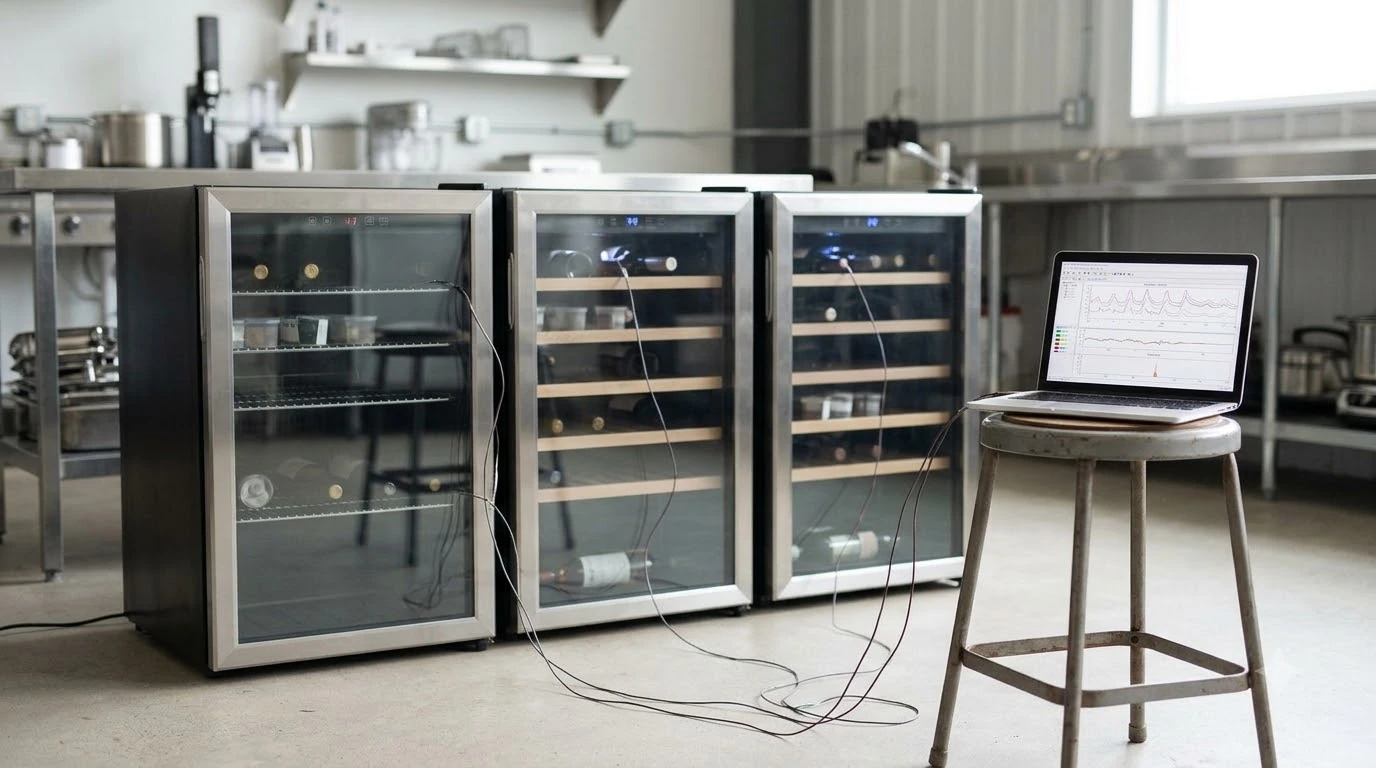
The wine enthusiast 36 bottle wine fridge is a practical single-zone wine cellar for households that want organized, temperature-controlled storage for up to 36 standard bottles. Its 3.35-cubic-foot interior, adjustable 39°F to 65°F temperature range, and relatively compact freestanding footprint make it a useful option for everyday wine storage. However, it is not a dual-zone refrigerator or an under-counter appliance, and larger bottles can reduce its advertised capacity. Buyers should also distinguish model 268 78 36 08 from other Wine Enthusiast refrigerators with similar capacities but different specifications.
A dedicated wine refrigerator can make a noticeable difference in how conveniently a household stores and serves wine. Instead of filling a kitchen refrigerator with bottles or leaving a growing collection in a warm cabinet, a wine cellar provides a designated environment with adjustable temperature control and horizontal bottle storage. The Wine Enthusiast 36 Bottle Wine Cellar with VinoView shelving targets the middle ground between a small countertop cooler and a large wine cabinet. Its specifications suggest a straightforward appliance rather than a sophisticated collector’s cellar. The important question is whether its capacity, temperature performance, installation requirements, and maintenance needs match the way a household actually buys and drinks wine.
Specs and Key Features
The Wine Enthusiast 36-bottle cellar is designed around practical storage capacity, a single adjustable temperature setting, and a freestanding cabinet. Its principal advantages are the 3.35-cubic-foot interior, a relatively narrow 19-inch width, and a temperature range that accommodates many common wine styles.
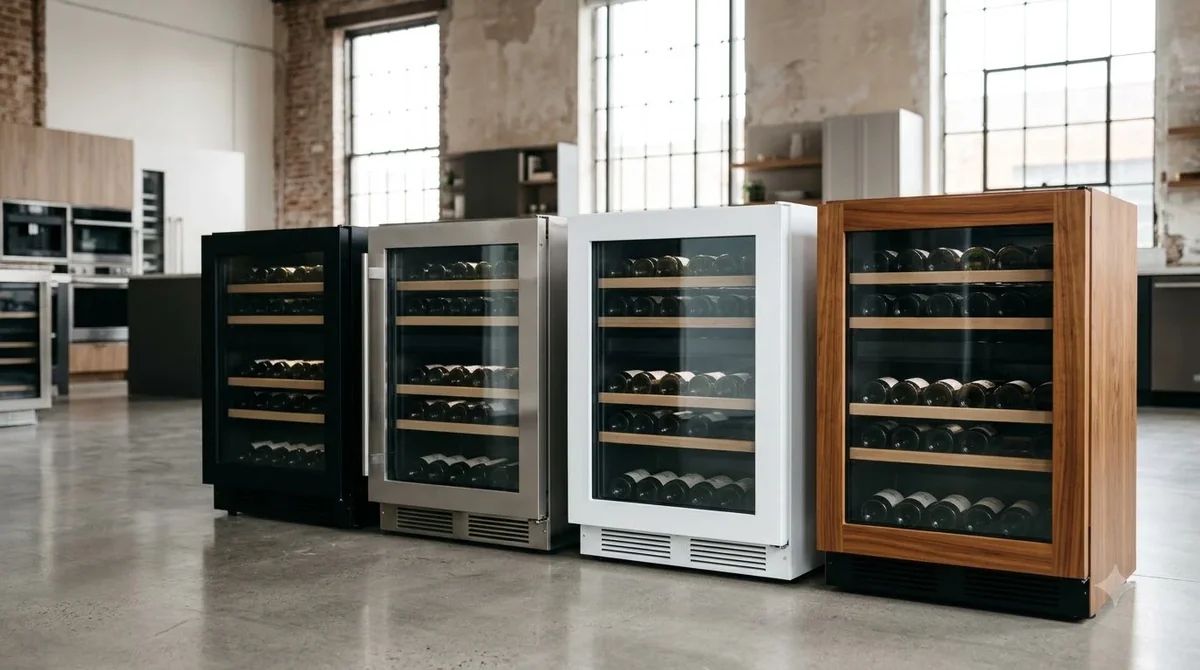
The manufacturer’s manual identifies model 268 78 36 08 as the 36 Bottle Wine Cellar with VinoView shelving. The appliance measures 19 inches wide, 18.75 inches deep, and 33.25 inches high. At approximately 60 pounds, it is substantial enough to require some planning during delivery and installation, but its upright format allows it to fit into spaces where a wider cabinet might be impractical.
The listed capacity is 36 standard bottles, while the interior volume is 3.35 cubic feet. These figures describe different aspects of the appliance: bottle capacity communicates the intended storage arrangement, whereas cubic footage describes the available interior volume. A collection containing predominantly conventional Bordeaux-style bottles is more likely to approach the stated capacity than one filled with unusually wide or tall bottles.
| Specification | Wine Enthusiast 36 Bottle Cellar |
|---|---|
| Model number | 268 78 36 08 |
| Advertised bottle capacity | 36 bottles |
| Interior volume | 3.35 cubic feet |
| Width | 19 inches |
| Depth | 18.75 inches |
| Height | 33.25 inches |
| Net weight | Approximately 60 pounds |
| Temperature range | 39°F to 65°F |
| Temperature zones | Single zone |
| Power input | 85 watts |
| Electrical requirement | 115V / 60Hz |
| Installation | Freestanding only |
| Shelf weight capacity | 55 pounds per shelf |
Temperature adjustment is relatively straightforward. The manual describes up and down controls that change the selected temperature by 1°F per press. A display shows the interior temperature during normal operation, temporarily displaying the selected setting after an adjustment before returning to the actual reading. This distinction matters because selecting 55°F does not mean the cabinet immediately reaches that temperature.
The interior light provides visibility when selecting a bottle, while the horizontal shelving arrangement keeps bottles organized. The VinoView designation identifies the shelving configuration associated with this cellar. It is important not to confuse the model with similarly sized Wine Enthusiast Dual Zone MAX products. Those are separate appliances with different temperature arrangements, specifications, and storage configurations.
There is another useful distinction in the available product documentation. The Costco support listing for the Wine Enthusiast 36 Bottle Wine Cellar identifies an inverter linear compressor and digital touchscreen controls, while the manual for model 268 78 36 08 describes conventional up-and-down temperature buttons. Buyers should match the model number and documentation to the actual unit rather than assume every appliance marketed as a 36-bottle cellar has identical components.
For buyers who want a broader understanding of available configurations, the wine cooler model reviews section provides a useful starting point for comparing different capacities and appliance designs.
What Owners Like
The strongest appeal of a 36-bottle wine cellar is the combination of useful household capacity and a relatively modest footprint. For someone who regularly keeps Cabernet Sauvignon, Pinot Noir, Chardonnay, Sauvignon Blanc, and sparkling wine on hand, a dedicated cabinet provides a more organized arrangement than scattering bottles throughout the kitchen.
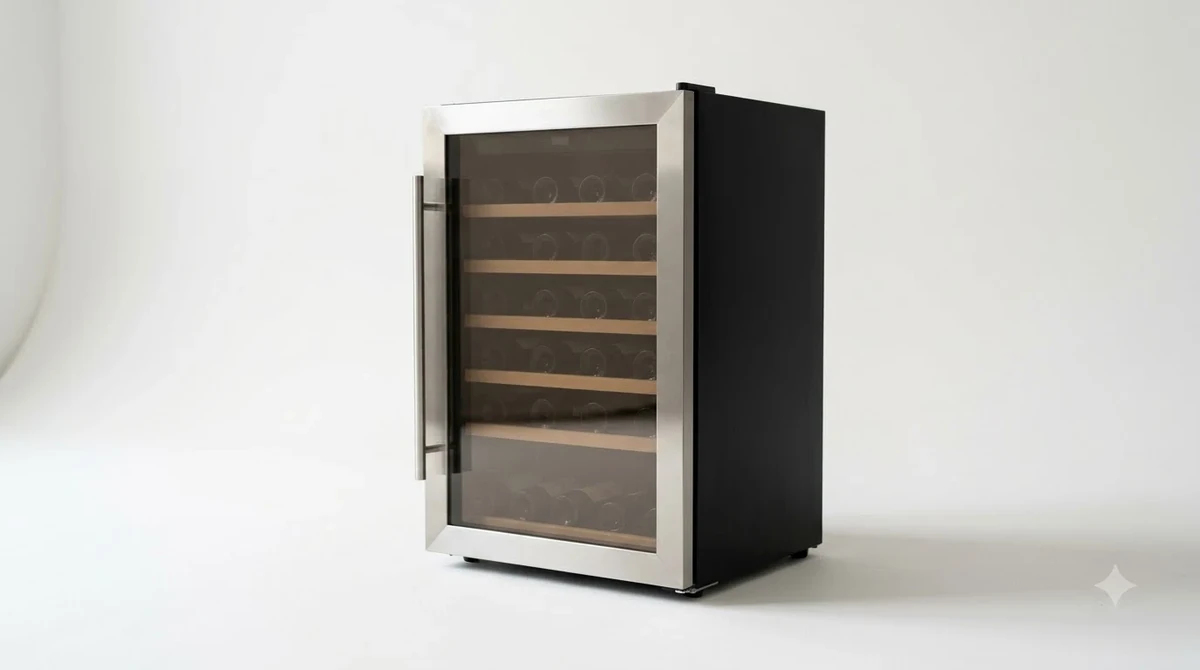
The 36-bottle capacity is particularly attractive for households that purchase several bottles at a time. A person who buys six bottles for a dinner party, keeps a few bottles for weekend meals, and gradually builds a selection of special-occasion wines can use the available space without immediately needing a full-size cellar. It also gives bottles a designated location instead of requiring them to compete with groceries for refrigerator space.
Another advantage is the adjustable temperature range. The 39°F to 65°F range provides flexibility for different storage and serving preferences. A setting near 55°F is suitable for general wine storage, while a cooler setting can prepare bottles for serving. The one-degree adjustment increments are helpful for making relatively precise changes without relying on broad temperature steps.
The interior light is a small but useful feature. It makes it easier to identify labels and retrieve a bottle without keeping the door open while looking through the collection. Horizontal shelving also allows bottles to remain organized and reduces the need to stack loose bottles in an ordinary refrigerator.
The manufacturer’s stated 55-pound shelf limit provides a useful loading guideline. This is particularly relevant when a household keeps several heavy bottles together or mixes standard wine bottles with larger formats. Distributing bottles across the cabinet helps prevent concentrated weight and supports more orderly storage.
Useful for a developing collection
Thirty-six bottles provide room for a reasonably varied household selection. One arrangement might include twelve red wines, twelve white wines, six sparkling wines, and six bottles reserved for guests or special occasions. Another household might devote most of the cabinet to red wine while keeping a smaller assortment of white and rosé bottles.
The single-zone design means all bottles share the same temperature setting. That is not necessarily a serious disadvantage for a collection intended primarily for storage. Serious Eats explains that wine can be stored together around 57°F even when individual wines have different serving preferences. Bottles can then be brought to their preferred serving temperatures shortly before opening.
That approach is particularly practical for households that enjoy a mixture of red and white wines but do not need both categories continuously chilled to different temperatures. A shared storage temperature also simplifies operation because there is only one setting to monitor.
Simple controls and conventional operation
Buyers who prefer basic appliance controls may appreciate the documented interface. The manual describes a temperature display, an interior-light control, and individual up and down buttons. There is no need to learn a complicated inventory system or manage a smartphone application to adjust the storage temperature.
There are also useful operating details in the manual. It explains that refrigerant circulation can produce gurgling sounds or slight vibrations and that the thermostat may click as it cycles on and off. These sounds are described as normal operating characteristics rather than automatic indications of a malfunction.
The overall appeal is therefore practical rather than luxurious. Buyers receive a designated wine-storage cabinet with useful capacity, adjustable temperature, interior lighting, and organized shelving. Those features make the appliance most attractive to everyday wine drinkers who want a dedicated place for their collection.
Common Complaints
The most important limitation is the single-zone temperature arrangement. Other potential drawbacks include the difference between advertised and practical bottle capacity, the freestanding-only installation requirement, and the need to maintain a suitable room temperature.
A single-zone wine refrigerator cannot maintain separate storage temperatures for red and white wines simultaneously. Although a setting around 55°F to 57°F is suitable for general storage, it does not provide the same convenience as having one compartment for chilled white wines and another for reds.
For example, someone who wants Sauvignon Blanc ready to serve at 45°F while keeping Cabernet Sauvignon at a warmer storage temperature will need to plan ahead. The refrigerator cannot independently provide both settings. A bottle can be chilled separately before serving, but that introduces an additional step.
Capacity is another consideration. The 36-bottle figure assumes a relatively conventional bottle shape. The manufacturer’s manual specifically mentions larger-format Pinot Noir and Champagne bottles and explains that these reduce the number of bottles that fit on a shelf.
Wide Burgundy bottles, sparkling-wine bottles, and unusually shaped bottles can take up more horizontal room than standard Bordeaux bottles. A buyer whose collection contains many of these formats should not assume the cabinet will accommodate 36 bottles without rearranging the shelving or reducing the total count.
The dimensions also deserve attention. Although the appliance is only 19 inches wide, it stands 33.25 inches high and measures 18.75 inches deep. A space that appears suitable based on width alone may not provide enough room for the full cabinet or the access needed to open its door and remove shelves.
The manufacturer’s manual explicitly identifies this appliance as freestanding only. It should not be treated as an under-counter or built-in refrigerator simply because its height appears compatible with a kitchen cabinet arrangement.
Temperature performance can also depend on the room. The manual recommends an ambient operating temperature of 60°F to 77°F. A hot garage, unheated utility room, or poorly insulated space is therefore not an ideal location if it regularly falls outside that range.
It is also important to distinguish documented specifications from independent owner feedback. The available documentation establishes the operating range and installation limitations, but it does not provide a comprehensive, model-specific collection of verified long-term owner experiences. Buyers should avoid treating anecdotal reports about other Wine Enthusiast refrigerators as proof of a defect in this exact model.
For a useful comparison, Serious Eats evaluated a different Wine Enthusiast 32-bottle Dual Zone MAX model. Its review discusses the dual-zone configuration, temperature range, shelving, and operating noise. Those observations concern the 32-bottle product, not model 268 78 36 08. They nevertheless illustrate why buyers should compare exact models instead of assuming all wine coolers from the same manufacturer have identical operating characteristics. The Serious Eats wine-fridge comparison provides additional context for evaluating those differences.
Another consideration is that the temperature display does not eliminate the need to allow the appliance time to stabilize. The manufacturer notes that temperature can fluctuate according to bottle position and whether the interior light is switched on or off. A single reading immediately after opening the door should not be treated as a complete picture of long-term temperature performance.
Who Should Buy and Who Should Skip
This cellar is best suited to households with a moderate wine collection, a suitable freestanding location, and no requirement for independently controlled temperature zones. It is less appropriate for serious collectors who need specialized storage conditions or buyers who want an appliance integrated into kitchen cabinetry.
Consider the Wine Enthusiast 36-bottle model if your collection contains mostly standard 750 ml bottles and you want to keep approximately three dozen wines organized in one location. It can serve as a convenient home cellar for regular purchases, dinner-party bottles, and wines that benefit from being stored away from fluctuating kitchen temperatures.
It is also a reasonable format for someone who enjoys several grape varieties without needing separate refrigeration compartments. A household that regularly drinks Merlot, Cabernet Sauvignon, Chardonnay, Riesling, and sparkling wine can store those bottles together around 55°F to 57°F and chill individual selections before serving.
The appliance is particularly appealing when the available installation area is relatively narrow. Its 19-inch width and 33.25-inch height give it an upright profile that can work in a dedicated dining-room storage area, a suitable pantry, or a temperature-controlled living space.
However, buyers should have a realistic idea of their storage requirements. Someone who regularly purchases 36 bottles and expects to add more each month may quickly outgrow the cabinet. A growing collection of Burgundy, Champagne, and other wide-format bottles also makes the advertised capacity less useful.
Who should skip it?
Skip this model if you need dual-zone storage. A household that wants white wines consistently held near 45°F and reds kept separately at a warmer setting will benefit from an independently controlled dual-zone appliance.
Also skip it if the intended location is beneath a kitchen counter or inside a built-in cabinet enclosure. The manufacturer specifies freestanding installation, so choosing a different appliance designed for built-in use is the more appropriate solution.
Collectors with valuable bottles intended for extended aging should consider their storage requirements carefully. Temperature control is important, but long-term storage also involves minimizing light exposure, vibration, and temperature fluctuations. A basic household refrigerator may not offer every environmental feature that a dedicated collector expects.
Finally, buyers living in environments where the room regularly exceeds the manufacturer’s recommended 77°F operating limit should look for a refrigerator designed to operate in warmer ambient conditions. Placement in an appropriate room is essential to getting reliable results from the appliance.
Tip: Before purchasing, measure the intended location in all three dimensions. Allow room for the door to open, check access to a grounded 115V outlet, and confirm that the room can remain within the recommended 60°F to 77°F ambient range.
How It Compares to Alternatives
The most useful comparison is between the 36-bottle single-zone cellar and Wine Enthusiast’s separately documented 32-Bottle Dual Zone MAX. Both offer dedicated wine storage, but their different temperature arrangements make them suitable for different households.
The 36-bottle model emphasizes a larger stated bottle capacity and a simple shared temperature setting. Its documented range is 39°F to 65°F, and its 3.35-cubic-foot volume provides room for a varied standard-bottle collection. It is a straightforward option for someone who primarily wants a consistent storage environment.
The Wine Enthusiast 32-Bottle Dual Zone MAX, by contrast, has two independently controlled temperature zones. Its manufacturer specification sheet lists a temperature range of 41°F to 64°F for both upper and lower zones. The appliance includes six racks, consisting of five wavy wire racks and one fixed bin.
Its stated capacity is 32 standard Bordeaux bottles, four fewer than the 36-bottle cellar. The specification sheet also lists dimensions of 33⅜ inches high, 19½ inches wide, and 17 inches deep. Both models are freestanding, but their different dimensions and shelf arrangements should be considered before choosing between them.
Serious Eats selected the 32-bottle Dual Zone MAX as its leading wine-fridge recommendation in its comparative review. Its assessment highlighted the independently controlled zones, adjustable temperature range, relatively compact footprint, and generally quiet operation, while also noting that the unit was noisier than some other models in its selection.
This is a useful alternative for people who value temperature separation more than maximizing the number of standard bottles. The 36-bottle model remains more attractive for a household that wants additional nominal capacity and is comfortable storing everything together at a suitable temperature.
Neither design is automatically superior. The right choice depends on whether the household values additional bottle capacity or separate temperature settings. The 32-bottle MAX also has a different shelving configuration, so buyers should consider bottle shapes and accessibility rather than comparing capacity figures alone.
Which specifications matter most?
For a predominantly red-wine collection, a single-zone cabinet can be sufficient because a general storage temperature around 55°F to 57°F is appropriate. The same applies to households that purchase a mixture of reds and whites but are happy to chill individual bottles before opening.
For frequent entertaining, the dual-zone alternative offers more convenience. One compartment can be maintained at a cooler setting for white and sparkling wines while the other provides a warmer storage environment for reds. This reduces the need to plan every serving temperature separately.
Other manufacturers and retailers offer wine refrigerators in different sizes and configurations, but capacity labels should not be the only comparison point. Check actual interior dimensions, shelf weight limits, ambient operating requirements, temperature ranges, and whether the unit is approved for built-in installation.
The same principle applies when choosing a refrigerator for a mixed beverage collection. A wine cellar is designed around wine bottles and their storage requirements, not general food refrigeration. A beverage refrigerator may offer different shelving and cooling arrangements, but it is not necessarily a better choice for preserving a collection of wine.
A wine cellar also makes it easier to organize bottles for meals and entertaining. For example, someone planning a dinner featuring chicken in a creamy mushroom sauce can keep a Chardonnay or Pinot Noir available without searching through a crowded kitchen refrigerator. A chicken marsala recipe is one example of a meal where having a suitable bottle ready can make planning the dinner simpler.
Likewise, a household that regularly serves sparkling cocktails can reserve space for Prosecco or another sparkling wine. An Aperol Spritz recipe calls for chilled Prosecco, making advance bottle chilling useful when preparing drinks for guests.
For a household that wants to store bottles in a compact, dedicated cabinet without paying for separate temperature compartments, the 36-bottle model remains a sensible format. For someone who regularly serves both red and white wines at different temperatures, the dual-zone alternative is more convenient.
Frequently Asked Questions
Can the Wine Enthusiast 36-bottle cellar store unopened wine for several years?
It can provide a controlled environment for storing wine, but the appliance should not automatically be considered a professional long-term aging cellar. Wine intended for extended aging also benefits from stable humidity, minimal vibration, and protection from light. The model’s published specifications do not establish a dedicated humidity-control system or a precise humidity target.
Does the VinoView shelving accommodate screw-cap wine bottles?
Yes, screw-cap bottles do not require a different temperature setting or a special storage arrangement simply because of their closures. They can be stored horizontally alongside cork-finished bottles, provided their dimensions fit the available shelf space. Bottle length and diameter are more important than closure type when determining physical compatibility.
Can the cellar be transported on its side in a vehicle?
The manufacturer recommends moving the appliance vertically rather than laying it down because horizontal transportation can affect the cooling system. After moving the cellar, the manual recommends waiting approximately 24 hours before connecting it to power. Planning vehicle space around its 33.25-inch height can help avoid unnecessary tilting.
Can the wine refrigerator be used to chill unopened wine before a party?
Yes, its adjustable temperature range allows bottles to be cooled before serving, provided the selected temperature is suitable for the wine. Sparkling wines generally benefit from serving temperatures around 40°F to 50°F, while light whites and rosé are commonly served around 45°F to 50°F. Allow enough time for bottles to cool rather than expecting immediate temperature changes.
Does the appliance require a dedicated electrical circuit?
The manufacturer’s manual specifies a properly grounded 115V outlet and a 15-amp electrical supply. It does not state that a separate dedicated circuit is mandatory. The manual discourages using extension cords and warns against removing the grounding connection or using unsuitable adapters.
The Wine Enthusiast 36-bottle wine cellar is a practical choice for households that want organized storage, straightforward temperature adjustment, and room for a moderately sized wine collection. Its single-zone arrangement and freestanding installation requirement are important limitations, but buyers who understand those restrictions can make good use of its capacity and adjustable cooling range. Measure the installation area, verify the exact model number, and compare it with the 32-bottle Dual Zone MAX before deciding which configuration better matches your collection.
More in Model Reviews
 Magic Chef 44 Bottle Wine Cooler Review for Flexible StorageUpdated Nov 21, 2026
 Whynter 164 Bottle Wine Cooler Review: Capacity, Features, and FitUpdated Nov 21, 2026
 Insignia NS WC16BK6 Review: Compact 16-Bottle Wine StorageUpdated Nov 21, 2026
 Wine Enthusiast Electric Blue Omega Review: Opening, Pouring, and Preserving Made EasierUpdated Nov 21, 2026
 Koolatron 20 Bottle Wine Cooler Review: Features, Fit, and PerformanceUpdated Nov 21, 2026
 NewAir AWC 330E Review for Home Wine StorageUpdated Nov 21, 2026