

We may earn a commission when you buy through links on this page, at no extra cost to you. Learn more.
The wine enthusiast 28 bottle wine fridge is a compact, single-zone compressor refrigerator designed for storing up to 28 standard Bordeaux-sized bottles in a temperature-controlled environment. The VinoView model 268 78 28 01 offers an adjustable 39°F to 65°F temperature range, label-forward shelving, UV-protected double-pane glass, and LED interior lighting. It is a good fit for smaller collections that prioritize presentation and straightforward wine storage, but its single temperature zone and limited accommodation for oversized bottles are important considerations.
The Wine Enthusiast VinoView 28-Bottle Compressor Wine Cooler occupies a useful middle ground between a countertop wine chiller and a larger home wine cellar. Its relatively narrow footprint makes it easier to accommodate in many living spaces, while its compressor system provides more flexibility than basic thermoelectric wine coolers. However, a 28-bottle capacity is not necessarily a practical 28-bottle capacity for every collection. Bottle shapes, shelf spacing, installation requirements, and your preferred serving temperatures all influence whether this refrigerator makes sense for your home.
Specs and Key Features
The VinoView combines compressor cooling, a single adjustable temperature zone, and presentation-focused shelving in a freestanding cabinet. Its strongest specifications are the 39°F to 65°F operating range, 28-bottle Bordeaux capacity, and double-pane UV-protected door.
The manufacturer’s model number is 268 78 28 01. The refrigerator measures 17 inches wide, 18.9 inches deep, and 32.7 inches high, making it a relatively compact appliance for a collection that needs more than a dozen bottles of dedicated storage. Its listed net weight is 70 pounds, so it is worth planning the delivery and final placement rather than treating it like a lightweight countertop accessory. The manufacturer’s VinoView 28-bottle product specifications provide the model’s capacity, dimensions, cooling technology, and warranty details.
| Specification | Wine Enthusiast VinoView 28 |
|---|---|
| Model number | 268 78 28 01 |
| Maximum capacity | 28 standard Bordeaux bottles |
| Temperature zones | 1 |
| Temperature range | 39°F–65°F |
| Normal temperature variance | ±4°F |
| Cooling technology | Compressor |
| Noise rating | 39 dBA |
| Exterior width | 17 inches |
| Exterior depth | 18.9 inches |
| Exterior height | 32.7 inches |
| Net weight | 70 pounds |
| Shelving | 5 sliding shelves and 1 fixed bottom shelf |
| Electrical requirement | 115V / 60Hz |
| Refrigerant | R600a |
| Installation | Freestanding only |
| Door | Double-pane glass with UV protection |
| Warranty | 1 year parts and labor; 3 years sealed-system parts |
One of the most distinctive features is the VinoView shelving arrangement. Instead of presenting every bottle with its neck facing outward, the design positions labels toward the front, allowing you to identify bottles without repeatedly pulling them out. The five sliding shelves extend approximately 53 percent, while a fixed shelf at the bottom completes the storage arrangement. This is a useful convenience for anyone who maintains a varied collection of reds, whites, and occasional sparkling wines.
The double-pane glass door adds another practical feature. Its UV protection helps limit exposure to light that can negatively affect wine during storage. Black steel construction, black stainless-steel trim, and interior LED strips also give the refrigerator a more finished appearance than a basic utility cooler. However, attractive lighting and glass construction do not replace the importance of consistent temperature management.
The manufacturer lists a normal temperature variance of approximately ±4°F and a noise rating of 39 dBA. Those figures are important when evaluating the refrigerator as a storage appliance rather than simply looking at its maximum bottle count. A single-zone cooler can work for a mixed collection, but it cannot independently maintain different temperatures for red and white wines.
What Owners Like
Customer feedback generally highlights the VinoView’s compact dimensions, attractive appearance, and convenient capacity. Its strongest appeal is providing dedicated wine storage without requiring the space occupied by a full-size cellar.
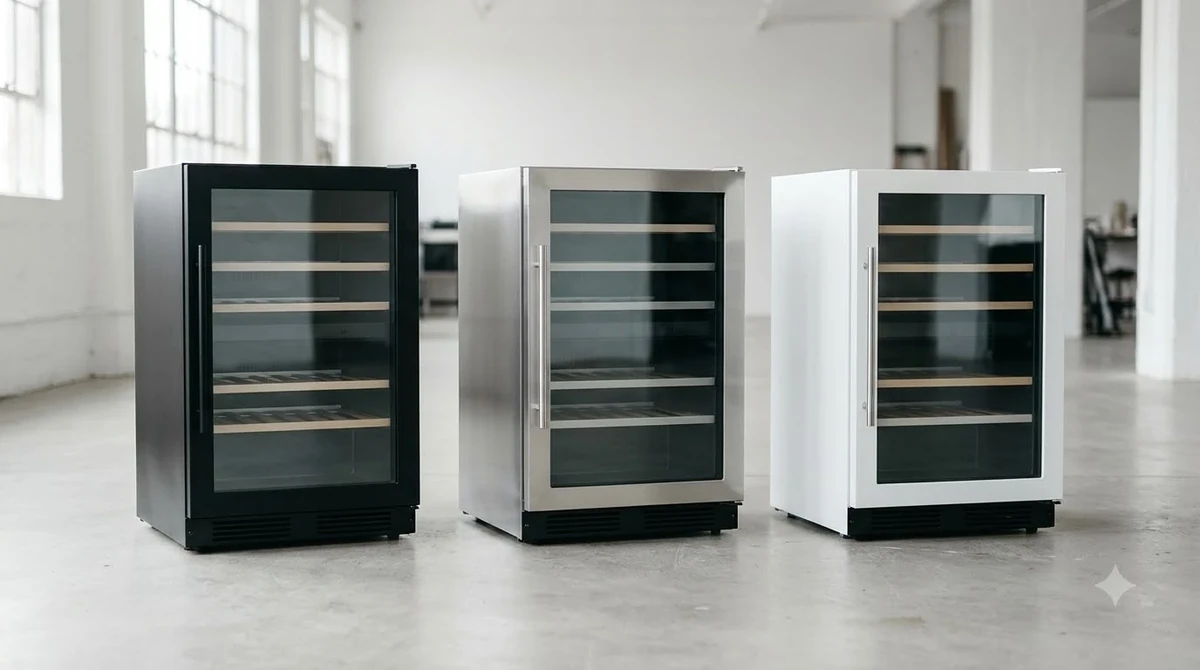
On Best Buy, the exact model 268 78 28 01 has three customer reviews, all positive. One purchaser described it as a particularly convenient size, another highlighted its suitability for an under-counter-sized space, and a third mentioned having purchased a second wine refrigerator from the same company. These comments suggest that the product’s dimensions and basic functionality are attractive to buyers with modest collections.
Wayfair’s VinoView listing also presents a generally favorable picture, with customers appreciating its appearance, compact design, and perceived build quality. The listing reports a 4.3-out-of-5 average from 15 reviews. That feedback should be interpreted as a snapshot of customer experiences rather than a guarantee that every refrigerator will perform identically.
The label-forward arrangement is another particularly useful feature. For collectors who purchase wine from different regions and producers, seeing the label makes bottle identification easier. You can quickly locate a Napa Valley Cabernet Sauvignon, an Oregon Pinot Noir, or a bottle of Italian Chianti without moving several bottles around.
Why the compressor matters
Compressor cooling is an important advantage for a wine refrigerator that will be used regularly. Compressor-based systems actively circulate refrigerant to remove heat, whereas thermoelectric models use a different cooling mechanism that can be more affected by surrounding temperatures.
The manufacturer describes its compressor technology as lasting up to twice as long as comparable thermoelectric cellars. That is a manufacturer claim rather than an independently established lifespan guarantee, but the technology makes the VinoView a sensible option for people who want a dedicated cooling appliance rather than a lightly cooled display cabinet.
The refrigerator’s adjustable range also accommodates several common wine-storage preferences. For example, a setting around 55°F is a reasonable starting point for general cellar-style storage, while cooler settings can prepare certain white wines for serving. The temperature can be adjusted through the electronic controls, allowing the cabinet to serve a collection with changing requirements.
Common Complaints
The VinoView’s main limitations are its single-zone design, bottle-shape restrictions, and shelving arrangement. These issues matter more to collectors with diverse bottle formats or specific red-and-white serving requirements than to owners storing a relatively uniform collection.
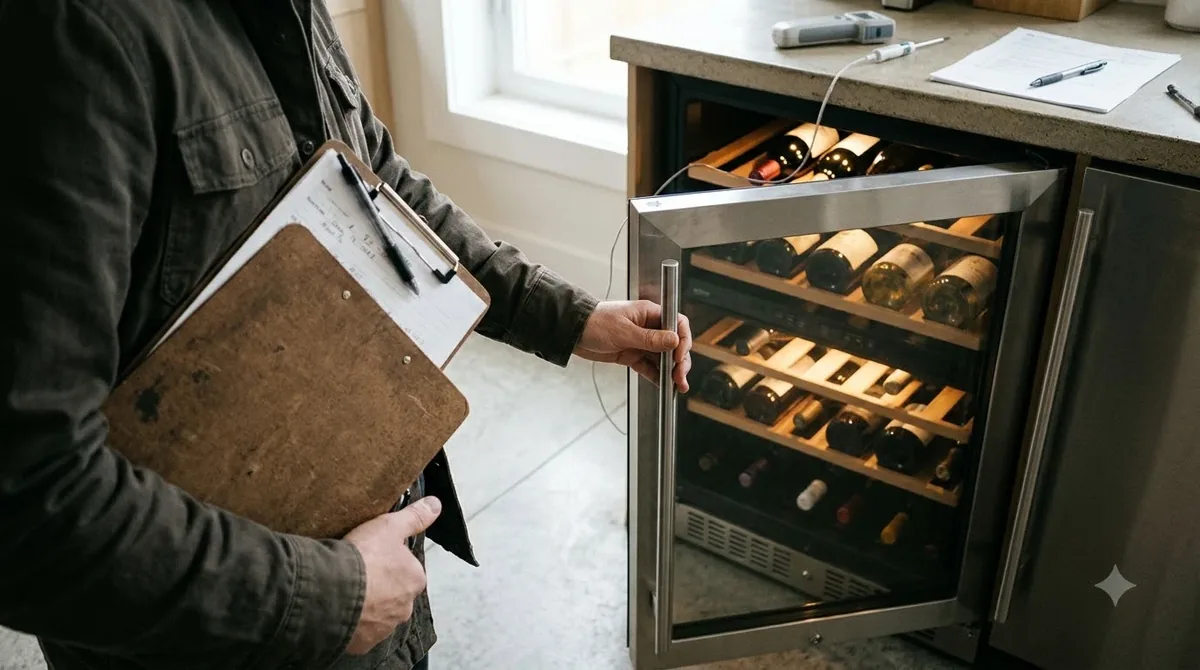
The first limitation is capacity. The advertised 28 bottles represent standard Bordeaux-sized bottles, not every possible wine bottle shape. Burgundy bottles, Champagne bottles, sparkling wine bottles, and some specialty formats are wider or differently shaped. The manufacturer specifically warns that nonstandard bottles can reduce usable capacity by 20 to 25 percent when they make up as much as half the collection. Larger bottles can reduce capacity by as much as 40 percent.
That means a collector who regularly buys Champagne and wider Burgundy bottles should not plan on consistently fitting 28 bottles. A more realistic approach is to consider the dimensions of the bottles that make up the majority of the collection and leave some room for variations.
Wayfair’s customer feedback also identifies concerns about awkward rack fit, limited room for certain bottles, and shelving that some owners consider flimsy. The same review summary mentions occasional freezing at lower temperature settings. These are useful warnings, although they do not establish that every unit experiences the same problems.
The single-zone limitation
The second major disadvantage is the lack of independent temperature controls. The refrigerator has one cooling compartment, meaning that all bottles share the same general temperature environment. A person who wants red wines stored around 55°F while keeping Sauvignon Blanc and sparkling wines colder for immediate serving may find this arrangement restrictive.
There is a practical workaround: choose a general storage temperature and move individual bottles into a regular kitchen refrigerator before serving. This approach is manageable for occasional wine drinkers, but less convenient for households that regularly serve several wine styles at different temperatures.
Another point concerns the temperature variance. The manufacturer’s listed ±4°F specification means the selected setting should not be interpreted as an exact temperature maintained at every point in the cabinet at every moment. Bottle placement, door openings, lighting, and surrounding conditions can influence the internal environment.
Installation is not universal
The refrigerator is designed for freestanding installation only. Although its dimensions might make it appear suitable for an under-counter opening, fitting inside a cabinet opening does not make an appliance approved for built-in installation.
The manufacturer identifies the top and sides as ventilation locations. Blocking those areas can interfere with heat dissipation and affect cooling performance. Buyers planning to position the appliance near cabinetry should pay particular attention to the installation requirements rather than assuming that a narrow footprint means built-in compatibility.
Who Should Buy and Who Should Skip
The VinoView is most appropriate for wine drinkers who need a dedicated 28-bottle-class storage solution, prefer visible labels, and are comfortable using one temperature setting. It is less suitable for large collections, mixed oversized bottles, and households that need two independently controlled wine environments.
Who should consider it
Small-collection owners: If your wine collection generally stays between 12 and 25 bottles, the VinoView provides useful additional capacity without requiring a large cellar. The nominal 28-bottle limit also leaves room for a few new purchases, provided your bottles are mostly standard Bordeaux formats.
Casual red and white wine drinkers: A single temperature zone can be practical if you prefer to store different wines together and chill individual bottles before serving. For example, Cabernet Sauvignon, Merlot, Pinot Noir, Chardonnay, and Riesling can share a general storage environment, even though their ideal serving temperatures differ.
People who value presentation: The front-facing labels and LED lighting make the VinoView particularly attractive for a dining room, home bar, or dedicated wine corner. It is designed to display a collection as well as store it.
Apartment and smaller-home owners: Its 17-inch width and 32.7-inch height are helpful when available floor space is limited. However, the refrigerator still needs appropriate ventilation and a suitable grounded electrical outlet.
Who should skip it
Dual-zone shoppers: If you regularly serve chilled whites alongside reds stored at warmer temperatures, a two-zone refrigerator will be more convenient. The VinoView cannot create separate cooling environments for these two groups.
Champagne and Burgundy collectors: Wider bottles can reduce the usable capacity and may create awkward shelf arrangements. Buyers with many sparkling wines or large-format bottles should prioritize a refrigerator specifically designed around those shapes.
Large collectors: A 28-bottle cabinet can become restrictive quickly if you regularly purchase cases or maintain wines for several years. A larger cellar provides more flexibility and reduces the need to rotate bottles frequently.
Built-in installation shoppers: Anyone who needs a refrigerator that sits flush with surrounding kitchen cabinetry should select a model explicitly designed and rated for built-in installation. The VinoView’s freestanding-only designation rules it out for that purpose.
Tip: Before purchasing, measure the actual bottle widths in your collection. A refrigerator rated for 28 Bordeaux bottles may accommodate substantially fewer Champagne or Burgundy bottles. Also measure the full installation area and allow the ventilation clearance specified by the manufacturer.
How It Compares to Alternatives
The VinoView is strongest as a compact single-zone display refrigerator, rather than a versatile wine-storage system for every type of collector. Wine Enthusiast’s own 32-bottle MAX Dual Zone Wine Fridge offers a useful comparison for buyers who want more capacity and separate temperature environments.
The 28-bottle VinoView provides one shared cooling compartment with a 39°F to 65°F adjustment range. Its design emphasizes label visibility, a relatively narrow cabinet, and a freestanding installation. It is an appealing choice when straightforward storage and presentation are more important than separate temperature controls.
The Wine Enthusiast 32-Bottle MAX Dual Zone Wine Fridge is a more relevant alternative for households that routinely keep red and white wines ready to serve at different temperatures. Its dual-zone configuration addresses the biggest functional limitation of the VinoView. Its four additional nominal bottle spaces are also useful, although the difference in actual capacity will still depend on bottle shapes.
Another consideration is the difference between a wine-storage refrigerator and a beverage center. Some compact beverage refrigerators are designed for a combination of wine bottles, soda cans, and other drinks. Those appliances may be more flexible for general entertaining, but a dedicated wine refrigerator provides shelving designed around wine-bottle storage and temperature management.
Single-zone versus dual-zone storage
A single-zone refrigerator is often sufficient when the goal is to keep a small collection at a relatively stable general storage temperature. A setting near 55°F is a useful starting point for this purpose. Individual bottles can then be chilled or allowed to warm before serving.
A dual-zone refrigerator is more practical for someone who regularly serves sparkling wine, white wine, and red wine without wanting to move bottles between appliances. The separate compartments offer more flexibility, particularly when the refrigerator doubles as a ready-to-serve wine station.
For a household that primarily drinks Cabernet Sauvignon, Merlot, Pinot Noir, and other reds, the VinoView’s single zone may be perfectly adequate. For someone who frequently alternates between a chilled Riesling, a bottle of Champagne, and a room-temperature red, the additional flexibility of dual-zone cooling is more valuable.
Wine storage also needs to be considered alongside drinking habits. A refrigerator that holds 28 bottles is not necessarily the right solution for a collector who buys 30 bottles every few months. Similarly, someone who maintains only 10 bottles but regularly entertains guests may benefit more from a dual-zone configuration than additional storage capacity.
Food pairing can influence how you organize your collection, too. A bottle of Chardonnay or Pinot Noir may be selected for a meal featuring chicken, while Cabernet Sauvignon may be reserved for a richer beef dish. For a practical dinner idea, this chicken marsala recipe provides an opportunity to plan a meal around a suitable wine rather than choosing bottles randomly.
Using and Maintaining the VinoView
Correct installation and sensible temperature settings are essential to getting consistent performance from the VinoView. The exact-model owner’s manual provides several practical instructions, including a 24-hour upright settling period, a 30-minute initial running period, and a recommended ambient environment of 60°F to 77°F.
After delivery, keep the refrigerator upright for approximately 24 hours before plugging it in. This allows the cooling system to settle following transportation. Once connected to a properly grounded outlet, allow the refrigerator to operate for at least 30 minutes before adjusting the temperature. The official Wine Enthusiast VinoView 28-bottle owner’s manual contains the installation, electrical safety, operating, and maintenance instructions for model 268 78 28 01.
Choose a firm, level surface away from direct sunlight, radiators, ovens, and other heat-producing appliances. The manual specifically warns against installation in locations that are not properly insulated or heated, such as unsuitable garages. Extreme surrounding temperatures can affect the cabinet’s ability to maintain the desired internal conditions.
Choosing a useful temperature
The refrigerator’s adjustable range of 39°F to 65°F provides considerable flexibility. However, a setting appropriate for serving a chilled white wine is not necessarily the best choice for general long-term storage.
For a mixed collection, approximately 55°F is a sensible starting point. It offers a general cellar-style environment for many reds and whites, with individual bottles adjusted before serving. The following serving temperatures are useful when preparing wine for a meal:
- Sparkling wine: 40°F to 50°F.
- Light-bodied white wine and rosé: 45°F to 50°F.
- Full-bodied white wine: 50°F to 55°F.
- Light-bodied red wine: 55°F to 60°F.
- Full-bodied red wine: 60°F to 65°F.
- Sweet white wine: 43°F to 50°F.
These serving ranges explain why a single-zone refrigerator requires a little planning. For example, a Chardonnay intended for immediate serving might need a cooler environment than a Cabernet Sauvignon. Keeping both bottles at a general storage temperature and chilling the Chardonnay separately is a practical solution.
For a refreshing summer gathering, a chilled sparkling wine can also be useful for cocktails. A traditional Aperol spritz recipe is one example, while a Hugo spritz recipe offers another way to use sparkling wine in a lighter drink.
Loading and cleaning
Distribute bottles evenly instead of concentrating their weight on one shelf. The manufacturer’s manual specifies a maximum shelf weight of 55 pounds, and it advises keeping bottles away from the back of the cabinet and the bottom interior step. Only pull out one shelf at a time.
When loading the refrigerator, begin with standard Bordeaux bottles and place wider bottles in positions that provide the necessary clearance. Avoid forcing a bottle into a shelf or leaving it in a position where it can roll against the cabinet. An organized arrangement also makes it easier to identify wines and limit unnecessary door openings.
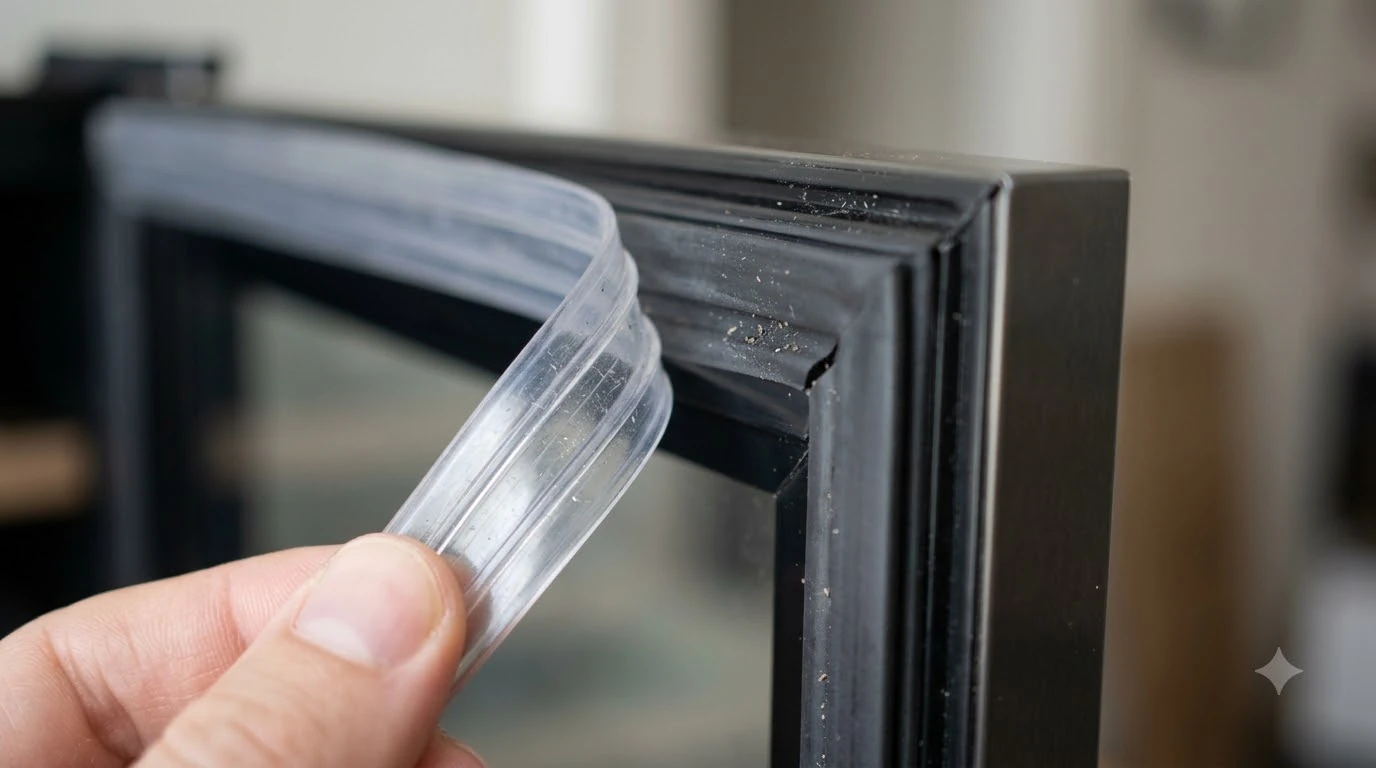
Clean the exterior and interior according to the manufacturer’s care instructions. Keep the door gasket clean and pliable, since an effective seal helps the cooling system maintain its environment. Periodically inspect the ventilation areas and condenser components for dust accumulation.
During a power interruption, the manual recommends disconnecting the refrigerator from its outlet and waiting three to five minutes after power returns before reconnecting it. For longer absences, clean the refrigerator, unplug it, and leave the door open to allow air circulation. These simple steps help maintain the appliance and reduce avoidable operating problems.
Frequently Asked Questions
Does the Wine Enthusiast VinoView 28 have a door lock?
The manufacturer’s specifications for model 268 78 28 01 do not list a lock-and-key feature. This means buyers should not treat it as a security cabinet for a collection that requires restricted access. If you need lockable wine storage, verify that feature explicitly before selecting another model.
Can the VinoView store opened wine bottles upright?
The refrigerator is primarily designed around horizontal wine-bottle storage. It does not advertise a dedicated upright open-bottle storage compartment. For opened bottles, use suitable wine stoppers and keep them refrigerated according to the wine style.
Does the VinoView include a charcoal air filter?
The manufacturer’s specifications for model 268 78 28 01 list the charcoal-filter feature as unavailable. Buyers who specifically want a dedicated charcoal filtration system should compare models that explicitly include one. This is separate from the refrigerator’s double-pane UV-protected glass door.
Can the refrigerator be moved after installation?
Yes, but the manufacturer recommends moving the appliance vertically rather than transporting it on its side. After moving it, allow approximately 24 hours before reconnecting it to power. This precaution helps protect the sealed cooling system during relocation.
Can the VinoView be used to store food and other beverages?
This model is intended for wine storage, not general food refrigeration. The manufacturer specifically warns against storing food in the wine cellar because its internal temperature may not be sufficiently cold to prevent spoilage or bacterial growth. A dedicated kitchen refrigerator is the appropriate appliance for perishable food.
The Wine Enthusiast VinoView 28-Bottle Compressor Wine Cooler is a sensible option for collectors who want compact, attractive, single-zone wine storage with convenient label-forward shelving. Its compressor cooling, adjustable temperature range, and UV-protected glass door make it a capable choice for a modest home collection. However, buyers who need dual-zone temperatures, built-in installation, or generous room for Champagne and oversized bottles should compare other configurations before committing. For the right collection size and storage requirements, the VinoView offers a practical balance of presentation and everyday wine storage.
More in Model Reviews
 Magic Chef 44 Bottle Wine Cooler Review for Flexible StorageUpdated Nov 21, 2026
 Whynter 164 Bottle Wine Cooler Review: Capacity, Features, and FitUpdated Nov 21, 2026
 Insignia NS WC16BK6 Review: Compact 16-Bottle Wine StorageUpdated Nov 21, 2026
 Wine Enthusiast Electric Blue Omega Review: Opening, Pouring, and Preserving Made EasierUpdated Nov 21, 2026
 Koolatron 20 Bottle Wine Cooler Review: Features, Fit, and PerformanceUpdated Nov 21, 2026
 NewAir AWC 330E Review for Home Wine StorageUpdated Nov 21, 2026