

We may earn a commission when you buy through links on this page, at no extra cost to you. Learn more.
The wine enthusiast 8 bottle wine fridge is a compact, single-zone refrigerator designed to keep up to eight standard Bordeaux-size bottles at adjustable temperatures between 51°F and 64°F. Its digital touchscreen, thermoelectric cooling system, smoked-glass door, and small freestanding footprint make it appealing for modest wine collections. However, its limited capacity, single temperature zone, bottle-size restrictions, and sensitivity to room temperature mean it is better suited to everyday wine storage than serious long-term cellaring.
The Wine Enthusiast 8-Bottle Wine Refrigerator, model 272 03 09, is designed for drinkers who want dedicated wine storage without committing to a large appliance. Its compact proportions make it easier to accommodate in a kitchen, dining area, or home entertaining space than a conventional wine cellar. The important distinction is that a small wine refrigerator is not automatically a miniature version of a full-size cellar. Temperature stability, bottle compatibility, ventilation, and installation restrictions matter just as much as the advertised capacity. This review examines the documented specifications, practical advantages, limitations, and ownership considerations before you decide whether this model deserves a place in your home.
Specs and Key Features of the Wine Enthusiast 8 Bottle Wine Fridge
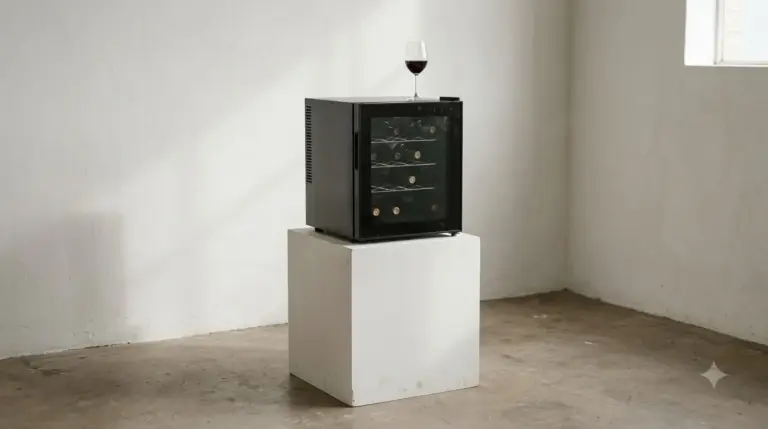
The Wine Enthusiast 272 03 09 combines eight-bottle storage with straightforward digital controls and a single temperature zone. Its strongest specifications are the compact 17-by-12-by-20-inch exterior, adjustable 51°F-to-64°F range, and thermoelectric cooling design.
Although the product is marketed around its eight-bottle capacity, the technical specifications provide a more useful picture of what buyers are getting. The instruction manual identifies a 23-liter interior, a 70-watt input rating at 77°F ambient temperature, and a standard 115V/60Hz electrical requirement. These details help establish the appliance’s intended role: a small wine storage unit rather than a high-capacity refrigerator intended to manage a substantial collection.
| Specification | Documented information |
|---|---|
| Brand | Wine Enthusiast |
| Model number | 272 03 09 |
| Advertised capacity | Up to 8 Bordeaux-size bottles |
| Interior volume | 23 liters |
| Temperature range | 51°F–64°F |
| Temperature zones | 1 |
| Cooling technology | Thermoelectric |
| Exterior dimensions | 17″W × 12″H × 20″D |
| Input power | 70 watts at 77°F ambient temperature |
| Electrical supply | 115V / 60Hz |
| Current rating | 1.0 amp at 77°F |
| Controls | Exterior digital touchscreen |
| Lighting | Interior LED |
| Installation | Freestanding only |
| Door | Smoked glass, stainless-steel trim |
These figures come from the model-specific instruction manual and retailer descriptions. The manual provides the technical information, while the WineStuff product listing confirms the model number, bottle capacity, touchscreen, thermoelectric system, and installation restrictions. One small documentation difference deserves attention: the manual identifies two slide-out shelves, whereas retailer descriptions are not entirely consistent about the shelf arrangement. Buyers considering a secondhand unit should inspect the actual interior rather than assume every listing describes an identical configuration.
Temperature controls and cooling system
The 51°F-to-64°F temperature range gives the appliance useful flexibility for keeping different wine styles at a practical storage or serving temperature. The exterior touchscreen allows adjustments without opening the door, and the temperature display makes it easier to monitor the selected setting. The manual also explains that the display can be switched between Fahrenheit and Celsius by holding the temperature adjustment buttons together for three seconds.
Thermoelectric cooling is an important part of the design. Instead of relying on a conventional compressor, this technology transfers heat using semiconductor components. WineStuff describes the model as virtually silent, which makes the design attractive for a kitchen or dining area where mechanical noise would be distracting. Thermoelectric systems also avoid the traditional compressor mechanism, although actual cooling performance remains dependent on the surrounding environment.
The manufacturer documentation makes an important qualification: the appliance is designed to cool up to 25°F below ambient temperature. That means its maximum cooling capability is not independent of room conditions. A refrigerator operating in a comfortable indoor environment has a better chance of reaching its intended settings than one placed beside a hot oven or in a warm enclosed cabinet.
Exterior design and everyday usability
The smoked-glass door, stainless-steel trim, recessed handle, and interior LED lighting give the refrigerator a more polished appearance than a basic open wine rack. The touchscreen is positioned externally, so changing the temperature does not require opening the door and allowing warmer air into the cabinet.
Its exterior dimensions are particularly useful for planning placement. At 17 inches wide and 12 inches high, it can fit into several countertop or furniture arrangements, provided the installation surface can support its weight and the rear remains properly ventilated. Its 20-inch depth is still substantial enough that measuring the available space is essential before purchasing.
What Owners Like About the Compact Design
The most appealing characteristics of the Wine Enthusiast 8-bottle refrigerator are its small footprint, simple temperature adjustment, and dedicated wine storage. These are practical advantages for someone who regularly keeps a few bottles ready for dinner without needing a larger appliance.
There is an important distinction between documented product features and verified owner consensus. The Best Buy listing for model 272 03 09 does not provide a substantial written customer-review sample, so it would be misleading to claim that owners overwhelmingly praise particular characteristics. Instead, the available specifications help identify the features that are most likely to matter during ordinary use.
A small footprint for limited spaces
Capacity is the first reason to consider this model. Eight bottles provide enough room for a small selection of everyday favorites, such as Sauvignon Blanc, Chardonnay, Pinot Noir, Merlot, and sparkling wine. Someone who usually keeps four or five bottles available can also leave a little room for a new purchase or an unopened bottle intended for a particular meal.
The dimensions make the appliance easier to accommodate than a large wine cellar. A dedicated area in a kitchen, dining room, or home bar can become a practical storage location without requiring substantial cabinetry changes. Its freestanding construction also means that the refrigerator does not need to be permanently integrated into furniture.
For example, a household that regularly prepares dinner for two might keep a few bottles of white wine and light red wine available throughout the week. A small collection like this does not necessarily justify a refrigerator holding 30 or 50 bottles. Eight standard bottles can be a sensible capacity if the collection remains relatively stable.
Simple digital operation
Another practical advantage is the external digital touchscreen. Rather than adjusting a mechanical dial hidden inside the cabinet, users can select their preferred temperature from the front panel. The displayed temperature also provides a convenient reference when making adjustments for a different type of wine.
The single-zone arrangement is straightforward. There is no need to learn separate controls or remember which compartment is intended for which bottle. A household that mainly drinks one wine style at a time may appreciate that simplicity.
The interior LED lighting is another useful feature. It makes it easier to identify bottles without relying on the room’s lighting, particularly when the refrigerator is positioned in a home bar or a dimmer dining area. The smoked-glass door provides a finished appearance while allowing the stored bottles to remain visible.
Thermoelectric cooling and quieter operation
The thermoelectric design is promoted as a quiet alternative to traditional compressor-based refrigeration. This can be appealing when a wine cooler is located close to seating, dining furniture, or a living room entertainment area. The absence of a conventional compressor also means there is a different mechanical arrangement from the one used in many larger refrigerators.
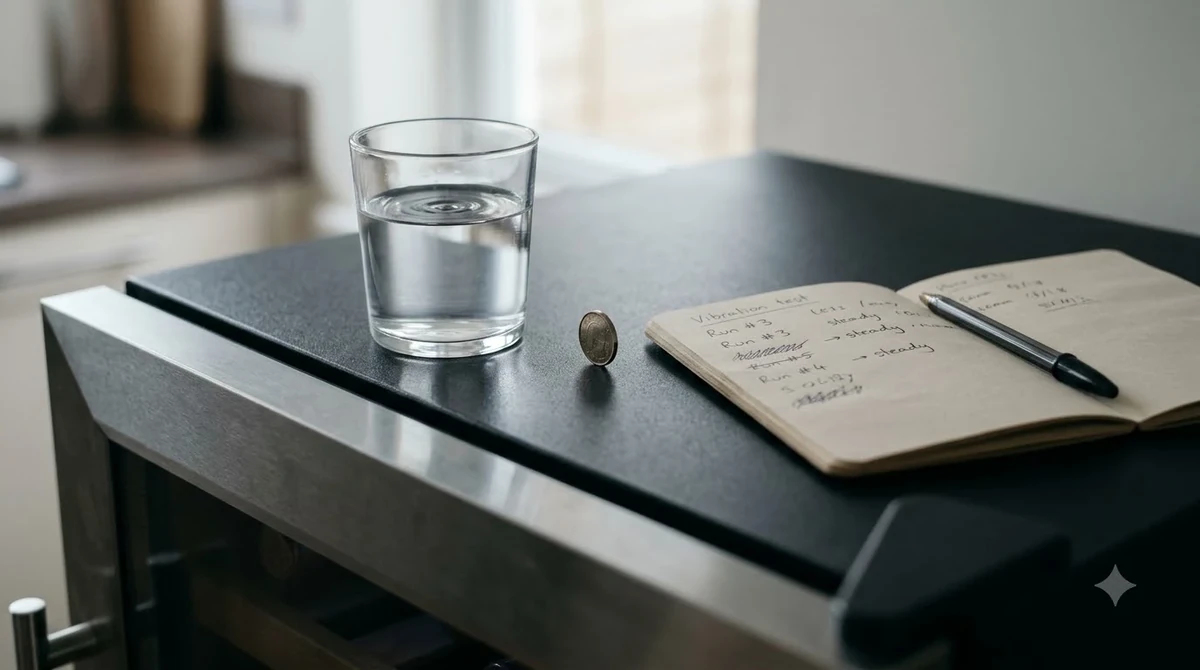
However, quiet operation should not be confused with completely silent operation. The unit has a cooling fan, and the instruction manual specifically includes fan noise and vibration among the issues to investigate during troubleshooting. Its actual sound level can depend on leveling, placement, ventilation, and the condition of the appliance.
For readers comparing different capacities, the wine refrigerator model reviews category can provide useful context about the additional features available in larger appliances. A compact eight-bottle unit should be evaluated according to its own intended purpose rather than expected to offer the same capabilities as a full-size cellar.
Common Complaints and Important Limitations
The biggest drawbacks are the single temperature zone, restricted bottle compatibility, and dependence on ambient temperature. These limitations are documented in the product information and instruction manual, even though a substantial verified owner-review sample for the exact model is unavailable.
It is particularly important to understand the advertised capacity before buying. Eight bottles is a maximum based on standard Bordeaux-size bottles, not a guarantee that eight bottles of every wine style will fit comfortably. Wider Burgundy bottles, Champagne bottles, and other unusual shapes can occupy more interior space.
Eight bottles does not mean eight bottles of every shape
Wine bottles are not manufactured to one universal exterior measurement. A conventional Bordeaux bottle has a relatively straight-sided shape, while many Burgundy bottles have broader shoulders and a wider body. Champagne bottles can also be larger than standard still-wine bottles.
The retailer specifically warns that the shelving is intended for standard Bordeaux-size bottles and that larger bottles may reduce the refrigerator’s capacity. Removing a shelf can create extra room, but doing so changes the number of bottles that can be stored simultaneously. A collection containing several sparkling wines or wide-bodied bottles may therefore make this refrigerator less practical than its headline capacity suggests.
Buyers should also consider bottle length. A long bottle can interfere with the door or shelf arrangement even if its width appears acceptable. This is particularly relevant for certain Riesling bottles and other wines sold in elongated formats.
A useful way to evaluate the appliance is to count the actual bottles that need storage rather than the total number of bottles in the household. If a collection consists of five standard Bordeaux bottles and three larger Champagne bottles, the advertised capacity should not be treated as a reliable promise that all eight will fit together.
One temperature zone limits flexibility
The refrigerator has a single controlled zone, so it cannot maintain one temperature for red wine and another for white wine at the same time. This is a meaningful limitation for households that regularly serve several styles during the same meal.
For general wine storage, approximately 55°F is a useful target. However, serving temperatures vary. Sparkling wines are generally served around 40°F to 50°F, light whites and rosé around 45°F to 50°F, and full-bodied whites around 50°F to 55°F. Light reds are commonly served around 55°F to 60°F, while fuller reds are generally served around 60°F to 65°F.
The Wine Enthusiast refrigerator’s 51°F minimum is warmer than the usual serving range for sparkling wine and some lighter whites. It can provide storage for those bottles, but it cannot replace a colder beverage refrigerator when immediate serving temperature is the priority.
A practical solution is to store different wine styles at one suitable general temperature and chill individual bottles separately before serving. For example, a bottle of sparkling wine can spend additional time in a conventional refrigerator or an ice bucket before guests arrive.
Ambient temperature affects cooling performance
The instruction manual recommends an operating environment between 51°F and 80°F. It also explains that the appliance’s maximum cooling capability is approximately 25°F below the surrounding temperature. These specifications are particularly important in warm kitchens, sunny rooms, and spaces without adequate air circulation.
For example, if the room becomes considerably warmer than the recommended operating environment, the refrigerator may struggle to maintain its selected setting. This is not necessarily evidence of a mechanical defect. It can reflect the limitations of the cooling technology under unsuitable conditions.
The manual also notes that temperature can vary according to bottle position and whether the interior light is switched on. Consequently, the displayed setting should not automatically be treated as proof that every bottle is at exactly the same temperature.
For buyers who want more independent control over red and white wine storage, a larger dual-zone refrigerator is a more appropriate choice. The convenience of a single small appliance does not compensate for the absence of separate temperature controls if simultaneous serving flexibility is essential.
Who Should Buy and Who Should Skip This Refrigerator
The Wine Enthusiast 8-bottle model makes the most sense for someone with a modest collection, limited installation space, and a preference for straightforward operation. It is less suitable for collectors who need substantial capacity, independent temperature zones, or consistent cooling in a warm environment.
Who should consider buying it?
Apartment residents with small collections: Someone who keeps between four and eight standard wine bottles at home may appreciate the compact design. The 17-inch width and 12-inch height make it easier to accommodate than a full-size cellar, although the 20-inch depth still needs careful measurement.
Casual wine drinkers: People who buy a few bottles for regular meals rather than collecting wine for extended aging can benefit from having dedicated temperature-controlled storage. The digital controls make everyday adjustments straightforward, and the single zone avoids unnecessary complexity.
Home entertainers with limited storage needs: A household that frequently serves dinner to two or four guests may find eight bottles adequate. It provides room for several wine choices without dedicating an entire cabinet or substantial floor area to refrigeration.
People who prefer a simple appearance: The smoked-glass door, stainless-steel trim, recessed handle, and interior lighting give the refrigerator a more finished appearance than a basic bottle rack. It can work as a small appliance in a dining area or home bar.
Who should skip it?
Serious collectors: Eight bottles is a small amount of storage for anyone who buys wine by the case or maintains a collection for several years. A larger refrigerator provides more room and reduces the need to constantly rotate bottles.
People who drink both reds and whites at different serving temperatures: One temperature zone cannot independently prepare two categories of wine. A dual-zone appliance is a better fit for households that frequently switch between chilled whites and reds.
Owners of Champagne and Burgundy-heavy collections: The standard Bordeaux bottle assumption is a significant restriction. Wider bottles can reduce capacity, while removing shelves sacrifices some of the original storage arrangement.
People planning an under-counter installation: The product is designed for freestanding use. The retailer explicitly warns against building it into cabinetry, recessing it underneath a counter, or placing it in an enclosed area.
Buyers living in consistently hot rooms: Thermoelectric cooling is dependent on ambient conditions. Someone who needs a refrigerator to operate reliably in a warm room should consider a model designed for a broader range of environmental conditions.
Before committing to a compact refrigerator, consider how the appliance fits into the rest of your wine routine. If most of your bottles are opened within a few weeks, small-capacity storage may be entirely adequate. If you regularly buy wine for aging or entertain larger groups, additional capacity is likely to become more valuable than a small footprint.
Tip: Measure your widest and longest wine bottles before purchasing. The advertised eight-bottle capacity assumes standard Bordeaux-size bottles, and larger bottles may require removing a shelf or reducing the number stored.
How It Compares to Alternative Wine Storage Options
The Wine Enthusiast 8-bottle refrigerator is best understood as an entry-level, single-zone storage appliance rather than a complete wine cellar. Comparing it with larger wine refrigerators and ordinary household refrigeration helps clarify where its compact design is useful and where it falls short.
Compared with a standard household refrigerator
A household refrigerator can chill wine to lower temperatures than the Wine Enthusiast model’s 51°F minimum. This is useful when preparing sparkling wine or crisp white wine for immediate service. However, ordinary food refrigerators are generally colder than the temperature commonly recommended for storing a mixed wine collection.
The Wine Enthusiast unit offers a dedicated wine environment with a narrower temperature range and space designed specifically for bottles. This arrangement is convenient for people who want their everyday wine stored separately from groceries, leftovers, and frequently accessed food items.
For example, a household refrigerator might be used to chill a bottle of Sauvignon Blanc to serving temperature before dinner, while the wine cooler keeps the remaining bottles at a more moderate temperature. The two appliances can serve different purposes rather than compete directly.
Compared with a wine rack
A traditional wine rack is simpler and does not require electricity, electronic controls, or a cooling system. It can also accommodate unusual bottle shapes if the rack has sufficiently wide openings. However, a rack does not control temperature, protect bottles from changing room conditions, or provide the enclosed environment of a dedicated refrigerator.
The Wine Enthusiast model is more suitable for a home where ambient temperatures vary significantly throughout the day. A wine rack may be perfectly adequate in a consistently cool storage area, but it offers no active temperature regulation.
For readers who are still learning about storage requirements, the distinction is important. Wine should generally be stored on its side near 55°F when it has a traditional cork closure. A suitable storage location matters more than the appearance of the rack or cabinet.
Compared with a larger single-zone wine refrigerator
A larger single-zone model offers the same basic concept of maintaining one temperature across the entire cabinet, but with more room for bottles. This is often a better choice for someone who expects a collection to grow beyond eight bottles.
Additional capacity can also make bottle organization easier. A collector may want separate spaces for everyday drinking wines, special-occasion bottles, and wines intended for a particular meal. A larger cabinet provides more flexibility without requiring separate temperature controls.
However, a larger refrigerator takes up more space and may require a dedicated floor area. The eight-bottle Wine Enthusiast model has a clear advantage when the available space is limited and the collection is genuinely small.
Compared with a dual-zone wine refrigerator
A dual-zone refrigerator is a stronger option for households that regularly store and serve both red and white wines. Independent compartments allow different temperature settings, so the user does not need to compromise between two different serving preferences.
For example, a household could maintain a cooler compartment for whites and sparkling wines and a warmer compartment for reds. The exact temperatures depend on whether the goal is storage or immediate serving, but separate controls make the arrangement more flexible.
The trade-off is that dual-zone appliances usually require more interior space and additional controls. Someone with only six or seven standard bottles may not need that complexity. The Wine Enthusiast model remains easier to justify when simplicity and compact dimensions are the main priorities.
For a household that mainly serves cocktails and occasional wine, a separate chilling arrangement may be more useful than a larger cellar. An Aperol Spritz recipe, for example, calls for chilled sparkling wine, while a bottle of red can remain stored at a moderate temperature until dinner.
Warranty, Installation, and Long-Term Care
Proper installation is particularly important for this small thermoelectric refrigerator because the manual identifies ventilation, leveling, and surrounding temperature as factors that influence operation. Buyers should also understand the documented warranty before purchasing an older or secondhand unit.
Installation and ventilation
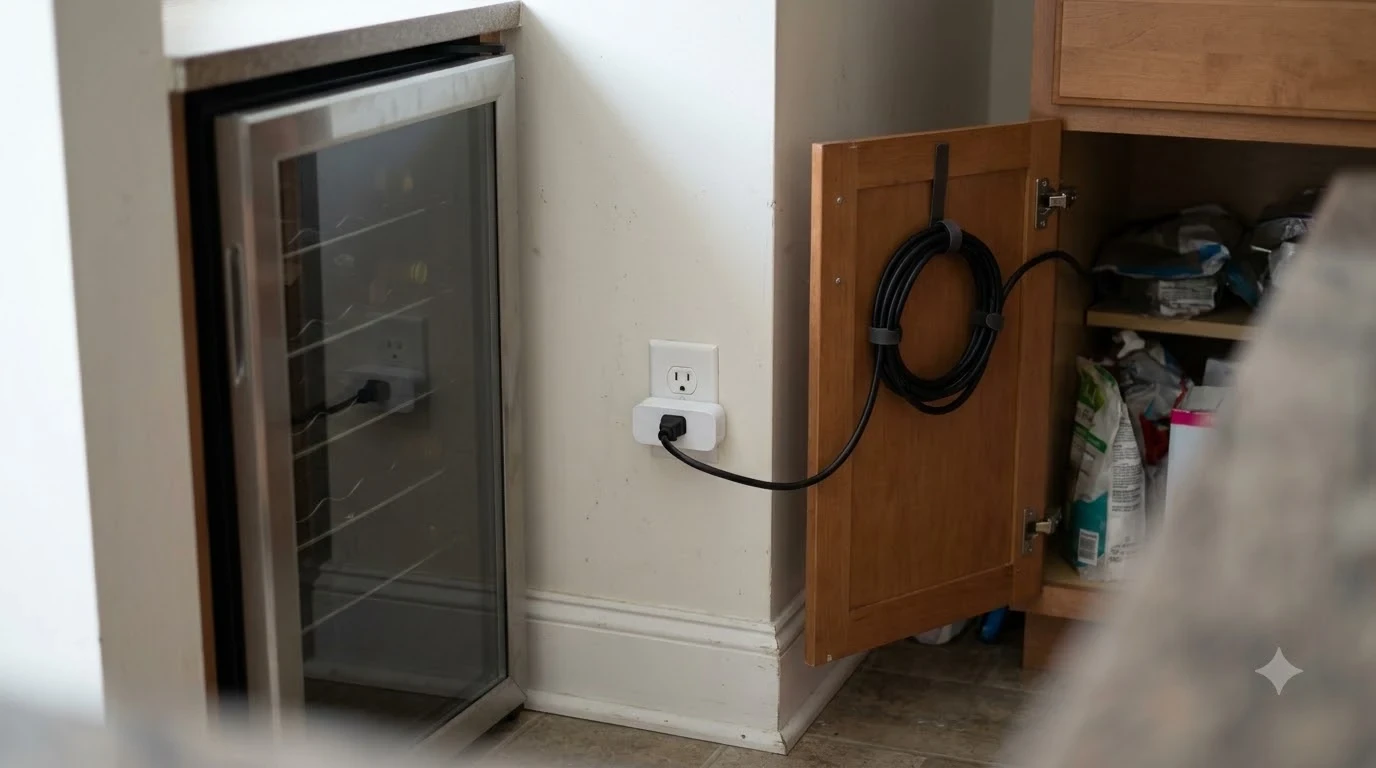
The refrigerator should be placed on a stable, level surface capable of supporting the appliance and its contents. Its freestanding design is not a suggestion to hide it inside a tight cabinet. WineStuff specifically states that the rear of the unit needs access to an open area for ventilation and that the appliance should not be installed underneath a counter or in an enclosed space.
Allow adequate room around the refrigerator and avoid positioning it immediately beside heat-producing equipment. A location near an oven, dishwasher, or direct sunlight can expose the unit to unnecessary heat and make temperature regulation more difficult.
The manual recommends leaving the appliance upright for approximately two hours before connecting it to power. This precaution helps reduce the possibility of cooling-system problems following transportation. After connecting it, allow the interior to stabilize before loading the complete collection.
Cleaning and routine maintenance
Cleaning is relatively straightforward. The instruction manual recommends disconnecting the power, removing all bottles, and cleaning the interior with warm water and baking soda. Its suggested cleaning solution uses approximately two tablespoons of baking soda for every quart of water.
The exterior can be cleaned with mild detergent and warm water. Avoid aggressive cleaning chemicals that could damage the finish, glass, or seals. The manual also identifies a removable water tray at the bottom of the appliance, which should be checked and cleaned periodically.
Pay attention to the door gasket because an imperfect seal can affect cooling performance. If the refrigerator appears warmer than expected, check that the door closes completely and that the seal is clean and properly positioned. Frequent opening can also introduce warmer air into the interior.
Understanding the warranty
The model-specific instruction manual describes a limited one-year warranty covering parts and labor from the date of receipt. It also explains that Wine Enthusiast or the manufacturer may arrange repair or replacement if the appliance does not operate within its specifications.
That information should not be treated as a guarantee that every secondhand purchase receives the same coverage. Warranty eligibility can depend on the original purchase documentation, retailer, ownership history, and applicable terms. Anyone purchasing a used refrigerator should request proof of purchase and verify the available service options before paying.
The Best Buy listing identifies model 272 03 09 as unavailable in new condition through that retailer. This makes it particularly important to distinguish between an older product listing, a used appliance, and a genuinely new unit being sold through another retailer. Availability and warranty support should be verified rather than assumed.
For a wider comparison of storage options, a dedicated review of chicken Marsala and wine pairing can also help illustrate why different wines may need different serving temperatures. A small single-zone refrigerator can keep a mixed collection organized, but individual bottles may still need additional preparation before a meal.
Frequently Asked Questions
How long should the Wine Enthusiast refrigerator run before adding wine?
The model-specific manual recommends allowing the appliance to stand upright for approximately two hours before connecting it to electricity. Once powered, give the cabinet time to cool and stabilize before filling it completely. The manual does not specify one universal stabilization period for every room temperature and loading condition.
Can the temperature display show Celsius instead of Fahrenheit?
Yes. The instruction manual explains that the temperature display can be switched between Fahrenheit and Celsius. Hold the two temperature adjustment buttons together for approximately three seconds to change the display format.
Does the refrigerator need a special electrical connection?
The manual specifies a standard grounded three-pin outlet and a 110V-to-115V, 60Hz electrical supply. It also recommends avoiding extension cords. Buyers should verify that their electrical installation matches the appliance’s requirements before connecting it.
Can the refrigerator be used to store food or other beverages?
The model-specific instruction manual advises against storing food because the interior may not become cold enough to prevent food spoilage. Its intended purpose is wine storage, not general-purpose food refrigeration. Using it outside that purpose can create temperature and storage problems.
What should you check if the refrigerator starts making unusual noises?
The troubleshooting instructions identify leveling and the cooling fan as possible areas to investigate. The refrigerator should sit securely on a level surface, with no loose items rattling inside the cabinet. Persistent unusual noise or a suspected electrical fault should be assessed by an appropriately qualified service professional.
The Wine Enthusiast 8-bottle wine refrigerator is a reasonable compact-storage option for households with a small collection of standard Bordeaux-size bottles and no need for separate temperature zones. Its digital controls, thermoelectric cooling, and modest dimensions are attractive, but bottle compatibility, ventilation, ambient temperature, and limited capacity deserve careful consideration. If those restrictions match your needs, the model can provide convenient dedicated wine storage; if your collection is larger or includes many oversized bottles, a larger wine refrigerator will be a more practical long-term choice.
More in Model Reviews
 Magic Chef 44 Bottle Wine Cooler Review for Flexible StorageUpdated Nov 21, 2026
 Whynter 164 Bottle Wine Cooler Review: Capacity, Features, and FitUpdated Nov 21, 2026
 Insignia NS WC16BK6 Review: Compact 16-Bottle Wine StorageUpdated Nov 21, 2026
 Wine Enthusiast Electric Blue Omega Review: Opening, Pouring, and Preserving Made EasierUpdated Nov 21, 2026
 Koolatron 20 Bottle Wine Cooler Review: Features, Fit, and PerformanceUpdated Nov 21, 2026
 NewAir AWC 330E Review for Home Wine StorageUpdated Nov 21, 2026