

We may earn a commission when you buy through links on this page, at no extra cost to you. Learn more.
The Vinotemp 28 bottle wine fridge is a compact wine-storage option for collectors who want organized bottle storage, compressor cooling, and, in the EL-WCU113-03 version, separate temperature zones for red and white wines. Its 28-bottle capacity, digital controls, sliding racks, and flexible installation options make it appealing for a home bar, kitchen, or small wine collection. However, buyers should distinguish this dual-zone model from other Vinotemp 28-bottle refrigerators, particularly the single-zone EL-28TS, before making a purchase.
A wine refrigerator needs to do more than look attractive behind a glass door. It should maintain appropriate storage conditions, accommodate the bottles you actually buy, and fit comfortably into the intended space. Vinotemp offers several compact coolers in this capacity category, and their differences matter. This review focuses primarily on the Connoisseur Series EL-WCU113-03, using its published specifications and manufacturer documentation to assess its features, practical advantages, limitations, and suitability for different wine collections.
Specs and Key Features
The Vinotemp EL-WCU113-03 combines a 28-bottle advertised capacity with dual-zone compressor cooling, digital temperature controls, and six sliding storage racks. Its strongest specification is the ability to maintain two different temperature settings within one compact cabinet, making it more versatile than a basic single-temperature wine refrigerator.
According to Vinotemp, the cooler accommodates 28 standard Bordeaux-style bottles. Its two temperature zones have an adjustable range of 40°F to 64°F, allowing owners to organize different wine styles according to their preferred storage or serving temperatures. A digital controller with a blue LED display provides access to the settings, while the glass door and interior lighting make the collection visible without opening the cabinet.
The cooling system uses compressor technology and includes automatic defrosting. This is an important distinction for shoppers comparing the appliance with small thermoelectric wine coolers. Compressor cooling is generally the more practical choice for maintaining refrigeration temperatures in ordinary household environments, although actual temperature stability depends on installation, ambient conditions, ventilation, and how frequently the door is opened.
| Specification | Vinotemp EL-WCU113-03 |
|---|---|
| Brand | Vinotemp |
| Series | Connoisseur |
| Model number | EL-WCU113-03 |
| Advertised capacity | 28 standard Bordeaux bottles |
| Temperature zones | 2 |
| Temperature range | 40°F–64°F |
| Cooling technology | Compressor |
| Defrost system | Automatic |
| Storage racks | 6 sliding black wire racks |
| Exterior | Black cabinet with stainless steel door trim |
| Lighting | Switchable interior light |
| Installation | Built-in or freestanding |
| Dimensions (W × D × H) | 14.75 × 22.5 × 32.25 inches |
| Weight | 73 pounds |
| Warranty | 2-year limited warranty |
The dimensions and weight above are listed by Costco for the EL-WCU113-03. These measurements are particularly useful when planning an under-counter installation because depth, door clearance, and the surrounding cabinetry can affect whether the refrigerator fits properly. The manufacturer also identifies built-in and freestanding installation as supported configurations.
One particularly useful feature is the six sliding racks. They provide access to individual bottles without requiring owners to remove several bottles from the cabinet. Vinotemp also identifies a designated bottom rack for larger bottles, an arrangement that adds some flexibility for collections containing different bottle formats.
The exterior design is relatively understated. A black cabinet, stainless steel accents, glass door, and blue LED display suit contemporary kitchens and home bars. The lighting can be switched on or off, so owners can choose whether to display their bottles continuously or keep the interior darker.
For the complete manufacturer’s feature description and available documentation, see the Vinotemp Connoisseur Series 28-bottle product page.
It is important not to transfer specifications between models simply because they share the same advertised capacity. The EL-28TS, for example, is a different Vinotemp refrigerator with one temperature zone, different dimensions, and a different cooling specification. The model number should therefore be confirmed before relying on any technical information.
What Owners Like
The EL-WCU113-03 has several features that make it attractive for everyday wine storage. Its combination of two temperature zones, a relatively narrow cabinet, compressor cooling, and sliding racks addresses several practical requirements for collectors who do not need a full-size wine cellar.
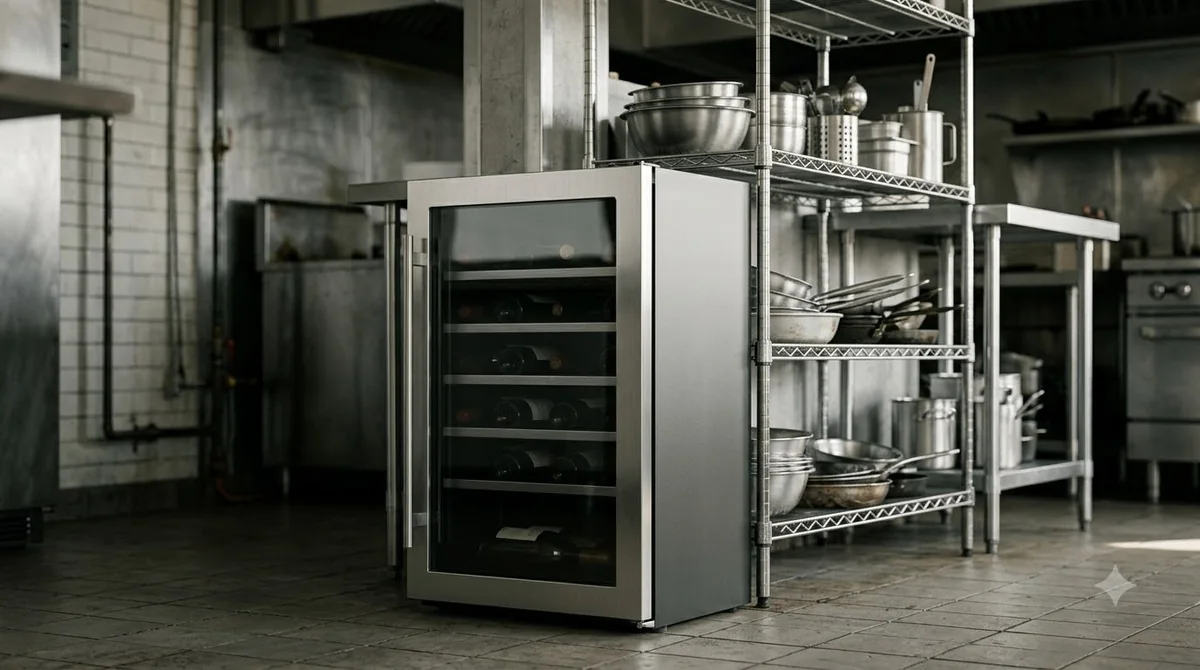
Separate temperature zones are the main advantage. A single-zone refrigerator requires every bottle to share the same general temperature setting. That arrangement can work well for a collection dominated by one wine style, but it becomes less convenient when the collection includes Cabernet Sauvignon, Pinot Noir, Chardonnay, Sauvignon Blanc, and sparkling wines.
With two independently adjustable zones, owners can organize reds and whites separately. For example, a collection could use one zone for lighter reds and another for white wines that are ready to serve. The ability to select temperatures within the published 40°F to 64°F range gives the appliance more flexibility than a single-zone model with one shared setting.
Consider the difference between a Cabernet Sauvignon and a Sauvignon Blanc. A full-bodied Cabernet is generally served around 60°F to 65°F, while a crisp Sauvignon Blanc is better served around 45°F to 50°F. Having separate compartments makes it easier to prepare both styles without repeatedly changing the refrigerator’s temperature setting.
The compressor cooling system is another advantage. Vinotemp specifies compressor technology and automatic defrosting for this model. Buyers who want a conventional refrigerated storage appliance may prefer this configuration over a thermoelectric cooler, particularly when the appliance will be used regularly rather than occasionally.
The six sliding racks also contribute to practical convenience. Wine storage can become frustrating when bottles are stacked tightly and the desired bottle is located behind several others. Sliding racks make individual bottles easier to reach and reduce the amount of rearranging needed when selecting a wine for dinner.
The designated lower storage area is another useful detail. Large-format bottles and some bottles with wider shoulders may not fit comfortably into conventional horizontal wine racks. Having a dedicated area for larger bottles provides some flexibility, although it does not mean that every Champagne, sparkling wine, or oversized bottle will fit.
The exterior design is suitable for visible installations. The glass door, stainless steel trim, black finish, and interior lighting give the refrigerator a finished appearance. In a kitchen, dining area, or home bar, this can make the appliance feel like part of the room rather than an ordinary utility refrigerator.
There is also a practical advantage to the relatively compact width. At 14.75 inches wide according to Costco, the EL-WCU113-03 occupies less horizontal space than many larger wine refrigerators. Its height of 32.25 inches may also suit certain under-counter layouts, although the actual opening and ventilation requirements must be verified before installation.
Finally, the two-year limited warranty provides a defined warranty period. This is a useful consideration for an appliance that contains a compressor, electronic controls, and moving rack components. Buyers should still review the applicable warranty terms, exclusions, registration requirements, and service procedures rather than assuming every repair or replacement component is automatically covered.
Common Complaints and Limitations
The most important limitation is the advertised 28-bottle capacity: it represents a standard bottle configuration rather than a guaranteed count for every wine collection. Buyers should also consider the single cabinet’s relatively specialized temperature range, installation requirements, and the practical differences between dual-zone and single-zone versions.
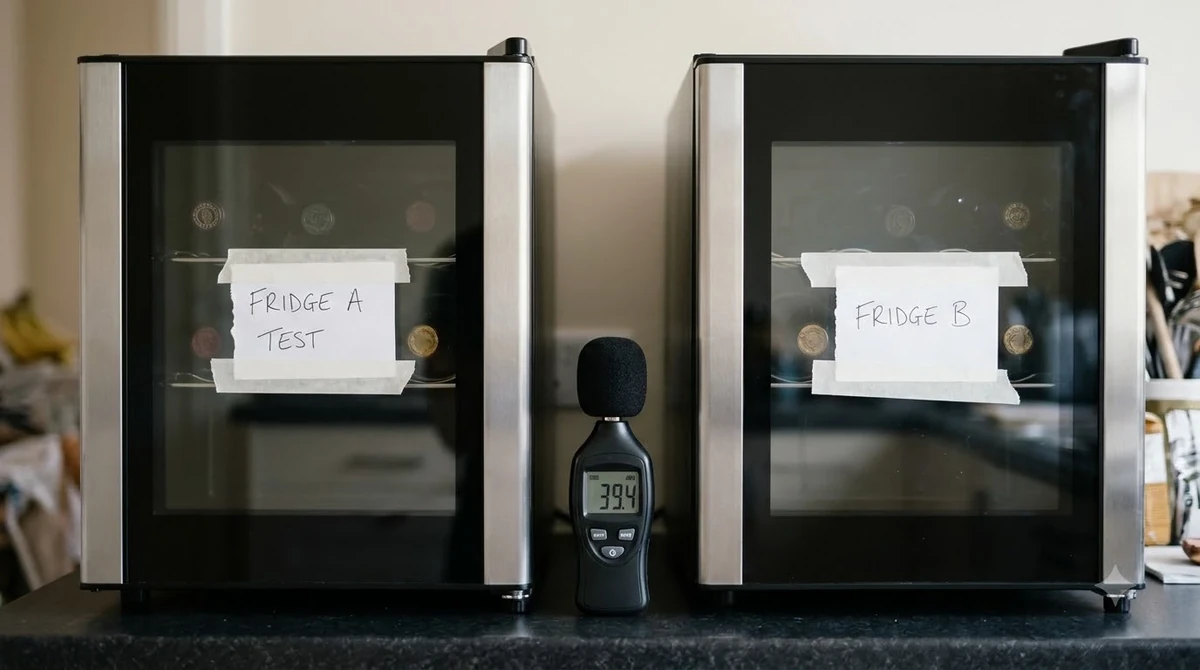
Actual bottle capacity can be lower than 28. Vinotemp’s capacity figure is based on standard Bordeaux-style bottles. This is a useful benchmark, but real collections are rarely made up entirely of identical bottles. Champagne bottles, sparkling wine bottles, Burgundy bottles, and some specialty wine bottles can have wider bodies or different shoulder shapes.
When those bottles occupy more room, the racks may no longer accommodate the advertised number. The lower storage area helps with larger formats, but owners should not assume that every bottle will fit in every rack position. Someone whose collection consists primarily of standard Bordeaux bottles will have a different experience from someone who regularly buys Champagne and wider Burgundy bottles.
The two-zone design still has physical limitations. Although the refrigerator offers separate settings, it does not provide four or five independent temperature environments. Owners who want dedicated storage for sparkling wine, delicate whites, full-bodied whites, light reds, and full-bodied reds may eventually want a larger cabinet or multiple appliances.
The published 40°F to 64°F operating range is another consideration. It covers many common wine-serving preferences, but it does not extend to every possible serving temperature. Full-bodied red wines, for example, are often served around 60°F to 65°F. The upper end of the refrigerator’s stated range is 64°F, so owners should account for the difference between storage and serving conditions.
Installation requires more planning than the dimensions alone suggest. A cabinet that measures 14.75 inches wide, 22.5 inches deep, and 32.25 inches high may appear easy to accommodate, but the actual installation opening also needs to account for the door, ventilation, electrical access, and surrounding cabinetry.
A built-in refrigerator must have the ventilation arrangement specified by its manufacturer. A freestanding installation has different practical considerations, including enough surrounding space for heat to dissipate and a convenient position for opening the door. The presence of a glass front does not make the appliance suitable for installation in a completely enclosed cabinet without checking the installation instructions.
The 73-pound weight also matters. This is not a lightweight countertop appliance. Moving it into a kitchen or home bar may require assistance, particularly if the installation involves a narrow hallway, stairs, or a tight cabinet opening. Buyers should plan delivery and placement before the refrigerator arrives.
Another limitation is the lack of a universally applicable performance guarantee for every room. A refrigerator installed next to an oven, in direct sunlight, or in a poorly ventilated cabinet may operate differently from one placed in a suitable indoor environment. Compressor cooling does not eliminate the importance of installation conditions.
Finally, the model’s advertised features should not be mistaken for independent evidence of temperature uniformity or noise performance. The manufacturer lists compressor cooling, automatic defrosting, and digital controls, but those features alone do not establish how consistently every rack maintains its target temperature in every household.
For buyers considering an older or used unit, condition deserves particular attention. A working display does not necessarily prove that the cabinet reaches or maintains its selected temperatures. Door seals, rack movement, cooling operation, and the condition of the compressor should all be checked before committing to a purchase.
Who Should Buy and Who Should Skip
The Vinotemp EL-WCU113-03 is best suited to households with a modest but varied wine collection that benefit from separate red and white storage. It is less suitable for large collectors, buyers who need extensive bottle-format flexibility, or anyone who wants a refrigerator with more than two independently controlled temperature areas.
Buyers with mixed red and white collections should give this model serious consideration. A household that keeps Cabernet Sauvignon, Merlot, Pinot Noir, Chardonnay, and Sauvignon Blanc can make good use of its dual-zone layout. The ability to maintain different settings is convenient for people who regularly serve different wine styles at dinner parties or family gatherings.
It can also suit people who want to keep a selection of bottles accessible without dedicating an entire room to wine storage. A 28-bottle refrigerator offers a practical middle ground between a small countertop cooler and a much larger wine cabinet. It can accommodate a rotating collection for weekend dinners, celebrations, and everyday meals.
Owners who entertain regularly may appreciate the sliding racks and glass door. Keeping bottles organized and visible makes it easier to select a wine without disturbing the rest of the collection. The separate zones also reduce the need to move bottles into another refrigerator whenever the household switches from red wine to white wine.
The model may also appeal to homeowners planning a compact built-in wine area. Its published width of 14.75 inches is relatively narrow, while the listed height of 32.25 inches can work with certain under-counter arrangements. The important condition is that the opening, door swing, and ventilation setup must meet the manufacturer’s requirements.
Collectors with larger or more specialized collections should consider alternatives. Someone who routinely stores more than 28 bottles will probably find the capacity restrictive. Even if the collection fits initially, a small refrigerator can become crowded as new purchases arrive, especially when larger-format bottles take up additional space.
People who buy Champagne frequently should also think carefully about rack compatibility. The stated capacity is based on standard Bordeaux-style bottles, so the advertised number may be unrealistic for a collection containing many wider sparkling wine bottles.
Another reason to skip this model is a preference for long-term cellar storage across a wider range of wines. Although Vinotemp describes the appliance as suitable for wine storage and service, buyers interested in long-term aging should prioritize stable storage conditions, suitable humidity management, protection from vibration, and consistent temperatures over decorative features alone.
The dual-zone layout is also unnecessary for some households. If nearly every bottle is red wine, or if the collection consists almost entirely of whites, a suitable single-zone refrigerator may provide the required storage without paying for separate temperature controls.
Buyers should also skip any version that cannot be verified by model number. Vinotemp’s 28-bottle range includes products with different cooling systems, temperature configurations, and cabinet dimensions. A listing that simply says 28-bottle wine fridge is not enough information to establish that the appliance is the EL-WCU113-03.
For additional context when comparing wine refrigerator categories, the wine cooler model reviews section can help narrow the choice by capacity and configuration. A useful comparison should consider more than the number of bottles advertised: temperature zones, compressor type, installation requirements, rack arrangement, and warranty coverage are equally important.
How It Compares to Alternatives
The most useful comparison is between the EL-WCU113-03 and other documented Vinotemp 28-bottle models. In particular, the EL-28TS illustrates why buyers should verify the exact product identification before comparing dimensions, temperature settings, and cooling arrangements.
The EL-WCU113-03 is a dual-zone compressor cooler with a published 40°F to 64°F temperature range. The EL-28TS is a separate single-zone model with an approximately 28-bottle capacity and a 39°F to 65°F control range. Both target compact home wine storage, but they serve different organizational needs.
| Comparison | EL-WCU113-03 | EL-28TS |
|---|---|---|
| Advertised capacity | 28 bottles | Approximately 28 bottles |
| Temperature zones | 2 | 1 |
| Temperature range | 40°F–64°F | 39°F–65°F |
| Cooling system | Compressor | Compressor |
| Dimensions | 14.75 × 22.5 × 32.25 inches | 16.9 × 18.9 × 32.6 inches |
| Weight | 73 pounds | 56.2 pounds |
| Power consumption | Not specified in the cited product listing | 0.85 kWh per 24 hours |
| Temperature arrangement | Two separate zones | One shared zone |
The specifications for the EL-28TS come from its owner’s manual, rather than the EL-WCU113-03 product listing. This distinction is important because the two models have different dimensions, weights, and cooling specifications. The EL-28TS should not be treated as a technical substitute for the Connoisseur Series model.
EL-WCU113-03 versus EL-28TS
For a mixed collection, the EL-WCU113-03 has the more useful temperature arrangement. Its two zones allow separate settings for red and white wines, while the EL-28TS uses one shared temperature setting. The dual-zone configuration is especially useful when a household regularly switches between different wine styles.
The EL-28TS may be more appropriate for someone who primarily stores one type of wine or wants a simpler single-zone setup. Its documented dimensions also make it a different option for people working with a particular cabinet opening. At 16.9 inches wide and 18.9 inches deep, it has a wider but shallower footprint than the EL-WCU113-03.
Weight is another difference. The EL-28TS is listed at 56.2 pounds, compared with 73 pounds for the EL-WCU113-03. That distinction may matter when planning delivery, moving the appliance, or positioning it in a confined installation area.
Dual-zone versus single-zone storage
The choice between these two configurations should depend on the collection rather than the advertised capacity. A 28-bottle single-zone refrigerator may be perfectly adequate for someone who primarily drinks one style of wine. A dual-zone refrigerator makes more sense when reds and whites need separate temperature settings.
Consider a collection containing several bottles of California Cabernet Sauvignon and Oregon Pinot Noir alongside New Zealand Sauvignon Blanc and California Chardonnay. Separate zones make it easier to organize these wines for different serving occasions. A single-zone appliance can still store them, but it cannot maintain two separate temperature settings at the same time.
For a wider comparison of wine styles and serving occasions, a chicken Marsala recipe is a useful example of a meal that can call for a medium-bodied red such as Pinot Noir or a softer Merlot. A separate zone makes it easier to keep those bottles available without setting the entire refrigerator for white wine.
What to compare before choosing
Beyond the zone count, compare the physical dimensions, door configuration, rack arrangement, and ventilation requirements. A refrigerator with an attractive specification sheet is not necessarily the right choice if its door cannot open properly in the intended space or its ventilation requirements cannot be met.
It is also useful to compare the warranty and support arrangements. The EL-WCU113-03 has a manufacturer-listed two-year limited warranty, but warranty coverage should be reviewed in full. Buyers should understand which components are covered, how service requests are handled, and whether the warranty applies to the specific seller and purchase channel.
For a household that wants a compact dual-zone appliance, the EL-WCU113-03 has a clear functional advantage over the documented single-zone EL-28TS. For a buyer who needs only one temperature setting, however, the simpler configuration may be sufficient.
Frequently Asked Questions
Is Vinotemp an American wine refrigerator brand?
Vinotemp identifies its business as based in Henderson, Nevada, and its manufacturer website provides a US customer-service telephone number. The company describes its background as designing wine storage products since 1985. These details establish its US business presence, but they should not be interpreted as proof that every component or appliance is manufactured in the United States.
Can the Vinotemp EL-WCU113-03 store beverages other than wine?
The EL-WCU113-03 is marketed as a wine refrigerator, and its published bottle arrangement is designed around wine bottles. Although its cooling system can produce refrigerator temperatures, the manufacturer does not establish a general beverage-storage capacity for this particular model. Buyers who need dedicated storage for cans, bottles of water, or other beverages should consider an appliance designed specifically for mixed beverage storage.
Does the EL-WCU113-03 require special electrical installation?
Costco identifies the EL-WCU113-03 as a household compressor refrigerator, but its product specification listing does not provide the complete electrical installation details. The exact electrical requirements should be obtained from the owner’s manual for this model before installation. A qualified installer can also confirm that the intended outlet and cabinet arrangement are appropriate.
Can a used EL-28TS manual be used to service the EL-WCU113-03?
No. The EL-28TS and EL-WCU113-03 are different models with different specifications and temperature configurations. An EL-28TS manual may help explain general wine-cooler operating principles, but it should not replace the correct service documentation for the dual-zone appliance. Model-specific replacement parts and troubleshooting procedures should be confirmed with Vinotemp.
Should a wine refrigerator be switched off when it is empty?
There is no universal requirement to switch off every wine refrigerator simply because it has no bottles inside. The appropriate procedure depends on whether the appliance will remain in regular use or be placed into extended storage. Before leaving a cooler unused, consult its specific manual for cleaning, unplugging, door-position, and restart instructions.
The Vinotemp EL-WCU113-03 is a compelling compact option for households that want 28-bottle storage with two temperature zones, compressor cooling, and flexible installation. Its biggest advantages are the separate temperature controls and practical sliding racks, while bottle-size restrictions and installation planning deserve careful consideration. Confirm the exact model number, available cabinet space, and warranty terms before buying so the refrigerator matches the collection rather than just the advertised bottle count.
More in Model Reviews
 Magic Chef 44 Bottle Wine Cooler Review for Flexible StorageUpdated Nov 21, 2026
 Whynter 164 Bottle Wine Cooler Review: Capacity, Features, and FitUpdated Nov 21, 2026
 Insignia NS WC16BK6 Review: Compact 16-Bottle Wine StorageUpdated Nov 21, 2026
 Wine Enthusiast Electric Blue Omega Review: Opening, Pouring, and Preserving Made EasierUpdated Nov 21, 2026
 Koolatron 20 Bottle Wine Cooler Review: Features, Fit, and PerformanceUpdated Nov 21, 2026
 NewAir AWC 330E Review for Home Wine StorageUpdated Nov 21, 2026