

We may earn a commission when you buy through links on this page, at no extra cost to you. Learn more.
The koolatron 18 bottle wine fridge WC18DZ is a compact, freestanding dual-zone cooler that holds up to 18 standard wine bottles and offers independent temperature settings from 46°F to 66°F in each zone. Its thermoelectric cooling, mirrored glass door, removable racks, and relatively small cabinet make it appealing for a modest home collection. Its limitations include sensitivity to room temperature, a narrow capacity for oversized bottles, and a need to verify the exact model number before ordering.
This review focuses on the WC18DZ, the 18-bottle model listed by Koolatron with a 9-bottle capacity in each zone. It is important to distinguish that appliance from the separately listed WC18MG, another Koolatron 18-bottle cooler with a different bottle arrangement, dimensions, and upper-zone temperature range. The differences matter when comparing product listings, planning cabinet space, and deciding whether the cooler suits the wines you buy. For more appliance reviews, see our model reviews and capacity guides.
WC18DZ Specs and Key Features
The WC18DZ combines an 18-bottle rating with two independently controlled compartments, a 46°F-to-66°F temperature range, and thermoelectric cooling. Its compact cabinet and freestanding design suit a home that needs separate spaces for different wine styles without installing a full-size cellar.
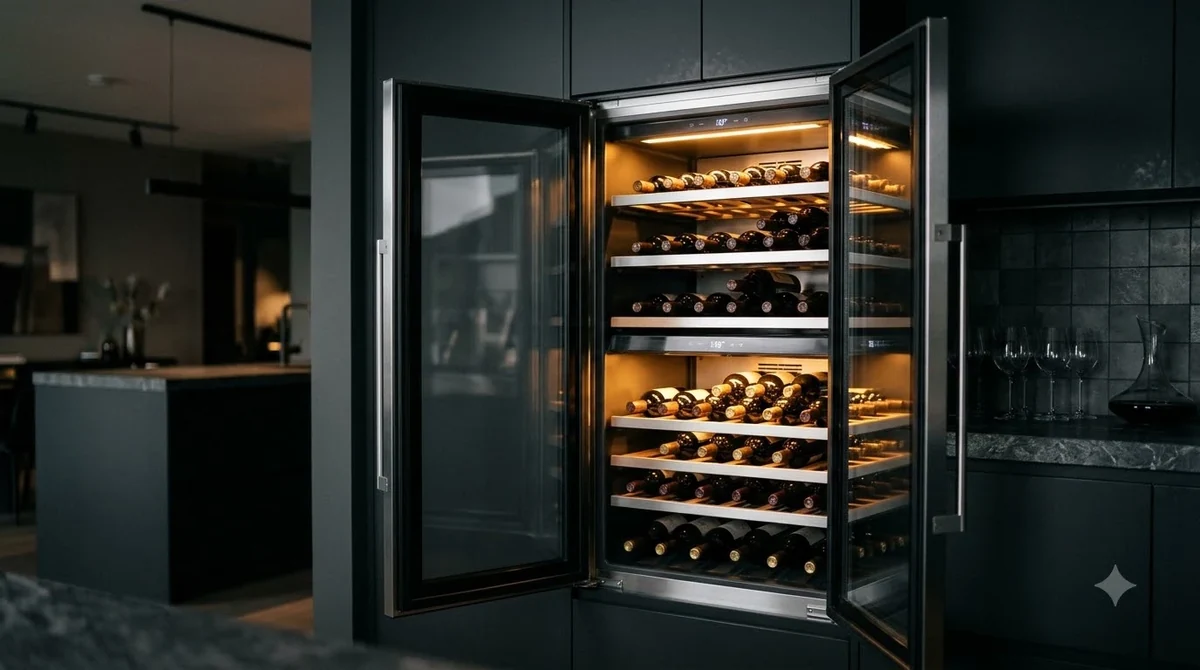
Koolatron lists the WC18DZ at 10 inches wide, 19.5 inches deep, and 25 inches high. Its stated volume is 1.7 cubic feet, or 48 liters, and the manufacturer describes it as a freestanding appliance that can also fit on a suitable countertop. The capacity is based on standard 750 ml bottles, rather than a promise that every combination of bottle shapes will fit in all 18 positions. That distinction matters for anyone who regularly buys sparkling wine, broad-shouldered bottles, or unusually shaped Burgundy bottles. A nominal capacity is a useful comparison point, but the actual arrangement of a mixed collection can reduce the number of bottles that fit comfortably.
| Specification | Koolatron WC18DZ |
|---|---|
| Model number | WC18DZ |
| Rated capacity | 18 standard 750 ml bottles |
| Upper-zone capacity | Up to 9 bottles |
| Lower-zone capacity | Up to 9 bottles |
| Temperature range | 46°F–66°F in each zone |
| Cooling technology | Thermoelectric |
| Cabinet dimensions | 10 x 19.5 x 25 inches |
| Listed capacity volume | 1.7 cubic feet (48 liters) |
| Electrical requirement | 110–120V AC, 60Hz, 100W |
| Installation | Freestanding |
| Door | Double-paned mirrored glass |
The separate upper and lower temperature controls are the main practical advantage. A household can set one compartment for a cooler selection of Sauvignon Blanc, Riesling, or sparkling wine and the other for reds such as Merlot or Cabernet Sauvignon. Both zones share the same advertised 46°F-to-66°F range, so this model offers flexibility rather than a fixed red-versus-white temperature split. External touchscreen controls let users adjust settings without opening the door, while the digital display makes it easier to monitor the compartments. The removable wire racks add some flexibility when a bottle does not fit the standard layout.
The manufacturer also specifies a mirrored double-paned glass door, soft LED interior lighting, adjustable leveling legs, and an airtight door seal. Its thermoelectric system is promoted as vibration-free, a useful feature for people who prefer not to keep bottles near a vibrating compressor. The manual’s electrical specifications are 100 watts on a 110–120V, 60Hz supply. It also gives a temperature tolerance of approximately ±3°C at a 72°F ambient temperature, which is a reminder that the displayed setting should not be mistaken for laboratory-level temperature precision under every room condition.
Tip: Let the empty WC18DZ run for approximately 3 hours before loading it. After adding bottles, allow up to 24 hours for the wine itself to reach the selected temperature, as directed in the instruction manual.
The Koolatron WC18DZ instruction manual is useful for checking the electrical requirements, spacing, and operating procedure before installation. Its guidance is more specific than a retailer listing’s basic measurements, particularly for the ventilation space required around the cabinet.
What Owners Like About the WC18 Family
Owner feedback for Koolatron’s 18-bottle wine cooler family points to three recurring attractions: a compact footprint, separate temperature compartments, and relatively quiet operation. These comments are useful context, but the available retailer reviews identify the earlier WC18 listing rather than consistently identifying the current WC18DZ model.
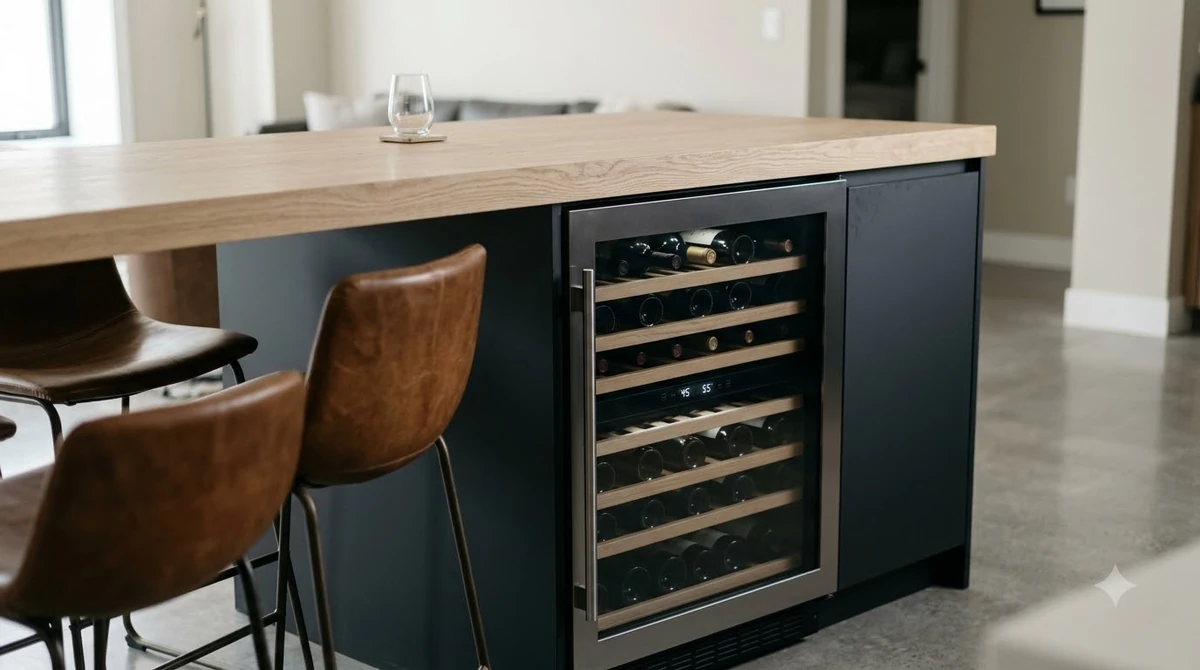
Several Home Depot reviewers describe the earlier WC18 as a useful choice for a home that cannot accommodate a wide under-counter wine refrigerator. One owner particularly liked the tall, narrow arrangement and the ability to place red and white wines in separate sections. The review describes an 8-bottle upper compartment and a 10-bottle lower compartment, which is not the same 9-and-9 arrangement specified for the WC18DZ. That distinction is important: the positive feedback helps explain the appeal of Koolatron’s compact dual-zone approach, but it should not be treated as a confirmation of every WC18DZ measurement or feature.
Quiet operation is another theme in the older WC18 feedback. One reviewer described hearing the fans but finding the unit quiet in normal use, while another praised the lack of noticeable vibration when the cooling system operated. That experience is consistent with the manufacturer’s description of thermoelectric cooling. The technology is attractive in a living room, dining area, or home bar where compressor noise could be distracting. Buyers should still expect some fan sound rather than assuming that the appliance is completely silent.
Ease of use also appears in owner comments. Reviewers mention being able to select different temperatures for the two sections, change the temperature display between Celsius and Fahrenheit, and adjust the lighting from the control panel. A recent purchaser of a similar Koolatron unit also described replacing an older one that had lasted a decade. Another owner reported that the replacement held its temperature more steadily than a previous cooler. These experiences are encouraging, though individual long-term reports cannot establish the expected service life of every WC18DZ.
Common Complaints and Limits
The main performance limitation is the relationship between a thermoelectric cooler and the temperature of the room around it. The WC18DZ manual specifies a preferred ambient range of 59°F to 77°F, while the temperature tolerance is given at a 72°F room temperature; a hot or unstable room can make the target more difficult to maintain.
This is relevant for households considering a garage, enclosed patio, sunny kitchen, or room that regularly becomes much warmer than the rest of the home. The WC18DZ is an indoor appliance, and Koolatron specifically warns that conditions outside the recommended ambient range can affect performance. Wine Enthusiast makes a similar distinction in its wine storage temperature guidance: thermoelectric coolers are generally quieter, while compressor models can be better suited to warmer environments around 80°F and above. A quiet cooler can be a good fit for a stable room without being the right option for every climate or location.
Retailer feedback also identifies some reliability and delivery concerns. A reviewer on Home Depot’s WC18 page described returning a unit on the delivery day after the dual-zone control button failed, with damage to the package and a dent on the cabinet. Another reviewer reported that a fan stopped working and the cooler stopped cooling after roughly seven months of use. These are individual reports, not a measured failure rate, and the WC18 listing does not establish that every comment concerns the current WC18DZ generation. Still, they provide a reasonable reason to inspect the unit promptly, test both zones, and keep the purchase paperwork.
Warranty coverage deserves particular attention. The downloadable WC18DZ manual specifies a 90-day warranty against defects in materials and workmanship and requires the original dated purchase receipt. Retail listings and warranty terms can differ by product generation or seller, so buyers should confirm the coverage supplied with the exact model they receive rather than assuming that an older WC18 review or another Koolatron listing establishes their protection. A limited manual warranty is a significant consideration for anyone expecting a refrigerator to operate for many years without service costs.
Who Should Buy the WC18DZ—and Who Should Skip It
The WC18DZ is best suited to someone with a modest collection of standard wine bottles who wants two temperature settings in a compact freestanding cabinet. It makes the most sense in a temperature-stable indoor room, with enough clearance around the appliance for ventilation and a collection that can fit its 18-bottle layout.
It can suit a household that regularly rotates between whites and reds. For example, the lower compartment can be set toward the cooler end for Sauvignon Blanc or sparkling wine, while the other compartment can hold a selection of reds closer to their serving temperatures. The manual recommends 46°F to 59°F for white wines and 59°F to 66°F for reds. Those are convenient service-oriented ranges, not a requirement to store every bottle at a separate temperature. Someone who prefers to keep an assortment ready for dinner may find the two compartments more useful than a single-zone cabinet. A bottle planned for a meal such as our chicken Marsala recipe can be staged alongside other dinner wines without sharing the same setting as every white in the collection.
The cooler can also help prepare bottles for entertaining. Its 46°F lower setting is within the general serving range for many sparkling wines, so a bottle of Prosecco can be kept ready before mixing an Aperol spritz. That does not mean the WC18DZ is a beverage center: it is designed around wine bottles, not cans, mixers, or a wide variety of drink containers. Buyers who want to chill beer, soft drinks, cocktail ingredients, and tall bottles together should consider a beverage refrigerator with shelves designed for those formats.
Skip the WC18DZ if the plan is to age a valuable collection over many years, install a cooler beneath a kitchen counter, or place the appliance in an unconditioned hot room. The manufacturer specifies freestanding use, not built-in installation. Wine Enthusiast recommends 53°F to 57°F for longer-term wine storage, and while the WC18DZ can be set within that range, its thermoelectric design and stated temperature tolerance make it more appropriate for convenient home storage and chilling than for buyers seeking a controlled cellar environment. A dedicated wine cellar with more precise environmental control is a better match for a serious aging collection.
How the WC18DZ Compares to Other Koolatron Options
The most important comparison is with Koolatron’s other 18-bottle slim model, the WC18MG. Both carry an 18-bottle rating and offer dual-zone cooling, but they are not identical appliances. The WC18DZ is listed at 10 x 19.5 x 25 inches with 9 bottles per zone, whereas the WC18MG is listed at 10 x 22.5 x 38 inches with 8 bottles in the upper zone and 10 in the lower zone.
Their temperature settings also differ. Koolatron lists the WC18DZ with a 46°F-to-66°F range in both compartments. For the WC18MG, the manufacturer specifies an upper-zone range of 54°F to 66°F and a lower-zone range of 46°F to 66°F. That difference could influence which one suits a collection: the WC18DZ provides the same published adjustment range in both sections, while the WC18MG uses a warmer minimum setting in its upper section. A product listing that simply says “Koolatron 18-bottle dual-zone wine cooler” is not enough to identify which configuration is being sold.
Buyers comparing these two models should start with the SKU, then check the exact cabinet dimensions and bottle arrangement on the listing. The WC18DZ’s 25-inch listed height may make it easier to place on a suitable counter or in a compact corner, while the WC18MG’s 38-inch height creates a taller, narrower storage format. The WC18MG page also specifies seven removable wire racks, which may appeal to someone looking for more flexibility with different bottle shapes. Those are practical layout differences, not proof that one model cools more accurately or lasts longer than the other.
There is also a broader choice between thermoelectric wine coolers and compressor-powered units. Thermoelectric operation is attractive where quietness and low vibration are priorities, but a compressor cooler is usually a more sensible comparison for a room that gets particularly warm or for someone who needs stronger cooling performance in difficult ambient conditions. A single-zone wine cabinet may be a better choice for a collection stored at one consistent cellar temperature rather than divided into ready-to-serve categories. The right alternative depends on room conditions, the bottle shapes in the collection, and whether the priority is short-term access or longer-term wine storage.
Overall, the WC18DZ makes the clearest case for buyers who specifically want a small 18-bottle cabinet with two equally adjustable zones. The WC18MG is the related option to examine for a taller cabinet and an 8-and-10 bottle split. If neither model matches the space or temperature requirements, moving to a compressor-based wine refrigerator is more sensible than buying an 18-bottle model and expecting it to perform like a larger cellar.
Frequently Asked Questions
These additional operating details help clarify the WC18DZ’s setup and everyday controls. The answers below focus on the manual’s instructions rather than assumptions based on another Koolatron model.
Does the WC18DZ display the selected temperature or the actual temperature?
The manual explains that the numbers flash while a temperature is being adjusted. Once the display stops flashing, it shows the current internal temperature rather than simply repeating the selected target. This distinction helps owners understand why the displayed number can differ from the setting immediately after an adjustment.
How do you switch the temperature display from Celsius to Fahrenheit?
Use the right touch control on the WC18DZ panel and hold it for 4 seconds to change between Celsius and Fahrenheit. A quick touch of the same control operates the interior light. Remembering the difference between a brief press and a longer hold makes routine adjustments easier.
Can the WC18DZ shelves be cleaned separately?
Yes. The manual instructs owners to wash the shelves with a mild detergent solution. For the interior surfaces, it specifies warm water mixed with approximately 2 tablespoons of baking soda per 1 quart of water, followed by rinsing and drying.
What should you do if the power goes out?
The manual says that a power failure lasting a few hours should not affect the appliance temperature if the door is opened as little as possible. For a longer interruption, take steps to protect the bottles rather than repeatedly opening the cabinet to check the interior. Keeping the door closed helps limit temperature changes while power is unavailable.
Should the cooler be left running during a short vacation?
The manual recommends leaving the appliance operating during a short vacation of less than 3 weeks. For a longer period without use, it directs owners to remove the bottles, switch off the cooler, clean and dry the interior, and leave the door slightly open. This helps prevent unwanted moisture and mold growth inside an unused appliance.
The Koolatron WC18DZ is a practical option for a compact indoor wine station when quiet dual-zone operation matters more than cellar-level environmental control. Its 18-bottle capacity, removable racks, and equal temperature ranges make it flexible for a small rotating collection, but the room conditions, installation clearances, exact SKU, and warranty should all be checked before purchase. Buyers who need warmer-room performance or long-term aging conditions should compare a compressor-based wine refrigerator instead.
More in Model Reviews
 Magic Chef 44 Bottle Wine Cooler Review for Flexible StorageUpdated Nov 21, 2026
 Whynter 164 Bottle Wine Cooler Review: Capacity, Features, and FitUpdated Nov 21, 2026
 Insignia NS WC16BK6 Review: Compact 16-Bottle Wine StorageUpdated Nov 21, 2026
 Wine Enthusiast Electric Blue Omega Review: Opening, Pouring, and Preserving Made EasierUpdated Nov 21, 2026
 Koolatron 20 Bottle Wine Cooler Review: Features, Fit, and PerformanceUpdated Nov 21, 2026
 NewAir AWC 330E Review for Home Wine StorageUpdated Nov 21, 2026