

We may earn a commission when you buy through links on this page, at no extra cost to you. Learn more.
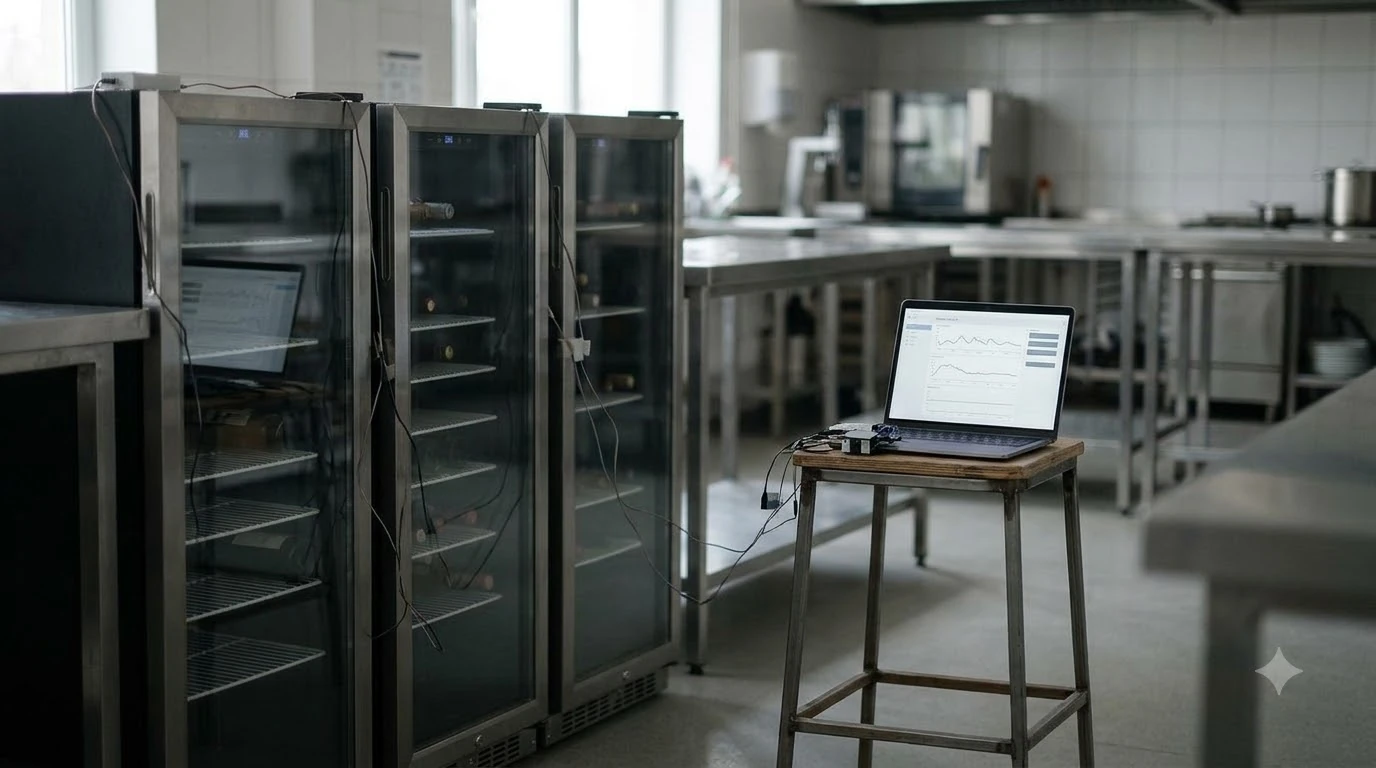
The danby 36 bottle wine fridge is a compact freestanding cooler for households that want one chilled storage space for up to 36 standard 750 ml bottles. The DWC036A1BSSDB-6 offers a 43°F to 57°F temperature range, blue LED lighting, a reversible door, and a stainless-steel finish, but its rear mechanical dial does not provide precise digital temperature selection. It is a practical convenience fridge, not a dual-zone cabinet or built-in cellar.
Danby’s 36-bottle model suits a regular rotation of whites, rosé, sparkling wine, and reds that can share one holding temperature. Its 17.5-inch width works in a kitchen, dining room, or home bar, but ventilation clearance means it needs more room than the cabinet dimensions suggest. This review focuses on the stainless-steel DWC036A1BSSDB-6.
Specs and Key Features
The DWC036A1BSSDB-6 is a freestanding wine cooler with 3.3 cubic feet of capacity and a thermostat range from 43°F to 57°F. Its strengths are its practical bottle count, reversible door, and presentation lighting; its main limitation is one shared temperature setting.
| Specification | Danby DWC036A1BSSDB-6 |
|---|---|
| Rated bottle capacity | Up to 36 standard 750 ml bottles |
| Interior volume | 3.3 cubic feet |
| Temperature range | 43°F–57°F (6°C–14°C) |
| Exterior dimensions | 17.5 in. W × 19.7 in. D × 33.19 in. H |
| Product weight | 59.2 lb. |
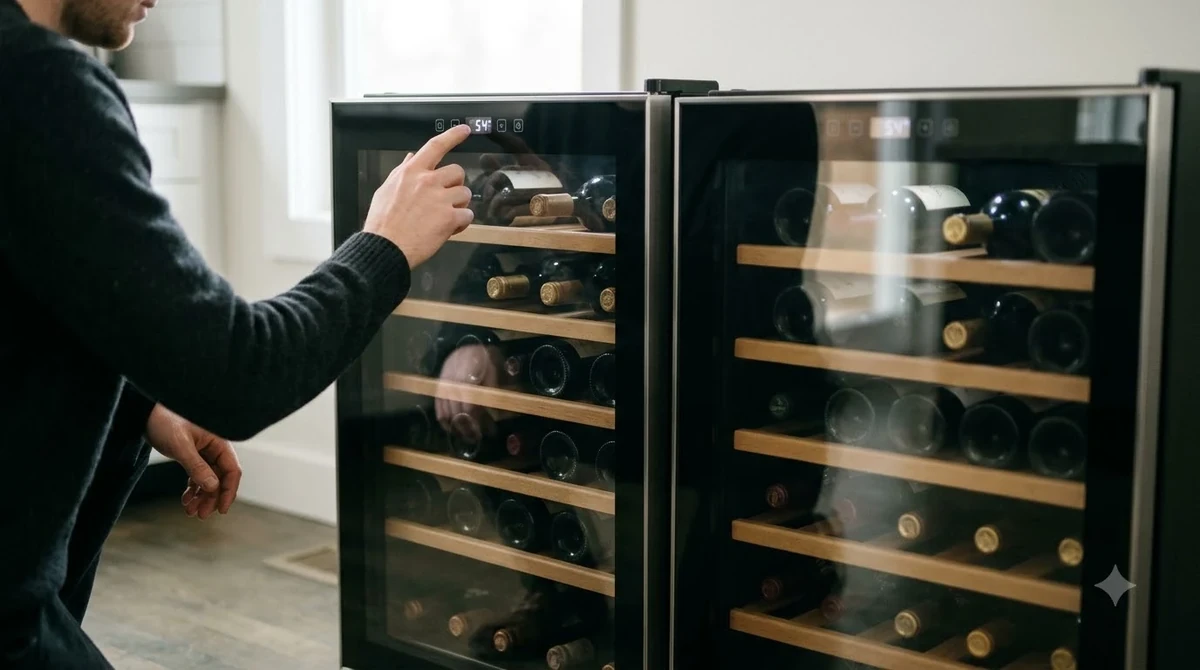
| Temperature control | Mechanical dial on the rear of the appliance |
| Door and lighting | Reversible door; tempered glass; blue LED interior light |
| Warranty | 12 months on parts and labor, with in-home service |
| Installation | Freestanding; 5 in. clearance at the back, sides, and top |
Danby rates capacity around standard 750 ml wine bottles. The owner’s manual gives a loading pattern of five bottles on each of the first six shelves, then three bottles on each of the two lower shelves. That totals 36, but it also shows why bottle shape matters: a wide-shouldered bottle or an unusually broad sparkling bottle can use space that a narrow Bordeaux bottle would leave available. Treat 36 as a best-case count, not a guarantee for every assortment.
The cabinet measures 17.5 inches wide, 19.7 inches deep, and just over 33 inches high. Danby’s manual calls for 5 inches of clearance at the back, sides, and top so ventilation openings remain unobstructed. Measure the full installation area, not just the cabinet footprint, and use a firm, level floor; the empty appliance weighs 59.2 pounds. The reversible hinge helps when the cooler sits beside a wall or counter, while the tempered-glass door is designed to help protect bottles from ultraviolet light. Blue LEDs illuminate the interior without an incandescent bulb, and Danby lists a 12-month parts-and-labor warranty with in-home service. For cleaning or rearranging, the manual says to lift the rear of a shelf, slide it out, then reseat it on its support brackets and push inward until it locks. See the manufacturer’s DWC036A1BSSDB-6 specifications for the full product details.
What Owners Like
Owner feedback on this stainless-steel model most often points to a useful balance of capacity, compact dimensions, appearance, and everyday cooling. The positive comments fit its role as a convenient wine and beverage refrigerator rather than a precision-controlled cellar.
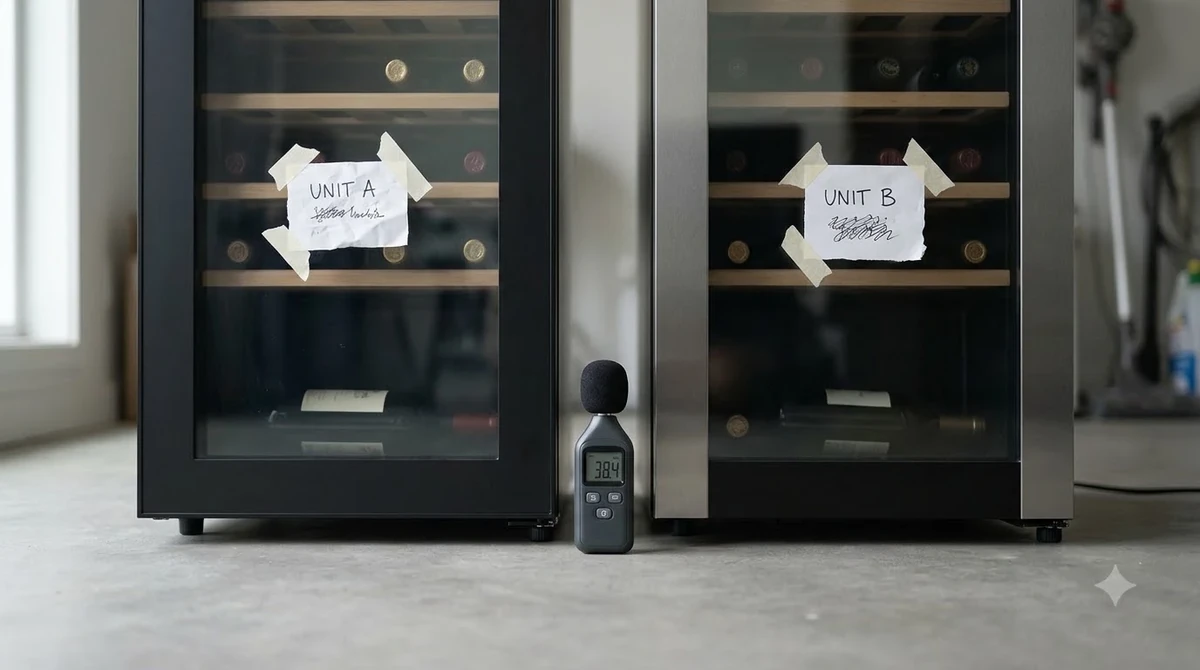
Several Lowe’s customer comments describe the unit as quiet, attractive, and surprisingly roomy for its footprint. Buyers mention using it to free space in the main kitchen refrigerator, keep favorite bottles close at hand, and fit a useful amount of wine into a dining or living area. That is a real advantage for households that open wine regularly but do not want bottles occupying most of the kitchen refrigerator.
The blue interior light and glass door also receive favorable mentions, as does the ability to arrange bottles across the cabinet. The reversible door is helpful when a wall or nearby cabinet determines the opening direction. Some owners report satisfactory cooling after finding a dial position that suits their room and bottle load. Danby’s manual notes that internal temperature changes with room temperature, the quantity stored, and how often the door is opened, so the cabinet needs time to settle after installation or a large load. Buyers who are willing to check the actual cabinet temperature will be more comfortable with this simple design.
The 36-bottle rating can cover a useful everyday mix: whites for chilled service, rosé, sparkling wine, and reds that can warm after removal. It can also keep a few bottles out of the main refrigerator and give the home bar a more organized look. The shelf layout is intended for horizontal wine storage, so owners primarily storing wine are likely to get more from the design than people who want a general-purpose drinks cabinet.
Common Complaints
The main trade-off is temperature adjustment: Danby uses a mechanical control knob on the back, not a front-facing digital thermostat with a precise degree setting. Customer comments are mixed, with some owners satisfied after experimenting and others frustrated by the effort required to reach a preferred temperature.
On Lowe’s review page for this exact model, some owners say the dial takes time to set or makes the cabinet colder than expected at certain positions. One customer describes needing a setting near the upper end to reach a desired temperature, while another reports an unexpectedly cold result from a relatively high dial position. These reports do not show that every unit behaves identically, but they illustrate the limitation of a graduated dial: it indicates warmer and colder settings rather than a temperature that can be entered and repeated. The manual also says cabinet temperature varies with room conditions, the amount of wine inside, and door-opening frequency. For a steadier result, avoid frequent large adjustments and allow the cooler to settle after adding bottles.
Other complaints are less common but worth weighing. Lowe’s reviewers mention ice building up over time, a door that feels loose or slightly out of square, and difficulty standing cans on the wire shelving. These are individual experiences, not guaranteed faults, but they make delivery inspection sensible: check door alignment, confirm the seal meets the cabinet evenly, and make sure the unit is level. Some feedback also describes the cooler as quiet while other comments about the model family mention compressor or fan noise. Normal cooling appliances cycle, but shoppers who expect absolute silence may prefer to place it in a kitchen, dining area, or dedicated bar rather than beside a bed or in a quiet office.
Who Should Buy and Who Should Skip
This Danby suits households that want a dedicated place for up to 36 standard bottles and do not need separate temperature zones. It is less suitable for collectors who want exact digital settings, a full complement of oversized bottles, or an appliance designed to sit beneath a counter.
Consider it if you regularly chill Sauvignon Blanc, Riesling, rosé, Prosecco, and other wines intended for near-term drinking. The 43°F lower limit can cool whites and sparkling bottles, while the upper end provides a cool holding temperature for reds that can warm after removal. A white wine served around 45°F–50°F can be poured soon after leaving the cabinet; a full-bodied red is generally better closer to 60°F–65°F and may need time outside the cooler. It also suits a casual collection built around weekly meals, with a few shelves of everyday bottles and sparkling options for guests.
Skip it if you want two independently controlled zones: red and white wine share one temperature throughout the cabinet. You can group bottles by type and plan ahead before serving, but you cannot keep one section colder than another. The wire racks are also designed around horizontal wine bottles, so upright cans may be awkward and broad sparkling or unusually shaped bottles can reduce the usable count below 36. Danby’s capacity assumes standard 750 ml bottles, making that distinction important if your collection is mostly Champagne or wide-shouldered glass. Shoppers comparing other capacities and configurations can browse the site’s wine and appliance model reviews.
It is also the wrong choice for a true built-in installation. Danby identifies this as a freestanding appliance, and the owner’s manual says it is not intended to be built into a cabinet or counter. The manual calls for 5 inches of clearance around the back, sides, and top; enclosing those areas can restrict airflow. A garage, porch, or outdoor kitchen is not a substitute for a temperature-controlled indoor room, either, because Danby warns against installing the cooler in outdoor or unconditioned spaces. Those constraints make it important to check the spot before delivery, rather than assuming a standard under-counter opening will work.
How It Compares to Alternatives
The Danby’s main argument is a straightforward 36-bottle format in a relatively narrow freestanding cabinet. Its compromises are easier to see beside a dual-zone refrigerator, a small countertop cooler, or a flexible beverage cabinet built for cans and mixers.
A dual-zone unit is the better fit for a collection that regularly includes reds and whites at different ready-to-drink temperatures. It can assign separate settings to separate compartments, reducing the need to plan ahead for each bottle. The Danby instead offers one 43°F–57°F range for the whole interior. That may be enough for a household that mostly stores whites and sparkling wine, or keeps reds cool and lets them warm before pouring. It is limiting for a home bar that wants white wine ready straight from the fridge and full-bodied red ready at a warmer temperature at the same time.
A small countertop cooler takes less floor space but cannot match the Danby’s rated capacity. The Danby’s 17.5-inch width makes it a relatively compact floor-standing choice, but its 33.19-inch height and 5-inch ventilation clearances still require planning. A flexible beverage refrigerator may be better if cans, tall bottles, mixers, and wine share the same space: flat or adjustable shelves make upright drinks easier to arrange than wine-oriented wire racks. For long-term collectors, compare temperature control, zone separation, bottle spacing, and the appliance’s stated purpose rather than capacity alone. This model offers a defined cooling range, UV-protective glass, and a one-year parts-and-labor warranty, but no digital readout or dual-zone system.
The stainless-steel finish, glass door, and blue LED suit a visible kitchen or dining room where the bottles can form part of the room’s look. The cooler can keep Prosecco chilled for an Aperol Spritz recipe or another wine-based cocktail, but that display style will not appeal to everyone. Choose a dual-zone fridge for separate red and white settings, a beverage center for upright cans and mixers, or a countertop cooler for a small collection. Choose the Danby when a 36-bottle rating, narrow cabinet, simple dial, and visible display match how you use wine.
Frequently Asked Questions
These practical details can help avoid installation and maintenance surprises after the DWC036A1BSSDB-6 arrives. Danby’s owner’s manual covers transport, cleaning, power, and defrosting steps that are easy to overlook when comparing product listings.
How long should the Danby wine fridge stand before it is plugged in?
Danby advises leaving the appliance upright for approximately 6 hours before connecting it to power after transport. This reduces the chance of a cooling-system problem caused by handling. The same waiting period applies if the cabinet has been laid on its back or side during a move.
Does the DWC036A1BSSDB-6 need manual defrosting?
No. The owner’s manual describes an automatic defrost function, so routine manual defrosting is not required. Defrost water is directed to a drip tray above the compressor, where heat from the compressor helps it evaporate.
What is the safest way to clean the inside?
Unplug the appliance before cleaning. Danby recommends a soft cloth with either mild detergent or a solution made from 1 tablespoon of baking soda in 1 quart of water. Avoid ammonia-based, alcohol-based, abrasive, or sharp cleaning products because they can damage the cabinet finish or interior surfaces.
Can the wine cooler run from an extension cord?
Danby says not to use an extension cord and calls for a properly grounded three-prong outlet. The manual also says not to share the wall outlet with another appliance. Plan for a suitable outlet near the installation location before moving the loaded cabinet into place.
What should I do after a power interruption?
Keep the door closed as much as possible during a short outage so the cabinet loses less cold air. If operation has been interrupted, the manual says to wait 3 to 5 minutes before attempting to restart the appliance. For a longer outage, move the wine to another suitable cool storage area if needed.
The Danby DWC036A1BSSDB-6 is a practical choice for a compact, visible, everyday wine collection, provided its single zone and rear dial suit your habits. Measure the ventilated space, allow for bottle-shape limits, and use a separate thermometer if you need a clearer picture of the cabinet temperature before deciding whether this 36-bottle cooler fits your home.
More in Model Reviews
 Magic Chef 44 Bottle Wine Cooler Review for Flexible StorageUpdated Nov 21, 2026
 Whynter 164 Bottle Wine Cooler Review: Capacity, Features, and FitUpdated Nov 21, 2026
 Insignia NS WC16BK6 Review: Compact 16-Bottle Wine StorageUpdated Nov 21, 2026
 Wine Enthusiast Electric Blue Omega Review: Opening, Pouring, and Preserving Made EasierUpdated Nov 21, 2026
 Koolatron 20 Bottle Wine Cooler Review: Features, Fit, and PerformanceUpdated Nov 21, 2026
 NewAir AWC 330E Review for Home Wine StorageUpdated Nov 21, 2026