

We may earn a commission when you buy through links on this page, at no extra cost to you. Learn more.
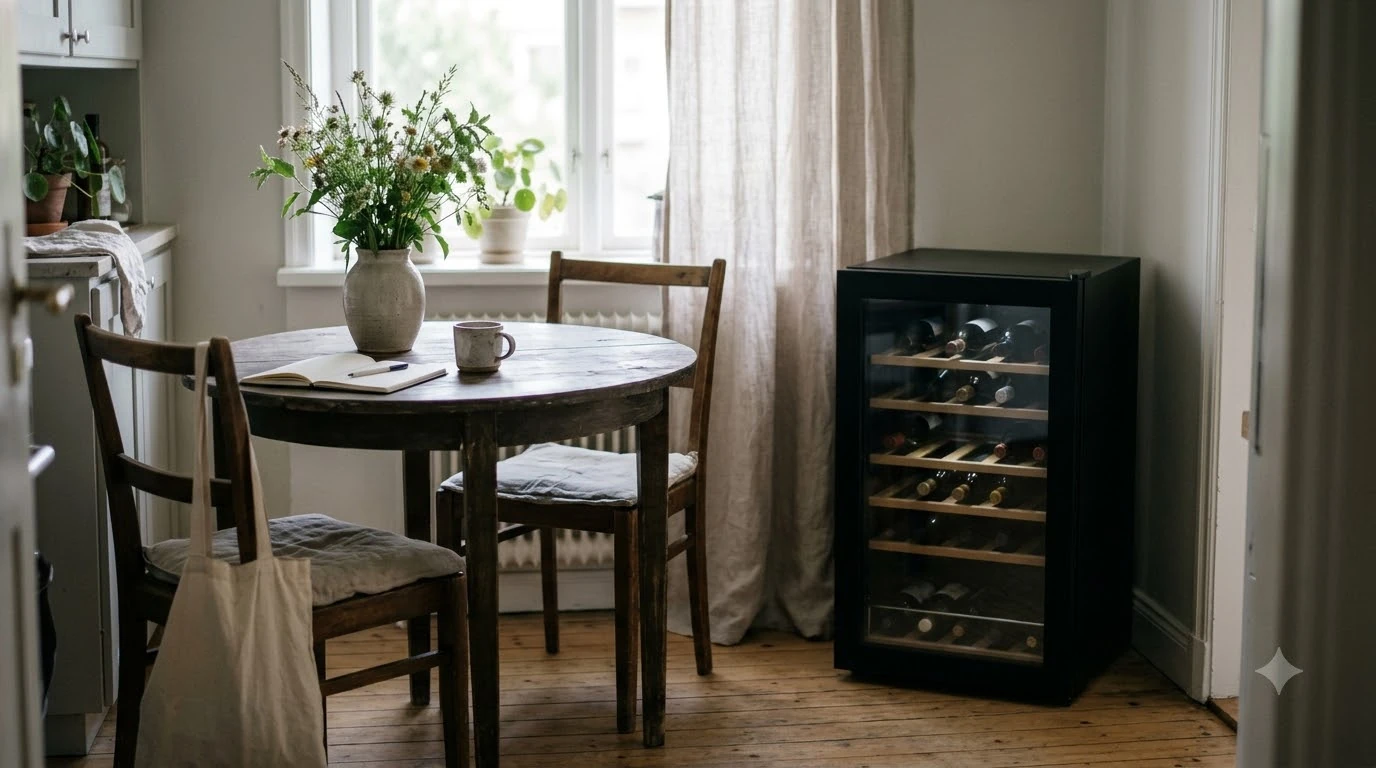
The haier 6 bottle wine fridge is a compact countertop wine cellar designed for storing up to six bottles, with adjustable temperatures from 46°F to 66°F and quiet thermoelectric cooling. The Haier HVTEC06ABS combines two chrome storage racks, a digital LED thermostat, smoked-glass styling, and soft interior lighting. It is particularly appealing for small kitchens, apartments, and occasional wine drinkers, although its limited capacity and discontinued status deserve consideration before purchasing.
The Haier six-bottle wine cellar takes a straightforward approach to home wine storage. Rather than providing the capacity or multiple temperature zones of a full-size wine refrigerator, it concentrates on keeping a small selection of bottles organized and chilled in a relatively compact appliance. Its thermoelectric cooling system, countertop-friendly height, and simple temperature adjustment make it an interesting option for people who want dedicated wine storage without committing to a large refrigerator. However, prospective buyers should distinguish between the original HVTEC06ABS and other Haier six-bottle models, particularly when shopping through secondhand marketplaces.
Specs and Key Features of the Haier HVTEC06ABS
The Haier HVTEC06ABS is a freestanding six-bottle wine cellar with a single temperature zone, digital controls, and thermoelectric cooling. Its strongest specifications are its adjustable 46°F to 66°F range, two full-width chrome racks, and compact exterior dimensions.
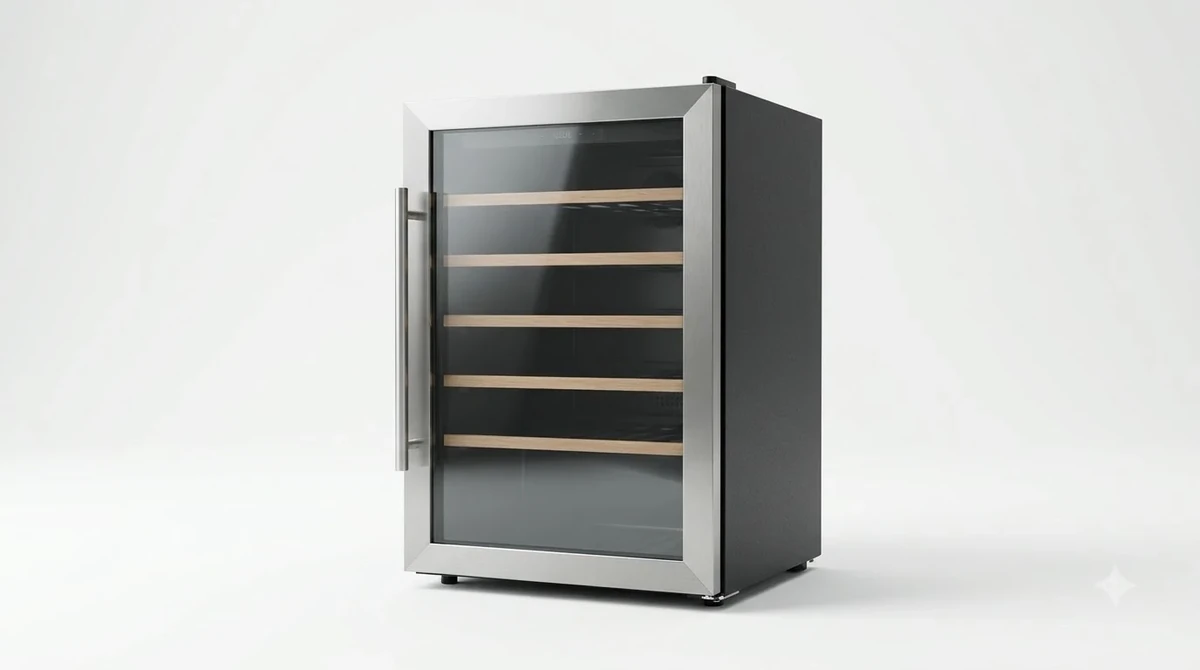
Haier designed this model around convenience rather than extensive wine collecting. The black cabinet, curved smoked-glass door, and blue LED display give it a recognizable countertop-appliance appearance. The interior light makes it easier to identify bottles without opening the door, while the two chrome racks provide organized storage for a small collection.
The digital thermostat is particularly useful because different wine styles benefit from different serving temperatures. A cooler setting can accommodate sparkling wine and light whites, while a warmer setting is more appropriate for fuller-bodied reds. The available range gives owners flexibility, although the single-zone configuration means the appliance cannot independently maintain two different temperatures for red and white bottles at the same time.
Here are the principal manufacturer specifications for the HVTEC06ABS:
| Specification | Haier HVTEC06ABS |
|---|---|
| Manufacturer | Haier |
| Model number | HVTEC06ABS |
| Maximum capacity | 6 bottles |
| Cooling technology | Thermoelectric |
| Temperature range | 46°F–66°F |
| Temperature zones | 1 |
| Storage racks | 2 full-width chrome wire racks |
| Width | 10 inches |
| Height | 14 1/4 inches |
| Depth | 20 5/8 inches |
| Net weight | 17.6 pounds |
| Electrical rating | 115V, 60Hz |
| Exterior finish | Black |
| Door | Curved smoked glass |
| Interior lighting | Soft interior light |
| Warranty specification | Limited 1 year, parts and labor |
These measurements are particularly important for countertop planning. Although the appliance is only 10 inches wide and 14 1/4 inches high, its depth of 20 5/8 inches means it occupies more counter space from front to back than its narrow appearance initially suggests.
Ventilation requirements also affect placement. Haier’s dimensional documentation specifies 2 inches of clearance on both sides, another 2 inches behind the appliance, and 4 inches above it. These spaces allow the cooling system to release heat instead of trapping it against surrounding cabinets or walls.
The manufacturer’s specification sheet also identifies the unit as a 115V, 60Hz appliance. This electrical rating is relevant to US household outlets and should be considered by anyone purchasing an imported or previously owned unit.
For additional technical details, consult the Haier HVTEC06ABS manufacturer’s specification sheet, which includes the dimensions, installation clearances, cooling method, and warranty information.
What Owners Like About the Six-Bottle Wine Cellar
The main attractions of the Haier six-bottle wine cellar are its compact footprint, relatively quiet cooling operation, simple controls, and attractive glass-front design. Customer feedback available through Lowe’s includes positive comments about its cooling performance and suitability for smaller spaces.
One of the most useful aspects is the appliance’s narrow 10-inch width. Many households have limited kitchen counter space, particularly in apartments, condominiums, and smaller homes. A full-size wine refrigerator may require a dedicated floor location, whereas the Haier can potentially fit on a suitable counter, provided the required ventilation clearances are maintained.
Its six-bottle capacity is also practical for people who purchase wine for immediate consumption rather than maintaining a large collection. A household that typically keeps a few bottles of Chardonnay, Sauvignon Blanc, Pinot Noir, and sparkling wine can use the refrigerator as a dedicated beverage-storage area instead of occupying valuable space in a general-purpose refrigerator.
Quiet thermoelectric operation
Haier promotes the thermoelectric cooling system as vibration-free and ultra-quiet. This design is attractive for placement in kitchens, dining areas, and other shared living spaces where an appliance with noticeable compressor cycling might become distracting.
One Lowe’s customer specifically described the unit as compact, effective at cooling, and super quiet. That experience supports the appeal of the design, although a single positive review cannot establish how every unit will perform over several years.
Thermoelectric cooling also avoids the conventional compressor mechanism. The cooling process uses a semiconductor-based system to transfer heat, rather than relying on the compressor cycle used by many larger refrigerators. This is one reason compact thermoelectric wine coolers are commonly marketed for quiet home environments.
Simple temperature adjustment
The blue LED display and digital thermostat provide an uncomplicated way to adjust the interior temperature. The specified 46°F to 66°F range is broad enough to accommodate several wine styles, from chilled sparkling wine to moderately cooled red wine.
For example, a bottle of sparkling wine can be served around 40°F to 50°F, while lighter white wines and rosé generally work well around 45°F to 50°F. Fuller-bodied whites are typically served around 50°F to 55°F, and lighter reds are often more enjoyable around 55°F to 60°F.
Those serving ranges explain why an adjustable thermostat is more useful than a wine cooler with only one fixed cooling setting. The owner can change the setting according to the bottles being stored rather than treating every wine as if it requires the same temperature.
Appearance and accessibility
The curved smoked-glass door is another appealing feature. It gives the appliance a more specialized appearance than an ordinary countertop refrigerator, while the soft interior light makes bottle identification convenient.
The chrome wire racks provide a simple storage arrangement, and the black finish can complement other dark kitchen appliances. The display is positioned for convenient temperature monitoring, while the glass door allows the collection to remain visible.
For entertaining, this arrangement can be useful. A small selection of chilled bottles is accessible without searching through a crowded kitchen refrigerator. It also creates a dedicated place for wine intended for an upcoming dinner or weekend gathering.
Common Complaints and Important Limitations
The Haier HVTEC06ABS has several limitations that potential buyers should understand, particularly its six-bottle capacity, single temperature zone, modest temperature range, and uncertain long-term reliability. Its discontinued status makes these considerations more important because finding replacement parts or a new unit may be more difficult.
The first limitation is capacity. Six bottles may sound sufficient for occasional wine drinkers, but a collection can fill the refrigerator quickly. Someone who regularly purchases wine by the case, entertains frequently, or likes to keep several bottles of each varietal available will probably find the interior restrictive.
The stated capacity also needs to be interpreted realistically. The six-bottle figure is a nominal storage specification, not a guarantee that every bottle shape will fit equally well. Standard Bordeaux-style bottles are generally easier to organize than unusually wide sparkling bottles, oversized Champagne bottles, or certain Burgundy-style bottles.
Single-zone temperature control
The refrigerator has one cooling zone, which means all six bottles share the same general storage environment. It cannot maintain one temperature for white wine and another for red wine simultaneously.
This matters for households with varied preferences. A person who wants Sauvignon Blanc ready to serve at approximately 45°F while keeping Pinot Noir closer to 55°F may find the single-zone arrangement inconvenient.
There is a practical workaround: choose a moderate storage setting and adjust the serving temperature after removing each bottle. However, that approach requires some planning and does not provide the convenience of a dedicated dual-zone wine refrigerator.
Thermoelectric cooling has environmental limitations
Thermoelectric cooling is not equally effective in every room. Its ability to maintain the desired interior temperature depends partly on the temperature surrounding the appliance and the efficiency with which it can release heat.
A warm kitchen, direct sunlight, or restricted ventilation can make cooling more challenging. The manufacturer’s clearance requirements are therefore not merely suggestions for neat installation. They are part of providing the cooling system with adequate operating conditions.
Buyers who live in particularly warm environments should be cautious about expecting a small thermoelectric refrigerator to perform like a larger compressor-based wine cellar. If the surrounding room regularly becomes hot, a compressor model may be a more suitable choice.
Mixed customer feedback
Available Lowe’s feedback illustrates another consideration: reliability experiences are not consistent. One customer reported that the appliance stopped operating after approximately one month, with both the interior light and cooling system no longer functioning.
Another customer described the product very positively, highlighting its compact dimensions, effective cooling, and quiet operation. These contrasting experiences demonstrate why the product should be evaluated beyond its feature list.
The available feedback is limited to two reviews, so it would be misleading to use it to calculate a dependable failure rate. Nevertheless, the reported early failure is a reason to inspect any secondhand unit carefully and verify that the seller can provide meaningful return protection.
Haier’s official product listing also identifies the HVTEC06ABS as no longer manufactured. That makes the condition of an individual unit, the availability of compatible components, and the remaining warranty coverage particularly important purchasing considerations.
Who Should Buy and Who Should Skip the Haier Wine Fridge?
The Haier six-bottle wine cellar is most appropriate for occasional wine drinkers who want a small, dedicated storage appliance for a handful of bottles. It is less suitable for serious collectors, households requiring separate red and white wine temperatures, or buyers who need dependable long-term storage for valuable bottles.
For a small apartment, a compact kitchen, or a home entertaining area, the appliance offers a convenient alternative to placing every bottle in a standard refrigerator. Its 10-inch width and 14 1/4-inch height make it relatively easy to accommodate on an appropriate surface, although the full 20 5/8-inch depth and ventilation space must be included in the installation calculation.
Good fit for occasional wine drinkers
Consider this model if you normally maintain a collection of three to six bottles and prefer having wine available at a more appropriate temperature for serving. The adjustable thermostat is particularly helpful if your drinking preferences include several different styles.
For example, someone who regularly buys a bottle of Chardonnay for dinner, keeps Sauvignon Blanc for seafood, and occasionally enjoys Pinot Noir may appreciate having a dedicated cooling space. The ability to adjust the temperature makes the refrigerator more flexible than a standard beverage cooler with a fixed setting.
It can also work for people who enjoy preparing cocktails that use wine-based sparkling ingredients. Keeping a few bottles chilled and accessible can simplify entertaining. A chilled bottle of sparkling wine, for instance, is useful for an Aperol Spritz recipe, although the six-bottle capacity means cocktail ingredients and everyday wine selections must share limited space.
Good fit for limited kitchen space
The compact design is attractive for apartments, smaller homes, and secondary entertainment areas. A large wine refrigerator may be excessive if the household only needs a few bottles available at any given time.
It may also be useful as a supplementary appliance in a kitchen where the main refrigerator is already full. Keeping wine in a separate compartment reduces the need to rearrange everyday groceries to make room for bottles.
However, the unit should not be squeezed into a narrow cabinet simply because its body is only 10 inches wide. Haier specifies 2 inches of side and rear clearance and 4 inches above the cabinet. A countertop installation must provide all those spaces while leaving the door accessible.
Who should choose another model?
Wine enthusiasts with growing collections should consider a larger wine refrigerator. Six bottles offer limited flexibility, particularly if the owner enjoys buying multiple bottles from the same producer or region.
Dual-zone users should also look elsewhere. A single temperature zone cannot simultaneously maintain separate conditions for red and white wine, regardless of how frequently the thermostat is adjusted.
Collectors who intend to store bottles for extended aging should consider a purpose-built wine cellar with more comprehensive environmental controls. The Haier’s stated operating range and small capacity make it more appropriate as a convenient chilling appliance than as a dedicated long-term collection-management system.
Finally, anyone uncomfortable purchasing discontinued appliances should prioritize a currently manufactured model with clearly documented service support. A lower-cost secondhand unit is not necessarily a good purchase if its operating condition is uncertain or a repair becomes difficult.
How It Compares to Alternatives
The Haier HVTEC06ABS occupies the compact end of the wine refrigerator category. Its main distinctions are its six-bottle capacity, thermoelectric cooling, 46°F to 66°F temperature range, and small countertop-oriented dimensions.
Comparing it with other Haier six-bottle models requires particular care because similar model numbers do not automatically indicate identical specifications. The HVTEC06ABS, HVTM06ABS, and older HVUE06 family should not be treated as interchangeable products.
Haier versus a larger compressor wine refrigerator
A larger compressor-based wine refrigerator is generally more appropriate for households with bigger collections or warmer installation environments. Compressor systems are commonly selected for appliances that need greater cooling capacity, while thermoelectric systems are attractive for smaller units where quiet operation and reduced mechanical vibration are priorities.
The Haier is more convenient for a small collection because its six-bottle design avoids the footprint of a larger cabinet. However, the limited capacity means it offers less room for different wine styles, backup bottles, or entertaining supplies.
Buyers should also consider the intended room. A thermoelectric model in a warm kitchen may have more difficulty maintaining its desired temperature than a properly sized compressor refrigerator. The right choice therefore depends on both the collection size and the environment in which the appliance will operate.
Haier HVTEC06ABS versus Haier HVTM06ABS
The HVTM06ABS is another Haier six-bottle thermoelectric wine cooler, but it is a separate model with its own documentation. Its published manual specifications list a temperature range of approximately 8°C to 18°C, equivalent to 46°F to 64°F, along with a freestanding design, two metal shelves, and a digital LED display.
By comparison, the HVTEC06ABS manufacturer’s specification sheet lists a 46°F to 66°F operating range, two full-width chrome wire racks, and dimensions of 10 inches wide, 20 5/8 inches deep, and 14 1/4 inches high.
The differences in model documentation are important. A seller might advertise a Haier six-bottle cooler without showing the complete model number. Buyers should request a photograph of the identification label and compare the exact model with the appropriate manufacturer’s specifications before making a purchase.
The older HVUE06 family is another distinct product group. Its service documentation identifies a six-bottle capacity and a 20-liter interior, but those figures should not be substituted for the HVTEC06ABS specifications.
Choosing between the Haier and a larger-capacity appliance
For a household that stores only a few bottles, the Haier’s compact design may be more practical than a larger wine refrigerator. A person who purchases wine for immediate consumption may have little reason to reserve substantial floor space for additional storage.
For a household with ten, twelve, or more bottles, however, a larger appliance is likely to be more convenient. Additional capacity reduces the need to rotate bottles constantly and allows owners to maintain separate selections for different occasions.
Another consideration is temperature flexibility. The Haier offers one zone, so buyers who frequently switch between red, white, and sparkling wines may prefer a dual-zone model. Such an appliance offers more control, although its additional capacity and functionality generally require a larger installation area.
For a broader look at comparable compact appliances, the wine appliance model reviews category can help shoppers evaluate storage capacity, cooling systems, and installation requirements before selecting a replacement.
Overall, the HVTEC06ABS is best understood as a small wine-serving refrigerator rather than a full wine-collection solution. Its quiet thermoelectric design and adjustable thermostat remain attractive features, but buyers should weigh those benefits against the discontinued status and limited capacity.
Frequently Asked Questions
Does the Haier six-bottle wine fridge have an automatic defrost function?
The published HVTEC06ABS specification sheet does not establish an automatic defrost feature. Buyers should not assume that the appliance has this function simply because it uses thermoelectric cooling. Consult the exact owner’s manual before attempting any defrosting or maintenance procedure.
Can the Haier HVTEC06ABS be installed as a built-in wine refrigerator?
The manufacturer identifies the appliance as a countertop-oriented freestanding wine cellar and specifies open ventilation clearances. It should not be treated as a built-in cabinet appliance. Installing it inside an enclosed space could restrict heat dissipation and interfere with normal cooling operation.
Does the Haier six-bottle cooler have a reversible door?
Lowe’s product specifications identify the HVTEC06ABS door as non-reversible. This means buyers should plan around the original door orientation rather than assuming the hinge can be transferred to the opposite side. Check the door swing before positioning the appliance beside a wall or another countertop appliance.
Can the Haier wine cellar accommodate opened wine bottles?
An opened bottle may fit if it remains upright and its stopper does not interfere with the rack or interior clearance. However, the manufacturer specifies a six-bottle storage capacity rather than a separate opened-bottle compartment. Upright storage is generally preferable for bottles with exposed stoppers to reduce the possibility of leakage.
What should buyers inspect on a used Haier HVTEC06ABS?
Inspect the power cord, door seal, hinges, thermostat display, interior light, and chrome racks. Ask the seller to demonstrate that the appliance powers on and reaches a stable temperature rather than relying solely on the display lighting up. Also request the original model identification and any available purchase or warranty documentation before completing the transaction.
The Haier HVTEC06ABS remains an appealing compact wine refrigerator for households that prioritize quiet operation, straightforward temperature adjustment, and storage for a small collection. Its six-bottle capacity and discontinued status mean it is not the right choice for everyone, particularly buyers seeking dual-zone cooling or long-term service certainty. For a suitable countertop installation and a modest collection, however, its combination of practical features and simple design makes it a model worth considering, provided the individual unit is in good working condition.
More in Model Reviews
 Magic Chef 44 Bottle Wine Cooler Review for Flexible StorageUpdated Nov 21, 2026
 Whynter 164 Bottle Wine Cooler Review: Capacity, Features, and FitUpdated Nov 21, 2026
 Insignia NS WC16BK6 Review: Compact 16-Bottle Wine StorageUpdated Nov 21, 2026
 Wine Enthusiast Electric Blue Omega Review: Opening, Pouring, and Preserving Made EasierUpdated Nov 21, 2026
 Koolatron 20 Bottle Wine Cooler Review: Features, Fit, and PerformanceUpdated Nov 21, 2026
 NewAir AWC 330E Review for Home Wine StorageUpdated Nov 21, 2026