

We may earn a commission when you buy through links on this page, at no extra cost to you. Learn more.
The black and decker 6 bottle wine fridge, model BD60016, is a compact thermoelectric wine cooler designed for storing up to six bottles in a small kitchen, apartment, or home bar. It offers an adjustable temperature range of 46°F to 65°F, a clear triple-pane glass door, digital temperature controls, and two interior shelves. Its main advantages are its small footprint and relatively quiet cooling technology, while its biggest limitations are its restricted capacity and dependence on room temperature.
The BLACK+DECKER BD60016 is worth considering if a full-size wine refrigerator would take up too much space. However, its six-bottle capacity and thermoelectric cooling system make it more appropriate for casual wine storage than for building a serious collection. This review examines its specifications, everyday usability, customer feedback, cooling performance, and the situations in which a different refrigerator may be a better purchase.
Specs and Key Features
The BD60016 combines a compact cabinet with basic electronic temperature controls and thermoelectric cooling. Its specifications are aimed at people who want a dedicated place for a handful of bottles rather than a large appliance with multiple storage zones.
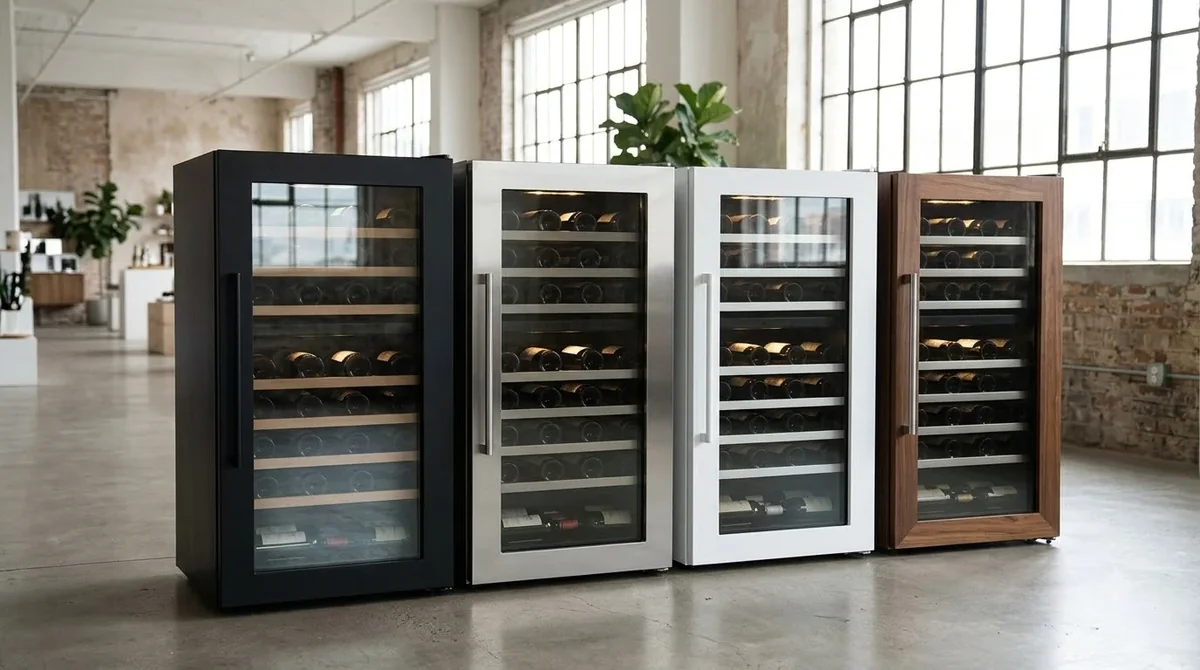
The manufacturer’s instruction manual identifies the BD60016 as a six-bottle model with two shelves and a temperature setting range of 46°F to 65°F. It also identifies the larger BD60026 as an eight-bottle model, so buyers should distinguish the two catalog numbers when comparing listings.
| Specification | BLACK+DECKER BD60016 |
|---|---|
| Product type | Freestanding wine cellar |
| Manufacturer | BLACK+DECKER |
| Model number | BD60016 |
| Advertised capacity | 6 bottles |
| Interior shelves | 2 |
| Temperature setting range | 46°F–65°F |
| Cooling technology | Thermoelectric |
| Door | Clear triple-pane glass |
| Exterior width | 9.7 inches |
| Exterior height | 14.9 inches |
| Exterior depth | 19.8 inches |
| Interior lighting | Yes |
| Temperature controls | Electronic touch controls |
| Installation | Freestanding |
| Warranty | 1 year for parts and labor, according to the manual |
The physical dimensions make this refrigerator particularly interesting. At approximately 9.7 inches wide, it takes up substantially less counter space than many larger beverage refrigerators. Its 14.9-inch height also makes it easier to accommodate beneath certain kitchen cabinets, although buyers should measure the available vertical clearance and allow room for ventilation.
The glass door provides visibility without requiring the refrigerator to be opened every time someone wants to see the available bottles. This is useful for a kitchen counter, small entertaining area, or home bar. The interior light also helps display the bottles in a dimmer room.
Temperature controls and cooling technology
The electronic control panel provides temperature adjustment through warmer and colder buttons. Users can also switch the display between Fahrenheit and Celsius. The refrigerator has a displayed temperature reading that returns to the actual cabinet temperature after a setting is selected.
One important distinction is that the 46°F to 65°F specification describes the available temperature settings, not a guarantee that the interior will always reach the selected temperature. The manual explains that ambient room temperature affects the actual cooling result. For example, at a room temperature of 77°F, the lowest achievable interior temperature may be approximately 50°F to 52°F.
This limitation matters particularly for people who want to serve sparkling wine or delicate white wines at colder temperatures. A refrigerator with a lower minimum temperature may be more appropriate for that purpose.
The thermoelectric system operates without the conventional compressor used in many larger refrigerators. BLACK+DECKER explains that this technology reduces the noise and vibration associated with compressor-based cooling. It also avoids the CFC, HCFC, and HFC refrigerants identified in the manual.
For the complete technical specifications and operating instructions, consult the BLACK+DECKER BD60016 product information page.
What Owners Like
Customer feedback generally highlights three appealing qualities: compact dimensions, straightforward operation, and the ability to keep a small selection of wine chilled. These characteristics make the BD60016 particularly attractive to households that do not need a large wine storage appliance.
Compact size for smaller rooms
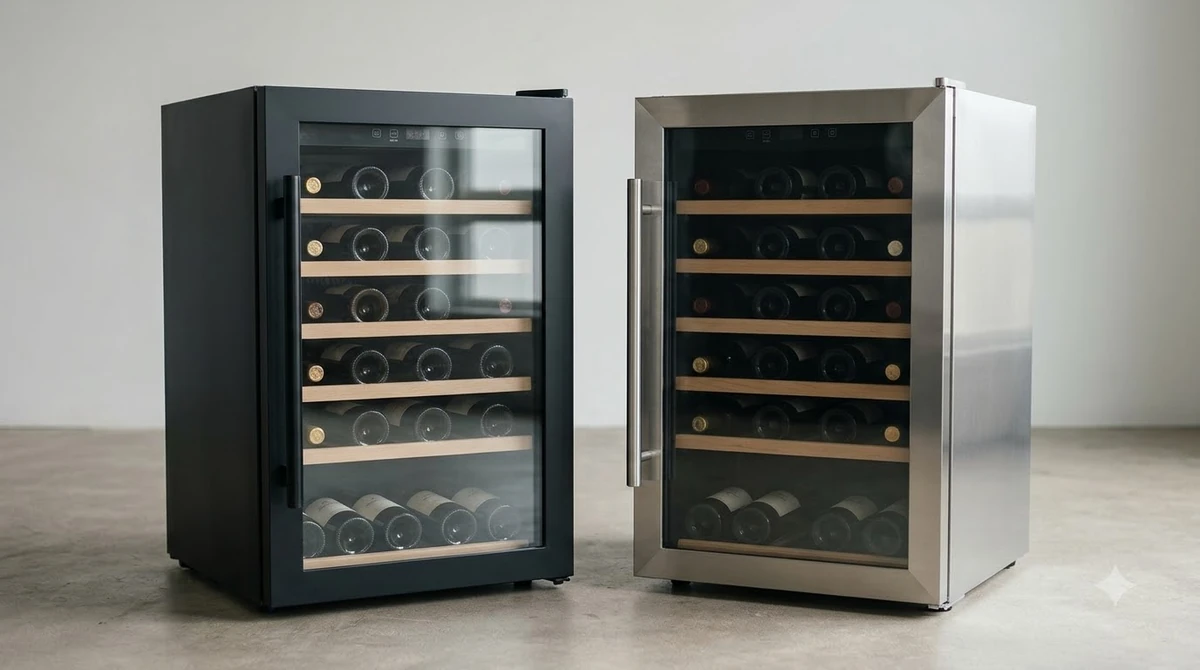
The strongest practical advantage is the narrow cabinet. A refrigerator that measures approximately 9.7 inches wide can fit into spaces that would be unsuitable for a conventional wine cooler. This is useful in apartments, smaller kitchens, offices, and home bars where countertop space is limited.
Home Depot customer feedback includes several comments praising the refrigerator’s compact size. One owner describes fitting it comfortably on a counter, while another appreciates its capacity for different bottle sizes. Other comments mention its appearance and suitability as a small household wine refrigerator.
The design also makes it a possible gift for someone who enjoys wine but does not have room for a larger collection. Instead of dedicating a substantial section of a kitchen to wine storage, the owner gets a small, separate appliance for frequently used bottles.
Relatively quiet operation
Thermoelectric cooling is another frequently attractive feature. Without a conventional compressor, the refrigerator avoids some of the cycling noise and vibration associated with traditional compressor-based appliances.
Several Home Depot reviewers describe the cooler as quiet or reasonably quiet. This is useful in an apartment, office, or open-plan kitchen where an appliance’s operating sound can become noticeable.
However, quiet should not be interpreted as completely silent. The refrigerator still uses a fan to circulate air and remove heat. Some owners report hearing a hum during operation, and others find the operating sound more noticeable than expected.
Simple everyday operation
The digital controls are relatively uncomplicated. The temperature can be adjusted using the buttons on the front control panel, and the interior light can be switched on manually.
For someone who wants to store six bottles without managing complicated settings, this straightforward arrangement is a benefit. There are no separate temperature zones to configure and no extensive collection-management features to learn.
The refrigerator also offers a useful visual display through its glass door. Owners can see which bottles are available before opening it, making it convenient when preparing drinks for guests.
Useful for casual wine drinking
Six bottles provide a reasonable starting point for someone who usually keeps a few familiar wines at home. A household might reserve space for a bottle of Chardonnay, Sauvignon Blanc, Pinot Noir, Merlot, sparkling wine, and a bottle intended for a weekend dinner.
That selection is more practical than repeatedly rearranging a standard kitchen refrigerator to accommodate wine bottles. It also provides a dedicated storage location for bottles that are intended to be served at a particular temperature.
For entertaining, the cooler can hold a small selection of wines and keep them accessible. Someone preparing an Aperol Spritz recipe can also appreciate having chilled sparkling wine available, although the refrigerator’s minimum temperature may not be ideal for every sparkling wine preference.
The overall appeal is therefore fairly specific: the BD60016 offers convenient, small-scale wine storage rather than advanced cellar management. That distinction helps explain why its compactness and ease of use matter more than sophisticated features.
Common Complaints
The BD60016 has several limitations that buyers should understand before purchasing. The most important concerns involve ambient temperature, fan noise, long-term reliability reports, and the difference between advertised temperature settings and actual cooling performance.
Cooling depends on the room
The refrigerator’s temperature range can initially look impressive for a compact wine cooler. However, thermoelectric technology is sensitive to the temperature of the surrounding environment.
The manufacturer’s manual provides a particularly useful example: when the room is 77°F, the lowest interior temperature may be only 50°F to 52°F. When the room is 72°F, the lowest interior temperature may improve to approximately 46°F to 48°F.
This means a hot kitchen can reduce the refrigerator’s practical cooling ability. Placing the appliance beside an oven, in direct sunlight, or near another heat-producing appliance can make the situation worse.
Buyers who live in warmer climates should pay particular attention to this limitation. A refrigerator that performs satisfactorily in an air-conditioned room may struggle in a consistently warm kitchen.
Fan noise is not completely eliminated
The absence of a compressor reduces certain operating noises, but the cooling system still requires airflow. The fan can produce a continuous hum while the appliance is running.
Home Depot reviews include both positive comments about quiet operation and less favorable feedback. One reviewer describes the refrigerator as louder than expected, while another reports that the fan runs continuously.
This difference in experience is understandable because sound perception depends on the surrounding environment. A refrigerator that seems quiet in a busy kitchen may be more noticeable in a silent bedroom or small office.
Reliability concerns in customer feedback
Customer feedback also includes isolated reports of early product failure. One Home Depot reviewer reported that a refrigerator stopped working after less than two months, while another described a unit that operated for only three days after delivery.
These reports should not be treated as proof that every BD60016 has a reliability problem. Individual experiences cannot establish a product-wide failure rate. Nevertheless, they are relevant because an appliance’s ability to maintain a stable temperature is more important than its appearance alone.
Buyers should inspect the refrigerator after delivery and confirm that it powers on, responds to temperature adjustments, and cools properly. Keeping the receipt and recording the model and serial numbers can also simplify a warranty claim if a problem develops.
Limited bottle flexibility
The advertised six-bottle capacity is based on standard bottle dimensions. Wine bottles do not all have identical shapes, and larger sparkling wine bottles, Champagne bottles, and some wider Burgundy-style bottles can make the interior more difficult to organize.
A standard Bordeaux bottle is relatively narrow and has a familiar cylindrical shape. A wider bottle can reduce the usable space on a shelf or require a different arrangement.
This matters because a six-bottle refrigerator does not necessarily hold six bottles of every wine style in the same configuration. Buyers who regularly purchase sparkling wines or unusually shaped bottles should not assume that the advertised capacity will always be achievable.
Tip: Before purchasing, measure your largest regular wine bottle and compare its diameter and length with the refrigerator’s usable interior. Also consider the clearance required to remove bottles from the shelves without hitting the door frame.
Not intended for built-in installation
Another important limitation is installation. The instruction manual explicitly identifies the BD60016 as a freestanding appliance rather than a refrigerator designed to be recessed into an enclosed cabinet.
It requires at least 2 inches of clearance at each side, 4 inches above, and 2 inches behind the unit for air circulation. The door should also have sufficient space to open to at least 120 degrees.
These requirements can make a seemingly convenient cabinet installation impractical. Buyers should not confuse a compact countertop refrigerator with a built-in wine appliance simply because its exterior dimensions appear suitable.
Who Should Buy and Who Should Skip
The BD60016 makes the most sense for casual wine drinkers who need a small dedicated refrigerator and have a reasonably temperature-controlled room. It is less appropriate for collectors, large households, or anyone who needs consistently cold storage in a warm environment.
Who should consider buying it?
Apartment residents: The narrow footprint makes this model attractive when a full-size wine refrigerator would take up too much floor or counter space. Its six-bottle capacity provides basic storage without requiring a separate appliance cabinet.
Occasional wine drinkers: People who usually keep two to six bottles available may find the capacity sufficient. It provides a convenient place for a few everyday wines rather than requiring a large collection.
Small household bars: The glass door and interior light make the unit suitable for a modest entertainment setup. It can keep a handful of bottles ready for casual gatherings without taking over the room.
People who prefer simple controls: The digital temperature adjustment and single-zone configuration are easy to understand. Someone who does not need separate red and white wine compartments may appreciate this uncomplicated design.
Buyers with temperature-controlled rooms: Because thermoelectric cooling depends on ambient conditions, a moderately cool indoor environment is particularly important. The refrigerator is better suited to a room where temperatures remain relatively stable than to an area exposed to substantial heat.
Who should skip it?
Wine collectors: Six bottles offer very limited storage for someone who purchases wine regularly. A larger refrigerator with more shelves and capacity will be more practical for a growing collection.
People who need very cold white wine storage: The 46°F minimum setting is not especially cold compared with refrigerators designed for lower serving temperatures. Someone who regularly drinks sparkling wine, Riesling, or Sauvignon Blanc very cold may prefer another appliance.
Owners of expensive bottles: This is a compact beverage refrigerator, not a dedicated long-term aging cellar. Serious collectors should consider a purpose-built wine refrigerator with more appropriate storage features and more consistent environmental control.
People with hot kitchens: The cooling system may struggle when surrounding temperatures rise. A compressor-based model is generally a more sensible choice for demanding environments.
Large households: Six bottles can disappear quickly when several people regularly drink wine or entertain guests. A 12-, 18-, or 24-bottle appliance provides considerably more flexibility.
Matching the refrigerator to wine styles
The BD60016 can accommodate several common wine styles, provided its actual cooling performance meets the user’s requirements.
For example, Chardonnay and Pinot Noir can benefit from different serving temperatures, but the single-zone arrangement means the refrigerator cannot maintain two independently selected temperatures simultaneously.
Light-bodied whites are commonly served around 45°F to 50°F, while full-bodied whites are generally served around 50°F to 55°F. Light reds are typically served around 55°F to 60°F, and fuller reds around 60°F to 65°F.
The refrigerator’s 46°F to 65°F setting range covers much of this serving-temperature spectrum. However, it does not mean that all wine styles can be stored at their ideal temperatures together.
For a household that mostly drinks one style at a time, the single-zone arrangement is less restrictive. For someone who frequently serves both chilled white wine and lightly cooled red wine at the same gathering, two independent zones are more convenient.
How It Compares to Alternatives
The BD60016 is not the only compact BLACK+DECKER wine refrigerator. Its closest named alternative in the same product family is the BD60026, an eight-bottle model with a similar temperature range and thermoelectric cooling technology.
The manufacturer also identifies the BD60316 as a six-bottle model with a mirrored glass door. These alternatives are useful comparisons because they address different storage and appearance preferences within the same general appliance category.
BD60016 versus BD60026
The BD60016 is designed for six bottles and has two shelves. The BD60026 increases the advertised capacity to eight bottles and has three shelves, while retaining the same stated 46°F to 65°F temperature setting range.
The eight-bottle version is a better option for someone who regularly keeps several different wine styles available. It offers more storage without moving into a much larger wine refrigerator category.
However, the BD60016 remains appealing for households where space is the main consideration. If six bottles are sufficient, choosing a larger cabinet may not provide enough practical benefit to justify the additional footprint.
BD60016 versus BD60316
The BD60316 is another six-bottle thermoelectric BLACK+DECKER wine cooler. Its most obvious design difference is its mirrored glass door rather than the clear glass door used on the BD60016.
This makes the BD60316 worth considering for people who prefer a more decorative appearance in a kitchen or home bar. The two models share the general appeal of compact thermoelectric wine storage, although buyers should compare the exact dimensions and specifications of the individual listing before choosing.
When a compressor wine refrigerator makes more sense
A compressor-based wine refrigerator may be a better choice for households that need stronger cooling performance in warmer rooms. Compressor systems are generally less dependent on small differences in ambient temperature than compact thermoelectric units.
They can also be more suitable for larger capacities and demanding cooling requirements. The trade-off is that compressor refrigerators can introduce additional vibration and operating noise, depending on their construction and installation.
The BD60016 therefore has a relatively clear target audience. It is intended for buyers who value compact dimensions and simpler thermoelectric operation more than high-capacity storage or aggressive cooling.
Which model offers the better fit?
The six-bottle BD60016 is the more sensible choice when available space is limited and the household only needs a few bottles chilled. The eight-bottle BD60026 is more practical when extra capacity is important, while the mirrored-door BD60316 offers another design option.
For readers comparing other compact wine refrigerators, the wine cooler model reviews section provides a useful starting point for evaluating capacity, installation requirements, and cooling technology.
It is also important to remember that storage capacity is only one consideration. A refrigerator that holds eight bottles but struggles in a hot room may be less useful than a smaller unit that operates reliably in the intended location.
Frequently Asked Questions
Does the BD60016 have an automatic defrost system?
The instruction manual discusses frost formation and provides a manual defrost procedure. It recommends unplugging the appliance and allowing accumulated frost to thaw before reconnecting it. This is a useful distinction for buyers who expect a completely maintenance-free cooling appliance.
Can the refrigerator be used to store food?
No. The manufacturer specifically advises against storing food in this wine cellar because its interior temperature may not be sufficiently cold to prevent food spoilage. It should be used for its intended wine-storage purpose rather than as a substitute for a kitchen refrigerator.
How long should the refrigerator cool before bottles are added?
The instruction manual recommends allowing the empty refrigerator to operate for approximately one hour before adding bottles. After loading, it recommends another one to two hours of operation to bring the contents toward the selected temperature.
Can the refrigerator be transported on its side?
The manufacturer instructs owners to move the appliance vertically and specifically warns against moving or storing it on its side. Following this instruction helps avoid problems associated with improper handling during relocation. The appliance should also be placed on a hard, flat, and solid surface.
What should owners do if the temperature does not reach the selected setting?
The troubleshooting section identifies insufficient ventilation, nearby heat sources, and frequent or prolonged door openings as possible causes. It recommends improving airflow, moving the appliance away from direct sunlight or heat, and keeping the door closed. Owners should contact qualified service personnel rather than attempting repairs to internal components.
The BLACK+DECKER BD60016 is a practical small wine refrigerator for households that want six bottles of dedicated storage without sacrificing much kitchen space. Its thermoelectric cooling, digital controls, and glass door make it convenient for casual use, but its temperature limitations and modest capacity deserve careful consideration. Choose it for compact everyday wine storage in a reasonably cool room; choose a larger compressor-based wine refrigerator if capacity, stronger cooling, or more demanding storage conditions are priorities.
More in Model Reviews
 Magic Chef 44 Bottle Wine Cooler Review for Flexible StorageUpdated Nov 21, 2026
 Whynter 164 Bottle Wine Cooler Review: Capacity, Features, and FitUpdated Nov 21, 2026
 Insignia NS WC16BK6 Review: Compact 16-Bottle Wine StorageUpdated Nov 21, 2026
 Wine Enthusiast Electric Blue Omega Review: Opening, Pouring, and Preserving Made EasierUpdated Nov 21, 2026
 Koolatron 20 Bottle Wine Cooler Review: Features, Fit, and PerformanceUpdated Nov 21, 2026
 NewAir AWC 330E Review for Home Wine StorageUpdated Nov 21, 2026