

We may earn a commission when you buy through links on this page, at no extra cost to you. Learn more.
The frigidaire 12 bottle wine fridge is a compact beverage cooler designed for storing up to 12 standard wine bottles, with adjustable temperatures from 46°F to 64°F. The EFRW1225 combines a curved glass door, digital temperature controls, blue interior lighting and a space-saving freestanding design. It is an interesting option for casual wine drinkers who want chilled bottles close at hand, but inconsistent temperature reports and its relatively small capacity make it less suitable for serious collectors or long-term wine storage.
The Frigidaire EFRW1225 is better understood as a small household beverage refrigerator than as a dedicated wine cellar. Its single cooling zone, flexible beverage capacity and compact format make it useful for keeping everyday bottles and cans accessible. However, prospective buyers should pay attention to its temperature limitations, bottle dimensions, ventilation requirements and mixed owner feedback before purchasing one. This review examines the specifications, practical advantages, reported problems and situations in which this model makes sense.
Specs and Key Features: What the Frigidaire EFRW1225 Offers
The Frigidaire EFRW1225 focuses on compact storage and straightforward temperature adjustment rather than advanced wine-preservation features. Its 12-bottle capacity, single temperature zone and 46°F to 64°F operating range establish what this appliance can realistically accomplish.
According to the EFRW1225 product specifications, the refrigerator has approximately 1 cubic foot of storage space. Its curved glass door provides a view of the interior, while the black exterior gives it a relatively understated appearance. Blue LED illumination makes it easier to see the contents without relying on the room’s lighting.
| Specification | Frigidaire EFRW1225 |
|---|---|
| Product category | Compact wine and beverage cooler |
| Standard wine capacity | Up to 12 bottles |
| Beverage capacity | Up to 26 cans |
| Storage volume | Approximately 1 cubic foot |
| Temperature range | 46°F–64°F |
| Temperature zones | 1 |
| Temperature controls | Digital touch controls |
| Door | Curved glass |
| Exterior finish | Black |
| Interior lighting | Blue LED |
| Electrical supply | 110 volts listed |
| Installation | Freestanding |
One of the most useful features is the adjustable temperature setting. The 46°F minimum is appropriate for chilling many everyday white wines and sparkling wines before serving. The upper setting of 64°F provides more flexibility for certain lighter reds and bottles that do not need refrigerator-level chilling.
However, the presence of adjustable controls does not mean the appliance provides two independent storage environments. The EFRW1225 has one temperature zone, so every bottle shares the same general cooling conditions. A Chardonnay and a Cabernet Sauvignon can be stored together, but they cannot be maintained at separate programmed temperatures.
Capacity and physical storage
The advertised 12-bottle capacity assumes relatively conventional wine bottle shapes. Standard 750 ml Bordeaux-style bottles are the most straightforward fit for compact wine racks. Larger Champagne bottles, broad Burgundy bottles and unusually shaped bottles may occupy more room and reduce the practical capacity.
The product information also identifies a capacity of up to 26 beverage cans. This makes the cooler more flexible than an appliance dedicated exclusively to wine. Owners can use it for a mixture of wine, canned drinks and other suitable beverages, provided the arrangement does not obstruct circulation or interfere with the door.
There is an important distinction between advertised capacity and usable everyday capacity. Twelve standard bottles may fit under ideal arrangements, but a collection containing oversized bottles may require removing shelves or leaving some storage positions empty.
The curved glass door and blue illumination are primarily presentation features. They make the cooler visually appealing in a kitchen, home office or entertainment area, although they do not replace temperature monitoring or other wine-storage considerations.
What Owners Like: Compact Design, Lighting and Everyday Convenience
Owner feedback points to three recurring strengths: a small footprint, attractive appearance and convenient access to chilled drinks. These qualities matter most in spaces where a full-size wine refrigerator would be impractical.
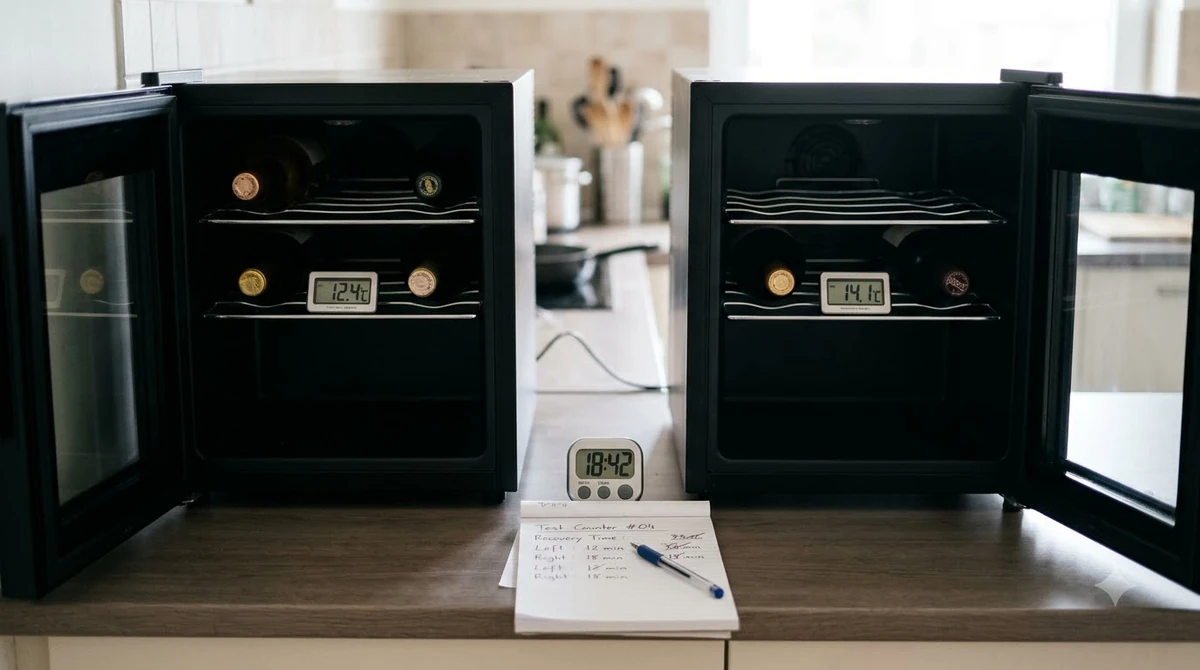
Best Buy customer feedback frequently highlights the unit’s compact dimensions and ability to fit into smaller spaces. Several owners describe it as a convenient addition to a home office or entertainment area rather than a major kitchen appliance. This is a useful distinction because the EFRW1225 is intended to supplement existing refrigeration rather than replace a full-size refrigerator.
The glass door is another appealing feature. Instead of opening the refrigerator to identify a bottle, users can see much of the stored collection from outside. Combined with the blue interior lighting, this creates a display effect that works well in a room where drinks are served regularly.
Some owners also report satisfactory noise levels. Best Buy feedback includes positive descriptions of quiet operation, particularly from people using the appliance in smaller living and working spaces. However, noise perception depends on the surrounding room, the installation surface and the condition of the individual unit. A positive report from one household does not guarantee identical performance in every environment.
Useful for casual wine collections
A 12-bottle refrigerator can be a sensible size for someone who buys a few bottles at a time. For example, a household might keep two bottles of Sauvignon Blanc, two bottles of Pinot Noir, a couple of sparkling wines and several additional bottles for dinner parties.
That collection is small enough to organize without complicated inventory management. It also provides a convenient place to keep bottles ready for planned meals or informal gatherings. A bottle of white wine can be chilled before serving, while a lighter red can be brought out and allowed to warm slightly.
The flexible beverage capacity is useful for households that do not drink wine exclusively. Rather than filling every position with wine, users can arrange the available space around their regular preferences.
For entertaining, the appliance can complement a cocktail setup. Ingredients and suitable chilled beverages for an Aperol Spritz recipe can be organized nearby, although the refrigerator should not be expected to replace proper ice storage or a dedicated cocktail station.
Simple controls are an advantage
The digital temperature display makes adjustments more straightforward than relying on a basic mechanical dial. Users can select a setting within the stated 46°F to 64°F range without having to estimate the position of an imprecise control.
The single-zone design also means there is no complicated process for programming multiple compartments. For a household that primarily wants chilled white wine, rosé, sparkling wine and a few lighter reds, this simplicity can be appealing.
Nevertheless, simple controls should not be confused with precise temperature regulation. The display communicates the selected setting, but actual bottle temperatures can be affected by room conditions, ventilation, door openings and the quantity of beverages inside.
That distinction becomes especially important for people who expect every bottle to remain at an exact serving temperature throughout the day.
Common Complaints: Temperature Consistency and Practical Limitations
The biggest concern surrounding the EFRW1225 is temperature performance. Although its advertised adjustment range is useful for everyday chilling, customer reports include difficulty reaching or maintaining the desired temperature.
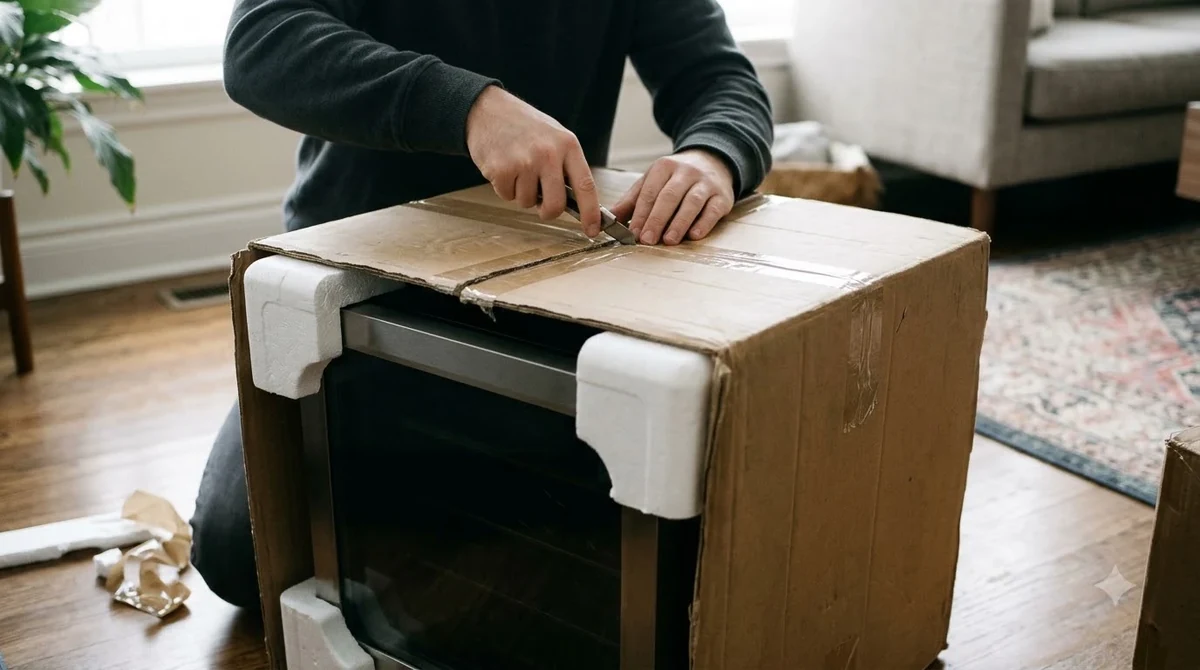
Best Buy feedback includes an owner who reported waiting approximately eight hours for the unit to reach 46°F and another lengthy recovery period after opening the door. Other feedback mentions difficulty reaching the desired temperature. These are individual experiences rather than controlled performance measurements, but they identify an issue worth considering before buying.
An eBay owner review also raises concerns about inconsistent temperature. In contrast, another owner describes keeping wine at a cool 46°F. The mixed experiences suggest that buyers should not assume every EFRW1225 will perform identically.
Room temperature and installation conditions can influence the performance of a compact cooling appliance. Placing it beside a hot oven, in direct sunlight or inside a poorly ventilated cabinet can make it harder for the cooling system to remove heat efficiently.
One temperature zone limits flexibility
The single-zone arrangement is a meaningful limitation for households with different wine preferences. Consider a collection containing Chardonnay, Champagne, Pinot Noir and Cabernet Sauvignon. Each wine has its own preferred serving temperature, but the EFRW1225 cannot maintain four separate settings.
For reference, light whites and rosé are generally served around 45°F to 50°F, full-bodied whites around 50°F to 55°F, light reds around 55°F to 60°F, and fuller reds around 60°F to 65°F. A single setting requires compromise, particularly when different bottles are intended for immediate service.
A practical approach is to store wines at a convenient general temperature and make final adjustments before serving. White wines can spend additional time in a conventional refrigerator, while red wines can sit at room temperature briefly if they have been chilled too much.
Capacity can be less convenient with larger bottles
The advertised 12-bottle capacity should not be interpreted as a guarantee that every combination of wine bottles will fit. Champagne and sparkling wine bottles can be wider than standard Bordeaux bottles. Some Burgundy bottles also have shoulders and bodies that make them less convenient to arrange on compact racks.
Best Buy’s product questions include a discussion of fitting larger 1.5-liter bottles by removing shelves. One response suggests that removing the racks can create room for larger bottles, although this naturally reduces the number of bottles that can be stored simultaneously.
This flexibility is helpful, but it does not transform the appliance into a large-capacity wine cabinet. Buyers with a regular supply of oversized bottles should consider their actual collection rather than relying on the headline capacity.
Door and control concerns
Best Buy feedback also identifies the door and control buttons among the areas that have generated complaints. Some customers describe problems with controls, while other reports concern the appliance shutting off or the door becoming loose.
These reports do not establish that every unit has a manufacturing problem. They do, however, make it sensible to inspect the door alignment, glass panel, hinges and control response immediately after delivery.
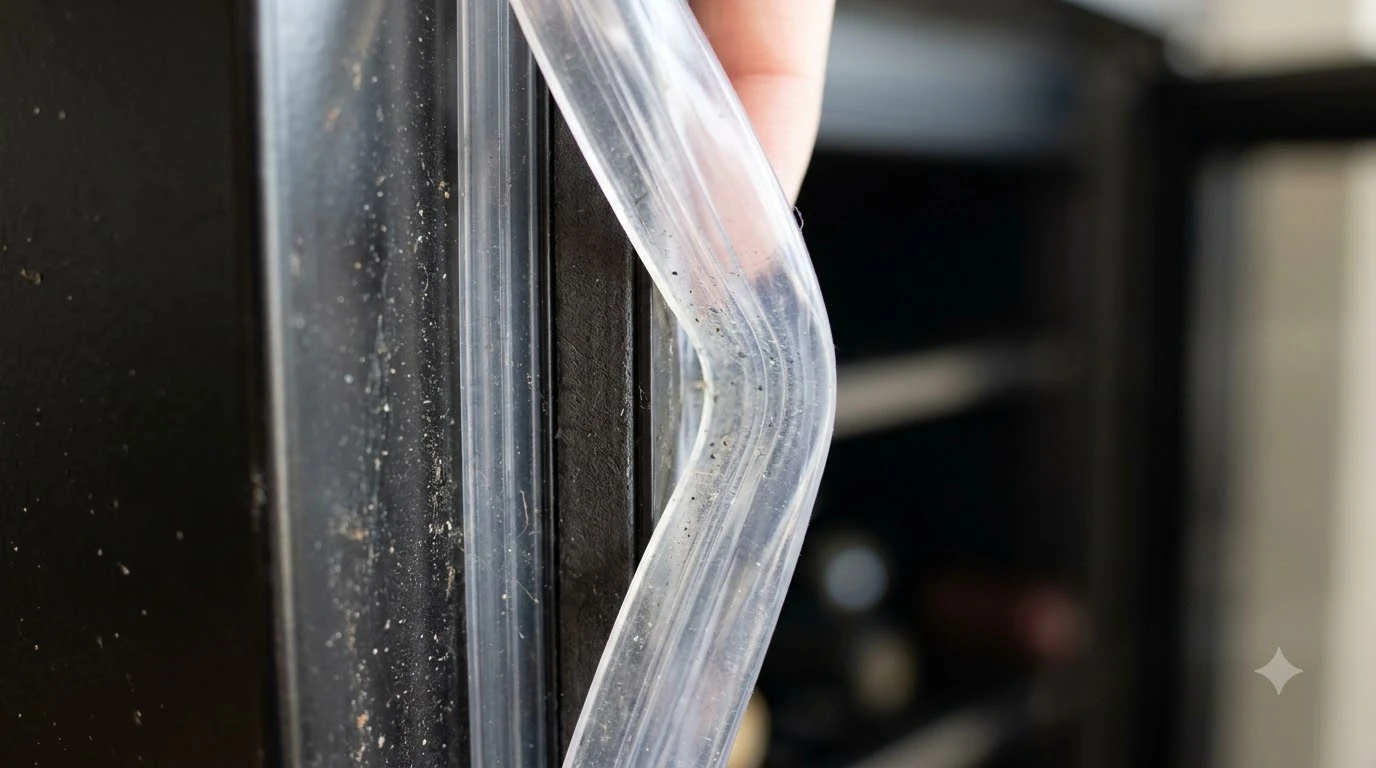
Pay attention to whether the door closes securely and whether the temperature display responds consistently. A door that does not seal properly can undermine cooling performance, even if the selected temperature appears appropriate.
There is also a practical availability concern. Best Buy identifies its EFRW1225 listing as unavailable in new condition, and the eBay product record indicates sold-out status. Buyers may encounter remaining inventory, used units or refurbished listings rather than a straightforward new purchase. The condition and return policy deserve particular attention in those circumstances.
Tip: Before loading a full collection, allow the cooler to stabilize in its intended location and monitor the interior temperature with an independent thermometer. Keep the ventilation area clear, avoid frequent door openings and check that the door closes firmly. This provides a more useful picture of actual cooling performance than relying on the display alone.
Who Should Buy the Frigidaire 12 Bottle Wine Fridge and Who Should Skip It?
The EFRW1225 makes the most sense for casual drinkers who value compact storage and attractive presentation. It is less appropriate for wine enthusiasts who require precise temperature management, substantial bottle capacity or dedicated long-term storage conditions.
Who should consider buying it?
Apartment residents with limited space: A 12-bottle cooler is more manageable than a large wine refrigerator. Someone living in a small apartment may appreciate having a dedicated beverage area without sacrificing significant floor space to a full-size appliance.
Occasional wine drinkers: People who purchase a handful of bottles for dinners and weekends may find the available capacity sufficient. The unit can keep everyday Sauvignon Blanc, rosé and other wines ready for planned consumption.
Home entertainers: The curved glass door and interior lighting provide a presentation feature that works in a dining area or entertainment room. The ability to store canned beverages alongside wine is also useful for households serving different drinks.
People who prefer simple controls: The digital interface offers straightforward temperature selection without requiring users to manage separate cooling compartments. For someone with a relatively uniform beverage collection, that simplicity may be preferable.
Who should skip it?
Serious wine collectors: A collection of 40 or 60 bottles quickly exceeds the EFRW1225’s advertised capacity. Regularly rotating bottles in and out of a 12-bottle cooler is inconvenient, particularly when the collection includes several different wine styles.
Buyers who need dual-zone cooling: People who routinely store sparkling wine, white wine and red wine at different temperatures should consider a dual-zone refrigerator. The EFRW1225 cannot independently control separate compartments.
Long-term wine collectors: This model is better suited to everyday chilling than dedicated cellar storage. Its single-zone temperature range and reported consistency concerns make it a less compelling choice for bottles intended to age over many years.
People who require guaranteed quiet operation: Some owners describe the unit as quiet, but those reports are not a guarantee of silent operation. Buyers placing a refrigerator beside a bed or in a particularly quiet office should consider their sensitivity to appliance noise.
Owners of large-format bottles: Households that frequently purchase 1.5-liter bottles or unusually wide sparkling wine bottles may find the advertised capacity difficult to achieve without removing storage racks.
Consider the wine collection before choosing
A useful way to assess this refrigerator is to count the bottles that need regular cooling rather than counting every bottle in the household. Someone who usually keeps six to eight bottles ready for consumption may have enough room. Someone who routinely maintains 15 bottles or more will probably find the storage restrictive.
Food pairing preferences can also influence the usefulness of the appliance. A household that regularly serves white wine with seafood or rosé with lighter meals may benefit from having a dedicated chilled beverage space. Those who primarily drink full-bodied reds may prefer a storage solution that provides more flexibility around warmer serving temperatures.
For example, a bottle intended for Chicken Marsala can be prepared for dinner independently of the refrigerator’s general setting. A Chicken Marsala recipe pairs well with several wine styles, including Pinot Noir and Chardonnay, but the correct serving temperature still depends on the wine itself.
How It Compares to Alternatives: Choosing the Right Wine Cooler
The Frigidaire EFRW1225 occupies the compact end of the wine refrigerator category. Its 12-bottle capacity and single-zone design are convenient for smaller collections, but buyers with different requirements should compare larger, dual-zone and dedicated wine-storage alternatives.
Compared with a larger single-zone wine refrigerator
A larger single-zone wine refrigerator is a logical alternative for someone who likes the Frigidaire concept but needs more storage. Models with 18, 24 or 30 bottle positions offer additional room for rotating bottles and accommodating different purchases.
The main advantage is reduced capacity pressure. Instead of rearranging bottles every time a new case arrives, owners can organize wines by grape variety, region or intended drinking date. A larger cabinet may also offer more practical shelf spacing for different bottle shapes.
The trade-off is physical space. A larger refrigerator needs more room, and its dimensions should be checked against the intended location before purchase. It may also be unnecessary for someone who rarely keeps more than six bottles at home.
Compared with a dual-zone wine refrigerator
A dual-zone model offers two independently controlled temperature areas. This is particularly useful when a household regularly stores both white and red wines and wants them ready for service without additional chilling or warming.
For example, one compartment can be set around 48°F for many white wines while the other can be maintained around 58°F for lighter reds. The exact settings depend on the wines and whether the objective is storage or immediate serving.
By comparison, the EFRW1225 requires users to choose one shared temperature. This is not necessarily a problem for a collection dominated by one wine style, but it becomes restrictive when the household regularly serves a broad range of wines.
Compared with a regular household refrigerator
A standard refrigerator can chill wine without requiring a separate appliance. It is particularly useful for sparkling wine, white wine and rosé that will be consumed relatively soon.
However, a regular refrigerator is not always convenient for wine organization. Bottles compete with groceries for space, and the temperature may be colder than desirable for certain wines. There is also no dedicated presentation area or organized wine rack.
The EFRW1225 provides a separate beverage space, which can make everyday organization easier. Its appeal is convenience rather than a fundamental improvement in wine preservation.
Compared with dedicated long-term wine storage
Dedicated wine cabinets are designed around collection management rather than simply chilling drinks. Depending on the model, they may offer more consistent temperature regulation, humidity management, vibration control, UV-protective glass and greater capacity.
Those features become more relevant when storing valuable bottles for extended periods. A collection containing age-worthy Bordeaux, Barolo or premium Burgundy deserves more careful storage consideration than a small assortment intended for consumption over the next few weeks.
The EFRW1225 is not a direct replacement for that category of appliance. Its principal advantage is its modest capacity and everyday convenience, not advanced cellar conditions.
For shoppers comparing other appliances, the Brand x Capacity model review collection provides a useful starting point for evaluating different refrigerator sizes and configurations. Compare actual usable capacity, temperature range, installation requirements and service support rather than choosing solely by the number of bottles printed in a product title.
Frequently Asked Questions
Can the Frigidaire EFRW1225 operate in a vehicle?
Product documentation for the EFRW1225 family describes compatibility with a 12-volt DC power connection in addition to household AC power. This feature is intended for compatible vehicle-power arrangements, but it does not make the appliance a purpose-built portable cooler. Secure placement, appropriate electrical connections and ventilation remain important considerations.
Does the Frigidaire 12-bottle cooler have an automatic light setting?
The product documentation describes blue interior LED lighting and a dedicated light control. The lighting is intended to illuminate the stored beverages, rather than function as continuous decorative room lighting. Owners who want permanent illumination should verify the exact behavior of their particular unit.
Can the Frigidaire EFRW1225 store opened wine bottles?
Yes, provided an opened bottle can be secured upright without interfering with the shelves or door. Use a suitable wine stopper or sparkling-wine closure, depending on the bottle. Refrigeration can help preserve opened still wine for approximately three to five days, although freshness varies with the wine, closure and amount of remaining air.
What should owners do if condensation appears inside the cooler?
Check that the door closes completely and that its sealing surface is clean. Frequent opening, warm humid room conditions and damp containers can contribute to moisture accumulation. If moisture persists or becomes excessive, consult the appliance documentation and investigate the door seal and ventilation conditions.
Can the EFRW1225 be used as a built-in kitchen appliance?
The product is identified as a freestanding cooler, so it should not automatically be treated as suitable for enclosed cabinetry. A built-in refrigerator must be specifically designed for the ventilation conditions of that installation. Restricting airflow around a freestanding appliance can interfere with heat removal and cooling performance.
The Frigidaire EFRW1225 is best viewed as a compact, convenient beverage cooler for modest household collections rather than a dedicated wine cellar. Its glass door, digital controls and flexible 12-bottle capacity are appealing, but temperature consistency, limited storage and mixed owner experiences deserve careful consideration. Buyers who prioritize a small footprint and everyday convenience may find its design suitable, while collectors seeking precise control and dependable long-term storage should compare more specialized wine refrigerators before making a decision.
More in Model Reviews
 Magic Chef 44 Bottle Wine Cooler Review for Flexible StorageUpdated Nov 21, 2026
 Whynter 164 Bottle Wine Cooler Review: Capacity, Features, and FitUpdated Nov 21, 2026
 Insignia NS WC16BK6 Review: Compact 16-Bottle Wine StorageUpdated Nov 21, 2026
 Wine Enthusiast Electric Blue Omega Review: Opening, Pouring, and Preserving Made EasierUpdated Nov 21, 2026
 Koolatron 20 Bottle Wine Cooler Review: Features, Fit, and PerformanceUpdated Nov 21, 2026
 NewAir AWC 330E Review for Home Wine StorageUpdated Nov 21, 2026