

We may earn a commission when you buy through links on this page, at no extra cost to you. Learn more.
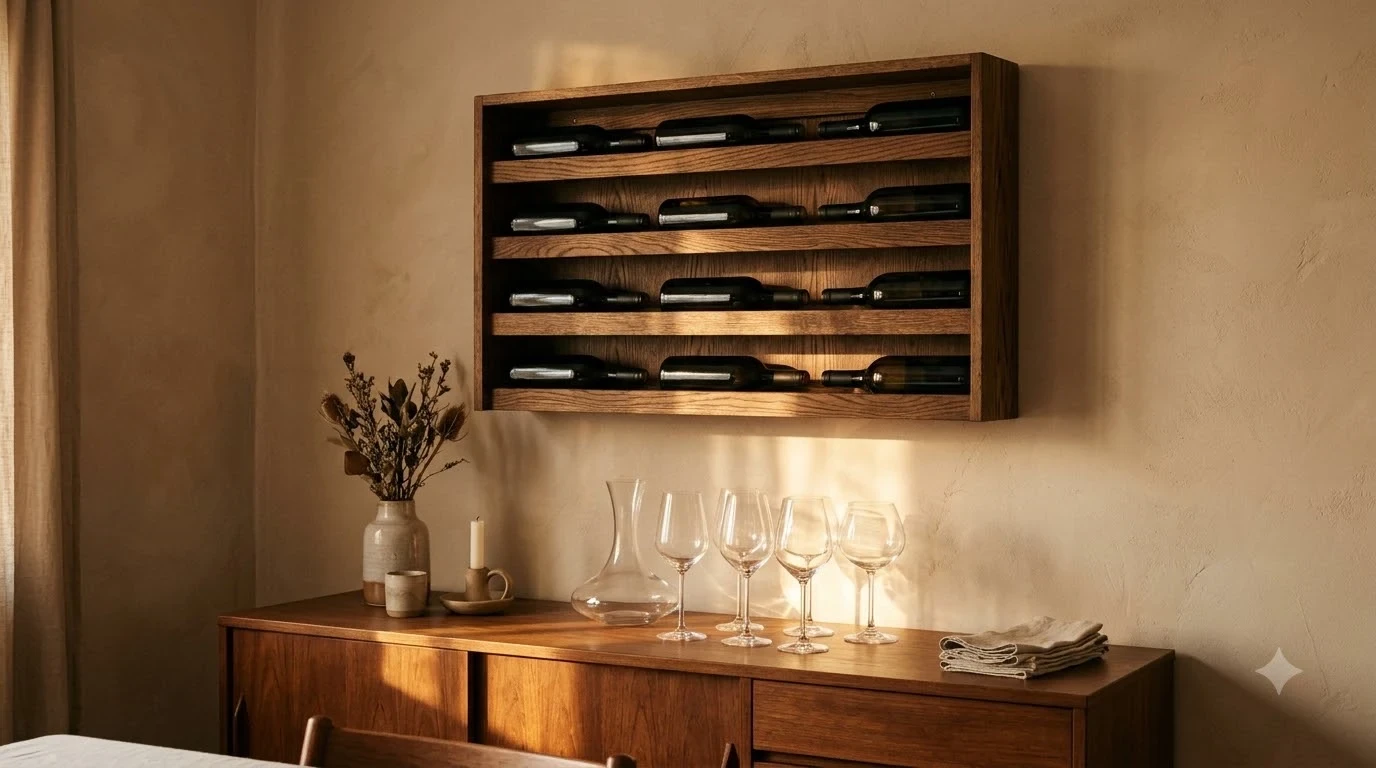
The best custom wine rack is one measured to the wall or alcove it will fill and built around the bottles you actually keep. A made-to-measure rack gives you exact spacing, a fit around pipes or trim, and room for mixed bottle sizes. Wood and metal are the usual materials, and the main decisions are the bottle count, the opening depth and whether the rack will be fixed or freestanding.
Stock racks come in set sizes, and many rooms do not match them. A custom rack solves that by building to the space, whether that is a narrow kitchen wall, a sloped attic corner or a recess beside a fridge. The result is closer to a built-in unit than a shelf. This roundup groups custom options by the setup they suit best, so you can choose the layout, material and finish before you order or build one.
Quick Comparison
Custom racks differ mainly in how they are built and what they are made from. The table compares the common types on the points that matter when the rack is measured to a specific room.
| Custom rack type | Typical bottle count | Installation | Material options | Best use |
|---|---|---|---|---|
| Built-in wall rack | Medium to large | Fixed to studs or a frame | Wood, metal, or both | Kitchen or dining room wall |
| Freestanding made-to-measure rack | Medium | No fixing, stands on the floor | Wood or metal | Odd corners or rentals |
| Alcove or recess rack | Large | Fitted into an opening | Wood, with a finished front | Under-stair or niche spaces |
| Modular stacking rack | Flexible, grows over time | Assembled from units | Wood, metal, or plastic | Collections that change size |
Best for a Narrow Kitchen Wall
A narrow wall is a common reason to order a custom rack. A rack built to a depth of one bottle, with a shallow frame, keeps the bottles close to the wall without blocking a doorway or a counter. Measure the wall height, the clearance above the countertop and the spot where a cabinet or fridge sits. A rack that fits those measurements looks like part of the kitchen rather than an add-on.

Most racks are built for the standard bottle, so start with a 750 ml bottle as the unit. Wikipedia’s wine rack article notes that most racks are constructed to hold the standard 750 ml bottles. Build the cells to that size, then add a little room for bottles with a wider shoulder, such as sparkling wine, which has a thicker, wider bottle.
Ordering a custom rack goes more smoothly when the measurements are written down before the first call to a maker. Record the wall width, the height from the floor to the lowest fixed point, the depth available before a door swings or a counter edge begins, and any pipe, outlet or light switch that sits inside the area. A maker who has those numbers can sketch a layout quickly, and you can check the sketch against the room before anything is cut.
Ask for a level test as well. A rack that leans even slightly will shift the bottles, and a bottle that rests on an uneven cell can move enough to disturb the sediment in an older wine. A spirit level on the frame during installation takes a minute and prevents that problem.
Best for an Alcove or Under-Stair Recess
A recess or alcove is where a custom rack shines. The unit can use the full depth of the opening, and the front can be finished to match the trim. A rack in this setting usually holds more bottles than a freestanding unit, since the space is otherwise unused.
Before building into a recess, check the room’s temperature and airflow. Wikipedia’s wine cellar article notes that a passive cellar relies on a naturally cool, damp area, while aboveground spaces need more control. An alcove on an exterior wall can swing in temperature, so keep the rack away from heaters and direct sun.
Best for Mixed Bottle Sizes
A custom rack can be drawn for different bottle shapes, which a stock rack rarely does. Bordeaux-style bottles are straight-sided with high shoulders, Burgundy and Rhône bottles are taller with sloping shoulders, and Champagne bottles are wider and thick-walled. Designing a few wider cells alongside the standard ones keeps the collection organized and avoids a bottle that rattles in a narrow slot.
Label the cells by style or by year if the collection is large. Use a finish that resists stains and marks, since a rack that holds bottles of different ages gets handled often.

Best for Long-Term Storage and Aging
For bottles meant to age, the rack has to protect the wine and make it easy to find. VinePair’s aging guide advises storing wine in a cool, dark place for a number of years, and it recommends a horizontal rack or a custom cellar. A custom rack is well suited to that job, because the bottles can rest on their sides at a height that makes them easy to reach.
Wood is the usual choice for aging storage, since it is easy to shape and it holds a steady, dry structure. Wikipedia’s wine rack article notes that cedar’s aroma can affect the wine through the cork, so use a neutral wood if the bottles will rest for many years. Keep the rack off the floor, away from vibration and out of direct light.
Best for Small Collections and Display
A custom rack does not have to be large. A display rack for a dozen bottles can be built into a bar niche, a bookcase or a dining room wall, where the bottles double as decor. Wrought iron and metal frames suit a modern look, and wood suits a traditional room. Wikipedia notes that some racks are mainly decorative, so a display rack can be designed for looks first and storage second.
Keep the display bottles moving through the collection. A small rack is easy to overfill, and a bottle that sits for years in a bright spot will age differently from one kept in the dark.
How to Choose a Custom Wine Rack
Start with the space and the bottles. Measure the wall or recess, then count the bottles you own and the ones you expect to add. Decide whether the rack will be fixed or freestanding, and choose the finish that fits the room.
Tip: Leave a small gap between the rack and the wall, and check that the bottles can be lifted out without bumping the frame. A rack that is too tight is hard to use, and it can scratch the labels as bottles are removed.
- Space: measure the wall height, width and depth, plus clearance for doors and trim.
- Bottle count: plan for the collection now and a few more bottles later.
- Cell size: build for the 750 ml standard, with wider cells for sparkling wine.
- Material: wood for warmth and aging, metal for a modern look and durability.
- Placement: keep the rack away from heaters, direct sun and vibration.
Once the rack is built, plan how the bottles will be stored and moved. For more styles and ideas, see the best wall-mounted wine racks guide, and check how many bottles are in a case of wine when you plan the number of cells.
Frequently Asked Questions
What makes a wine rack custom?
A custom rack is built or sized for a specific space and collection, rather than bought in a fixed size. It can be fitted to a wall, an alcove or a corner, and the cells can be sized for the bottles you own.
Should a custom rack hold standard 750 ml bottles?
Most racks are built for the standard 750 ml bottle, so that is the usual starting size. Add wider cells if you keep sparkling wine or bottles with a broad shoulder.
What is the best material for a custom wine rack?
Wood is the most common choice because it is easy to work with and suits aging storage. Metal, including stainless steel, resists corrosion and works well in a modern room or a humid kitchen.
Where should a custom wine rack be placed?
Choose a cool, dark spot away from heaters, direct sun and vibration. An interior wall is usually more stable than an exterior one, which can swing in temperature.
A custom wine rack earns its place by fitting the room and the collection. Measure carefully, plan the cell sizes around the bottles you own, and choose a material that suits how the rack will be used. A well-fitted rack keeps the bottles safe and makes the wall look finished.
More in Racks & Storage
 Best Wine Barrel Racks for Distinctive Bottle StorageUpdated Nov 20, 2026
 Best Wine Storage Tower: Sizing, Protection and Room LayoutUpdated Nov 18, 2026
 Best Pyramid Wine Rack: Materials, Sizes and Where It FitsUpdated Nov 18, 2026
 Best Kitchen Cabinet Wine Rack Insert for Built-In Bottle StorageUpdated Nov 18, 2026
 Best 16 Bottle Wine Rack Options for Kitchens, Bars and CellarsUpdated Nov 18, 2026
 Best 48 Bottle Wine Rack Options for Cellars, Kitchens, and Tight SpacesUpdated Nov 18, 2026