

We may earn a commission when you buy through links on this page, at no extra cost to you. Learn more.
The best verde valley wineries include Page Springs Cellars, Javelina Leap Vineyard & Winery, Alcantara Vineyards, Chateau Tumbleweed, and Merkin Vineyards for distinctive Arizona wines, scenic vineyard settings, and memorable tasting experiences. Located in Northern Arizona, the Verde Valley wine region brings together vineyards, small-production wineries, and welcoming tasting rooms around Cottonwood, Cornville, Clarkdale, Camp Verde, and Jerome. The best destination depends on whether you prefer creekside scenery, guided tastings, walkable downtown wine bars, or a winery visit combined with a meal.
The Verde Valley offers a different experience from more established American wine destinations. Rather than concentrating every producer in one town, its wineries occupy several communities connected by scenic roads, historic districts, and vineyard landscapes. A little planning makes it easier to visit the places that match your interests without spending the entire afternoon driving. This guide covers the leading stops, the differences between vineyard visits and tasting rooms, and practical ways to organize an Arizona wine itinerary.
Who Should Visit Verde Valley Wineries
Verde Valley wineries suit visitors who enjoy discovering regional wines, exploring smaller producers, and combining wine tasting with outdoor scenery. The area is particularly appealing to travelers staying near Sedona or Cottonwood who want an alternative to sightseeing alone.

First-time visitors should consider beginning around Page Springs and Cornville. This area provides a particularly attractive introduction because several wineries are located close together along Page Springs Road, near Oak Creek. Page Springs Cellars, Javelina Leap Vineyard & Winery, and Oak Creek Vineyards and Winery are three established stops in this corridor. Their proximity makes it possible to compare different winery experiences without planning an extensive driving route.
Travelers who prefer a social atmosphere may enjoy Old Town Cottonwood. Its concentration of tasting rooms makes it easier to sample several Arizona producers while exploring restaurants and independent businesses. Arizona Stronghold Vineyards, Burning Tree Cellars, and Cellar 433 are among the names worth considering. Six of the seven tasting rooms covered in a local Cottonwood guide are located within a few flat blocks of North Main Street.
Jerome offers another type of wine outing. Its historic mining-town setting, hillside streets, and compact collection of tasting rooms create a different atmosphere from the vineyard properties outside town. Caduceus Cellars and Cabal Cellars are notable stops for visitors interested in exploring Arizona wine in a historic setting. However, parking and steep streets make Jerome less convenient for visitors who want an easy walking route.
Couples looking for a relaxed afternoon can combine a vineyard visit with lunch, while wine enthusiasts interested in regional production can prioritize wineries with vineyard or cellar experiences. Families should investigate individual visitor policies before choosing a destination, because not every tasting room offers the same arrangements.
The region also suits visitors who want to learn about wines beyond familiar California varieties. Arizona producers work with different grape varieties and growing locations, offering an opportunity to compare regional styles rather than expecting every bottle to resemble a Napa Cabernet Sauvignon or Oregon Pinot Noir.
Key Factors to Compare When Choosing a Winery
The most useful way to compare Verde Valley wineries is to consider their setting, tasting format, wine selection, food options, and location. These factors often make a bigger difference to the experience than choosing a winery based on popularity alone.
| Winery or destination | Location | Best reason to visit | Planning consideration |
|---|---|---|---|
| Page Springs Cellars | Cornville | Creekside winery setting and bistro | Allow time for food and wine |
| Javelina Leap Vineyard & Winery | Page Springs | Family winery and vineyard atmosphere | Last pour listed at 5:30 PM |
| Oak Creek Vineyards and Winery | Page Springs | Convenient vineyard-area stop | Weekend opening listed at 10 AM |
| Alcantara Vineyards | Camp Verde | Vineyard, tasting room, and restaurant | Daily hours listed as 11 AM to 5 PM |
| Chateau Tumbleweed | Clarkdale | Small winery and tasting room | Groups should arrange visits ahead |
| Arizona Stronghold | Cottonwood | Downtown tasting and food options | North Main Street location |
| Caduceus Cellars | Jerome | Arizona wine in a historic town | Plan for limited parking and hills |
| Merkin Vineyards Hilltop Winery & Trattoria | Cottonwood | Winery visit and Italian dining | Allow time for a full meal |
Location and accessibility: Page Springs is a strong choice for visitors who want to spend an afternoon near vineyards rather than in a downtown tasting room. Old Town Cottonwood is more convenient for people who prefer to park once and walk between multiple establishments. Jerome offers a historic atmosphere but requires more attention to parking and walking conditions.
Wine selection: Look for wineries that offer a variety of red, white, and rosé wines if you want to compare styles. A tasting flight is particularly useful for identifying differences in acidity, body, tannin, and oak influence. Ask whether the tasting includes locally grown fruit, wines from other Arizona growing areas, or special releases.
Food and hospitality: Some wineries provide food alongside their tasting menus, while others concentrate on wine service. Page Springs Cellars offers a bistro experience, and Merkin Vineyards Hilltop Winery & Trattoria is known for Italian-inspired dining. Alcantara also has an on-site restaurant. If lunch is part of the plan, selecting a winery with food service can simplify the itinerary.
Opening hours and reservations: A winery’s published hours are useful starting points, but seasonal changes, private events, and group arrangements can affect availability. For example, the local winery directory lists Clear Creek Vineyard & Winery as open Friday through Sunday, 11 AM to 5 PM. That schedule makes it unsuitable as an unplanned weekday stop.
Finally, compare the actual tasting experience rather than assuming every establishment offers the same format. Some places emphasize flights at a tasting counter, while others offer outdoor seating, food pairings, or more extensive visits. Tasting fees are not consistently published across the region, so ask about the cost, included pours, and any bottle-purchase arrangements before ordering.
Tip: Choose two or three wineries in the same area instead of trying to visit every destination in one day. The Verde Valley Directory estimates that driving between the main wine areas commonly takes 10 to 25 minutes, before allowing time for parking, tasting, and meals.
Step-by-Step: How to Plan a Verde Valley Winery Visit
A successful wine itinerary starts with choosing one geographic area and deciding how much time to spend at each stop. Two or three thoughtfully selected wineries usually provide a more enjoyable experience than rushing through a long list.
- Choose your starting town. Begin with Cornville and Page Springs if vineyard scenery is your priority. Choose Cottonwood for walkable tasting rooms, Clarkdale for Chateau Tumbleweed and the Southwest Wine Center, or Jerome for historic architecture and downtown wine tasting.
- Select two or three destinations. For a first visit, consider Page Springs Cellars, Javelina Leap, and Oak Creek Vineyards. These three are close together along Page Springs Road, making them a practical combination. If you prefer an urban tasting afternoon, choose Arizona Stronghold, Burning Tree Cellars, and Cellar 433 in Cottonwood.
- Check opening hours and tasting arrangements. Verify the schedule directly with each winery before leaving. Some locations have limited operating days, and groups may need advance arrangements. Ask about tasting fees, reservations, food availability, and the final tasting time.
- Arrange transportation. Choose a designated driver or a suitable wine tour. Even short drives between wineries should be planned responsibly. Walking between Cottonwood tasting rooms can reduce the need to move a vehicle during the tasting portion of the day.
- Set a comfortable tasting pace. Allow approximately 45 to 90 minutes for each stop, depending on whether you plan to eat, take a tour, or simply enjoy a flight. A three-winery itinerary can therefore occupy much of an afternoon.
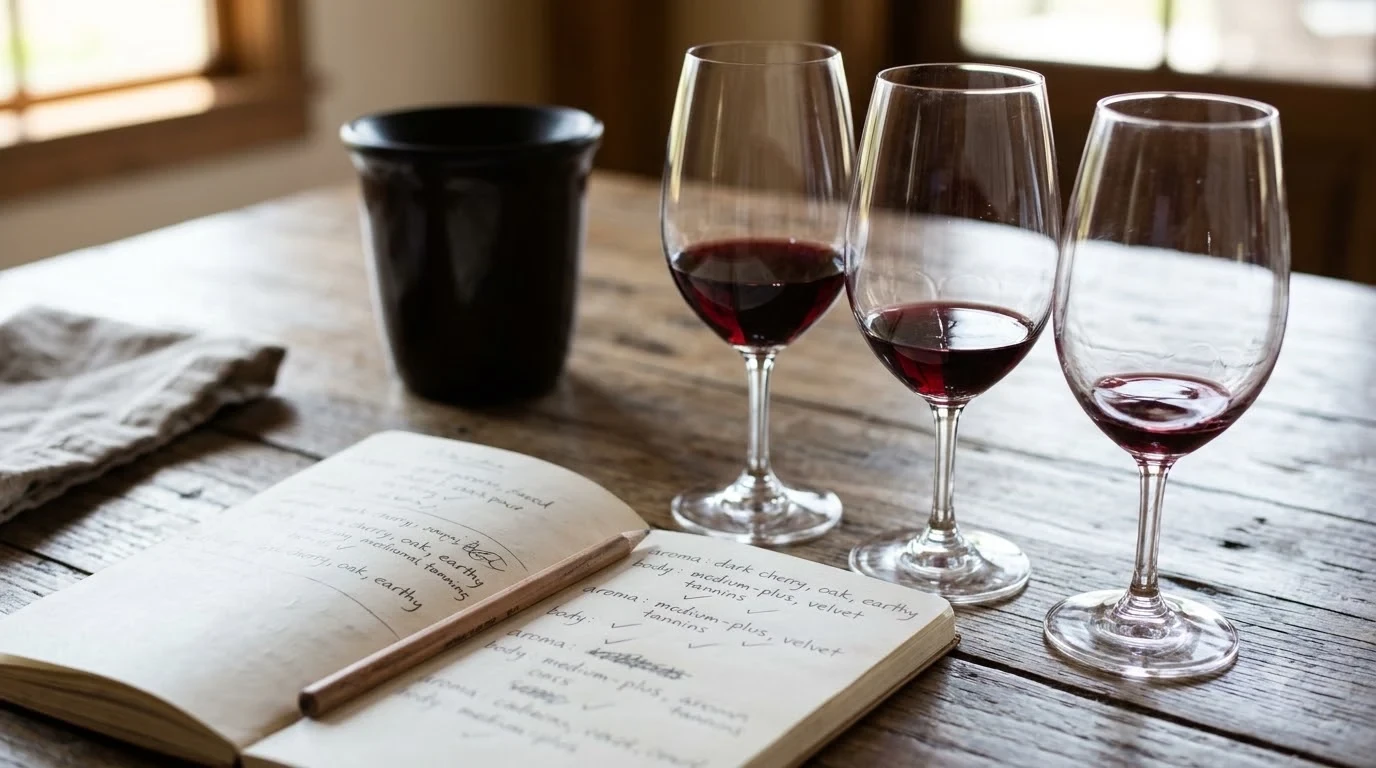
- Take tasting notes. Record the winery, grape variety, vintage, acidity, tannin, and flavors you notice. If you particularly enjoy a wine, ask about its production method and whether it is available for purchase or through a wine club.
- Plan the final stop around your interests. Finish with a meal at a winery restaurant, a relaxed tasting in Cottonwood, or a visit to Jerome. Leave sufficient time for the return journey and avoid scheduling a demanding drive immediately after a long tasting afternoon.
A sample itinerary could begin at Page Springs Cellars around 11 AM, continue to Javelina Leap around midday, and finish at Oak Creek Vineyards in the afternoon. This route focuses on a compact geographic area rather than attempting to cover the entire valley. Alternatively, a Cottonwood afternoon can begin around noon and include several Main Street tasting rooms before dinner.
For travelers coming from Sedona, the choice between these itineraries depends on whether the goal is to see vineyards or sample several producers. A dedicated vineyard day favors Page Springs and Cornville, while a shorter outing can focus on Cottonwood. Visitors with more time can add Clarkdale or Jerome on another day.
The official Verde Valley Wine Trail directory is a useful starting point for identifying participating destinations and finding the trail map and passport. It provides a broader picture of the region than relying on a single town’s tasting-room list.
Types of Verde Valley Winery Experiences Explained
Verde Valley wine destinations fall into several practical categories, including vineyard wineries, downtown tasting rooms, restaurant-focused properties, and educational wine centers. Understanding these differences helps visitors choose experiences that match their expectations.
Vineyard wineries and creekside tasting rooms
These destinations are ideal for visitors who want the landscape to be part of the experience. Page Springs Cellars, Javelina Leap Vineyard & Winery, and Oak Creek Vineyards and Winery are associated with the Page Springs area along Oak Creek. The setting is a major reason to include this corridor in a first-time itinerary.
Alcantara Vineyards offers another vineyard-oriented experience near Camp Verde. Its location along the river and its combination of wine service, vineyard grounds, and restaurant facilities make it an appealing option for a longer visit. Rather than treating it as a quick tasting-room stop, visitors can allow time to enjoy the setting.
Cove Mesa Vineyard in Cornville is another option for people interested in a winery environment with food service. Its location near Page Springs Road makes it useful for extending a Cornville itinerary without traveling into a different part of the valley.
Historic-town tasting rooms
Old Town Cottonwood is one of the easiest places to explore several Arizona wine producers in a single afternoon. Arizona Stronghold Vineyards, Burning Tree Cellars, Cellar 433, and Tantrum Wines are among the establishments in or around the North Main Street district.
These tasting rooms are especially useful for visitors who want to compare producers without spending time driving between vineyards. The experience is more urban than a vineyard visit, but it offers a convenient way to sample wines from different Arizona wineries. Visitors can also combine wine tasting with shopping and dining in Cottonwood.
Jerome offers a different historic-town experience. Caduceus Cellars, Passion Cellars, The Original Jerome Winery, and Cabal Cellars are among the names associated with the town’s wine scene. Caduceus Cellars is particularly recognizable within Arizona wine tourism. Jerome’s hillside streets and historic buildings provide a memorable backdrop, although visitors should account for the challenging parking situation.
Restaurant-centered winery visits
Some destinations work particularly well for visitors who want wine and food in one place. Merkin Vineyards Hilltop Winery & Trattoria in Cottonwood combines a winery setting with Italian-inspired food, including handmade pasta, wood-fired pizza, and gelato.
Page Springs Cellars also offers a bistro experience, making it a useful choice for visitors who prefer a longer stop rather than several short tastings. Alcantara’s on-site restaurant adds another option for combining vineyard scenery with a meal.
Food also changes how a wine tasting feels. A meal allows visitors to slow down and explore wine pairings instead of concentrating exclusively on tasting flights. If you enjoy structured food and wine combinations, ask which wines the restaurant recommends with its dishes.
Educational and small-production wine experiences
Southwest Wine Center in Clarkdale offers a different perspective because it is connected to Yavapai College’s wine program. Students in the college’s program make the wine, giving visitors an opportunity to explore the educational side of regional winemaking.
Chateau Tumbleweed is another worthwhile stop for visitors interested in smaller Arizona producers. Located in Clarkdale, it offers red, white, and rosé wines, along with charcuterie and a tasting-room setting. The winery works with grapes sourced from vineyards around Arizona, making it a useful destination for understanding the wider state’s wine-growing network.
These experiences are especially interesting for visitors who want to learn about grape sourcing, winemaking decisions, and the differences between Arizona growing regions. Ask staff about the varieties they produce and what distinguishes their wines from other local labels.
Common Mistakes When Visiting Verde Valley Wineries
The most common planning mistake is treating the Verde Valley as one compact winery district. Its destinations are spread across multiple communities, and a poorly organized itinerary can involve unnecessary driving and missed tasting opportunities.
Trying to visit too many wineries: It can be tempting to follow every destination on the wine trail, but each stop requires time. A visit to three wineries with food, conversations, and tasting flights can fill most of an afternoon. Selecting a smaller number of destinations gives you more time to appreciate the wine and scenery.
Confusing vineyard properties with downtown tasting rooms: Cottonwood has a useful concentration of tasting rooms, but those businesses are not necessarily surrounded by vineyards. If you specifically want to see vines, prioritize Page Springs, Cornville, or Camp Verde. If your priority is sampling different Arizona producers, downtown Cottonwood may be more practical.
Assuming every winery opens daily: Opening schedules differ considerably. Clear Creek Vineyard & Winery and Southwest Wine Center are listed as Friday-through-Sunday destinations in the local directory. A weekday itinerary built around these stops could therefore fail without advance verification.
Ignoring the difference between similarly named businesses: DA Ranch Estate Lodge and Vineyards in Cornville is not the same business as DA Vines Vineyard and Bistro in Old Town Cottonwood. Their names can easily create confusion during trip planning. Confirm the full destination name and address before entering directions.
Arriving with a large group without contacting the winery: Small tasting rooms may have limited seating, and some wineries recommend advance arrangements for groups. The Cottonwood tasting-room guide specifically advises groups of six or more to call ahead. This is especially important if you are arranging a celebration or traveling with several couples.
Expecting identical tasting menus: Each producer determines its own selection, tasting format, and fees. Some offer flights, while others may emphasize seated service, food, or special experiences. Ask what is included before committing to a tasting.
Underestimating Jerome’s terrain: Jerome is a historic hillside town, not a flat tasting district like Old Town Cottonwood. Limited parking and sloped streets can make moving between several tasting rooms more time-consuming than expected. Choose a central parking location and plan to walk carefully.
Forgetting the return journey: Wine tasting requires responsible transportation planning. Visitors should not assume that a short drive between two wineries makes it appropriate to drive after tasting. Use a designated driver or arrange professional transportation before the first stop.
Wine Buying, Care, and Storage Tips After Your Visit
Buying bottles directly from a Verde Valley winery can be a good way to remember a trip and discover wines that are less familiar outside Arizona. The most useful approach is to select wines based on your preferences, intended food pairings, and storage plans rather than purchasing bottles simply because they are local.
Start with a balanced selection. If you are buying several bottles, consider a combination of red, white, and rosé wines. A high-acidity white can work well with seafood and acidic dishes, while a fuller-bodied red may be more suitable for grilled meats and richer foods. Pinot Noir generally has lower-to-medium tannin and relatively high acidity, while Cabernet Sauvignon is typically more tannic and structured.
Ask about grape varieties and growing locations. Arizona wineries may use fruit from different parts of the state. Chateau Tumbleweed, for example, sources grapes from vineyards around Arizona. Cabal Cellars is described by the Verde Valley Directory as using fruit grown in Elgin and Willcox. Asking where the grapes originated can help explain differences between wines made under the same regional label.
Consider food pairing before purchasing. For a meal with grilled beef, Cabernet Sauvignon or Syrah can be suitable choices because their tannin structure can complement protein and fat. For seafood, lighter whites such as Sauvignon Blanc generally provide a more suitable match than strongly tannic reds. Acidic foods pair best with wines that have equal or higher acidity, while wine served with dessert should generally be at least as sweet as the dessert itself.
Think about serving temperature. Temperature influences how wine smells and tastes. Light-bodied whites and rosés are generally best served around 45 to 50 degrees Fahrenheit, while fuller-bodied whites work well around 50 to 55 degrees. Light reds benefit from slightly cooler serving temperatures of approximately 55 to 60 degrees, and fuller reds are typically served around 60 to 65 degrees.
Tip: If you bring home a bottle from a warm-weather winery visit, avoid leaving it in a parked vehicle. Heat can damage wine quality. Transport bottles in a protected bag or cooler and move them into appropriate storage as soon as possible.
Store bottles correctly. A cool, dark location with a relatively consistent temperature is preferable to a kitchen counter or sunny shelf. For bottles with traditional cork closures, horizontal storage helps keep the cork in contact with the wine. A temperature near 55 degrees Fahrenheit is a useful general storage target. Avoid locations near ovens, radiators, or windows where temperatures fluctuate significantly.
Handle opened bottles carefully. Once opened, still wines generally remain enjoyable for approximately three to five days when refrigerated and properly sealed. Sparkling wines typically last around one to three days with a suitable sparkling-wine stopper. These are general storage windows rather than guarantees, because wine style, age, and closure quality affect freshness.
Plan purchases around your trip. If you are visiting multiple wineries, keep track of which bottles are available for shipping and which are sold only at the property. Ask about wine-club memberships, case purchases, and shipping restrictions. Alcohol-shipping regulations vary by state, so confirm whether a winery can send bottles to your home before making a large purchase.
For readers who enjoy exploring wine destinations in other parts of the United States, our guide to the best Napa Valley wineries provides a useful comparison with California’s established wine country. Visitors interested in cooler-climate wines can also explore the best Willamette Valley wineries, while those planning an East Coast wine trip can consult our best Hudson Valley wineries guide. Additional advice on choosing bottles and understanding wine purchases is available through our wine-buying resources.
Frequently Asked Questions
Is the Verde Valley an official American Viticultural Area?
Yes. The Verde Valley is recognized as an American Viticultural Area, a designation that identifies a distinct grape-growing region. The designation recognizes the area’s geographic and growing characteristics rather than guaranteeing a particular wine style or quality level.
What grape varieties are grown in the Verde Valley?
Arizona vineyards grow varieties that include Syrah, Grenache, Mourvèdre, Cabernet Sauvignon, Zinfandel, and Viognier. The mix differs between vineyards because growers select grapes according to their individual sites and production goals. Ask wineries which varieties are estate grown and which come from other Arizona regions.
Can visitors buy wine directly from Verde Valley wineries?
Yes. Many wineries and tasting rooms sell bottles directly to visitors, and some also offer wine-club memberships. Availability can differ between tasting-room selections and online offerings. Ask whether a particular release is limited to the winery or available through regular retail channels.
Are dogs allowed at Verde Valley wineries?
Some wineries welcome dogs in designated outdoor areas, but policies vary. Chateau Tumbleweed is listed as dog-friendly, and some other destinations also advertise pet-friendly facilities. Confirm whether dogs are permitted inside tasting rooms, on patios, or in vineyard areas before bringing a pet.
Can visitors join a wine club at a Verde Valley winery?
Yes. Several regional producers offer wine clubs with recurring releases and member benefits. Burning Tree Cellars, Cove Mesa Vineyard, and Chateau Tumbleweed are among the wineries identified with wine-club offerings. Ask about shipment frequency, minimum commitments, pickup options, and cancellation conditions before joining.
The best Verde Valley wineries offer more than a tasting flight: they provide an introduction to Arizona’s growing wine scene through vineyard settings, distinctive local producers, historic towns, and food-focused experiences. Start with Page Springs and Cornville for vineyard scenery or Old Town Cottonwood for convenient tasting-room access, then add Jerome or Clarkdale if your schedule allows. With a sensible route, advance planning, and responsible transportation, a Verde Valley wine trip can become one of the most enjoyable parts of a Northern Arizona visit.
More in Wine Buying Guides
 Cheap Red Blend: How to Find a Flavorful Bottle for LessUpdated Nov 20, 2026
 Pinot Grigio Gift: How to Choose a Bottle They’ll EnjoyUpdated Nov 20, 2026
 Best White Wine at Total Wine for Every MealUpdated Nov 20, 2026
 Wine Fridge Replacement Shelves: Find the Right FitUpdated Nov 20, 2026
 Best Sparkling Wine Under 20: Find Bubbles Worth BuyingUpdated Nov 20, 2026
 Best Wine For Birthday Celebrations With Perfect Party PairingsUpdated Nov 20, 2026