

We may earn a commission when you buy through links on this page, at no extra cost to you. Learn more.
Syrah history begins in southeastern France, where DNA profiling proved the grape is a natural cross between two obscure local varieties—Dureza and Mondeuse Blanche—rather than an ancient import from Persia or Sicily. First documented in the Northern Rhône Valley in 1781, Syrah traveled to Australia in 1832 under the name Scyras before evolving into the powerhouse red known worldwide as Shiraz. Today, this thick-skinned grape spans roughly 460,000 acres across both hemispheres, producing styles ranging from peppery, savory Old World reds to plush, fruit-driven New World bottles.
Few wine grapes have inspired as many origin myths as Syrah, a varietal whose name alone sent historians looking everywhere from ancient Iran to Greek Sicily. Understanding how a humble regional vine from the Rhône-Alpes became one of the world’s most celebrated red grapes makes sense of why two bottles made from the exact same variety can taste completely different in your glass.
Myths and DNA Proof of Syrah’s Origins
For centuries, wine writers speculated that Syrah arrived in France from distant Mediterranean or Middle Eastern ports, but modern genetic testing settled the debate in 1998 by tracing the grape straight back to southeastern France.
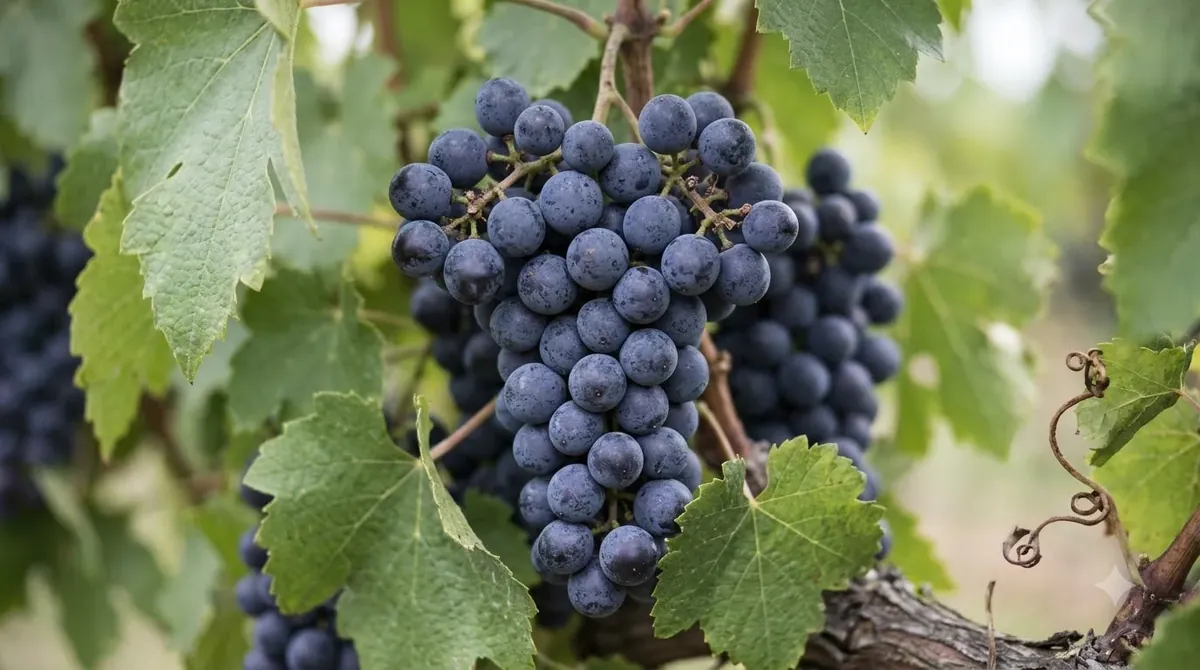
Before DNA analysis existed, ampelographers and historians relied on phonetic clues and local folklore to explain where Syrah came from. One popular legend claimed that a returning Crusader named Gaspard de Stérimberg brought vine cuttings from the Persian city of Shiraz to a hermitage hill in the Rhône Valley during the thirteenth century. Another theory pointed to Syracuse in Sicily, suggesting Roman legions carried the grape north after Emperor Probus lifted restrictions on provincial vineyard plantings in the third century AD. Even Pliny the Elder’s 77 AD account of a dark-skinned grape grown by the Allobroges tribe near Vienne—known as Allobrogica—was widely assumed to be an early ancestor of modern Syrah.
In 1998, researchers led by Dr. Carole Meredith at the University of California, Davis partnered with French viticultural scientists in Montpellier to run DNA profiling on Syrah alongside hundreds of traditional European varieties. Their findings overturned centuries of romantic storytelling: Syrah is the direct offspring of Dureza, a dark-skinned grape from the Ardèche region, and Mondeuse Blanche, a white-skinned grape native to Savoie. Because neither parent variety ever strayed far from its home turf in the Rhône-Alpes, geneticists concluded that the spontaneous cross almost certainly occurred within southeastern France itself, close to the Northern Rhône.
Linguists also cast doubt on the Persian and Sicilian naming theories, noting that ancient Shirazi wine was historically white rather than red. Instead, many scholars trace the name Syrah—along with regional synonyms like Serine and Scyras—to the Latin word serus, meaning late-ripening, or to local dialect terms describing the vine’s growth habits.
Rise in the Northern Rhône Valley
Syrah’s documented rise to prominence began in the steep granite vineyards of France’s Northern Rhône Valley, where its wines became prized across Europe long before formal appellation laws existed.
The earliest written mention of the grape under a recognizable name dates to 1781, when records outside the village of Tain-l’Hermitage noted Syrah growing on the slopes overlooking the Rhône River. Throughout the eighteenth and nineteenth centuries, wines from Hermitage and Côte-Rôtie earned an international reputation for longevity, deep color, and concentrated dark fruit. Their reputation grew so strong that winemakers in Bordeaux routinely imported Northern Rhône Syrah to “hermitage” their own wines—blending it into lighter vintages of Cabernet Sauvignon and Merlot to add body, color, and aging potential before twentieth-century appellation rules banned the practice.
Beyond its Northern Rhône strongholds of Hermitage, Côte-Rôtie, Cornas, and Saint-Joseph, Syrah gradually expanded south into warmer Mediterranean appellations. In Châteauneuf-du-Pape, Côtes du Rhône, and the Languedoc, growers found that blending Syrah with Grenache and Mourvèdre provided structure, dark pigment, and firm tannins that balanced Grenache’s softer, higher-alcohol profile. During the second half of the twentieth century, French plantings surged dramatically—rising from roughly 4,000 acres in 1958 to nearly 170,000 acres across southern France today.
How Syrah Became Shiraz in Australia
Syrah’s second great historical chapter opened in 1832, when Scottish-born viticulturist James Busby carried vine cuttings from France to Australia and launched the grape’s New World identity as Shiraz.
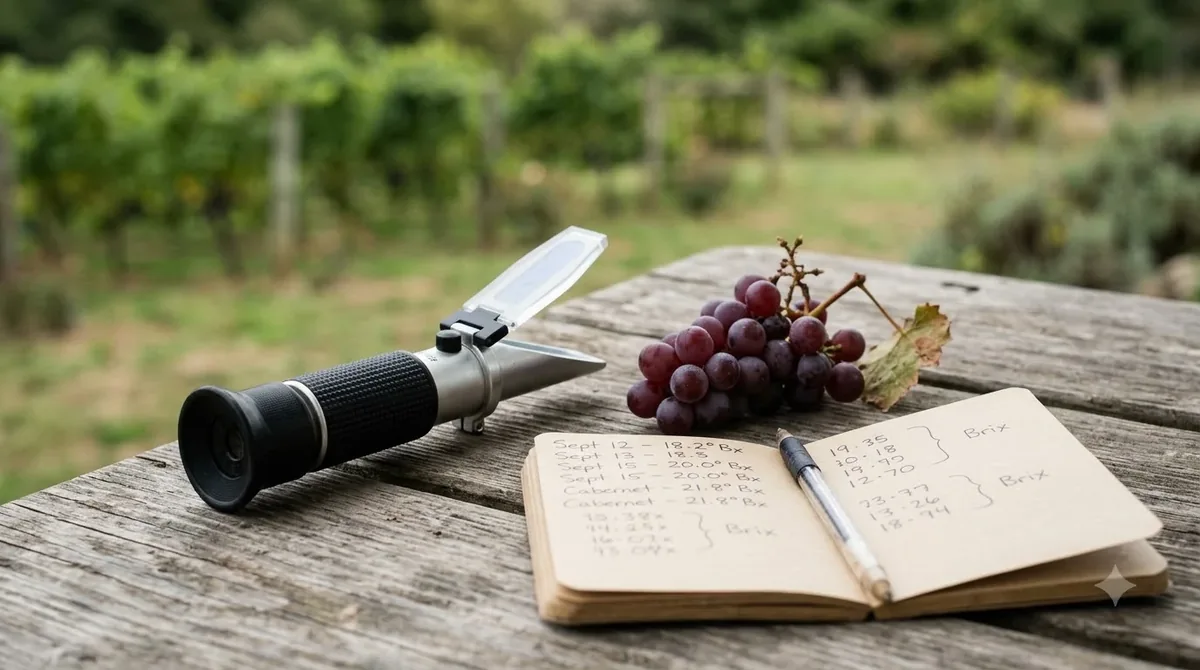
As Decanter’s guide to Syrah and Shiraz notes, Busby collected cuttings labeled Scyras in Montpellier and planted them in Sydney’s Botanical Gardens and the Hunter Valley. Over the following decades, Australian settlers carried those vines into South Australia’s warm Barossa Valley and McLaren Vale. Because Australia escaped the devastating phylloxera root louse outbreak that wiped out most European vineyards in the late nineteenth century, several of those original nineteenth-century plantings still survive—including Langmeil’s Freedom vineyard in the Barossa Valley, planted in 1843.
Through phonetic drift in Australian vineyards, Scyras gradually morphed into Shiraz, a spelling that eventually came to signify a distinct winemaking style as much as a geographic origin. While European Syrah emphasized savory pepper, smoke, and firm acidity, warm-climate Australian Shiraz became famous in the late twentieth century for lush blackberry jam, chocolate, sweet oak spice, and generous alcohol levels. Today, Shiraz accounts for roughly a quarter of Australia’s total vineyard acreage, though a growing wave of cool-climate Australian producers in regions like the Adelaide Hills and Yarra Valley now label their leaner, spicier bottlings as Syrah to signal Old World restraint.
Expansion Into California, Washington, and the New World
Following its success in France and Australia, Syrah spread across the Americas and South Africa, arriving in California in the late nineteenth century before experiencing a modern renaissance in the 1980s and 1990s.
Historical nursery records show that Syrah first reached California in 1878, yet it remained an obscure curiosity for more than a century. For decades, American wine drinkers frequently confused true Syrah with Petite Sirah—a separate grape variety bred in Montpellier around 1880 by botanist François Durif by crossing Syrah with Peloursin. True Syrah only gained commercial momentum in the United States during the 1980s, championed by a group of California vintners known as the Rhône Rangers alongside pioneering growers in Washington State’s Yakima Valley, where Red Willow Vineyard planted the state’s first commercial Syrah block in 1986.
Between 1995 and 2001, California Syrah acreage jumped more than tenfold, expanding from 1,330 acres to 14,700 acres as plantings spread across Paso Robles, Santa Barbara County, Napa, and the Sonoma Coast. Although California acreage later leveled off from its 2010 peak, Syrah remains the most widely planted Rhône variety in the state. Meanwhile, high-altitude vineyards in Argentina, coastal valleys in Chile, and historic estates in South Africa’s Stellenbosch and Paarl regions have established Syrah as a global benchmark grape. If you are exploring where Syrah is grown today, each of these regions reflects a different branch of the vine’s nineteenth- and twentieth-century migration.
How History Shaped Two Distinct Styles
Because Syrah adapted to both cool European hillsides and sun-drenched Southern Hemisphere plains, its history created two recognizable stylistic poles that still define the bottles on wine shop shelves.
According to Wine Folly’s overview of Syrah, the grape’s thick, dark skins produce wines with intense color concentration, firm tannins, and a signature black pepper aroma driven by a natural compound called rotundone. In cooler climates like the Northern Rhône, Sonoma Coast, or Washington’s Walla Walla Valley, slower ripening preserves crisp acidity and highlights savory notes of cracked black pepper, smoked meat, black olive tapenade, and dried violet. In warmer regions such as the Barossa Valley or Paso Robles, extended sunshine concentrates fruit sugars, yielding fuller-bodied reds packed with ripe blueberry, blackberry, cocoa, and sweet baking spices.
| Historical Era / Milestone | Region | Key Development | Stylistic Impact |
|---|---|---|---|
| Pre-1781 (Natural Cross) | Southeastern France (Rhône-Alpes) | Dureza pollinates Mondeuse Blanche in the wild, creating Syrah | Thick-skinned red grape with high pigment, firm tannins, and peppery rotundone |
| 1781 | Tain-l’Hermitage, Northern Rhône | First documented written record of Syrah in French vineyard logs | Established benchmark for age-worthy, savory, single-varietal reds |
| 1832 | Sydney & Hunter Valley, Australia | James Busby imports Scyras cuttings from Montpellier | Led to phylloxera-free old vines and the plush, ripe Shiraz style |
| 1878–1986 | California & Washington State | First U.S. cuttings arrive in 1878; modern Rhône movement begins in the 1980s | Bridged Old World savory structure with New World dark berry richness |
| 1998 | UC Davis & Montpellier | DNA profiling confirms Syrah’s French parentage | Ended centuries of Persian and Sicilian origin myths |
Comparing these two traditions side by side makes what Syrah tastes like far easier to predict before you pull the cork. Whether a bottle leans toward earthy Northern Rhône restraint or plush New World fruit, serving it around 60 to 65 degrees Fahrenheit—slightly below typical room temperature—keeps its alcohol balanced and allows both its floral and peppery aromatics to shine. For more context on how Syrah compares to other major red grapes, explore our guide to wine by type.
Tip: When shopping for a bottle, check the label spelling as a quick style clue—producers using “Syrah” usually aim for a drier, pepperier, higher-acid profile, while “Shiraz” generally signals riper dark fruit and a richer, fuller body.
Frequently Asked Questions
Are Syrah and Shiraz the exact same grape?
Yes, Syrah and Shiraz are genetically identical. Winemakers in France, the United States, and cooler regions typically use the original French name Syrah, while Australian and many South African producers use Shiraz to reflect the vine’s nineteenth-century migration and a riper, fruit-forward winemaking style.
Did Syrah really originate in the Iranian city of Shiraz?
No, genetic testing conducted in 1998 proved that Syrah originated in southeastern France. DNA profiling revealed that Syrah is a natural cross between two local French varieties, Dureza and Mondeuse Blanche, disproving older legends about Persian Crusaders or ancient Greek traders from Syracuse.
Is Petite Sirah an older or smaller version of Syrah?
Petite Sirah is a completely separate grape variety, not a smaller clone of Syrah. Created in Montpellier, France around 1880 by botanist François Durif, Petite Sirah (also called Durif) is an offspring of Syrah crossed with Peloursin, resulting in smaller berries with higher tannins and deeper color.
When was Syrah first planted in the United States?
The earliest records of Syrah in the United States date to 1878 in California, though commercial plantings remained minimal for over a century. Dedicated Syrah production only took off in the 1980s through California’s Rhône Rangers movement and early plantings in Washington’s Yakima Valley in 1986.
Tracing Syrah history from a spontaneous cross in the French Alps to old-vine vineyards in South Australia and steep hillsides along the West Coast shows how geography shapes a single grape. Knowing whether a bottle draws from its Northern Rhône roots or its Shiraz heritage lets you pick the exact balance of peppery spice and dark fruit you want at the table.
More in Wine Types & Grapes
 What Does Mourvèdre Taste Like? Flavor Profile, Regions, and PairingsUpdated Nov 20, 2026
 What Does Marsanne Taste Like? Flavors, Styles, and Food PairingsUpdated Nov 20, 2026
 What Does Malvasia Taste Like? Styles, Flavors, and Food PairingsUpdated Nov 20, 2026
 What Does Grenache Blanc Taste Like? Flavor Profile, Styles, and PairingsUpdated Nov 20, 2026
 What Does Garnacha Taste Like? Key Flavors, Styles, and Pairing TipsUpdated Nov 20, 2026
 What Does Fruit Wine Taste Like? A Complete Flavor and Style BreakdownUpdated Nov 20, 2026