


We may earn a commission when you buy through links on this page, at no extra cost to you. Learn more.
Pinot Noir sulfites typically measure around 50 to 100 parts per million (mg/L) in standard dry bottles, which is significantly lower than white wines, sweet dessert wines, and many everyday packaged foods. Like every wine on the shelf, Pinot Noir contains naturally occurring sulfur dioxide produced by yeast during fermentation, alongside small, regulated additions used by winemakers to prevent oxidation and bacterial spoilage. Because red wines extract natural antioxidant tannins from grape skins during maceration, they require far less added sulfur than crisp white or sweet styles.
Understanding how sulfur compounds work inside a bottle of Pinot Noir clears up one of the most persistent misconceptions in the wine aisle. Far from being a synthetic shortcut, sulfur dioxide has served as a fundamental winemaking preservative since ancient Roman times, keeping delicate red fruit aromas vibrant from the cellar to your dinner table.
What Are Pinot Noir Sulfites and How Much Is in a Bottle?
In wine chemistry, “sulfites” refers to sulfur dioxide (SO2) and related mineral salts that exist in every fermented beverage, with a typical dry red wine like Pinot Noir carrying roughly 50 mg/L to 100 mg/L of total sulfites. Even bottles produced with zero chemical additions still contain between 10 and 40 ppm of naturally occurring sulfites generated by yeast metabolism alone.
Winemakers track sulfites in two distinct pools inside the bottle: bound SO2 and free SO2. Bound sulfites attach themselves to sugars, pigments, and fermentation byproducts like acetaldehyde, rendering them chemically inactive as preservatives. Free sulfites remain unbound in the liquid—including a tiny, active gas fraction known as molecular SO2—where they actively shield the wine against oxygen and unwanted microbes. Together, the free and bound fractions make up the total sulfite measurement regulated by government agencies.
Pinot Noir sits in an interesting middle ground compared to other red varieties. Reviewers at Wine Folly note that wines with deeper color and higher tannin levels require fewer sulfites than pale wines, because phenolic compounds from the grape skins act as natural antioxidants. Because Pinot Noir has thin skins and lighter pigmentation than Cabernet Sauvignon, winemakers carefully balance their sulfur additions—especially when a vintage yields higher pH levels, as wines at pH 3.6 and above are less microbiologically stable and need slightly more protection to maintain shelf life.
How Pinot Noir Sulfites Compare to Other Wines and Foods
Dry red wines such as Pinot Noir contain fewer sulfites than almost any other commercial wine category, and dramatically less than common grocery items like dried fruit or frozen potatoes. While a glass of Pinot Noir delivers trace amounts of sulfur dioxide, a handful of dried apricots can contain up to twenty times that concentration.
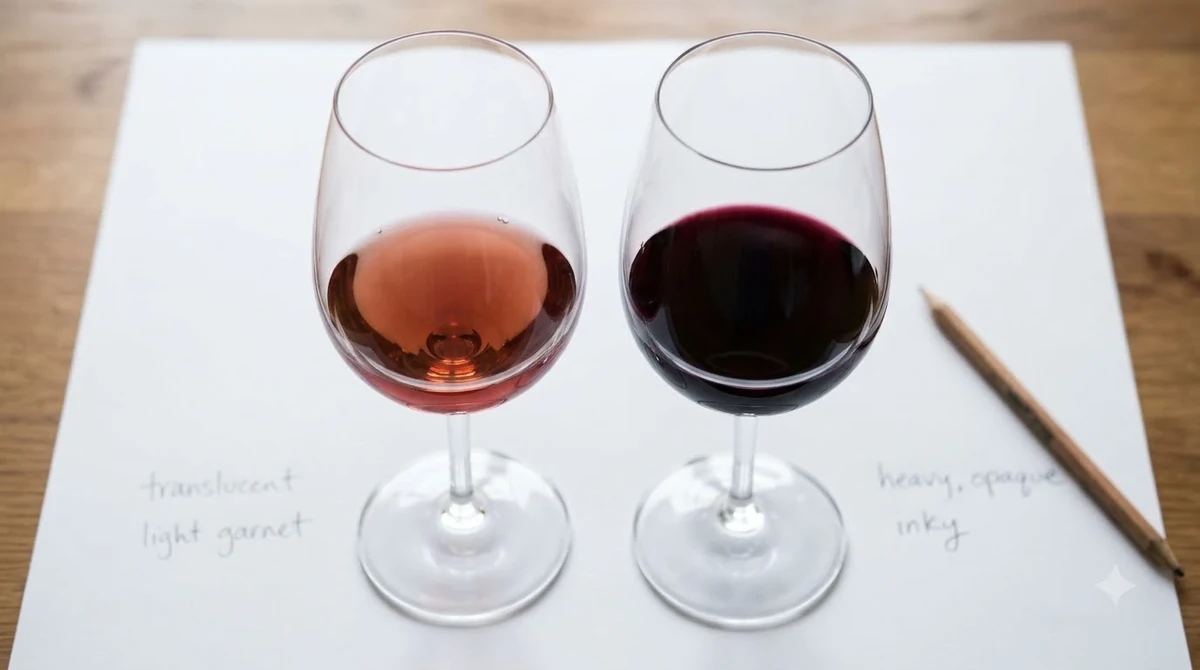
The primary driver behind sulfite levels in wine is residual sugar rather than grape color alone. When a wine finishes fermentation with unfermented sugar remaining, wild yeasts can restart fermentation inside the sealed bottle, creating carbonation, cloudiness, and off-flavors. Because Pinot Noir is almost universally fermented completely dry—typically under 5 grams of sugar per liter—winemakers do not need heavy doses of sulfur dioxide to keep stray yeasts dormant. Sweet dessert wines, by contrast, require much higher levels to stabilize their sugar content and overcome sugar-binding reactions.
| Beverage or Food Item | Typical Sulfite Level | Regulatory or Practical Context |
|---|---|---|
| No-Added-Sulfite Wine | 10 to 40 ppm (mg/L) | Produced naturally by yeast during fermentation |
| Dry Red Wine (Pinot Noir) | 50 to 100 ppm (mg/L) | Protected partly by natural skin tannins; US legal cap is 350 ppm |
| Dry White Wine | 80 to 130 ppm (mg/L) | Lacks red grape tannins, requiring more antioxidant protection |
| Sweet and Dessert Wine | 150 to 300+ ppm (mg/L) | High sugar requires extra SO2 to prevent secondary fermentation |
| Bottled Lemon Juice | Up to 500 mg/L | Prevents enzymatic browning and flavor degradation |
| Dried Apricots | 500 to 2,000 mg/kg | Used heavily to preserve bright orange color and shelf stability |
Exploring different categories across Wine by Type makes these preservation differences even clearer. Crisp, aromatic whites like Sauvignon Blanc and Riesling lack the protective tannins found in red grape skins, so cellarmasters rely more heavily on free sulfur dioxide to keep citrus and floral notes from turning flat and nutty. Even though Pinot Noir is lighter in structure—many drinkers wonder is Pinot Noir full bodied when comparing it to Syrah or Malbec—its skin maceration still provides enough natural phenolic buffering to keep sulfite additions modest.
Why Winemakers Use Sulfites in Pinot Noir
Sulfur dioxide performs two irreplaceable jobs in the winery: it acts as an antioxidant that preserves fresh berry aromatics and ruby color, and it serves as an antimicrobial agent that stops spoilage bacteria from turning wine into vinegar. Without a measured baseline of free SO2, Pinot Noir quickly loses its hallmark perfume of cherry, raspberry, and rose petal, shifting instead toward bruised apple and Sherry-like oxidation.
Technically, sulfur dioxide does not simply absorb oxygen out of the liquid. Instead, it interrupts the chemical chain reaction caused by oxygen exposure by binding with hydrogen peroxide and quinones before those compounds can dull fruit flavors or brown the wine’s pigment. At the same time, molecular SO2 suppresses unwanted microbes like Brettanomyces and acetic acid bacteria that thrive in barrels during aging.
This protective shield also dictates cellaring potential. If you have ever checked how long does Pinot Noir last unopened, the answer depends heavily on proper closure integrity alongside balanced free sulfur dioxide levels. Winemakers typically add small increments of SO2 at three critical moments—after crushing the grapes, during barrel aging, and just before bottling—using just enough to keep the wine stable during shipping and storage without muting its expressive bouquet.
Labeling Laws, Organic Rules, and “No Added Sulfites”
In both the United States and the European Union, any wine containing 10 parts per million or more of total sulfur dioxide must carry a “Contains Sulfites” warning on its label. Because fermentation naturally generates at least 10 to 40 ppm of sulfites on its own, virtually every bottle of Pinot Noir sold commercially displays this statement regardless of whether the winemaker added extra sulfur.

The mandatory label text acts as a binary threshold rather than a measurement scale. Under rules enforced by the US Alcohol and Tobacco Tax and Trade Bureau (TTB), a minimal-intervention Pinot Noir sitting at 15 ppm carries the exact same “Contains Sulfites” phrase as a sweet white wine bottled at 300 ppm. While the maximum legal limit in the United States is 350 ppm across all wine styles, European regulations enforce stricter tiered caps—limiting conventional dry red wines to 150 mg/L and certified organic dry reds under 2 grams per liter of residual sugar to 100 mg/L.
Certification rules also differ sharply across the Atlantic when you shop for organic Pinot Noir. In the United States, a bottle displaying the USDA Organic seal cannot contain any added sulfites, leaving only naturally occurring fermentation sulfites inside. Wines labeled “Made with Organic Grapes” in the US are permitted small sulfur additions up to a strict 100 ppm ceiling. Checking a winery’s technical sheet—often downloadable from producer websites—is the most reliable way to see exact free and total SO2 numbers for a specific vintage.
Tip: If a newly opened bottle of Pinot Noir smells slightly like struck matches or boiled eggs, decant it for 15 to 30 minutes and chill it slightly toward cellar temperature; warmer liquid releases volatile sulfur compounds faster, and brief aeration lets them dissipate.
Sulfite Sensitivity vs. Other Red Wine Reactions
According to editors at Wine Enthusiast, sulfites are frequently blamed for post-wine headaches, yet clinical evidence points toward other naturally occurring compounds in red wine as the far more likely culprits. Genuine sulfite sensitivity affects a small fraction of the population—most notably roughly 5 to 10 percent of people who have asthma—and typically triggers respiratory symptoms such as wheezing, chest tightness, or skin hives rather than a standard headache.
When someone experiences nasal congestion, flushing, or a throbbing head after drinking Pinot Noir, winemakers and researchers point toward biogenic amines like histamines and tyramine, alongside grape tannins and alcohol dehydration. Because red wines ferment in contact with grape skins and seeds, they extract significantly higher concentrations of histamines and phenolic compounds than white wines. If you can eat dried fruit, deli meats, or bottled salad dressings without issue, sulfites are unlikely to be the cause of a wine reaction.
It also helps to separate sulfites from unrelated dietary concerns when evaluating wine labels. For instance, shoppers researching is Pinot Noir gluten free often worry that fining agents or preservatives introduce allergens, when pure grape wine is naturally gluten-free and sulfite labeling exists strictly for asthmatic and sulfite-sensitive consumers.
Frequently Asked Questions
Does Pinot Noir have more sulfites than Cabernet Sauvignon?
Pinot Noir and Cabernet Sauvignon typically carry very similar sulfite levels, generally ranging from 50 to 100 mg/L in dry commercial bottlings. Because Cabernet Sauvignon has thicker skins and higher tannin levels that provide extra natural antioxidant protection, it occasionally requires slightly less added sulfur than lighter-bodied Pinot Noir. Both dry reds contain substantially fewer sulfites than white or sweet wines.
Is there any Pinot Noir that is 100 percent sulfite-free?
No wine is completely free of sulfites because yeast naturally produces sulfur dioxide as a metabolic byproduct during alcoholic fermentation. Even bottles labeled “no added sulfites” or certified USDA Organic typically measure between 10 and 40 parts per million of naturally occurring sulfites.
Can you smell or taste sulfites in Pinot Noir?
At normal winemaking levels of 50 to 100 ppm, sulfites are virtually undetectable by taste or smell. However, if a wine is served too warm or contains excess unbound molecular sulfur, it can release a sharp struck-match aroma, whereas reduction issues during fermentation can create hydrogen sulfide that smells like rotten eggs.
Do sulfite-removing wine drops and wands actually work?
Commercial drops and filter wands typically rely on small amounts of hydrogen peroxide to oxidize free sulfites into sulfates. While they can lower free sulfur dioxide in the glass, they offer limited benefit for people sensitive to bound sulfites and often strip away delicate fruit aromas and flavor balance in the process.
Pinot Noir relies on modest, carefully calibrated levels of sulfur dioxide to protect its delicate aromatics without weighing down its silky texture. Checking vintage tech sheets or looking for organic certifications gives you direct insight into how a producer manages preservation, letting you choose bottles that match both your palate and your preferences.
More in Wine Types & Grapes
 What Does Mourvèdre Taste Like? Flavor Profile, Regions, and PairingsUpdated Nov 20, 2026
 What Does Marsanne Taste Like? Flavors, Styles, and Food PairingsUpdated Nov 20, 2026
 What Does Malvasia Taste Like? Styles, Flavors, and Food PairingsUpdated Nov 20, 2026
 What Does Grenache Blanc Taste Like? Flavor Profile, Styles, and PairingsUpdated Nov 20, 2026
 What Does Garnacha Taste Like? Key Flavors, Styles, and Pairing TipsUpdated Nov 20, 2026
 What Does Fruit Wine Taste Like? A Complete Flavor and Style BreakdownUpdated Nov 20, 2026