

We may earn a commission when you buy through links on this page, at no extra cost to you. Learn more.
The vinglace wine tumbler is a 10-ounce, glass-lined stemless drinkware piece built to keep wine insulated without letting it touch stainless steel. Its removable glass insert, double-wall steel exterior, and slide-close lid make it a practical choice for patios, picnics, and casual entertaining. The trade-off is a relatively small serving capacity and a few extra cleaning steps compared with a simple glass or one-piece metal cup.
Vinglacé calls this model the Glass Lined Wine Glass, although shoppers often describe it as a wine tumbler. The distinction matters: the design combines the familiar low, stemless shape with an insulating outer shell, while the beverage sits inside a removable glass insert. That construction is the central reason to consider it—and the main detail to understand before buying.
Specs and Key Features
The main specifications are straightforward: a 10-ounce capacity, a stainless-steel exterior, a removable glass interior, and a slide-close lid. The product is sold in 11 listed colors, and its insert is designed to come out for cleaning.
Vinglacé’s product page identifies the item as the Glass Lined Wine Glass and describes the construction as stainless steel outside and glass inside. A separate product listing from Loop & Tie provides a stated footprint of 3.5 by 3.5 by 5 inches and identifies the removable insert as borosilicate glass. That third-party dimension is useful for judging portability, but the official listing does not publish a dimensional drawing or a filled-weight figure.
| Specification | Published detail | Why it matters |
|---|---|---|
| Capacity | 10 fl oz | A compact serving size; leave room below the rim when using the lid. |
| Overall dimensions | 3.5 × 3.5 × 5 in | Loop & Tie’s listing gives a useful estimate for storage and cup-holder planning. |
| Exterior | Double-wall, vacuum-insulated stainless steel | Helps slow temperature change and limits exterior condensation. |
| Interior | Removable glass insert | Wine contacts glass rather than the steel shell. |
| Insert material | Borosilicate glass, according to Loop & Tie | Confirms the glass type named by that product listing. |
| Lid | Slide-close lid | Useful for carrying and reducing splashes; it should not be treated as guaranteed leakproof. |
| Capacity-to-pour context | 10 oz total | More than a standard 5 oz wine pour, but not enough for two full pours plus generous headroom. |
| Cleaning | Glass insert is dishwasher safe; steel exterior is hand wash | The two main parts have different care requirements. |
| Listed colors | 11: White, Rose Gold, Navy, Stone, Sea Glass, Copper, Cool Blue, Black, Sand, Rose, Coral | There is a broad range of neutral, metallic, and brighter finishes. |
| Personalization | Available on all listed colors except Copper | A potential gift feature; confirm the chosen finish before ordering. |
The 10-ounce capacity is compact but workable for a casual pour: a standard 5-ounce serving leaves space for the lid and a little headroom. It is less suitable for oversized pours or drinks with plenty of ice.
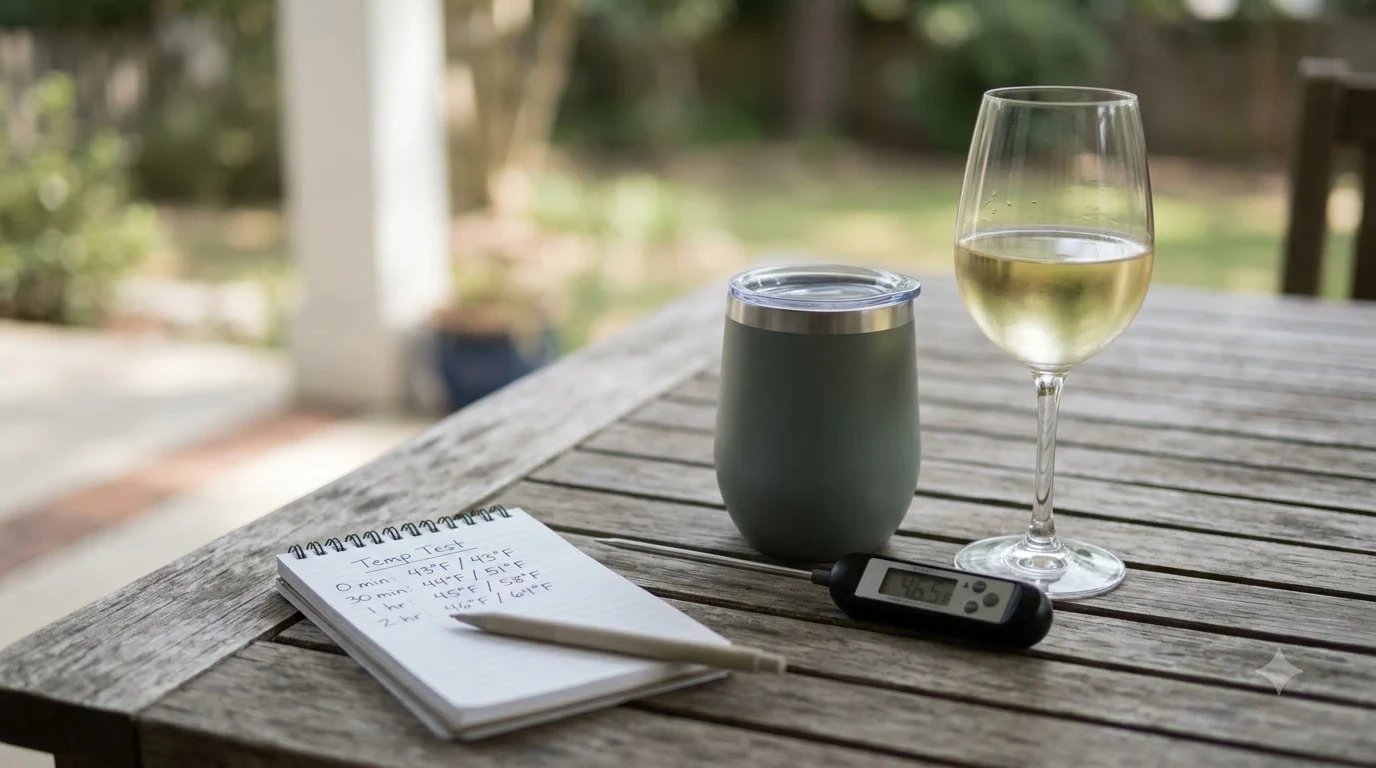
One point deserves careful reading in the brand’s performance information. Vinglacé lists up to 2 hours cold for its “Wine Glass,” versus 3-plus hours for a separately described glass-lined tumbler. Because this product page is titled Glass Lined Wine Glass, use the shorter figure as the relevant estimate. These are brand-stated claims, not independent laboratory results.
Tip: Pre-chill the wine before pouring. For a light white or rosé, a 45–50°F serving temperature is a useful starting point; the tumbler is designed to slow warming, not actively cool a warm drink.
What Owners Like
The strongest positive theme is the glass contact surface: customers who prefer drinking wine from glass do not have to sip directly from exposed stainless steel. Owners also praise the insert’s cleanability, the insulating outer body, and the finish options, with several comments describing the item as attractive enough for entertaining or gifting.
Reviews displayed on Vinglacé’s product page repeatedly mention the glass interior as a deciding factor. One owner contrasts it favorably with metal, while another says the wine stays very cold and describes the insert as durable. A separate review praises the combination of insulation and the absence of a steel aftertaste. These comments are anecdotal rather than controlled temperature tests, but they show what buyers value most: a familiar drinking surface inside a more durable-looking exterior. The glass-lined layout suits drinkers who dislike sipping from metal. Wine rests in the removable insert, and Vinglacé describes glass as non-porous and less likely to retain odors or stains.
The removable insert makes the drinking surface accessible for washing. Buyers praise the appearance, and the listing shows 11 finishes, including White, Navy, Rose Gold, Sea Glass, and Coral. Personalization is offered on all listed colors except Copper; allow 7 to 10 business days for custom work, according to the official listing. Outdoors, the stemless base and surrounding shell may feel more practical than a thin-walled stemmed glass. The insert is still glass, so the tumbler is not unbreakable. One owner mentions using it around a boat, RV, and fire pit; that is a personal use case, not a rugged-use certification.
To see the exact finish choices and customization controls, compare the live Vinglacé Glass Lined Wine Glass listing with the options offered by the seller. Color availability can change, and a finish name does not always predict its exact appearance under indoor and outdoor light.
Common Complaints
The recurring caution is not about the basic concept; it is about the removable insert and the lid. A small number of customer comments mention difficulty getting the glass insert back into the shell or a leak, while other comments point to differences in exterior finish from older versions. These are worth considering, but the available comments do not establish a widespread defect rate.
One review on the official product page says the insert was difficult to put back and that the cup leaked. Another customer says the newer exterior coating differs from the finish on an older Vinglacé glass, while a separate comment says the Copper color looked more gold than expected. These are individual experiences, not proof of a widespread defect. They point to three practical checks: seat the insert fully, inspect the lid fit before carrying a filled cup, and compare finish photographs before selecting a color.
Treat the lid as splash control, not a license to pack the tumbler on its side. Vinglacé describes a slide-close lid; Loop & Tie mentions a silicone seal. A sliding opening is not the same as a sealed travel-bottle closure, so keep it upright and leave headroom. The insert adds a handling step: lift it out, wash and dry it, then return it to the shell. Seat it straight rather than forcing it at an angle if it catches. That routine suits someone who values glass contact more than one-piece simplicity.
Capacity is another limitation some buyers may notice. At 10 ounces, it is smaller than many general-purpose travel cups. The official page does not provide a separate empty weight, and the available third-party listing gives dimensions but no reliable weight figure. That makes it difficult to judge how heavy it feels in the hand from published numbers alone. The outer steel shell and glass insert mean it will not have the featherweight feel of a disposable cup or thin plastic vessel. Insulation does not actively chill wine: Vinglacé lists up to 2 hours cold for its Wine Glass and recommends starting with a chilled drink. Pre-chill the wine; a warm pour will not become cold inside the cup.
Who Should Buy and Who Should Skip
This tumbler makes the most sense for someone who wants the taste and feel of glass with the convenience of an insulated outer body. It is particularly suited to a patio, poolside table, picnic, or casual dinner where a 10-ounce serving vessel and a slide-close lid are useful.
Buyers who dislike the metallic feel of steel drinkware are the clearest match. The wine touches the glass insert, not the steel exterior, and the insert can be removed for cleaning. That construction also suits people who alternate between wine and other beverages and prefer a non-porous drinking surface. The lid is useful for carrying a cup from the kitchen to the patio or reducing accidental splashes around a crowded table, provided it stays upright. It can work as a gift: 11 listed colors and personalization on all except Copper offer options. Plan around the stated 7-to-10-business-day customization window, and make sure a 10-ounce capacity suits the recipient’s usual pour.
Skip it if a fully leakproof commuter mug is essential. The slide-close lid is useful, but the available product information does not justify treating it like a sealed bottle for a backpack or suitcase. A one-piece stainless tumbler is simpler for people who prioritize ruggedness and easy cleanup over glass contact; a conventional stemmed wine glass is better for a formal tasting, where bowl shape, aroma, and swirling matter more than insulation. It is also not ideal for someone who wants a large serving or an especially light cup. The 10-ounce capacity leaves limited headroom once a pour is in the glass, and the glass insert plus steel shell adds structure. People who mainly drink wine indoors may get more value from an ordinary stemless glass, while frequent outdoor drinkers may appreciate the insulation.
Before choosing it, decide which feature matters most: glass contact, temperature maintenance, portability, or a spill-resistant lid. The Vinglacé is strongest when the first two lead the list. For a broader look at this style category, the site’s guide to a stemless wine tumbler explains what to compare in low-profile wine drinkware, while its overview of a wine tumbler with lid helps separate splash control from genuinely leakproof travel construction.
How It Compares to Alternatives
The Vinglacé sits between an ordinary stemless wine glass and a conventional insulated metal tumbler. It offers a glass drinking surface and a more protective outer body than a single layer of glass, but its insert and lid add parts that a basic glass does not need.
Compared with a standard stemless glass, the Vinglacé is more practical outdoors: its steel shell surrounds the glass insert and the lid can limit splashes. A traditional glass is easier to rinse and has no insert to remove. For tasting Cabernet Sauvignon or Pinot Noir, a proper wine glass remains more useful because bowl shape and aroma matter; on a deck, insulation may matter more.
Compared with a one-piece stainless travel tumbler, Vinglacé trades simple cleanup for a glass interior. A metal cup may be easier to carry if its lid is commuter-ready, while the Vinglacé keeps wine away from the metal drinking surface. Its insert needs separate handling, and the slide-close lid should not be assumed leakproof. A dedicated wine tumbler with lid may be better for someone who wants the same format but does not care about a removable liner. Compare the lid seal, capacity, cleaning instructions, and whether the cup is designed for upright carrying or bag transport. Vinglacé has a stated 10-ounce capacity but no published leakproof rating or empty weight, omissions that matter more to a commuter than to a patio user.
Vinglacé’s figures distinguish the formats: up to 2 hours cold for the Wine Glass, versus 3-plus hours for its separately named glass-lined tumbler. Do not automatically apply the longer figure to this model. The manufacturer’s insulation and care explanation says to hand-wash the steel exterior while the insert can go in the dishwasher. Think of it as a specialized glass-lined cup rather than an all-purpose travel mug or a replacement for every wine glass in the cabinet. For other entertaining accessories, the site’s Accessory Brands section is a helpful starting point for comparing different types of wine gear. The Vinglacé fills a narrow but useful role: a more protected vessel for an everyday pour where temperature and the feel of glass both count.
Frequently Asked Questions
Does the Vinglacé wine tumbler have a real glass interior?
Yes. Loop & Tie identifies the removable insert as borosilicate glass. The 10 fl oz capacity is about 296 ml, which is enough for two measured 5 oz servings only if the cup is filled close to its full capacity.
Can the glass insert go in the dishwasher?
Yes. Vinglacé recommends placing the insert on the top rack. Its care guidance also says to avoid abrasive cleaners and steel wool on the drinkware, since these can damage the exterior finish.
Can this glass-lined cup be used for hot drinks?
The brand says its glass-lined drinkware can be used for hot beverages as well as cold ones. Its general guidance lists 2 to 3 hours for hot coffee in the separately described tumbler category, a figure that should not be confused with a tested result for this wine-glass shape.
Can the glass insert be frozen before serving?
Vinglacé’s general care guidance says not to freeze its products, even though an older product-page answer addressed the insert separately. Follow the broader care instruction and keep the glass insert out of the freezer unless customer support confirms otherwise for your exact model.
Are replacement glass inserts available?
Vinglacé’s support information says replacement inserts are offered for its drinkware products through the accessories collection or customer service. Confirm compatibility with the Glass Lined Wine Glass before ordering, because inserts are not necessarily interchangeable across every cup size or shape.
The Vinglacé Glass Lined Wine Glass is a thoughtful option for wine drinkers who want a glass contact surface without giving up an insulated outer shell. Its 10-ounce capacity, removable insert, and slide-close lid suit relaxed outdoor use, but buyers should treat the lid as splash control and allow for the extra cleaning step. Choose it for the glass-lined design—not as a substitute for a large, fully leakproof travel mug or a traditional tasting glass.
More in Wine Accessories
 ZWILLING Electric Wine Opener Review: Features and DrawbacksUpdated Nov 20, 2026
 Vinturi Electric Wine Opener Review for Easy UncorkingUpdated Nov 20, 2026
 Vinabon Wine Aerator Review for Easier, Cleaner Wine ServingUpdated Nov 20, 2026
 Vacu Vin Electric Wine Opener Review: Easy Cork Removal for Home Wine LoversUpdated Nov 20, 2026
 Rabbit Wine Accessories for Easier Home Wine ServiceUpdated Nov 20, 2026
 Vinabon Wine Opener Review: Fast Cork Removal With Less EffortUpdated Nov 20, 2026