

We may earn a commission when you buy through links on this page, at no extra cost to you. Learn more.
The marquis decanter is a stylish crystal serving vessel, and the Marquis by Waterford Maxwell is a particularly appealing choice for whiskey enthusiasts who want decorative detail alongside practical pouring features. Its lead-free crystalline construction, 28-ounce capacity, cut pattern, and fitted stopper make it suitable for displaying and serving spirits. However, this is primarily a whiskey decanter rather than a dedicated wine-aerating vessel, and its hand-wash requirements deserve consideration before purchasing.
Marquis by Waterford occupies an interesting position in the crystal barware market. Its decanters combine traditional decorative details with contemporary proportions, giving buyers an alternative to plain glass bottles and more elaborate traditional crystal. The Maxwell model is particularly interesting because its appearance is supported by functional details, including a shaped pouring lip and an airtight stopper identified by Food & Wine. This review examines its specifications, reported performance, ownership considerations, and suitability for different home bars. It also distinguishes the Maxwell from other Marquis decanters so buyers can avoid confusing similarly named products.
Specs and Key Features
The Marquis by Waterford Maxwell Decanter is a compact, decorative whiskey-serving vessel with a 28-ounce capacity and a crystalline body. Its combination of vertical and diagonal cuts creates a traditional crystal appearance while providing additional texture for handling.
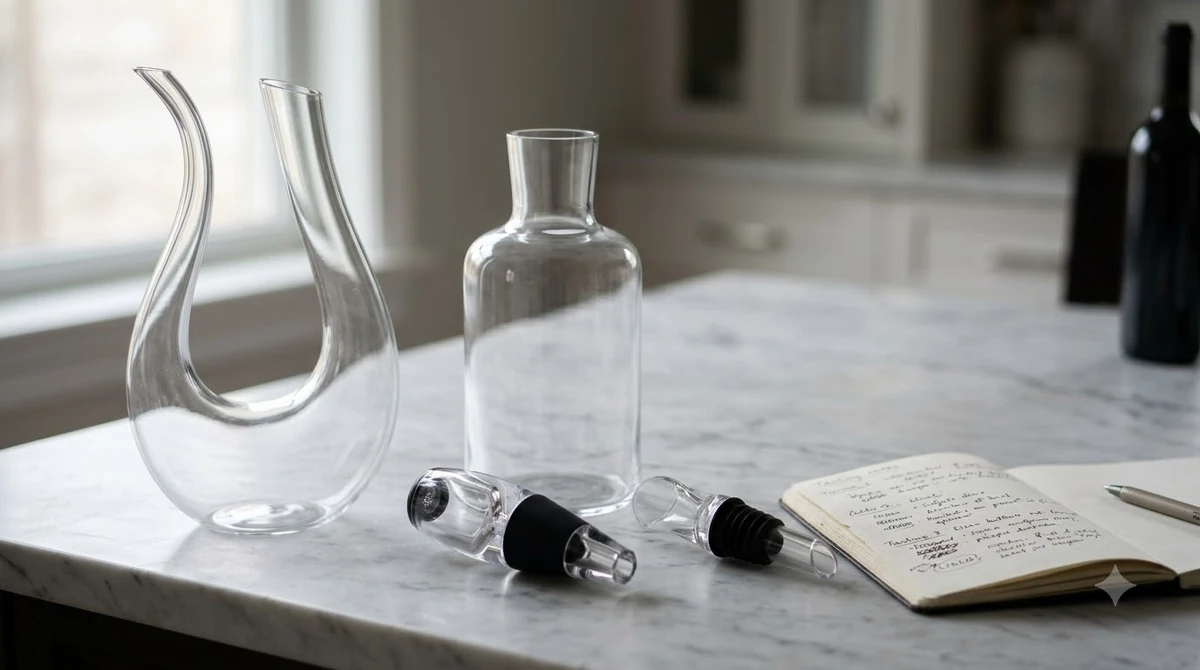
According to Dillard’s product specifications, the Maxwell measures 8.1 inches high, 3.5 inches wide, and 3.5 inches deep. These dimensions give it a relatively compact footprint compared with larger statement decanters designed for expansive bar cabinets. The 28-ounce capacity also makes it practical for holding a standard 750 ml bottle of whiskey, which contains approximately 25.4 fluid ounces. Food & Wine independently confirms that the Maxwell accommodates a complete standard bottle.
Material is another important consideration. Dillard’s identifies the Maxwell as crystalline, while Food & Wine specifically describes it as lead-free crystal. Crystal provides a clearer, more decorative presentation than many ordinary glass vessels. Its cut surfaces also interact with surrounding light, making the decanter visually noticeable even when it contains only a small quantity of whiskey.
| Specification | Marquis Maxwell |
|---|---|
| Brand | Marquis by Waterford |
| Collection | Maxwell |
| Material | Crystalline / lead-free crystal |
| Capacity | 28 fluid ounces |
| Height | 8.1 inches |
| Width | 3.5 inches |
| Depth | 3.5 inches |
| Design | Vertical and diagonal cuts |
| Stopper | Fitted crystal stopper |
| Packaging | Gift box |
| Cleaning | Hand wash |
| Dishwasher safe | No, according to Food & Wine |
The specifications make the Maxwell a straightforward product to evaluate. Its dimensions are particularly useful for buyers with limited cabinet space or a smaller serving area. The narrow footprint also means it can sit comfortably beside whiskey glasses, a cocktail shaker, and other bar accessories without requiring a dedicated display cabinet.
Its stopper is an important part of the design rather than merely a decorative finishing touch. Food & Wine highlights the airtight seal as one of the product’s principal advantages. A properly fitted stopper helps limit exposure to dust and outside air, although buyers should avoid assuming that every decorative crystal stopper provides the same sealing performance.
One detail deserves clarification: the Marquis range includes several different decanter designs. The Moments model, for example, has a listed capacity of 29 ounces and measures 10.7 inches high by 4.3 inches wide and long. Those specifications should not be attributed to the shorter, 28-ounce Maxwell model.
What Owners and Independent Reviewers Like
The Maxwell’s strongest selling points are its decorative cut pattern, practical pouring characteristics, and capacity for a complete standard bottle. Food & Wine’s product evaluation gives particular attention to the balance between appearance and everyday functionality.
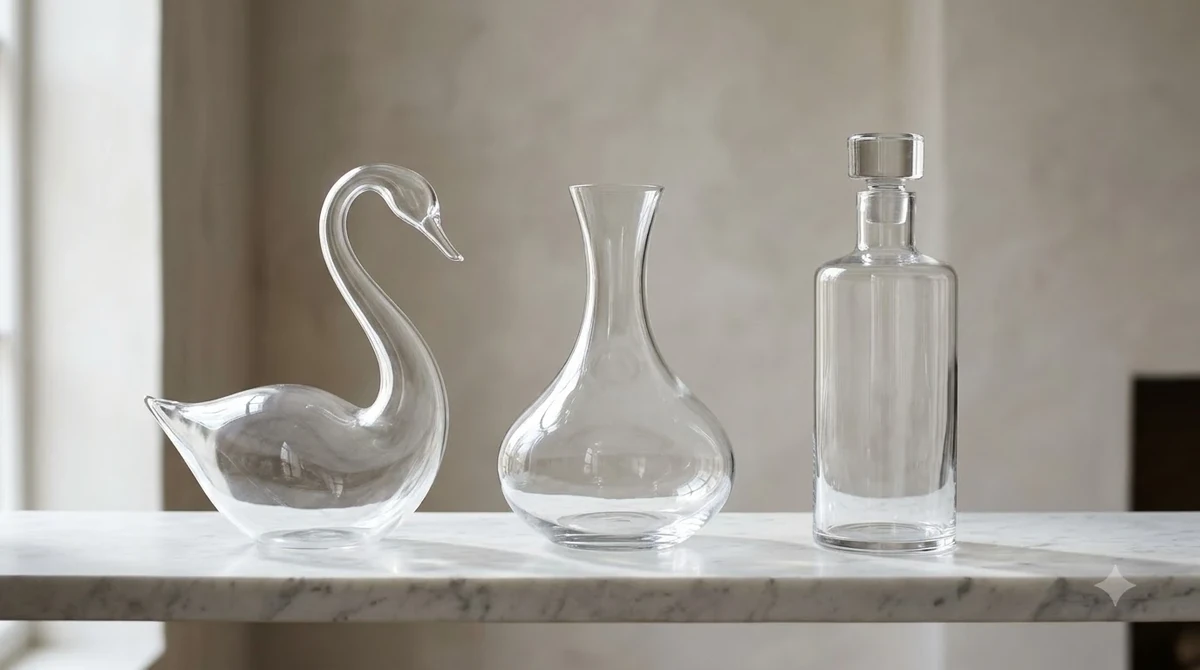
The first advantage is visual presentation. The vertical and diagonal cuts create depth across the crystal surface, producing a more detailed appearance than a plain cylindrical glass bottle. This makes the Maxwell suitable for a traditional home bar, a dining-room sideboard, or a drinks cabinet where accessories contribute to the overall presentation.
The second advantage is its textured grip. Food & Wine notes that the ridges help make the vessel easier to hold while pouring. This is a useful consideration because decorative decanters can become awkward when their sides are smooth, their bodies are unusually wide, or their stoppers are heavy. The Maxwell’s relatively compact dimensions help make handling more manageable.
Its curved pouring lip is another practical feature. According to Food & Wine, the lip helps prevent drips and spills during serving. A controlled pour matters when transferring whiskey into smaller glasses, especially during gatherings where a clean serving area is preferable to repeatedly wiping the bar surface.
The 28-ounce capacity also receives favorable attention. A typical 750 ml bottle contains approximately 25.4 fluid ounces, leaving the Maxwell with some additional space rather than requiring the whiskey to be filled to the very top. This is convenient for someone who prefers to transfer an entire bottle instead of keeping the original packaging nearby.
Gift presentation is another positive. Dillard’s lists a gift box as part of the Maxwell package. This makes it appropriate for occasions such as weddings, housewarmings, anniversaries, and milestone celebrations. A crystal decanter is also a more distinctive gift than a basic bottle opener or ordinary drinking glass because it can serve both a decorative and practical purpose.
For a closer look at the editorial evaluation, Food & Wine’s whiskey decanter review discusses the Maxwell’s capacity, crystal construction, stopper, pouring lip, and comparative strengths. Its assessment is useful because it considers both appearance and practical serving performance rather than focusing exclusively on decorative appeal.
There is an important distinction between independent editorial evaluation and customer ownership feedback. Food & Wine provides a product assessment based on its comparative decanter evaluation, but the available Maxwell-specific information does not establish a large body of independently verified long-term owner experiences. Buyers should therefore treat its reported pouring and sealing advantages as useful editorial findings rather than guarantees about every individual unit.
For people who enjoy arranging their barware, the Maxwell also offers flexibility. It can be displayed with matching crystal tumblers, placed on a serving tray, or used as a centerpiece alongside a whiskey bottle and cocktail accessories. Its relatively traditional appearance means it is less likely to look out of place when other barware styles change.
Those who prefer understated accessories may appreciate that its decorative pattern is built into the crystal rather than relying on bright colors or elaborate exterior decoration. It offers a recognizable crystal look without requiring an oversized or unusually shaped vessel.
Common Complaints and Limitations
The Maxwell is not without compromises. Its 28-ounce capacity is adequate for a standard whiskey bottle, but buyers seeking a larger display vessel may prefer a decanter with more generous volume, and its crystal construction requires careful cleaning.
The most clearly identified limitation comes from Food & Wine, which describes the Maxwell as smaller than several competing whiskey decanters. Although it holds a complete 750 ml bottle, the difference becomes relevant when someone wants extra room for a larger bottle, a substantial spirit collection, or repeated additions during an event.
Capacity should therefore be considered in relation to intended use. A 28-ounce decanter is sufficient for an ordinary 750 ml bottle, but it is not designed to accommodate every large-format bottle. Buyers who regularly purchase spirits in larger containers should consider a higher-capacity alternative rather than assuming that all standard-looking decanters hold the same volume.
Another limitation is maintenance. Dillard’s specifies hand washing, and Food & Wine identifies the Maxwell as not dishwasher-safe. This matters to people who prefer low-maintenance kitchen accessories. Crystal with decorative cuts and a separate stopper can require additional attention, particularly around the neck, base, and detailed exterior surfaces.
The material also deserves careful handling. Crystal may provide greater clarity and decorative brilliance than ordinary glass, but that does not make a decorative decanter immune to chips or breakage. Knocking the vessel against a hard countertop, placing it beside heavy bar equipment, or stacking it with other glassware can create unnecessary risks.
There is also a difference between a decorative whiskey decanter and a dedicated wine decanter. The Maxwell is designed and reviewed as a whiskey-serving vessel. Its compact form and stopper are not the same as the broad base and open neck commonly associated with wine-aerating decanters. Someone primarily interested in serving Cabernet Sauvignon or Syrah should consider a purpose-built wine decanter instead.
Finally, a decorative stopper should not be mistaken for a guarantee of indefinite spirit preservation. An airtight closure can help reduce exposure to outside air, but the amount of air inside the vessel, the frequency of opening, storage conditions, and the quantity remaining all influence how well the spirit keeps its original character.
Tip: Before transferring an entire bottle into the Maxwell, check that the stopper fits securely and that the vessel is completely dry. Keep the original bottle and its identifying information if you are transferring a collectible or premium whiskey, particularly when provenance and product identification matter.
Who Should Buy and Who Should Skip the Maxwell
The Marquis Maxwell is best suited to whiskey enthusiasts who value decorative crystal, want to display a standard bottle attractively, and appreciate practical pouring details. Its 28-ounce capacity and compact 8.1-inch height make it especially suitable for a smaller home bar.
It is a sensible option for someone who regularly serves bourbon, Scotch, rye, or other spirits to guests. The cut pattern gives it a recognizable crystal appearance, while its curved lip and textured body address two practical aspects of serving. Rather than choosing an oversized decorative bottle that takes up considerable space, buyers get a vessel designed around an everyday standard bottle.
Gift buyers may also find it appealing. The included gift box, recognizable Marquis by Waterford branding, and traditional crystal appearance make it appropriate for someone who enjoys entertaining. It is particularly suitable for a person who already owns whiskey glasses but does not have a dedicated serving decanter.
However, this is not necessarily the right choice for someone whose primary interest is wine service. Wine enthusiasts who frequently open young, tannic red wines may benefit more from a broad-based decanter designed to increase the wine’s exposure to air. For those buyers, a dedicated wine-serving vessel is more appropriate than a compact whiskey decanter.
People who regularly serve wine can also explore different stemware options before purchasing another decorative bar accessory. The shape of a glass affects how wine is presented and how aromas reach the drinker. Our guide to wine glasses explains the differences between common glass shapes and their intended uses.
Buyers who prefer dishwasher-safe accessories should also look elsewhere. The Maxwell’s hand-wash requirement is not an incidental detail. If convenience is more important than decorative crystal, a straightforward glass decanter with clearly stated dishwasher-safe specifications may be a better fit.
Likewise, collectors who regularly display oversized bottles or keep several different spirits in one serving vessel should compare capacities carefully. A larger decanter may provide more room, but its additional weight and dimensions can make pouring and storage less convenient.
For someone who wants one attractive decanter for occasional entertaining, however, the Maxwell presents a reasonable balance. Its compact size, bottle-compatible capacity, and detailed crystal surface make it more practical than a purely ornamental vessel that cannot comfortably accommodate a standard bottle.
How It Compares to Other Marquis and Crystal Decanters
The Maxwell sits within a wider assortment of Marquis by Waterford barware. Buyers should compare the actual collection, capacity, proportions, and construction rather than assuming that every product carrying the Marquis name has identical characteristics.
The Moments Whiskey Decanter is one useful comparison. Wayfair lists this model at 29 ounces, just one ounce above the Maxwell, but its dimensions are considerably taller at 10.7 inches and wider at 4.3 inches. Its lead-free crystal construction and contemporary silhouette make it a different option for someone who prefers a taller presentation.
The Vector Decanter provides another alternative. Dillard’s describes this model as a 24-ounce lead-free crystal decanter made in Slovenia. Its approximately 9.6-inch height and 4.1-inch width give it a different profile, with bold contours and a rounded stopper. Its smaller capacity means it does not offer the same standard-bottle convenience as the Maxwell.
For buyers interested in sets rather than individual vessels, the Marquis Brady collection is another relevant comparison. Food & Wine identifies a Marquis Brady three-piece whiskey set containing a 32-ounce decanter and two 11-ounce glasses. The additional glasses make it a more complete gifting option, although the set’s overall weight and the glasses’ substantial construction may not suit everyone.
| Model | Capacity | Dimensions | Best suited to |
|---|---|---|---|
| Maxwell | 28 oz | 8.1 x 3.5 x 3.5 in | Compact whiskey presentation |
| Moments | 29 oz | 10.7 x 4.3 x 4.3 in | Taller contemporary display |
| Vector | 24 oz | 9.6 x 4.1 x 4.1 in | Geometric decorative design |
| Brady three-piece set | 32 oz | 9.5 in high | Complete decanter and glass gift set |
The table illustrates why collection names matter. The Maxwell is not the largest option, but it provides enough room for an ordinary 750 ml bottle. The Moments is slightly taller and has a similar capacity, while Vector emphasizes a different geometric appearance at the expense of some capacity.
Those who prioritize having matching glasses should pay particular attention to the Brady set. Food & Wine describes its two 11-ounce double old-fashioned glasses as substantial and relatively heavy. That may appeal to someone who prefers a coordinated whiskey presentation, although it is less suitable for people who favor lighter drinking glasses.
When considering alternatives outside the Marquis range, the Crate & Barrel Hatch Decanter is another product discussed by Food & Wine. Its 32-ounce capacity is larger than the Maxwell’s, and it is made from ordinary glass rather than crystal. The editorial assessment highlights its airtight stopper and dishwasher-safe construction, making it relevant to buyers who prioritize convenience over decorative crystal.
For a buyer choosing between these products, the main question is not simply which decanter holds more. Material, stopper performance, dimensions, ease of cleaning, and the intended type of spirit all matter. The Maxwell is attractive when crystal presentation and a compact footprint are priorities, while a larger standard-glass model may make more sense for someone who frequently serves bigger quantities.
Glassware should also match the drink being served. A whiskey decanter is only one part of the presentation, and buyers who are assembling a broader collection may find our guides to red wine glasses and champagne flutes useful when choosing complementary serving pieces.
Cleaning, Storage, and Everyday Care
The Maxwell requires hand washing, careful drying, and sensible storage to preserve its crystal appearance. Proper maintenance is especially important because the cut exterior and stopper create more surfaces that can collect water marks or residue.
Begin by emptying the decanter after serving rather than leaving a small quantity of whiskey inside for extended periods. Rinse the interior with lukewarm water and use a suitable gentle cleaning method. Avoid sudden temperature changes, which can place unnecessary stress on glass and crystal.
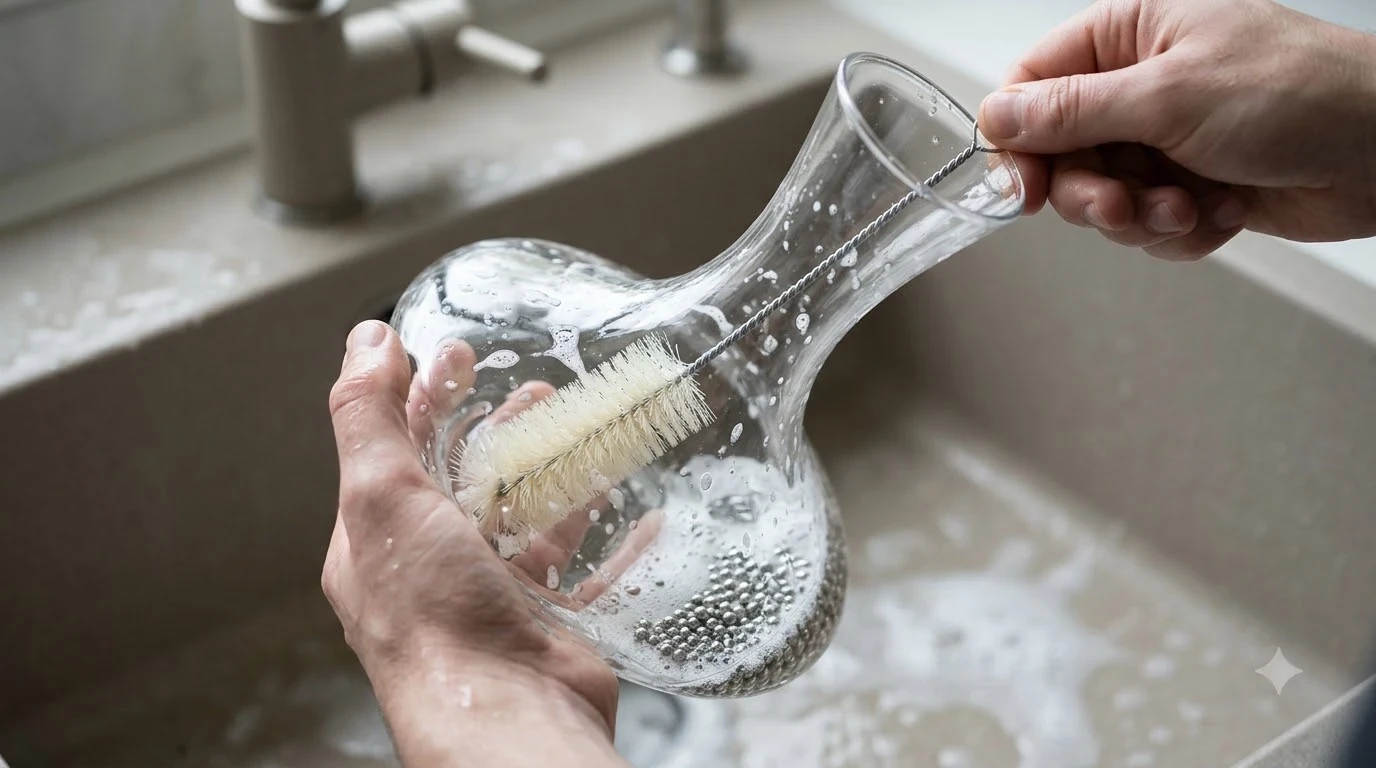
A soft cleaning cloth is preferable to abrasive pads. The decorative cuts are intended to catch light, so scratching the surface would undermine one of the Maxwell’s main visual advantages. A soft bottle brush may help with the interior if its dimensions permit safe access, but it should not be forced through a narrow opening.
The stopper should be cleaned separately and allowed to dry completely before being returned to the vessel. Moisture trapped around the stopper or neck can contribute to unwanted residue and water marks. Never force a stopper into position if it appears misaligned or becomes difficult to remove.
Food & Wine recommends hand washing crystal decanters generally, even when some ordinary glass alternatives can be cleaned in a dishwasher. This is particularly relevant to the Maxwell because Dillard’s explicitly specifies hand washing. A dishwasher introduces heat, movement, and possible contact with other objects, all of which can increase the risk of damage.
Storage also deserves attention. Place the decanter on a stable, level surface away from the edge of a counter or shelf. Keep it separate from heavy cocktail shakers, metal accessories, and other items that could knock against its crystal body.
When it is not in use, storing the decanter empty is generally a practical approach. This reduces the chance of residue accumulating inside the vessel and makes it easier to inspect for remaining moisture before the next use. If the decanter is displayed permanently, choose a location that avoids direct impacts and frequent handling by children or visitors.
The care requirements should not discourage buyers who appreciate crystal. They simply mean that the Maxwell is better suited to someone willing to give barware a little attention. A decorative crystal decanter is not intended to be treated like a disposable serving bottle.
For additional glassware comparisons, the Glassware Brands guide can help readers understand how different manufacturers approach material, design, and everyday serving equipment.
One final consideration is long-term spirit storage. Although an airtight stopper is useful, a decanter should not automatically become the permanent home for a rare or collectible whiskey. Keeping the original bottle and limiting unnecessary transfers is a more cautious approach when preserving product identification and minimizing handling.
Frequently Asked Questions
Can the Marquis Maxwell Decanter be used for cocktails?
Yes, it can serve as a presentation vessel for prepared spirits and suitable cocktail mixtures, provided the liquid is compatible with the vessel and it is cleaned promptly afterward. Avoid leaving acidic cocktail ingredients or sugary mixtures sitting inside crystal for extended periods. For drinks containing citrus, fresh fruit, or other perishable ingredients, prepare and serve them promptly rather than treating the decanter as long-term storage.
Does Marquis by Waterford make matching whiskey glasses?
Yes, Marquis by Waterford offers barware collections that include drinking glasses and decanter sets. The Brady three-piece set is one example identified by Food & Wine, with a decanter and two double old-fashioned glasses. Matching pieces should be selected by collection name because different Marquis designs do not necessarily share the same cut pattern.
Can a crystal decanter develop a cloudy appearance?
Cloudiness can develop from mineral deposits, detergent residue, or accumulated film. Hard-water marks are particularly noticeable on clear decorative crystal because they interfere with the surface’s transparency. Regular rinsing, appropriate gentle cleaning, and thorough drying help reduce this problem.
Should a crystal decanter be stored with its stopper inserted?
For long-term empty storage, keeping the vessel clean and completely dry is more important than maintaining a permanently closed stopper. Allowing the interior to dry can help prevent trapped moisture and stale odors. Keep the stopper alongside the decanter in a protected location to reduce the chance of chipping or accidental loss.
Can the Marquis Maxwell Decanter hold bourbon and Scotch interchangeably?
Yes, the vessel can be used for either bourbon or Scotch, provided it is thoroughly cleaned between different spirits. It is not designed around a particular whiskey style or country of origin. However, collectors may prefer to retain premium spirits in their original bottles so that labels, batch information, and identifying details remain available.
The Marquis by Waterford Maxwell is a strong option for buyers who want a compact, decorative crystal whiskey decanter with practical pouring features and enough capacity for a standard bottle. Its hand-wash requirement and relatively modest volume are worth considering, but its cut design, lead-free crystal construction, and reported airtight stopper make it an appealing addition to a traditional home bar. Choose it for attractive spirit presentation rather than wine aeration, and compare the Moments and Brady collections if a different size or coordinated glassware set better suits your needs.
More in Wine Glasses
 Zwiesel Glas Champagne Flutes for Durable Everyday Sparkling WineUpdated Nov 20, 2026
 Vera Wang Crystal Wine Glasses: Design, Quality and Buying AdviceUpdated Nov 20, 2026
 West Elm White Wine Glasses: Compare Designs for Better Everyday Wine ServiceUpdated Nov 20, 2026
 Zalto Stemless Wine Glasses: Discover Their Distinctive DesignsUpdated Nov 20, 2026
 Viski Champagne Glasses That Match Your Style and Sparkling WineUpdated Nov 20, 2026
 Vista Alegre Decanter Review: Crystal Style and Wine ServiceUpdated Nov 20, 2026