

We may earn a commission when you buy through links on this page, at no extra cost to you. Learn more.
The best commercial wine fridge for a restaurant, bar or shop is a glass-door or solid-door unit sized to the number of bottles you keep on hand, with a steady temperature range and a layout that lets staff reach the bottles quickly. Choose the door style by how the fridge is used, then check the capacity, the cooling performance and the way the shelves are arranged.
A commercial wine fridge is built for heavier use than a home unit. It is opened many times a day, often in a busy room, and it has to hold a steady temperature while staff take bottles in and out. This guide covers the main types, the settings where each one works best, and the points to check before buying, so you can match the fridge to your service.
Quick Comparison of Commercial Wine Fridge Types
Commercial wine fridges fall into a few groups. Glass-door units show the bottles and suit front-of-house display, while solid-door units keep light out and suit back-of-house storage. Under-counter models save floor space behind a bar.
| Fridge type | Best setting | Visibility | Space use |
|---|---|---|---|
| Glass-door display unit | Front of house, bars and wine shops | Bottles clearly visible | Freestanding, needs wall space |
| Solid-door storage unit | Back of house and kitchen storage | Bottles hidden, less light exposure | Freestanding, often larger capacity |
| Under-counter unit | Bar stations and tight service areas | Front-loading, quick access | Fits under a counter |
| Reach-in cabinet | High-volume restaurant wine service | Depends on the door type | Takes up a full section of wall |
The right type depends less on the brand than on how the fridge fits the workflow. A glass door helps sell a bottle, but a solid door keeps the bottles calmer and out of direct light, which matters for storage that sits for longer.
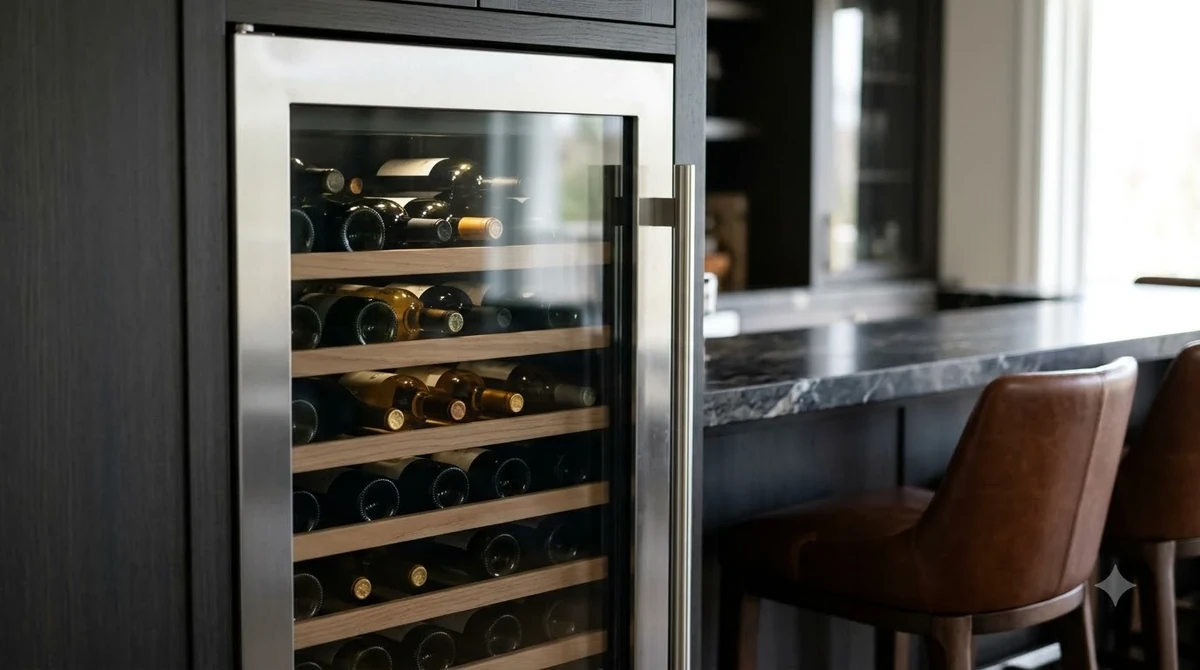
Best for Restaurants Pouring by the Glass
A restaurant that pours wine by the glass needs a fridge that holds several bottles of each style within easy reach of the service station. Speed of access matters more than the total volume, because staff reach in during every service.
Why it stands out: A compact reach-in or under-counter unit keeps the open-by-the-glass bottles close to the server. A clear layout with labeled shelves saves time during a busy dinner rush.
Keep in mind: Plan for how often the door is opened, and place the fridge away from hot equipment such as ovens and dishwashers so it can hold its temperature.
Best for: Restaurants and wine bars that serve a rotating list by the glass.
Best for Bars and Lounges
Bars often want the wine on show. A glass-door unit behind or beside the bar displays the labels and makes the selection part of the room’s look, while still keeping the bottles at a controlled temperature.
Why it stands out: Glass doors work as a visual selling point, and a bar-height or under-counter model keeps the bartender’s workspace clear. Lighting inside the unit helps the labels stand out.
Keep in mind: Glass lets in light, so keep the display away from direct sun and strong lamps. Check that the fridge can run in a warm room, since bars can get hot during a busy night.
Best for: Cocktail bars, lounges and wine bars where the display is part of the appeal.
Best for Wine Shops and Retail Displays
A retail shop needs a fridge that shows the stock clearly and keeps a range of bottles at one steady temperature. The customer is looking at the labels, so the display should make the bottles easy to read and compare.
Why it stands out: Glass-door display units with adjustable shelves show a broad range of styles at once. Many models hold bottles in neat rows, which helps staff restock quickly.
Keep in mind: A display unit near a window will work harder and may warm up, so position it on an interior wall where possible. Confirm that the shelves can hold the bottle sizes you stock, including larger formats.
Best for: Independent wine shops, delis and specialty retailers that sell chilled bottles.
Best for Catering and Event Storage
Caterers and event companies often need a fridge that can be moved between venues and used for a few days at a time. The unit should be sturdy, simple to load, and able to hold a temperature for the length of the event.
Why it stands out: A freestanding solid-door unit can serve as back-up storage, keeping stock cool before service and out of the way once the event starts. Solid doors cut the amount of light reaching the bottles during transport and setup.
Keep in mind: Check the power requirements and the space needed for ventilation, because a unit used in a tent or hall may not have the same airflow as a fixed kitchen. Plan the loading order so the bottles you need first are at the front.
Best for: Catering businesses, event companies and venues that keep wine on hand for many guests.

Best for Large Back-of-House Inventories
Some restaurants hold a large reserve of wine in the kitchen or a storage room, not on the floor. For this use, capacity and steady conditions matter more than display, and a solid-door unit with well-spaced shelves is usually the practical choice.
Why it stands out: A large solid-door unit keeps a bigger reserve in one place and cuts the amount of light reaching the bottles. Fixed shelves or sliding racks make it easier to keep the inventory organized and rotate older stock.
Keep in mind: A reserve that sits for a long time is not the same as a cellar. Storage in a commercial fridge keeps wine cool, but it does not replace a properly controlled cellar for wines meant to age.
Best for: Restaurants and hotels that hold a deep wine list and need a dependable reserve.
How to Choose a Commercial Wine Fridge
Start with the service, then the space, then the capacity. The service tells you whether the bottles need to be visible and how often staff will reach in. The space tells you whether the fridge can be freestanding, under a counter or built into a wall. The capacity tells you how many bottles you need to hold for a normal week.
Tip: Ask how the unit holds temperature when the door is opened often, and whether it can run in a warm room. A fridge that struggles in the kitchen heat will work harder and may not keep the wine steady.
- Decide whether the wine must be on show (glass door) or kept hidden (solid door).
- Measure the space, including the clearance needed for ventilation at the back and sides.
- Count the bottles you keep on hand, then add room for the ones you are about to receive.
- Check the temperature range and the ability to hold it when the door is opened often.
- Confirm the shelf layout suits your bottle sizes and the way staff restock.
The Wikipedia article on wine cellars gives a useful reference point for storage temperature: it describes a range of roughly 7 to 18 degrees Celsius as acceptable so long as changes are gradual, and it notes that large swings put stress on the wine. Commercial fridges are built to hold a steady setting, but the wine still benefits from a stable room. For wine that is opened in service, VinePair’s guide to storing an open bottle explains that chilling slows oxidation, which is why a cold unit suits open-bottle storage.
Frequently Asked Questions
What is the difference between a commercial wine fridge and a home wine fridge?
Commercial units are built for frequent door openings, busy rooms and heavier loads. Home units are designed for lower use and quieter settings. Check the manufacturer’s rating for the room the fridge will sit in.
Should a commercial wine fridge have a glass door?
A glass door suits a bar, restaurant floor or shop where the bottles are part of the display. A solid door suits back-of-house storage, because it keeps light off the bottles and hides the stock.
Where should a commercial wine fridge be placed?
Place it on an interior wall, away from ovens, dishwashers and direct sun, and leave the clearance the manufacturer specifies for ventilation. A fridge in a hot or crowded spot works harder and holds temperature less well.
Can a commercial wine fridge replace a wine cellar?
It can keep wine cool and steady for service and short-term storage, but it is not a substitute for a cellar built to hold wine for years. Wines meant for long aging need a stable environment that a service fridge is not designed to provide.
A commercial wine fridge should fit the way the wine is used. Decide whether the bottles need to be seen, measure the space, and count the bottles you need on hand. For a smaller home option, see our guide to small wine fridges, and for food-service tips on how long opened bottles last, read how long wine lasts after opening.
More in Wine Fridges by Type
 Best White Wine Fridge for Reliable Chilling and StorageUpdated Nov 20, 2026
 Best Smart Wine Fridge for Steady Temperatures and Remote ChecksUpdated Nov 18, 2026
 Best Black Under Counter Wine Fridge Options for Kitchens and IslandsUpdated Nov 18, 2026
 Best Black Slim Wine Fridge for Narrow Gaps and Dark KitchensUpdated Nov 18, 2026
 Best Built In Dual Zone Wine Fridge Options by Kitchen LayoutUpdated Nov 18, 2026
 Best Slim Built in Wine Cooler: 5 Space-Saving Styles for Tight KitchensUpdated Nov 18, 2026