

We may earn a commission when you buy through links on this page, at no extra cost to you. Learn more.
The best wine skin depends on how you plan to carry or serve wine: traditional leather suits display and gifts, lightweight carriers suit picnics and travel, and sturdy designs suit groups and outdoor trips. A wine skin is a flexible carrier that holds a bottle or a pour of wine in a soft shell instead of glass. The right choice depends on the trip, the number of people sharing the wine, and whether the carrier is meant to be used or kept on display.
Wine skins are among the oldest ways of moving wine from one place to another. The traditional version is made from animal hide prepared as leather, usually goat or sheep, and the design has changed little in its basic purpose. Today the choice ranges from classic leather pieces to modern carriers made from coated fabric. This roundup groups the main types by use, so you can match a wine skin to the setting where it will be carried, shared, or shown.
Quick Comparison
Wine skins vary in material, how they are carried, and where they suit best. The table below sets the main types side by side so the group picks below are easier to compare. Keep in mind that a carrier designed for a short walk may not suit a full day outdoors, so the use you have in mind should decide the type before the look does. Weight matters too, since a heavy carrier is tiring on a long hike or a crowded train platform.
| Type | Material | Best use | Carry style | Care |
|---|---|---|---|---|
| Traditional leather | Prepared animal hide | Display, history, and gifts | Shoulder or hand carry | Keep dry and conditioned |
| Leather-look bag | Faux leather or treated fabric | Everyday outings | Strap or crossbody | Wipe clean |
| Coated fabric carrier | Water-resistant fabric | Picnics and outdoor trips | Hand or shoulder | Rinse and air dry |
| Insulated travel sleeve | Padded synthetic material | Travel and carry-on luggage | Zip or strap | Wipe clean |
| Group or event carrier | Sturdy canvas or leather | Festivals and camping | Shoulder strap | Check the maker’s label |
Best for Historical and Display Pieces
Traditional leather wine skins suit people who value the object as much as the wine. The material is an old one, and a leather skin shows the age and craft of a traditional carrier.
Why it stands out: Leather has a long history as a wine carrier. Sources describe the earliest mentions of wineskins in Ancient Greece, where skins were made from goat hide, and a Tang dynasty figurine from China shows a Sogdian merchant holding one, according to the Wineskin article on Wikipedia. A leather piece makes a strong conversation starter on a shelf.
Keep in mind: Leather needs regular care to stay supple and avoid cracking. It is less practical for frequent outdoor use, and a skin that is not used regularly may look better as decor than as a daily carrier.
Best for: Collectors, history fans, and anyone who wants a traditional piece for a wine room or cabinet.
Best for Picnics and Outdoor Trips
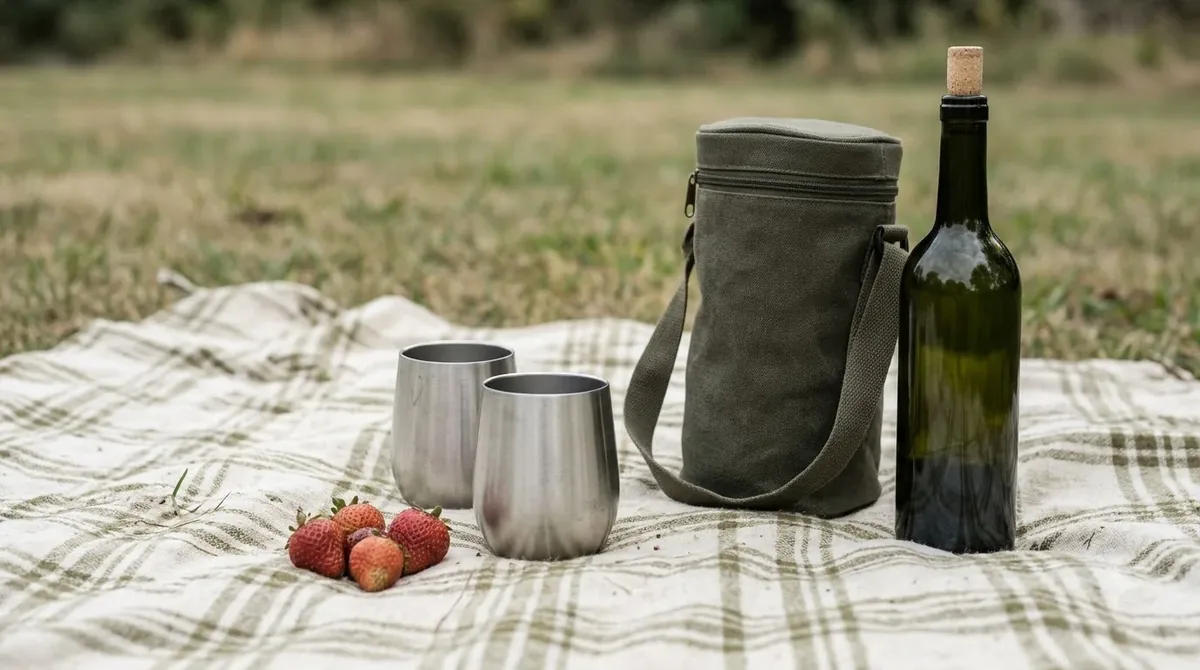
A lightweight, water-resistant carrier is the practical choice for picnics, beach days, and hikes. It keeps the bottle or a pour protected and easy to carry over a longer distance.
Why it stands out: Coated fabric resists light rain and spills, and it is easy to rinse after a day outside. The soft shape fits in a bag more easily than a glass bottle.
Keep in mind: Fabric carriers do not protect against hard knocks as well as a rigid case. Pack the carrier with the wine upright and away from sharp items, and keep ice packs away from the wine itself.
Best for: Picnics, day trips, and anyone who wants a lightweight option that is simple to clean.
Best for Travel and Carry-On Luggage
Travel-focused wine skins are built to fit in a suitcase or carry-on bag. The padded design protects the bottle, and the zip or strap keeps the carrier closed on the way.
Why it stands out: A padded sleeve protects the wine from bumps in transit and makes packing easier. Many travelers prefer one carrier that works on a train, a plane, and a hotel room.
Keep in mind: Check the rules of any airline or transport operator before you travel with wine. Rules on liquids and bottles differ by route, so confirm the details before packing.
Best for: Frequent travelers and anyone who brings a bottle as a gift on a trip.

Best for Gifts for Wine Lovers
A wine skin makes an unusual gift for someone who already has a full set of glasses and bottle stoppers. A good carrier can be personalized, and the gift works well for a birthday or a thank-you present.
Why it stands out: The gift is different from the usual wine accessories, and the carrier can be paired with a bottle or a tasting pack. Leather designs look especially good when wrapped and presented.
Keep in mind: Choose a size that matches the bottles the recipient already drinks, because a skin that is too small or too large looks like a mismatch. For ideas on pairing a gift with a bottle shelf, see the bar cart guide.
Best for: Birthdays, housewarmings, and hosts who collect unusual wine gear.
Best for Festivals, Camping, and Group Outings
Group and event carriers are sturdier designs made for shared use. They are often built for a longer day, several people, and rougher handling than a single-user carrier.
Why it stands out: A sturdy carrier holds up better on a campsite or at a festival, and its shoulder strap makes it easier to move between tents or stages.
Keep in mind: Heavier designs add weight, and a group carrier is only as good as its closures. Check the stitching, the strap, and the seal before the trip, and keep the carrier away from open flames and hot cars.
Best for: Campers, festival groups, and anyone sharing wine at a long outdoor event.
How to Choose
The right wine skin comes down to the setting, the material, and how often you plan to use it. Start with the three points below before comparing picks.
- Use: Choose leather for display and gifts, a coated fabric carrier for picnics, and a padded sleeve for travel.
- Size: Match the carrier to the bottles you actually open. A carrier that fits one standard bottle is easier to pack than a large one.
- Material: Leather is traditional and durable with care. Fabric is light and easy to clean. Padded synthetics protect best during travel.
- Closure: Look for a secure zip, strap, or cap that stays closed when the bag is tipped or carried.
- Storage: Keep the carrier dry and stored upright when it is not in use. If you also use a rack for your bottles, a wine advent calendar or gift set can be a good way to mix bottle types.
It helps to think about the setting first and the look second. A wine skin is a practical carrier, so the best one is the one you will actually take with you. Test the fit with the bottle you plan to carry before the trip, check that the closure holds when the carrier is tipped, and decide in advance who will carry it, since a shared carrier is easier to manage when one person owns it. A carrier you trust is a better purchase than one that looks impressive in a photo but sits unused in a closet.
Frequently Asked Questions
What is a wine skin made from?
Traditional wine skins are made from animal hide prepared as leather, usually goat or sheep. Modern carriers may use faux leather, coated fabric, or padded synthetic materials.
Is a wine skin the same as a wine bag?
The terms overlap. A wine skin usually refers to a flexible carrier shaped like the traditional leather version, while a wine bag is a broader term for soft carriers of any design.
How do I clean a leather wine skin?
Wipe it with a dry or lightly damp cloth, keep it away from heat, and let it air dry fully before storing. Leather care products suited to the material help keep it supple over time.
Can I take a wine skin on a plane?
Rules differ by airline, route, and country, so check the current guidance before you travel. A padded carrier protects the bottle in transit, but it does not change the rules on carrying wine.
A wine skin is a useful piece for the right trip or gift. For more wine accessories that fit a home or gathering, see the Accessories Library, and use the bottle and glass guide to plan how much wine your carrier should hold.
More in Wine Accessories
 Coravin Vs Vacu Vin: Choose the Right Wine Saver for Your BottlesUpdated Nov 21, 2026
 Zwilling Wine Stopper Review: Preserve Open Bottles LongerUpdated Nov 21, 2026
 Wine Enthusiast Wine Preserver Review: Features, Benefits and LimitationsUpdated Nov 21, 2026
 Wine Enthusiast Wine Stopper: An Easier Way to Reseal Open BottlesUpdated Nov 21, 2026
 Vintorio Wine Opener: Two-Step Cork RemovalUpdated Nov 21, 2026
 Zwilling Wine Aerator Review: Aerate, Pour, and Seal With One ToolUpdated Nov 21, 2026