

We may earn a commission when you buy through links on this page, at no extra cost to you. Learn more.
The whynter bwr 1002sd is a 100-bottle, single-zone compressor wine refrigerator designed for built-in or freestanding installation, with adjustable temperatures from 40°F to 65°F. It combines a stainless steel-trimmed glass door, removable wooden shelves, reversible door swing, and front ventilation in a tall cabinet designed for substantial home collections. Its biggest advantages are storage capacity and presentation, while its single temperature zone, practical bottle capacity, and installation requirements deserve attention before purchasing.
A large wine refrigerator should provide more than an impressive bottle-count specification. It needs to fit the available cabinetry, accommodate different bottle shapes, maintain a suitable storage temperature, and make individual bottles accessible without rearranging the entire collection. The Whynter BWR-1002SD addresses many of these requirements with a relatively narrow cabinet and a traditional wine-cellar appearance. This review examines its specifications, reported owner experiences, installation considerations, and the situations in which a different refrigerator may be a better investment.
Specs and Key Features
The BWR-1002SD is a single-zone compressor refrigerator rated for up to 100 standard 750 ml bottles. Its 9.7-cubic-foot interior, adjustable thermostat, wooden slide-out shelves, and front ventilation make it a substantial dedicated wine-storage appliance for a home kitchen, dining area, or wine room.
Whynter specifies a temperature range of 40°F to 65°F, giving owners flexibility for storing different wine styles. However, the appliance has only one temperature zone, meaning the entire cabinet operates around the same selected setting. This is an important distinction for anyone who wants to maintain separate temperatures for red wine, white wine, and sparkling wine.
| Specification | Whynter BWR-1002SD |
|---|---|
| Rated capacity | 100 standard 750 ml bottles |
| Capacity with display configuration | Approximately 90 bottles |
| Storage volume | 9.7 cubic feet |
| Temperature range | 40°F–65°F |
| Temperature zones | 1 |
| Cooling system | Compressor |
| Refrigerant | R600a |
| Exterior dimensions | 55″H × 23.5″W × 22.25″D |
| Depth with handle | Approximately 24 inches |
| Net weight | 159 pounds |
| Electrical requirements | 115V/60Hz, 2.0A |
| Maximum listed power | 120 watts |
| Shelving | 12 removable wooden shelves and display shelf |
| Interior lighting | 9 soft-white LED lights |
| Door construction | Double-pane tempered glass |
| Door direction | Reversible |
| Security | Cylinder lock and two keys |
| Warranty | 1-year limited warranty |
The manufacturer’s specifications establish the basic appeal of this refrigerator. Its 55-inch height gives it substantial vertical storage, while the 23.5-inch width makes it relevant to kitchen designs that accommodate approximately 24-inch appliances. The depth is also important because the handle extends beyond the main cabinet measurement.
The 159-pound net weight means installation should be planned before delivery. Moving the refrigerator through narrow hallways, doorways, or basement entrances can be difficult, particularly if the delivery route includes stairs. The packaged weight is approximately 170 pounds, so it is sensible to arrange appropriate assistance and inspect the delivery area beforehand.
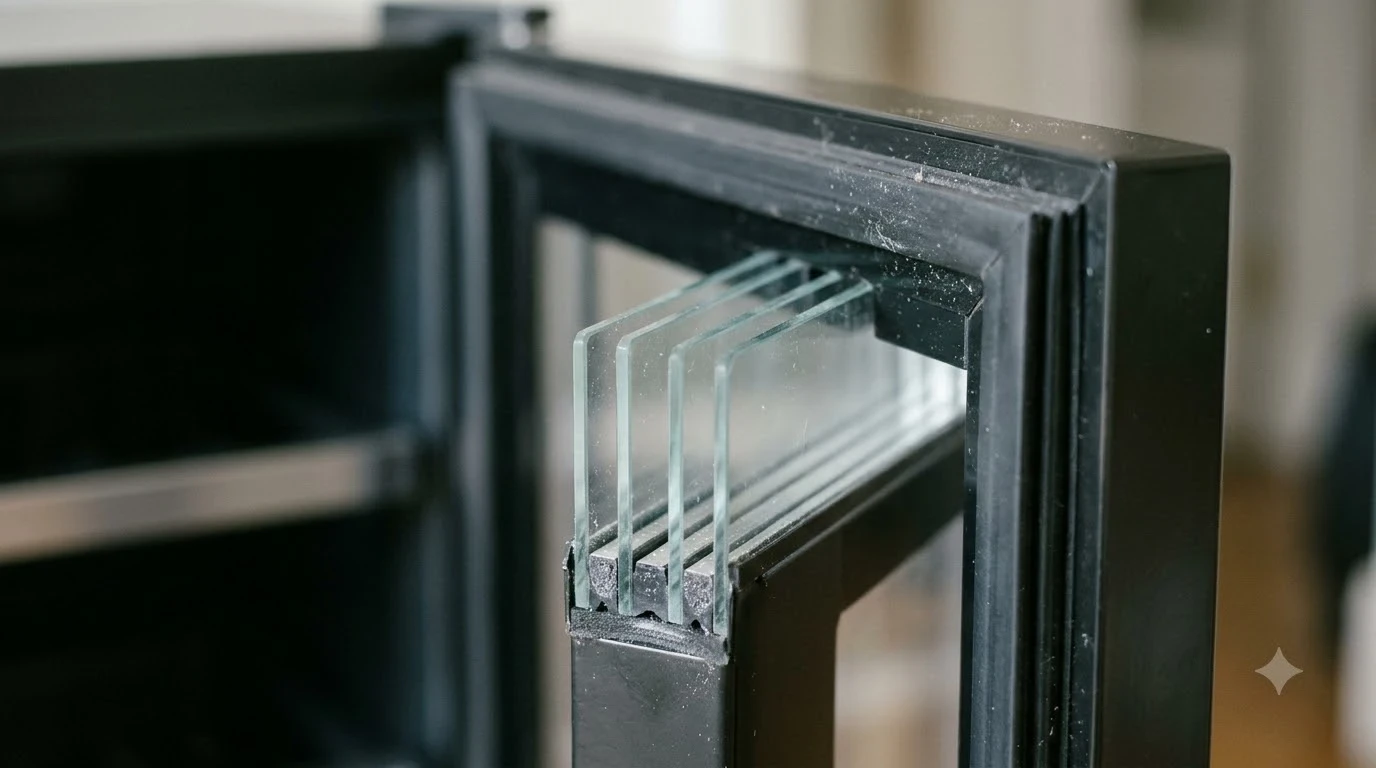
The interior includes removable wooden flat slide-out shelves, internal fan circulation, and nine soft-white LED lights. The tinted double-pane glass door provides UV protection while allowing the collection to remain visible. A cylinder lock and two keys provide an additional security feature for households that want to restrict access.
The refrigerator also uses R600a refrigerant and a compressor cooling system. Its front ventilation design is intended to support both built-in and freestanding installation, provided the specified clearances are maintained. The reversible door is useful when the refrigerator must fit into a particular kitchen arrangement.
One important capacity distinction appears in the manufacturer’s documentation. The standard configuration accommodates 100 bottles, while the alternate display configuration accommodates approximately 90. The display shelf is useful for presenting bottles or positioning opened wine, but it uses space that would otherwise accommodate additional standard bottles.
For the complete specifications, the official Whynter BWR-1002SD product page provides the manufacturer’s dimensions, cooling details, shelf information, and installation classification. These specifications are more useful for planning an installation than relying exclusively on a retailer’s abbreviated product description.
What Owners Like
Owner feedback highlights the refrigerator’s storage capacity, appearance, and potential to consolidate smaller wine coolers into one organized cabinet. Its strongest practical advantage is the combination of substantial capacity and a presentation-oriented design.
The wooden shelves are an important part of that experience. Instead of stacking bottles in a basic wire rack, owners can arrange their collections into individual rows and slide shelves forward to identify particular wines. This makes organization easier for people who separate bottles by producer, grape variety, region, or intended drinking date.
The display shelf provides another useful arrangement. Bottles can be positioned at an incline for presentation, while opened bottles can be stored separately from the main horizontal arrangement. For homeowners who entertain regularly, this feature can make it easier to identify a selected bottle without disturbing the rest of the collection.
Appearance is another advantage. The stainless steel-trimmed door, curved handle, black cabinet, and interior lighting give the refrigerator a more finished appearance than many compact wine coolers. The glass door allows the collection to become part of the room’s presentation without requiring the appliance to remain open.
The reversible door is particularly helpful during kitchen renovations. A left-opening door may be preferable when the refrigerator is positioned against one wall, while a right-opening arrangement may work better in another location. This flexibility makes it easier to integrate the refrigerator into an existing layout.
Some Home Depot reviewers describe the refrigerator favorably in terms of appearance and capacity. Other feedback highlights its ability to replace multiple smaller refrigerators with one larger storage cabinet. These experiences are useful indicators of how the appliance fits into real homes, although individual results depend on the collection and installation.
The front ventilation arrangement is also appealing. Many freestanding wine coolers require substantial space around the rear and sides, making them difficult to incorporate into cabinetry. The BWR-1002SD is designed for built-in or freestanding use, so it offers more flexibility when planning a dedicated wine-storage area.
For collectors with mostly standard Bordeaux-style bottles, the shelf arrangement offers a straightforward way to organize a growing collection. Cabernet Sauvignon, Merlot, and many conventional red blends generally fit the traditional bottle profile used in the manufacturer’s capacity calculation.
The single-zone design may also be an advantage for people who prioritize conservation storage instead of immediate serving temperatures. A collection can remain at one relatively stable temperature, with individual bottles brought to their preferred serving temperatures before opening.
That distinction matters for homeowners who entertain. A bottle of sparkling wine can be chilled separately before a gathering, while red wines can be allowed to warm slightly after removal from storage. The refrigerator does not need two zones if the owner is comfortable managing serving temperatures outside the cabinet.
Common Complaints
The main limitations are the single temperature zone, the difference between advertised and practical capacity, and the need for careful installation. Owner feedback also highlights the importance of inspecting delivery condition and understanding the display shelf’s space requirements.

The 100-bottle specification refers to standard 750 ml bottles arranged according to the manufacturer’s designated configuration. With the display shelf arrangement, the listed capacity falls to approximately 90 bottles. This is a meaningful difference for anyone purchasing the refrigerator specifically because they need room for 100 bottles.
Bottle dimensions introduce another complication. Bordeaux bottles are relatively straight-sided, while Burgundy bottles and some Pinot Noir bottles have wider shoulders and bodies. Champagne and other sparkling-wine bottles can also be wider than conventional still-wine bottles. Magnums and other large-format bottles require even more space.
Consequently, a collection containing many different bottle shapes may not approach the rated capacity. Collectors should consider the dimensions of their actual bottles rather than assuming that every 750 ml bottle occupies identical space.
The display shelf can also interfere with certain bottle arrangements. Some owners report that unusually shaped bottles can make it difficult to slide the upper display shelf in and out without contacting the interior ceiling. This is particularly relevant for people who frequently purchase Burgundy-style wines or larger sparkling bottles.
The second major limitation is the single-zone configuration. Although the temperature can be adjusted between 40°F and 65°F, the refrigerator cannot independently maintain different settings in separate sections. Someone who wants white wine at 46°F and red wine at 62°F will need another solution.
Noise is another consideration. The manufacturer lists an operating noise level below 39 dBA, but compressor refrigerators still produce mechanical sounds as the cooling system cycles. The perceived noise depends on the room, flooring, installation, and distance from occupied areas.
The instruction manual identifies compressor operation and refrigerant movement as normal sources of sound. Occasional changes in sound as components respond to temperature fluctuations are not automatically signs of a fault. Persistent rattling, however, deserves attention because the appliance may not be level or a component may be improperly positioned.
Delivery condition should also be considered. Some Home Depot reviewers describe problems involving damaged packaging or door alignment. These are individual customer experiences rather than evidence that every BWR-1002SD has a manufacturing defect, but they reinforce the importance of inspecting the refrigerator before accepting delivery.
The glass door, handle, hinges, shelves, and cabinet panels should all be examined. If the door does not sit correctly, or if the exterior has visible damage, document the problem and contact the retailer before completing installation.
Finally, the one-year limited warranty is relatively short for a substantial appliance intended to store valuable bottles over several years. Buyers should understand the manufacturer’s coverage conditions and transportation responsibilities before making a decision.
Who Should Buy and Who Should Skip
The BWR-1002SD is best suited to homeowners who want a large, attractive wine refrigerator and are comfortable maintaining one storage temperature. Its combination of wooden shelves, front ventilation, and a relatively narrow exterior makes it particularly relevant to planned kitchen installations.
Who should consider buying it
Collectors consolidating smaller refrigerators: Someone currently using two or three compact wine coolers may appreciate having one larger cabinet. The 9.7-cubic-foot interior provides a more unified arrangement, while the sliding shelves make it easier to organize bottles.
Homeowners planning a built-in installation: The front ventilation system makes the refrigerator suitable for a properly designed cabinetry opening. Its approximately 24-inch width is relevant to kitchen renovations where a conventional undercounter appliance footprint is preferred.
Collectors with mostly standard bottles: A collection dominated by ordinary 750 ml Bordeaux-style bottles is more likely to approach the manufacturer’s advertised capacity than a collection containing many oversized or irregularly shaped bottles.
People who prioritize appearance: The tinted glass door, stainless steel trim, curved handle, and LED lighting provide a dedicated display area. These features can work particularly well in a dining room, kitchen, or entertainment space.
Owners who prefer one general storage temperature: People who store most of their bottles for gradual consumption rather than keeping wines at separate serving temperatures may find the single-zone design entirely adequate.
Who should skip it
Red and white wine drinkers who want separate settings: This refrigerator cannot independently control its upper and lower sections. Anyone who regularly stores sparkling wine, crisp Sauvignon Blanc, Chardonnay, and full-bodied Cabernet Sauvignon at different temperatures should consider a genuine dual-zone model.
Collectors with many large bottles: Burgundy, Champagne, and sparkling-wine bottles may reduce practical capacity. Buyers who regularly purchase magnums should investigate shelf dimensions and available clearance before choosing a refrigerator based on its standard-bottle rating.
People with limited installation access: The refrigerator’s height and weight can make it unsuitable for narrow doorways, difficult staircases, or poorly prepared kitchen openings. The delivery route needs to be measured as carefully as the final installation location.
Buyers who need a longer warranty: The one-year limited warranty may not provide the reassurance some owners want for a substantial appliance. Additional coverage, if available through a retailer, should be assessed separately.
Homeowners who cannot provide proper ventilation: The front grille must remain unobstructed, and the appliance should be installed according to the manufacturer’s clearance requirements. A cabinet design that blocks airflow is not appropriate simply because the exterior dimensions appear to fit.
Tip: Count the bottles in your actual collection and measure the widest and tallest examples before purchasing. A refrigerator rated for 100 conventional bottles may accommodate considerably fewer if the collection contains Champagne, Burgundy, and large-format wines.
How It Compares to Alternatives
The BWR-1002SD occupies a useful position between smaller single-zone refrigerators and larger dual-zone cabinets. Its main strengths are the 100-bottle advertised capacity and approximately 24-inch installation format, but the lack of independent temperature controls is the deciding limitation for many mixed collections.
Whynter’s own refrigerator lineup provides useful comparisons. The BWR-1642DZ is a 164-bottle dual-zone refrigerator, while the BWR-1662SD is a larger single-zone alternative rated for 166 bottles. These models illustrate two different ways to expand beyond the BWR-1002SD.
| Model | Rated capacity | Temperature zones | Best suited to |
|---|---|---|---|
| Whynter BWR-1002SD | 100 bottles | Single | Medium-to-large collections using one storage temperature |
| Whynter BWR-1642DZ | 164 bottles | Dual | Larger mixed collections requiring separate temperature settings |
| Whynter BWR-1662SD | 166 bottles | Single | Collectors prioritizing greater storage capacity in one zone |
The BWR-1642DZ is the more relevant comparison for households that regularly maintain different temperatures for different wine styles. Its dual-zone configuration allows separate storage environments, which can be more convenient for people who drink both red and white wines frequently.
The larger capacity is also attractive for collections approaching the limits of a 100-bottle refrigerator. However, more capacity is not automatically better. A larger cabinet requires more physical space and may be unnecessary for a household with a relatively stable collection.
The BWR-1662SD takes the opposite approach. It provides a larger single-zone storage arrangement for collectors who need more room but do not require separate temperature compartments. Its appeal is capacity rather than temperature flexibility.
These differences matter because wine storage and serving are related but separate tasks. A collector can store red and white wines together at a suitable conservation temperature, then bring individual bottles to their preferred serving temperatures before opening them. A single-zone refrigerator can therefore work well for long-term collection management.
For additional appliance comparisons, the model reviews section provides another starting point for evaluating refrigerator designs and practical differences. Capacity, shelf layout, temperature control, installation requirements, and service coverage are more useful comparison points than the largest number printed in a product description.
The BWR-1002SD is also different from a regular kitchen refrigerator. Wine storage benefits from relatively stable temperatures, limited exposure to light, and appropriate bottle positioning. A dedicated wine refrigerator is designed around these priorities, whereas a conventional food refrigerator may be colder than necessary and offer less convenient horizontal bottle storage.
For homeowners who entertain regularly, the refrigerator can form part of a larger drinks area. A separate serving space can hold chilled ingredients for cocktails such as an Aperol Spritz or Hugo Spritz, while the wine refrigerator remains dedicated to bottled wine. This arrangement helps prevent frequent opening of the wine cabinet while preparing drinks for guests.
Ultimately, the right comparison depends on the collection. A household with mostly Cabernet Sauvignon, Merlot, and Pinot Noir may be satisfied with one consistent storage temperature. A household that regularly switches between Champagne, Riesling, Chardonnay, and Cabernet Sauvignon may benefit more from separate compartments.
Installation, Operation, and Long-Term Care
Correct installation is particularly important because the BWR-1002SD is a relatively heavy compressor refrigerator with a front ventilation system. The manufacturer’s instructions cover clearance, electrical connection, leveling, and initial setup, and these requirements should be followed before the cabinet is loaded.
Before installation, measure the opening carefully. The refrigerator is approximately 55 inches high and 23.5 inches wide, with a depth of 22.25 inches before the handle. The handle increases the overall depth to approximately 24 inches, so it should be included when planning cabinetry and walking clearance.
For built-in installation, the manual specifies at least one-quarter inch of clearance at each side and above the refrigerator. The front ventilation grille must remain completely unobstructed. This matters because an appliance designed for built-in installation still needs an appropriate route for ventilation.
For freestanding installation, Whynter recommends approximately five inches of clearance behind and beside the appliance. The refrigerator should sit on a hard, level surface that can support its weight and the additional weight of the bottles. A stable floor is particularly important once the cabinet is fully loaded.
Electrical preparation is equally important. The appliance requires a grounded three-prong 115V/60Hz outlet. The manual recommends a separate circuit and specifically warns against using an extension cord or removing the grounding prong.
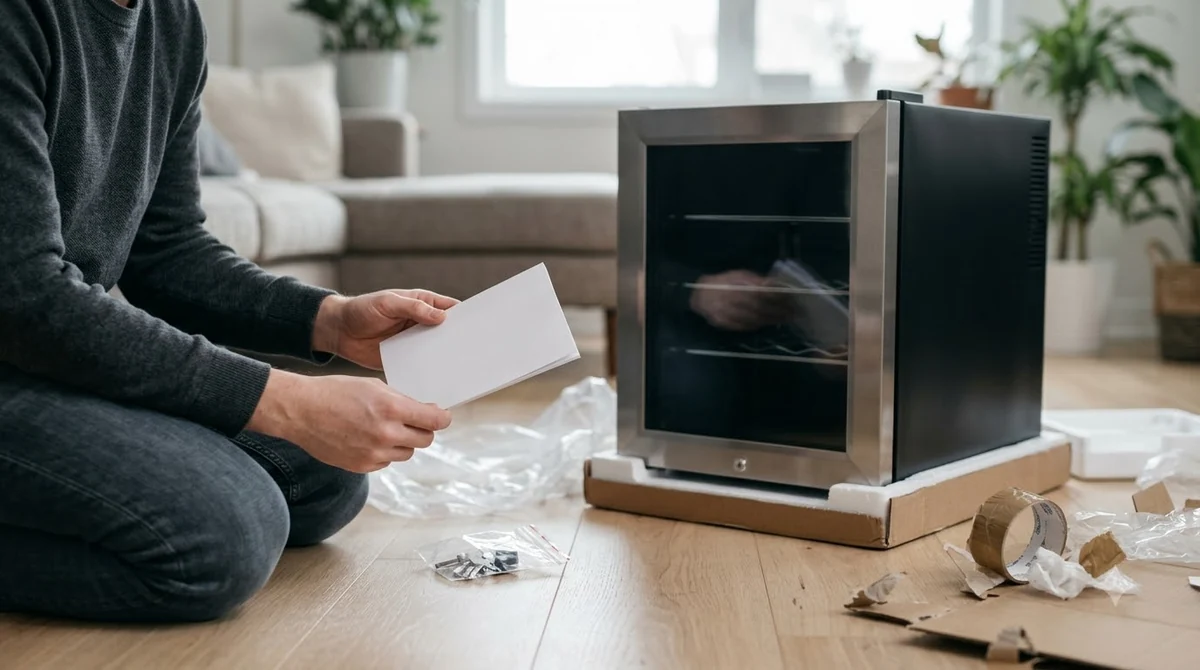
After transportation, the manual recommends leaving the refrigerator upright for approximately four hours before connecting it to power. This allows the cooling system to settle following handling. The interior should also be cleaned with suitable mild cleaning methods before the first bottles are loaded.
Choosing a suitable temperature
The 40°F to 65°F range provides flexibility for different wine categories, but a single-zone appliance requires the owner to choose one general setting for the entire collection. For conservation storage, Whynter recommends approximately 49°F to 57°F.
This range can work well for a mixed collection that is being stored rather than prepared for immediate serving. A consistent environment is often more useful for long-term collection management than repeatedly adjusting the thermostat to match the preferred serving temperature of individual bottles.
Serving temperatures are different. Sparkling wines are commonly served around 40°F to 50°F, while light whites and rosé generally suit 45°F to 50°F. Fuller-bodied whites are often served around 50°F to 55°F, and lighter reds around 55°F to 60°F.
Full-bodied reds such as Cabernet Sauvignon are commonly served around 60°F to 65°F. These ranges are reasons to think carefully about the intended use of the refrigerator rather than assuming that every bottle should be stored at its serving temperature.
For example, a bottle of Sauvignon Blanc can remain in a conservation-oriented cabinet and be chilled further before dinner. A bottle of Pinot Noir can be removed shortly before serving and allowed to warm slightly if necessary.
Keeping the refrigerator in good condition
Routine care starts with keeping the door closed as much as practical. Repeatedly opening the cabinet for extended periods can affect internal temperature. Loading a large number of room-temperature bottles at once can also produce temporary fluctuations while the refrigerator returns to its selected setting.
Clean the interior with appropriate mild cleaning methods and avoid abrasive or solvent-based products. The door gasket should remain properly seated so that the door closes securely. Shelves should be positioned correctly to avoid interfering with the door or the movement of neighboring shelves.
Pay particular attention to the front ventilation grille and surrounding area. Dust and objects blocking airflow can interfere with heat removal. If the refrigerator begins cycling frequently, check the room temperature, door closure, gasket condition, loading arrangement, and ventilation before assuming a mechanical failure.
The manual recommends an ambient operating temperature of approximately 72°F to 78°F for optimal performance. Extremely hot or cold surroundings can affect operation and contribute to temperature fluctuations. Avoid positioning the refrigerator beside an oven, grill, or another strong heat source.
Wine itself should also be stored appropriately. Most conventional bottles sealed with natural cork closures are best kept horizontally, while bottles should be protected from excessive light and unnecessary temperature changes. The wooden shelves support this familiar horizontal arrangement.
When opening a bottle, consider its serving requirements rather than assuming the refrigerator’s storage setting is ideal for immediate consumption. Sparkling wine generally benefits from colder serving temperatures than full-bodied red wine. A separate serving refrigerator or a short period of chilling can help compensate for the single-zone limitation.
These practices are especially relevant when the cabinet contains valuable bottles. A well-organized arrangement reduces unnecessary handling, makes it easier to identify individual wines, and helps owners keep track of bottles intended for earlier consumption.
Warranty and Support
Whynter lists a one-year limited warranty for the BWR-1002SD, subject to its stated purchase and usage conditions. This coverage deserves attention because the refrigerator is a substantial appliance that may be used to store a wine collection for many years.
According to the manufacturer’s instruction manual, qualifying coverage applies to the original owner purchasing from an authorized dealer within the continental United States. The warranty concerns qualifying defects in materials and workmanship under normal residential use.
The warranty process requires contacting Whynter customer support with the appliance’s serial number and proof of purchase. The manufacturer requires a Return Authorization Number before products or parts are sent back for service. Qualifying repairs, replacements, or exchanges are handled according to the warranty terms.
Transportation responsibilities are another important consideration. The manual specifies that return freight is prepaid within the first two months after purchase. For warranty returns after that period and within the first year, the owner is responsible for return freight to the service center.
That condition matters for a refrigerator weighing approximately 159 pounds. Returning a large appliance can involve substantial packaging and transportation arrangements, particularly if the original packaging has been discarded.
The warranty excludes circumstances such as commercial use, improper electrical supply, accidental damage, misuse, and unauthorized repairs. It is therefore important to understand the difference between a qualifying manufacturing defect and damage caused during delivery, installation, or operation.
Buyers should inspect the appliance carefully when it arrives. Check the glass door, hinges, handle, shelves, and exterior panels before installing it. Photograph visible damage and contact the retailer promptly if the refrigerator arrives in unacceptable condition.
Keep the purchase receipt, serial number, warranty documentation, and delivery paperwork together. These records can make a later service request easier to process and help establish eligibility for coverage.
Before buying, confirm that the seller is an authorized dealer and clarify who handles delivery damage, replacement arrangements, and return transportation. A manufacturer’s limited warranty does not automatically cover every installation or shipping problem.
For an appliance intended to store a growing collection, the one-year coverage should be considered alongside construction quality, service arrangements, and the retailer’s return policy. Buyers who prefer longer protection may want to compare additional coverage options before making a final decision.
The manufacturer’s BWR-1002SD instruction manual is particularly useful for checking installation clearances, electrical requirements, temperature settings, troubleshooting instructions, and warranty conditions before the refrigerator is installed.
Frequently Asked Questions
Does the Whynter BWR-1002SD have an activated charcoal filter?
Yes. The refrigerator includes an activated charcoal filter intended to help manage odors entering the cabinet. The filter is a separate component from the compressor cooling system and does not replace routine interior cleaning.
Can the Whynter BWR-1002SD store opened wine bottles?
Yes. The manufacturer describes the display shelf as suitable for displaying bottles and storing opened bottles. Reseal opened wine appropriately, and remember that most opened still wines generally retain their quality for approximately three to five days when refrigerated.
Does the BWR-1002SD have a door-open alarm?
Yes. The instruction manual identifies the ED display indication as a warning that the door has remained open for more than 60 seconds. This helps alert owners to an open door, although it is not a remote notification system.
Can the BWR-1002SD be used for commercial wine storage?
The manufacturer’s warranty documentation specifies household, noncommercial use. Restaurants, bars, and commercial wine businesses should investigate equipment designed for their intended application because commercial use is excluded from the stated warranty coverage.
What do E1 and E2 error codes mean on the BWR-1002SD?
According to the troubleshooting section of the instruction manual, E1 and E2 indicate air-temperature sensor failures. The manual directs owners to contact service for these conditions rather than attempting an unauthorized repair. Other codes can indicate different sensor, defrost, or door-switch problems.
The Whynter BWR-1002SD is a practical choice for homeowners who want a large, attractive wine refrigerator with front ventilation, adjustable cooling, and organized wooden shelving. Its single-zone configuration and realistic bottle capacity are the main considerations, but buyers who understand those limitations may find it a suitable centerpiece for a substantial home collection. Measure the installation area, account for actual bottle shapes, and review the warranty arrangements before making the final purchase.
More in Model Reviews
 Magic Chef 44 Bottle Wine Cooler Review for Flexible StorageUpdated Nov 21, 2026
 Whynter 164 Bottle Wine Cooler Review: Capacity, Features, and FitUpdated Nov 21, 2026
 Insignia NS WC16BK6 Review: Compact 16-Bottle Wine StorageUpdated Nov 21, 2026
 Wine Enthusiast Electric Blue Omega Review: Opening, Pouring, and Preserving Made EasierUpdated Nov 21, 2026
 Koolatron 20 Bottle Wine Cooler Review: Features, Fit, and PerformanceUpdated Nov 21, 2026
 NewAir AWC 330E Review for Home Wine StorageUpdated Nov 21, 2026