

We may earn a commission when you buy through links on this page, at no extra cost to you. Learn more.
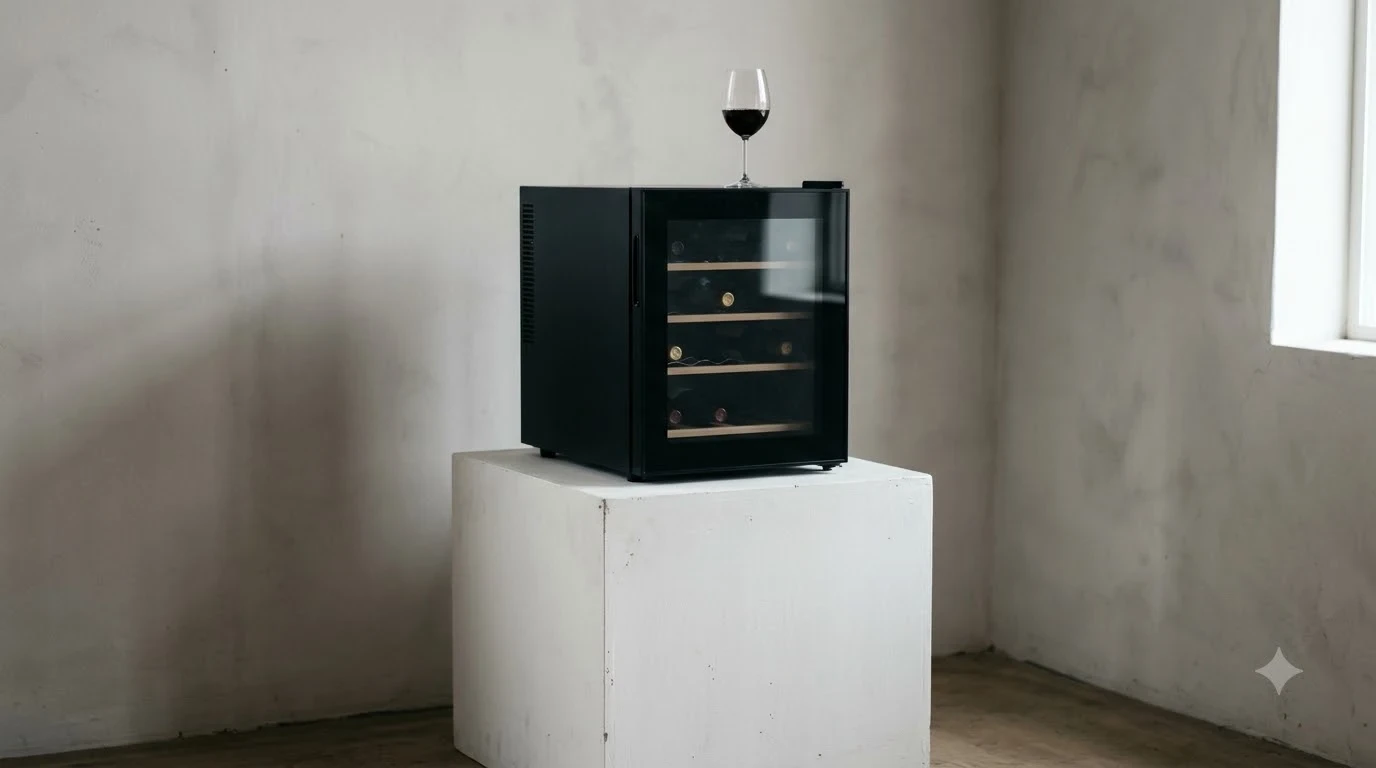
The frigidaire fwc084hm is a compact 8-bottle wine cooler designed for countertop wine storage, with adjustable temperatures from 46°F to 66°F and a space-saving footprint. Its digital controls, glass door, and interior lighting make it convenient for keeping a small selection of wine ready to serve. However, limited bottle clearance, mixed long-term reliability reports, and its discontinued retail availability mean buyers should evaluate its condition carefully, particularly when shopping for a used unit.
The Frigidaire FWC084HM occupies a useful category between a standard kitchen refrigerator and a larger dedicated wine cabinet. It offers a relatively small storage area for people who want their everyday bottles organized and accessible without committing substantial floor space to wine storage. Its appeal comes primarily from convenience rather than cellar-level storage capacity. Understanding its actual bottle compatibility, temperature range, installation requirements, and potential maintenance concerns is essential before purchasing one. This review examines its documented specifications, customer experiences, and suitability for different wine collections.
Specs and Key Features
The FWC084HM is a small wine cooler with an advertised capacity of eight standard bottles, adjustable digital temperature controls, and an illuminated interior. Its dimensions make it particularly interesting for compact kitchens, home bars, and apartments where a traditional wine refrigerator would occupy too much room.
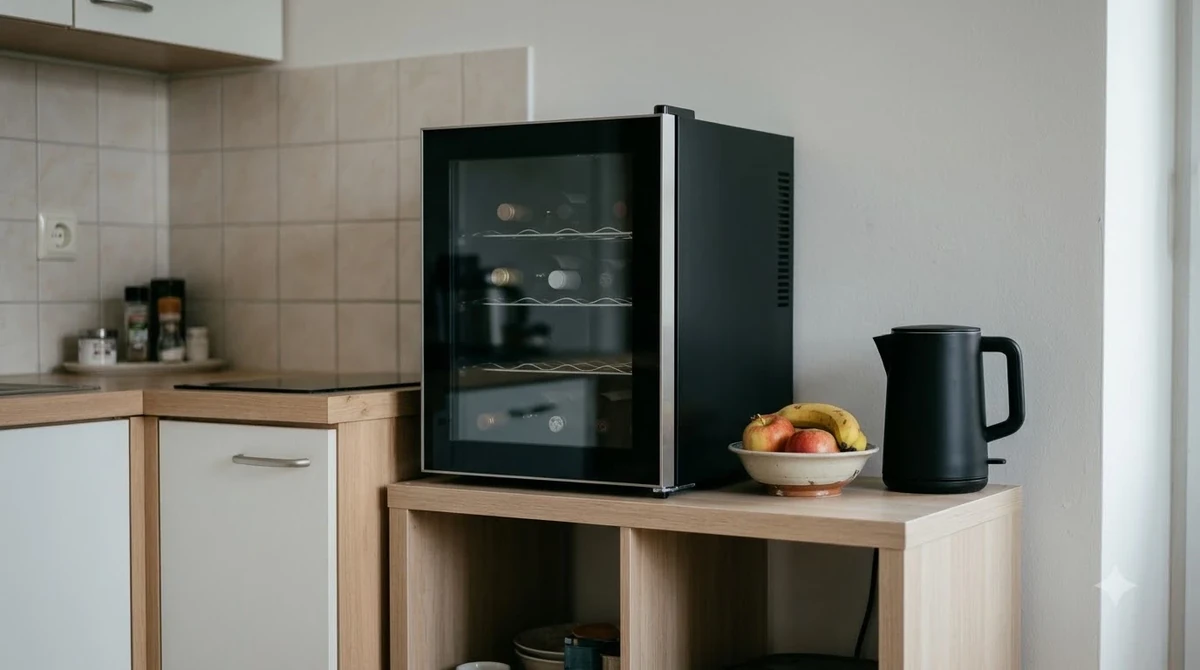
According to Frigidaire Support responses published in Best Buy’s product questions, the appliance measures approximately 10.9 inches high, 16.25 inches wide, and 20.75 inches deep. This unusually wide, low profile distinguishes it from many upright countertop wine coolers. The dimensions should be considered before buying because the front handle and rear power connection require additional clearance beyond the cabinet measurements.
The product’s principal specifications are summarized below. The electrical information combines Frigidaire Support responses with an owner-reported specification from a separate technical discussion, rather than assuming that every production unit has identical components.
| Specification | Frigidaire FWC084HM |
|---|---|
| Product category | Wine cooler |
| Advertised bottle capacity | 8 standard bottles |
| Temperature range | 46°F–66°F |
| Height | 10.9 inches |
| Width | 16.25 inches |
| Depth | 20.75 inches |
| Electrical supply | 110 volts, according to Frigidaire Support |
| Reported power consumption | 50 watts, according to one owner-reported unit specification |
| Reported capacity | 23 liters |
| Temperature controls | Digital adjustable controls |
| Lighting | Switchable interior light |
| Finish | Silver exterior styling |
The temperature range is one of the most practical features. At 46°F, the cooler can accommodate chilled sparkling wines and many white wines. At 50°F to 55°F, it can hold fuller-bodied whites, while settings closer to 60°F can suit lighter red wines that are intended to be served slightly cool. The maximum setting of 66°F also provides flexibility for storing certain fuller-bodied reds at a moderate room-like temperature.
There is an important distinction between an appliance’s selected temperature and the temperature of the wine itself. A digital display provides a useful reference, but the contents do not necessarily reach the selected temperature immediately. Opening the door, adding several room-temperature bottles, and operating the appliance in a warm room can affect its performance.
The illuminated interior is another convenience. Frigidaire Support confirms that the light can be switched on and off, allowing owners to view their bottles without leaving the illumination running continuously. The glass-front presentation also makes the appliance suitable for a visible home-bar arrangement.
Frigidaire Support identifies the FWC084HM as using thermoelectric cooling in its product-question responses. This is relevant because thermoelectric appliances typically rely on fans and heat transfer rather than a conventional compressor refrigeration arrangement. Buyers should still verify the identification label and original documentation when evaluating an older unit.
What Owners Like
Customer feedback generally highlights three strengths of the FWC084HM: its compact dimensions, accessible temperature controls, and attractive appearance. These characteristics explain why the appliance remains interesting to people looking for a small wine-storage solution rather than a large cellar refrigerator.
The footprint receives particularly positive attention. Several Best Buy reviewers describe placing the cooler on kitchen counters, in small bar areas, and in other spaces where taller wine refrigerators would be inconvenient. Its low height can be especially useful beneath wall cabinets, provided the installation area allows sufficient ventilation and room for the power connection.
That shape also makes the unit visually different from the typical narrow upright wine cooler. Instead of emphasizing vertical bottle storage, it uses a broad, shallow cabinet arrangement. For someone who wants a dedicated place for a few frequently opened bottles, this can be an appealing layout.
Temperature adjustment is another recurring positive theme. Owners appreciate being able to choose a setting instead of relying on the fixed temperature of an ordinary refrigerator. This matters because wine styles benefit from different serving temperatures.
For example, sparkling wine is generally served around 40°F to 50°F, while light-bodied whites and rosé are typically served around 45°F to 50°F. Fuller-bodied whites generally benefit from approximately 50°F to 55°F. The FWC084HM’s lower setting can accommodate the first two categories, while its upper range provides additional flexibility for other bottles.
Owners also mention the convenience of keeping wine separate from food. A kitchen refrigerator is designed for general food storage, while a wine cooler provides a dedicated location where bottles can remain organized and accessible. This arrangement can be particularly useful for households that regularly purchase different wines for meals and entertaining.
Noise feedback is generally favorable, although it is not universally positive. Some reviewers describe the cooler as quiet enough for a kitchen, basement bar, or other shared living space. Others mention noticeable changes in fan noise during operation. That variation suggests that the sound experience can depend on the installation surface, room acoustics, and the condition of an individual appliance.
The lighting and glass-front presentation contribute to its visual appeal. Rather than hiding bottles in a cabinet, owners can display their selection and identify labels more easily. This is a modest feature, but it can make a difference in a compact entertaining area.
For someone who typically keeps four to eight standard bottles available, these conveniences may be more valuable than additional storage capacity. A small dedicated cooler can help maintain an organized selection of everyday wines without requiring a full-size appliance.
Another positive is the straightforward nature of the controls. The ability to adjust the temperature directly is easier to understand than complicated multi-zone programming. Owners looking for a basic single-compartment arrangement may appreciate this simplicity.
However, positive feedback should be viewed in context. Customer satisfaction with initial cooling and convenience does not establish how reliably every unit will perform after several years. That distinction becomes especially important when considering the FWC084HM as a secondhand purchase.
Common Complaints
The most important limitations reported by owners involve bottle compatibility, cooling consistency, operating noise, and long-term reliability. The advertised eight-bottle capacity is useful, but it should not be interpreted as a guarantee that every wine bottle will fit in the available space.

Standard Bordeaux-style bottles are generally the easiest bottles to accommodate in compact wine coolers. However, Pinot Noir, Champagne, sparkling wine, and some Burgundy bottles can have wider bodies or different shoulder shapes. These differences may reduce the practical capacity of a small interior.
Several FWC084HM reviewers specifically mention problems with larger, rounder, or longer bottles. One customer reports that oversized bottles reduce the number that can be stored, while another explains that some longer bottles do not fit comfortably. This is a significant consideration for buyers who regularly purchase sparkling wine or bottles with unusual dimensions.
Capacity also depends on how the interior shelves are arranged. A cooler that accommodates eight conventional bottles may hold fewer bottles when several have wider bodies. Owners should not expect eight Champagne bottles or eight unusually shaped premium bottles to fit automatically.
Temperature consistency is another area requiring attention. Some customers report satisfactory temperature control, while others describe temperature fluctuations or difficulty maintaining their preferred setting. Reports of units failing to cool after extended use also appear in the product’s customer questions.
These complaints do not establish that every FWC084HM has a cooling defect. They do, however, make a working demonstration important when purchasing a used appliance. A display that lights up is not sufficient proof that the cooling system is functioning correctly.
Noise is similarly variable. Some customers describe the appliance as quiet, while another reviewer reports noticeable fan-speed changes occurring at intervals of approximately five to ten seconds. Repeated changes in fan speed may become distracting in a quiet bedroom, office, or open-plan living area.
Placement can influence how noticeable this behavior becomes. A cooler sitting on a solid kitchen counter may produce different perceived noise from one installed near a hard wall or inside a poorly ventilated cabinet. Buyers who are sensitive to appliance noise should listen to a unit operating through a complete cooling cycle before purchasing it.
Long-term reliability deserves particular attention. Customer questions include reports of digital display problems, cooling failures, and appliances that stop maintaining their selected temperatures. These are individual owner reports rather than verified failure-rate statistics, but they demonstrate why condition matters more than appearance when shopping for an older unit.
Another concern involves the availability of parts and repair information. The FWC084HM is not a current new-condition product at Best Buy. Finding an exact replacement component may therefore be more difficult than servicing a recently released appliance.
A technical discussion on Home Improvement Stack Exchange documents one owner’s FWC084HM circuit-board problem. The owner identifies a fuse marked 2.5A and 250V and reports a 50-watt power input. The FWC084HM circuit-board and fuse discussion provides a useful reference for understanding the electrical details reported for that particular unit. It should not be treated as a universal repair specification or as an instruction to replace electrical components without qualified assistance.
Finally, the appliance’s small interior limits its usefulness for collecting. Eight standard bottles provide room for a modest selection, but there is little space for building a collection of multiple vintages, different producers, and several bottle formats. Buyers who frequently entertain or purchase wine by the case may outgrow the available capacity quickly.
Who Should Buy and Who Should Skip
The Frigidaire FWC084HM makes the most sense for someone who wants a compact dedicated wine cooler and does not need substantial storage capacity. Its strongest use case is keeping a small everyday selection chilled in a kitchen, apartment, or home bar.
It may suit occasional wine drinkers who usually maintain a selection of Sauvignon Blanc, Chardonnay, Pinot Noir, or sparkling wine. These buyers can benefit from having a dedicated temperature setting and a convenient location for their bottles without allocating space to a larger cabinet.
It is also worth considering for people who entertain occasionally. Having several bottles ready for dinner can be convenient, especially when the cooler is positioned close to the serving area. A chilled bottle of sparkling wine or a suitable white wine can be removed without rearranging groceries in the main refrigerator.
Food pairing can also influence how owners use the temperature controls. For example, a Chardonnay served around 50°F to 55°F can complement chicken dishes, while lighter whites can accompany seafood and fresh salads. A bottle of Pinot Noir served slightly cool can work well with roasted poultry and mushroom-based dishes.
For a dinner featuring chicken Marsala, a lighter red or fuller-bodied white can make a suitable pairing depending on the preparation. The FWC084HM can help keep these bottles organized and ready for serving, although its capacity will not accommodate a large assortment simultaneously.
The appliance may also appeal to people who already have a wine collection stored elsewhere and simply need a small serving-temperature station. In that situation, its limited capacity is less problematic because the cooler is not expected to provide long-term storage for an entire collection.
Who should consider another wine cooler
Collectors should generally look for a larger wine refrigerator. Eight bottles leave limited room for different vintages, multiple regions, and backup bottles. A larger cabinet also offers more flexibility when storing bottles with different shapes.
People who frequently purchase Champagne, Burgundy, or oversized wine bottles should be cautious. The available interior space may prevent the advertised capacity from being achieved with those formats.
Anyone requiring precise long-term cellar conditions should also consider a purpose-built wine storage appliance with documented temperature stability and more extensive technical specifications. The FWC084HM is a small convenience cooler rather than a substitute for a dedicated wine cellar.
Buyers who need a completely silent appliance may prefer a model with independently documented operating-noise specifications. Owner reports about the FWC084HM vary, making it difficult to promise a consistently quiet experience.
Finally, people who prefer buying new appliances with straightforward warranty coverage should consider its discontinued retail availability. A used unit may be inexpensive to acquire, but its repair history and remaining service life can be difficult to establish.
For a broader comparison of different wine-storage appliances, the wine cooler model reviews section can help identify the capacity and features worth prioritizing before choosing another model.
How It Compares to Alternatives
The FWC084HM is best understood as a compact countertop wine cooler rather than a general-purpose refrigerator or a full-size wine cabinet. Its main advantage is its small physical footprint, while its most obvious compromises are limited capacity and restricted bottle compatibility.
Compared with a standard kitchen refrigerator, a dedicated wine cooler provides a separate storage area for bottles and adjustable temperature settings designed around wine storage. A conventional refrigerator may be colder than necessary for some serving preferences, and its shelves are not always arranged conveniently for wine bottles.
However, a regular refrigerator can still be useful for temporarily chilling a bottle before serving. The FWC084HM becomes more attractive when wine is consumed regularly and maintaining a dedicated bottle-storage area is important.
Compared with a larger single-zone wine refrigerator, the FWC084HM has a clear capacity disadvantage. A larger model can accommodate more bottles, provide additional shelf space, and make it easier to store different bottle shapes. It may also be a better choice for someone who buys several bottles at once.
The smaller Frigidaire unit has the advantage of fitting into more restricted spaces. Someone with a narrow kitchen counter or compact bar may find its low profile easier to accommodate than a tall freestanding wine refrigerator.
There is also a distinction between countertop coolers and under-counter wine refrigerators. A purpose-built under-counter model is designed around a larger installation footprint and may offer greater storage capacity. The FWC084HM should not be treated as an integrated cabinet appliance simply because its dimensions appear convenient.
Another alternative is a dual-zone wine cooler. These appliances provide separate temperature settings for different wine categories, making them useful for households that regularly keep both whites and reds ready to serve. The FWC084HM’s single-compartment arrangement is simpler, but it does not provide the same independent temperature flexibility.
For households that mostly drink one category of wine, this distinction may not matter. Someone who primarily enjoys white wine can select an appropriate setting and keep several bottles ready without paying for features that may never be used.
For households that alternate between sparkling wine, white wine, and red wine, the restricted temperature arrangement may become inconvenient. A single setting requires owners to choose a compromise or adjust the temperature before changing the types of wine being stored.
Another important comparison concerns cooling-system documentation. Frigidaire identifies the FWC084HM as thermoelectrically cooled in its product questions. Buyers who prioritize a specific cooling design should still verify the appliance’s identification label and original documentation rather than relying on general descriptions of similar models.
Availability is also part of the comparison. Best Buy identifies the FWC084HM as unavailable in new condition through its listing. That means shoppers may encounter used or previously owned units rather than a straightforward new purchase with current retail support.
When evaluating an alternative, consider more than its advertised bottle count. Temperature range, actual interior dimensions, bottle compatibility, ventilation requirements, replacement-part availability, and warranty coverage all affect long-term usefulness.
For buyers who only need a small number of bottles close at hand, the FWC084HM can still make sense if the particular unit is functioning correctly. For anyone seeking a dependable long-term storage solution, a newer and larger model with clearly documented specifications may be the safer choice.
Manual, Setup, and Everyday Care
Finding the correct Frigidaire FWC084HM manual is important because manuals for other Frigidaire wine coolers may describe different controls, cooling systems, capacities, and installation requirements. A manual for a similarly named appliance should never automatically be treated as the correct document for this model.
Start by checking the model identification label on the actual appliance. Record the complete model and serial information, then contact Frigidaire support to ask whether an archived owner’s manual is available. Best Buy’s Frigidaire FWC084HM product questions and support answers also contain historical responses about the temperature range, electrical supply, cooling technology, dimensions, and installation. These answers are useful references, but they are not a substitute for the original model-specific documentation.
Initial setup
Before operating a secondhand unit, inspect its exterior, door, electrical cable, shelves, and ventilation openings. Check that the door closes properly and that its seal is not torn, flattened, or detached. A damaged seal can allow warm air to enter, making temperature maintenance more difficult.
Place the appliance on a stable, level surface with sufficient clearance around its ventilation openings. Do not assume that a tight cabinet installation is acceptable simply because the unit fits physically. Restricted airflow can interfere with cooling performance and increase the workload on the cooling system.
Allow the appliance to settle after transportation before connecting it, particularly if it has been tilted or laid on its side. The appropriate waiting period should follow the original FWC084HM instructions or manufacturer guidance rather than an unrelated wine-cooler manual.
Once connected, use the digital controls to select a suitable temperature. Allow sufficient time for the interior and bottles to cool before expecting the selected temperature to be reflected throughout the contents.
Choosing a practical temperature
The available 46°F to 66°F range offers several useful settings for everyday wine service. A starting setting around 48°F to 50°F can work for many sparkling wines and lighter whites. A setting around 52°F to 55°F is more appropriate for fuller-bodied white wines.
For lighter reds such as Pinot Noir, a setting closer to 55°F to 60°F can provide a useful starting point. Fuller-bodied reds are generally better served around 60°F to 65°F. The selected storage temperature does not have to match the final serving temperature exactly because a bottle can be adjusted briefly before opening.
Wine storage and wine serving are related but different tasks. The FWC084HM is most useful as a convenient storage and chilling appliance for bottles intended for relatively near-term consumption. It should not be treated as a controlled long-term aging cabinet simply because it has adjustable temperature controls.
Tip: Avoid filling the cooler with several room-temperature bottles immediately before serving. Allow newly added bottles adequate time to cool, keep the door closed between selections, and leave enough room for air to circulate around the bottles.
Cleaning and maintenance
Unplug the appliance before cleaning its interior or handling removable shelves. Use a soft cloth and a mild cleaning solution rather than abrasive materials that could damage the interior finish or glass door.
Clean the door seal carefully so that dust and residue do not interfere with its contact against the cabinet. Inspect the power cord periodically for damage, and avoid using an appliance with a visibly damaged plug or cable.
Keep the area around the ventilation openings free of dust and obstructions. A cooler placed beside an oven, dishwasher, or other heat-producing appliance may have to work harder to maintain its selected temperature.
Do not place the appliance in direct sunlight or an area with extreme temperature fluctuations. A stable indoor environment is preferable for consistent operation.
When loading bottles, avoid forcing them into the racks. Wide bottles should not be pushed against the door, shelves, or internal surfaces. If a bottle does not fit comfortably, remove another bottle rather than putting pressure on the glass door or interior supports.
For wine intended for longer storage, a dedicated cellar maintained near 55°F is generally a more appropriate solution. Bottles sealed with natural corks are traditionally stored horizontally to maintain contact between the wine and cork. The small FWC084HM is better suited to convenient access and short-term temperature management.
Frequently Asked Questions
Where can I download the Frigidaire FWC084HM manual?
Start with Frigidaire’s official support website and search using the complete FWC084HM model number. If the archived document is unavailable online, contact Frigidaire customer support and request the original owner’s instructions. Avoid relying on manuals for unrelated eight-bottle coolers because control layouts and installation requirements can differ.
Can the FWC084HM store Champagne bottles?
Some Champagne bottles may fit, but their wider bodies can reduce the available capacity. Bottle dimensions vary by producer and style, so a successful fit with standard wine bottles does not guarantee compatibility with sparkling-wine formats. Check the actual interior clearance before purchasing or loading several oversized bottles.
Does the FWC084HM have a replaceable interior light?
Frigidaire Support confirms that the interior light can be switched on and off, but the available model-specific information does not establish a universal replacement procedure or replacement bulb specification. If the light stops working, identify the appliance’s exact electrical and lighting components before ordering parts. Do not assume that a bulb from another Frigidaire wine cooler will be compatible.
Why does the temperature display differ from a bottle thermometer?
The display and the wine itself measure different things if one is reading the cabinet environment and the other is measuring liquid temperature. Wine bottles have considerable thermal mass and can take longer to respond to temperature changes. A recently opened door or a newly loaded bottle can also create temporary differences between displayed and actual bottle temperatures.
Can the FWC084HM be transported while lying flat?
Keeping a refrigerator-style appliance upright during transportation is generally preferable because movement and tilting can affect internal cooling components. If the unit has been transported horizontally, follow Frigidaire’s instructions for allowing it to stand upright before reconnecting it. The correct waiting period should be confirmed from model-specific guidance rather than guessed.
The Frigidaire FWC084HM remains an interesting option for people who want compact wine storage, simple temperature adjustment, and an attractive countertop presentation. Its eight-bottle capacity and small footprint are appealing, but bottle compatibility, inconsistent owner experiences, and discontinued new-condition availability are meaningful limitations. A carefully inspected, fully functioning unit may suit an occasional wine drinker, while collectors and buyers seeking dependable long-term storage should consider a newer model with clearer specifications and stronger support.
More in Model Reviews
 Magic Chef 44 Bottle Wine Cooler Review for Flexible StorageUpdated Nov 21, 2026
 Whynter 164 Bottle Wine Cooler Review: Capacity, Features, and FitUpdated Nov 21, 2026
 Insignia NS WC16BK6 Review: Compact 16-Bottle Wine StorageUpdated Nov 21, 2026
 Wine Enthusiast Electric Blue Omega Review: Opening, Pouring, and Preserving Made EasierUpdated Nov 21, 2026
 Koolatron 20 Bottle Wine Cooler Review: Features, Fit, and PerformanceUpdated Nov 21, 2026
 NewAir AWC 330E Review for Home Wine StorageUpdated Nov 21, 2026