

We may earn a commission when you buy through links on this page, at no extra cost to you. Learn more.
The cokunst electric wine opener is a convenient battery-powered corkscrew for opening traditional wine bottles with less manual effort. Its automatic extraction mechanism, separate cork-release button, transparent housing, blue indicator light and included foil cutter make everyday bottle opening straightforward. However, battery requirements, inconsistent owner feedback about durability and limitations with certain cork types are important considerations before buying.
Electric wine openers are particularly useful for people who regularly serve wine at home, entertain guests or simply prefer not to operate a traditional corkscrew. COKUNST offers several versions of its electric opener, including battery-powered and rechargeable designs, so identifying the correct model matters. This review concentrates on the four-AA-battery KB1-602103-style opener, explaining its construction, operation, practical advantages and potential drawbacks without treating other models as interchangeable.
Specs and Key Features
The COKUNST battery-operated wine opener combines a motorized corkscrew, two-button controls and a removable foil cutter in a compact cordless design. Its most useful feature is automatic extraction: instead of manually twisting a handle, the user positions the device over the cork and activates the motor.
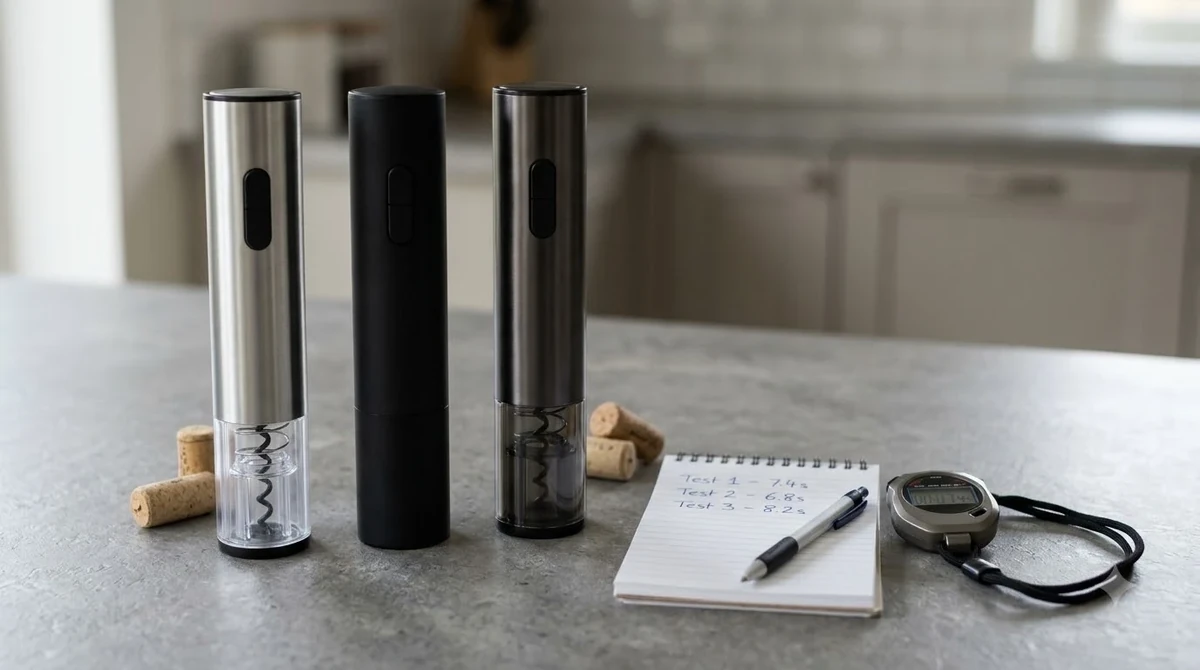
The KB1-602103 instruction manual identifies stainless steel and ABS as its construction materials. The combination provides a metal exterior component with lightweight plastic housing, while the transparent section on the manufacturer’s described design lets users watch the corkscrew mechanism work. A blue LED indicator provides a visible operating signal, which is useful when the mechanism is running.
One important distinction is that COKUNST sells multiple electric wine opener configurations. The KB1-602103 manual specifies four AA batteries, while the brand also lists a separate Type-C rechargeable model. Those are different power arrangements, and a buyer should not assume that a battery-operated version includes a charging port simply because another COKUNST listing advertises rechargeable operation.
| Specification | COKUNST KB1-602103 |
|---|---|
| Product type | Automatic electric wine opener |
| Model number | KB1-602103 |
| Power source | 4 AA batteries |
| Batteries included | No |
| Construction | Stainless steel and ABS |
| Listed dimensions | 9.7 x 2 inches |
| Listed weight | 272 grams (9.6 ounces) |
| Approximate cork-entry diameter | 35 mm |
| Operating controls | Extraction and release buttons |
| Included accessory | Foil cutter |
| Indicator | Blue LED on the manufacturer’s described design |
The manufacturer’s product description estimates approximately 5-7 seconds for automatic cork removal. The instruction manual gives a slightly different operating estimate of 6-8 seconds for extraction and approximately 5-7 seconds for releasing the cork from the mechanism. These figures describe the individual operating steps rather than a guarantee that every bottle will open within a fixed time. The official COKUNST battery-operated wine opener description provides additional information about the transparent housing, indicator light and automatic operating sequence.
The supplied foil cutter is a practical addition because it removes the capsule before the opener is positioned on the bottle. It is a separate accessory rather than a replacement for the electric corkscrew mechanism. The manual also provides operating and troubleshooting instructions, including guidance for battery installation and cork release.
For buyers comparing product specifications, the most important details are the power source, included accessories, physical dimensions and cork compatibility. A four-AA-battery opener offers a different ownership experience from a USB-C model, even if both products share a similar appearance and automatic operating principle.
What Owners Like
Ease of operation is the strongest reported advantage of the COKUNST electric wine opener. Its motor handles the physical cork extraction, while the second button removes the cork from the spiral, reducing the amount of twisting and pulling required during normal use.

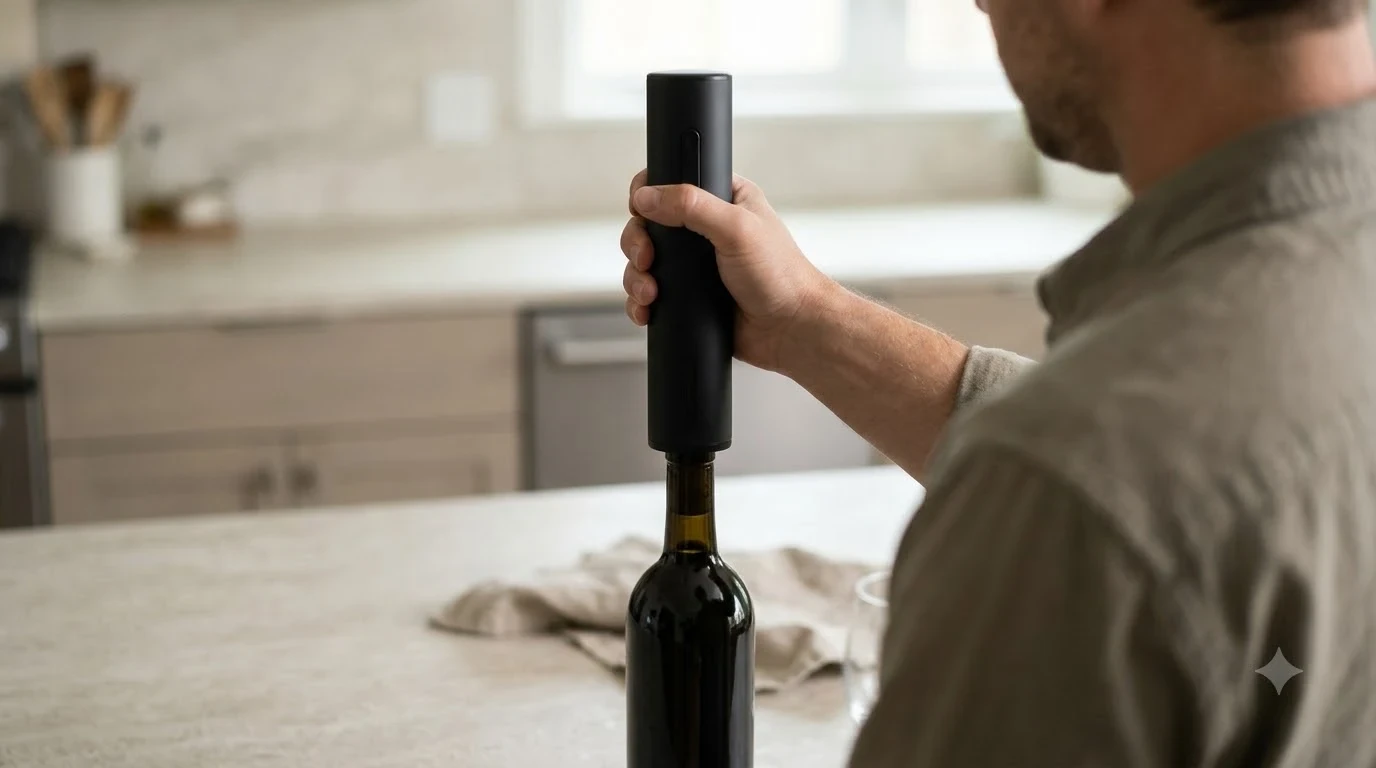
The operating process is also relatively easy to understand. After the foil is removed, the opener is positioned over the bottle neck and activated. The cork travels upward into the transparent housing, giving the user a visual indication of the extraction process. Once the opener is lifted away from the bottle, the release control reverses the mechanism to eject the cork.
The independent review published by No Fuss Deal identifies ease of use, automatic cork ejection and the cordless design as prominent advantages in owner feedback. Some owners appreciate being able to open bottles without applying much wrist or hand strength. Others like the appearance of the transparent housing and the blue operating light, which make the product look more distinctive than a basic manual corkscrew.
Convenience for everyday entertaining
For a household that regularly serves wine, the convenience of a motorized opener can make a noticeable difference to the serving routine. A traditional corkscrew requires the user to position the worm, rotate it into the cork and pull the cork out. The electric design automates most of that work through a simple button-operated mechanism.
This can be particularly useful when opening several standard bottles for a dinner party. Instead of repeatedly applying manual twisting force, the user can follow the same short sequence for each bottle. The separate release button also eliminates the need to grip the extracted cork and pull it off the spiral manually.
The included foil cutter makes the package more practical for someone replacing a basic corkscrew. A dedicated cutter can remove the capsule cleanly before opening, while the compact opener can be stored in a kitchen drawer alongside other wine accessories. The device weighs approximately 9.6 ounces according to its manual, making it reasonably portable for occasional entertaining away from home.
Simple cordless operation
The battery-powered arrangement has a practical advantage over openers that need to remain connected to a charging cable during operation. There is no charging base to occupy counter space, and the device can be stored in a drawer between uses. When batteries become depleted, replacement does not require waiting for a charging cycle.
However, that convenience depends on keeping spare batteries available. The four AA batteries are not included with the KB1-602103 model described in the manual, so the buyer needs to supply them separately. Households that already keep AA batteries available may find this arrangement straightforward.
Another positive is the relatively uncomplicated operating system. There are no complicated menus, settings or adjustable extraction modes to learn. The user simply needs to understand which button extracts the cork and which one releases it.
For additional wine accessory comparisons and practical product assessments, the Model reviews section can help readers compare other equipment used for opening, serving and storing wine.
Common Complaints and Limitations
The main concerns surrounding the COKUNST electric wine opener involve inconsistent extraction, variable battery life and questions about long-term durability. Its convenient operating system is appealing, but owner experiences suggest that performance may depend on the condition of the cork, battery strength and the particular unit.
The independent No Fuss Deal review reports that some owners have experienced problems removing corks cleanly, while others describe reliable operation over extended periods. The review also identifies complaints about batteries draining quickly and some units failing earlier than expected. These reports should be treated as individual owner experiences rather than a guarantee that every opener will develop the same problems.
Battery replacement is part of ownership
The KB1-602103 requires four AA batteries, which are not included. This means the opener does not offer the convenience of a built-in rechargeable battery, and regular users need to account for replacement batteries as part of normal ownership.
Battery performance can also change depending on the amount of resistance the motor encounters. A cork that is unusually tight may require more effort than a loose, properly fitted natural cork. If the motor begins slowing down or struggles to extract corks, checking battery condition is a sensible first troubleshooting step.
The battery arrangement is not inherently a disadvantage. Some households prefer replaceable batteries because they can keep spares in a drawer instead of remembering to charge another appliance. However, people who prefer USB-C charging may find a different COKUNST configuration more suitable.
Plastic construction and durability concerns
The opener’s combination of stainless steel and ABS does not make it a fully metal appliance. The lightweight construction is convenient for handling and storage, but buyers expecting the weight and solid feel of a premium metal wine accessory may be disappointed.
Owner feedback summarized by No Fuss Deal includes both positive long-term experiences and complaints about units breaking early. Some users describe continued operation over several years, while others question the strength of the body and internal mechanism. This variation makes it difficult to predict the service life of an individual unit from the published specifications alone.
Careful positioning and sensible handling are particularly important with a motorized corkscrew. It should be held upright rather than tilted, and the user should avoid forcing the motor through a cork that appears stuck. Applying additional pressure to a jammed mechanism is unlikely to solve the underlying problem and could cause further damage.
Not every bottle is compatible
The KB1-602103 manual specifically warns against using the opener with synthetic corks and champagne bottles. Its intended application is the removal of traditional natural corks from standard wine bottles. The device should not be considered a universal bottle opener.
Screw-cap wine bottles do not need a corkscrew at all. Sparkling wines also require a different opening technique because their corks are held under pressure. For those bottles, a motorized extraction mechanism designed for ordinary still-wine corks is not the appropriate tool.
These compatibility restrictions are important for households with varied wine collections. Someone who mainly buys standard cork-closed Cabernet Sauvignon, Merlot or Chardonnay will have a different experience from someone who regularly serves sparkling wine, screw-cap Sauvignon Blanc or bottles sealed with synthetic corks.
Who Should Buy and Who Should Skip
The COKUNST electric wine opener is best suited to occasional or regular home wine drinkers who value automatic cork removal and prefer a cordless appliance. It is less suitable for buyers who need a heavy-duty commercial tool, require universal cork compatibility or want a rechargeable device without checking which model they are purchasing.
For home use, the two-button design offers a convenient alternative to a manual corkscrew. The separate extraction and release functions make the opening process relatively simple, and the included foil cutter means buyers receive an accessory for preparing traditional wine bottles.
Who should consider buying it?
People who find traditional corkscrews difficult to operate are among the most obvious potential buyers. Manual corkscrews require the user to maintain a stable grip, turn the handle and pull the cork out. An electric model shifts much of that physical work to a motor.
It may also suit households that regularly serve still wine at dinner parties or family gatherings. The quick operating sequence is easy to repeat, and the cordless design avoids the need for a charging station on the kitchen counter. A household that opens a few traditional cork-sealed bottles each week may appreciate the convenience without requiring a more specialized appliance.
Another suitable buyer is someone shopping for a straightforward wine accessory gift. The automatic mechanism, indicator light and included foil cutter make the opener more distinctive than a basic manual corkscrew. However, the recipient should be comfortable with the requirement for four AA batteries if receiving the KB1-602103 version.
Who should look elsewhere?
Buyers who regularly open bottles with synthetic corks should pay particular attention to the compatibility warning in the manual. A traditional manual corkscrew may be a more flexible backup for bottles that the electric mechanism cannot handle.
Professional bartenders and restaurant operators may also prefer equipment designed for frequent commercial use. The reported inconsistency in durability makes it difficult to recommend this model as the only opener in a busy service environment. A manual backup is sensible even for a household that likes electric operation.
People who specifically want USB-C charging should also avoid assuming that every COKUNST opener has that feature. The brand lists a separate rechargeable model, but the four-AA-battery KB1-602103 is not the same configuration.
Tip: Before ordering, compare the model number and power-source description rather than relying on product photographs alone. COKUNST sells both battery-powered and rechargeable openers, and the distinction affects how the device is powered and maintained.
For people who prefer traditional wine service, a manual corkscrew remains a useful alternative to keep in the kitchen. It requires no batteries, can work with a wider range of traditional corks and provides a practical backup if an electric opener becomes stuck.
How It Compares to Alternatives
The most relevant comparison is between the battery-operated COKUNST opener, the brand’s separate rechargeable configuration and a conventional manual corkscrew. Each approach offers a different balance of convenience, power requirements and compatibility.
The COKUNST product range includes a Type-C rechargeable electric wine opener. According to the manufacturer’s description, that configuration uses a Type-C connection instead of requiring four AA batteries. It retains the general concept of automatic cork removal, making it a more relevant comparison for buyers who like the electric operating principle but do not want to replace disposable batteries.
The COKUNST KB1-602103 instruction manual is particularly useful for checking the battery requirements, operating sequence, cork compatibility and cleaning precautions before using the battery-powered version.
Battery-powered versus rechargeable COKUNST
The battery-operated KB1-602103 is straightforward to maintain if replacement AA batteries are readily available. There is no need to locate a charging cable or plan charging sessions before entertaining. However, the buyer must monitor battery condition and purchase replacements when necessary.
The rechargeable Type-C model takes a different approach. Its charging connection eliminates the need to purchase replacement AA batteries for normal operation, although the user must keep the device charged. This may be preferable for someone who regularly uses USB-C accessories and wants to reduce the number of disposable batteries used around the home.
Neither power arrangement automatically guarantees better cork extraction or longer service life. Battery chemistry, motor design, construction quality and the condition of the cork all influence practical performance. The published product descriptions establish the power-source difference, not a verified durability advantage for either configuration.
Electric versus manual corkscrews
A manual corkscrew is generally the simpler option. It has no motor, battery compartment or electronic controls, and many traditional designs can be used with different types of natural cork. Its biggest disadvantage is that the user must supply the twisting and pulling force.
An electric opener reverses that balance. It reduces physical effort but introduces a motorized mechanism that needs power and can potentially become jammed. It also requires the user to position the device correctly so the worm enters the center of the cork.
For someone who opens wine occasionally and has no difficulty using a traditional corkscrew, the electric model may be a convenience rather than a necessity. For someone who values reduced manual effort, the convenience may justify choosing an electric design.
The distinction also matters during wine service. A conventional waiter-style corkscrew is easy to carry and does not require preparation. An electric opener is more convenient on a kitchen counter or dining table, where it can be used without repeatedly applying manual force.
Choosing between the available designs
The best option depends on how often wine is opened and which bottle closures are most common. A person who primarily buys standard cork-closed still wines may find the battery-powered COKUNST model adequate. Someone who prefers rechargeable appliances may find the separate Type-C version more appealing.
For a household with several types of wine closures, keeping a manual corkscrew alongside an electric opener provides additional flexibility. The electric model can handle suitable natural corks, while the manual tool provides an alternative when the automatic mechanism is incompatible or unavailable.
Readers interested in wine service can also explore an Aperol Spritz recipe for a sparkling aperitif or a chicken Marsala recipe for a dinner pairing idea. These examples illustrate why different wine and beverage preparations benefit from having the appropriate opening and serving equipment available.
Frequently Asked Questions
Does the COKUNST electric wine opener work with all bottle sizes?
The KB1-602103 manual identifies a 35 mm approximate cork-entry diameter and describes the opener for standard wine bottles. This specification should not be interpreted as a guarantee of compatibility with every bottle-neck shape. Unusually shaped bottles may not provide the stable positioning needed for correct extraction.
Can the COKUNST opener remove a cork without damaging the wine?
The opener is designed to extract the cork rather than interact with the wine itself. Its motorized mechanism does not require pouring, aerating or otherwise handling the liquid. Keeping the device centered and upright helps reduce the possibility of breaking the cork during normal opening.
What should you do if the cork breaks during extraction?
Stop operating the motor if the cork becomes damaged or the mechanism appears jammed. A manual corkscrew designed for difficult corks can provide an alternative for removing the remaining material. Avoid repeatedly activating a blocked electric mechanism, as this can place unnecessary strain on the device.
Can rechargeable AA batteries be used in the battery-operated model?
The instruction manual specifies four AA batteries but does not provide a detailed comparison of battery chemistries. Rechargeable AA batteries are a different option from the dedicated Type-C COKUNST model. Buyers should use batteries of the correct size and follow the polarity markings inside the compartment.
Does the electric wine opener have a replaceable corkscrew mechanism?
The KB1-602103 manual does not document a user-replaceable corkscrew mechanism or provide a replacement-part procedure. It advises users not to disassemble or repair the appliance themselves. For a mechanical failure, the recommended route is to contact customer support through the retailer where the product was purchased.
The COKUNST electric wine opener is a convenient option for people who want automatic cork removal without a complicated setup. Its four-AA-battery configuration, separate release control and included foil cutter make it practical for ordinary home wine service, although inconsistent owner reports and limited cork compatibility deserve consideration. Check the exact model before buying, and keep a manual corkscrew available for bottles that the electric mechanism cannot handle.
More in Model Reviews
 Magic Chef 44 Bottle Wine Cooler Review for Flexible StorageUpdated Nov 21, 2026
 Whynter 164 Bottle Wine Cooler Review: Capacity, Features, and FitUpdated Nov 21, 2026
 Insignia NS WC16BK6 Review: Compact 16-Bottle Wine StorageUpdated Nov 21, 2026
 Wine Enthusiast Electric Blue Omega Review: Opening, Pouring, and Preserving Made EasierUpdated Nov 21, 2026
 Koolatron 20 Bottle Wine Cooler Review: Features, Fit, and PerformanceUpdated Nov 21, 2026
 NewAir AWC 330E Review for Home Wine StorageUpdated Nov 21, 2026