

We may earn a commission when you buy through links on this page, at no extra cost to you. Learn more.
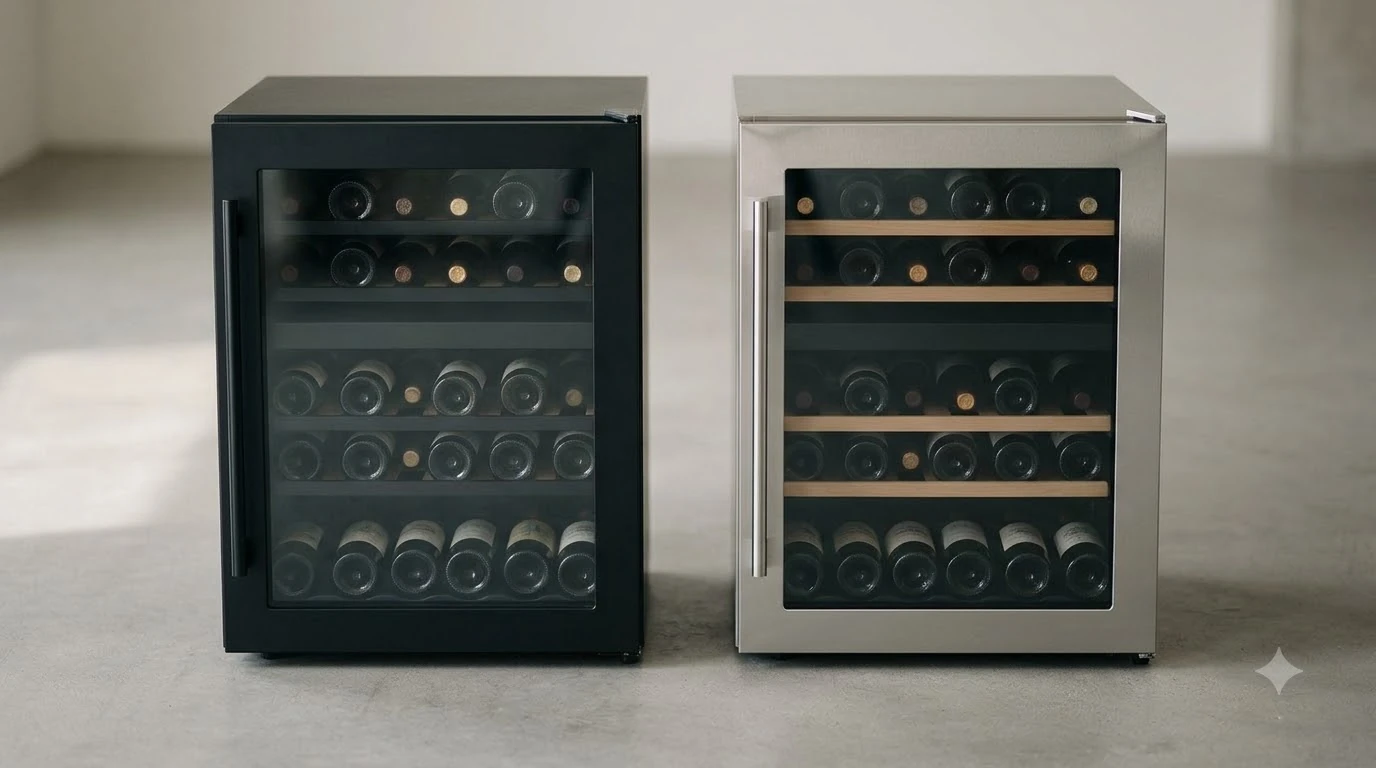
The sub zero 24 inch wine fridge is a premium built-in wine storage appliance designed for homeowners who want integrated kitchen styling, dedicated bottle storage, and a capacity of up to 42 standard bottles in the current DEU2450W model. Its compact 24-inch width makes it suitable for an undercounter installation, while its custom-panel-ready design allows it to blend into surrounding cabinetry. However, buyers should distinguish the current DEU2450W from the older 424G/S, a discontinued 46-bottle model that frequently appears in secondhand listings.
Sub-Zero has a strong presence in the premium kitchen appliance market, and its wine storage products are designed for people who consider wine preservation part of their kitchen planning. The 24-inch category is particularly interesting because it provides dedicated wine storage without requiring an entire wall of cabinetry. This review examines the current Designer Series DEU2450W, its installation requirements, storage capacity, practical advantages, limitations, and the differences buyers should understand before purchasing.
Specs and Key Features
The current Sub-Zero DEU2450W is a 24-inch Designer Series undercounter wine storage appliance with room for 42 standard bottles. Its dimensions, electrical requirements, and panel-ready construction make it a specialized built-in appliance rather than a conventional freestanding wine cooler.
Sub-Zero lists the DEU2450W at 24 inches wide, 34 1/2 inches high, and 23 1/8 inches deep. Its published weight is 176 pounds, so installation requires appropriate planning, suitable flooring, and professional handling. The appliance is intended for a dedicated cabinet opening, and its custom-panel-ready construction allows homeowners to coordinate the door with their kitchen design.
One important distinction concerns the older 424G/S. That model is also a 24-inch undercounter wine refrigerator, but it has a different physical specification and a stated capacity of 46 bottles. It measures 23 7/8 inches wide, 34 inches high, and 24 inches deep, and weighs 195 pounds. These differences matter when replacing an existing appliance or evaluating a used listing.
| Specification | Current DEU2450W | Older 424G/S |
|---|---|---|
| Product category | Designer undercounter wine storage | 400 Series undercounter wine storage |
| Width | 24 inches | 23 7/8 inches |
| Height | 34 1/2 inches | 34 inches |
| Depth | 23 1/8 inches | 24 inches |
| Bottle capacity | 42 bottles | 46 bottles |
| Appliance weight | 176 pounds | 195 pounds |
| Electrical supply | 115 VAC, 60 Hz | 115 VAC, 60 Hz |
| Electrical service | 15-amp dedicated circuit | 15-amp dedicated circuit |
| Installation style | Built-in, undercounter | Built-in, undercounter |
These specifications come from Sub-Zero’s published technical information for the two models. They should not be treated as interchangeable measurements because the cabinet opening, door arrangement, and installation details differ between generations.
Custom cabinetry and exterior design
The DEU2450W is designed for a coordinated kitchen appearance. Its panel-ready configuration allows a compatible custom door panel to match surrounding cabinetry, making it less visually prominent than a freestanding stainless-steel appliance. Buyers who prefer a more traditional appliance appearance can investigate the available stainless-steel door and handle options through an authorized dealer.
Custom panels introduce additional planning requirements. Sub-Zero specifies a maximum panel weight of 22 pounds for the DEU2450W and a panel thickness between 5/8 and 3/4 inch. A panel that exceeds the permitted weight or thickness can create installation and door-operation problems.
Capacity and electrical requirements
The stated 42-bottle capacity is based on standard bottle storage rather than every possible wine bottle shape. Burgundy, Champagne, and unusually large bottles can occupy more room than standard Bordeaux bottles. Buyers who regularly purchase oversized formats should consider usable rack space instead of relying entirely on the published capacity.
The appliance requires a 115-volt, 60-Hz electrical supply and a dedicated 15-amp circuit. These requirements should be addressed during kitchen renovation planning, particularly if the wine refrigerator is being installed alongside other undercounter appliances.
For the official model specifications, installation documents, and compatible accessories, consult Sub-Zero’s DEU2450W technical specifications.
What Owners Like
The strongest appeal of the Sub-Zero 24-inch wine storage category is its combination of integrated appearance, dedicated storage, and relatively substantial bottle capacity. Homeowners planning premium kitchens may appreciate having wine storage built into the cabinetry instead of occupying valuable counter or floor space.

Integrated kitchen appearance
For many buyers, the appearance of the appliance is just as important as its refrigeration function. A panel-ready DEU2450W can be coordinated with the surrounding kitchen cabinets, creating a consistent appearance across an island, beverage station, or kitchen wall.
This is particularly useful in kitchens where stainless-steel appliances already dominate the visual design. A matching cabinet panel can make the wine storage area look like another section of the cabinetry rather than a separate appliance.
The undercounter format also makes the refrigerator convenient to access while preparing meals or entertaining guests. Wine bottles are stored close to the kitchen’s food preparation and serving areas, reducing the need to retrieve bottles from a separate storage room.
Dedicated bottle organization
A 42-bottle capacity provides meaningful storage for a household that maintains a rotating selection of red, white, sparkling, and rosé wines. Instead of keeping bottles in several kitchen cabinets or on open shelving, owners have a designated location for their collection.
Horizontal bottle storage is particularly practical for traditional cork-finished wines because it keeps the cork in contact with the wine. Organized shelving also makes it easier to separate bottles by grape variety, region, drinking occasion, or intended opening date.
For example, a homeowner might reserve one section for everyday Sauvignon Blanc and Pinot Grigio, another for Chardonnay, and additional space for Cabernet Sauvignon, Merlot, and Pinot Noir. Sparkling wine can be organized separately so that bottles intended for celebrations are easy to locate.
Thoughtful kitchen integration
Sub-Zero’s undercounter design is useful for kitchens where every inch of floor space matters. Rather than installing a full-height wine cabinet, homeowners can use a 24-inch section beneath an existing countertop. This arrangement can work well near a dining area, kitchen island, or dedicated entertaining space.
The appliance can also become part of a larger beverage station. A nearby cabinet can hold wine glasses, corkscrews, cocktail equipment, and serving accessories. This arrangement keeps the practical elements of entertaining together without requiring a separate bar room.
For example, a wine station can be positioned near ingredients for an Aperol Spritz recipe, while another section of the kitchen remains dedicated to meal preparation.
Established manufacturer documentation
Another advantage is the availability of model-specific technical and installation documentation. Sub-Zero provides specification sheets, design information, installation instructions, and use-and-care resources for the current appliance family.
That documentation helps homeowners, cabinetmakers, and installers coordinate their work. Instead of relying on approximate measurements from a retailer listing, buyers can plan the opening, electrical supply, panel, and hinge arrangement around the actual model.
However, these are design and specification advantages rather than proof that every owner has the same experience. Individual satisfaction will depend on installation quality, maintenance, bottle-storage habits, and the condition of the appliance.
Common Complaints
The main drawbacks to consider are the premium appliance commitment, limited capacity compared with larger wine cabinets, custom installation requirements, and the potential confusion surrounding older Sub-Zero models. A 24-inch wine refrigerator is not automatically the right solution for every wine collection or kitchen layout.
Limited room for growing collections
Forty-two bottles is a useful capacity for a moderate collection, but it can become restrictive for serious collectors. Someone who regularly buys wine by the case may fill the available space quickly, particularly if the collection includes Champagne, Burgundy bottles, or larger formats.
The published capacity is a standardized figure, not a guarantee that 42 unusually shaped bottles will fit comfortably at the same time. Bottle dimensions and rack arrangements influence practical capacity. Owners who want space for magnums should investigate the actual shelf configuration before committing to the appliance.
A household with 100 or more bottles may be better served by a larger wine cabinet or a dedicated wine room. The 24-inch format is most appropriate when convenient kitchen access matters more than maximum storage volume.
Installation is not a simple plug-in project
The DEU2450W requires a properly prepared cabinet opening and a dedicated electrical circuit. Its 176-pound appliance weight also makes it a substantial installation project. Custom panels, door alignment, finished cabinet returns, and hinge clearance require coordination between the appliance installer and cabinetmaker.
Sub-Zero’s design documentation specifies a 24-inch-wide opening and a 34 1/2-inch opening height for the standard DEU2450W. It also specifies a 24-inch opening depth. The appliance itself measures 23 1/8 inches deep, so the opening dimensions should not be confused with the external appliance dimensions.
Finished cabinet returns are another consideration. Sub-Zero’s design guide specifies a minimum 3 1/2-inch finished return around the undercounter wine opening. Framed cabinetry may also require additional finished filler material behind the face frame.
Replacement and repair considerations
Premium built-in appliances should be evaluated with service access in mind. A replacement may require cabinet adjustments, electrical work, or a new custom panel if the original model is no longer available.
This issue is especially important for used 424G/S units. Sub-Zero’s model timeline lists the 424G/S production period as ending in 2016. A secondhand appliance may still be useful, but its age, service history, parts availability, and operating condition should be investigated before purchase.
Do not assume that an older 424G/S can be replaced by a DEU2450W without modifications. Although both belong to the 24-inch undercounter category, their dimensions, weight, panel requirements, and installation details are different.
Custom panel limitations
The panel-ready appearance is attractive, but it requires additional design work. The DEU2450W has a maximum custom panel weight of 22 pounds, with a specified thickness range of 5/8 to 3/4 inch.
These restrictions can limit the choice of materials and decorative construction. A heavy solid-wood panel may not be appropriate, even if it visually matches the surrounding cabinets. The panel must also be finished properly on all sides because portions may be visible when the door is open or through the glass.
Tip: Before ordering cabinetry, obtain the exact DEU2450W installation and panel specifications. Confirm the 24-inch opening width, 34 1/2-inch opening height, 24-inch opening depth, dedicated 15-amp circuit, and maximum 22-pound panel weight with the installer.
Who Should Buy and Who Should Skip
The Sub-Zero DEU2450W makes the most sense for homeowners who want built-in wine storage, a coordinated kitchen appearance, and room for approximately 42 standard bottles. It is less suitable for buyers who prioritize inexpensive refrigeration, large collection capacity, or a simple freestanding installation.
Who should consider buying it?
Homeowners renovating a premium kitchen: The panel-ready design is a natural fit for a kitchen where cabinetry, hardware, and appliances have been selected as part of one overall design. Its 24-inch width allows a dedicated wine storage area without requiring a large appliance footprint.
Wine enthusiasts with moderate collections: A 42-bottle capacity can accommodate a selection of everyday wines and bottles reserved for special occasions. It is particularly useful for households that purchase a variety of wines throughout the year rather than maintaining a large cellar.
People who entertain regularly: An undercounter wine refrigerator close to the dining area makes it easier to organize bottles for dinner parties and family gatherings. Wine can be stored alongside glassware and cocktail supplies for convenient access.
Owners who value integrated design: If matching the appliance door to the kitchen cabinets is a priority, the custom-panel-ready construction offers a clear advantage over many freestanding wine coolers.
Who should skip it?
Budget-conscious buyers: Sub-Zero belongs in the premium appliance category. Buyers primarily interested in keeping a modest number of bottles at a suitable temperature may find that a simpler wine refrigerator meets their needs without the complexity of a built-in installation.
Large wine collectors: Forty-two standard bottles may not provide sufficient room for a collection that grows continuously. A larger wine cabinet or dedicated storage room will provide more flexibility.
Renters and frequent movers: A built-in appliance designed around custom cabinetry is not an ideal choice for someone who expects to move frequently. Its installation and removal are more involved than those of a conventional freestanding wine cooler.
Buyers looking for a basic plug-in refrigerator: The electrical, cabinetry, panel, and clearance requirements make this a planned installation. Someone who wants to place an appliance in a spare room and start using it immediately should consider another category.
Consider your actual wine habits
Before buying, estimate how many bottles your household typically keeps. A collection of 20 to 30 bottles may leave useful room for future purchases in a 42-bottle unit. A collection that regularly approaches 60 bottles will need a different storage strategy.
Think about the types of wine you purchase, too. A collection dominated by standard 750 ml Bordeaux bottles is easier to organize than one containing many oversized Champagne bottles and unusual formats.
Serving habits also influence the value of a dedicated wine refrigerator. Light whites and rosé are generally served around 45 to 50 degrees Fahrenheit, while full-bodied reds are commonly served around 60 to 65 degrees. A dedicated wine storage appliance can be part of a broader plan for organizing bottles before serving, but buyers should confirm the precise temperature capabilities and controls of their chosen model rather than assuming every 24-inch Sub-Zero has identical settings.
How It Compares to Alternatives
The most useful comparisons are within Sub-Zero’s own wine storage range, particularly the narrower DEU1550W, the lower-height DEU2450WADA, and the older 424G/S. These models serve different installation and storage needs, so the right choice depends on cabinet dimensions, available space, and whether the appliance is new or used.
DEU2450W versus DEU1550W
The DEU2450W provides 24 inches of width and a published capacity of 42 bottles. The DEU1550W belongs to the same Designer Series undercounter family but uses a narrower 15-inch format.
The narrower option is useful when cabinet space is limited or when a homeowner wants to combine wine storage with other undercounter appliances. However, the DEU2450W is the more practical choice for someone who needs a larger dedicated wine compartment.
For a kitchen with enough available cabinetry, the 24-inch model offers more flexibility for organizing a moderate collection. For a compact beverage station, the 15-inch option may be easier to accommodate.
DEU2450W versus DEU2450WADA
The ADA version is another important comparison. Sub-Zero lists the DEU2450WADA at 24 inches wide, 32 1/2 inches high, and 23 1/8 inches deep, compared with the standard DEU2450W height of 34 1/2 inches.
Both models have a stated capacity of 42 bottles, but the lower-height configuration is intended for a different installation requirement. This distinction is especially important when designing cabinetry around a specific counter height or accessibility requirement.
Do not substitute one version for the other based only on their shared width and capacity. Their required cabinet opening heights are different, and the exact model suffix should be confirmed before the cabinetry is finalized.
DEU2450W versus the older 424G/S
The 424G/S is an older Sub-Zero 24-inch undercounter wine storage model with a published 46-bottle capacity. It is slightly shorter than the DEU2450W, measuring 34 inches high instead of 34 1/2 inches, and is 24 inches deep rather than 23 1/8 inches.
Its four additional stated bottle positions may appear attractive, particularly to someone shopping for a used unit. However, Sub-Zero lists the 424G/S production period as ending in 2016. Buyers should therefore evaluate it as an older appliance rather than treating it as the current equivalent of the DEU2450W.
The older model may appeal to someone replacing an existing 424 installation or seeking a matching appliance for an established kitchen. Nevertheless, the condition of the refrigeration system, electrical components, shelves, door seals, and controls deserves careful inspection.
Choosing the right model for the kitchen
For a new kitchen renovation, the current DEU2450W is the more straightforward starting point because its documentation and installation requirements are available through Sub-Zero’s current product resources.
For a lower countertop configuration, investigate the ADA version. For a smaller cabinet opening, investigate the DEU1550W. For a used 424G/S, obtain the complete model and serial information and arrange an appropriate condition assessment before purchasing.
Another practical consideration is how the wine refrigerator fits into the surrounding kitchen. A dedicated wine station near a dining area may be more useful than an appliance installed far from the places where bottles are opened and served.
Food pairing can also influence how the collection is organized. Cabernet Sauvignon and other structured reds work well with richer dishes, while higher-acidity Sauvignon Blanc can complement seafood. A nearby cooking station may also make it convenient to select a bottle for a chicken Marsala recipe or prepare a refreshing Hugo Spritz recipe for guests.
Frequently Asked Questions
Is the Sub-Zero 424G/S still manufactured?
No. Sub-Zero’s official model timeline identifies 2016 as the final production year for the 424G/S. The model may still appear in secondhand appliance listings, but buyers should treat those units as used equipment and verify their manufacturing information before purchasing.
Can the Sub-Zero 424G/S be installed as a freestanding refrigerator?
The 424G/S is an undercounter model, not the freestanding 424FSG. Sub-Zero identifies the 424FSG as the version with finished stainless-steel sides and top suitable for freestanding placement. The two models should not be confused when shopping for a replacement.
How much does a fully loaded Sub-Zero 424 weigh?
Sub-Zero states that a Model 424 weighs approximately 350 pounds when filled with wine. This is considerably heavier than its published empty weight of 195 pounds for the 424G/S, making transportation and floor-loading considerations important during relocation.
Can the DEU2450W be installed beside another Sub-Zero undercounter appliance?
Yes, Sub-Zero documents dual installations for compatible undercounter appliances. Its design guide specifies a 48-inch combined opening width for two 24-inch models, and a dual installation kit may be required depending on the configuration. The hinge arrangement and filler-strip requirements must also be considered.
Can the wine racks be customized?
Sub-Zero’s design documentation explains that the natural cherrywood facing on undercounter wine storage racks can be stained and sealed or replaced with wood that better matches the surrounding cabinetry. This offers a way to coordinate the interior appearance with a kitchen’s wood finishes without changing the basic appliance configuration.
The Sub-Zero 24-inch wine fridge is a compelling option for homeowners who want dedicated wine storage integrated into a premium kitchen. The current DEU2450W offers a 42-bottle capacity and a custom-panel-ready design, but its installation requirements and collection size should be considered carefully. Confirm the exact model, cabinet measurements, electrical requirements, and panel specifications before purchasing so the appliance fits both the kitchen and the way the household enjoys wine.
More in Model Reviews
 Magic Chef 44 Bottle Wine Cooler Review for Flexible StorageUpdated Nov 21, 2026
 Whynter 164 Bottle Wine Cooler Review: Capacity, Features, and FitUpdated Nov 21, 2026
 Insignia NS WC16BK6 Review: Compact 16-Bottle Wine StorageUpdated Nov 21, 2026
 Wine Enthusiast Electric Blue Omega Review: Opening, Pouring, and Preserving Made EasierUpdated Nov 21, 2026
 Koolatron 20 Bottle Wine Cooler Review: Features, Fit, and PerformanceUpdated Nov 21, 2026
 NewAir AWC 330E Review for Home Wine StorageUpdated Nov 21, 2026