

We may earn a commission when you buy through links on this page, at no extra cost to you. Learn more.
The edgestar cwr263dz is a compact dual-zone wine refrigerator designed for storing up to 23 standard 750 ml bottles, with separate temperature ranges for reds and whites. Its 15-inch width, reversible door, and built-in or freestanding installation options make it appealing for kitchens and smaller wine collections. However, its actual bottle capacity, installation clearances, temperature limitations, and reported operating noise deserve careful consideration before buying.
A dedicated wine refrigerator can make everyday entertaining easier by keeping different bottles ready at their preferred serving temperatures. The EdgeStar CWR263DZ takes a relatively narrow approach to that task, combining two temperature zones in a cabinet intended to fit under a counter or stand independently. Its feature set is attractive for homeowners who want more organized storage without giving up an entire kitchen cabinet, although it is important to understand what its specifications mean in practical use.
Specs and Key Features of the EdgeStar CWR263DZ
The CWR263DZ is a 23-bottle dual-zone wine refrigerator with a slim 15-inch cabinet and digital temperature controls. Its strongest selling points are the separate cooling ranges, flexible installation options, and relatively small footprint.
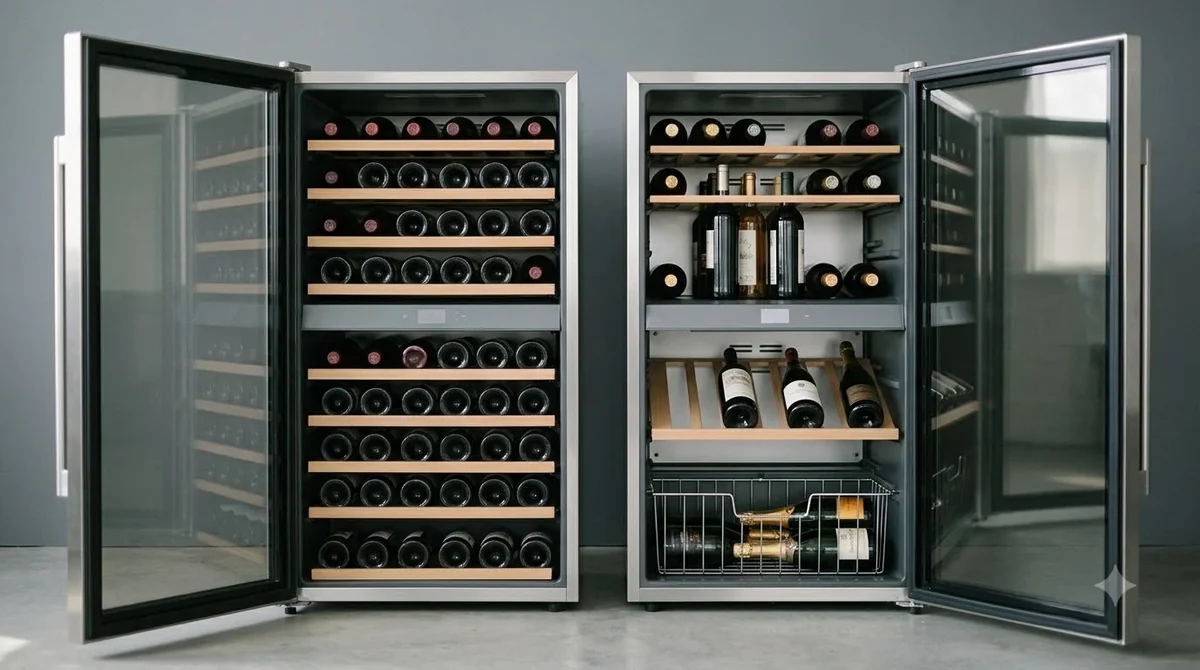
According to the manufacturer’s owner manual, the refrigerator has an upper compartment operating between 54°F and 65°F and a lower compartment operating between 40°F and 54°F. This arrangement gives owners separate environments for wines that benefit from warmer storage and bottles that need more substantial chilling before serving. Buyers can consult the EdgeStar CWR263DZ owner’s manual for the complete specifications, installation instructions, and operating guidance.
| Specification | EdgeStar CWR263DZ |
|---|---|
| Product category | Dual-zone wine refrigerator |
| Manufacturer-stated capacity | 23 standard 750 ml bottles |
| Upper temperature zone | 54°F–65°F |
| Lower temperature zone | 40°F–54°F |
| Height | 32 inches |
| Width | 15 inches |
| Depth including handle | 25.25 inches |
| Depth without handle | 23.5 inches |
| Listed capacity by volume | 2.9 cubic feet |
| Weight | Approximately 82–83 pounds |
| Electrical requirements | 115V, 60Hz, 1.5A |
| Power consumption rating | 120 watts |
| Refrigerant | R600a |
| Exterior finish | Black cabinet, stainless steel door |
| Installation | Built-in or freestanding |
The dimensions deserve particular attention. A 15-inch-wide refrigerator can fit into spaces where a conventional full-size wine cooler would be impractical. Nevertheless, buyers should measure the entire opening, including its usable depth, rather than relying on the advertised width alone. The 25.25-inch measurement includes the handle, while the cabinet’s depth without that component is 23.5 inches.
Ferguson also lists digital controls, an interior light, a reversible door, and a locking mechanism among the available features. These details make the appliance more versatile for household use. The reversible door is especially useful in kitchens where the surrounding cabinetry or adjacent wall determines which direction the door should open.
One important distinction is the stated bottle capacity. EdgeStar specifies 23 standard 750 ml bottles, not 26 bottles. Some retailer product headings use a 26-bottle description, so buyers should use the manufacturer’s specification as the more reliable capacity reference. Bottle shape and shelf arrangement can also affect how much wine fits comfortably.
What Owners Like About the Wine Refrigerator
Owner feedback highlights the CWR263DZ’s compact dimensions, separate temperature zones, and under-counter appearance. These are meaningful advantages for households that want a dedicated wine-storage area without installing a large standalone appliance.
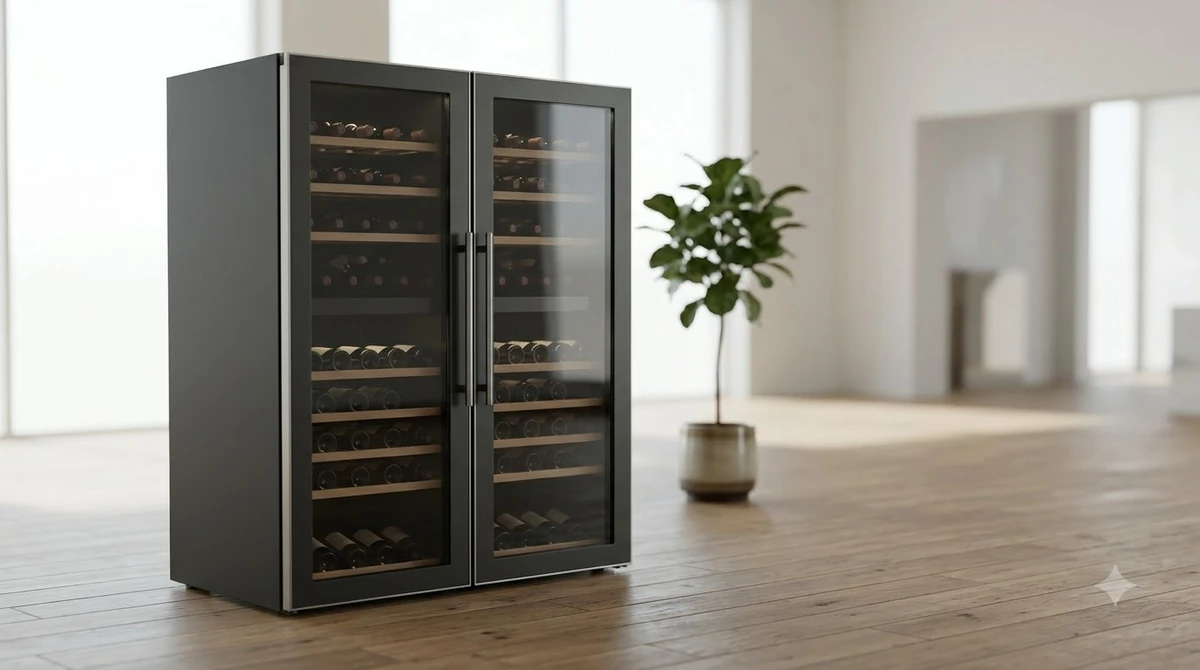
One recurring positive theme in Home Depot customer feedback is the refrigerator’s ability to fit beneath kitchen counters. Buyers appreciate having a dedicated wine cabinet that looks integrated into the surrounding kitchen rather than resembling an additional household refrigerator. The stainless steel door and dark cabinet also give it a conventional appliance appearance that can work alongside other kitchen finishes.
The dual-zone arrangement is another commonly praised feature. Instead of keeping every bottle at the same temperature, owners can separate bottles that need different storage or serving conditions. For example, Sauvignon Blanc and sparkling wine generally benefit from colder serving temperatures than many fuller-bodied reds. Having two compartments reduces the need to move bottles between the wine refrigerator and a regular refrigerator before entertaining.
Some Home Depot reviewers also describe the cooling performance positively. One owner specifically appreciated the combination of dual temperatures and relatively quiet operation. Another mentioned the door alarm as a useful feature, particularly because an incompletely closed door can undermine cooling performance.
Compact installation is a practical advantage
The narrow cabinet is particularly attractive in smaller homes, apartments, and kitchen renovations. A 15-inch opening is considerably easier to accommodate than the wider footprint of many traditional wine refrigerators. The appliance can also be used independently rather than being restricted to an under-counter position.
That flexibility matters for people who might eventually rearrange their kitchens or move the refrigerator into a dining area. The reversible door adds another layer of installation flexibility, allowing the opening direction to be changed when the surrounding layout calls for it.
Separate storage for different wine styles
The two temperature ranges make sense for a mixed collection. The lower compartment can accommodate bottles that need colder conditions, while the upper compartment offers a warmer environment for wines that are better served above refrigerator temperature.
For example, a household that regularly serves Pinot Grigio, Riesling, Chardonnay, Merlot, and Cabernet Sauvignon may appreciate being able to organize bottles according to their intended serving temperatures. This is more convenient than using a single-temperature cabinet for every style.
For additional ideas about matching wine styles to meals, the chicken Marsala recipe is a useful starting point for planning a dinner around a suitable red wine.
Common Complaints and Potential Drawbacks
The main concerns surrounding the CWR263DZ are its practical bottle capacity, possible operating noise, and the limitations of its temperature ranges. It is a specialized compact appliance, not a substitute for a large wine cellar.
One particularly useful Home Depot review describes a refrigerator that cooled effectively but produced distracting coolant noise. The same reviewer reported difficulty fitting four bottles on the same shelf level, making it harder to achieve the advertised capacity in practice.
This is an important distinction between manufacturer-rated capacity and everyday usability. Bottle-capacity figures generally describe standard Bordeaux-style bottles. Champagne bottles, Burgundy bottles, wider sparkling-wine bottles, and unusually shaped wine packaging can take up more shelf space. A collection containing many oversized bottles may therefore require rearranging shelves or accepting fewer stored bottles.
Operating noise may matter in open kitchens
Customer experiences with noise are not completely consistent. Some owners describe the unit as quiet, while others report distracting sounds from the cooling system. This difference can reflect installation conditions, room acoustics, individual sensitivity to appliance noise, and the normal cycling of refrigeration components.
The refrigerator contains an internal fan and a cooling system, so it should not be treated as a completely silent storage cabinet. Its sound may be less noticeable in a kitchen with other appliances than in a quiet dining room or open-plan living area.
Leveling and adequate ventilation are also important. The manufacturer identifies poor leveling and contact with neighboring furniture or appliances as possible explanations for unusual noises. Before assuming that a sound indicates a defect, owners should make sure the refrigerator is installed correctly and has sufficient surrounding space.
The temperature ranges have limitations
The upper zone begins at 54°F, while the lower zone reaches 40°F at its coldest setting. These ranges are useful for many wines, but they do not cover every possible beverage-storage requirement.
For example, someone who wants to keep sparkling wine at approximately 40°F can use the lower compartment. However, a person expecting both zones to reach very cold beverage temperatures should recognize that the upper compartment is designed for a warmer range.
Likewise, the upper compartment’s 65°F maximum should not be mistaken for an ideal long-term storage temperature for every wine. A wine refrigerator is primarily intended to provide controlled storage conditions, and stable temperatures matter more than simply choosing the warmest available setting.
Capacity is limited for growing collections
Twenty-three standard bottles are sufficient for casual collectors and households that purchase wine for regular consumption. However, the capacity can become restrictive for people who buy several cases at a time or maintain a collection containing different bottle formats.
Collectors who routinely store 30 to 50 bottles should consider a larger appliance instead. The CWR263DZ is best viewed as a compact storage solution rather than a long-term cellar for an expanding collection.
Who Should Buy and Who Should Skip the CWR263DZ
The CWR263DZ is most suitable for homeowners who need a narrow, dual-zone refrigerator for a modest wine collection. It is less attractive for serious collectors, people who require very large capacity, or households that need specialized beverage refrigeration.
Who should consider buying it?
Small wine collections: A 23-bottle capacity works for households that keep a selection of everyday favorites rather than buying wine in large quantities. It can hold several bottles for weekday dinners and a few additional choices for weekend entertaining.
Kitchen renovation projects: Its 15-inch width makes it worth considering when designing a compact under-counter wine-storage area. The front-ventilated design and built-in installation option are particularly relevant for this purpose.
Red and white wine drinkers: The two temperature zones offer a practical arrangement for households that regularly alternate between lighter whites and fuller-bodied reds. A colder compartment can be used for white wine, while the warmer compartment can hold suitable reds.
People who value a reversible door: The ability to change the door-opening direction helps accommodate different kitchen layouts. This can be useful when the refrigerator is positioned beside a wall or another appliance.
Home entertainers: Keeping wine in a dedicated refrigerator makes it easier to prepare bottles ahead of a dinner party. Hosts can arrange wines according to the menu instead of filling a regular refrigerator with bottles.
Who should skip it?
Large wine collectors: The 23-bottle manufacturer-rated capacity is relatively modest. Buyers who maintain several cases of wine should look for a larger cabinet.
Noise-sensitive households: Conflicting owner feedback means that the refrigerator may not be the safest choice for someone who expects a completely quiet appliance in a living room or bedroom-adjacent space.
People who want a single-temperature cellar: Some wine collectors prefer one stable temperature for all bottles, particularly when they are storing wines for extended periods. A dual-zone unit may not be necessary for this type of collection.
Commercial users: The manufacturer’s manual identifies the CWR263DZ as an appliance for domestic indoor use, not industrial or commercial operation. Restaurants and wine bars should investigate refrigeration equipment designed for their specific business requirements.
Buyers with unusually shaped bottles: Those who regularly purchase large-format bottles, wide Champagne bottles, or specialty packaging should pay particular attention to shelf dimensions and usable capacity.
How It Compares to Alternative Wine Storage Options
The CWR263DZ occupies a useful middle ground between a simple wine rack and a much larger wine refrigerator. Its dual-zone design gives it more flexibility than a basic single-temperature storage cabinet, although its compact capacity limits its usefulness for larger collections.
A traditional wine rack is the simplest alternative. It costs less to operate because it does not require electricity, and it allows owners to store bottles horizontally in a suitable room. However, a rack cannot actively cool wine or maintain two separate temperature zones. Its performance depends heavily on the surrounding environment.
A regular kitchen refrigerator offers another option, especially for people who only occasionally chill white wine. However, standard refrigerators are generally colder than the preferred serving conditions for many wines. They also provide less convenient organization for a dedicated collection.
A single-zone wine refrigerator is worth considering if the household mostly purchases one category of wine or prefers to maintain all bottles at a consistent temperature. It can simplify storage and may offer a larger capacity within a similar footprint, depending on the model.
| Storage option | Temperature control | Capacity flexibility | Best application |
|---|---|---|---|
| EdgeStar CWR263DZ | Two zones, 40°F–65°F overall | 23 standard bottles | Small mixed wine collections |
| Traditional wine rack | Depends on room conditions | Varies by rack size | Stable, naturally suitable rooms |
| Regular refrigerator | One general cooling environment | Depends on available shelves | Occasional short-term chilling |
| Single-zone wine cooler | One adjustable temperature range | Varies by model | Collections with similar storage needs |
The most important question is whether two temperature zones genuinely improve the way a household stores wine. If the collection includes both reds and whites and bottles are frequently served at home, the arrangement can be convenient. If most bottles are stored at one consistent temperature and rarely moved, a single-zone refrigerator may be sufficient.
For readers comparing other appliance categories and individual models, the Model reviews section provides another place to explore product-specific buying considerations.
Installation, Operation, and Temperature Settings
Correct installation is essential for the CWR263DZ because insufficient ventilation, uneven positioning, and unsuitable room conditions can interfere with refrigeration performance. Buyers should prepare the installation space before moving the appliance into its final position.
Measure the opening carefully
Start by measuring the height, width, and depth of the intended installation space. The refrigerator measures 32 inches high and 15 inches wide, with a depth of 25.25 inches including its handle. The handle measurement matters if the appliance must sit flush with nearby cabinetry or fit into a restricted passage.
According to the owner’s manual, the refrigerator needs at least 1 to 2 inches of clearance at the rear, 1/4 inch at the top, and 1/4 inch at each side. If the door side faces a wall, the manual specifies at least 2 3/8 inches of clearance to accommodate the door opening.
Do not assume that a cabinet opening measuring exactly 15 inches wide is automatically suitable. The actual opening must accommodate the appliance, its installation requirements, and enough access for servicing.
Prepare the electrical connection
The CWR263DZ requires a properly grounded 115V, 60Hz electrical supply. Its specifications list 1.5 amps and 120 watts. The manufacturer’s instructions recommend a separate circuit and explicitly advise against using an extension cord or power strip.
Check that the electrical outlet is correctly grounded before installation. A qualified electrician should address any wiring or outlet problems rather than attempting to modify the refrigerator’s power connection.
Allow the refrigerator to settle
The manufacturer recommends leaving the appliance upright for at least 24 hours before connecting it to electricity following transportation. This waiting period allows the compressor’s oils to settle after movement.
The appliance should also be placed on a firm, level surface. Its adjustable feet allow owners to correct uneven positioning, and a carpenter’s level can help verify that the refrigerator sits correctly.
Choose practical temperature settings
The best starting point depends on the types of wine being stored and whether the bottles are intended for longer-term storage or relatively immediate serving.
- Lower compartment: Use the 40°F–54°F range for white wines, rosé, and sparkling bottles that benefit from colder storage.
- Upper compartment: Use the 54°F–65°F range for red wines and bottles that are better served at warmer temperatures.
- Mixed collections: Organize bottles by intended serving temperature rather than placing every wine in the same compartment.
For additional entertaining inspiration, an Aperol Spritz recipe can help plan a refreshing pre-dinner drink. The wine refrigerator itself, however, should be used according to its wine-storage temperature ranges rather than treated as a general-purpose drinks refrigerator.
Care, Maintenance, and Warranty Considerations
Regular cleaning, appropriate ventilation, and periodic carbon-filter replacement help keep the CWR263DZ operating as intended. Its maintenance requirements are relatively straightforward, but owners should follow the manufacturer’s instructions rather than using aggressive cleaners or attempting internal repairs.
Clean the cabinet and door
The owner’s manual recommends mild detergent or hand soap mixed with warm water for cleaning the exterior. Use a soft sponge or cloth, rinse with clean water, and dry the surfaces to reduce water spotting.
For the stainless steel door, avoid abrasive or caustic cleaning products. The manufacturer also warns that chlorine gas and moisture can discolor stainless steel. Gentle cleaning is preferable to harsh chemical treatment.
Maintain the carbon filter
The CWR263DZ includes a carbon filter that acts as an odor barrier. According to the manufacturer, replacement is generally recommended every 3 to 6 months depending on exposure to surrounding odors.
A kitchen installation may expose the filter to more cooking odors than a separate dining-room installation. For this reason, the manual recommends a three-month replacement interval when the appliance is placed in a kitchen.
Monitor frost and ventilation
The appliance uses an automatic defrost system, but the manual explains that manual defrosting may occasionally be necessary. Excessive humidity, an incorrectly fitted door gasket, frequent opening, and unsuitable ambient temperatures can contribute to frost formation.
If frost becomes a recurring problem, check the door seal and the surrounding room conditions. The manufacturer recommends unplugging the unit to allow accumulated frost to melt when manual defrosting is required.
Tip: Keep the front ventilation area unobstructed, avoid placing the refrigerator beside an oven or other heat source, and make sure the door closes fully. These simple installation and operating habits can help prevent unnecessary cooling problems.
Understand the warranty
The manufacturer’s manual specifies a limited warranty covering one year of parts and one year of labor for qualifying residential use in the contiguous United States. Warranty service is subject to the manufacturer’s stated conditions and exclusions.
Coverage applies to the original purchaser and qualifying residential use. Installation costs, cosmetic damage, misuse, unauthorized modifications, and certain transportation-related expenses are among the exclusions described in the warranty terms.
Keep the original purchase receipt and record the appliance’s model and serial numbers. These details can help when contacting customer service or arranging warranty service. Buyers should also confirm that the seller is an authorized reseller and review the applicable warranty terms before completing a purchase.
Frequently Asked Questions
Does the EdgeStar CWR263DZ have a door alarm?
Retailer descriptions and customer feedback identify a door-ajar alarm as a feature of this refrigerator. It is intended to alert owners when the door has been left open, helping prevent avoidable temperature fluctuations. Its presence is particularly useful in busy kitchens where the door may be opened repeatedly during meal preparation.
Can the CWR263DZ be used in a garage?
The manufacturer specifies an operating ambient temperature above 50°F and below 90°F. An unconditioned garage that regularly falls outside this range may therefore be unsuitable. A temperature-controlled indoor location is a more appropriate choice.
Does the CWR263DZ have a UV-protected glass door?
The manufacturer’s specifications identify a stainless steel door rather than a transparent glass display door. Buyers looking for a glass-front refrigerator to display bottle labels should consider this distinction. The solid exterior also gives the appliance a different appearance from wine cabinets designed primarily for visual presentation.
Can the CWR263DZ store beer and other beverages?
Its temperature range may accommodate some beverages, but it is designed and specified as a wine refrigerator. The upper compartment cannot provide the colder conditions that some beer styles and other drinks require. Buyers who primarily want cold beverage storage should consider a dedicated beverage refrigerator instead.
Does the CWR263DZ require professional installation?
The manufacturer provides installation instructions for both freestanding and built-in arrangements, so a professional installer is not automatically required. However, the refrigerator weighs approximately 82–83 pounds, and the manual recommends using at least two people when moving and installing it. Electrical work involving an improperly grounded outlet should be handled by a qualified electrician.
The EdgeStar CWR263DZ is a practical option for households seeking compact dual-zone wine storage, especially when a 15-inch under-counter footprint is a priority. Its 23-bottle capacity, separate temperature ranges, and reversible door provide useful flexibility, although bottle arrangement, operating noise, and installation clearances deserve attention. Buyers who measure their available space carefully and have realistic expectations about capacity will be better positioned to decide whether this wine refrigerator suits their home.
More in Model Reviews
 Magic Chef 44 Bottle Wine Cooler Review for Flexible StorageUpdated Nov 21, 2026
 Whynter 164 Bottle Wine Cooler Review: Capacity, Features, and FitUpdated Nov 21, 2026
 Insignia NS WC16BK6 Review: Compact 16-Bottle Wine StorageUpdated Nov 21, 2026
 Wine Enthusiast Electric Blue Omega Review: Opening, Pouring, and Preserving Made EasierUpdated Nov 21, 2026
 Koolatron 20 Bottle Wine Cooler Review: Features, Fit, and PerformanceUpdated Nov 21, 2026
 NewAir AWC 330E Review for Home Wine StorageUpdated Nov 21, 2026