

We may earn a commission when you buy through links on this page, at no extra cost to you. Learn more.
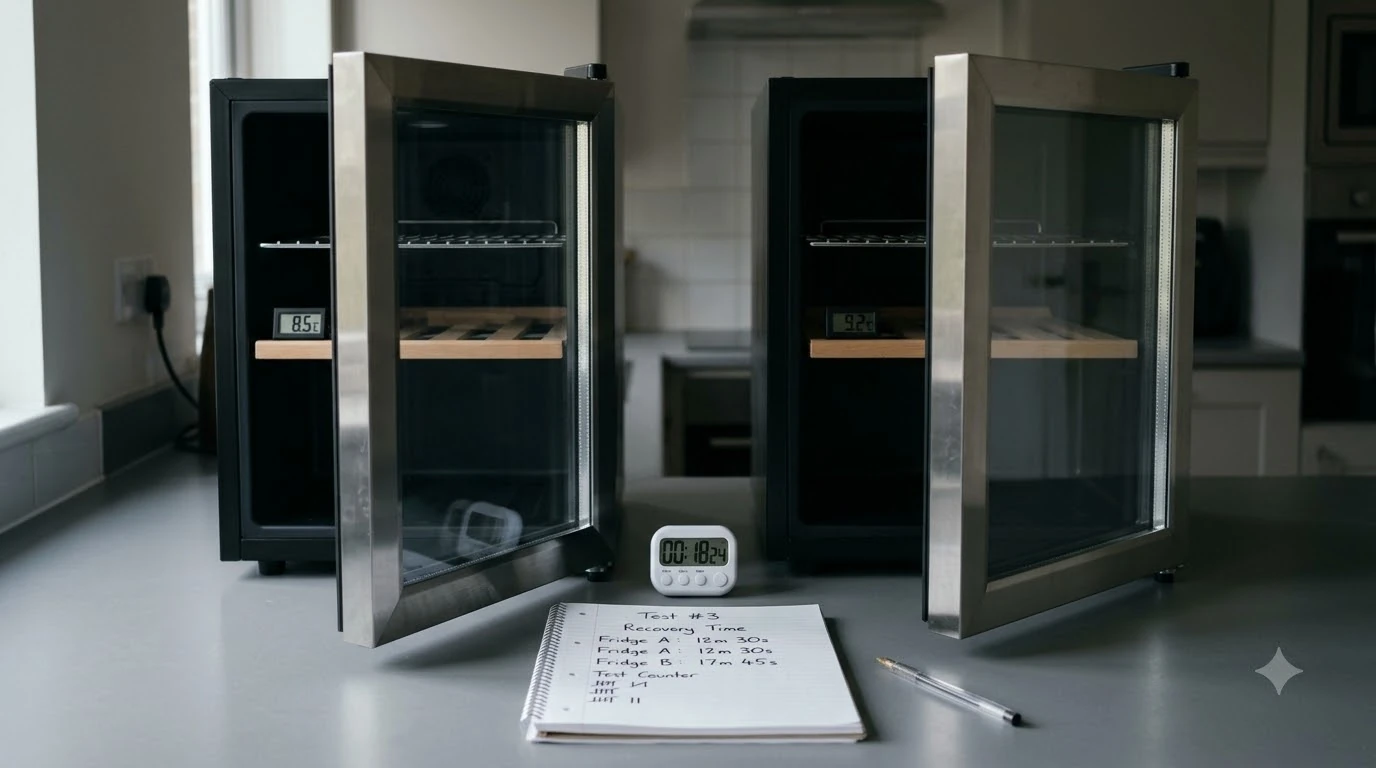
A wine fridge vs beverage fridge comparison comes down to temperature, shelving, and storage purpose: choose a wine fridge for maintaining a wine collection and a beverage fridge for keeping cans, beer, soda, and water cold. Wine refrigerators generally provide warmer temperature settings and bottle-specific storage, while beverage refrigerators prioritize colder temperatures and flexible shelving. If your household regularly serves both wine and other drinks, a dual-zone combination refrigerator can provide separate compartments for each.
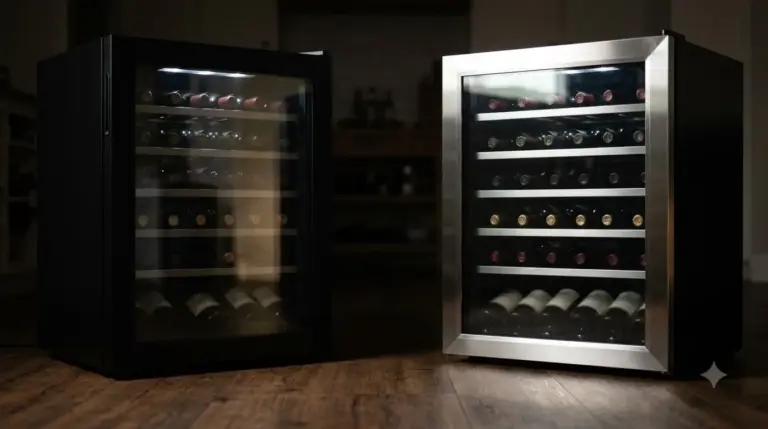
These appliances can look almost identical from the outside. Both may feature glass doors, digital temperature displays, interior lighting, and compact designs that fit beneath a kitchen counter. Their internal layouts and cooling priorities, however, serve different purposes. Understanding those differences helps prevent buying an appliance that keeps drinks convenient but stores wine under unsuitable conditions. The right choice depends on whether you prioritize a wine collection, everyday refreshments, or a combination of both.
Wine Fridge Vs Beverage Fridge: Temperature and Cooling Performance
A wine refrigerator is designed to maintain moderate, relatively stable temperatures, while a beverage refrigerator generally prioritizes colder settings. This is the most important distinction because wine, beer, soda, and sparkling water do not all benefit from the same storage temperature.
| Comparison | Wine refrigerator | Beverage refrigerator |
|---|---|---|
| Typical temperature range | Approximately 40–68°F | Approximately 34–50°F, depending on model |
| General storage target | Approximately 55°F | Approximately 37–40°F |
| Primary purpose | Wine storage and serving | Chilling everyday drinks |
| Shelf configuration | Contoured bottle racks | Flat or adjustable shelves |
| Humidity management | Available on selected models | Generally not a primary feature |
| Temperature zones | Single-zone or dual-zone | Usually single-zone |
| Typical contents | Red, white, rosé, and sparkling wine | Water, soda, beer, juice, and mixers |
| Extended wine storage | Better suited when storage conditions are appropriate | Generally not recommended |
The temperature figures are general buying ranges rather than universal specifications. Whynter describes wine refrigerators operating around 41–68°F and beverage refrigerators capable of reaching approximately 34°F. Whirlpool gives a typical wine refrigerator range of 40–65°F. Individual appliances can fall outside these ranges, so compare their actual minimum and maximum settings before purchasing.
For wine, approximately 55°F is a practical general storage target. This is different from the temperature at which a bottle should be served. Sparkling wine is generally served at 40–50°F, light white wines and rosé at 45–50°F, full-bodied whites at 50–55°F, light reds at 55–60°F, and full-bodied reds at 60–65°F.
A dedicated wine refrigerator helps maintain a suitable environment before bottles are brought to their serving temperatures. A single-zone model set around 55°F works well for general storage, even if the collection includes Cabernet Sauvignon, Pinot Noir, Chardonnay, and Riesling.
A beverage refrigerator generally operates closer to ordinary refrigerator temperatures. A setting around 37–40°F works well for many canned refreshments and mainstream beers, although individual drinks have different serving preferences. This makes it convenient for a party or home bar but potentially too cold for wine bottles intended to remain in storage for months.
Temperature consistency matters as much as the displayed setting. An appliance showing 55°F may experience fluctuations during compressor cycles or when its door is frequently opened. Consumer Reports identifies temperature uniformity as an important consideration when selecting a wine refrigerator because substantial fluctuations can affect wine quality.
For additional buying context, Wine Enthusiast’s wine refrigerator buying guide explains why storage temperature, intended aging period, and cabinet features should all influence the decision.
Shelving, Bottle Capacity, and Everyday Accessibility
Wine refrigerators prioritize bottle positioning and protection, while beverage refrigerators prioritize flexible storage and convenient access. Their shelving arrangements affect what fits inside and how efficiently the available space can be used.
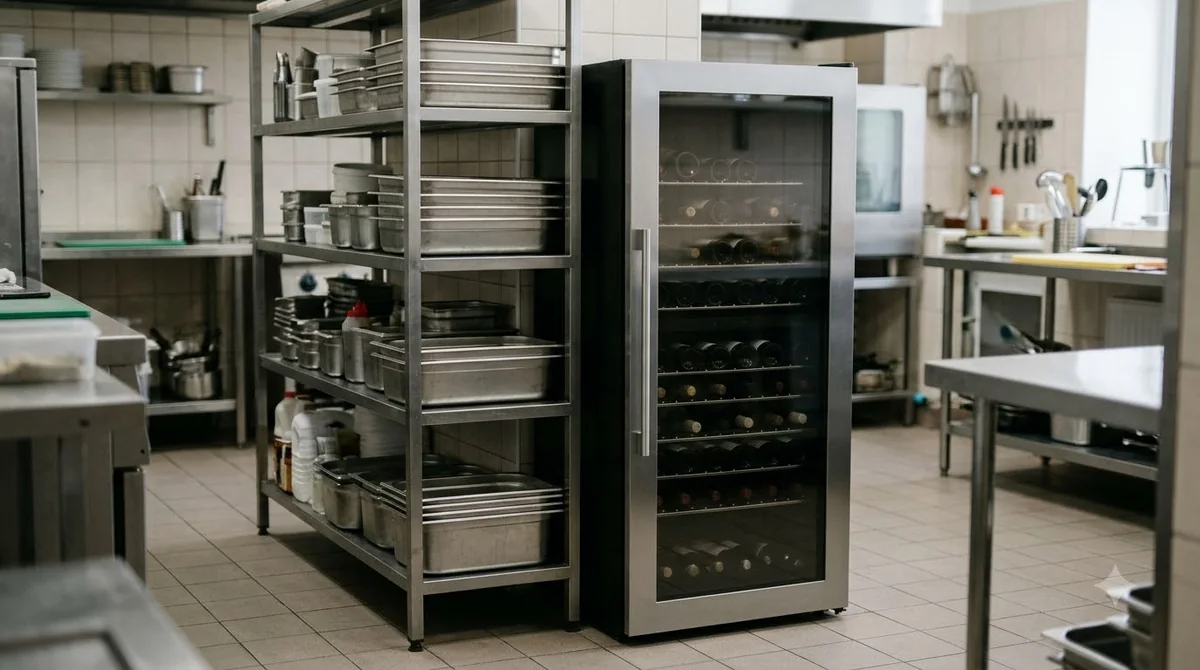
Wine refrigerators commonly feature contoured metal or wooden racks designed to hold standard wine bottles horizontally. This arrangement makes it easier to organize bottles by grape variety, producer, region, or drinking occasion. Horizontal positioning also keeps the wine in contact with the cork in traditional cork-finished bottles, an important consideration for extended storage.
Some wine refrigerators use individual sliding shelves, allowing a bottle to be removed without moving everything above it. This is particularly useful when storing delicate bottles or maintaining a collection with different vintages. A shelf that slides smoothly and has a retaining stop is preferable to one that can pull completely out accidentally.
Beverage refrigerators generally use flat wire or glass shelves. These accommodate cans, plastic bottles, glass bottles, juice cartons, and mixers in different arrangements. Adjustable shelf heights are useful because a row of tall water bottles requires different spacing from standard soda cans.
Capacity measurements also deserve attention. Wine refrigerators commonly advertise the number of standard wine bottles they can accommodate, while beverage refrigerators often list can capacity. Neither measurement necessarily describes real-world capacity for a mixed collection.
For example, a refrigerator advertised for 30 standard wine bottles may hold fewer if the collection includes wider sparkling wine bottles, Champagne bottles, or unusually shaped Burgundy bottles. Similarly, a beverage refrigerator advertised for 120 cans may fit fewer when larger bottles, tall cans, or irregularly shaped containers occupy the shelves.
Wine Enthusiast points out that many advertised wine refrigerator capacities assume Bordeaux-style 750 ml bottles. Larger Champagne and Burgundy bottles can reduce practical capacity, even when the cabinet appears large enough on paper.
Before buying, consider the physical dimensions of the containers you regularly store. Measure the height and diameter of your tallest bottles, inspect the shelf spacing, and determine whether individual shelves can be repositioned. If you frequently entertain, accessible storage can be more valuable than the largest advertised capacity.
A beverage refrigerator can also be more practical for a household that regularly prepares mixed drinks. Flat shelving makes it easy to organize tonic water, soda, juice, sparkling water, and mixers. Anyone preparing an Aperol Spritz recipe may appreciate having chilled sparkling water and mixers together in one accessible compartment.
Humidity, Vibration, and Protection From Light
Wine storage requires more consideration of environmental conditions than ordinary beverage chilling. Humidity, vibration, light exposure, and temperature consistency can all influence how well bottles keep over time.
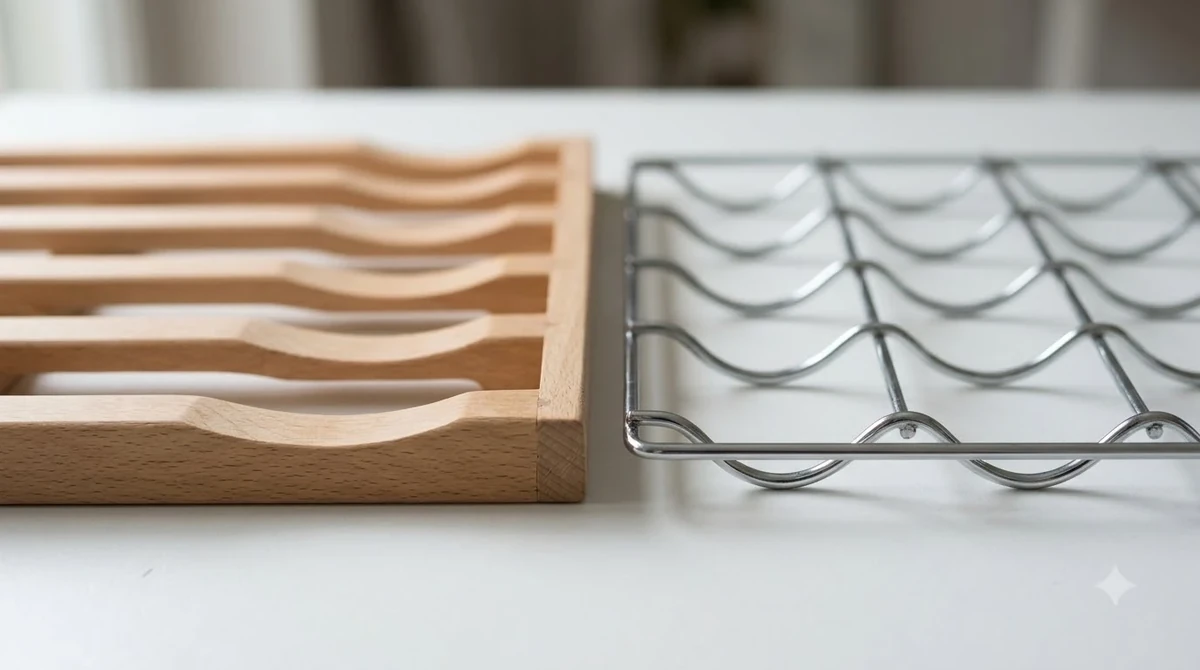
Humidity matters most when storing wine sealed with natural cork. Wine Enthusiast identifies approximately 50%–70% relative humidity as a useful range for helping prevent corks from drying out. A dry environment can cause cork material to lose moisture and potentially compromise the seal, increasing the risk of unwanted oxygen exposure.
Not every wine refrigerator actively controls humidity. Some models include humidity management systems, while others rely on cabinet design and operating conditions. A basic beverage refrigerator generally does not prioritize this feature because its main purpose is chilling drinks that are consumed relatively quickly.
That difference becomes more relevant when comparing storage periods. Keeping a screw-cap Sauvignon Blanc for a short period is not the same as holding a cork-sealed Bordeaux for several years. The latter deserves more careful attention to temperature stability, humidity, light exposure, and storage position.
Vibration is another feature to examine, although its importance should not be exaggerated. Wine refrigerators may include vibration-reducing components, specialized compressor arrangements, or other design measures intended to keep the storage environment stable. Whynter, for example, describes inverter compressor technology designed to reduce micro-vibrations and operating noise in its panel-ready refrigeration range.
However, not every beverage refrigerator produces harmful vibration, and not every wine refrigerator eliminates it. The practical buying priority is to select a reasonably quiet, stable appliance with suitable wine-storage features rather than assuming that every machine in one category is automatically superior.
Light exposure also deserves attention. Ultraviolet light can affect wine quality over time, which is why some wine refrigerators use tinted or UV-protective glass. Beverage refrigerators may also have glass doors, but their display-oriented design does not necessarily provide the same level of protection for wine.
For a collection of everyday bottles consumed within a few weeks, these distinctions may have limited practical consequences. For special bottles intended for extended storage, they become much more important. A dedicated wine refrigerator with UV protection, stable cooling, suitable humidity management, and reduced vibration offers a more appropriate environment than a typical beverage center.
Odor control is another detail worth considering. Wine Enthusiast identifies unwanted odors as one of the environmental concerns associated with long-term wine storage. Some wine refrigerators use charcoal filters to help manage odors inside the cabinet, a feature that may be useful for a collection containing bottles intended to age.
Storage Duration and the Drinks You Plan to Keep
The length of time you intend to store your drinks is a useful way to decide between the two appliances. A beverage refrigerator is appropriate for quickly consumed refreshments, while a suitable wine refrigerator is preferable for bottles that need consistent conditions over a longer period.
For everyday wine that will be opened within a few weeks, a beverage refrigerator can sometimes serve as temporary storage. Whynter recommends using the warmer end of the appliance’s temperature range for this purpose. This approach is most appropriate for casual drinking bottles rather than valuable wines or bottles intended to age.
For wine held over several months, a dedicated wine refrigerator is generally the more sensible choice. Its bottle racks, moderate operating temperatures, and potential humidity and vibration controls are designed around the requirements of wine rather than the convenience of cold canned drinks.
For longer-term cellaring, appliance quality matters more than the label on the door. A basic wine cooler may offer only a narrow temperature range and relatively limited environmental controls. A more sophisticated wine refrigerator or wine cellar is better suited to preserving bottles over years, provided it maintains stable conditions and has adequate capacity.
Consider the types of wine in the collection, too. Cabernet Sauvignon, Merlot, Pinot Noir, Chardonnay, Riesling, and sparkling wine can all be stored in a suitable wine refrigerator. They do not need separate refrigerators simply because their serving temperatures differ. A consistent storage temperature is more important for long-term keeping than constantly adjusting a cabinet to match the temperature at which each bottle will eventually be poured.
Serving temperature can be handled separately. For example, a full-bodied red can be brought out of a 55°F storage environment and allowed to warm slightly before serving, while a bottle of sparkling wine can be chilled further before opening.
For a household that regularly prepares cocktails, the storage decision may involve both wine and mixers. A beverage refrigerator makes sense for the soda, tonic, and sparkling water used in a Hugo Spritz recipe. A separate wine refrigerator can keep the wine collection at more appropriate conditions.
Food pairings also influence how a household organizes its bottles, even though they do not change the appliance requirements. Someone planning a chicken Marsala recipe may want a bottle of red wine available for cooking and another suitable bottle for serving. Keeping the bottles in a dedicated wine refrigerator makes it easier to maintain an organized supply without filling the kitchen refrigerator with wine.
Installation, Energy Use, Noise, and Available Space
Both appliances can work in kitchens, dining rooms, entertainment areas, and home bars, but installation requirements vary by model. Checking ventilation, dimensions, door clearance, and operating noise before purchase can prevent problems after delivery.
Wine refrigerators are available in compact countertop, freestanding, and built-in configurations. Some models are narrow enough for small kitchen spaces, while larger cabinets accommodate substantial bottle collections. Their front-facing glass doors can also make a wine collection an attractive part of a dining room or entertaining area.
Beverage refrigerators are similarly available in several sizes and installation formats. Their flexible shelving makes them useful beneath kitchen counters, in home bars, or near entertainment spaces where people frequently need cold drinks. A larger can capacity can be particularly useful for households that host gatherings.
The difference between freestanding and built-in installation is especially important. Whynter explains that freestanding appliances generally vent from the rear and need sufficient clearance around the cabinet. Built-in undercounter appliances use front ventilation, allowing them to fit into a suitable cabinet opening.
Never assume that a freestanding refrigerator can be enclosed inside kitchen cabinetry. Restricted airflow can interfere with cooling performance and may contribute to overheating. Check the installation instructions for the exact appliance, including the required side, rear, and top clearances.
Noise is another consideration, particularly if the refrigerator will sit close to a living room, bedroom, or dining area. Compressor operation and internal fans can produce noticeable sounds. Wine Enthusiast recommends considering models around 40 decibels or lower when placing a wine refrigerator in a quiet room.
Compressor and thermoelectric cooling also have different characteristics. Compressor models can provide stronger cooling performance but may produce a noticeable hum. Thermoelectric models can be quieter, although they may be less effective for larger collections or warmer environments. The best choice depends on the cabinet size, installation location, and surrounding room temperature.
Energy consumption depends on cabinet size, insulation, compressor design, ambient temperature, door opening frequency, and the selected temperature. A colder setting generally requires more cooling work, especially when the appliance is frequently opened. Compare the manufacturer’s energy information for individual models rather than assuming that every wine refrigerator consumes less electricity than every beverage refrigerator.
Finally, consider the door and surrounding space. A wide glass door may look attractive but can be inconvenient in a narrow kitchen walkway. Check whether the door opens in the required direction, whether the hinges can be reversed, and whether shelves can be removed for cleaning.
Which Should You Pick for Your Home?
The best choice depends on what occupies most of your refrigerator space and how long those drinks remain stored. A dedicated wine refrigerator is the stronger choice for wine collections, while a beverage refrigerator is generally more useful for everyday refreshments.
Choose a wine refrigerator if wine is your priority
A wine refrigerator makes sense if you regularly purchase several bottles at a time, keep different wine styles available, or want to maintain a collection for future occasions. Its horizontal shelving and moderate temperature settings are particularly useful for traditional cork-finished bottles.
It is also the better choice if you enjoy serving different styles at their recommended temperatures. A dual-zone model can provide separate compartments for bottles that require different storage or ready-to-serve settings. Look for independently adjustable zones rather than assuming that every two-section cabinet provides independent temperature control.
If you have bottles that you intend to age, prioritize stable temperature control, UV protection, humidity management, and reduced vibration. These features matter more than decorative lighting or a large capacity figure on the product listing.
Choose a beverage refrigerator if convenience matters most
A beverage refrigerator is a better fit for families, home bars, entertainment rooms, and anyone who regularly keeps cans and bottled refreshments ready to serve. Its colder operating range is appropriate for many soft drinks, water, and mainstream beers.
Adjustable shelves make it easier to accommodate different container sizes. You can organize soda cans on one shelf, bottled water on another, and mixers in a separate section without dealing with wine-specific racks.
A beverage refrigerator can also temporarily chill wine before serving, provided the bottle is removed at the appropriate time. It should not automatically become the main storage environment for a collection of cork-finished bottles that will remain there for months.
Choose a combination unit if you regularly need both
A dual-zone wine and beverage refrigerator can offer a useful compromise for homes with limited space. It combines wine-specific bottle storage with a separate compartment for colder drinks, allowing different temperatures to be maintained within one appliance.
Whynter lists separate wine, beverage, and combination configurations in its panel-ready range. Some models are designed to fit beneath kitchen counters and accept custom cabinet panels, making them useful in renovated kitchens or built-in home bars.
However, inspect the capacity of each compartment before choosing a combination unit. A model that dedicates most of its interior to wine may not provide enough space for family beverages. Likewise, a unit with a small wine compartment may be disappointing for someone with an established collection.
Check whether the two compartments have genuinely independent temperature controls. A dual-zone refrigerator should let you select separate settings for the wine and beverage sections, rather than simply dividing one cooling space with a shelf or partition.
There is no need to pay for features that do not support your actual routine. If the household mostly drinks water and soda, a straightforward beverage refrigerator is sufficient. If wine storage is the priority, choose a dedicated model with suitable storage features. For more product comparisons, the Versus comparison section offers another way to evaluate competing options.
Tip: Before purchasing, write down the number of wine bottles, cans, and larger drink containers you normally keep at home. Then measure your available installation space and compare the appliance’s actual temperature range, shelf dimensions, and ventilation requirements. These details are more useful than choosing a refrigerator based on appearance alone.
Frequently Asked Questions
Can I put unopened wine bottles in a beverage refrigerator door?
It is generally better to place wine bottles inside the main compartment rather than in a door rack designed for frequently accessed drinks. Door storage is exposed to more temperature changes as the refrigerator opens and closes. It may also lack the horizontal support needed for traditional cork-finished bottles.
Do screw-cap wines need to be stored horizontally?
No. Screw-cap wines do not depend on wine-to-cork contact to maintain their seal. They can be stored upright or horizontally, provided the storage environment is appropriate. Horizontal positioning is still useful for organizing a wine collection and maximizing the capacity of a dedicated wine refrigerator.
Can a wine refrigerator store Champagne bottles?
Yes, provided the shelves accommodate the wider bottle shape and the refrigerator has enough interior clearance. Champagne and many traditional-method sparkling wines use thicker, wider bottles than standard Bordeaux bottles. Their dimensions can reduce the number of bottles that fit compared with the advertised standard-bottle capacity.
Should a wine refrigerator run continuously?
Yes. A wine refrigerator is designed to maintain its selected storage environment continuously, cycling its cooling system as needed. Avoid regularly unplugging the appliance or changing its temperature settings unnecessarily. A dependable power supply helps the cabinet maintain a more consistent environment.
Does a glass door make a wine refrigerator less suitable for wine storage?
Not necessarily. Many wine refrigerators use tinted or UV-protective glass to reduce potentially damaging light exposure. The important distinction is whether the door offers suitable protection and whether the cabinet maintains stable internal conditions. A refrigerator positioned away from direct sunlight is preferable to one exposed to strong sunlight throughout the day.
A wine refrigerator is the better investment for maintaining a wine collection, while a beverage refrigerator is the more practical option for keeping everyday refreshments cold and accessible. If both needs are equally important, a properly designed dual-zone combination unit can provide a convenient middle ground. Compare temperature performance, storage capacity, ventilation, and shelf design before deciding, and choose the appliance that matches the drinks you actually keep at home.
More in Versus
 Edgestar Vs Kalamera: Choose the Right Wine CoolerUpdated Nov 21, 2026
 Frigidaire Vs Magic Chef: Compare Wine Cooler Features and FitUpdated Nov 21, 2026
 EdgeStar Vs Whynter Wine Coolers for Smarter StorageUpdated Nov 21, 2026
 Newair Vs Whynter: Choose the Right 46-Bottle Wine CoolerUpdated Nov 21, 2026
 Kalamera Vs Newair: Choose the Right Wine Cooler for Your HomeUpdated Nov 21, 2026
 Danby Vs Vinotemp: Choose the Right Wine Cooler for Your SpaceUpdated Nov 21, 2026