

We may earn a commission when you buy through links on this page, at no extra cost to you. Learn more.
The best chateauneuf du pape wineries to know include Château de Beaucastel, Clos des Papes, Domaine du Vieux Télégraphe, Domaine de la Janasse, Château Rayas, and Château La Nerthe. These leading estates offer different interpretations of the Southern Rhône appellation, from traditional Grenache-led blends to structured, age-worthy wines and distinctive white cuvées. The right producer depends on whether you prefer powerful reds, balanced blends, collectible bottles, or opportunities to visit a working winery.
Châteauneuf-du-Pape is one of France’s most recognizable wine regions, but its wines are far from interchangeable. Vineyard location, grape selection, fermentation decisions, and aging vessels all influence the finished bottle. Some producers emphasize traditional methods and long maturation, while others favor greater fruit expression and more contemporary cellar techniques. Understanding those differences makes it easier to identify estates worth seeking out and select wines that suit your preferences. This guide covers the producers, buying considerations, and practical steps that matter most.
Who This Guide Is For: Matching Producers to Your Wine Preferences
The best Châteauneuf-du-Pape producer for one wine drinker might not be the right choice for another. Start with the kind of wine you enjoy, whether that means structured Grenache blends, elegant reds with developed aromas, or expressive white Rhône wines.
Buyers who appreciate powerful, concentrated reds should begin with Château de Beaucastel and Domaine du Vieux Télégraphe. Both have established reputations for wines with substantial structure and aging potential, although their approaches differ. Beaucastel is particularly interesting for its emphasis on Mourvèdre alongside Grenache, Syrah, and other permitted varieties. Vieux Télégraphe offers a more aromatic, modern traditionalist interpretation, with red-fruit and spice characteristics supported by fine tannins.
For collectors interested in traditional estate bottlings, Clos des Papes and Château Rayas deserve attention. Clos des Papes emphasizes balance through blending fruit from numerous vineyard parcels, while Rayas is unusual for its focus on Grenache grown in cooler sandy and clay soils. These producers illustrate why the appellation cannot be understood through grape varieties alone.
First-time buyers may prefer Domaine de la Janasse or Château La Nerthe. Their wines provide useful introductions to the range of winemaking approaches found in the region. Château de la Gardine is another worthwhile name, particularly for visitors who want to understand the connection between vineyard conditions, cellar decisions, and finished wines.
There is also a useful distinction between buying for immediate enjoyment and buying for a cellar. A fruit-forward red with moderate structure may be enjoyable relatively young, while a concentrated Mourvèdre-influenced blend may reward additional bottle aging. Buyers interested in the broader process of selecting bottles can also consult our wine buying guide before choosing a producer or vintage.
Key Factors to Compare When Choosing a Châteauneuf-du-Pape Winery
Compare producers by grape composition, vineyard location, winemaking, and intended drinking window. These four factors explain many of the differences between the leading estates and help prevent an expensive purchase based solely on a famous name.
Grape composition is a useful starting point. Châteauneuf-du-Pape permits 13 grape varieties, although Grenache dominates most red blends. Syrah contributes color, aromatic intensity, and structure, while Mourvèdre adds additional depth and tannin. Cinsault can contribute freshness and supple fruit. The permitted varieties also include white grapes such as Roussanne, Clairette, and Bourboulenc.
Terroir is equally important. The appellation includes rounded-stone terraces, sandy soils, clay, and limestone-influenced sites. The famous galets roulés are large rounded stones that can retain daytime warmth and influence vineyard conditions. However, sandy sites can produce a very different expression. Château Rayas is an especially useful example because its distinctive identity is associated with sand and clay rather than the classic stony terrain.
Winemaking choices provide another way to compare estates. Traditional producers may use whole clusters, concrete fermentation vessels, and large oak foudres. Other estates partially destem grapes and combine large oak vessels with smaller barrels. The vessel itself does not establish quality; what matters is whether the winemaking supports the fruit and vineyard character.
Finally, consider the wine’s drinking window. A structured wine with substantial tannin and concentrated fruit may need time to develop. A softer, more immediately expressive bottling may be more appropriate for an upcoming dinner. Vintage conditions also matter, so comparing multiple vintages from the same producer can reveal how the estate responds to different growing seasons.
| Producer | Distinctive characteristic | Best buying interest | Style to explore |
|---|---|---|---|
| Château de Beaucastel | All 13 permitted varieties cultivated | Collectors and structured-wine enthusiasts | Traditional, complex red blends |
| Clos des Papes | 24 vineyard parcels | Buyers seeking balance | Harmonious red and white wines |
| Château Rayas | Old Grenache vines on sandy and clay soils | Specialist collectors | Distinctive Grenache-led wines |
| Domaine du Vieux Télégraphe | Modern traditionalist winemaking | Buyers seeking structure and ageability | Aromatic, powerful reds |
| Domaine de la Janasse | Partial destemming and mixed oak aging | Buyers exploring different cuvées | Rich, balanced Grenache blends |
| Château La Nerthe | All 13 permitted varieties cultivated | Buyers exploring contemporary styles | Structured reds and whites |
| Château de la Gardine | Family-estate tasting experience | Visitors and wine explorers | Multiple Rhône appellations |
| Domaine de Marcoux | Biodynamic vineyard management | Terroir-focused buyers | Grenache-led reds and white wines |
The table is a starting point rather than a definitive quality ranking. Each estate has its own strengths, and individual cuvées can differ considerably from the producer’s standard bottling. For a useful independent overview of the region’s leading estates and their winemaking approaches, consult Decanter’s Châteauneuf-du-Pape estate profiles. For an informed purchase, compare the specific wine, vintage, grape composition, and cellar approach rather than assuming every bottle from a recognized estate has the same character.
Step-by-Step: How to Choose the Right Winery and Bottle
A systematic buying process helps narrow a large appellation to a manageable shortlist. Use the following six steps to identify a producer, evaluate the wine, and decide whether a particular bottle fits your needs.
-
Decide whether you want red or white wine.
Red Châteauneuf-du-Pape accounts for approximately 93% of production according to the appellation’s official information. Most buyers encounter Grenache-led reds first, but white bottlings deserve attention if you enjoy Rhône whites with aromatic complexity and texture. Domaine de Marcoux and Château La Nerthe are useful producers to investigate when exploring the white category.
-
Choose your preferred red-wine structure.
If you enjoy substantial tannins and concentrated flavors, investigate Château de Beaucastel and Domaine du Vieux Télégraphe. For a more balanced and integrated style, Clos des Papes is a logical starting point. Think about the red wines you already enjoy rather than choosing solely according to reputation.
-
Investigate the vineyard and grape composition.
Look beyond the regional name. A Grenache-dominant wine from sandy soils can differ substantially from a Mourvèdre-influenced blend from stony terraces. Château Rayas illustrates the importance of soil, while Beaucastel demonstrates how the use of multiple varieties can shape a distinctive house style.
-
Compare winemaking and aging decisions.
Look for information about destemming, fermentation vessels, and maturation. Large oak foudres generally have a different influence from smaller barrels. Concrete vessels can preserve a different impression of fruit and texture. Domaine de la Janasse is an informative example of an estate combining partial destemming with both barrels and foudres.
-
Match the vintage and drinking window to your plans.
For a bottle intended for an upcoming meal, prioritize an approachable cuvée rather than automatically selecting the most structured wine available. For longer-term cellaring, investigate established producers with wines known for concentration, balance, and development potential. Ask a knowledgeable retailer about the particular vintage instead of applying one aging estimate to the entire appellation.
-
Purchase from a retailer with reliable storage and provenance.
Look for bottles with intact capsules, clean labels, and evidence of appropriate storage. Older wines require particular care because heat exposure and poor storage can accelerate deterioration. A reputable merchant should be able to explain the bottle’s origin, storage conditions, and expected drinking window.
This process can also help when comparing Châteauneuf-du-Pape with American wine regions. For example, buyers who enjoy Rhône-inspired reds may want to explore the best Paso Robles wineries, where Rhône varieties such as Grenache and Syrah feature in a different climate and regional context.
Tip: Buy two bottles from the same producer but different vintages when practical. Comparing them side by side can reveal how weather, grape ripeness, and maturation influence the estate’s signature style more clearly than comparing unrelated wineries.
Types and Styles Explained: The Leading Châteauneuf-du-Pape Estates
Châteauneuf-du-Pape has several recognizable winemaking styles, but the traditional and modern categories are best understood as a spectrum. The leading wineries combine grape selection, vineyard practices, and maturation techniques in different ways to produce individual expressions of the appellation.
Château de Beaucastel: The Multi-Variety Benchmark
Château de Beaucastel is among the most important estates to understand when exploring Châteauneuf-du-Pape. The Perrin family owns the property, and the estate cultivates all 13 permitted grape varieties. Decanter describes its vineyard as approximately 100 hectares and highlights the particular importance of Mourvèdre and Counoise alongside Grenache.
The red wines are known for their concentration, firm structure, and ability to develop over extended periods. Decanter identifies laurel and thyme among the aromatic characteristics associated with the estate. Its special Hommage à Jacques Perrin cuvée is produced in exceptional years, while the Roussanne Vieilles Vignes white provides another reason to investigate the property.
Beaucastel is a particularly useful choice for buyers interested in understanding how multiple grape varieties can work together. It is also an excellent reference point when comparing other structured Southern Rhône reds.
Clos des Papes: Balance and Vineyard Diversity
Clos des Papes is associated with owner-winemaker Vincent Avril and a vineyard divided into 24 parcels distributed throughout the appellation. This spread of vineyard sites gives the estate an opportunity to combine different expressions of terroir in a single wine.
Decanter describes the red blend as approximately 65% Grenache, 20% Mourvèdre, and 10% Syrah. The estate initially ages its wines in concrete vats before transferring them to old oak foudres for approximately one year. This approach emphasizes balance and integration rather than making obvious new-oak character the central feature.
The estate produces one red wine and one white wine according to Decanter’s profile. Buyers interested in a consistent interpretation of the appellation should place Clos des Papes high on their shortlist.
Château Rayas: A Distinctive Grenache Specialist
Château Rayas occupies a particularly unusual position among the region’s famous producers. Its red wine demonstrates that complex, age-worthy Châteauneuf-du-Pape does not require a conventional blend of several varieties.
Decanter highlights its very old, low-yielding Grenache vines and the cooler sandy and clay soils where they grow. The site’s conditions differ from the classic galets roulés vineyards that many buyers associate with the appellation. The result is a distinctive expression of Grenache with a different relationship between fruit, texture, and structure.
Rayas is particularly relevant to experienced collectors and buyers interested in unusual terroir expressions. Its distinctive identity makes it an important estate to study even when its wines are difficult to source.
Domaine du Vieux Télégraphe: Modern Traditionalism
Domaine du Vieux Télégraphe, associated with the Brunier brothers, represents an approach that combines traditional regional identity with more contemporary precision. Decanter describes the wines as aromatic, powerful, and supported by fine tannins.
The estate’s approach includes old-vine Grenache, Syrah, and Mourvèdre, partial destemming, and maturation in large oak foudres. This combination provides a useful middle ground for buyers who appreciate traditional Rhône character but also want a wine with clear fruit expression and structured texture.
It is one of the most logical estates to investigate when searching for a bottle that can be enjoyed relatively young or given additional time in the cellar. The individual vintage remains important when deciding how long to wait.
Domaine de la Janasse: Richness and Aromatic Precision
Domaine de la Janasse is another important name for buyers interested in Grenache-led wines. Decanter describes Grenache as the dominant variety, with the regular bottling reaching approximately 80% Grenache in its profile.
The estate uses partial destemming and a combination of oak barrels and foudres. Its approach aims to maintain rich fruit and full texture while avoiding excessive heaviness. Different cuvées also provide opportunities to explore how vineyard selection and grape composition influence the finished wine.
For someone building familiarity with the appellation, Janasse is a particularly useful producer to compare against Beaucastel and Clos des Papes.
Other Estates Worth Knowing
Château La Nerthe deserves attention for its historic identity and broad grape selection. Decanter identifies the estate as dating to 1560 and describes its approach as modernist without excess. Its use of all 13 permitted varieties and a combination of vats, foudres, and barrels provides an interesting contrast with more traditional estates.
Domaine de Marcoux is another important name. Sisters Catherine and Sophie Armenier have managed the biodynamically cultivated estate, which produces Grenache-dominated reds as well as white wine. Its Vieilles Vignes bottling is particularly interesting for buyers investigating wines made from older vines.
Château de la Gardine is worth considering for both wine selection and winery visits. Its tasting experience introduces visitors to Châteauneuf-du-Pape alongside other Rhône appellations, providing a broader understanding of regional winemaking.
Common Mistakes When Buying Châteauneuf-du-Pape
The most common buying mistakes involve treating every bottle as the same style, overemphasizing reputation, and overlooking the importance of vintage and storage. Avoiding these assumptions makes it easier to select wines that genuinely suit your preferences.
Assuming every wine is powerful and heavy is one of the biggest misconceptions. Grenache can produce generous fruit and substantial alcohol, but the appellation includes a wide range of structures and expressions. A sandy-soil Grenache bottling from Rayas is not necessarily comparable to a Mourvèdre-influenced Beaucastel. Even within one estate, the standard cuvée and a special selection may have very different characteristics.
Buying solely because of a famous name can also lead to disappointing purchases. A producer’s reputation does not guarantee that every vintage will match your preferred style. Examine the specific cuvée, growing conditions, and drinking window. A less famous estate may offer a more appropriate bottle for a particular dinner or occasion.
Ignoring white Châteauneuf-du-Pape means missing an important part of the appellation. White wines account for approximately 7% of production according to the regional association. Roussanne, Clairette, Grenache Blanc, and Bourboulenc are among the varieties that can contribute to these wines. They can offer aromatic complexity and texture that make them particularly interesting alternatives to the region’s better-known reds.
Confusing oak influence with quality is another mistake. Some consumers associate noticeable vanilla or toast with premium winemaking, but oak is only one component of a wine’s character. Large foudres, smaller barrels, and concrete tanks each serve different purposes. The appropriate choice depends on the fruit, structure, and intended expression.
Opening a young structured wine too soon can also obscure its potential. A powerful red with substantial tannin may initially seem closed or dominated by its structure. Young full-bodied reds can benefit from 30 to 60 minutes of decanting, although this does not replace proper bottle aging for wines that need additional development.
Finally, do not overlook provenance. An older bottle with uncertain storage history is a greater risk than a younger bottle purchased from a reputable specialist. Pay particular attention to fill level, cork condition, and signs of heat exposure when buying mature wines.
Care and Storage Tips for Preserving Your Bottles
Correct storage protects the investment in a good bottle and helps preserve its intended development. Temperature stability, limited light, and appropriate humidity matter more than elaborate storage equipment for most home collectors.
Store bottles on their sides in a cool, dark location near 55 degrees Fahrenheit. This position keeps the cork in contact with the wine and helps reduce the risk of drying. Avoid locations near ovens, radiators, windows, or other sources of temperature fluctuations. Consistent conditions are particularly important for mature bottles of Beaucastel, Clos des Papes, and Vieux Télégraphe.
For serving, temperature should reflect the wine’s structure. Light reds generally work well at 55 to 60 degrees Fahrenheit, while full-bodied reds are better around 60 to 65 degrees. Châteauneuf-du-Pape often benefits from serving toward the cooler end of the full-bodied red range, particularly when the wine has considerable alcohol and concentration. Excessive warmth can make alcohol more noticeable and obscure aromatic detail.
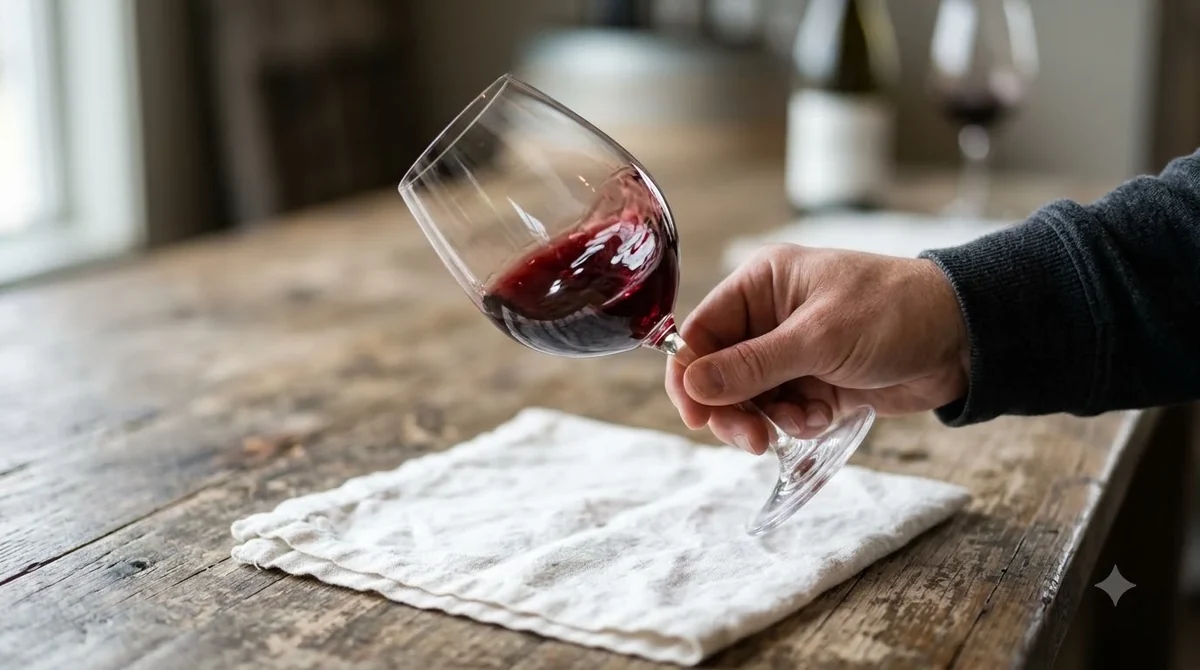
Use an appropriate glass with enough room to swirl the wine and release its aromas. A standard 5-ounce pour in a 750 ml bottle provides approximately five glasses. Avoid filling the glass too high because doing so makes it harder to evaluate the wine’s aromatic development.
Young, concentrated reds may benefit from decanting for 30 to 60 minutes. However, older bottles require more caution. Mature wines can be more delicate, and prolonged exposure to oxygen may cause their aromas to fade. Decant an older bottle carefully to separate sediment and serve it promptly once it has opened sufficiently.
Once opened, store remaining still wine in the refrigerator and use it within approximately three to five days for the best quality. Allow a red wine to warm slightly before serving again. Keep the bottle sealed between pours to limit oxidation.
Buyers who enjoy exploring different American wine destinations can also compare regional wine cultures through our guides to the best Temecula wineries and Fredericksburg wineries. These regions offer different climates, grape varieties, and visitor experiences, making them interesting comparisons with the Southern Rhône.
Frequently Asked Questions
How many grape varieties can be used in Châteauneuf-du-Pape?
The appellation permits 13 grape varieties, including three color variations of Grenache and several other traditional Rhône grapes. The permitted varieties include Grenache, Syrah, Mourvèdre, Cinsault, Clairette, Counoise, and Roussanne. The precise blend is a decision made by each producer.
Why does Châteauneuf-du-Pape have such distinctive bottles?
The appellation is closely associated with embossed bottles bearing papal imagery. Historically, different producer organizations used versions featuring a papal tiara and crossed keys or a bishop’s mitre. Some individual estates, including Château de Beaucastel and Clos des Papes, use their own distinctive embossed signatures.
Can Châteauneuf-du-Pape wines be made without Grenache?
Grenache is dominant in most wines, but the appellation’s permitted varieties allow producers considerable blending flexibility. Château Rayas is especially unusual because its red wine is made exclusively from Grenache. Its sandy and clay vineyard conditions contribute to a distinctive expression of the variety.
What is the difference between a foudre and a demi-muid?
A foudre is a large wooden aging vessel, traditionally used in the Rhône, while a demi-muid is a smaller wooden vessel with a capacity of approximately 600 liters. A standard Bordeaux barrel holds approximately 225 liters. The different surface-area-to-volume relationships influence how much oak character and oxygen exposure the wine receives.
Are all Châteauneuf-du-Pape wines made in France?
Yes. Châteauneuf-du-Pape is a protected French appellation in the Southern Rhône Valley. The five communes covered by the appellation are Châteauneuf-du-Pape, Bédarrides, Courthézon, Orange, and Sorgues. Wines made elsewhere cannot legally use the protected appellation name simply because they use similar grape varieties or winemaking methods.
The best Châteauneuf-du-Pape wineries offer much more than prestigious labels: they demonstrate how grape varieties, vineyard conditions, and winemaking decisions create distinctive wines within one appellation. Start with Beaucastel, Clos des Papes, Vieux Télégraphe, and Janasse to understand the region’s leading styles, then explore Rayas, La Nerthe, Marcoux, and La Gardine for additional perspectives. Comparing individual cuvées and vintages is the most reliable way to find bottles worth enjoying now and keeping for the future.
More in Wine Buying Guides
 Cheap Red Blend: How to Find a Flavorful Bottle for LessUpdated Nov 20, 2026
 Pinot Grigio Gift: How to Choose a Bottle They’ll EnjoyUpdated Nov 20, 2026
 Best White Wine at Total Wine for Every MealUpdated Nov 20, 2026
 Wine Fridge Replacement Shelves: Find the Right FitUpdated Nov 20, 2026
 Best Sparkling Wine Under 20: Find Bubbles Worth BuyingUpdated Nov 20, 2026
 Best Wine For Birthday Celebrations With Perfect Party PairingsUpdated Nov 20, 2026