

We may earn a commission when you buy through links on this page, at no extra cost to you. Learn more.
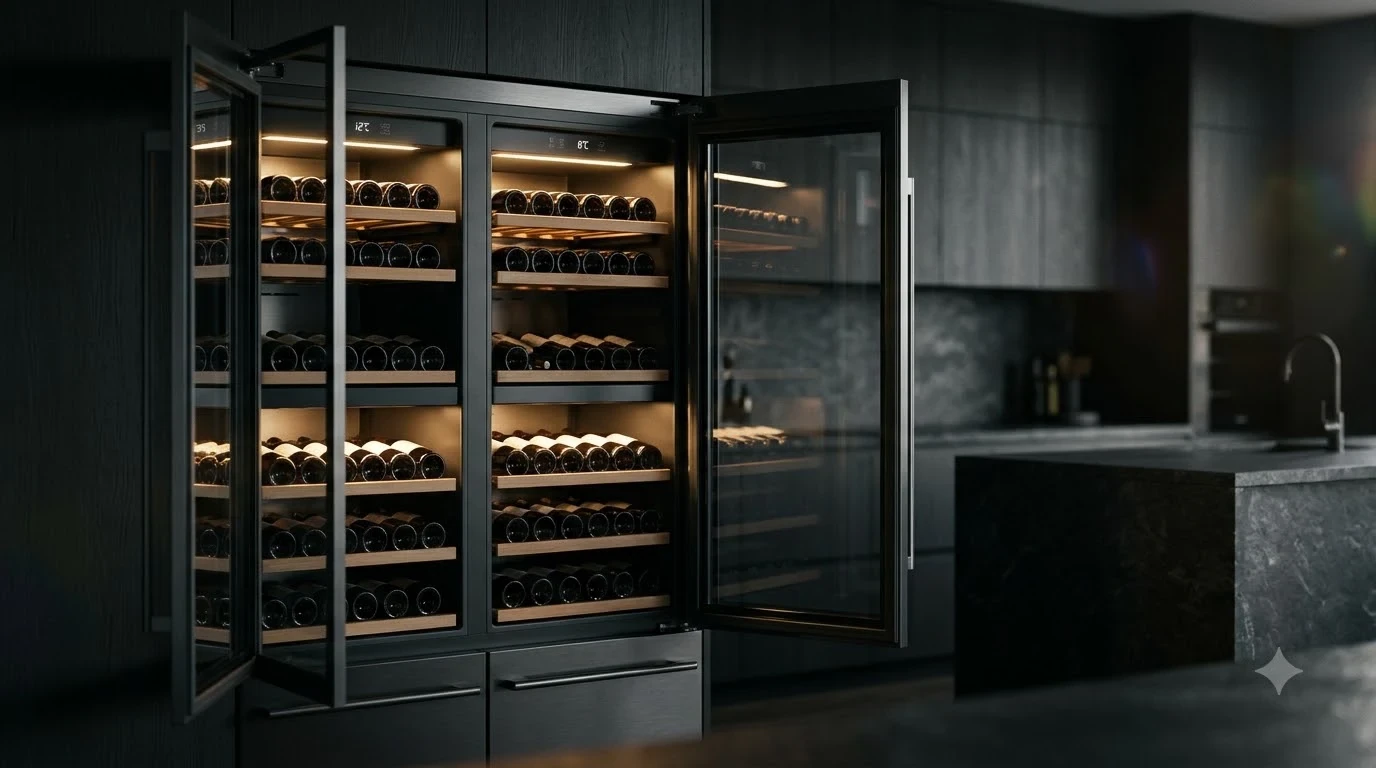
The Haier dual zone wine fridge, model QWR04DGRGB, is a 44-bottle cabinet with two independently controlled temperature zones, a 41°F to 61°F range, and a compact footprint for a home kitchen or bar. Its strongest points are the glass-front design, wooden sliding shelves, and separate settings for reds and whites; its biggest drawback for shoppers today is that Haier says the model is no longer being manufactured. It is worth considering only when the condition, remaining warranty, and service options for the exact unit are clear.
This review focuses on the QWR04DGRGB, Haier’s black-glass 44-bottle wine center. Confirm the model number before comparing specifications: other Haier dual-zone wine cellars have different capacities, cooling methods, and temperature limits. The key question is whether this model’s two-zone layout and installation dimensions match the way you store and serve wine.
Specs and Key Features
The QWR04DGRGB is a freestanding, compressor-cooled wine center built around two independently controlled zones and a stated capacity of 44 standard bottles. Its dimensions are modest for a dedicated wine cabinet, although the actual bottle count depends on bottle shape and how much shelf access you want.
| Specification | Haier QWR04DGRGB |
|---|---|
| Rated bottle capacity | 44 bottles |
| Temperature range | 41°F to 61°F |
| Cooling zones | 2 independently controlled zones |
| Overall dimensions | 19.6 in. W × 23 in. D × 32.3 in. H |
| Listed storage volume | 4.0 cu. ft. |
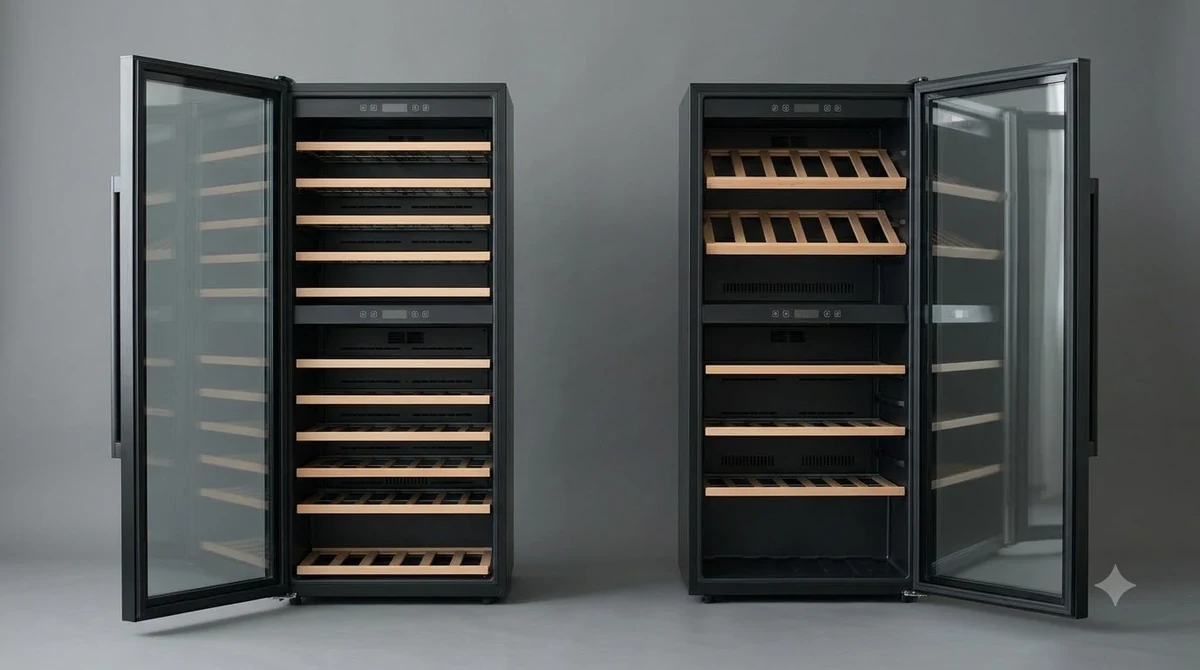
| Shelves | 4 wooden shelves: 3 full-width, 1 half-width |
| Door | Triple-pane glass |
| Controls and lighting | Capacitive touch controls; interior LED lighting |
| Electrical rating | 120 V, 60 Hz |
| Limited warranty listed by retailer | 1 year |
The two-zone system is the central reason to choose this model. Haier lists a range of 41°F to 61°F, with separate controls for each compartment, according to Haier’s QWR04DGRGB product page. That lets you keep a cooler section for sparkling wine and crisp whites while setting the other zone warmer for lighter reds or bottles intended for near-term service. It is more flexible than a single-zone cooler when your collection includes several styles, although it does not turn the unit into two separate long-term cellars. Many sparkling wines are served around 40°F to 50°F, light whites and rosé around 45°F to 50°F, and full-bodied reds around 60°F to 65°F; a full red may need a short rest outside the cabinet before pouring because the Haier’s top setting is 61°F.
Storage is arranged across three full-width wooden shelves and one half-width shelf. The advertised 44-bottle count is a best-case figure for standard wine bottles, not a guarantee for every collection. Standard Bordeaux-style 750 ml bottles are the easiest reference; wide Champagne bottles, broad Burgundy shoulders, and unusually long-necked bottles can reduce the usable count or force a different arrangement. Haier lists large-bottle capability, but that does not mean every oversized bottle will fit while the cabinet is loaded to its full stated capacity. Owners have also reported that the cooler holds fewer bottles than advertised unless the bottles are among the smaller standard formats.
The black glass front, integrated flush handle, touch-sensitive controls, recessed LED lighting, and triple-pane door give the cabinet a polished kitchen-bar appearance. Haier says the triple-pane glass improves temperature stability, reduces condensation, and improves energy efficiency compared with double-pane glass. For installation, however, treat this as a freestanding appliance, not a built-in wine fridge: the technical sheet calls for 2 inches of rear clearance, 2 inches above, and 1 inch at each side. The cabinet itself measures 19.6 inches wide, 23 inches deep, and 32.3 inches high, so the opening and required air space must both be measured.
What Owners Like
Owner feedback tends to focus on the same strengths found in the specification sheet: a smart-looking cabinet, separate temperature settings, useful shelf access, and generally quiet operation. Lowe’s owner-review summaries praise the design, quiet running, dual-zone controls, and interior lighting, while individual comments describe the unit as a good fit beside kitchen cabinetry.
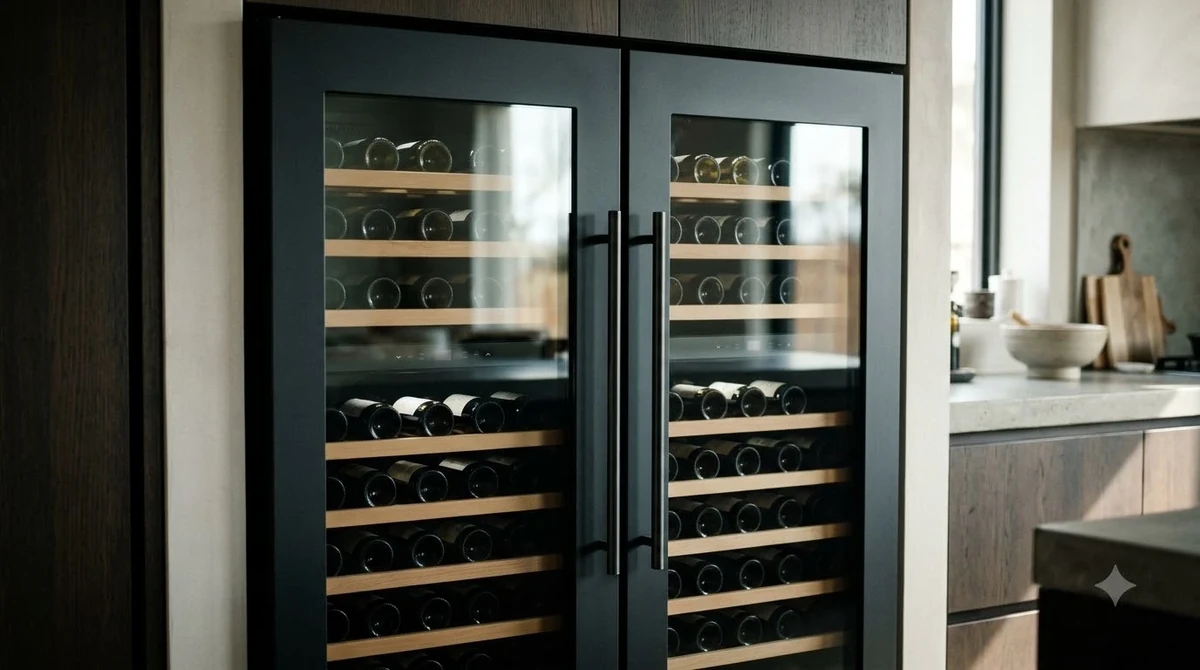
Design is one of the clearest positives. Owners mention the black glass front, wooden shelves, compact shape, and interior light as features that make the cooler look at home in a kitchen or bar rather than like a utility appliance. That matters because many wine refrigerators remain visible in a dining area or open-plan room. The flush handle also avoids a large protruding grip, which can be useful in a tighter walkway. These details do not affect wine quality directly, but they can make the appliance easier to live with every day.
Quiet operation is another recurring positive in owner comments. A Lowe’s purchaser describes being pleased with the low operating noise, and another owner specifically praises the refrigerator’s performance and appearance. These are individual experiences rather than laboratory sound measurements, so they do not prove that every unit will be silent. A compressor appliance can hum, cycle, or make short refrigerant and expansion sounds during normal operation. Still, the positive comments suggest that owners often find the operating noise unobtrusive in a home setting.
Owners who use both compartments appreciate being able to separate bottles by serving preference. One section can hold sparkling wines and whites while the other holds reds, or the settings can be brought closer together if most of the collection is one style. That can be useful for a household that regularly opens Sauvignon Blanc, Chardonnay, Pinot Noir, and Cabernet Sauvignon. It is less important for someone who buys almost exclusively one type of wine and would rather have extra shelf space than two temperature settings.
Common Complaints
The biggest practical complaint is the difference between the stated 44-bottle capacity and the number of bottles that fit comfortably. Bottle diameter, shoulder shape, neck length, and label thickness all affect shelf spacing. A cabinet packed tightly enough to approach the advertised maximum may be harder to organize, and bottles that technically fit can make the sliding shelves awkward to use. If your collection includes many Champagne or Burgundy bottles, plan for a lower working capacity than the headline figure suggests.
Some owner feedback also raises questions about the divider gasket between the two zones. A Lowe’s customer reported that the wiper-style insert would not fit into the center rail, while another described a tear in the piece and the need to find a replacement. The divider helps separate the two compartments, so inspect it carefully on any new-old-stock, open-box, or used unit. Confirm that the gasket is present, undamaged, and seated correctly, and check that both temperature controls respond independently. These reports do not establish a defect in every unit, but they identify a specific component worth checking before purchase.
Temperature behavior and long-term availability deserve attention as well. A retailer reviewer recommended allowing 24 hours for the cabinet to stabilize after installation, which is a sensible expectation after first setup or a significant adjustment. Room temperature, ventilation, frequent door openings, and bottle loading can affect how quickly the sections settle, so use a thermometer in each zone if you need to verify the actual conditions. More importantly, Haier identifies this model as no longer being manufactured. That does not make a functioning used unit unattractive, but confirm its serial number, purchase date, warranty status, service history, and parts availability first.
Tip: Before accepting a used or open-box QWR04DGRGB, inspect the center divider gasket, door seal, shelf slides, glass, and touch controls. Then run it for at least 24 hours with a thermometer in each compartment to confirm that both sections settle near their settings.
Who Should Buy and Who Should Skip
This Haier makes the most sense for someone who wants a neat-looking two-zone refrigerator for a moderate, regularly used collection and has a suitable freestanding space. Its 19.6-inch width, 32.3-inch height, four wooden shelves, and separate controls suit a kitchen, dining room, or home bar where 44 standard bottles would be a comfortable upper target rather than a strict everyday requirement. It is particularly useful when you move between reds, whites, and sparkling wines instead of storing only one category.
It is less suitable for a collector who needs long-term cellaring conditions, high humidity management, very precise temperature control, or room for many oversized bottles. The listed controls cover 41°F to 61°F, and the product literature presents the unit as a serving-temperature wine center rather than a specialist aging cabinet. For wines intended to mature over many years, temperature stability, humidity, vibration management, light exposure, and serviceability matter as much as the number of zones. Someone who mostly buys one wine style may also get more value from a larger single-zone model with similar dimensions and a simpler layout.
Availability should shape the purchase decision. With the QWR04DGRGB discontinued, a new unit may be remaining inventory, and a used model may have little or no transferable warranty. Ask the seller to demonstrate both zones running, verify the controls, look for unusual rattling, and confirm whether replacement shelves or seals can still be ordered. Measure the opening and allow the specified 2-inch rear and top clearances plus 1 inch at each side; also plan a clear delivery route from the entrance to the installation space. A unit that fits the alcove but cannot be moved through the doorway is not a practical fit.
Think about how you use wine and cocktails before deciding whether the two zones are worthwhile. If your routine includes an Aperol spritz recipe or a Hugo spritz recipe, the cooler can keep sparkling wine and crisp whites ready, while spirits and mixers stay elsewhere. For a chicken Marsala recipe, a medium-bodied red or fuller white can be staged in the warmer compartment and adjusted shortly before dinner. The appliance earns its space when the settings support your actual habits, not simply because two zones sound more advanced.
How It Compares to Alternatives
The QWR04DGRGB sits between a compact single-zone cooler and a larger wine cabinet. Its main advantage over a single-zone unit is the ability to keep different wine styles at different temperatures without adding a second appliance. Its trade-off is that the 44-bottle rating is not especially generous once bottle shapes and easy shelf access are taken into account.
A single-zone cooler is the simpler option for someone who mostly buys one style or prefers to store bottles at a consistent holding temperature and bring them to serving temperature later. It may also be easier to organize because there is no center divider and no need to plan which section receives each wine. The Haier is more flexible for a mixed collection, but that flexibility matters only if both zones get used. If one section is often empty or the same temperature is selected for both, a single-zone cabinet with more usable space may be a better match.
A larger dual-zone wine cabinet is more appropriate for a household that regularly holds more than the Haier’s practical capacity. Compare usable capacity with your own bottle mix, temperature range in each zone, shelf spacing, cooling method, and installation style. Do not compare bottle counts alone: a tall cabinet may quote a higher capacity but need substantially more floor or wall space, while the Haier’s 19.6-by-23-by-32.3-inch footprint may fit a tighter room. Also separate freestanding and built-in designs. Haier and Lowe’s list this model as freestanding and specify clearance around it; a front-facing glass door and flush handle do not make it safe to enclose in cabinetry. For broader comparisons among wine-center types, browse our brand-and-type appliance reviews and compare installation requirements before choosing.
Frequently Asked Questions
These additional specifications help answer practical questions that are easy to miss when comparing the capacity and temperature range.
How heavy is the Haier QWR04DGRGB?
Lowe’s lists the net weight at 87 pounds and the approximate shipping weight at 95 pounds. Plan for two-person handling during delivery and positioning, and avoid dragging the cabinet across flooring.
Can the door swing be reversed?
The manufacturer specification lists a reversible door and a 105-degree door stop. Confirm that the hinge parts and instructions are included with a used or open-box appliance before planning the installation around a left-hand swing.
Does this wine center defrost automatically?
The Haier specifications identify the defrost type as automatic. That reduces the need for routine manual defrosting, although it does not remove the need to keep the interior clean and the door seal in good condition.
Which refrigerant does this model use?
The product specification identifies R600a as the refrigerant. Refrigerant work is a service task, so cooling problems should be handled by a qualified appliance technician rather than by opening the sealed system.
Does the cabinet have an audible door alarm?
Yes. The listed features include an audible alarm for a door left open, which can help catch an incomplete close before warm room air affects the stored bottles.
The Haier QWR04DGRGB offers an attractive, compact way to separate wine into two temperature zones, and owner feedback points to quiet operation and a clean-looking cabinet as genuine strengths. Its discontinued status, fit-dependent bottle capacity, and possible divider-gasket issues mean the smartest buyer is one who can inspect the exact unit and confirm service coverage before purchase.
More in Model Reviews
 Magic Chef 44 Bottle Wine Cooler Review for Flexible StorageUpdated Nov 21, 2026
 Whynter 164 Bottle Wine Cooler Review: Capacity, Features, and FitUpdated Nov 21, 2026
 Insignia NS WC16BK6 Review: Compact 16-Bottle Wine StorageUpdated Nov 21, 2026
 Wine Enthusiast Electric Blue Omega Review: Opening, Pouring, and Preserving Made EasierUpdated Nov 21, 2026
 Koolatron 20 Bottle Wine Cooler Review: Features, Fit, and PerformanceUpdated Nov 21, 2026
 NewAir AWC 330E Review for Home Wine StorageUpdated Nov 21, 2026