

We may earn a commission when you buy through links on this page, at no extra cost to you. Learn more.
For shoppers comparing ralph lauren crystal wine glasses, Ralph Lauren Home offers a polished, design-led choice with several distinct stemware styles and confirmed lead-free crystal options. Langley, Coraline, and Norwood each bring a different look, from coin-edge-inspired cuts to hand-faceted bowls and a cleaner, fine-walled silhouette. The main trade-off is care: the wine glasses reviewed here are marked for hand washing, so they suit considered entertaining better than a dishwasher-first routine.
Ralph Lauren’s glassware is not one uniform range, and the distinctions matter before choosing a matching set. Product descriptions identify different dimensions, capacities, finishes, and material wording across the collections; this review separates those details so shoppers can weigh visual appeal against practical use.
Specs and Key Features
Ralph Lauren Home’s wine stemware focuses on decorative detail, clear crystal, and classic silhouettes rather than one standardized shape. Langley, Coraline, and Norwood cover noticeably different designs, and the manufacturer’s specifications are not identical from one glass to the next.
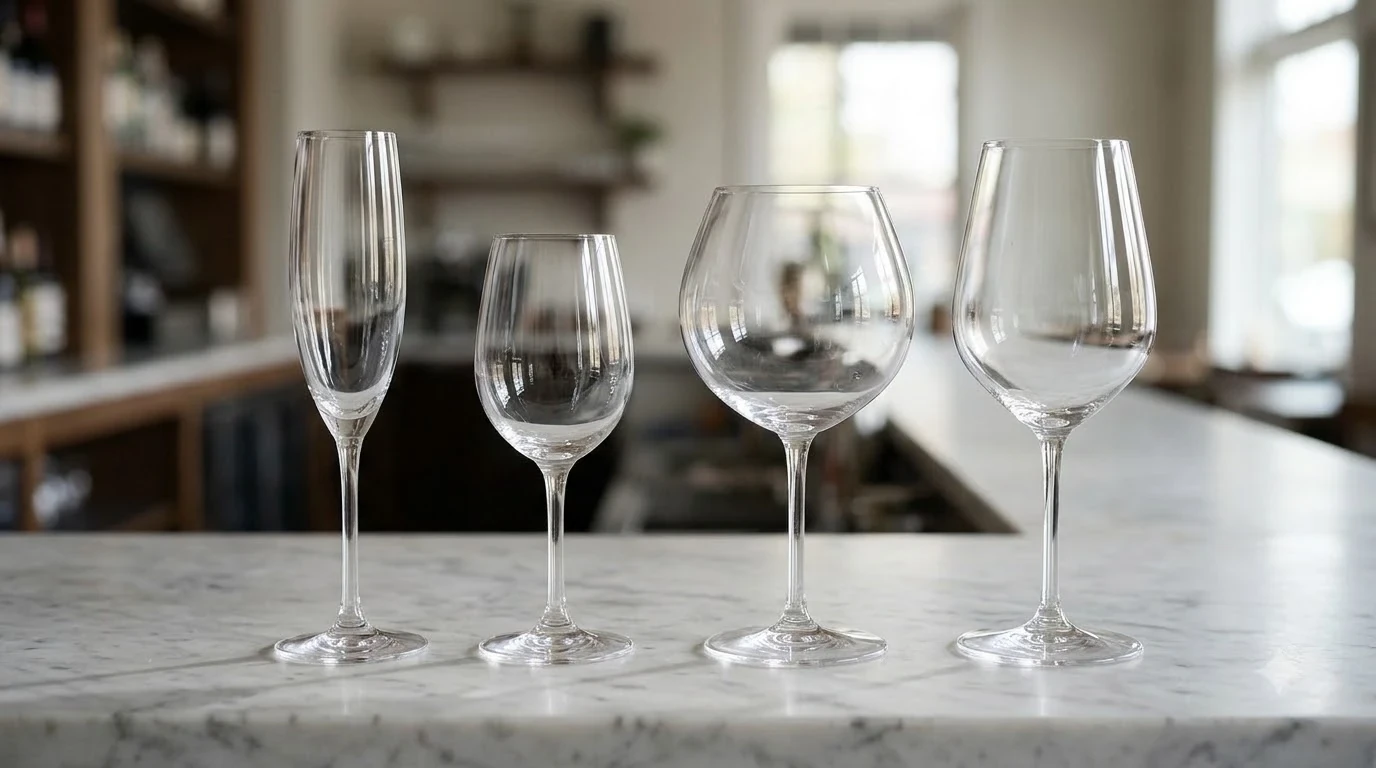
Langley is the most recognizable design for shoppers who like a subtle pattern. Ralph Lauren says its delicate cuts take inspiration from the coin-edge detailing of a classic watch, while the crystal gives the glass clarity and a sense of weight. The white wine glass measures 3¼ inches across and 7¾ inches high; the red wine version measures 3½ inches across and 8 inches high. Both are described as 100% lead-free crystal glass and are marked for hand washing. Coraline takes a more visibly decorative route: hand-cut facets accent its silhouettes, with a 9.5-ounce white wine glass measuring 3.5 inches across by 8 inches high and a 10.6-ounce red glass measuring 4 inches across by 8.5 inches high. The Coraline details say “crystal glass” and “hand wash,” but do not repeat the Langley pages’ exact 100% lead-free wording.
Norwood is the cleaner alternative within the brand’s crystal stemware. Its red wine glass is listed at 7.75 inches high, 4 inches in diameter, and 15 ounces in capacity; Ralph Lauren identifies 100% lead-free crystal, hand washing, and Polish manufacture. Measurements matter for cabinet fit and pour style: Norwood’s 15-ounce capacity gives it a different amount of room from Coraline’s 10.6-ounce red wine glass, while the Langley pages do not publish ounce capacities. The table keeps published specifications separate rather than filling gaps with estimates.
| Glass | Published dimensions | Capacity | Material and care stated by Ralph Lauren |
|---|---|---|---|
| Langley White Wine | 3¼” diameter × 7¾” high | Not stated | 100% lead-free crystal glass; hand wash; imported |
| Langley Red Wine | 3½” diameter × 8″ high | Not stated | 100% lead-free crystal glass; hand wash; imported |
| Coraline White Wine | 3.5″ diameter × 8″ high | 9.5 oz | Crystal glass; hand wash; imported |
| Coraline Red Wine | 4″ diameter × 8.5″ high | 10.6 oz | Crystal glass; hand wash; imported |
| Norwood Red Wine | 4″ diameter × 7.75″ high | 15 oz | 100% lead-free crystal glass; hand wash; made in Poland |
What Owners Like
The strongest buyer appeal is the combination of recognizable design and practical stemware proportions. Langley, Coraline, and Norwood give a host a choice between understated pattern, decorative facets, and a relatively restrained profile.

Langley’s coin-edge reference is a distinctive cue without relying on a large logo or a colored bowl. Its cut detailing can catch reflections from candlelight and overhead fixtures, while the clear crystal keeps the wine visible. That makes the collection a natural fit for a traditional dining room, a formal holiday table, or a home bar where pieces coordinate. The line also extends beyond wine stems into barware, allowing a shopper to create a consistent look across more than one kind of drink service.
Coraline will appeal to buyers who want the glass itself to contribute more visual texture. Its hand-cut facets give it a more overtly classic character. This is a design advantage, not a wine-performance claim: facets do not make a wine taste better, but they can give the table a more ornate appearance. Its white and red versions have separate published capacities, 9.5 and 10.6 ounces. Norwood’s attraction is different: the 15-ounce red wine capacity is larger than either Coraline capacity, and its description emphasizes an elegant stem and a fine-walled vessel. For someone who prefers less visible cutting, Norwood is the calmest-looking option among these examples. Another likely point of satisfaction is that the collections are not limited to one wine type. Langley has red and white wine glasses as well as flutes and other barware; Coraline includes red and white wine options and coordinated pieces; Norwood includes red and white wine stemware and a champagne coupe. Buyers who value a coordinated table can stay within one design family instead of mixing unrelated patterns. Still, compare the shapes with other crystal wine glasses before deciding: a decorative finish is only one part of choosing a useful bowl. The appeal here is best understood through published design features rather than assumptions about universal owner satisfaction.
Common Complaints
The clearest drawbacks are the care commitment and the fact that specifications vary by collection. A hand-wash instruction is manageable for occasional entertaining, but it may frustrate anyone who expects all stemware to go through a regular dishwasher cycle.
Ralph Lauren lists hand washing for the Langley white and red glasses, the Coraline white and red glasses, and the Norwood red wine glass described here. That is a practical limit: decorative cuts and clear crystal do not override the manufacturer’s care instruction. Buyers accustomed to putting everyday tumblers in the dishwasher may find it inconvenient to separate these glasses after dinner, wash them individually, and dry them carefully. The American Cleaning Institute advises hand washing crystal unless the maker says otherwise, using a folded towel to cushion the sink, and avoiding sudden temperature changes that can crack glass. Red wine residue should also be rinsed promptly to limit staining; its wine glass and crystal advice gives practical washing steps for special glassware.
A second potential frustration is inconsistency in product details. Langley and Norwood explicitly say 100% lead-free crystal glass, while Coraline’s details use the broader phrase “crystal glass”; Coraline’s white and red stems differ in capacity by 1.1 ounces, and the Langley descriptions do not publish ounce capacities. Decorative stems also need careful handling: glasses can chip if they knock together in a crowded cabinet or sink, and twisting the bowl while holding the foot can stress a narrow stem. These are handling risks shared by fine stemware, not proof of a particular Ralph Lauren defect. The brand’s styling is not neutral either; Langley’s cuts and Coraline’s facets may feel too ornate for minimalist settings, while Norwood’s 4-inch bowl still needs adequate cupboard clearance.
Tip: Before buying a full set, measure shelf height and cabinet width. A glass standing 8.5 inches high with a 4-inch bowl needs more clearance than a compact everyday stem, and hand-wash-only care should fit the household routine.
Who Should Buy and Who Should Skip
Ralph Lauren crystal wine glasses make the most sense for buyers who put appearance, a coordinated tablescape, and brand-specific detailing high on the list. They are less compelling for households that rank dishwasher convenience, low replacement cost, or heavy daily use above presentation.
Consider Langley if a subtle, recognizable pattern is the goal. Its watch-inspired cuts create a decorative accent without Coraline’s denser facets, and its red and white versions have clearly stated 100% lead-free crystal construction. That makes it a sensible direction for a formal place setting where the wine stems should coordinate with restrained barware details. Coraline is a better fit for someone who wants visible texture and a classic decorative mood; its 9.5-ounce white glass and 10.6-ounce red glass are specified separately, making bowl capacity easier to compare. It can suit a formal dinner party, a wedding gift, or a dining room with cut crystal, polished silver, or traditional table linens.
Norwood suits a shopper who favors a simpler profile and a larger red wine bowl. Its 15-ounce capacity is the largest listed in this comparison, and its description names 100% lead-free crystal and Polish manufacture. Skip all three styles if washing stemware by hand is not realistic, or if glasses need to be nested, stacked, or handled like thick tumblers. A household that regularly entertains large groups may prefer a less precious everyday set for casual service and reserve decorative crystal for smaller dinners. Buyers focused on material wording should also compare individual models: Langley and Norwood explicitly state 100% lead-free crystal, while Coraline uses “crystal glass.” A comparison of lead free crystal wine glasses can help put that wording alongside shape, rim design, and care method.
How It Compares to Alternatives
Within Ralph Lauren’s selection, the most meaningful comparison is between the design approaches rather than an assumed difference in wine performance. Langley is subtly patterned, Coraline is visibly faceted, and Norwood is the cleaner, fine-walled option with the largest stated red wine capacity of the three.
Compared with a plain, undecorated stem, Langley and Coraline place more attention on surface detail. That can be an advantage for a formal dining room, but it also makes the glasses more visually specific: they become part of the table’s style rather than disappearing into the background. Norwood is less ornate, although its 4-inch bowl diameter is still substantial. RIEDEL is another established name in wine stemware, and its published care guidance provides a practical point of comparison rather than a model-by-model performance benchmark. RIEDEL says most of its glasses are dishwasher-safe when the individual product is designated that way, and describes testing against EN 12875-1 and EN 12875-2. Ralph Lauren’s listed pieces here are marked hand wash, which is a useful day-to-day distinction, not proof that one maker’s glasses are more durable or deliver better aromas.
There is also a difference in the level of material detail. Langley and Norwood explicitly identify 100% lead-free crystal, while Coraline’s listing describes crystal glass without repeating that percentage language. A shopper who prioritizes the clearest possible material statement may prefer a model whose product page makes it explicit. For a wider view of stemware shapes, capacity, and everyday versatility, compare the options in a broader guide to wine glasses rather than assuming a designer label alone determines fit. RIEDEL’s glass care and use instructions also show why maker-specific care matters: they advise spacing glasses apart and avoiding twisting pressure while polishing. For the Ralph Lauren pieces covered here, gentle sink washing remains the direct choice.
Frequently Asked Questions
The main buying decision is whether the design and material details suit the way the glasses will be used. These answers cover practical points that are easy to overlook when comparing photographs and product dimensions.
Are Ralph Lauren crystal wine glasses made with lead?
The Langley and Norwood product pages cited here explicitly describe their glasses as 100% lead-free crystal glass. Coraline’s reviewed product details say “crystal glass” but do not repeat the same 100% lead-free wording, so the exact model description matters. Do not assume that a specification on one collection automatically applies to every collection.
What is the standard pour for a glass of wine?
A typical serving is 5 ounces, even when the glass itself has a much larger listed capacity. That leaves room in the bowl for aromas to collect and reduces the chance of spills when carrying the glass. A 750-milliliter bottle provides about five standard 5-ounce pours.
Can the same stemware be used for white and red wine?
Yes, a general-purpose wine glass can serve both, although a dedicated bowl shape may suit a preferred wine style better. Light whites and rosé are commonly served around 45–50°F, while full-bodied reds are generally served around 60–65°F. The glass does not replace temperature control.
How should crystal wine glasses be dried after washing?
Use a clean, lint-free cloth and avoid twisting the bowl against the stem. RIEDEL recommends two microfiber cloths for polishing and cautions against holding the foot and bowl at the same time, because that creates twisting pressure. Letting a wet glass sit upside down on a hard metal rack can also put stress on its rim.
How many glasses should be bought for a dinner party?
A practical starting point is one wine glass per guest, plus a small spare allowance for breakage or an unexpected extra guest. For a dinner with eight guests, a set of eight covers the first pour, while ten gives a little room for a replacement or an additional guest. The ideal number depends on whether guests will use separate glasses for different wines.
Ralph Lauren’s crystal wine glasses are most persuasive when their design is part of the reason for buying: Langley for restrained detailing, Coraline for facets, and Norwood for a simpler profile with a larger red wine capacity. Choose the individual model by its published material wording and dimensions, and be prepared to hand wash the pieces to keep them in good condition.
More in Wine Glasses
 Zwiesel Glas Champagne Flutes for Durable Everyday Sparkling WineUpdated Nov 20, 2026
 Vera Wang Crystal Wine Glasses: Design, Quality and Buying AdviceUpdated Nov 20, 2026
 West Elm White Wine Glasses: Compare Designs for Better Everyday Wine ServiceUpdated Nov 20, 2026
 Zalto Stemless Wine Glasses: Discover Their Distinctive DesignsUpdated Nov 20, 2026
 Viski Champagne Glasses That Match Your Style and Sparkling WineUpdated Nov 20, 2026
 Vista Alegre Decanter Review: Crystal Style and Wine ServiceUpdated Nov 20, 2026