

We may earn a commission when you buy through links on this page, at no extra cost to you. Learn more.
The best wine cellar racking for most home collections is a modular system of individual bottle cubbies, made from solid wood or powder-coated steel, that fits your wall and grows with your collection. Look for a design that lets you pull one bottle without moving the rest, keeps every bottle lying on its side, and can be extended later with extra modules.
Racking is the part of a wine cellar that holds the bottles. Whether you are fitting out a dedicated room, a closet, a basement corner or a garage, the racking decides how easily you can find a bottle, how much you can store in the space, and how well the bottles stay in position over time. This guide walks through the main racking styles, the situations where each one makes sense, and the factors that matter most when you choose.
Quick Comparison of Wine Cellar Racking Styles
Wine cellar racking falls into a few broad families. Each one trades off access, density and cost in a different way, so the right choice depends on how you buy and how often you open bottles.
| Racking style | Best use | Access to a single bottle | Expansion |
|---|---|---|---|
| Individual cubbies (modular wood or steel) | Dedicated cellars and finished rooms | Pull any bottle directly | Add modules as the collection grows |
| Diamond bin racking | Large volume storage in a basement | Bottles are stacked in bins, so labels are harder to see | Easy to add rows |
| Wall-mounted racks | Narrow walls and closets | Good for the front rows, limited deep access | Limited by the wall you have |
| Freestanding wooden floor racks | Rooms where you cannot mount to the wall | Good, with the bottles in view | Add a unit alongside the first one |
Bin racking is often the cheapest way to hold a large number of bottles, but it makes it hard to read labels and find older bottles. Cubbies cost more per bottle of capacity, and they reward owners who keep an inventory because each bottle has its own clear slot.

Best for Narrow Closets and Under-Stair Spaces
Tight spaces are where wall-mounted and slim modular racking earn their place. When the room is narrow, the goal is to use vertical space and keep the bottles off the floor without blocking the door.
Why it stands out: Slim modular cubbies can be stacked to the ceiling and fixed to studs, so the footprint stays small. Many designs let you remove a single module to reach the back of the wall.
Keep in mind: Measure the wall before you order, and check that the racking clears any door swing or light switch. Deep, heavy modules can be hard to load in a small space.
Best for: People who want a working collection in a closet or under a staircase and do not plan to move it.
Best for Finished Basements with a Full Wall
A finished basement usually has enough wall to build a proper cellar layout. This is the setting where individual cubbies look their best and where a clear layout makes the collection easy to manage.
Why it stands out: Full-wall cubby systems let you organize by region, grape or price tier, and the open fronts show the labels. Solid wood gives a traditional look that suits a finished room.
Keep in mind: Wood responds to humidity, so choose a finish and joinery that suit the room, and make sure the floor is level before the racks go in. Heavy racks should be anchored to the wall.
Best for: Collectors who keep a steady stock and want a layout they can read at a glance.
Best for Buyers Who Store by the Case
Some owners buy mostly in cases of twelve and want to keep each case together until it is ready to drink. Racking for this buyer should favor density and easy loading over close inspection of each label.
Why it stands out: Bin or deep-row racking holds the most bottles per square foot, and a case can be slid in as a unit. This is the economical choice for a large, rotating stock.
Keep in mind: Bins make it easy to lose track of older bottles. Keeping an inventory list or a simple label on each bin helps you avoid forgetting a bottle that has been waiting for years.
Best for: High-volume buyers who value capacity over easy access.
Best for Garages and Unfinished Rooms
An unfinished garage or utility room is often not climate-controlled, so the racking choice has to work with the room rather than against it. Steel and powder-coated finishes handle the changing conditions better than untreated wood.
Why it stands out: Steel racking resists the dust and moisture common in unfinished spaces, and the modules can be wiped down easily. Freestanding units can be moved if the room is needed for something else.
Keep in mind: Racking alone does not protect wine. An unfinished room needs its own cooling plan, because temperature swings damage wine more than the shelves do.
Best for: Owners who already have a cooling unit or a separate climate-controlled storage area.
Best for Showing Off a Collection in a Dining Room
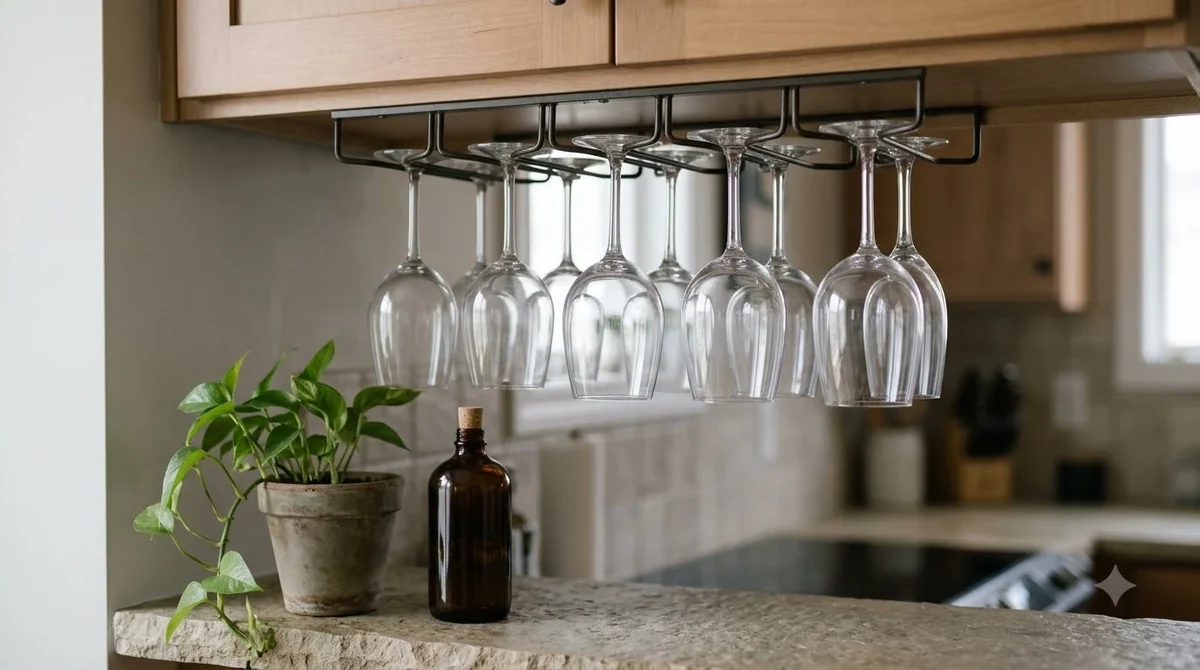
When the racking is part of the room’s design, the priority shifts from capacity to appearance. The bottles are on display, so the material, finish and spacing matter as much as how many bottles fit.
Why it stands out: Open wooden cubbies or a freestanding floor rack can be placed in a dining or living area and read as furniture. Many designs suit a range of décor styles.
Keep in mind: Bottles on display need the most protection from light and heat, so keep the racking away from windows and radiators. A display rack is not a substitute for a cellar if you plan to age wine for years.
Best for: Owners who want the collection visible and are willing to rotate bottles often.
How to Choose the Right Racking
Start with the room, then the collection, then the budget. The room tells you what can be mounted and how much space you have. The collection tells you how many bottles you need to hold and how often you reach into the rack. The budget decides how much of that you can build now and how much you can add later.
Tip: Buy one more module than you think you need. A collection almost always grows faster than planned, and adding a unit later is easier when the same system is still available.
Ask these questions before you buy:
- Do you need to pull any bottle without moving others? If yes, choose cubbies.
- Is the room finished, unfinished, or shared with other storage? Match the material to the conditions.
- Will the racks be fixed to the wall, or do they need to move? Wall-mounted and freestanding systems solve different problems.
- Do you want the collection hidden or on display? That answer changes the finish and placement.
According to VinePair’s guide to aging wine, a wine that is meant to be kept should be stored in a cool, dark place, on a horizontal rack or in a custom cellar. Whichever racking you choose, the bottles should lie on their sides so the cork stays in contact with the wine.
Frequently Asked Questions
What is the best wine cellar racking material?
Solid wood suits finished rooms and gives a traditional look. Powder-coated steel handles humidity and dust better, so it is often the better choice for garages and unfinished spaces. Neither material protects wine on its own, so the room’s temperature and humidity still matter most.
Do wine cellar racks need to be mounted to the wall?
Mounting makes a tall rack safer and more stable, especially when it holds heavy bottles. Freestanding floor racks avoid drilling into walls and can move with you, but they need a level floor and a firm base. Check the manufacturer’s instructions for the load each unit can carry.
Should wine bottles lie flat or sit at an angle in racking?
Bottles with natural corks are usually stored on their sides so the cork stays moist and does not dry out. Most cellar racking is designed for horizontal storage, which also makes it easier to read labels when the bottles are in cubbies.
Is it better to plan the racking before buying wine?
Yes. Measuring the space and deciding how the collection will be used before buying racks prevents costly rework. Plan the layout first, then add modules as the number of bottles grows, so the room stays organized.
Racking is the most visible part of a wine cellar, but the room and the layout do most of the work. Start with the space you have, decide whether you need easy access or maximum capacity, and build a system you can expand. If you are also planning the other storage pieces, the best wine racks guide covers freestanding options, and our notes on wine cellar cooling units explain how to keep the room at a steady temperature.
More in Racks & Storage
 Best Wine Barrel Racks for Distinctive Bottle StorageUpdated Nov 20, 2026
 Best Wine Storage Tower: Sizing, Protection and Room LayoutUpdated Nov 18, 2026
 Best Pyramid Wine Rack: Materials, Sizes and Where It FitsUpdated Nov 18, 2026
 Best Kitchen Cabinet Wine Rack Insert for Built-In Bottle StorageUpdated Nov 18, 2026
 Best 16 Bottle Wine Rack Options for Kitchens, Bars and CellarsUpdated Nov 18, 2026
 Best 48 Bottle Wine Rack Options for Cellars, Kitchens, and Tight SpacesUpdated Nov 18, 2026