

We may earn a commission when you buy through links on this page, at no extra cost to you. Learn more.
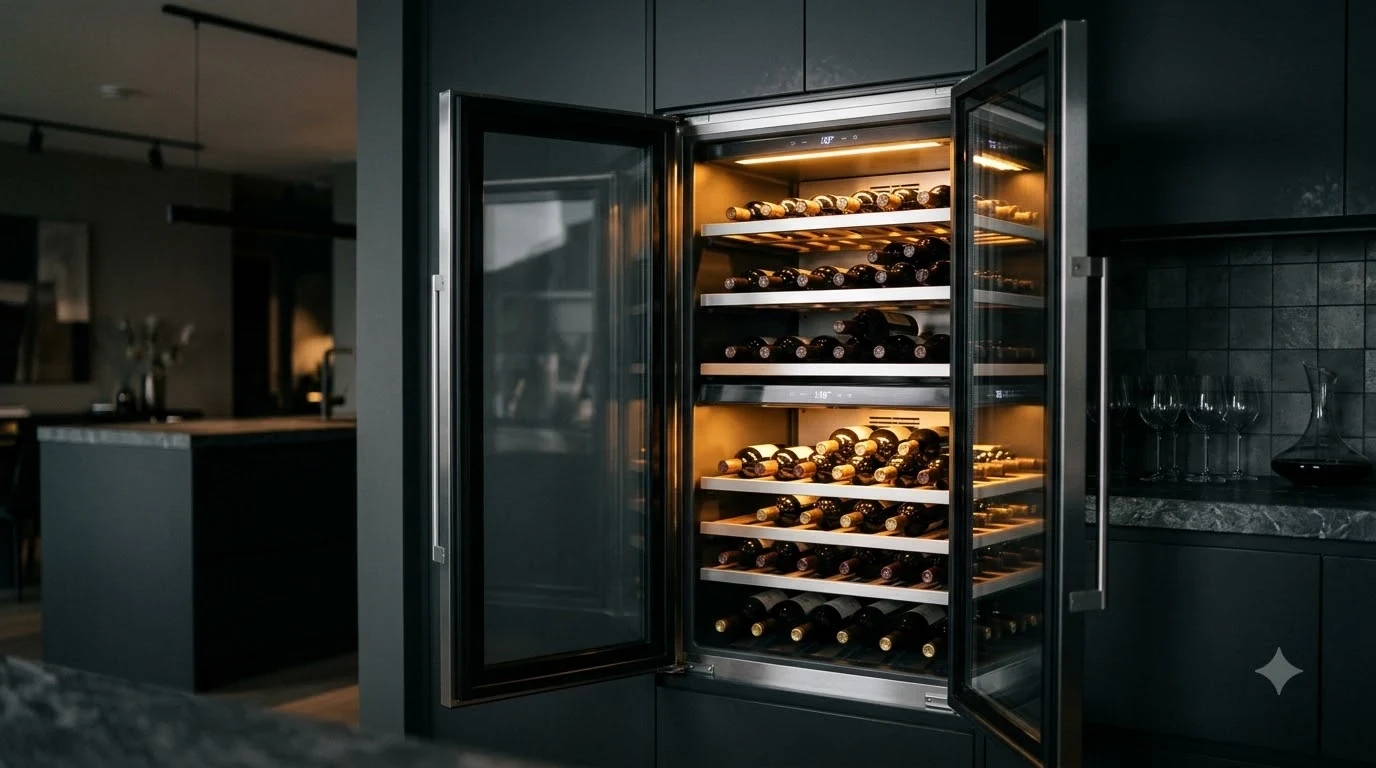
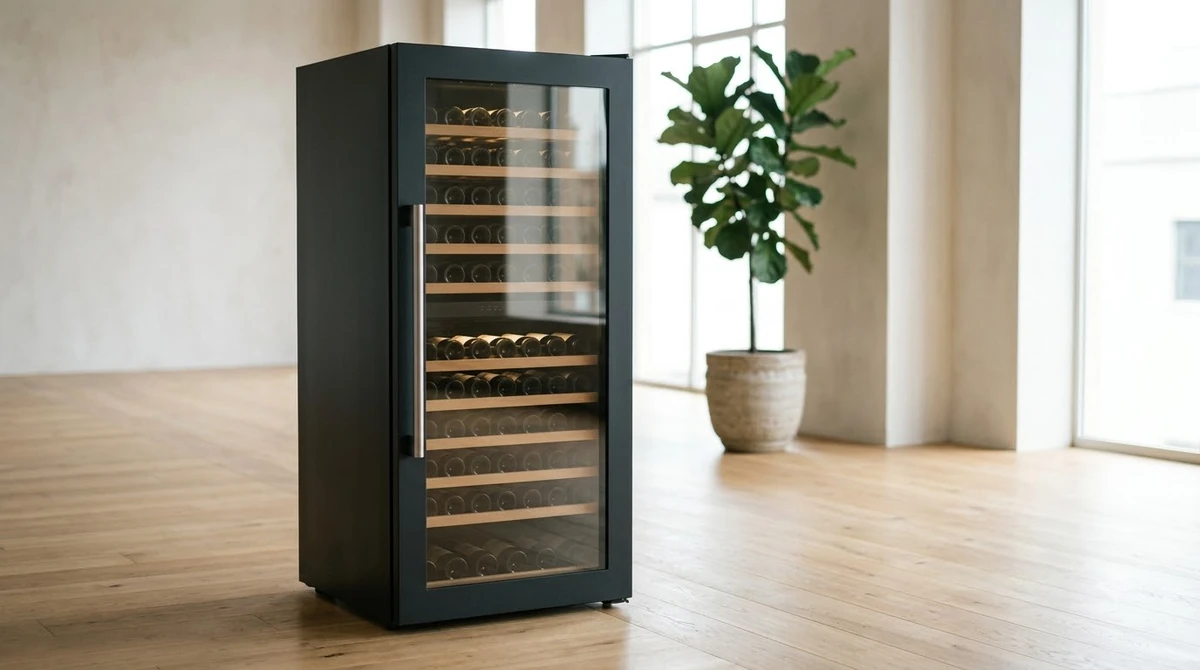
The danby dual zone wine fridge is a practical choice for wine drinkers who want to store reds and whites at separate temperatures in one compact appliance. The Danby DWC040D2BSSDB offers space for up to 38 bottles, independent temperature controls, a digital thermostat, and a frost-free cooling system. Its main advantages are flexible storage, straightforward temperature management, and a reversible door, although buyers should consider its freestanding design, limited capacity for larger collections, and compressor operating noise before purchasing.
Danby makes several dual-zone wine coolers, so the exact model number matters when comparing features. This review focuses primarily on the DWC040D2BSSDB, a 38-bottle stainless steel model with two separate temperature compartments. It also considers the practical differences between Danby’s other wine cooler configurations, what owner feedback suggests about everyday operation, and the installation details that can affect long-term satisfaction.
Specs and Key Features
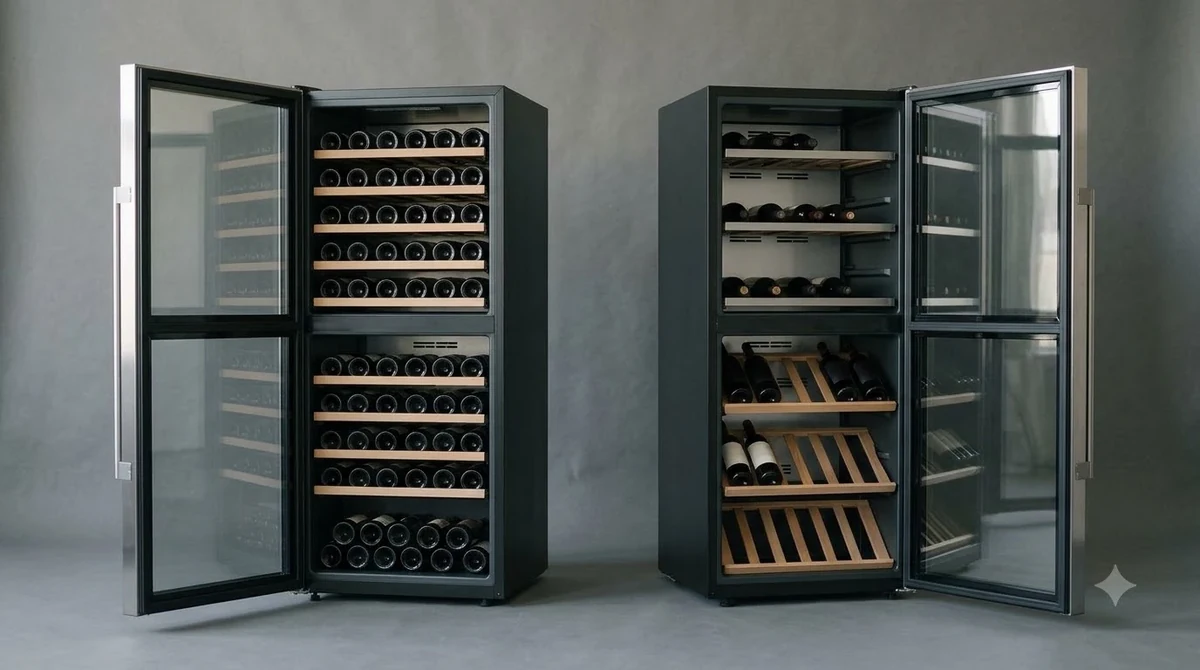
The DWC040D2BSSDB combines two independently controlled compartments with a 38-bottle capacity and a relatively compact freestanding cabinet. Its temperature settings cover 41°F to 64°F across the two sections, making it suitable for households that regularly keep different wine styles ready to serve.
| Specification | Danby DWC040D2BSSDB |
|---|---|
| Maximum bottle capacity | 38 bottles |
| Interior capacity | 4 cubic feet |
| Temperature range, upper zone | 41°F–50°F |
| Temperature range, lower zone | 50°F–64°F |
| Width | 19.44 inches |
| Depth | 25 inches |
| Height | 33.31 inches |
| Product weight | 90.39 pounds |
| Cooling system | Frost-free, fan-forced |
| Temperature controls | Independent digital controls |
| Interior lighting | Blue LED |
| Shelving | Natural beechwood |
| Door | Tempered glass, reversible hinge |
These specifications make the DWC040D2BSSDB a mid-sized home wine storage option rather than a large collection cellar. Its 19.44-inch width is useful for rooms where floor space is limited, while the 33.31-inch height keeps the cabinet relatively accessible. However, the 25-inch depth needs attention because the door and handle extend into the room. Measuring only the available cabinet width is not enough to establish whether the appliance will fit comfortably.
The two temperature compartments are the central selling point. Danby specifies 41°F–50°F for the upper section and 50°F–64°F for the lower section. This arrangement provides different cooling environments for wine styles that benefit from different serving temperatures. For example, the upper section can accommodate chilled Sauvignon Blanc, Riesling, and sparkling wine, while the lower section can hold lighter and fuller-bodied reds at more suitable temperatures. The manufacturer’s DWC040D2BSSDB product specifications provide the model-specific details buyers should use when checking dimensions and temperature capabilities.
The digital thermostat and LED display make temperature adjustments easier than relying on a basic mechanical dial. The appliance also includes temperature and door-ajar alarms. Danby states that the thermostat returns to its previous setting after a power outage, a useful feature for households where temporary interruptions in electricity are possible.
Another practical detail is the frost-free, fan-forced cooling system. Danby describes this arrangement as providing more consistent internal temperatures than an automatic-defrost system. The tempered glass door is designed to help protect wine from harmful UV exposure, and the blue LED lighting allows owners to see their bottles without relying on a conventional incandescent bulb.
The natural beechwood shelves provide a warmer appearance than an entirely metal interior. The reversible hinge also gives buyers flexibility when deciding which direction the door should open. Together, these features make the cabinet reasonably attractive for a dining area, home bar, or dedicated indoor wine storage corner.
What Owners Like
The most appealing aspects of Danby’s wine cooler range are its practical bottle storage, separate temperature settings, and accessible controls. Owner feedback on related Danby models also highlights the usefulness of accommodating different bottle shapes, although feedback from another model should not be treated as proof of identical performance from the DWC040D2BSSDB.
Capacity is an important consideration for anyone who regularly buys wine in several styles. A 38-bottle rating provides room for a modest household collection, including everyday drinking bottles, special-occasion selections, and a few bottles reserved for entertaining. The ability to separate reds and whites also reduces the need to keep some wines in an ordinary refrigerator while others occupy a wine cabinet.
The independently controlled compartments are particularly useful for households that drink both white and red wine throughout the week. A white Burgundy, for example, can be kept cooler than a bottle of Cabernet Sauvignon. Similarly, a chilled bottle of Prosecco can be available for an aperitif while red wine remains in the lower compartment.
For casual entertaining, this arrangement is convenient. Someone preparing a classic Aperol spritz recipe may want chilled sparkling wine available alongside other bottles intended for dinner. Keeping several wine styles in one appliance can make preparation easier without constantly rearranging the main kitchen refrigerator.
The exterior appearance is another potential advantage. Stainless steel, glass, wood-look shelving, and interior lighting give the DWC040D2BSSDB a more traditional wine-cellar appearance than a basic beverage refrigerator. The design is relatively neutral, so it can work with contemporary kitchens, traditional dining rooms, and home bars.
Feedback on the related Danby DWC036A1BSSDB-6 published by Goemans provides some additional context about everyday ownership. Its review summary highlights positive comments about bottle flexibility, cooling performance, and appearance. One reviewer specifically mentioned being able to accommodate different bottle shapes, including Prosecco bottles, which can be more difficult to fit in tightly spaced wine racks. The Goemans owner feedback for the related Danby cooler is useful context, but it concerns a different model.
That distinction matters: the DWC036A1BSSDB-6 is not the same dual-zone model reviewed here. Best Buy’s product Q&A identifies that particular model as a freestanding, single-zone wine cooler. Its owner comments should therefore be considered general feedback about a related Danby appliance rather than a direct evaluation of the DWC040D2BSSDB.
The digital display, alarm functions, and reversible door also add everyday convenience. Buyers who value a straightforward appliance rather than complicated connected features may appreciate this relatively simple approach to wine storage.
Common Complaints
The main considerations with the Danby dual-zone wine fridge are operating noise, actual usable bottle capacity, installation flexibility, and the differences between model specifications. These are not necessarily defects, but they can become frustrations if buyers assume the appliance will behave like a silent built-in cabinet or accommodate every bottle shape.
Noise is one of the more important considerations for an appliance intended for a living room or dining area. Danby explains that its refrigerator and freezer products generally operate between 35 and 46 decibels, which it describes as a normal range for modern refrigeration appliances. The company also confirms that compressor cycling is normal operation.
That does not mean every owner will find the sound unobtrusive. Goemans’ review summary for the related DWC036A1BSSDB-6 includes feedback describing noticeable humming when the refrigeration system switches on and off. The reviewer characterized the sound as comparable to a small running refrigerator. Although this is not direct feedback about the DWC040D2BSSDB, it illustrates why buyers sensitive to intermittent appliance noise should think carefully about placement.
For an open-plan apartment, a quiet office, or a bedroom-adjacent bar area, compressor and fan sounds may be more noticeable than they would be in a separate kitchen. The cabinet should also sit level on a stable surface. Danby’s troubleshooting guidance identifies vibration against surrounding surfaces and loose internal components as possible contributors to unusual sounds.
Bottle capacity is another potential source of disappointment. The stated 38-bottle maximum is a manufacturer capacity figure, not a guarantee that every combination of wine bottles will fit. Standard 750 ml Bordeaux-style bottles are generally easier to arrange than wide Champagne bottles, Burgundy bottles, or unusually shaped sparkling wine bottles.
Owners with a mixed collection may need to leave some shelf positions unused or rearrange their bottles. This matters particularly if the collection contains larger formats or bottles with wider shoulders. The shelf layout should be considered in practical terms rather than assuming that the advertised maximum will always be achievable.
Installation flexibility also has limits. The DWC040D2BSSDB is marketed as a freestanding wine cooler. Although Danby’s general guidance discusses built-in installation for some products, it does not mean every freestanding wine cooler can be enclosed in cabinetry without restrictions. The specific owner’s manual and ventilation requirements must determine whether a proposed installation is suitable.
Danby also states that its wine cellars are not designed for outdoor installations or other uncontrolled-temperature environments. A garage, covered porch, or outdoor kitchen may expose the cooling system to conditions outside its intended operating environment. The company warns that unsuitable placement can affect warranty coverage.
Finally, buyers should be careful about assuming that all Danby dual-zone models have identical temperature ranges. Some older 38-bottle models have different specifications, and certain 36-bottle products are single-zone rather than dual-zone. Checking the exact model number before ordering is more reliable than comparing product photographs or general descriptions.
Who Should Buy and Who Should Skip
The Danby DWC040D2BSSDB is best suited to wine drinkers who want a moderately sized indoor storage cabinet with two separate temperature compartments. It makes the most sense for households that regularly enjoy reds and whites but do not need the capacity of a large wine cellar.
For a household with approximately 15 to 30 bottles in regular rotation, a stated maximum of 38 bottles provides useful additional room. It allows some flexibility for buying wine ahead of a dinner party, keeping a few bottles of sparkling wine available, or maintaining a small selection for different meals.
It is also a reasonable option for someone who wants to organize wine by drinking preference rather than grape variety alone. One compartment could hold Sauvignon Blanc, Pinot Grigio, and sparkling wines, while the other stores Pinot Noir, Merlot, and Cabernet Sauvignon. The separate temperature controls make this arrangement easier than using a single-temperature appliance.
Food pairing can also benefit from having different wine styles ready at suitable temperatures. A chilled white wine can accompany seafood, while a moderately cool red can be prepared for a richer main course. Someone making a chicken Marsala recipe, for example, might prefer to serve a medium-bodied red alongside the meal while keeping a white wine ready for guests who prefer it.
The appliance is also worth considering for an indoor home bar. Its glass door, blue lighting, and natural beechwood shelves create a more wine-focused presentation than a standard refrigerator. The reversible hinge provides additional flexibility if the cabinet must fit into a particular corner or against a wall.
Who should consider another option?
Serious collectors who regularly purchase more than 38 bottles may find the capacity restrictive. A larger cellar with additional storage space will provide more flexibility, particularly if the collection includes bottles intended for several years of aging.
Buyers who mainly store one wine style may not need two temperature compartments. A single-zone cabinet could be a more straightforward solution if the collection consists almost entirely of red wine or white wine. Similarly, people who want to store wine and large quantities of canned beverages should investigate a dedicated beverage center instead of assuming a wine cooler will meet both requirements.
The DWC040D2BSSDB is also not the right choice for someone who specifically needs an outdoor-rated appliance. Danby’s guidance excludes uncontrolled-temperature locations, including garages and porches. Buyers planning a custom kitchen installation should also prioritize a model explicitly designed for that purpose rather than relying on assumptions about ventilation.
Finally, anyone who expects a completely silent appliance should be cautious. Refrigeration systems require compressors and fans, and their operating cycles can be audible. A wine cooler in a separate kitchen or utility area is generally easier to accommodate than one immediately beside a quiet seating area.
For a broader comparison of appliance categories and individual models, the appliance model reviews section can help readers identify which features matter most before choosing a wine storage solution.
How It Compares to Alternatives
The DWC040D2BSSDB sits between small countertop wine coolers and larger wine storage cabinets. Its 38-bottle capacity and two temperature compartments make it more versatile than a basic single-zone appliance, but its dimensions and freestanding configuration are important limitations when comparing it with larger or built-in alternatives.
The first alternative is a single-zone wine cooler. This type of appliance uses one shared temperature environment throughout the cabinet. It is suitable for people who primarily collect one category of wine or prefer to keep their entire collection at a consistent storage temperature.
For example, someone who mainly collects Cabernet Sauvignon, Merlot, and Syrah may not benefit much from having separate red and white compartments. A single-zone cabinet can be sufficient for that collection, particularly if bottles are intended for longer-term storage rather than immediate serving.
A dual-zone cabinet has a clearer advantage when a household regularly drinks both red and white wines. The Danby model’s upper compartment operates between 41°F and 50°F, while its lower compartment operates between 50°F and 64°F. This division provides more serving flexibility than a single shared thermostat.
A second alternative is a larger wine cellar. This makes more sense for people who have outgrown a 38-bottle cabinet or routinely buy several cases of wine. Larger cabinets can provide additional shelf positions, more room for different bottle shapes, and a better arrangement for separating everyday drinking bottles from special selections.
The trade-off is physical space. A larger cabinet generally requires more floor area and may be harder to position in a small apartment or compact kitchen. The DWC040D2BSSDB’s 19.44-inch width and 33.31-inch height make it easier to accommodate than a much larger cellar, provided its 25-inch depth and ventilation requirements are suitable.
A third alternative is a beverage center. These appliances are designed for mixed drink storage, often accommodating cans alongside wine bottles. They are particularly useful in entertainment areas where guests want soft drinks, sparkling water, and other beverages in addition to wine.
However, beverage centers and dedicated wine coolers serve different priorities. Wine-focused shelving is generally arranged to support horizontal bottle storage, while beverage centers may prioritize adjustable shelves and can capacity. Danby’s own wine-storage guidance distinguishes between these appliance categories and identifies sideways storage as a feature of its wine cellars.
Another important distinction is installation. A freestanding cabinet should not automatically be treated as a built-in model. Some wine coolers are designed with front ventilation for cabinetry installation, while others require open space around their cooling system. Buyers should compare the installation instructions, not simply the exterior dimensions.
In practical terms, the DWC040D2BSSDB is most compelling for a household that wants dedicated wine storage, two temperature environments, and a moderate capacity without moving to a large cellar. A single-zone appliance may be more suitable for a focused collection, a beverage center for mixed drinks, and a larger wine cabinet for collectors with substantially more bottles.
Frequently Asked Questions
How long should a Danby wine fridge sit upright before being plugged in?
Danby’s product FAQ for the DWC040D2BSSDB recommends allowing the appliance to stand upright for 6 hours before connecting it to power if it has been transported on its side. This waiting period is an important setup step after delivery. Following the manufacturer’s instructions helps prepare the refrigeration system for operation.
Can the Danby DWC040D2BSSDB use an extension cord?
Danby does not recommend using an extension cord with this model. The manufacturer advises connecting the appliance according to its electrical installation instructions. Buyers should plan the cabinet’s location around an appropriate power outlet rather than relying on an extension lead.
What does the HI warning mean on a Danby wine cooler?
Danby explains that a HI indication can appear when too many bottles are loaded at once or when the door has not been closed tightly. The manufacturer recommends waiting approximately 5 minutes after closing the door to see whether the warning disappears. Persistent warnings should be investigated using the owner’s manual and customer support guidance.
How frequently should a Danby wine refrigerator be cleaned?
Danby recommends cleaning the interior and exterior every few months with mild detergent and water. The company advises against harsh cleaning chemicals that could damage the appliance’s finish. Regular inspection of the shelves and internal components is also part of its general maintenance guidance.
How long can a Danby wine fridge typically last?
Danby’s general wine-cooler FAQ gives a typical lifespan of 5 to 10 years or longer with regular maintenance. Actual service life depends on operating conditions, installation, and maintenance. Keeping the cabinet ventilated and inspecting its door seals and cooling components can help support reliable operation.
The Danby DWC040D2BSSDB is a sensible option for households seeking separate red and white wine storage without committing to a large cellar. Its 38-bottle capacity, independent temperature compartments, digital controls, and reversible door make it a practical indoor wine refrigerator. Before buying, confirm the exact model number, available floor space, ventilation requirements, and bottle dimensions to ensure the cabinet suits the collection and intended location.
More in Model Reviews
 Magic Chef 44 Bottle Wine Cooler Review for Flexible StorageUpdated Nov 21, 2026
 Whynter 164 Bottle Wine Cooler Review: Capacity, Features, and FitUpdated Nov 21, 2026
 Insignia NS WC16BK6 Review: Compact 16-Bottle Wine StorageUpdated Nov 21, 2026
 Wine Enthusiast Electric Blue Omega Review: Opening, Pouring, and Preserving Made EasierUpdated Nov 21, 2026
 Koolatron 20 Bottle Wine Cooler Review: Features, Fit, and PerformanceUpdated Nov 21, 2026
 NewAir AWC 330E Review for Home Wine StorageUpdated Nov 21, 2026