

We may earn a commission when you buy through links on this page, at no extra cost to you. Learn more.
The le creuset wine stopper is a worthwhile choice for preserving opened Champagne and sparkling wine, thanks to its metal construction, switch-style locking mechanism, and airtight rubber seal. Its main appeal is keeping carbonation inside a partially used bottle while providing a more substantial, polished alternative to basic bottle plugs. However, buyers should distinguish the dedicated Champagne Stopper from Le Creuset’s separate vacuum wine pump and other multifunctional wine accessories before choosing one.
Le Creuset makes wine accessories for people who appreciate functional equipment with coordinated kitchen and entertaining aesthetics. Its Champagne Stopper is particularly interesting because sparkling wine presents a different preservation challenge from ordinary still wine: the closure must help retain dissolved carbon dioxide rather than simply cover the opening. This review examines its construction, operation, strengths, limitations, alternatives, and the type of wine drinker most likely to appreciate it.
Specs and Key Features
The Le Creuset Champagne Stopper is a reusable closure designed primarily for opened sparkling wine bottles. Its metal body, black nickel finish, curved attachment base, and switch-style valve make it more specialized than an ordinary decorative wine stopper.
| Specification | Details |
|---|---|
| Product | Le Creuset Champagne Stopper |
| Primary purpose | Preserving opened sparkling wine and Champagne |
| Construction | Metal |
| Finish | Black nickel |
| Sealing mechanism | Switch-style locking valve |
| Seal | Airtight rubber seal |
| Dimensions | 2 x 4 x 4.5 inches high |
| Attachment design | Curved base that slides onto the bottle neck |
| Manufacturing country | China |
| Cleaning | Hand wash with a damp cloth or warm, soapy water |
| Storage after cleaning | Dry completely and store in a dry place |
These specifications come from the product information published by Williams Sonoma. The most important functional feature is the locking valve. Rather than relying on friction alone to keep a plug in place, the stopper uses a mechanical closure to secure the bottle opening. The rubber seal provides the contact between the stopper and the bottle, while the metal body supplies the structure needed to operate the locking mechanism.
The dimensions are also relevant to storage. At 4.5 inches high, the stopper is larger than a small silicone plug, so it deserves a dedicated space in a bar drawer or kitchen cabinet. Its substantial construction is an advantage for buyers who prefer a solid-feeling accessory, although it may be less convenient for people who want something extremely compact.
Another important distinction is that this particular model is a Champagne stopper, not the same accessory as the Le Creuset Wine Pump and 3 Stoppers. The latter uses vacuum technology and includes three separate bottle plugs. Buyers looking for a sparkling-wine closure should focus on the dedicated Champagne model rather than assuming every Le Creuset stopper operates identically.
For a closer look at the manufacturer’s specifications and product description, consult the Williams Sonoma product information.
What Owners Like
The strongest appeal of the Le Creuset Champagne Stopper is its combination of a secure mechanical closure and a substantial metal design. It addresses the practical problem of retaining carbonation while looking appropriate alongside other premium bar accessories.
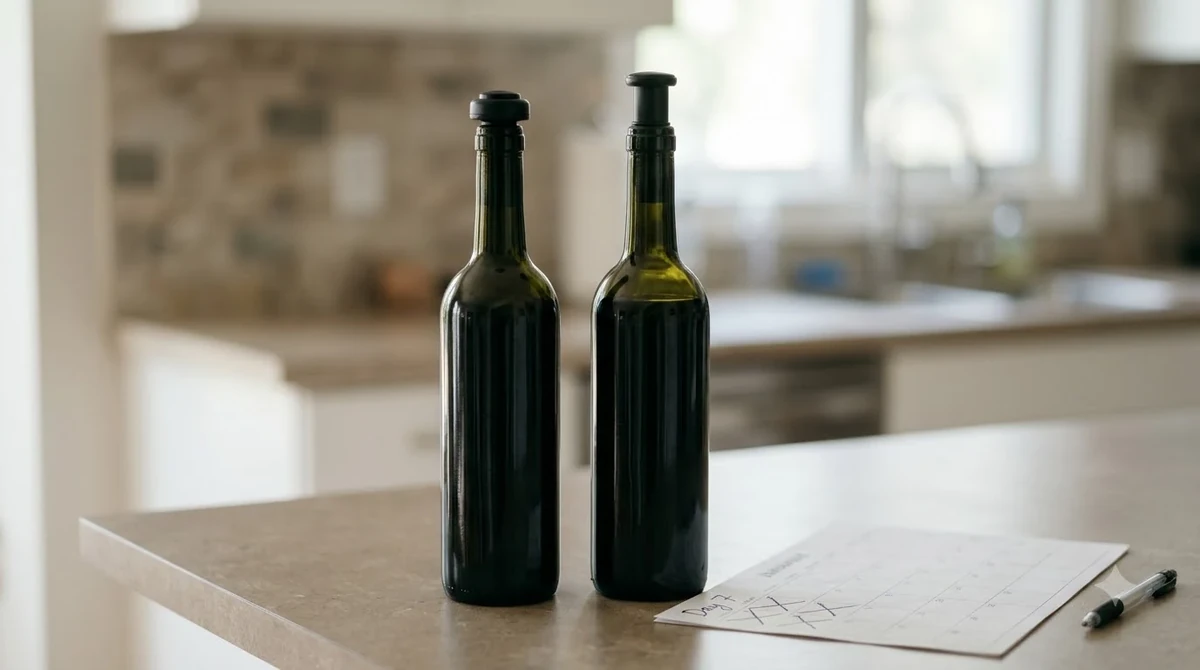
A locking mechanism designed for sparkling wine
Champagne, Cava, and Prosecco all contain dissolved carbon dioxide that produces their characteristic bubbles. Once a bottle is opened, pressure begins escaping through the neck. A conventional cork or loosely fitted stopper may cover the opening, but it does not necessarily provide the reliable closure required to retain carbonation.
The Le Creuset design uses a switch-style valve to lock the stopper in place. The rubber sealing component helps close the opening, while the mechanical action secures the accessory against the bottle neck. This arrangement is especially useful for people who regularly open sparkling wine for two or three glasses rather than serving an entire bottle at once.
Liquor.com’s assessment of the product also highlights its sealing performance. The publication evaluated the stopper using Prosecco, returning to the partially consumed bottle after approximately three days of refrigerated storage. Its assessment found that the wine had lost some effervescence but still retained noticeable bubbles and a satisfying sparkling character.
That distinction matters. No ordinary stopper can guarantee that opened sparkling wine will retain exactly the same carbonation as a freshly opened bottle. The practical objective is to slow the loss of bubbles and maintain a pleasant drinking experience for another occasion.
Solid metal construction
The metal body and black nickel finish give the stopper a more substantial character than inexpensive plastic closures. For someone who keeps a collection of bar tools on display, the finish also provides a coordinated appearance alongside metal corkscrews, wine pourers, and cocktail equipment.
Liquor.com describes the stopper as relatively heavy and sturdy in the hand. That observation supports its appeal as a durable-feeling accessory, although weight alone does not establish long-term durability. The locking mechanism, rubber seal, and moving components still require sensible handling and cleaning.
The black nickel appearance is also relatively restrained. It can complement stainless steel bar equipment, dark serving trays, and contemporary glassware without introducing an unusually decorative shape.
Useful for different sparkling-wine occasions
A dedicated sparkling-wine stopper makes sense for more than formal Champagne service. A bottle of Prosecco opened before dinner, a Cava served with appetizers, or a sparkling wine used for a weekend brunch can all leave unfinished wine behind.
For example, someone pouring two 5-ounce glasses from a 750 ml bottle may have wine remaining for another meal. A reliable closure makes it easier to refrigerate the bottle instead of feeling obliged to finish it immediately.
The accessory is particularly appealing to households that regularly serve sparkling wine but do not necessarily open multiple bottles at once. Its function is specific, but that specialization is also its main advantage.
Common Complaints
The most important limitations are its specialized purpose, relatively substantial size, mechanical attachment method, and maintenance requirements. Buyers who expect a universal stopper for every wine bottle may find that the dedicated Champagne design does not match their needs.

The attachment method takes some getting used to
Unlike a simple stopper that is placed vertically over a bottle opening, the Le Creuset Champagne Stopper uses a curved base that attaches from the side of the bottle neck. Liquor.com’s product evaluation specifically notes that the application method initially caused confusion because the reviewer expected to position it from above.
This is an important practical consideration. A first-time user should understand the shape of the base and the intended locking action before attempting to close the bottle. Once the mechanism is familiar, the switch-style design is relatively straightforward, but it is not identical to the push-in closures found on many inexpensive wine accessories.
For households where several people serve wine, this difference may be worth explaining when introducing the accessory. A guest unfamiliar with the design could otherwise attempt to force it into position incorrectly.
It is not the smallest wine accessory
At 2 x 4 x 4.5 inches, the Champagne Stopper occupies more space than a basic rubber or silicone closure. Its curved metal body is designed around a specific locking mechanism, not minimum storage size.
This may be a disadvantage in a crowded kitchen drawer. Buyers who already have several wine tools, cocktail accessories, and bottle openers should consider where they will store it between uses.
Its weight can also be a matter of preference. Some people associate a solid metal accessory with quality, while others prefer lightweight tools that can be handled and stored without much effort.
Specialized rather than universal
The Champagne Stopper is intended for sparkling wine bottles. Although Liquor.com reports that the reviewed design can also be used with still wine, its main purpose is retaining carbonation. Buyers who primarily drink Cabernet Sauvignon, Pinot Noir, Chardonnay, or Sauvignon Blanc may have little reason to choose a dedicated sparkling-wine closure.
For still wine, a vacuum stopper may be more appropriate because the main preservation concern is reducing exposure to oxygen. A dedicated sparkling-wine closure and a vacuum system solve different problems, so neither should automatically replace the other.
Hand washing requires additional attention
The product’s care instructions recommend cleaning with a damp cloth or warm, soapy water, followed by complete drying. That is a little less convenient than putting a simple dishwasher-safe accessory into a regular cleaning cycle.
There is also a practical reason to avoid careless storage. The stopper contains metal components, and Williams Sonoma recommends keeping it dry after cleaning to prevent corrosion. Moisture left around moving parts or the sealing area is not desirable.
These requirements are not especially demanding, but they matter for buyers who expect every wine accessory to be maintenance-free.
Who Should Buy and Who Should Skip
The Le Creuset Champagne Stopper is best suited to people who regularly open sparkling wine and want a reusable, mechanically secured closure. It is less compelling for occasional sparkling-wine drinkers or households that primarily need a simple solution for still wine.
Who should buy it
Regular Champagne drinkers: People who open Champagne for dinner, celebrations, or weekend entertaining can benefit from a dedicated sparkling-wine closure. Instead of finishing a bottle in one sitting, they can secure the remaining wine and refrigerate it for another occasion.
Prosecco and Cava enthusiasts: The stopper is not limited to Champagne as a style of wine. Other sparkling wines also release carbonation after opening, making a dedicated closure useful for people who regularly enjoy Italian Prosecco or Spanish Cava.
People building a coordinated bar collection: The black nickel finish and metal construction suit buyers who appreciate visually consistent bar equipment. It can sit alongside a metal corkscrew, wine pourer, and other serving accessories without looking like an inexpensive disposable tool.
Gift buyers: A dedicated Champagne stopper is a practical present for someone who already enjoys sparkling wine. It is more distinctive than a generic bottle plug and can be paired with Champagne glasses, a bottle of sparkling wine, or another wine accessory.
Who should skip it
Mostly still-wine drinkers: Someone who usually opens Bordeaux, Burgundy, Napa Valley Cabernet Sauvignon, or Oregon Pinot Noir will probably benefit more from a vacuum stopper. Those wines do not require the same carbonation-retention mechanism.
Minimalist kitchen owners: If drawer space is limited, a larger metal accessory may be less convenient than a compact silicone stopper. The dimensions and curved base should be considered before purchasing.
Infrequent sparkling-wine drinkers: Someone who opens Champagne only once or twice a year may not get enough use from a dedicated accessory. A simpler closure may be adequate for occasional entertaining.
Dishwasher-focused households: People who prefer accessories that can be placed directly in a dishwasher may find the recommended hand-cleaning routine inconvenient.
A practical buying decision
Consider how often sparkling wine appears in your household rather than choosing the accessory solely because of its brand. If a partially consumed bottle of Prosecco or Champagne is a regular occurrence, a dedicated closure can earn its place in the kitchen. If most unfinished bottles are still wines, a vacuum-based product is likely the more useful purchase.
Those comparing several wine accessories can also explore the broader Accessory Brands category to see how different closures, pourers, and preservation tools serve different needs.
How It Compares to Alternatives
Le Creuset’s dedicated Champagne Stopper competes in a different category from ordinary bottle plugs and vacuum preservation systems. The most useful comparison is not simply which product looks better, but which closure technology matches the wine being preserved.
| Accessory | Primary function | Best suited to | Main consideration |
|---|---|---|---|
| Le Creuset Champagne Stopper | Mechanical locking and airtight closure | Champagne and other sparkling wines | Dedicated sparkling-wine design |
| Le Creuset Wine Pump and 3 Stoppers | Vacuum extraction | Opened still wine | Requires a separate pump |
| Vacu Vin Wine Saver | Vacuum preservation | Opened still wine | Uses a pump and compatible stoppers |
| Rabbit Wine and Champagne Sealer | Mechanical bottle closure | People seeking a reusable general-purpose closure | Different attachment mechanism |
| OXO Perfect Seal Bottle Stoppers | Expanding bottle closure | Simple everyday bottle sealing | Does not use Le Creuset’s switch-style mechanism |
The alternatives listed above are discussed in Liquor.com’s wine-stopper recommendations. Their inclusion does not mean that every product provides identical preservation performance or is interchangeable with the Le Creuset Champagne Stopper.
Le Creuset Champagne Stopper versus a vacuum pump
The distinction between the dedicated Champagne Stopper and the Le Creuset Wine Pump and 3 Stoppers is particularly important. The Champagne model uses a locking closure to help retain carbonation. The pump system removes air from the bottle to slow oxidation in still wine.
Le Creuset describes its Wine Pump and 3 Stoppers as a four-piece set containing one pump and three universal-sized vacuum stoppers. The manufacturer states that the system can preserve the flavor and aroma of opened wine for up to a week, although actual results depend on the wine, storage conditions, and how much remains in the bottle.
The pump’s large-capacity barrel is designed to extract more air with fewer strokes. That makes it a more suitable choice for someone who regularly opens several still wines and wants to seal them for later consumption.
Le Creuset versus Vacu Vin
Vacu Vin is another recognizable option for vacuum-based wine preservation. Liquor.com includes it among its recommended wine stoppers and discusses its pump-assisted sealing approach.
The main difference is the preservation task. A vacuum pump is designed to reduce the air remaining inside a still-wine bottle, while the Le Creuset Champagne Stopper is designed around keeping a sparkling bottle closed. A person who drinks both still and sparkling wine may have a reason to own both types of accessory.
Le Creuset versus Rabbit and OXO
Rabbit and OXO represent other approaches to everyday bottle closure. Liquor.com includes the Rabbit Wine and Champagne Sealer and OXO Perfect Seal Bottle Stoppers in its recommendations. These alternatives may appeal to people looking for a different style of closure or a more straightforward accessory.
The choice depends on the bottle, the wine style, and the expected frequency of use. A sparkling-wine enthusiast should prioritize an appropriate pressure-retaining closure. A still-wine drinker may prefer a compact stopper or a vacuum system instead.
For someone who also pours wine regularly, a separate wine drip stopper can help keep the bottle neck and tablecloth cleaner. That accessory addresses pouring mess rather than preserving leftover wine, so it should be considered an additional tool rather than a substitute for a bottle closure.
Using and Caring for the Le Creuset Champagne Stopper
Correct attachment and routine cleaning help the stopper perform its intended function. The main priorities are securing the bottle closure correctly, refrigerating unfinished sparkling wine, and keeping the metal components dry after cleaning.
How to attach the stopper
- Prepare the bottle. Pour the desired amount of Champagne, Prosecco, or another sparkling wine into glasses. Keep the bottle upright on a stable surface.
- Position the stopper. Examine the curved base and approach the bottle neck from the side rather than trying to place the accessory straight down over the opening.
- Secure the attachment. Position the base as intended around the bottle neck and operate the switch-style mechanism to secure the closure.
- Check the seal. Make sure the stopper is properly seated and that the locking mechanism is engaged before moving the bottle.
- Refrigerate the bottle. Store the partially consumed sparkling wine upright in the refrigerator. A cool environment helps slow the loss of freshness and carbonation.
- Remove it carefully. Release the locking mechanism before lifting the stopper away. Avoid forcing the accessory if it does not release normally.
The curved attachment design is different from a push-in plug, so understanding its orientation is important. Liquor.com’s evaluation highlights this as the main initial learning point. Once the intended position is understood, the locking action is easier to repeat.
How to clean it
Williams Sonoma recommends cleaning the stopper with a damp cloth or warm, soapy water to remove wine deposits. After washing, dry the accessory completely and store it in a dry location.
Avoid assuming that the metal construction automatically makes the accessory suitable for dishwasher cleaning. The published care instructions recommend hand cleaning, which is the safer routine to follow for the mechanism and its sealing components.
Tip: Keep the Champagne Stopper attached to an opened bottle only while it is being stored. After finishing the bottle, wash away any wine residue, dry the accessory thoroughly, and keep it in a clean, dry drawer or bar cabinet. This simple routine helps protect the metal finish and sealing area.
How long does sparkling wine last after opening?
A stopper helps slow carbonation loss, but it does not make an opened bottle identical to a freshly opened one. For most sparkling wines, a practical refrigerated storage window is approximately 1 to 3 days, depending on the wine, the remaining carbonation, the bottle’s fill level, and how effectively it was closed.
For example, a bottle of Prosecco opened at dinner may still provide an enjoyable glass the following evening. Champagne or Cava may also retain pleasant freshness when properly sealed and refrigerated, although the amount of remaining fizz can change from bottle to bottle.
Do not confuse the manufacturer’s general preservation claims for other Le Creuset accessories with a guarantee that the Champagne Stopper will maintain every sparkling wine for a fixed number of days. The vacuum pump’s up-to-a-week statement concerns its separate still-wine preservation system.
Readers interested in the science of wine aromas and sensory differences can also explore le nez du vin and the related le nez du vin reviews for additional wine-learning equipment.
How It Compares to Other Le Creuset Wine Accessories
Le Creuset offers more than one way to close an opened bottle, and the differences between its accessories are significant. Choosing the right product depends on whether the main requirement is carbonation retention, air removal, or a combination of pouring and serving functions.
Wine Pump and 3 Stoppers
The Wine Pump and 3 Stoppers is a separate preservation system with one pump and three universal-sized vacuum stoppers. Its large-capacity barrel is designed to remove more air per stroke, and Le Creuset states that the system can preserve the flavor and aroma of opened wine for up to a week.
The package contains four pieces and has a listed length of 5 3/4 inches. Le Creuset specifies hand washing and a five-year warranty for this set. These details make it a more complete option for households that regularly store partially consumed still wines.
Its main limitation is that it requires the pump as well as the individual stoppers. Someone who only wants a quick closure for an opened bottle of sparkling wine may prefer the dedicated Champagne model.
WA163 Aerator, Pourer, and Stopper
The WA163 is another distinct accessory. Instead of concentrating exclusively on bottle preservation, it combines three functions: aerating wine during pouring, providing a controlled spout, and closing the bottle afterward.
Its instructions describe a rotating upper section that opens and closes the stopper. They also specify compatibility with cork-sealed and screw-cap bottles. The design allows wine to pass through an aeration chamber, while the pouring spout is intended to regulate the flow.
This multifunctional design is useful for people who want one accessory for serving and temporary bottle closure. However, it should not be confused with a dedicated Champagne stopper or a vacuum preservation system.
Choosing the right accessory
The easiest way to decide is to begin with the type of wine that most frequently remains unfinished.
- Champagne, Prosecco, and Cava: Choose a dedicated sparkling-wine closure designed to retain carbonation.
- Cabernet Sauvignon, Merlot, and Pinot Noir: Consider a vacuum stopper for opened still red wines.
- Chardonnay, Riesling, and Sauvignon Blanc: A vacuum system is a practical option for preserving unfinished still whites.
- Regular pouring and serving: Consider the WA163 multifunctional accessory if an integrated aerator and pourer are important.
There is no requirement to buy every accessory in the collection. A household that drinks mostly still wine may find the pump set more useful, while someone who regularly opens sparkling wine may prefer the Champagne Stopper. Matching the mechanism to the wine is more important than matching every accessory to the same brand.
Frequently Asked Questions
Can the Le Creuset Champagne Stopper be used with Prosecco?
Yes, Prosecco is a sparkling wine and benefits from a closure designed to retain carbonation. The bottle’s neck and attachment area should be compatible with the stopper’s curved base. Liquor.com’s evaluation specifically used a bottle of Prosecco when assessing the Le Creuset Champagne Stopper.
Does the Le Creuset Champagne Stopper work with screw-cap bottles?
The dedicated Champagne Stopper uses a curved locking base designed for a suitable bottle neck, so compatibility should not be assumed for every closure style. Le Creuset’s separate WA163 accessory explicitly states that it fits both cork-sealed and screw-cap bottles. These are different products with different attachment systems.
Can the Le Creuset Champagne Stopper be used for sparkling rosé?
Yes, sparkling rosé is still sparkling wine, so the same carbonation-retention principle applies. The color of the wine does not change the basic preservation requirement. The important consideration is whether the bottle neck suits the stopper’s attachment design.
Is the Le Creuset Champagne Stopper suitable for travel?
It is a reusable accessory, but its metal body and curved attachment mechanism make it less compact than a small flexible stopper. For travel, keep it protected in a padded bar-tool pouch or a secure compartment. Always transport an opened bottle upright and secured against movement.
Can a Champagne bottle be stored horizontally with this stopper?
Upright refrigeration is the more practical storage choice for an opened sparkling-wine bottle because it minimizes the amount of wine in contact with the closure. Horizontal storage can increase the chance of liquid contacting the sealing area, particularly if the bottle moves during storage. Keeping the bottle upright also makes it easier to inspect the closure before serving again.
The Le Creuset Champagne Stopper is a specialized wine accessory with a useful locking design, substantial metal construction, and a finish suited to a coordinated home bar. Its strongest case is for people who regularly open Champagne, Prosecco, or Cava and want a dedicated way to retain carbonation between servings. If most of your unfinished bottles contain still wine, the separate Le Creuset vacuum pump system is likely the more practical choice. Before buying, identify which type of wine you most often preserve and choose the closure designed for that job.
More in Wine Accessories
 Vinglace Wine Tumbler Review: A Glass-Lined Choice for Better SippingUpdated Nov 20, 2026
 ZWILLING Electric Wine Opener Review: Features and DrawbacksUpdated Nov 20, 2026
 Vinturi Electric Wine Opener Review for Easy UncorkingUpdated Nov 20, 2026
 Vinabon Wine Aerator Review for Easier, Cleaner Wine ServingUpdated Nov 20, 2026
 Vacu Vin Electric Wine Opener Review: Easy Cork Removal for Home Wine LoversUpdated Nov 20, 2026
 Rabbit Wine Accessories for Easier Home Wine ServiceUpdated Nov 20, 2026