
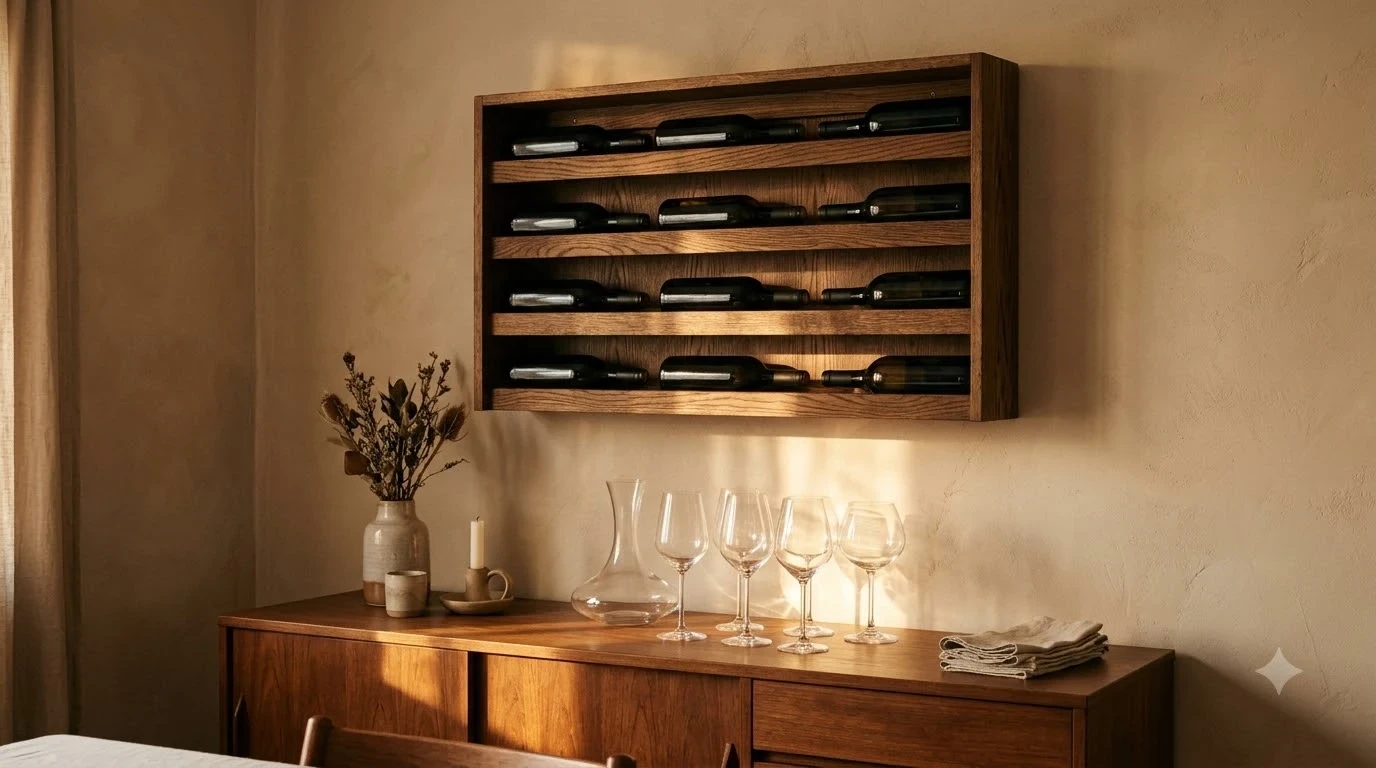

We may earn a commission when you buy through links on this page, at no extra cost to you. Learn more.
A luigi bormioli decanter is a worthwhile choice for wine drinkers who want attractive Italian glassware, practical pouring features, and a vessel designed to help wine breathe before serving. The Atelier Wine Decanter is a particularly interesting option because it combines mouth-blown construction, an anti-drip coating, and a generous 25.25-fluid-ounce stated capacity. However, the brand offers several distinct designs, so the best choice depends on your preferred appearance, available storage space, and typical wine-serving habits.
Luigi Bormioli makes several wine decanters rather than one universal model. Its range includes the Atelier, Vinea, Sublime, DOC Classic, and Vinoteque designs, with differences in proportions, capacity, appearance, and pouring features. This review examines the Atelier as a representative choice while comparing the manufacturer’s other wine-serving designs. It also considers what the available product information and customer feedback establish, where product descriptions need closer attention, and which type of wine drinker is likely to appreciate the purchase.
Specs and Key Features
The Atelier Wine Decanter combines a broad body, a relatively narrow neck, handmade construction, and an anti-drip treatment. Its design aims to provide an appropriate oxygenation surface while making wine service more controlled and presentable.
According to the Luigi Bormioli USA product listing, the Atelier model is sold individually and has a stated capacity of 25.25 US fluid ounces. It measures 8 inches across and 11.2 inches tall, giving it a substantial footprint compared with a conventional wine bottle. Those measurements matter because a wide decanter needs enough room on a dining table, serving cart, or kitchen counter.
| Specification | Atelier Wine Decanter |
|---|---|
| Brand | Luigi Bormioli |
| Collection | Atelier |
| Listed capacity | 25.25 US fl oz |
| Diameter | 8 inches |
| Height | 11.2 inches |
| Construction | Mouth-blown, handmade |
| Glass material | SON.hyx blown crystal glass |
| Pouring feature | Anti-drip coating |
| Additional uses | Wine, water, and juice |
| Dishwasher safe | Yes, according to the manufacturer |
| Country of manufacture | Europe, according to the US listing |
| Package quantity | One decanter |
One detail deserves attention before ordering: Luigi Bormioli’s international Atelier product page gives a representative packaging specification of 183 cl, or approximately 62 US fluid ounces, with a height of 287 mm and a diameter of 203 mm. That differs substantially from the 25.25-fluid-ounce US product listing. The two published specifications should not be casually treated as interchangeable. Buyers should confirm the precise product version and intended usable capacity with the retailer before purchasing, especially if a particular serving volume is important.
The manufacturer’s international description identifies SON.hyx glass, a high-tech blown crystal material, and describes the product as handmade and dishwasher safe. The US listing emphasizes the anti-drip coating and multipurpose use. These details make Atelier more than a decorative vessel: its construction and pouring features are intended to support regular serving.
The broad lower body is particularly relevant to wine service. A greater exposed wine surface allows oxygen to interact with the liquid after decanting. The neck is designed to reduce evaporation and help limit the loss of important aromas. These features are useful, although the precise effect depends on the wine itself, how much liquid is poured into the vessel, and how long it remains there.
The anti-drip treatment is another practical distinction. Rather than relying entirely on the shape of the pouring lip, the manufacturer describes a coating that helps droplets remain inside the decanter. That can make serving cleaner, particularly when pouring several glasses around a dinner table. It does not eliminate the need for a controlled pouring motion, but it addresses an everyday annoyance associated with some wide-bodied glass decanters.
For the complete manufacturer description, the official Atelier Wine Decanter specifications provide the US measurements, capacity, construction details, and care instructions. This is the most useful reference for confirming which version is being considered.
What Owners Like
The strongest reasons to consider the Atelier decanter are its handmade presentation, multipurpose design, and attention to pouring details. Available owner feedback is limited, so these advantages should be distinguished from a large-scale consensus about long-term performance.
The appearance is an obvious part of the appeal. Clear glass allows the wine’s color to remain visible, making the decanter suitable for both informal dinners and more formal table settings. A broad silhouette also gives the vessel a noticeable presence without requiring colored glass or decorative patterns. For people who prefer simple glassware, that understated design can work with different dinnerware styles.
Handmade construction adds another point of interest. The international Atelier specification identifies the decanter as mouth-blown and made using SON.hyx glass. This gives buyers a more specific description of the manufacturing approach than a generic listing that simply calls an item crystal glass. Handmade production can also introduce small variations between individual pieces, so buyers should not expect every example to be mechanically identical.
Convenience is another advantage. The US manufacturer describes the Atelier as dishwasher safe, which is appealing for households that regularly entertain or use their glassware throughout the week. A large decanter can be inconvenient to clean by hand, particularly around the bottom of its body, so dishwasher compatibility is a useful feature. However, the product’s size still makes secure positioning important.
The multipurpose design is useful beyond red wine. Luigi Bormioli identifies wine, water, and juice as suitable contents. The wide mouth also accommodates ice cubes and fruit pieces, making the decanter practical for flavored water or nonalcoholic table drinks. This additional functionality gives it a role at gatherings where not everyone is drinking wine.
There is also a practical advantage to the decanter’s intended oxygenation surface. Young wines can sometimes benefit from exposure to air before serving, particularly structured reds that initially seem tight or restrained. The Atelier’s body provides an environment for that process without requiring a complicated aeration accessory. It is a straightforward serving vessel that can make preparation feel more deliberate.
Customer feedback should be interpreted carefully. The US product page shows one review for Atelier, which is too small a sample to establish consistent owner satisfaction across different households. The available feedback includes a positive comment about the combination of elegance and a sturdy feel, but one owner’s experience cannot establish long-term performance. The limited feedback cannot prove that every buyer will find the vessel easy to handle, perfectly balanced, or resistant to accidental damage.
For a wider look at how a decanter fits into a complete serving setup, the guide to wine glasses can help identify complementary shapes and capacities. A suitable decanter is only one part of a practical wine-service arrangement; the glasses used afterward still influence how the wine is presented and enjoyed.
Common Complaints and Limitations
The main potential drawbacks of the Atelier design are its relatively large footprint, the need for careful handling, and uncertainty surrounding the different published capacity specifications. These are practical considerations rather than established patterns of product failure.
First, an 8-inch diameter requires meaningful storage space. A narrow kitchen cabinet designed for ordinary drinking glasses may not accommodate the decanter comfortably. Its 11.2-inch height also means that some cupboards and dishwasher racks may be unsuitable. Buyers should measure the available storage area rather than assuming that a wine decanter will fit wherever a large pitcher does.
Second, broad-bodied glassware can be awkward to handle when filled. The body provides a large oxygenation surface, but the combination of liquid weight and a relatively wide shape requires a secure grip. A decanter filled with wine is not particularly convenient to carry over a crowded table or hold at arm’s length while pouring. Positioning it close to the intended glasses is generally easier.
The third issue is the published capacity difference. The US Atelier listing gives 25.25 fluid ounces, whereas the international manufacturer’s Atelier description gives a 183 cl representative packaging specification. That is a meaningful difference, not a rounding variation. The international product page also identifies 183 cl as a packaging specification, while the US listing explicitly identifies 25.25 fluid ounces as the product capacity. Buyers should obtain confirmation of the exact item being supplied rather than assuming the larger figure describes the US listing.
Cleaning is another consideration, even though dishwasher compatibility is advertised. A decanter’s broad base can collect residue, particularly if red wine dries inside after serving. The opening and neck also affect how easily a hand or cleaning brush can reach the interior. Dishwasher safe does not automatically mean that every household dishwasher will hold the vessel securely or clean every area equally well.
There is also a limitation that applies to almost all glass decanters: the vessel cannot compensate for unsuitable wine or poor serving technique. A delicate older Pinot Noir may lose its more subtle aromas if left exposed for too long. Conversely, a young, tightly structured Cabernet Sauvignon may benefit from a period of aeration. The same decanting schedule should not be applied indiscriminately to both.
The anti-drip coating should also be understood as a pouring aid rather than a guarantee against spills. A rushed pour, an overly full vessel, or an awkward serving angle can still cause wine to run down the exterior. The treatment is a useful feature, but controlled handling remains necessary.
Finally, there is not enough independent owner feedback available to identify a reliable pattern of complaints about breakage, coating longevity, or long-term clarity. It would be misleading to claim that owners consistently report these problems. A sensible purchase decision should instead account for the inherent handling requirements of large glassware and the manufacturer’s actual care instructions.
Who Should Buy and Who Should Skip
The Atelier is most appropriate for people who regularly serve wine at home and appreciate glassware that combines presentation with practical features. It is less suitable for buyers who need a compact, lightweight vessel or rarely decant wine.
Wine enthusiasts who frequently open young Cabernet Sauvignon, Syrah, or other structured reds may appreciate the wide-body design. These wines can have noticeable tannin and may initially seem restrained. Giving them time in a decanter can help expose more aromas before serving. The exact duration should depend on the wine rather than a fixed rule, although young full-bodied reds commonly benefit from approximately 30 to 60 minutes of decanting.
People who entertain regularly may also appreciate the multipurpose design. One vessel can serve wine during dinner, water during a family meal, or fruit-infused drinks at a gathering. This flexibility is especially useful when the dining table needs to accommodate several types of beverages without filling the available space with separate pitchers and bottles.
Buyers who value handmade glassware are another natural audience. The Atelier’s mouth-blown construction and SON.hyx material provide identifiable manufacturing characteristics. Its clear design also works well alongside other minimalist glassware. Those who want a coordinated setting can combine it with glassware brands that share a similar aesthetic.
Who may prefer another option?
Casual drinkers who open a bottle occasionally may not need a dedicated wine decanter at all. Pouring directly from the bottle into suitable wine glasses is perfectly reasonable for many everyday wines. A decanter becomes more useful when there is a clear serving purpose, such as aerating a structured young red or separating sediment from an older bottle.
Small households with limited cabinet space should also consider the footprint. An 8-inch-wide vessel is not particularly compact, and its broad body may require a dedicated storage position. A narrower carafe may be more practical if the main objective is to transfer wine from its original bottle rather than maximize oxygen exposure.
People who regularly serve older, delicate wines should consider their habits before choosing a large aerating vessel. Mature wines can contain sediment that needs separating, but prolonged aeration may not always be desirable. A decanter with a suitable pouring shape and enough capacity for careful separation may be more important than one with an especially broad base.
Buyers who primarily serve sparkling wine should also reconsider whether a large red-wine decanter is appropriate. Champagne and other sparkling wines are generally served in dedicated sparkling glasses, and transferring them into a wide vessel can reduce their carbonation. A decanter is not a universal replacement for every type of wine-serving equipment.
For a more focused serving arrangement, consider matching your vessel to the wine styles you drink most often. The guide to red wine glasses is useful for households that primarily serve structured reds and want complementary glass shapes.
How It Compares to Alternatives
Luigi Bormioli’s other decanters provide useful alternatives for people who prefer different proportions or a different serving style. Atelier is not automatically the best choice for every household; Vinea, Sublime, and DOC Classic each have identifiable characteristics that may better suit particular requirements.
The Vinea collection is a particularly relevant comparison because its white wine decanter has a stated capacity of 25.25 fluid ounces and measures 6.8 inches across by 12.1 inches high. Compared with the US Atelier listing, Vinea has a narrower footprint and a slightly taller profile. Its manufacturer description also emphasizes mouth-blown construction, an anti-drip coating, and use for wine, water, and juice.
That narrower footprint may be attractive to people who have less space on the dining table. The Vinea design is also presented as a purpose-oriented wine-serving vessel, with attention to neck dimensions and oxygenation area. The choice between Vinea and Atelier is therefore largely about proportions and presentation rather than a completely different approach to decanting.
The Sublime decanter takes a different approach. Its international manufacturer specification gives it a capacity of 75 cl, a height of 330 mm, and a diameter of 149 mm. Its rounded shape is designed to promote oxygenation, and the manufacturer identifies it as mouth-blown, handmade, and dishwasher safe. This taller, narrower format may appeal to buyers who prefer a more sculptural centerpiece.
The DOC Classic Wine Glass Decanter is another option for people who want a straightforward design. Luigi Bormioli specifies a 0.75-liter capacity and describes it as suitable for structured red wines and complex white wines. Its flush neck is intended to encourage oxygenation while releasing aromas. That description makes it a practical alternative for someone whose priority is traditional wine service rather than the distinctive appearance of Atelier. The official DOC Classic product description provides the manufacturer’s intended wine styles and capacity.
| Model | Published capacity | Key dimensions | Standout feature |
|---|---|---|---|
| Atelier US listing | 25.25 fl oz | 8 in diameter, 11.2 in high | Handmade construction and anti-drip coating |
| Vinea White Wine | 25.25 fl oz | 6.8 in diameter, 12.1 in high | Narrower footprint and anti-drip coating |
| Sublime | 75 cl | 149 mm diameter, 330 mm high | Rounded oxygenation-focused design |
| DOC Classic | 0.75 L | Not specified in the cited product description | Flush neck and traditional wine-service design |
These specifications come from different official product pages and markets, so the table compares published descriptions rather than claiming that every product has an identical measurement method. In particular, the international Atelier specification differs from the US Atelier listing. Confirming the exact product version is important before comparing capacities.
For most buyers, the choice can be simplified. Choose Atelier if you want a broad, prominent handmade decanter with an anti-drip treatment. Consider Vinea if a somewhat narrower body suits your table better. Choose Sublime if the rounded, taller presentation is more appealing, or DOC Classic if a traditional serving shape is the main priority.
There is no need to select the largest decanter simply because it appears more impressive. A vessel that comfortably accommodates your usual serving quantity and fits your storage space is more useful than an oversized centerpiece that is difficult to clean and handle.
Frequently Asked Questions
Is Luigi Bormioli the same company as Bormioli Rocco?
Luigi Bormioli and Bormioli Rocco are distinct glassware brands associated with the broader Bormioli glassmaking business. Their product collections include different wine glasses, table accessories, and storage products. Buyers should check the exact brand and collection name rather than assuming that similarly named products share the same specifications.
Does a decanter need to be completely dry before wine is added?
Yes, allowing the interior to dry thoroughly is preferable before adding wine. Residual rinse water can dilute a small quantity of wine and may leave unwanted odors if the vessel has been stored damp. After cleaning, allow sufficient airflow through the opening and neck before putting the decanter away.
Can a wine decanter be used for homemade sangria?
A multipurpose glass decanter can be used for sangria if its opening accommodates the fruit pieces and the vessel has sufficient capacity. Luigi Bormioli specifically identifies ice cubes and fruit pieces as suitable for the wide opening of its Atelier design. For recipes containing substantial quantities of fruit, a larger pitcher may be more convenient.
Should wine be poured into a decanter in one continuous motion?
For a young wine being aerated, a steady pour is generally convenient and helps avoid unnecessary splashing. For an older bottle containing sediment, pouring should be slower and more controlled so that the deposit remains in the original bottle. A light source behind the bottle neck can help identify when sediment approaches the opening.
Can a decanter be used to serve nonalcoholic wine?
Yes. A glass wine decanter can also serve nonalcoholic wine, sparkling grape beverages, and other suitable drinks. The main consideration is whether the drink benefits from exposure to air and whether the vessel’s opening and capacity suit the serving requirements. Carbonated drinks should generally be transferred carefully to preserve as much fizz as possible.
The Luigi Bormioli Atelier is an appealing choice for households that want handmade glassware, an anti-drip feature, and a versatile wine-serving design. Its broad body and dishwasher-safe construction make it practical for regular entertaining, although the footprint and inconsistent published capacity specifications deserve attention before ordering. Compare the Atelier with Vinea, Sublime, and DOC Classic, then choose the shape that best fits your wine habits, storage space, and preferred table presentation.
More in Wine Glasses
 Zwiesel Glas Champagne Flutes for Durable Everyday Sparkling WineUpdated Nov 20, 2026
 Vera Wang Crystal Wine Glasses: Design, Quality and Buying AdviceUpdated Nov 20, 2026
 West Elm White Wine Glasses: Compare Designs for Better Everyday Wine ServiceUpdated Nov 20, 2026
 Zalto Stemless Wine Glasses: Discover Their Distinctive DesignsUpdated Nov 20, 2026
 Viski Champagne Glasses That Match Your Style and Sparkling WineUpdated Nov 20, 2026
 Vista Alegre Decanter Review: Crystal Style and Wine ServiceUpdated Nov 20, 2026