

We may earn a commission when you buy through links on this page, at no extra cost to you. Learn more.
The costco decanter worth examining is the Rabbit Wine Decanter, a 750 ml borosilicate glass vessel with a sediment strainer, aerating funnel, and acacia wood coaster. Its wide base and included accessories make it a practical option for serving a full bottle of wine at dinner or during a small gathering. However, its 8-inch footprint, hand-wash-only care, and lack of a stated stopper make it less suitable for buyers who prioritize compact storage or covered wine service.
Costco’s wine-accessory selection includes several decanter styles, from practical glass designs to handmade crystal pieces. The Rabbit model stands out because it combines filtration and aeration in one serving setup. Rather than evaluating it solely by appearance, buyers should consider its capacity, pouring arrangement, cleaning requirements, and compatibility with the wines they actually drink. This review examines the Rabbit model listed by Costco and compares its features with other decanters available through the retailer.
Specs and Key Features
The Rabbit Wine Decanter is designed to hold one standard 750 ml bottle and includes separate components for filtering and aerating wine. Its wide glass body, removable accessories, and wooden coaster give it a more elaborate setup than a basic glass carafe.
Costco identifies the product as item 1454123, model B201116. The main vessel is made from borosilicate glass, while the included package contains a micro-perforated strainer, an aerating funnel, and an acacia wood coaster. The strainer is intended to catch sediment and other impurities during pouring. The funnel directs wine across the inside of the glass, creating the waterfall-style flow described in the product listing. Buyers can review the Costco Rabbit Wine Decanter specifications for the listed package contents and dimensions.
The following specifications come from Costco’s product description. They provide a useful starting point for assessing whether the decanter will fit a particular serving routine.
| Specification | Rabbit Wine Decanter |
|---|---|
| Brand | Rabbit |
| Product item | 1454123 |
| Model | B201116 |
| Material | Borosilicate glass |
| Capacity | 750 ml / 25.36 fl. oz. |
| Length | 8 inches |
| Width | 8 inches |
| Height | 11.25 inches |
| Strainer | Micro-perforated |
| Aeration accessory | Separate aerating funnel |
| Coaster | Acacia wood |
| Cleaning | Hand wash only |
| Country of manufacture | China |
The 750 ml capacity is particularly useful because it corresponds to one standard wine bottle. That means buyers can transfer an entire bottle without dividing it between two vessels. It also provides enough room for a conventional serving routine, although the actual available headspace depends on the amount of wine poured and the position of the accessories.
The dimensions deserve attention. An 11.25-inch height is manageable on most dining tables, but the 8-inch width and length require more storage room than a slim-necked carafe. Buyers should measure cabinet openings and shelves rather than assuming that a decanter will fit simply because its capacity is similar to other models.
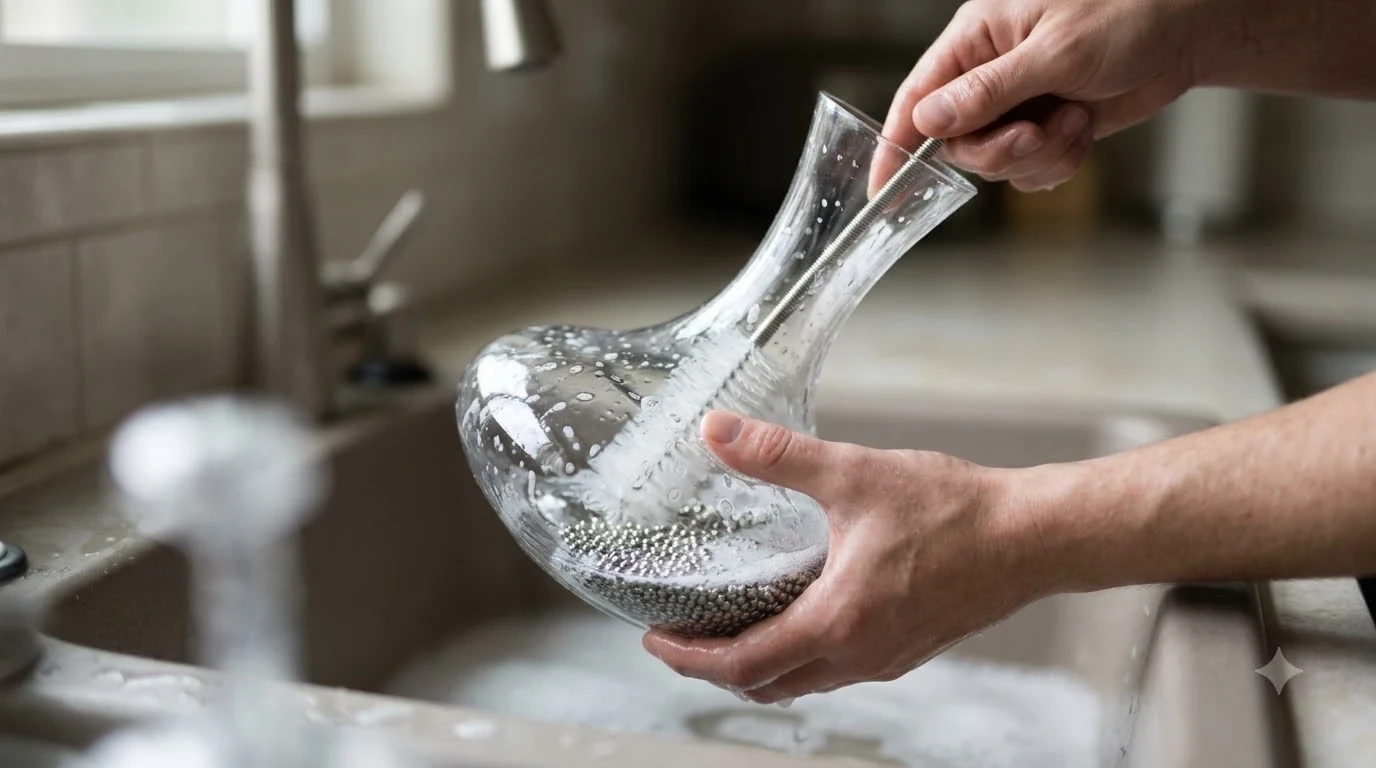
The glass construction is another important detail. Borosilicate glass is commonly used in glassware designed for practical everyday use, but buyers should not interpret the material description as a guarantee against breakage. The wide body, funnel, and strainer also create several separate surfaces that need cleaning after use.
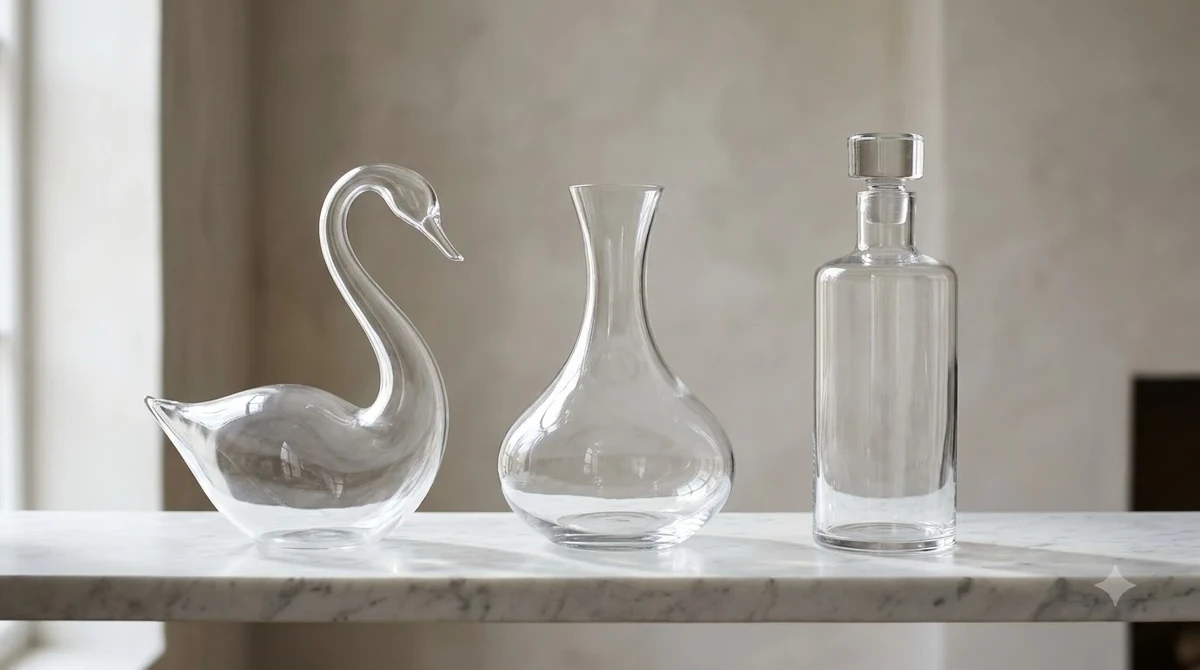
One distinction matters when comparing this model with other Costco listings: the Rabbit is not the same product as the Riedel Ultra or Riedel O decanters. Those products have different materials, capacities, shapes, and care instructions. A comparison should therefore consider the actual model rather than treating every Costco decanter as interchangeable.
What Owners Like
The Rabbit design’s strongest selling points are its included accessories, one-bottle capacity, and convenient serving arrangement. It combines several useful functions without requiring buyers to purchase a separate sediment filter or aerating accessory.
The wide base is a practical feature for people who prefer a stable serving vessel. A decanter that stands securely on a dining table is easier to use during a meal than an unusually tall design with a narrow base. The broad shape also gives wine a larger exposed surface, which is useful when the goal is aeration rather than simply transferring wine from another container.
The separate funnel is another appealing part of the design. Costco describes a waterfall-style flow that spreads wine across the interior of the glass. This gives the wine more contact with air during the transfer than a simple direct pour into a narrow-necked vessel might provide.
The included micro-perforated strainer adds a different function. Some mature red wines develop sediment as tannins and pigments settle over time. Filtering during a careful pour can help keep those particles out of the serving vessel. This is particularly useful when opening an older bottle that has been stored horizontally.
The acacia wood coaster also gives the set a defined place on the table. Beyond appearance, it is intended to catch drips and protect the surface underneath the glass vessel. That can be useful during dinner parties, especially when guests are pouring wine at the table rather than using a separate serving station.
There is also a convenience advantage in the 750 ml capacity. A household that usually opens one bottle for two to four people can transfer the full contents into the decanter without making multiple trips between the bottle and the table. The vessel can then be used for controlled pours throughout the meal.
Chowhound’s coverage of the Costco Rabbit model highlights its combination of borosilicate glass, strainer, and wood coaster. The publication also discusses customer feedback, including positive comments about its appearance and functionality. Those observations support the idea that the included accessories are part of the product’s appeal, although individual ownership experiences should not be treated as a guarantee of performance. Its comparison of the Costco Rabbit and Williams Sonoma decanters also discusses differences in footprint and reported accessory complaints.
Another positive feature is that the design makes the process visible. Guests can see wine pass through the funnel and spread through the glass body. For someone who enjoys serving wine as part of a dinner presentation, this can make an ordinary bottle service feel more deliberate.
Still, the most meaningful advantage is functional rather than decorative. A decanter should make wine easier to serve, help separate sediment when necessary, or provide useful aeration. The Rabbit offers equipment for all three activities, which makes it more versatile than a decorative vessel that has no filtration or aeration accessories.
Common Complaints
The Rabbit’s most important compromises involve storage space, manual cleaning, and the number of separate components. Buyers who want a simple vessel that can be rinsed quickly and placed in a cabinet may prefer a more basic decanter.
First, the 8-by-8-inch footprint is relatively substantial. A small kitchen cabinet may have enough vertical clearance for the 11.25-inch height but insufficient shelf depth for the wide base. The coaster also needs a separate storage location when the set is not being used.
Second, Costco specifies hand washing only. This is a meaningful consideration for households that put most kitchen glassware into a dishwasher. The vessel’s broad interior, funnel, and fine strainer require individual attention, and residue can remain around the accessory openings if they are not rinsed thoroughly.
Third, the product listing does not specify an included stopper. Chowhound’s discussion of customer feedback also mentions complaints about missing accessories, including a stopper or pour spout. Buyers who want to cover wine between servings should not assume that these components come in the package.
The lack of a stated stopper matters most when a bottle is not finished during the meal. A decanter is primarily a serving vessel, not a complete wine-preservation system. Once wine has been transferred, exposure to air continues unless the vessel is covered and stored appropriately.
The strainer also requires realistic expectations. Its micro-perforated construction can catch sediment and larger particles, but it should not be treated as a guarantee that every undesirable substance or fine particle will be removed. Proper pouring technique remains important, particularly with older bottles that contain a substantial deposit.
The aerating funnel may also be more equipment than some casual wine drinkers need. Most everyday wines can be poured directly from the bottle. A separate funnel and strainer are useful additions when their functions are regularly needed, but they create extra washing and assembly work after each use.
Another potential drawback is that the product is listed as online-only by Costco. Availability may differ between warehouses and the online store. A listing that appears in a retailer’s catalog does not guarantee that the item can be ordered or delivered to every location.
Finally, the glass construction requires careful handling. The wide base may help with stability during serving, but the vessel is still glassware. A crowded sink, a hard countertop, or careless storage beside heavier cookware can lead to accidental damage. Buyers should make sure there is enough room to wash and dry the decanter without knocking it against other dishes.
Who Should Buy and Who Should Skip
The Rabbit decanter makes the most sense for wine drinkers who regularly serve full bottles, appreciate sediment filtration, and have enough storage room for a wide 750 ml vessel. It is less appealing to people who rarely decant wine or prefer dishwasher-safe glassware.
Who should consider it
Red wine drinkers: People who frequently open Cabernet Sauvignon, Syrah, or other structured reds may appreciate the aerating arrangement. Young, tannic wines can benefit from exposure to air, although decanting does not change the wine’s fundamental structure or guarantee a softer taste.
Collectors who open mature bottles: Older wines can develop sediment, making a decanter with a strainer useful for careful serving. The important advantage is the ability to separate the clear wine from the deposit rather than allowing particles to enter the glasses.
Hosts who serve one bottle at a time: The 750 ml capacity is convenient for dinner parties and family meals. One standard bottle can be transferred to the vessel, allowing guests to serve themselves without repeatedly handling the original bottle.
People who enjoy presentation: The glass body, gold-toned accessory appearance, and acacia coaster give the Rabbit a more decorative presence than a plain kitchen carafe. It can serve as a centerpiece for a dinner table without requiring a separate display stand.
Who should skip it
Small-kitchen households: An 8-inch footprint can be inconvenient in crowded cabinets. A narrower decanter may be easier to store and handle if available shelf space is limited.
Dishwasher-dependent households: Costco’s hand-wash-only instruction makes this a poor fit for buyers who want low-maintenance glassware. A simpler vessel with fewer accessories may be easier to clean.
Occasional wine drinkers: Someone who opens a bottle only a few times each month may not need a dedicated aerating funnel and sediment strainer. A basic glass carafe can provide a practical alternative for occasional serving.
People who prioritize wine preservation: The listing does not establish that the Rabbit includes a sealed stopper or vacuum-preservation accessory. Buyers who regularly leave wine unfinished should consider a separate preservation solution.
Owners of delicate older wines: A wide aerating design is not automatically ideal for every bottle. Very old Pinot Noir, aged Rioja, and other delicate reds can lose their more subtle aromas after excessive air exposure. These wines often need careful handling and prompt service rather than extended aeration.
The choice also depends on the glassware used alongside the decanter. A good decanter cannot replace suitable serving glasses. People building a complete setup may want to compare wine glasses that offer appropriate bowl shapes for their preferred varieties.
How It Compares to Alternatives
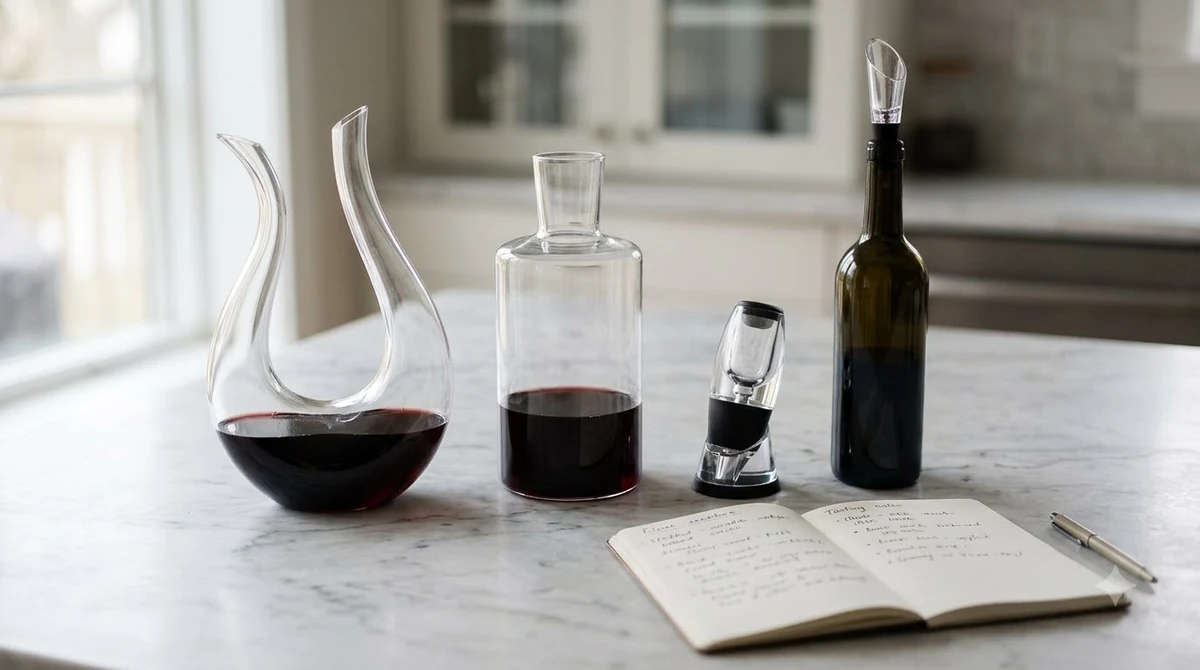
Costco’s decanter selection includes several distinct designs, so the Rabbit should be compared with products that serve similar purposes. The main differences involve capacity, construction, appearance, filtration, and the amount of space required.
The Riedel Ultra Single Decanter is a more traditional premium-style alternative. Costco describes it as a handmade, mouth-blown lead-crystal vessel with a 43.4-ounce capacity and a height of 8.37 inches. Its larger stated capacity provides more room than the Rabbit’s 750 ml vessel, while its crystal construction and simpler accessory arrangement appeal to a different buyer.
The Riedel O Wine Decanter offers another alternative. Costco lists its capacity as 34.5 fluid ounces, approximately the volume of a standard 750 ml bottle, and its height as 8 7/8 inches. The product is hand-blown lead crystal, with an upward well at the bottom designed to increase oxygenation.
These Riedel products are not direct equivalents to the Rabbit. They emphasize crystal construction and vessel design, whereas the Rabbit includes a dedicated strainer and aerating funnel. The choice depends on whether the buyer values an integrated accessory system or a more traditional decanter.
The comparison below uses the specifications published by Costco. It does not assume that a larger vessel or more expensive-looking construction automatically produces better wine.
| Feature | Rabbit Wine Decanter | Riedel Ultra | Riedel O |
|---|---|---|---|
| Capacity | 750 ml | 43.4 fl. oz. | 34.5 fl. oz. |
| Material | Borosilicate glass | Lead crystal | Lead crystal |
| Height | 11.25 in. | 8.37 in. | 8.875 in. |
| Construction | Glass vessel with accessories | Handmade, mouth-blown | Hand-blown |
| Strainer | Included | Not specified | Not specified |
| Aeration feature | Separate funnel | Wide decanter design | Upward base well |
| Care | Hand wash only | Hand wash recommended | Hand wash |
The Rabbit is the most accessory-focused option among these three. Its strainer is a useful distinction for people who regularly serve mature wines with sediment. The aerating funnel is also a separate component, making the pouring process different from simply transferring wine into an open vessel.
The Riedel Ultra is a better comparison for buyers who want a larger crystal decanter. Its 43.4-ounce capacity provides considerably more volume than the Rabbit, although that additional capacity is not necessary for every household. People who usually serve a single 750 ml bottle may find the Rabbit’s size more appropriate.
The Riedel O offers a more compact crystal alternative by height. Its 34.5-ounce capacity is close to a standard bottle’s volume, while the upward base well is intended to support oxygenation. Its construction and care instructions differ from those of the Rabbit, so buyers should compare handling requirements as well as appearance.
There is also a broader glassware consideration. The decanter is only one part of wine service, and the shape of the glass affects how aromas reach the drinker. People who serve Cabernet Sauvignon and other structured reds may find a dedicated set of red wine glasses a useful addition. Those who primarily serve sparkling wine will have different priorities and may prefer purpose-designed champagne flutes.
For shoppers comparing the wider manufacturer selection, Costco’s Glassware Brands category is another useful place to consider how different serving pieces fit together. The right combination depends on the wines served, available storage, and cleaning preferences.
One final point is important: decanter shape alone does not determine how much a wine improves. Young, tannic Cabernet Sauvignon, Petite Sirah, and Nebbiolo can benefit from 30 to 60 minutes of aeration. Older, delicate reds generally require more careful handling and should be served soon after a gentle transfer. These differences matter more than choosing a vessel solely for its visual design.
Frequently Asked Questions
Does the Rabbit Wine Decanter come with a lid?
Costco’s listed package contents include the glass vessel, micro-perforated strainer, aerating funnel, and acacia wood coaster. A stopper or lid is not identified among those included components. Buyers who want to cover transferred wine should confirm accessory availability before purchasing.
Can the Rabbit decanter be used for white wine?
Yes, the glass vessel can hold white wine as well as red wine. Full-bodied Chardonnay and certain aromatic whites may benefit from brief aeration, while crisp Sauvignon Blanc and delicate whites are often better served directly from the bottle. Chilling the vessel before serving can also help maintain an appropriate serving temperature.
Does the strainer remove cork pieces?
The micro-perforated strainer is designed to catch impurities and sediment, so it can also help intercept larger pieces of broken cork during pouring. However, Costco does not publish a specific particle-size rating or filtration guarantee. Carefully opening the bottle remains the better way to prevent cork fragments from entering the wine.
Can the decanter be used for nonalcoholic wine?
The vessel can hold nonalcoholic wine as well as conventional wine. The same basic considerations about cleanliness, aeration, and serving temperature apply. Because nonalcoholic wines vary considerably in composition and carbonation, avoid assuming that every style will respond to aeration in the same way.
Should the decanter be preheated or chilled before use?
Neither is generally necessary for ordinary red wine service. A room-temperature, clean vessel is suitable for most reds, while chilling the glass briefly can be useful for serving white wine. Avoid sudden temperature changes, which can place unnecessary stress on glassware.
The Rabbit Wine Decanter is a functional Costco option for buyers who want one-bottle capacity, sediment filtration, and an integrated aerating funnel. Its broad footprint and hand-washing requirement are genuine trade-offs, but the included accessories make it more versatile than a basic serving carafe. Choose it if those features match your wine routine; otherwise, a simpler glass decanter or one of Costco’s Riedel alternatives may be a better fit.
More in Wine Glasses
 Zwiesel Glas Champagne Flutes for Durable Everyday Sparkling WineUpdated Nov 20, 2026
 Vera Wang Crystal Wine Glasses: Design, Quality and Buying AdviceUpdated Nov 20, 2026
 West Elm White Wine Glasses: Compare Designs for Better Everyday Wine ServiceUpdated Nov 20, 2026
 Zalto Stemless Wine Glasses: Discover Their Distinctive DesignsUpdated Nov 20, 2026
 Viski Champagne Glasses That Match Your Style and Sparkling WineUpdated Nov 20, 2026
 Vista Alegre Decanter Review: Crystal Style and Wine ServiceUpdated Nov 20, 2026