

We may earn a commission when you buy through links on this page, at no extra cost to you. Learn more.
A ralph lauren decanter is a luxury crystal serving piece that combines decorative design with practical wine presentation, making it an appealing choice for formal dining rooms, home bars, and thoughtful gifts. Ralph Lauren Home offers several designs, including the Langley, Ashton, Coraline, and Ethan decanters, with different proportions, decorative details, and materials. The best choice depends on whether you prioritize lead-free crystal, a distinctive silhouette, usable capacity, or a statement piece for entertaining. These decanters also require more careful cleaning than ordinary everyday glassware.
A decanter has two jobs: it provides an attractive way to serve wine and, when its shape and capacity are suitable, gives wine an opportunity to interact with oxygen. Ralph Lauren approaches the category primarily through refined materials and recognizable design details. Its collection includes understated contemporary shapes, engraved branding, decorative cuts, and vintage-inspired profiles. However, an attractive vessel is not automatically the best technical choice for every bottle of wine. This review examines the available product specifications, practical advantages, limitations, and everyday considerations so buyers can make an informed decision.
Specs and Key Features: Comparing Ralph Lauren Decanter Models
Ralph Lauren Home offers several distinct decanter designs, and their dimensions make a meaningful difference to presentation, storage, and handling. The Langley and Ashton models are particularly useful reference points because the manufacturer publishes specific measurements, construction details, and care instructions for both.
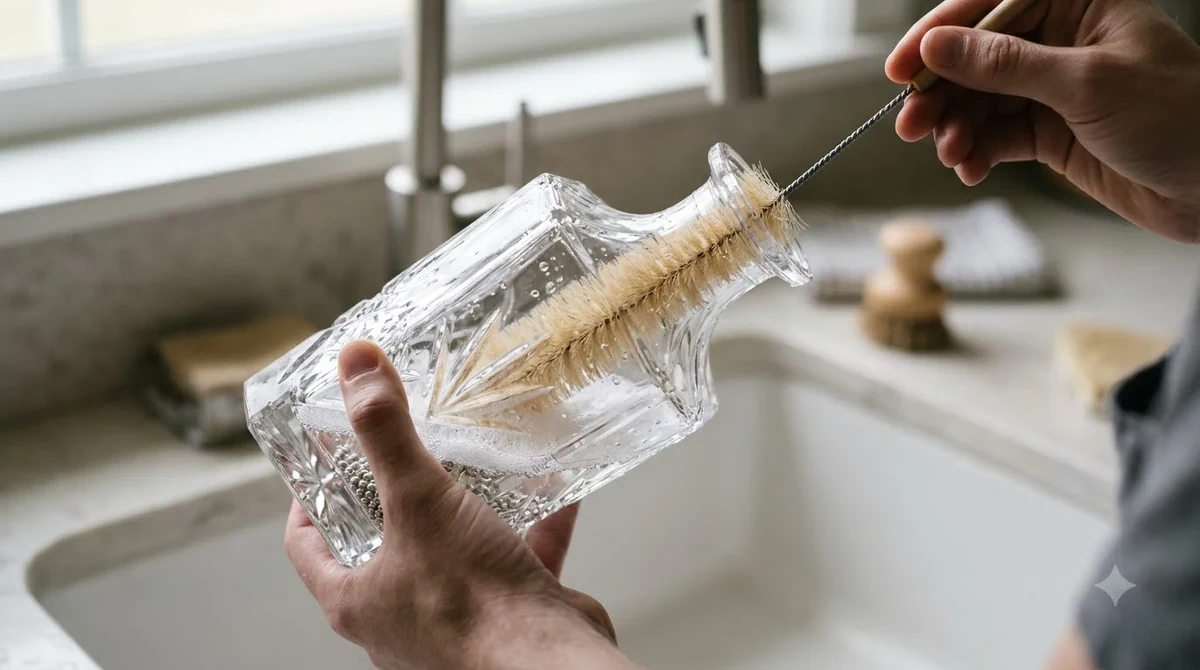
The Langley is a tall, decorative crystal design with coin-edge-inspired cuts, while the Ashton uses a shorter profile and a prominent stacked RL logo. Coraline takes a more delicate, faceted approach, and Ethan offers a vintage-inspired silhouette with fire-polished edges. These differences make the collection more varied than a single branded glass bottle with several interchangeable decorations.
| Model | Published dimensions | Material | Distinctive feature |
|---|---|---|---|
| Langley | 5.5-inch diameter × 13.25-inch height | 100% lead-free crystal glass | Coin-edge-inspired cuts |
| Ashton | 4.75-inch diameter × 7-inch height | 100% lead-free crystal glass | Stacked RL logo and etched band |
| Coraline | 4.5-inch diameter × 10.5-inch height | 100% lead-free crystal glass | Decorative facets |
| Ethan | 3.75-inch diameter × 12.25-inch height | Glass, as described by the manufacturer | Vintage-inspired silhouette and fire-polished edges |
These specifications reveal different priorities. Langley is the tallest of the four listed designs, standing 13.25 inches high, so cabinet clearance and shelf spacing deserve attention. Ashton is considerably shorter at 7 inches, making it a more compact option for a crowded serving area. Its stated 30.25-fluid-ounce capacity is also a useful published specification for buyers who want to understand its intended serving function.
Material descriptions deserve particular attention. Ralph Lauren explicitly identifies Langley, Ashton, and Coraline as 100% lead-free crystal glass. Ethan is described as finely crafted glass, with the manufacturer highlighting its handmade construction in Poland and fire-polished edges. Buyers should not assume that every item in a branded collection has identical glass composition simply because the designs share a manufacturer.
The Langley product description emphasizes the weight and clarity of its crystal, with decorative cuts inspired by the detailing of a Ralph Lauren watch. This is an important part of its visual identity: rather than relying on a large logo, it uses a repeated surface detail to create a more understated luxury appearance.
Ashton takes the opposite approach. Its stacked RL emblem is a defining feature, accompanied by a decorative etched band. Someone who wants the brand to be immediately recognizable may prefer this design over the more restrained Langley. Both are specified as lead-free crystal and require hand washing.
For a broader understanding of the category, compare these designs with the options covered in our guide to Glassware Brands. A decanter is a separate purchase from drinking glasses, but coordinating the two can make a home bar or dining table feel more consistent.
What Owners and Buyers May Appreciate
The strongest appeal of Ralph Lauren decanters is their combination of decorative detailing, recognizable design language, and functional serving-vessel proportions. The manufacturer emphasizes crystal clarity, distinctive silhouettes, and presentation, giving buyers a choice between subtle ornamentation and more obvious branding.
The Langley is especially appealing to people who appreciate restrained decoration. Its coin-edge-inspired cuts provide visual interest without requiring a prominent logo across the center of the vessel. Its 13.25-inch height also creates a noticeable presence on a dining table or bar cabinet. The embossed presentation box adds to its suitability as a special-occasion gift.
Ashton offers a different kind of appeal. Its 7-inch height and 30.25-fluid-ounce capacity make it a more compact option, while the stacked RL emblem provides an identifiable decorative feature. Buyers who enjoy coordinated barware may find its visual language easier to match with other branded serving accessories.
Crystal clarity and decorative presentation
Clear glass allows the color of wine to remain visible during serving. This is useful with a deep-colored Cabernet Sauvignon, a translucent Pinot Noir, or an older red wine whose appearance has changed during bottle aging. A transparent vessel also allows the host to observe sediment while pouring, although good lighting and careful technique remain necessary.
Decorative crystal can add another dimension to a table setting. Cut surfaces catch light differently from smooth glass, and an etched design can create visual detail without adding color. Langley’s repeated cuts and Coraline’s facets offer two examples of how Ralph Lauren uses surface decoration to distinguish otherwise clear vessels.
Gift presentation
A decanter can be a more personal gift than an ordinary bottle of wine because it remains useful after the wine has been consumed. Ralph Lauren’s embossed presentation box makes several of its models suitable for weddings, anniversaries, housewarmings, and milestone celebrations.
The choice of design should reflect the recipient’s home and entertaining habits. A person with a traditional dining room may appreciate the more decorative Langley or Ethan silhouette, while someone with a contemporary bar might prefer Ashton’s shorter proportions and visible RL branding. Coraline provides another option for buyers who favor faceted glass rather than a strongly branded surface.
Practical serving potential
A decanter should be judged by more than its appearance. Its opening needs to accommodate pouring, its base should provide stability, and its interior should be accessible enough for cleaning. Its capacity should also be appropriate for the quantity of wine being served.
Ashton’s published capacity of 30.25 fluid ounces is a concrete advantage for evaluating its intended use. Langley, Coraline, and Ethan have published dimensions in the cited product information, but those measurements should not be confused with an independently verified liquid capacity. A tall vessel is not necessarily more practical than a shorter one, particularly if its opening is narrow or its center of gravity makes handling less comfortable.
Common Complaints and Practical Limitations
The main drawbacks to consider are maintenance, storage, handling, and the difference between decorative luxury and actual wine-serving performance. Ralph Lauren’s published specifications provide useful material and size information, but they do not establish that every design offers superior aeration or makes wine taste better than a conventional decanter.
Hand washing is an important limitation for buyers accustomed to putting most household glassware in a dishwasher. Langley, Ashton, Coraline, and Ethan all have manufacturer instructions specifying hand washing. This adds time after entertaining and requires a suitable place for drying and storage.
Hand washing requires additional care
Crystal surfaces can develop visible water spots, particularly when hard water leaves mineral deposits behind. Decorative cuts also create more surfaces where dried wine or cleaning residue may remain. A quick rinse that leaves liquid inside the vessel can therefore cause problems if the decanter is put away before it is fully clean and dry.
The taller Langley deserves particular attention. At 13.25 inches high, it may not fit comfortably beneath every kitchen faucet or inside every sink. Buyers should consider the available washing area before choosing a tall design. The shorter Ashton may be easier to accommodate in a smaller kitchen, although its opening and interior still determine how conveniently it can be cleaned.
Fragility and handling
Crystal is not immune to chips, scratches, or breakage. A decorative decanter can be more difficult to handle than a simple glass carafe, particularly when it is filled with wine and needs to be carried from a kitchen counter to a dining table.
Pay attention to the weight of the vessel, its grip points, and the shape of its base. A broad base can provide useful stability, but it also occupies more cabinet and serving-table space. A narrow profile can be convenient for storage but may require more deliberate handling when pouring.
Decorative value is not the same as aeration performance
A common purchasing mistake is assuming that an expensive or elaborately cut decanter necessarily improves wine more effectively. Aeration depends on several factors, including the vessel’s exposed wine surface, the quantity poured, and the time spent in contact with air.
A decorative decanter may be perfectly suitable for serving wine without being optimized for maximum oxygen exposure. Someone who regularly opens young, structured Cabernet Sauvignon may prefer a design with a broad base and a generous wine surface. Someone who primarily serves older Pinot Noir may prioritize controlled pouring and sediment separation instead.
There is also a practical limitation concerning old wines. A fragile bottle can lose its aromas relatively quickly after exposure to air. The purpose of decanting an older wine is often to remove sediment rather than leave it aerating for an extended period.
For that reason, the buying decision should begin with intended use. A display-oriented vessel may be the right purchase for a formal home bar, but a dedicated working decanter could be more appropriate for someone who regularly serves a range of wine styles.
Who Should Buy and Who Should Skip a Ralph Lauren Decanter
A Ralph Lauren decanter makes the most sense for buyers who value branded crystal presentation and want a serving piece that contributes to the appearance of a dining room or home bar. It is less compelling for people whose primary requirement is inexpensive, low-maintenance wine aeration.
Who should consider buying one
People furnishing a formal entertaining area are natural candidates. A Langley or Coraline design can complement traditional table settings, while Ashton offers a more compact decorative statement. Ethan provides another silhouette for someone who prefers a vintage-inspired appearance.
Gift buyers may also appreciate the collection. A decanter is useful beyond one particular occasion, and the Ralph Lauren presentation packaging makes the product feel appropriate for a substantial celebration. For someone who already owns coordinating glassware, a matching serving accessory can be a thoughtful addition.
Collectors of branded home accessories may find the design details particularly appealing. The Langley collection connects its decoration to the coin-edge detailing of a watch, while Ashton makes the RL initials a central feature. These details provide a recognizable visual identity without requiring the same design approach across every product.
Who should consider alternatives
Buyers who want a decanter for frequent everyday use may be better served by a simpler, easier-to-clean glass vessel. A basic carafe can provide sufficient space for pouring and aeration without requiring the same degree of care associated with decorative crystal.
People with limited cabinet clearance should be cautious about taller models. Langley’s 13.25-inch height and Ethan’s 12.25-inch height can be inconvenient in cabinets with fixed shelves. Measure the intended storage area before making a decision.
Buyers who need a clearly specified capacity should also compare manufacturer documentation carefully. Ashton has a published 30.25-fluid-ounce capacity, but the cited Langley, Coraline, and Ethan descriptions do not provide equivalent capacity figures. This does not make those designs unsuitable, but it limits direct capacity comparisons.
Consider your wine-drinking habits
If most of the wines you serve are young, full-bodied reds, a decanter with a suitable base and opening may be more useful than one selected only for its decoration. Young Cabernet Sauvignon and Nebbiolo, for example, can benefit from approximately 30 to 60 minutes of aeration when they initially seem closed.
If your collection includes older Bordeaux, mature Rioja, or aged Pinot Noir, sediment handling and careful pouring may be more important. These wines should not automatically receive extended aeration simply because they are old.
Buyers who regularly serve sparkling wine should remember that decanting is generally not the normal serving method for Champagne or Prosecco. Preserving bubbles is usually more important than increasing exposure to air. A dedicated set of champagne flutes is more appropriate for those occasions.
How It Compares to Alternatives
Ralph Lauren decanters compete in a category where appearance, construction, ease of cleaning, and wine-serving function all matter. The most useful comparison is not simply between expensive and inexpensive vessels, but between the priorities each type of decanter serves.
Decorative crystal versus a basic glass carafe
A conventional glass carafe can perform the essential job of holding and pouring wine. It may be easier to replace, less demanding to store, and more practical for frequent use. Its appearance is often simpler, however, and it may not offer the decorative presence of a cut crystal Ralph Lauren design.
For a person who decants wine several times a week, practicality can outweigh ornamentation. A basic carafe with a broad base and accessible opening may be easier to clean after repeated use. For occasional entertaining, a decorative crystal piece may provide more visual value.
Lead-free crystal versus lead crystal
Material specifications are another important point of comparison. Langley, Ashton, and Coraline are explicitly described by Ralph Lauren as 100% lead-free crystal glass. This makes their stated composition straightforward for buyers who specifically want a lead-free option.
Older crystal products and some traditional decorative vessels may contain lead. The material distinction is important because the word crystal alone does not identify a product’s exact composition. Buyers should assess the manufacturer’s stated material rather than assume all crystal glass is equivalent.
Wide-base decanters versus narrow-profile designs
For aeration, the shape of the decanter influences the amount of wine exposed to air. A wider base generally offers a greater exposed surface when the same quantity of wine is poured into it. A tall, narrow vessel can still be useful for presentation and serving, but may offer less surface exposure.
The shape should also match the wine. A young, tannic red may benefit from a broader surface and a period of aeration. A mature wine that mainly needs sediment separation is better handled with a careful, controlled pour rather than unnecessary agitation.
Coordinating with wine glasses
A decanter is only one part of the serving setup. The glasses used afterward should suit the wine and provide enough room to evaluate its aromas. A Bordeaux-style glass works well for structured Cabernet Sauvignon, while a more rounded bowl is often chosen for Pinot Noir.
Explore our guides to wine glasses and red wine glasses when building a coordinated serving collection. Matching every item is not essential, but consistency in glass quality and overall presentation can make a dining setup more attractive.
The practical verdict is that Ralph Lauren’s strongest distinction is design rather than a documented technical advantage in wine aeration. Buyers who value lead-free crystal construction, refined decoration, and recognizable branding have clear reasons to consider the collection. Those who primarily want a workhorse decanter should compare simpler shapes and cleaning requirements before choosing.
Frequently Asked Questions
Can a Ralph Lauren decanter be used for whiskey and other spirits?
Yes, a clean glass decanter can also serve spirits, provided the opening and stopper are suitable for the intended use. However, wine and spirits have different storage considerations, particularly regarding evaporation and prolonged exposure to air. Avoid assuming that every wine decanter provides an airtight seal suitable for long-term spirit storage.
Does a crystal decanter need to be seasoned before its first use?
No special seasoning process is generally required for a new glass decanter. A thorough rinse with clean water before its first use is a sensible way to remove dust or packaging residue. Allow the interior to drain completely before adding wine.
Can a decanter be used to serve rosé wine?
Yes, a clean decanter can be used to serve still rosé, although most bottles do not require decanting. Keep the wine appropriately chilled, around 45 to 50 degrees Fahrenheit for a typical light rosé. Avoid leaving chilled wine in a warm room for an extended serving period.
Can wine be stored overnight in a crystal decanter?
It is generally preferable to return unfinished wine to a suitable sealed bottle or storage container rather than leave it exposed in an open decanter. Oxygen exposure continues after serving and can gradually reduce freshness. A stopper should not be assumed to provide an airtight seal unless the manufacturer specifically confirms that function.
Why do some crystal decanters develop cloudy marks after washing?
Mineral deposits from hard water can leave visible spots, while detergent residue and dried wine can also affect clarity. Glass deterioration may contribute to persistent cloudiness in older vessels. Using low-mineral water and drying the decanter carefully can help prevent many ordinary water marks.
A Ralph Lauren decanter is best viewed as a combination of decorative glassware and a functional wine-serving accessory. Langley is a strong choice for buyers who prefer tall, understated detailing, while Ashton suits those who want a shorter profile and recognizable RL branding. Compare dimensions, material descriptions, storage space, and cleaning requirements before choosing. For additional guidance on serving technique, see Wine Enthusiast’s explanation of when to decant wine and Decanter’s practical instructions for decanting.
More in Wine Glasses
 Zwiesel Glas Champagne Flutes for Durable Everyday Sparkling WineUpdated Nov 20, 2026
 Vera Wang Crystal Wine Glasses: Design, Quality and Buying AdviceUpdated Nov 20, 2026
 West Elm White Wine Glasses: Compare Designs for Better Everyday Wine ServiceUpdated Nov 20, 2026
 Zalto Stemless Wine Glasses: Discover Their Distinctive DesignsUpdated Nov 20, 2026
 Viski Champagne Glasses That Match Your Style and Sparkling WineUpdated Nov 20, 2026
 Vista Alegre Decanter Review: Crystal Style and Wine ServiceUpdated Nov 20, 2026