

We may earn a commission when you buy through links on this page, at no extra cost to you. Learn more.
A ravenscroft decanter is a worthwhile choice for wine drinkers who want lead-free crystal, attractive presentation and a practical vessel for aerating and serving wine. Ravenscroft offers handmade designs with different capacities, shapes and decorative details, making it possible to choose a decanter for everyday bottles or special occasions. Its main advantages are crystal craftsmanship, distinctive styling and generous serving options, while hand-washing requirements and individually fitted stoppers deserve consideration before buying.
A wine decanter can be both a functional serving tool and a centerpiece on the dining table. Ravenscroft Crystal offers several designs that combine traditional glassmaking details with shapes intended to expose wine to oxygen. However, the brand’s different decanters are not interchangeable in every situation. Some prioritize a broad bowl for aeration, while others have narrower profiles, decorative bases or capacities intended for spirits. Understanding those differences makes it easier to select a model that suits the wines you actually serve.
Specs and Key Features
Ravenscroft’s main strengths are lead-free crystal construction, distinctive glassmaking details and a selection of shapes for different serving preferences. The Grapes Decanter provides a useful example of the brand’s wine-focused designs, with an 84-ounce capacity and an unusually broad profile.
The Grapes Decanter is handmade from lead-free crystal and features an ornate grape imprint across its broad base. Ravenscroft describes the shape as providing additional breathable surface area for wine, while the angled mouth is intended to make pouring easier. Its dimensions are substantial, so it makes more sense as a permanent dining-room or bar accessory than as a compact piece of glassware that disappears into a crowded kitchen cabinet.
| Specification | Ravenscroft Grapes Decanter |
|---|---|
| Construction | Handmade crystal |
| Lead content | Lead-free |
| Capacity | 84 ounces |
| Height | 8.5 inches |
| Width | 11 inches |
| Design | Ornate grape imprint and broad base |
| Pouring feature | Angled mouth |
| Manufacturing location | Europe |
| Care | Hand wash only |
One important distinction is the difference between the capacity of a decanter and the amount of wine you should pour into it. An 84-ounce vessel can accommodate considerably more than a standard 750 ml bottle, which contains approximately 25.4 fluid ounces. That extra room gives wine plenty of space to spread across the base, but it also means the Grapes model takes up more storage space than a compact single-bottle decanter.
Ravenscroft also offers the Taylor Decanter, which has a 35-ounce capacity, a 10.5-inch height and a 5-inch width. Its mouth-blown bubble decoration at the base creates a distinctive appearance, while its flared spout is designed to help prevent spills. The Infinity Decanter is another wine-focused option, with a 41.5-ounce capacity, a broad base and a flared spout.
These specifications show why choosing by appearance alone can lead to disappointment. The Grapes model emphasizes a broad decorative presentation, the Taylor offers a narrower footprint, and the Infinity balances a relatively broad shape with a more moderate capacity. For a standard bottle, the latter two are more manageable choices than a large-format serving vessel.
The manufacturer describes all its products as lead-free, although it distinguishes between handmade and machine-made pieces. Almost all its products are manufactured at its factory in Poland, but buyers should not assume that every individual model shares exactly the same production method or country of origin. For the Grapes Decanter, the product listing specifically identifies handmade construction and European manufacture.
For a closer look at the manufacturer’s construction details and dimensions, consult the official Grapes Decanter specifications before choosing a particular size.
What Owners Like
Customer feedback on Ravenscroft decanters frequently emphasizes appearance, substantial construction and presentation. The brand’s handmade details can make a decanter feel like a permanent bar accessory rather than a basic container used only when opening a bottle.
Feedback summarized by Fakespot for the Buckingham Decanter identifies packaging quality and glass weight as recurring positive themes. Customers also mention the product’s stability, visual appeal and suitability for entertaining. These observations are useful for understanding the brand’s general appeal, although they relate specifically to the Buckingham model rather than establishing that every Ravenscroft decanter has identical handling characteristics.
The substantial appearance is particularly attractive for people who display their glassware. A well-designed decanter can make an ordinary bottle of Cabernet Sauvignon look more appropriate for a formal dinner, and a crystal vessel allows the color of the wine to remain visible. This presentation can be especially appealing when serving a deep-colored red such as Syrah or a mature Bordeaux-style blend.
Lead-free construction is another meaningful advantage. Ravenscroft states that its products are made without lead, and the company identifies this as a consistent feature of its crystal range. That distinction matters to shoppers who want traditional crystal styling without choosing leaded glassware for storing or serving beverages.
Another positive is the variety of available capacities. Ravenscroft classifies its decanters by how many standard 750 ml bottles they can accommodate. Its Single category holds approximately 25 to 49 ounces, while the Magnum category accommodates approximately 50 to 99 ounces. This makes the manufacturer’s sizing system relatively straightforward for people who regularly serve different bottle quantities.
The variety also gives buyers more flexibility with their entertaining habits. Someone who usually opens one bottle for dinner can choose a smaller model, while a host who pours several bottles into one vessel may prefer a larger format. A wider decanter can also make a dramatic presentation when several guests are seated around a large table.
Design is another area where the brand has an advantage. The Grapes Decanter has decorative grape detailing, the Taylor has its distinctive bubble base, and the Infinity uses a broad, sculptural silhouette. These are recognizable design differences rather than superficial changes in color or packaging.
Presentation also extends to gift suitability. Ravenscroft says most of its products arrive in a white gift box with a black satin ribbon. A crystal decanter can therefore work as a wedding, anniversary or housewarming gift, particularly when the recipient already enjoys wine or has an established home bar.
However, owners’ comments should be considered in context. Feedback about the Buckingham Decanter cannot establish the exact pouring experience, weight or durability of the Grapes model. A buyer should evaluate the individual product dimensions and care requirements rather than treating every design as identical.
Common Complaints
The main drawbacks are the need for careful cleaning, the handling demands of substantial crystal and the limitations of Ravenscroft’s individually fitted stoppers. These are practical considerations rather than reasons to dismiss the entire range.
Hand-washing is probably the most important everyday inconvenience. Ravenscroft identifies the Grapes, Taylor and other handmade crystal decanters as hand-wash-only products. Their shapes can make cleaning more difficult than washing a standard water glass, especially when the base is wide and the neck is relatively narrow.
A dishwasher is not a good shortcut for these models. A large crystal vessel can be difficult to position securely, and contact with other dishes creates an unnecessary risk of damage. Hand-washing requires more attention, but it is the appropriate approach for preserving delicate handmade glassware.
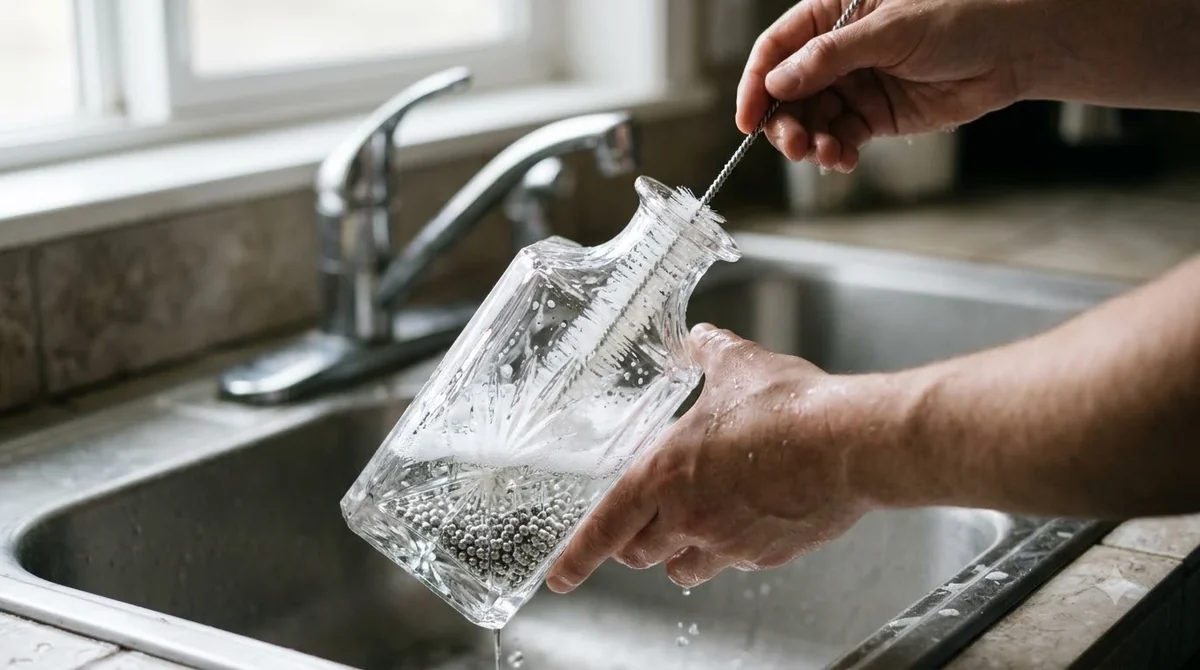
Drying can also require patience. Water can remain trapped in the bottom of a broad vessel, particularly when the opening is narrower than the base. A decanter cleaning brush or purpose-made drying accessory can make maintenance easier, although the tool should be suitable for delicate crystal and should not scrape decorative details.
Weight is another consideration. Fakespot’s Buckingham review summary reports that customers generally appreciate the substantial feel but that some find the weight requires careful handling. This is not a verified measurement for every Ravenscroft model, but it highlights an important buying consideration: large crystal pieces can become awkward when filled with wine.
The stopper deserves particular attention. Ravenscroft explains that its crystal stoppers are individually hand-ground to fit the neck of each decanter. This creates a snug fit, but it also means a replacement stopper cannot simply be ordered if the original breaks. The company states that it cannot replace an individual handmade stopper because another stopper will not necessarily fit that particular vessel.
There is also a common misunderstanding about what the stopper actually does. Ravenscroft explicitly says that its stoppers are not airtight. They are decorative closures that fit the decanter, not a substitute for an airtight wine-preservation system.
Tip: If a decanter arrives with a loose or excessively shaky stopper, contact Ravenscroft rather than trying to grind, reshape or force the crystal into place. Keep the original packaging and purchase information until the item has been inspected and accepted.
Handmade production can also produce small variations. Ravenscroft explains that occasional small bubbles may appear in its handmade pieces and that these are not necessarily considered defects. Buyers who prefer perfectly uniform, machine-produced glass should understand this distinction before ordering a handcrafted design.
Finally, a large decanter is not automatically better for every wine. A very broad base exposes more wine to air, which can be useful for certain young, structured reds. However, delicate older wines may lose aromatic character if exposed to excessive oxygen. The appropriate shape depends partly on the wine being served, not simply on the visual appeal of the glass.
Who Should Buy and Who Should Skip
A Ravenscroft decanter is a strong option for people who appreciate lead-free crystal, attractive table presentation and traditional wine-serving accessories. It is less suitable for anyone who wants completely maintenance-free glassware or an airtight container for storing unfinished wine.
Buy one if you regularly serve structured red wines. Young Cabernet Sauvignon, Syrah and Nebbiolo can benefit from aeration, particularly when their aromas seem closed immediately after opening. A decanter with a broad base provides room for the wine to spread out during the resting period.
For young, full-bodied reds, 30 to 60 minutes is a useful starting point. The exact time depends on the individual wine, its age and how it responds to oxygen. Decanting should be treated as a serving choice rather than a mandatory step for every bottle.
Consider one if presentation matters. A crystal decanter can add a formal touch to a dinner party, holiday meal or special celebration. The decorative Grapes model is particularly suited to a table where a large centerpiece is welcome, while the Taylor’s narrower shape may be easier to accommodate on a smaller serving surface.
Buy one if you appreciate traditional glassmaking. Handmade details, lead-free crystal and distinctive shapes are meaningful advantages for buyers who prefer crafted tableware. The brand offers designs with different visual personalities, so there is room to choose between understated silhouettes and more decorative pieces.
On the other hand, skip a handmade Ravenscroft model if you expect to put all your glassware in the dishwasher. The Grapes Decanter and Taylor Decanter are explicitly designated as hand-wash-only products. Regular dishwasher cleaning would be inconsistent with their care instructions.
It is also worth skipping a large model if cabinet space is limited. The Grapes Decanter measures 11 inches across, which is considerable for a kitchen shelf or small bar cabinet. A narrower 35-ounce Taylor Decanter may be a more practical fit for someone who usually opens one bottle at a time.
People looking for a long-term wine storage solution should also consider a different type of container. Because the Ravenscroft stopper is not airtight, an unfinished bottle should not be left in the decanter with the expectation that it will remain fresh for several days. A suitable wine-preservation closure and refrigeration are better choices for opened still wine.
Finally, buyers who frequently handle fragile objects or have limited space around their dining table should consider a smaller and simpler design. A decanter is most useful when it can be handled comfortably, cleaned properly and stored safely between occasions.
How It Compares to Alternatives
Ravenscroft’s own range offers several meaningful alternatives, particularly for buyers who want different proportions or capacities. The Taylor and Infinity models provide useful comparisons with the larger Grapes Decanter, while a standard wine carafe remains an alternative for people who prioritize convenience over decorative crystal.
The Taylor Decanter is the most compact of the three named Ravenscroft designs discussed here. Its 35-ounce capacity is suitable for a standard 750 ml bottle, with some room remaining above the wine. Its 10.5-inch height and 5-inch width give it a relatively narrow footprint compared with the 11-inch-wide Grapes model.
The Taylor’s bubble decoration is also distinctive. Ravenscroft describes it as a mouth-blown detail at the base, and the flared spout is intended to help prevent spills. Someone who prefers a more vertical decanter with a decorative base may find this shape more attractive than a wide, low-profile vessel.
The Infinity Decanter offers another compromise. Its capacity is 41.5 ounces, with dimensions of 9.25 inches high and 8 inches wide. The manufacturer emphasizes its broad base and flared spout, making it an option for someone who wants a substantial aeration surface without choosing the especially wide Grapes design.
The Grapes Decanter is the largest of these three examples by capacity. At 84 ounces, it offers considerable room for wine, but its broad shape requires more storage and serving space. Its decorative grape imprint also makes it a more visually prominent centerpiece.
| Model | Capacity | Height | Width | Design emphasis |
|---|---|---|---|---|
| Grapes | 84 oz | 8.5 in | 11 in | Decorative broad base |
| Taylor | 35 oz | 10.5 in | 5 in | Bubble base and flared spout |
| Infinity | 41.5 oz | 9.25 in | 8 in | Broad base and flared spout |
These dimensions are manufacturer-listed measurements, and handmade pieces can vary slightly. The differences nevertheless make the choice straightforward: Taylor for a narrow profile, Infinity for a moderate-capacity broad-base design, and Grapes for maximum capacity and decorative impact.
A conventional glass carafe is another alternative. It may be easier to clean, less demanding to store and more appropriate for everyday table service. However, it may not offer the same handmade crystal detailing or decorative presence as a Ravenscroft piece.
For someone comparing the broader glassware category, our guide to wine glasses can help match serving accessories to different wine styles. A decanter handles the wine before pouring, while the glass determines how it is presented and experienced at the table.
Likewise, people who regularly serve Bordeaux-style reds may want to coordinate their decanter with appropriately shaped red wine glasses. Both accessories contribute to presentation, although they perform different functions.
The important point is that there is no universal winner among these shapes. A large decanter is useful when capacity and presentation are priorities, but a smaller model can be easier to handle and clean. The best alternative is the one that matches the number of bottles you serve and the amount of storage space available.
Frequently Asked Questions
These answers address additional purchasing and ownership details that are useful when comparing handmade crystal decanters, including bottle compatibility, cleaning and long-term care.
Can a Ravenscroft decanter be used for whiskey?
Yes, many Ravenscroft decanter designs are suitable for serving spirits as well as wine. The company’s product range includes dedicated distiller decanters, with designs intended for whiskey and other spirits. For a spirit-focused purchase, choose a model listed in its Distiller collection rather than assuming every wine decanter has the same intended use.
Can a Ravenscroft decanter go in a refrigerator?
A decanter’s suitability for refrigeration depends on its dimensions, construction and the temperature change involved. Avoid moving crystal directly between extreme temperatures, since sudden temperature changes can create stress in glass. For routine wine storage, a sealed bottle is generally more convenient than refrigerating a large crystal serving vessel.
How much wine should remain in a decanter after serving?
For sediment-free young wine, the amount left behind depends mainly on the serving quantity and the decanter’s shape. For an older bottle containing sediment, some wine may need to remain in the original bottle to avoid transferring the solids. The amount is not fixed because sediment levels and bottle conditions differ considerably.
Does a Ravenscroft decanter need to be polished after washing?
Careful drying with a clean, lint-free microfiber cloth can help prevent visible water spots on crystal. Use a gentle touch and avoid twisting the neck while holding the base, since this can put unnecessary pressure on the glass. Allow any trapped moisture to drain before returning the decanter to a cabinet.
Does Ravenscroft offer replacement stoppers for handmade decanters?
Ravenscroft states that it cannot replace an individual stopper for its handmade decanters because each one is ground to fit its specific vessel. This is different from standardized closures used on some machine-made containers. Keeping the original stopper protected when the decanter is not in use is therefore especially important.
A Ravenscroft decanter is best viewed as a combination of functional wine service and decorative crystal craftsmanship. The Grapes, Taylor and Infinity designs each offer different advantages, so capacity, dimensions and cleaning requirements should guide the final choice. For wine drinkers who value lead-free crystal and distinctive presentation, the range offers several attractive options worth considering.
More in Wine Glasses
 Zwiesel Glas Champagne Flutes for Durable Everyday Sparkling WineUpdated Nov 20, 2026
 Vera Wang Crystal Wine Glasses: Design, Quality and Buying AdviceUpdated Nov 20, 2026
 West Elm White Wine Glasses: Compare Designs for Better Everyday Wine ServiceUpdated Nov 20, 2026
 Zalto Stemless Wine Glasses: Discover Their Distinctive DesignsUpdated Nov 20, 2026
 Viski Champagne Glasses That Match Your Style and Sparkling WineUpdated Nov 20, 2026
 Vista Alegre Decanter Review: Crystal Style and Wine ServiceUpdated Nov 20, 2026