

We may earn a commission when you buy through links on this page, at no extra cost to you. Learn more.
The hisense beverage cooler HBC54D6AS is a roomy 140-can, single-zone option for households that want cold drinks in an under-counter or freestanding cabinet. Its 34°F to 50°F temperature range, reversible door, frost-free design, and front ventilation make it flexible for a home bar or kitchen. The trade-off is a 45 dB published noise rating and mixed owner reports that include cooling failures after several years, so it is a practical-capacity choice rather than an automatic long-term reliability pick.
Hisense sells several beverage coolers, so this review focuses on the US-market HBC54D6AS: a 5.4-cubic-foot model rated for 140 standard cans. Other models differ in size, controls, lighting, and installation, so match the model number before applying these specifications.
Specs and Key Features
The HBC54D6AS combines a 140-can stated capacity with a 34°F to 50°F control range, making it suited to soft drinks, beer, and other beverages that need refrigerator-cold storage. Its single temperature zone, glass display door, and front-venting cabinet are the central design choices to understand before buying. Hisense describes the model’s intended placement and features on its HBC54D6AS product page.
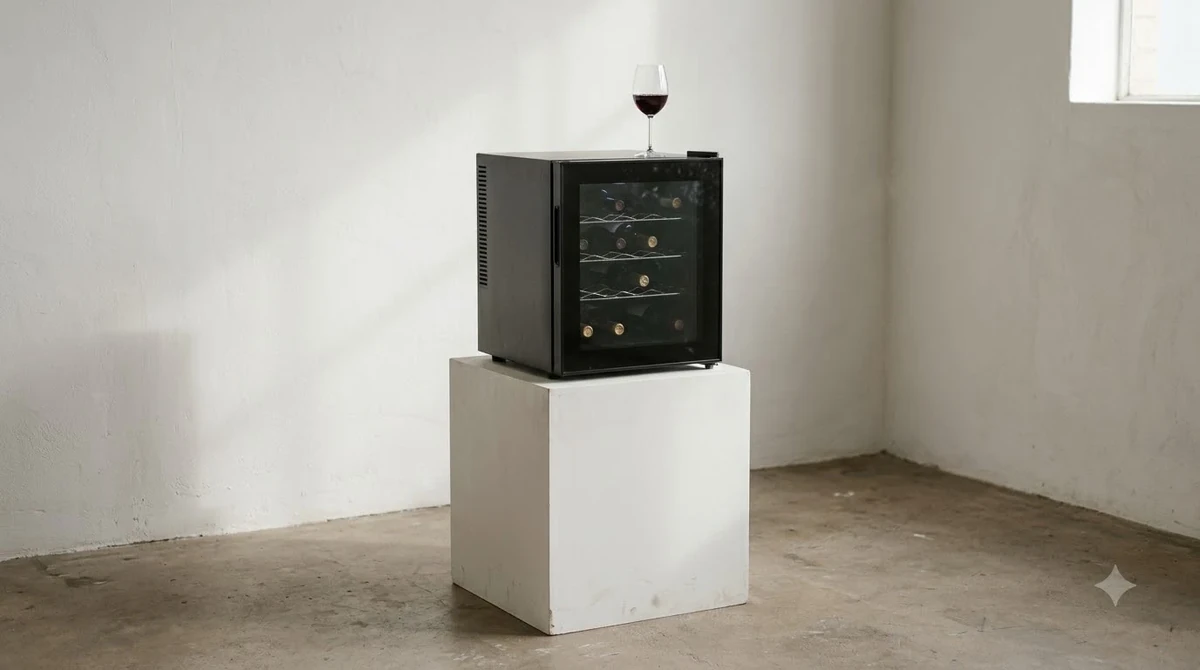
Hisense lists dimensions of 23.43 inches wide, 23.62 inches deep with the door, and 33.94 inches high. At 93 pounds net, it is a two-person installation task; its 45.80-inch open-door depth also needs to fit the aisle in front of the cabinet.
| Specification | Hisense HBC54D6AS | What it means |
|---|---|---|
| Rated capacity | 140 standard cans | Large household drink storage |
| Advertised volume | 5.4 cu. ft. | Check the can layout, not just the volume |
| Temperature range | 34°F–50°F | One setting for the whole cabinet |
| Cooling type | Frost-free | No routine manual defrost cycle |
| Temperature zones | 1 | Not separate settings for wine and beer |
| Noise rating | 45 dB | Consider placement in quiet rooms |
| Shelves | 3; glass and plastic | Arranges cans and some taller containers |
| Lighting | Interior LED | Displays the contents through the door |
| Installation | Built-in or freestanding | Front ventilation supports under-counter placement |
| Door | Reversible | Hinge direction can suit the room |
| Door alarm | Yes | Alerts if the door remains open |
| Overall dimensions | 23.43″W × 23.62″D × 33.94″H | Measure the full opening before delivery |
| Depth with door open | 45.80 in. | Allow usable aisle space |
| Net weight | 93 lb | Plan for a stable, level floor |
The 34°F minimum suits people who like soda or beer very cold, while 50°F allows a warmer setting. This is not a wine cellar: there are no independent zones or dedicated humidity controls, and every drink shares one temperature target. The rated capacity is a layout maximum, not a guarantee that 140 mixed-size bottles and cans will fit. Leave the air outlet unobstructed, and avoid loading the interior so tightly that cold air cannot circulate between containers. Three glass-and-plastic shelves, LED lighting, electronic controls, and a door alarm distinguish it from a basic mini fridge. Hisense says the alarm sounds after 2 minutes; Low-E glass helps limit heat transfer, and frost-free cooling avoids routine manual defrosting. There is no door lock.
Built-in and freestanding compatibility is useful because the front-venting design supports under-counter placement. Keep the front grille clear and follow the installation dimensions; built-in compatibility does not mean the cooler can be packed tightly into any opening. Leave room to reach the plug and controls, too, and avoid positioning the cabinet beside an oven, radiator, or other strong heat source. A hot location can make a small compressor work harder and can affect the cooler’s ability to hold its target temperature.
What Owners Like
Owner feedback most often praises the HBC54D6AS for its clean stainless-steel-and-glass appearance, useful can capacity, and quiet-feeling operation in everyday use. The three-shelf layout and visible interior are practical advantages for a kitchen, wet bar, or entertainment room where people want to see what is chilled before opening the door.
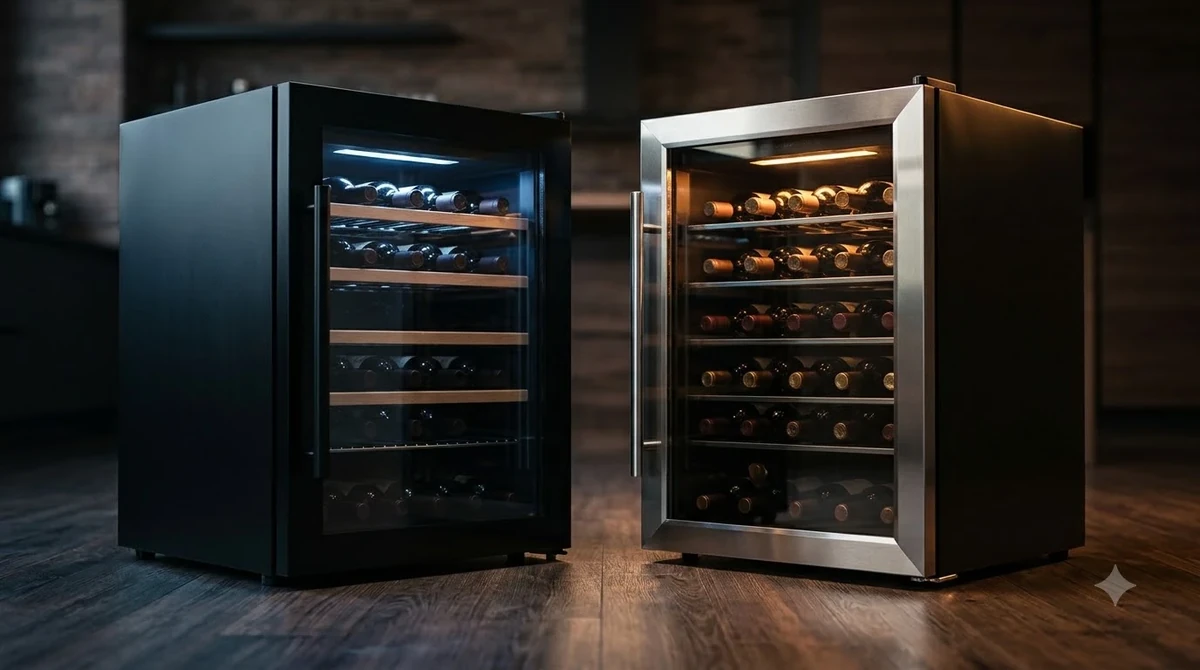
Positive Lowe’s comments describe an attractive finish, useful storage, and effective chilling. Some owners say it runs quietly; one reports quick cooling and stable temperatures, while another likes the adjustable shelves. These are personal experiences, not controlled performance tests, but they explain the appeal of a dedicated drinks cabinet. The Lowe’s HBC54D6AS owner reviews also show why feedback should be read as a mix of individual experiences rather than a guarantee of results.
The 140-can rating is a substantial step up from compact 48-can models. It gives a household room for water, soda, and beer without filling the main refrigerator door, while the glass front makes it easy to check supplies in a basement bar or media room. Adjustable shelves can create room for taller bottles, although wide bottles, pitchers, and food containers may not fit like they would in a conventional refrigerator. Check shelf height against the drinks you buy regularly.
The reversible door helps when a wall or cabinet return blocks the default swing. Leveling legs and an electronic display also make placement and repeatable temperature selection easier. A display front is especially handy when guests serve themselves: the contents are visible without repeated door openings, and the alarm can remind someone to close it. For a household that wants a tidy drinks station rather than another appliance hidden behind a cabinet door, that convenience is part of the appeal. In a compact bar, it can keep mixers and sparkling water close to the glassware for an Aperol spritz recipe. For longer-term bottle storage, compare the best rated wine cooler options instead of treating a beverage refrigerator as a wine-cellar substitute.
Common Complaints
The most important concern in owner feedback is long-term cooling reliability: some Lowe’s reviewers report that their HBC54D6AS stopped cooling after roughly 2.5 to 5 years. Other comments mention condensation or difficulty with the handle installation, although many owners report satisfactory cooling and appearance; retailer reviews cannot establish how frequently these issues occur across all units.
Cooling-loss reports deserve attention because this appliance has one job: keeping drinks chilled. The comments do not establish a failure rate, but they make parts availability and local service worth checking before purchase. A built-in cooler is especially frustrating to replace if a nearby technician will not work on it. Read the warranty wording carefully. One Lowe’s reviewer describes needing a technician’s diagnosis and approval before parts were supplied; compressor coverage does not automatically mean labor or every service visit is covered. Check the supplied warranty card and ask who arranges service in your ZIP code.
Other comments mention door condensation or a handle that needed adjustment. Moisture can form when humid room air meets a cold glass surface, but pooling water or a door that will not seal needs attention. Check that the cabinet is level, the gasket is seated, and the door closes without interference. A humid basement or a room with poor airflow can make glass-door moisture more noticeable, so placement conditions matter as much as the appliance finish. Keep the exterior and gasket clean, and avoid leaving the door open while choosing drinks. The published 45 dB rating may matter in a bedroom or quiet office. The compressor and fans cycle, and room acoustics affect how noticeable they are, so compare noise specifications rather than relying only on comments that call a unit quiet.
The single-zone layout means beer and wine cannot be held at separate temperatures, and the cooler is not a full-size refrigerator for perishable food. Buyers who need dual zones, a lock, or dedicated wine storage should choose another appliance type.
Who Should Buy and Who Should Skip
The HBC54D6AS is a good fit for households that want up to 140 cans close at hand, need a front-venting under-counter appliance, and prefer a glass-front cabinet with a reversible door. Its 34°F to 50°F range and three shelves make it most useful as a dedicated drinks station rather than a small all-purpose refrigerator.
Consider it for a wet bar, kitchen, finished basement, or game room where the door can open fully. Its 23.43-inch width and 33.94-inch height suggest a roughly 24-inch appliance footprint, but the cutout must also allow for leveling, ventilation, and the finished floor. Measure the narrowest point of the opening rather than the trim-to-trim face, and check whether handles, adjacent drawers, or an island interfere with the door. A reversible hinge helps with the swing direction, but it cannot solve a space that is simply too tight.
It suits households that mainly chill canned drinks and prefer a glass display. Standard 12-ounce cans will use the cabinet more efficiently than large bottles, slim cans, or oversized containers. Skip it if you need dual-zone storage, a lock, or wine-aging conditions. The 45 dB rating may also be distracting in a quiet bedroom or office, while buyers storing fresh food should choose a compact refrigerator with a more flexible interior. Compare warranty terms and local repair options before building it into cabinetry. Cooling-failure complaints do not prove the model will fail, but service access is more important for an appliance that may be expensive to remove. Ask whether the retailer handles an exchange for early problems, which company dispatches an authorized technician, and whether parts and labor are covered for the same length of time. Save the purchase paperwork and model/serial information in a place you can reach after installation.
For wine-first storage, choose a wine refrigerator with bottle cradles and any separate zones you need; the HBC54D6AS is better for short-term chilling. It can keep mixers cold while you prepare this chicken marsala recipe, but the appliance is meant for beverages, not food.
How It Compares to Alternatives
The HBC54D6AS is the larger, more installation-flexible choice compared with Hisense’s compact HBC048N1AVD, while the smaller model takes up less floor and counter space. The HBC54D6AS offers 140-can capacity and built-in or freestanding installation; the HBC048N1AVD is a 48-can freestanding cooler with a narrower 17.5-inch body.
Hisense lists the HBC048N1AVD at 34°F to 50°F and 43 dB, versus 34°F to 50°F and 45 dB for the HBC54D6AS. The compact model has mechanical control, one wire shelf, and no interior light; the larger model has electronic controls, three shelves, and LED lighting. The first suits a small nook, while the second better fits a kitchen or home bar. The HBC048N1AVD is freestanding only, so it is not an under-counter substitute. At 17.5 inches wide, 16.5 inches deep without the door, and 19.8 inches high to the hinge, it is easier to fit into a small nook but holds less than half as many cans.
Against a wine refrigerator, the key distinction is purpose. The HBC54D6AS has a single 34°F to 50°F range and is arranged around cans and mixed beverages, whereas wine refrigerators may offer bottle cradles, different temperature ranges, and dual zones. A wine-specific unit is the better choice for a collection that needs separate storage and serving temperatures; the Hisense is more practical for canned drinks that are opened and replenished regularly. Compared with a standard mini fridge, it offers a 140-can display cabinet but less flexibility for food containers. It needs 45.80 inches of door-open depth and a clear front grille; a basic mini fridge may be easier to tuck into an informal space.
Use the site’s Brand x Type model reviews to compare capacity, temperature range, dimensions, and service coverage. The HBC54D6AS suits buyers who need 140-can capacity and built-in flexibility; the HBC048N1AVD is the smaller freestanding choice.
Frequently Asked Questions
The HBC54D6AS manual covers practical details beyond the 140-can capacity and 34°F to 50°F range, including shelf loading, control settings, and moving the appliance into place.
Is the 140-can capacity based on standard cans?
Yes. The HBC54D6AS manual describes its capacity using standard 12-ounce cans. Larger cans, bottles, and unusual packaging change how many drinks fit, so treat 140 as a layout-based maximum rather than a guaranteed count for every beverage mix.
How much weight can each shelf hold?
Hisense’s use-and-care manual gives a maximum loading of 33 pounds for each shelf type. Avoid concentrating heavy glass bottles in one spot, and distribute drinks across the shelves instead of treating the stated can capacity as permission to overload an individual shelf.
How many cans can go on the bottom of the cabinet?
The manual says no more than 14 cans should be placed on the cabinet bottom, because cans can roll and break. Follow the illustrated shelf arrangement for the remaining cans rather than stacking them loosely at the base.
Can the temperature display switch between Fahrenheit and Celsius?
Yes. The control panel includes a Fahrenheit/Celsius change key, so the temperature can be displayed in either unit. The manual also notes that temperature adjustments are made in one-degree increments in the selected scale.
What should you do if the cooler was transported on its side?
Hisense’s manual advises waiting at least 2 hours before connecting the appliance after horizontal transport. That pause allows compressor oil to flow back into the compressor; keep the unit upright during normal placement and follow the supplied installation instructions.
The Hisense HBC54D6AS offers useful 140-can capacity, under-counter flexibility, and straightforward cold-drink storage, but owner reports make service coverage an important part of the decision. Measure the opening and door swing carefully, then compare the warranty and local repair arrangements before choosing it for a built-in space.
More in Model Reviews
 Magic Chef 44 Bottle Wine Cooler Review for Flexible StorageUpdated Nov 21, 2026
 Whynter 164 Bottle Wine Cooler Review: Capacity, Features, and FitUpdated Nov 21, 2026
 Insignia NS WC16BK6 Review: Compact 16-Bottle Wine StorageUpdated Nov 21, 2026
 Wine Enthusiast Electric Blue Omega Review: Opening, Pouring, and Preserving Made EasierUpdated Nov 21, 2026
 Koolatron 20 Bottle Wine Cooler Review: Features, Fit, and PerformanceUpdated Nov 21, 2026
 NewAir AWC 330E Review for Home Wine StorageUpdated Nov 21, 2026