

We may earn a commission when you buy through links on this page, at no extra cost to you. Learn more.
Pottery Barn champagne flutes are a good fit for shoppers who want decorative glassware for celebrations, with the Zwiesel Classico set the most practical choice for regular use. The range spans handcrafted soda-lime glass, patterned designs, and dishwasher-safe Tritan crystal, so construction and care vary more than the retailer name suggests. LoveShackFancy is the style-led pick, while Zwiesel Classico offers a larger 9.5-ounce capacity and a dishwasher-safe build. The main trade-off is that some of the prettiest options need hand washing and have smaller bowls.
Pottery Barn’s flute selection is not one standardized collection: it includes its own decorative designs and branded glassware from Zwiesel. This review focuses on published specifications and practical use rather than implying direct product testing or treating broad retailer feedback as proof about a particular glass.
Specs and Key Features
The most useful differences are capacity, construction, and cleaning instructions. The examples below range from 5.75-ounce decorative glasses to a 12-ounce crystal flute, with pack sizes of four or six.
| Model | Set size | Capacity | Construction and dimensions | Care |
|---|---|---|---|---|
| LoveShackFancy Champagne Flutes | 4 | 7.75 oz | Handcrafted soda-lime glass | Hand wash only |
| Stewart Plaid Champagne Flutes | 4 | 5.75 oz | Soda-lime glass; 2.5 in. diameter × 7.25 in. high | Dishwasher safe |
| ZWIESEL GLAS Classico Champagne Flutes | 6 | 9.5 oz | Tritan crystal; 2.75 in. diameter × 9 in. high; made in Germany | Dishwasher safe |
| ZWIESEL GLAS Verbelle Champagne Flutes | 6 | 12 oz | Tritan crystal; 3 in. diameter × 9 in. high; made in Germany | Dishwasher safe |
| Monique Lhuillier Lily of the Valley Flutes | 4 | 5.75 oz | Clear soda-lime glass; 2.75 in. diameter × 9 in. high; heat-applied decal | Hand wash recommended |
The dimensions and capacities are not minor details. A 5.75-ounce glass is sized for a modest celebratory pour, while 9.5 or 12 ounces leave more room above the wine and give a larger visual profile. A flute’s stated capacity is its total volume, not a recommendation to fill it to the rim; a measured pour leaves space for bubbles and keeps the glass comfortable to carry. For perspective, a 5-ounce serving in a 5.75-ounce glass leaves just 0.75 ounce of nominal headroom, while the Classico leaves 4.5 ounces and the Verbelle leaves 7 ounces. Real fill levels depend on the bowl shape, but these differences make clear why the smaller decorative glasses can feel more formal and the larger crystal options less restrictive.
Pack size is just as concrete a buying factor. A four-piece set suits a household that usually pours for two and keeps two spares, but a six-piece set is a cleaner match for a dinner party of six. If you expect more guests than the set covers, buy matching multiples before a design is retired; mixing a patterned flute with a plain one can make place settings look unplanned. Also measure cabinet height if the glass is 9 inches tall, since stemware often needs more vertical clearance than everyday tumblers.
Materials also describe different priorities. Soda-lime glass is the standard construction on the decorative options listed here, while Pottery Barn identifies the Zwiesel models as Tritan crystal and describes that material as resilient to chipping and breakage. That does not make any glass unbreakable: stems, rims, and contact with hard objects still need care.
What Owners Like
The strongest appeal is choice: shoppers can select a romantic engraved look, a seasonal pattern, or a more restrained crystal flute. Capacities from 5.75 to 12 ounces and pack sizes of four or six make it possible to match the glass to the occasion rather than buying a single generic shape.
LoveShackFancy is the most decorative option in this group. Its handcrafted soda-lime construction and coordinated glassware collection give it a distinct role on a dressed table, especially when paired with the matching coupe glasses or goblets. The 7.75-ounce capacity is more generous than the 5.75-ounce decorative styles, and that makes it more flexible for a full pour of Champagne or a sparkling cocktail.
Buyers who value day-to-day practicality have a clearer reason to consider the Zwiesel Classico. Its six-glass set suits a larger gathering, 9.5 ounces is roomy without being unusually oversized, and the listed dishwasher-safe construction is easier to maintain than hand-wash-only glassware. The Zwiesel Verbelle takes the generous-capacity approach further at 12 ounces, while Stewart Plaid offers a patterned look with dishwasher-safe care in a four-piece set. This range also gives a buyer a way to coordinate the glassware with different hosting styles: an engraved or printed design can anchor a holiday table, while a clear crystal flute can stay in use for anniversaries, birthdays, and casual weekend brunches without looking tied to one season.
There is an important limit to the word “owners” in this review: accessible product descriptions establish the specifications, but they do not provide a large, model-specific body of verified owner comments from which to claim a reliable consensus about long-term durability or feel in the hand. The positive points here are therefore the concrete features that a buyer can verify—capacity, design, pack size, material, and stated care—not invented customer quotations or assumed star-rating trends.
Common Complaints
The main drawback is uneven maintenance. LoveShackFancy flutes are hand-wash only, Monique Lhuillier’s decorated glasses have hand washing recommended, and the Classico and Verbelle are listed as dishwasher safe; mixing these styles in one cupboard means remembering different care rules.
Capacity can also disappoint when the product name creates the wrong expectation. Stewart Plaid and Monique Lhuillier both hold 5.75 ounces, which is compact compared with the 9.5-ounce Classico or 12-ounce Verbelle. That smaller size is not a defect, but it can feel limiting if you prefer a larger pour, use the glass for cocktails with extra ingredients, or want more room to swirl.
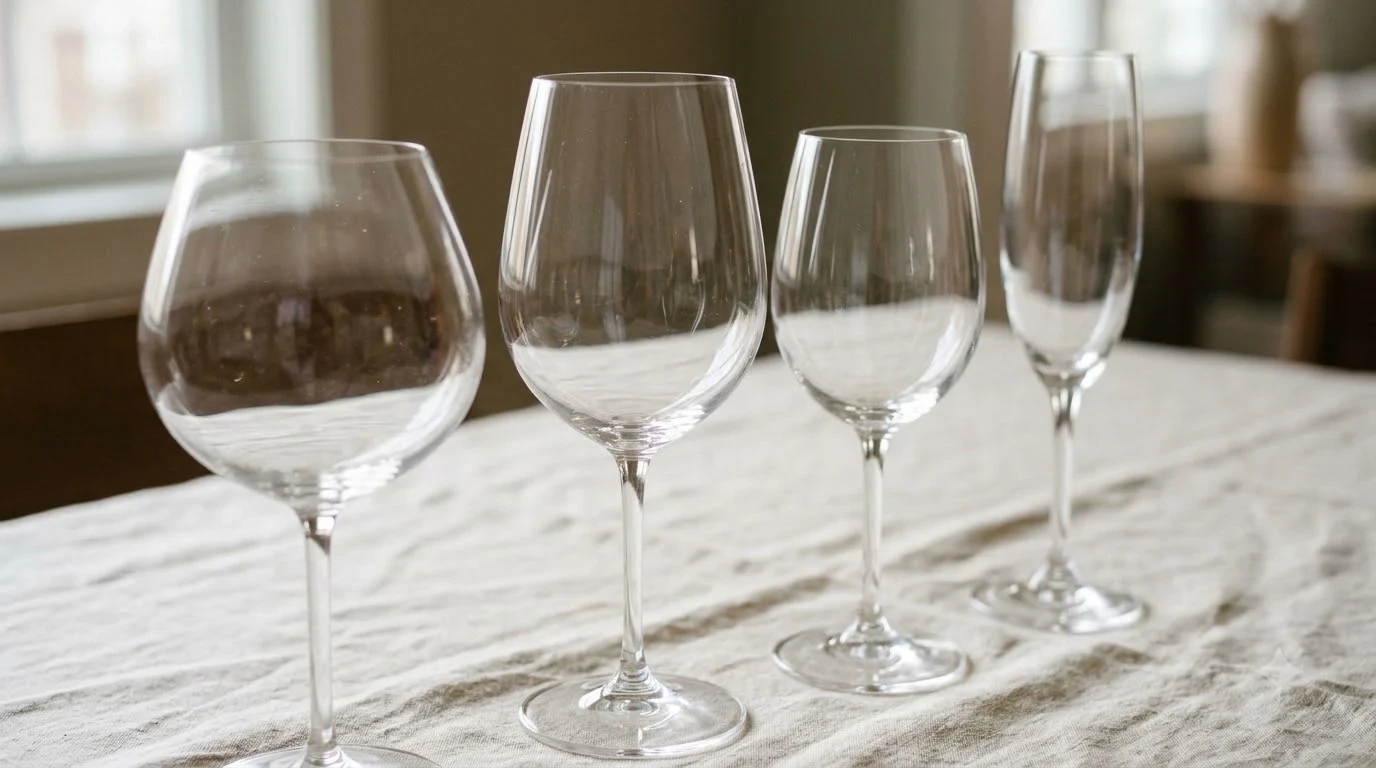
There is also a broader glass-shape compromise. Wine Enthusiast’s discussion of Champagne service notes that the narrow flute directs attention to visible bubbles but gives complex sparkling wine less room to express its aromas; its experts favor a tulip-shaped white wine glass for tasting. A flute is still useful for a toast or an event where presentation and easy tray service matter. It is simply not the most versatile vessel for every bottle.
Finally, dishwasher-safe does not mean careless loading. Zwiesel’s care guidance says glasses should not touch each other or other objects, recommends a short program at 50–55°C (122–131°F), and sets 65°C (149°F) as the maximum. A crowded rack can still scratch or break glassware, so the practical advantage is easier cleaning, not immunity from damage. The manufacturer also advises letting Tritan glasses return to room temperature before filling them with a cold drink and avoiding sudden temperature changes. When removing stemware from a dishwasher, lift it by the stem or foot rather than gripping the bowl and twisting; pressure at the stem can cause breakage. For hand-wash models, use warm water, mild detergent, and a soft cloth rather than abrasive pads, then dry each piece before putting it away.
Who Should Buy and Who Should Skip
Choose Pottery Barn’s decorative flutes if the glass is part of the table setting as much as the drink service: LoveShackFancy suits a romantic, patterned tablescape, Monique Lhuillier adds a floral motif, and Stewart Plaid gives a seasonal detail with dishwasher-safe convenience. Those designs make the most sense for holiday meals, engagement celebrations, wedding toasts, and occasional entertaining where appearance matters.
Choose Zwiesel Classico if you want a set that can do more regular work. Six matching pieces, a 9.5-ounce capacity, Tritan crystal, and dishwasher-safe care are a more functional combination for people who host often or want a consistent set for birthdays and dinners. Verbelle’s 12-ounce bowl is worth considering for drinkers who prefer a little more room, although the larger capacity does not turn a flute into a tasting glass.
Skip the hand-wash models if you know you will resent washing stemware individually. Also skip the entire flute category if you mainly buy mature, complex vintage Champagne and want to explore its layers of brioche, citrus, orchard fruit, or autolytic character. A tulip-shaped sparkling-wine glass or a white wine glass with a gently narrowing rim is the better tool for that purpose. Shoppers furnishing a first apartment may also prefer a versatile white wine glass before adding a dedicated flute set; one adaptable shape can handle still whites and many sparkling wines, while a specialized flute earns its cupboard space when formal toasts are a regular part of entertaining. If the set is primarily a wedding or housewarming gift, think about whether the recipient has room for six tall glasses and is comfortable hand-washing decorated pieces.
Tip: Before ordering, compare the capacity and care line for the exact design. A 5.75-ounce flute that needs hand washing is a different everyday commitment from a 9.5-ounce dishwasher-safe Zwiesel set, even though both are sold as Champagne flutes.
For a wider shortlist of shapes and uses, our champagne flutes roundup can help you compare classic, tulip, and decorative options. The best champagne glass guide is more useful if aroma and tasting performance matter more than a traditional flute silhouette.
How It Compares to Alternatives
Within Pottery Barn’s own range, the main alternative to a decorative design is the Zwiesel Classico. It gives up the ornate look of LoveShackFancy or Monique Lhuillier in exchange for a larger bowl, a six-piece set, German-made Tritan crystal, and dishwasher-safe care. That is the more convincing choice for regular serving; the decorative sets make more sense when their pattern is the reason for buying.
Outside the retailer’s decorative range, a tulip-shaped white wine glass is the most meaningful alternative for serious sparkling wine. Wine Enthusiast names Riedel white wine glasses, Glasvin, and Zalto universal glasses as examples used by its interviewed experts. Those are not direct one-for-one substitutes for a flute: their wider bowls and narrower openings are intended to give aromas more space while directing them toward the nose. The Wine Enthusiast guide to Champagne glass shapes explains why sommeliers often prefer that style for aromatic detail.
There is no single right answer for every sparkling wine. A narrow flute makes a celebratory pour look lively and helps focus the view on the bead; a coupe creates a broad, open presentation but lets the wine lose its chill and carbonation more quickly; a tulip or white wine glass gives more room for aroma. The Wine and Spirit Education Trust describes how bubble movement, surface area, and the glass’s headspace all influence aroma release, which is why shape can change the tasting experience. Its Champagne glass research overview is a useful deeper read.
Pottery Barn’s wider wine glasses guide can help if you want one set for several wine styles instead of dedicated flutes. For shoppers comparing manufacturers and design families, the Glassware Brands page is the better next stop. The practical verdict remains simple: buy a decorative Pottery Barn flute for presentation, or choose Zwiesel Classico for the strongest balance of capacity and care convenience in this selection.
Frequently Asked Questions
These details help match a set to the number of guests and the kind of sparkling wine being served. A standard 750 ml bottle provides about five 5-ounce pours, so set size and bottle count are worth planning together.
How many guests can one set serve?
A four-piece set covers four simultaneous pours, while the six-piece Zwiesel sets cover six. For a party of eight, two four-piece sets or a six-piece set plus two additional glasses avoids having to wash and reuse a glass during the toast.
How many servings are in a standard bottle of Champagne?
A 750 ml bottle yields about five standard 5-ounce glasses. Smaller pours can stretch the bottle to more guests, but leave enough room in the flute for the bubbles to rise without spilling.
Can these flutes be used for Prosecco or Cava?
Yes. A Champagne flute can serve other sparkling wines, including Prosecco and Cava; the glass shape does not limit it to wine made in Champagne. For aromatic or bottle-aged examples, a tulip-shaped glass may reveal more detail than a narrow flute.
What temperature should sparkling wine be served at?
Serve sparkling wine well chilled, around 40–50°F. A cold bottle helps keep the first pour refreshing, and smaller pours are easier to replenish before the wine warms in the glass.
Are champagne flutes suitable for mimosas?
Yes. The tall shape works for mimosas and other sparkling cocktails because it presents the bubbles clearly and is easy to carry at brunch. For cocktails with substantial juice or fruit, a 9.5-ounce or 12-ounce glass gives more room than a compact 5.75-ounce flute.
Pottery Barn’s range is best approached as a set of distinct choices rather than one uniform product line. For decorative presentation, start with the design you like and accept its care requirements; for frequent use, the Zwiesel Classico is the more balanced pick.
More in Wine Glasses
 Zwiesel Glas Champagne Flutes for Durable Everyday Sparkling WineUpdated Nov 20, 2026
 Vera Wang Crystal Wine Glasses: Design, Quality and Buying AdviceUpdated Nov 20, 2026
 West Elm White Wine Glasses: Compare Designs for Better Everyday Wine ServiceUpdated Nov 20, 2026
 Zalto Stemless Wine Glasses: Discover Their Distinctive DesignsUpdated Nov 20, 2026
 Viski Champagne Glasses That Match Your Style and Sparkling WineUpdated Nov 20, 2026
 Vista Alegre Decanter Review: Crystal Style and Wine ServiceUpdated Nov 20, 2026