

We may earn a commission when you buy through links on this page, at no extra cost to you. Learn more.
The pulltap corkscrew is an excellent choice for wine drinkers who want a compact, durable waiter’s corkscrew with a double-hinged lever for controlled cork removal. Its two-stage mechanism, integrated foil-cutting blade and nonstick spiral make it particularly useful for people who open wine regularly. The Classic 500 is the standout model for most buyers, although Pulltap’s also offers premium and lightweight alternatives with different materials and construction.
A good wine opener should make opening a bottle predictable rather than turning it into a struggle with a stubborn cork. Pulltap’s has built its reputation around a relatively simple idea: use two lever positions to extract the cork gradually instead of relying on one long pull. That approach makes the brand interesting to home wine enthusiasts, restaurant professionals and anyone putting together a practical wine-serving setup. This review examines the construction, operating mechanism, model differences, advantages and limitations to help determine whether a Pulltap’s wine key deserves a place in your kitchen or bar.
Specs and Key Features
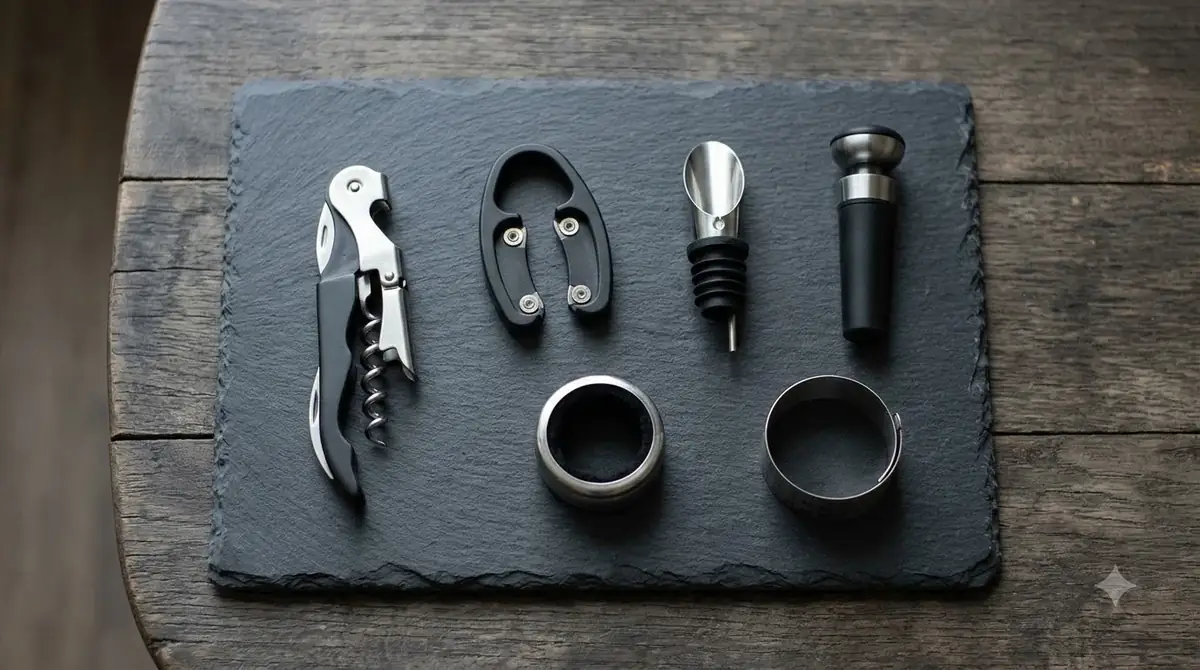
The Classic 500 is the most recognizable Pulltap’s model and the most practical starting point for evaluating the brand. It combines a compact metal handle, a double-hinged extraction lever, a folding foil knife and a coated spiral in a traditional waiter’s corkscrew format.
Pulltap’s traces its original two-stage mechanism to Ramon Brucart, who developed the design patented in 1992. The central idea is straightforward: the lever has two articulated support positions, allowing the user to lift a cork in stages while maintaining contact with the bottle lip. Rather than pulling the cork through its entire length using one extended lever movement, the mechanism provides a second support point after the first lift.
The Classic 500 is manufactured in Spain, according to the manufacturer’s product information. Its body uses iron, while the spiral is stainless steel with a nonstick coating. The folding blade has a serrated cutting edge, and the handle is available in multiple finishes and colors. Newly manufactured versions also incorporate a Soft-Touch polymer layer on the inside of the handle, intended to improve grip and handling comfort.
Here are the manufacturer’s published specifications for the Classic 500, alongside two other models in the range. The figures help explain why the Classic 500 occupies a useful middle position between the lightweight Compact 600 and heavier Classic 100.
| Specification | Classic 500 | Classic 100 | Compact 600 |
|---|---|---|---|
| Dimensions | 115 x 20 x 13 mm | 120 x 20 x 13 mm | 115 x 20 x 13 mm |
| Weight | 70 g | 100 g | 68 g |
| Main body | Iron | Zamak, with solid aluminum handle | Fiberglass |
| Lever mechanism | Double hinged | Double hinged | Double hinged |
| Blade | Hinged | Hinged | Hinged |
| Spiral | Nonstick coated | Nonstick coated | Nonstick coated |
| Country of origin | Spain | Spain | Spain |
These specifications come from the individual product descriptions published by Pulltap’s Genuine. One distinction deserves attention: the Classic 100’s listed main material is Zamak, while its handle is described as solid aluminum. Buyers should distinguish the handle construction from the manufacturer’s main-material field rather than treating the entire opener as one material.
The Classic 500’s 70-gram weight is reasonable for a metal waiter’s corkscrew. It is substantial enough to feel like a working tool without becoming inconvenient to carry in an apron pocket or kitchen drawer. Its 115 mm length also keeps it within the familiar dimensions of a traditional wine key.
There are practical details beyond the main lever. The integrated knife helps remove a bottle’s foil capsule, while the spiral is designed to penetrate both natural and synthetic corks. The articulated lever also incorporates a crown-cap opener for beer and other bottled drinks. These additions make the Classic 500 a useful multipurpose accessory rather than a single-purpose wine gadget.
What Owners and Independent Reviewers Like
The strongest argument for the Pulltap corkscrew is its combination of compact construction and controlled extraction. Its double-hinged lever provides a useful mechanical advantage, while the folding blade and coated spiral keep the tool functional without adding unnecessary bulk.
Independent editorial evaluations provide additional context. Good Housekeeping selected Pulltap’s double-hinged waiter’s corkscrew as its best overall wine opener after evaluating 28 models. The publication highlighted its sturdy construction, comfortable handling and portability. Its review also praised the retractable foil knife, nonstick spiral and spacing between the lever notches.
That last detail is more important than it might initially appear. A lever needs a stable resting point against the bottle lip. If its support slips during extraction, the cork may rise unevenly, the user may need to reposition the tool, and the cork can become more difficult to remove cleanly. A properly spaced double-hinge system helps make the two-stage process more controlled.
Good Housekeeping also compared the Pulltap’s mechanism with a less expensive double-hinged alternative. Its evaluation noted that the alternative’s thinner spiral did not enter the cork as easily and its hinges felt stiffer. This illustrates why two wine keys can share a similar appearance without necessarily providing the same operating experience.
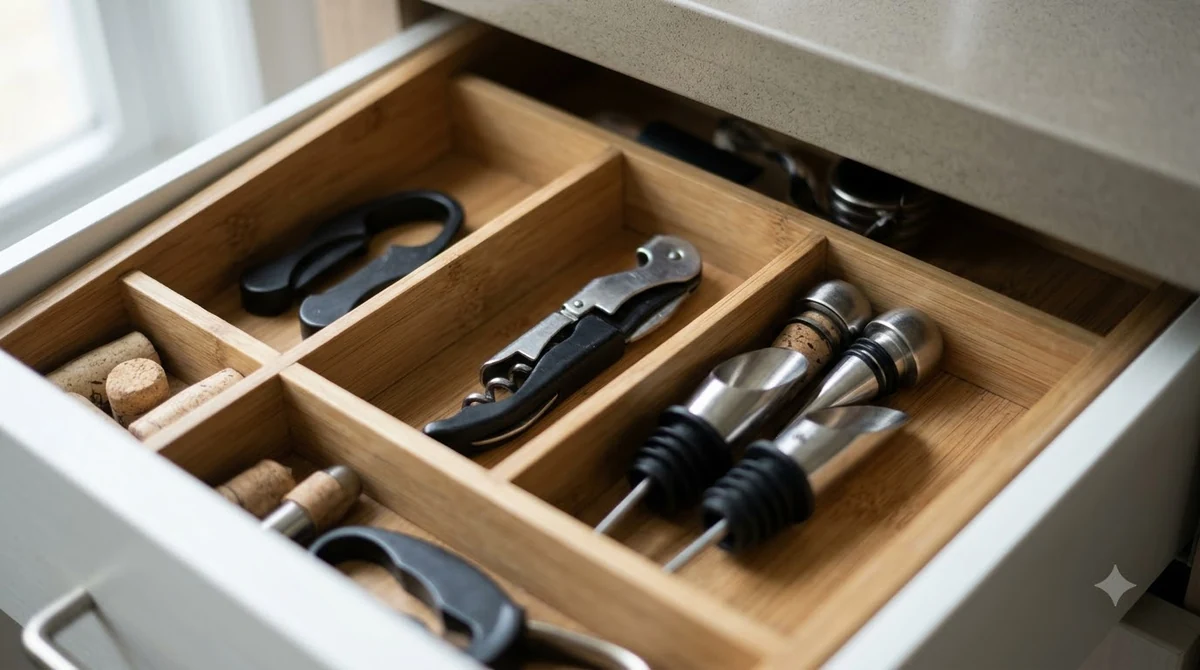
The compact format is another practical advantage. A traditional waiter’s corkscrew folds into a relatively flat shape, making it easy to keep beside a wine refrigerator, in a kitchen utensil drawer or inside a bartender’s kit. Unlike a large lever opener, it does not need a dedicated storage space or a broad countertop area.
For restaurant workers, portability matters because a wine key can be carried throughout a shift. For home users, it means the opener can be stored with other serving accessories instead of occupying permanent counter space.
Pulltap’s also offers a range of colors and finishes. The Classic 500 is available in options such as black, white, red, blue, green and chrome-plated finishes, among others. This gives buyers room to choose something understated for a professional setting or more distinctive for a personal collection.
Another advantage is the relatively familiar operating format. Anyone who has previously used a traditional waiter’s corkscrew will recognize the basic folding handle, spiral, blade and bottle-lip support. The double-hinge action requires practice, but it does not require learning an entirely different opening system.
For additional information about its construction and available finishes, the official Classic 500 product specifications provide a useful reference.
Common Complaints and Limitations
The Pulltap corkscrew is not a completely effortless opener for every user. Its biggest limitation is that it remains a manual waiter’s corkscrew, requiring hand strength, coordination and some familiarity with the two-stage lever movement.
Good Housekeeping specifically identified the need for some strength and practice as a drawback. This is a reasonable qualification because the double-hinged system improves leverage but does not eliminate the physical work involved in extracting a cork. A user must still turn the spiral into the cork, position the support correctly and lift the handle through two controlled movements.
Someone accustomed to a large countertop lever opener may initially find the Pulltap’s technique less intuitive. A traditional wine key also requires the user to hold the bottle steady while operating the lever. That combination of hand movements can take a little time to master, particularly when opening bottles with longer or unusually tight corks.
The folding blade is another consideration. Although it makes the opener compact, the blade is smaller than a dedicated foil cutter. Users who prefer a separate circular foil cutter may find the integrated knife less convenient. Its folding mechanism also means that the user needs to handle the blade carefully when opening and closing it.
The spiral itself requires sensible technique. A corkscrew should enter close to the center of the cork, with enough depth to secure the cork without passing through its bottom. If the spiral is angled, it can pull one side of the cork more aggressively than the other. This problem is not unique to Pulltap’s, but it remains relevant to anyone purchasing a manual wine key.
There is also a buying concern involving authenticity. Forbes Vetted has discussed supply problems and counterfeit concerns surrounding the Pulltap name, pointing out that imitations can make it difficult to know whether a buyer is receiving the original construction. Similar-looking products should not automatically be assumed to have the same hinge quality, spiral coating or durability.
Pulltap’s recommends purchasing genuine products through its own website or authorized sales channels. Good Housekeeping also identifies Spanish manufacture and the Pulltap’s engraving on the lever as useful authenticity indicators. These checks are particularly relevant when buying through an unfamiliar marketplace seller.
Finally, the Classic 500 is not designed to solve every cork-related problem. Extremely old, brittle corks can crumble during extraction even when the opener is functioning correctly. A traditional worm-based corkscrew is also not the ideal specialized tool for every damaged or deteriorating cork. Wine collectors who regularly open fragile older bottles may prefer a dedicated two-prong opener such as an Ah-So-style tool.
Tip: Before purchasing, inspect the hinge joints, spiral alignment and lever engraving. A genuine-looking logo alone does not establish that a used or secondhand opener is in good mechanical condition.
Who Should Buy and Who Should Skip It
The Pulltap corkscrew makes the most sense for people who regularly open conventional wine bottles and prefer a compact manual tool. It is particularly suitable for home wine enthusiasts who appreciate a traditional sommelier-style opener and want a more refined mechanism than an inexpensive single-hinge wine key.
It is also a sensible option for restaurant servers, bartenders and hospitality workers. Its slim profile fits easily into a work apron, and its integrated blade and crown-cap opener cover several common beverage-service tasks. The double-hinge design is useful during repeated service because the cork can be lifted in two stages rather than relying on one extended pull.
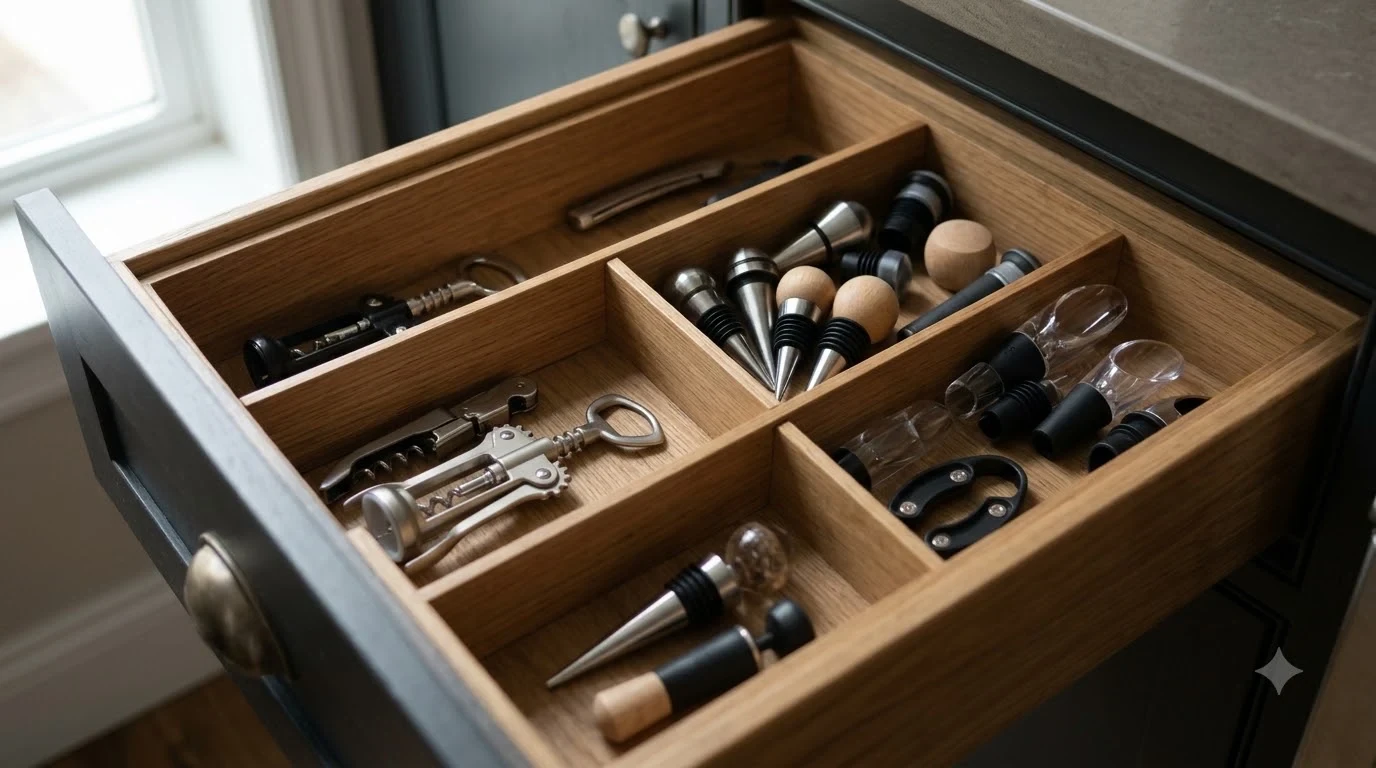
Home users with a dedicated wine station may appreciate the Classic 500’s compact dimensions. It can be kept in a drawer or a small organizer beside wine glasses and other serving accessories. If a home bar is part of the setup, a dedicated bar cart can provide a convenient place for the opener, foil cutter and other small tools.
The Pulltap’s range also provides options for people who care about materials and weight. The Classic 100 is the more substantial premium alternative, while the Compact 600 is the lighter option. This means buyers do not necessarily have to choose the Classic 500 simply because it is the most recognizable model.
However, there are several situations in which another type of opener makes more sense.
Choose another opener if ease of operation is the priority
People who struggle with manual twisting, grip strength or coordinated lever movements may find an electric wine opener more convenient. An electric model removes much of the physical work involved in extracting a standard cork, although it requires batteries or charging and generally takes up more storage space.
A countertop lever opener may also be preferable for households that frequently open several bottles during gatherings. These devices use a larger handle mechanism to remove corks with a more straightforward movement. They are less portable, but can be easier for occasional users who do not want to learn a waiter’s corkscrew technique.
Skip it if you mainly open screw-cap wine
A manual corkscrew has limited value in a household where most wine purchases use screw caps. In that situation, a simpler bottle opener may be more practical than purchasing a dedicated wine key.
Similarly, people who regularly open fragile vintage bottles should consider a specialized cork-removal tool. A double-hinged spiral opener is primarily intended for standard cork extraction, not for rescuing every damaged or deteriorating closure.
For buyers still deciding between traditional and lever-based mechanisms, the best Rabbit corkscrew options offer a useful comparison in terms of storage, operating effort and opening style.
How It Compares to Alternatives
Pulltap’s occupies the traditional waiter’s corkscrew category, but it competes with several different styles of wine opener. The most relevant comparison is not necessarily another premium wine key; it is whether a compact double-hinged opener is the right format for the way a household opens wine.
A single-hinge waiter’s corkscrew has a simpler support mechanism. It can be inexpensive and compact, but it does not offer the same two-stage lifting arrangement. A double-hinged design allows the user to reposition the support as the cork rises, which can make extraction more controlled.
Winged corkscrews use a different mechanical arrangement. The spiral enters the cork while two side arms rise. Pushing those arms down extracts the cork. This is a familiar format for home users and can be easier to understand without prior experience using a wine key.
Large lever-style openers such as Rabbit products use a handle-driven mechanism to insert and remove the spiral. They are generally more substantial devices than the Pulltap Classic 500. Their larger format can be convenient for entertaining but less suitable for someone who wants a tool that fits in a pocket.
Good Housekeeping’s comparison is particularly useful here because it included both Pulltap’s and a Rabbit lever-style opener. The publication selected Pulltap’s as its best overall option and Rabbit as its preferred lever-style option. The distinction reflects different priorities rather than suggesting that one design is universally superior.
| Opener style | Main advantage | Main limitation | Best suited to |
|---|---|---|---|
| Pulltap double-hinged | Compact two-stage extraction | Requires manual technique | Regular wine drinkers and servers |
| Single-hinge wine key | Simple, portable construction | Less leverage during extraction | Occasional users on a basic budget |
| Winged corkscrew | Easy-to-understand side-arm operation | Bulkier storage footprint | Casual home wine drinkers |
| Rabbit lever opener | Convenient handle-driven extraction | Larger and less portable | Frequent entertaining at home |
| Electric opener | Minimal manual extraction effort | Requires power and storage space | Users prioritizing convenience |
The Pulltap’s advantage is its balance between portability and mechanical assistance. It is not as simple as an electric opener, nor does it provide the broad handle leverage of a countertop device. Instead, it offers a compact middle ground that works well for someone who wants a traditional wine key with a more developed hinge arrangement.
Another important comparison is the difference between genuine Pulltap’s products and lookalike double-hinged openers. The mechanism may appear nearly identical, but hinge smoothness, metal thickness, spiral construction and blade quality can vary. A cheaper alternative may perform adequately, but the appearance of two hinges is not proof of equivalent construction.
For a wider look at alternative designs, Rabbit corkscrew reviews can help buyers compare the different lever-style formats. The right choice depends on whether portability, mechanical assistance or minimal hand effort matters most.
Frequently Asked Questions
Does Pulltap’s have a left-handed corkscrew?
Yes. Pulltap’s lists a left-handed version of the Classic 500 with a spiral specially designed for left-handed users. This is a useful distinction because the orientation of a traditional wine key can affect how comfortably a person operates its spiral and lever. Buyers should specifically select the left-handed version rather than assuming every color option has the same configuration.
Can a Pulltap corkscrew open sparkling wine bottles?
No traditional corkscrew should be used to extract a sparkling wine cork under pressure. Champagne and other traditional-method sparkling wines require careful manual cork removal, with the bottle pointed away from people and the cork controlled throughout the process. A Pulltap is intended for conventional cork-sealed bottles rather than pressurized sparkling wine closures.
Does Pulltap’s offer customized corkscrews?
Yes. Pulltap’s describes customization options that include laser engraving, corporate logos, special colors and packaging choices. Its official website also provides a product customization process for customers who want a personalized wine key. These options can make the Classic 500 particularly relevant for hospitality businesses and corporate gifts.
What is the difference between a wine key and a sommelier knife?
These terms commonly describe the same general category of folding wine opener. A sommelier knife typically combines a corkscrew spiral, foil-cutting blade and bottle-lip lever in one compact tool. The Pulltap Classic 500 fits this traditional format, although terminology can vary among wine professionals and retailers.
Can the Pulltap corkscrew open bottles with synthetic corks?
Yes. Pulltap’s states that the Classic 500’s coated stainless steel spiral is suitable for natural and synthetic cork surfaces. Synthetic closures can sometimes feel different during extraction because their material and compression characteristics vary. Keeping the spiral centered and lifting gradually helps maintain controlled removal.
The Pulltap corkscrew is a strong choice for anyone who values a traditional, portable wine key with a carefully designed double-hinged mechanism. The Classic 500 offers the most balanced combination of dimensions, weight and everyday functionality, while the Classic 100 and Compact 600 provide alternatives for buyers with different material and weight preferences. For regular wine service at home or in hospitality settings, it remains a worthwhile style of opener to consider, provided the user is comfortable with manual two-stage extraction.
More in Wine Accessories
 Coravin Vs Vacu Vin: Choose the Right Wine Saver for Your BottlesUpdated Nov 21, 2026
 Zwilling Wine Stopper Review: Preserve Open Bottles LongerUpdated Nov 21, 2026
 Wine Enthusiast Wine Preserver Review: Features, Benefits and LimitationsUpdated Nov 21, 2026
 Wine Enthusiast Wine Stopper: An Easier Way to Reseal Open BottlesUpdated Nov 21, 2026
 Vintorio Wine Opener: Two-Step Cork RemovalUpdated Nov 21, 2026
 Zwilling Wine Aerator Review: Aerate, Pour, and Seal With One ToolUpdated Nov 21, 2026