

We may earn a commission when you buy through links on this page, at no extra cost to you. Learn more.
The hydro flask wine tumbler is a worthwhile choice for outdoor wine drinking if temperature retention and durable construction matter more than a completely spillproof lid. Its 10-ounce capacity, insulated stainless steel body, and closeable lid make it practical for patios, picnics, and casual entertaining. The current ceramic-lined version also addresses flavor-transfer concerns, although the drinking experience and lid design deserve consideration before buying.
Traditional wine glasses are designed around aroma, presentation, and the experience of drinking from an open rim. Insulated wine tumblers take a different approach: they prioritize temperature control, portability, and resistance to everyday breakage. Hydro Flask brings its insulated drinkware design to this category with a compact tumbler intended for wine and other beverages. The important distinction is that the current ceramic-lined version and earlier stainless-steel versions should not automatically be treated as identical products. Their shared capacity and general shape make them recognizable members of the same product category, but interior materials and advertised features differ.
Specs and Key Features of the Hydro Flask Wine Tumbler
The Hydro Flask wine tumbler combines a compact 10-ounce capacity with vacuum insulation and a closeable drinking lid. Its current ceramic-lined version is particularly interesting for wine drinkers who want the convenience of stainless steel without having the beverage directly contact a bare metal interior.
Hydro Flask’s current product page identifies the product as a ceramic-lined stainless-steel wine tumbler. The ceramic interior is designed to provide a smooth flavor profile and limit leftover flavor transfer. That distinction matters for people who alternate between aromatic white wines, rosé, and fuller-bodied reds rather than using the same cup for one beverage every time.
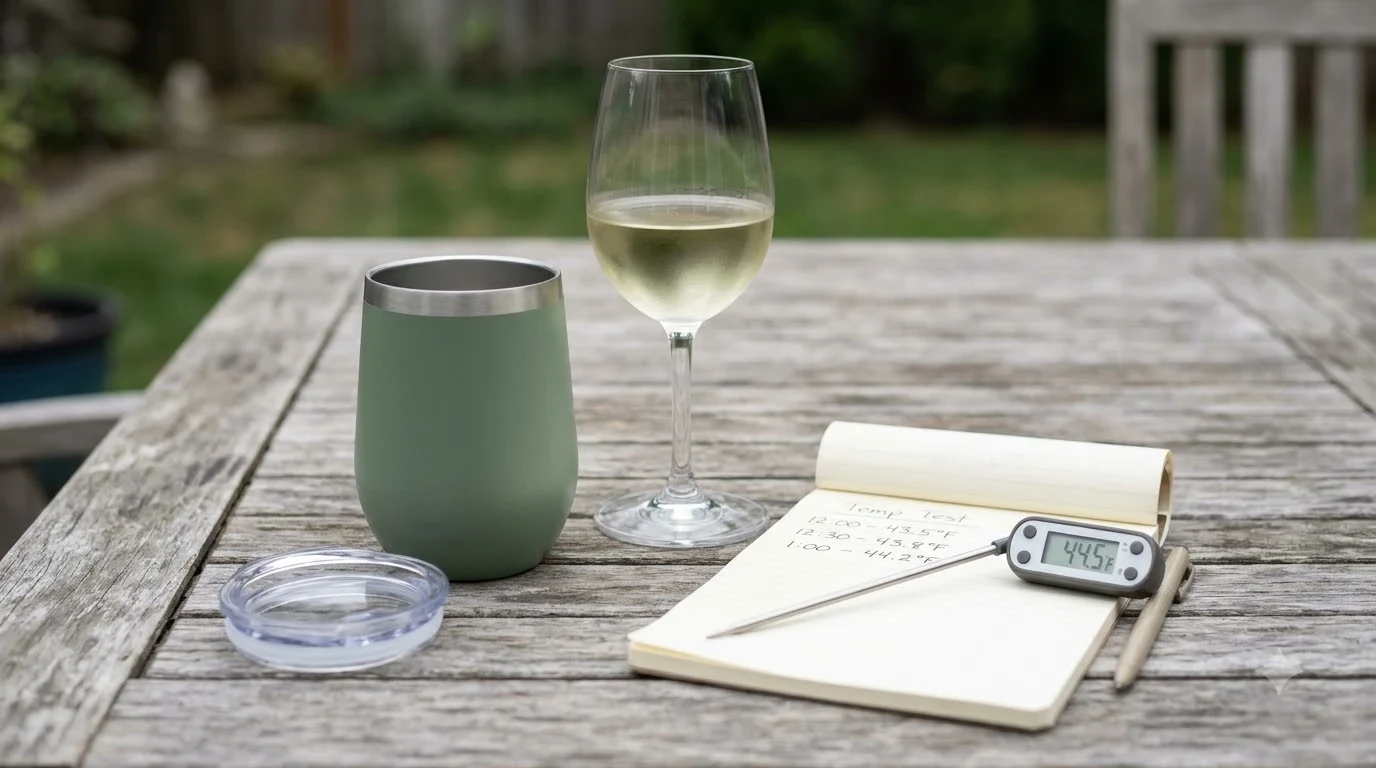
The exterior uses double-wall vacuum insulation under Hydro Flask’s TempShield branding. This construction separates the inner and outer walls with an insulated space, helping reduce heat exchange with the surrounding environment. For a chilled Sauvignon Blanc or Pinot Grigio on a warm patio, that design is more useful than an ordinary single-wall metal cup. It also makes the tumbler a practical option for people who prefer to drink slowly rather than finish a glass immediately.
The current model has a 10-ounce capacity. That is a useful size for casual wine service, although it is not a recommendation to fill the cup completely. A standard wine serving is approximately 5 ounces, leaving room for a comfortable pour and some space above the liquid.
| Specification | Current ceramic-lined model |
|---|---|
| Capacity | 10 fl. oz. |
| Diameter | 3.25 inches |
| Height | 4.25 inches |
| Weight | 0.40 lb. (6.4 oz.) |
| Body material | Stainless steel |
| Interior | Ceramic lining |
| Insulation | TempShield double-wall vacuum insulation |
| Lid | Closeable, splash-resistant design |
| Cleaning | Dishwasher safe |
| Microwave use | Not suitable |
These specifications are taken from Hydro Flask’s current product information. An earlier version sold through REI also has a 10-ounce capacity and 3.25-by-4.25-inch dimensions, but REI lists that version at 5.9 ounces and describes its interior as 18/8 stainless steel. The different weights and interior descriptions are a reason to distinguish the ceramic-lined version from older inventory rather than assuming every Hydro Flask wine tumbler has the same construction.
The current model’s dishwasher-safe construction is another practical advantage. Many insulated drinkware products require hand washing, so dishwasher compatibility can make regular use easier. Hydro Flask also specifically excludes stove, microwave, and freezer use. Its insulation is intended to maintain beverage temperature, not to make the vessel suitable for direct heating or freezing.
For more options in this category, the Accessory Brands collection provides a useful starting point for comparing drinkware and other wine-related equipment.
Hydro Flask’s official ceramic wine tumbler specifications provide the clearest reference for identifying the current construction and care requirements.
What Owners Like About Everyday Use
The strongest reasons to choose the Hydro Flask wine tumbler are temperature retention, portability, and a compact shape that works in casual settings. Owners also appreciate having a reusable wine cup that feels more substantial than disposable outdoor drinkware.
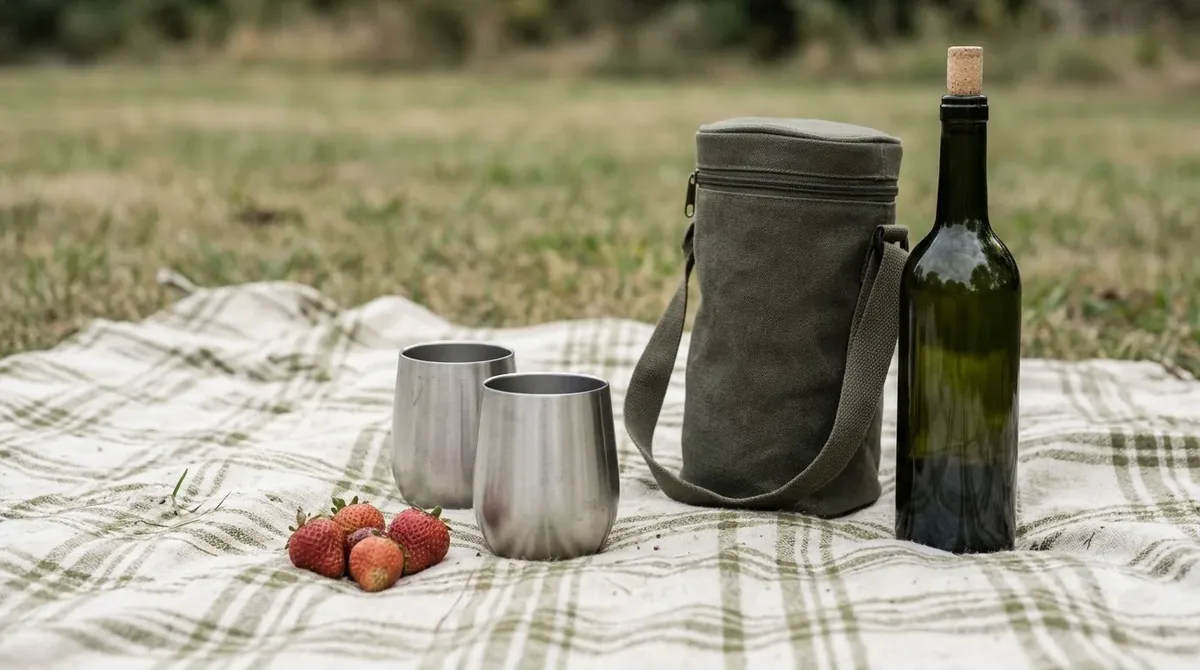
Temperature control is one of the most frequently mentioned benefits in owner feedback. Reviews on Zappos describe successful outdoor use in warm weather, particularly for keeping rosé cold. This is a sensible application for vacuum-insulated drinkware because white wine and rosé are generally more enjoyable when served cool rather than left warming in a regular glass.
The tumbler is also useful for leisurely drinking. A conventional wine glass has no insulation, so its contents gradually approach the surrounding temperature. That may be perfectly acceptable during dinner, but it can become inconvenient during a long afternoon outdoors. A vacuum-insulated cup slows that temperature change and gives the drinker more time to enjoy a pour.
The 10-ounce capacity provides another advantage. It accommodates a typical 5-ounce serving with plenty of room left over, and the cup can hold a second standard pour if needed. REI describes its earlier model as holding two standard pours. That capacity makes the product convenient for a short outdoor gathering or an evening on the deck without carrying a large bottle-shaped container.
Its relatively broad base also contributes to practical stability. Good Housekeeping compared several insulated wine tumblers and found that the Hydro Flask design had a flatter, more stable bottom than some competing options. A stable base is useful on picnic tables, outdoor furniture, and other surfaces where a delicate stemmed glass may be less convenient.
That advantage should not be confused with tip resistance. A flat bottom can help a tumbler stand securely, but it cannot guarantee that the beverage will stay inside after a collision or accidental knock. The lid helps control splashes during ordinary handling, but the vessel should still be treated as an openable drinking cup rather than a sealed travel bottle.
Owners also have positive things to say about the feel and appearance. Customer comments describe the cup as comfortable to hold and convenient for relaxing outdoors. Its compact, rounded form makes it suitable for settings where traditional stemware feels unnecessarily delicate. The stainless-steel exterior also provides a more durable alternative to ordinary glass for many casual occasions.
The ceramic interior adds another appealing detail for wine drinkers. Wine has recognizable aromas and flavors, and people who regularly switch between beverages may prefer an interior that is designed not to retain previous flavors. Hydro Flask specifically markets its ceramic lining around this benefit. It does not turn the cup into professional tasting glassware, but it addresses a reasonable concern about using one reusable vessel for different drinks.
The overall appeal is therefore straightforward: this is a convenient cup for enjoying a chilled beverage over a longer period. It is especially useful at a picnic, campsite, poolside table, or backyard gathering where keeping wine cool and avoiding fragile glassware are more important than examining the wine’s aroma through a traditional glass.
Common Complaints and Practical Limitations
The biggest drawback is the lid, which should not be mistaken for a fully leakproof closure. Some independent testing and owner comments identify leakage, awkward drinking, and difficulties operating the opening as recurring concerns.
Good Housekeeping reported that its tester found the Hydro Flask wine tumbler harder to drink from than some competing designs. Its testing also found that the lid did not prevent leaks. This is an important distinction because a closeable lid sounds reassuring, particularly for outdoor use, but a sipping opening and sliding closure do not necessarily create a watertight seal.
Owner feedback raises similar concerns. Zappos reviews include reports of wine escaping around the drinking opening when the cup is lifted away from the mouth. Other reviewers mention spills after the tumbler is knocked over. Some users also found the press-in lid difficult to open, which can make repeated sipping less convenient than expected.
These experiences do not mean every tumbler will leak during ordinary use. They do show why the product should be evaluated according to its intended purpose. A lid that reduces splashing and keeps insects away from a beverage is useful outdoors. A closure designed for carrying a full container inside a backpack is a different requirement.
Another consideration is the drinking experience itself. Wine glasses have openings and bowl shapes designed to help concentrate aromas. A compact insulated tumbler has different priorities. Its drinking rim and interior proportions do not reproduce the experience of a traditional wine glass, and people who enjoy smelling and assessing wine may find that difference noticeable.
This matters particularly with aromatic varieties such as Riesling, Sauvignon Blanc, and Pinot Noir. Their expressive aromas are part of the pleasure of drinking them. A regular stemmed glass is generally a better choice for a formal tasting, a wine class, or a special bottle where evaluating the nose and palate is part of the occasion.
Capacity is another limitation for people who want a larger serving vessel. Ten ounces is enough for a conventional 5-ounce serving, but it does not provide the generous bowl space associated with large red wine glasses. It is a compact outdoor cup, not a substitute for every style of stemware.
Finally, the ceramic-lined version should not be assumed to be indestructible. Stainless steel provides a durable exterior, but a ceramic interior is still a lining rather than a solid ceramic drinking vessel. Careless handling and hard impacts can affect drinkware over time. Users should avoid assuming that a reusable insulated tumbler can tolerate every type of impact simply because its exterior is metal.
Tip: Treat the Hydro Flask lid as a splash-reducing drinking closure, not as a guarantee against leaks. Keep the tumbler upright during transport, and avoid putting a filled cup inside a bag where it could tip over.
The practical takeaway is that the Hydro Flask works best when it stays upright and is used for stationary or relatively relaxed drinking. If spill prevention during travel is the primary requirement, a dedicated sealed bottle is a better category to investigate.
Who Should Buy It and Who Should Skip It
The Hydro Flask wine tumbler is best suited to casual wine drinkers who want insulated drinkware for outdoor settings. It is less suitable for people who need a completely sealed container or prioritize traditional wine-tasting performance.
Good choice for outdoor entertaining
People who regularly enjoy wine on a patio, balcony, or picnic table are a natural audience. A 10-ounce cup is manageable to carry, provides room for a standard serving, and has insulation that helps maintain the temperature of chilled beverages. The stainless-steel body is also more practical than fragile stemware in many outdoor environments.
Rosé, Pinot Grigio, Sauvignon Blanc, and sparkling alternatives served in casual settings are particularly reasonable choices. These beverages are commonly enjoyed cool, and the insulation helps slow warming. For best results, begin with wine at the appropriate serving temperature rather than relying on the tumbler to chill a warm bottle.
Good choice for people who switch beverages
The ceramic-lined version makes sense for people who use one cup for several different beverages. Hydro Flask’s stated goal of reducing flavor transfer is relevant when moving between different wine styles or switching from wine to another drink. The dishwasher-safe design also helps simplify cleaning after regular use.
People who enjoy both red and white wine may find this flexibility convenient. A lightly chilled Pinot Noir and a crisp Chardonnay have different serving preferences, but the same insulated cup can accommodate either. The important point is to clean the interior between drinks rather than allowing residues to accumulate.
Skip it if you need a sealed travel vessel
Commuters, hikers, and travelers who intend to put a full tumbler inside a backpack should consider a different design. The closeable lid offers convenience, but the reported leakage issues make it unsuitable as a guaranteed spillproof container. A screw-top bottle or another vessel with a genuinely sealed closure is more appropriate for movement.
Skip it if wine tasting is the priority
Traditional stemware remains preferable for formal wine appreciation. A glass with a suitable bowl makes it easier to observe color, swirl the wine, and appreciate aromas. The Hydro Flask is designed around portability and insulation, not the specific sensory requirements of professional wine evaluation.
There is also little reason to replace an existing set of good wine glasses if most wine drinking takes place indoors at a dining table. The tumbler offers its greatest advantages in situations where temperature retention and resistance to breakage matter more than presentation.
For someone who wants a more conventional portable option, a stemless wine tumbler may provide a closer drinking experience to ordinary glassware. Those who specifically need a closure can also compare a wine tumbler with lid before choosing a model.
How It Compares to Other Wine Drinkware
The Hydro Flask wine tumbler occupies the middle ground between conventional stemware and a portable insulated bottle. Its main strengths are insulation and convenience, while its main compromises are the lid design and reduced emphasis on wine aroma.
Compared with a traditional stemmed wine glass, Hydro Flask offers better practical temperature control and a more durable outdoor-friendly construction. A glass is lighter in some cases and provides a more familiar wine-drinking experience. It also makes it easier to appreciate aromas, especially when enjoying complex wines with several layers of fragrance.
Compared with a regular stemless glass, the Hydro Flask has the advantage of insulation. A conventional stemless glass is easy to store and can feel natural in the hand, but it does not have the same double-wall vacuum construction. For a warm afternoon outdoors, that difference can matter considerably.
There is also a difference between the Hydro Flask tumbler and a dedicated wine flask. A flask is intended to carry wine between locations, usually with a closure designed around transport. A tumbler is intended primarily for drinking. People who want to carry a serving of wine in a bag and pour it later should consider a wine flask instead.
The following comparison summarizes the practical differences between these categories without assuming that one type is appropriate for every occasion.
| Drinkware type | Main advantage | Main limitation | Best application |
|---|---|---|---|
| Hydro Flask wine tumbler | Double-wall insulation and portable construction | Lid is not guaranteed leakproof | Outdoor casual drinking |
| Stemmed wine glass | Traditional aroma and tasting experience | More delicate and less portable | Dinner and wine tasting |
| Stemless wine glass | Simple shape and familiar drinking experience | Limited temperature insulation | Everyday indoor entertaining |
| Sealed wine flask | Designed for carrying beverages | Requires pouring into a drinking vessel | Travel and transport |
| Ordinary insulated cup | General-purpose temperature retention | May lack wine-specific interior features | Mixed beverage use |
One additional distinction concerns the interior material. The older Hydro Flask wine tumbler listed by REI uses 18/8 stainless steel as its drinking surface, while the current ceramic-lined model adds an interior coating intended to provide a smoother flavor profile. People comparing older stock with the current model should pay attention to that difference.
For buyers who already own Hydro Flask bottles and other insulated drinkware, the wine tumbler offers a familiar design approach in a smaller format. For someone purchasing a first insulated wine cup, however, the most important comparison is not the logo or color selection. It is whether the lid, drinking opening, and capacity suit the way the cup will actually be used.
Independent evaluation also provides useful context. Good Housekeeping’s insulated wine tumbler comparison highlights both the stable base and the drinking and leakage limitations identified during its evaluation. That balanced picture is more useful than judging the product solely by its insulation specifications.
Frequently Asked Questions
Can the Hydro Flask wine tumbler hold sparkling wine?
Yes, sparkling wine can be served in the tumbler, although its shape is not designed to preserve or display carbonation like a Champagne flute. A narrow flute typically helps concentrate bubbles and aromas. For casual outdoor drinking, the insulated cup can still be convenient, but it is better to pour a fresh serving rather than expect the lid to preserve carbonation for an extended period.
Does the Hydro Flask wine tumbler make wine taste different?
The current ceramic lining is specifically intended to provide a smooth flavor profile and reduce flavor transfer. However, the cup’s shape can change how aromas reach the nose compared with a traditional wine glass. That difference is more noticeable with aromatic wines such as Gewürztraminer and Riesling than during casual sipping of straightforward everyday wines.
Can the tumbler be used for cocktails and nonalcoholic drinks?
Yes. Hydro Flask describes the current ceramic-lined product as suitable for hot and cold beverages, so it can serve iced tea, cold water, and other drinks as well as wine. Its compact capacity makes it useful for individual servings. The manufacturer does not recommend using it on a stove, in a microwave, or in a freezer.
Should red wine be served in the Hydro Flask tumbler?
Yes, although serving temperature still matters. Light-bodied reds such as Pinot Noir are often more enjoyable slightly cool, while fuller-bodied Cabernet Sauvignon and Syrah are generally served warmer than white wines but cooler than typical room temperature. An insulated tumbler can help maintain the temperature at which the wine is poured, but it does not replace proper serving-temperature preparation.
How much wine should be poured into a 10-ounce tumbler?
A conventional 5-ounce serving is a sensible starting point, leaving ample room above the liquid. This also gives the drinker space to sip without bringing the wine too close to the lid. A 10-ounce capacity does not mean that filling the vessel to the rim is the best way to serve wine, particularly when the cup will be moved around outdoors.
The Hydro Flask wine tumbler makes the most sense for people who regularly enjoy wine outside and want a reusable cup with dependable insulation and convenient cleaning. Its ceramic-lined construction is appealing, but the lid’s reported leakage and drinking-comfort issues deserve serious consideration. Choose it as an insulated casual-drinking vessel rather than a sealed travel container or replacement for traditional wine-tasting glassware.
More in Wine Accessories
 Coravin Vs Vacu Vin: Choose the Right Wine Saver for Your BottlesUpdated Nov 21, 2026
 Zwilling Wine Stopper Review: Preserve Open Bottles LongerUpdated Nov 21, 2026
 Wine Enthusiast Wine Preserver Review: Features, Benefits and LimitationsUpdated Nov 21, 2026
 Wine Enthusiast Wine Stopper: An Easier Way to Reseal Open BottlesUpdated Nov 21, 2026
 Vintorio Wine Opener: Two-Step Cork RemovalUpdated Nov 21, 2026
 Zwilling Wine Aerator Review: Aerate, Pour, and Seal With One ToolUpdated Nov 21, 2026