

We may earn a commission when you buy through links on this page, at no extra cost to you. Learn more.
A Summit beverage cooler is a commercial-grade, compressor-driven refrigerator built specifically for tight residential and foodservice spaces where standard 24-inch appliances will not fit. Models like the 18-inch SCR1841B and 24-inch SCR600BL series stand out for ANSI-NSF Standard 7 sanitation listings, factory door locks, and true front-breathing undercounter ventilation, though buyers should weigh higher replacement part costs and a parts-only compressor warranty after year one.
Shoppers researching a Summit beverage cooler usually have a very specific cutout problem to solve, such as a narrow 12-inch, 15-inch, or 18-inch wet bar niche, an ADA-height counter, or a breakroom that requires commercial health-department certification. Headquartered in the Bronx, New York, as a division of Summit Appliance (Felix Storch, Inc.), the brand focuses heavily on specialty compact refrigeration rather than mass-market kitchen suites. Evaluating how these units actually perform means comparing their published engineering specs against long-term owner feedback on cooling consistency, noise, and service support.
Summit Beverage Cooler Specs and Key Features
Summit builds its beverage centers around commercial compressor systems, automatic defrost, and exact cabinet widths ranging from 12 inches to 24 inches. Across the core lineup, the 18-inch built-in SCR1841B and the 24-inch freestanding SCR600BL series illustrate the two main engineering approaches Summit uses for residential bars and light commercial venues.
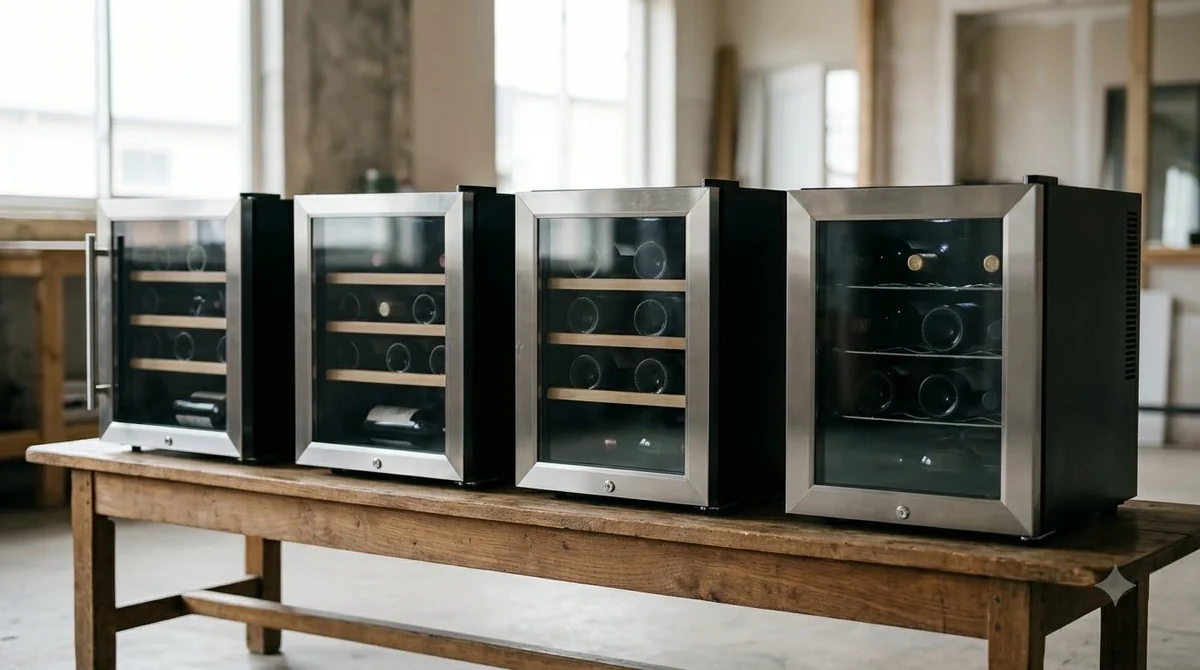
The Summit SCR1841B specifications show an 18-inch nominal cabinet (17.75 inches wide by 34.25 inches high by 23.5 inches deep, or 25.25 inches deep including the towel-bar handle) yielding 2.7 cubic feet of interior volume. Because its cooling system breathes through the front kickplate, installers can slide the cabinet flush under a standard 24-inch counter without leaving side or rear air gaps. Inside, a digital thermostat adjusts from 34°F to 64°F, allowing the cabinet to chill canned sodas and beer near freezing or hold white and sparkling wines at cellar-adjacent serving temperatures between 45°F and 55°F.
By contrast, the classic 24-inch SCR600BL series targets maximum storage density in a freestanding footprint, measuring 23.63 inches wide by 33.5 inches high by 23.5 inches deep for 5.5 cubic feet of capacity according to AJ Madison’s product specifications. Instead of a digital keypad, it uses a mechanical dial thermostat and conceals its evaporator plate inside the rear wall so cans and bottles do not catch on exposed coils. Both lines ship with reversible tempered glass doors, interior lighting on a manual switch, and factory-installed keyed cylinder locks.
| Specification | Summit SCR1841B (18″ Built-In) | Summit SCR600BL Series (24″ Freestanding) |
|---|---|---|
| Nominal Width & Capacity | 18″ wide (17.75″ actual) · 2.7 cu. ft. | 24″ wide (23.63″ actual) · 5.5 cu. ft. |
| Cabinet Dimensions (H x W x D) | 34.25″ x 17.75″ x 23.5″ (25.25″ w/ handle) | 33.5″ x 23.63″ x 23.5″ (25.88″ w/ handle) |
| Installation & Ventilation | Front-breathing (built-in or freestanding) | Rear/side breathing (freestanding; 5″ clearance) |
| Temperature Control & Range | Digital thermostat · 34°F to 64°F | Mechanical dial thermostat · 34°F to 46°F |
| Shelving & Door Construction | 4 adjustable chrome wire shelves · Triple-pane glass | 4 adjustable glass shelves · Double-pane glass |
| Refrigerant & Annual Energy | R600a (1.06 oz) · 284 kWh/year | R134a (1.8 oz) · 434 kWh/year |
| Certifications & Sound Rating | ETL, ETL-C, ETL-S (NSF-7) · 34.2 dB | UL, ULC, ETL-S (NSF-7) · Commercial compressor |
| Standard Warranty | 1 year parts & labor · 5 years compressor (parts) | 1 year parts & labor · 5 years compressor (parts) |
Temperature Range and Dual-Purpose Beverage Flexibility
Most dedicated kitchen beverage centers bottom out around 37°F or 38°F, which leaves canned beer and sparkling water slightly warmer than ice-chest temperature. Summit’s 34°F lower limit on the SCR1841B reaches the top end of commercial foodservice chillers, while its 64°F upper ceiling lets owners pivot the unit toward red wine storage when hosting dinner parties. That wide 30-degree span makes a single-zone Summit cabinet far more adaptable than fixed-range soda coolers, though anyone building a serious bottle collection should still compare dedicated dual-zone models in a best rated wine cooler roundup.
What Owners Like About Summit Beverage Coolers
Verified buyers and remodelers consistently highlight three strengths: exact non-standard cabinet widths, rugged commercial sanitation hardware, and dependable multi-year cooling once properly installed. Rather than competing on luxury wood-trimmed aesthetics, Summit wins loyalty by fitting cabinetry openings that mainstream appliance brands ignore.
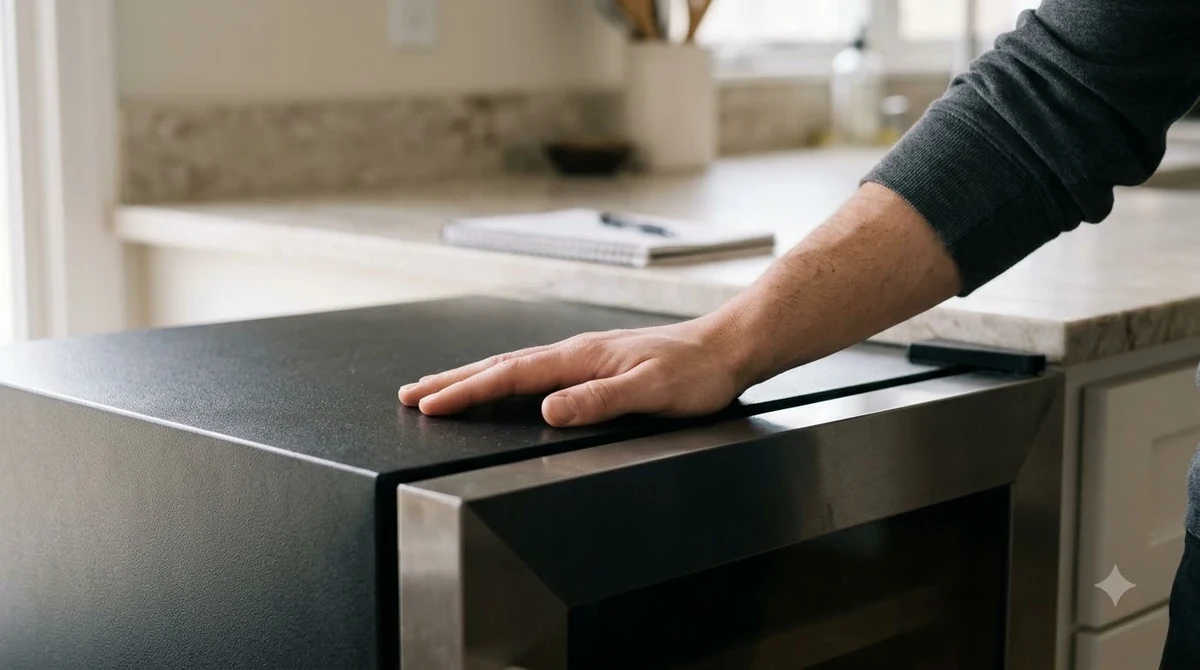
In kitchen and wet-bar renovation discussions on Reddit’s appliance repair community, homeowners who outfitted entire home bars with Summit undercounter pieces report steady multi-year cooling performance across 15-inch, 18-inch, and 24-inch cutouts. Summit’s catalog includes 12-inch models like the SCR1225B, 15-inch units like the SCR1536BG, and 31.75-inch ADA-compliant heights such as the SCR1841BADA, giving cabinetmakers exact dimensional matches without custom filler strips. Buyers also appreciate that the cabinets arrive fully finished in black powder coat, meaning a built-in model can sit freestanding at the end of a counter run without exposed sheet metal.
Small-business owners, dental offices, and café operators point to the ETL-S listing to ANSI-NSF Standard 7 and CalCode compliance as decisive advantages. Standard residential glass-door mini fridges frequently fail local health inspections because they lack commercial temperature recovery and food-grade interior liners. Having a factory-installed keyed lock right on the door frame also saves offices and rental hosts from drilling aftermarket latches into tempered glass.
Tip: Before plugging in any newly delivered Summit compressor cooler, leave the cabinet standing upright for at least 2 hours—and up to 24 hours if it was tilted during freight transit—so compressor oil drains back into the sump. Set the thermostat to a middle setting around 38°F to 40°F for the first 24 hours before loading warm cans, and keep at least 1 inch of breathing room between cans and the rear interior wall.
Common Complaints and Real-World Trade-Offs
Critical feedback on Summit beverage coolers rarely targets basic cooling power; instead, complaints cluster around post-warranty repair costs, replacement part delays, minor factory fit-and-finish flaws, and over-chilling on dial-controlled models. Understanding these friction points ahead of purchase prevents costly surprises during year two or three of ownership.
Across Better Business Bureau filings for Summit Appliance in the Bronx and long-term owner threads, the most frequent frustration involves service logistics and parts availability after the initial 12-month labor warranty expires. While Summit backs the sealed compressor for 5 years, that extended coverage pays only for the replacement part—not the technician’s diagnostic trip, refrigerant recovery, or brazing labor, which owners note can easily approach half the cost of a new compact fridge. Some commercial and residential buyers also report waiting weeks for specific control boards, door gaskets, or hinge brackets when an older SKU is phased out.
A second recurring complaint involves temperature swings or frozen cans on mechanical-dial units and shallow-depth models. Retail owner reviews for Summit’s shallow-depth beverage coolers note that turning a dial thermostat toward its coldest setting—or packing cans tightly against the rear cooling plate—can freeze soda and burst aluminum cans overnight. Even on digital units like the SCR1841B, Summit’s owner documentation specifies an ambient room temperature window of 60°F to 90°F (with 72°F to 78°F considered optimal); placing an indoor-rated cabinet in an unconditioned garage above 90°F forces the compressor to run continuously and accelerates wear.
Finally, perfectionists inspecting showroom fit and finish occasionally flag uneven door hinge brackets on multi-door cabinets, modest compressor hum when the unit cycles under a dining counter, and fingerprint smudges on stainless-trimmed glass doors. At a published 34.2 dB on the SCR1841B, compressor noise is quiet enough for an open kitchen or living room, yet still noticeable as a low background hum in a silent bedroom or study.
How Summit Beverage Coolers Compare to Alternatives
When shopping for an undercounter drink refrigerator, Summit sits squarely between budget residential mini fridges and luxury custom-panel wine preservation cabinets. Comparing Summit’s commercial-rated cabinets against standard residential beverage coolers and dedicated wine cellars clarifies where its engineering pays off and where simpler or specialized units win.
Against mainstream residential 15-inch and 24-inch beverage coolers sold at big-box home centers, Summit’s biggest differentiator is commercial sanitation and electrical certification. According to Summit Appliance’s specification sheets, models like the SCR1841B and SCR600BL carry ETL-S listing to ANSI-NSF Standard 7, which certifies that the interior liner, shelving, and cooling recovery meet commercial foodservice standards for packaged beverages. Most residential-only beverage fridges omit NSF-7 testing, use lighter-duty door hinges, and skip factory keyed locks, though those consumer models often include softer blue or amber display lighting and slightly lower entry costs for casual basement bars.
Within Summit’s own catalog and across dedicated wine storage brands, buyers also weigh a pure beverage center against a single-zone or dual-zone wine cellar. For example, Summit pairs the 18-inch SCR1841B beverage cooler with the matching 18-inch SWC1840B wine cellar so remodelers can install them side by side in a 36-inch opening. While the beverage unit uses flat chrome wire or tempered glass shelves to pack upright 12-ounce cans and 750 ml bottles tightly, dedicated wine coolers swap flat racks for scalloped wooden or wire cradles that hold Bordeaux bottles horizontally and cap minimum temperatures near 41°F rather than 34°F. If the goal is chilling Prosecco, soda water, and bitter aperitifs for an aperol spritz recipe alongside craft beer, a flat-shelf beverage cooler holds far more varied container shapes than a scalloped wine rack.
Installation, Ventilation, and Daily Care Guidelines
Proper ventilation clearance and thermostat setup determine whether a compressor beverage cooler runs quietly for a decade or burns out prematurely. Summit splits its lineup into true front-breathing built-in models and rear-breathing freestanding models, and mixing up the two installation styles is one of the fastest ways to void warranty coverage.
According to Summit’s published installation manuals, front-breathing undercounter models such as the SCR1841B pull and exhaust air through the slotted lower front kickplate, allowing flush installation between base cabinets under a standard 24-inch countertop. By contrast, freestanding units like the SCR600BL dissipate heat through the rear and side walls and require at least 5 inches of open air space behind and beside the cabinet—as well as unobstructed ceiling clearance—so trapped heat does not overload the R134a or R600a compressor. Both styles require a grounded 115V AC, 60Hz dedicated circuit without extension cords, and Summit advises against placing any indoor-rated model near ovens, radiators, or unconditioned garages outside the 60°F to 90°F operating window.
Routine maintenance stays straightforward thanks to automatic cycle defrost on both the SCR1841B and SCR600BL series, which eliminates manual ice scraping. Every three to six months, unplugging the unit to vacuum dust off the lower front condenser grille keeps airflow unrestricted and holds annual energy draw near Summit’s published 284 kWh to 434 kWh benchmarks. Wiping interior walls with a mild baking soda and warm water solution—rather than harsh bleach or abrasive pads—protects the NSF-rated liner and prevents odor transfer when chilling mixers, garnishes, or leftover white wine opened for a weekend chicken marsala recipe.
Frequently Asked Questions
Can you reverse the door swing on a Summit beverage cooler?
Yes, most Summit glass-door beverage centers—including both the 18-inch SCR1841B and 24-inch SCR600BL series—ship with user-reversible door hinges so the handle can open from either the left or right side. Summit’s specification sheets note that the reversible triple-pane and double-pane glass doors can be switched on site with standard hand tools, provided the top hinge bracket and lower kickplate pins are realigned carefully so the magnetic gasket seals evenly.
Do Summit beverage coolers block UV light to protect bottled beer and wine?
Standard Summit glass-door models use double-pane or triple-pane tempered glass to insulate against heat gain, and Summit offers four optional factory tint upgrades (designated T1 through T4) on models like the SCR1841B. According to Summit Appliance’s technical documentation, those factory tint films reject up to 99 percent of ultraviolet rays, making them worthwhile if the cooler sits near a sunlit kitchen window or patio door.
How many cans and bottles actually fit inside an 18-inch vs. 24-inch Summit cooler?
Interior volume scales from 2.7 cubic feet on the 18-inch SCR1841B up to 5.5 cubic feet on the 24-inch SCR600BL, roughly doubling usable storage space. Storage capacity depends heavily on container diameter and shelf spacing, with Summit listing 2.7 cubic feet of interior volume on the 18-inch SCR1841B and 5.5 cubic feet on the 24-inch SCR600BL, and removing one of the adjustable shelves creates extra vertical clearance for taller upright bottles.
Is a Summit beverage cooler quiet enough for an open-concept kitchen or living room?
With a published sound rating of 34.2 dB on the R600a-equipped SCR1841B, Summit’s newer built-in models operate below the volume of a quiet library whisper and blend easily into open kitchens or family rooms. A soft click when the compressor cycles on and a low hum while it pulls warm cans down to 34°F remain audible in a silent room, especially if the cabinet sits on bare hardwood rather than a leveling mat.
What happens if a Summit beverage cooler breaks down after the first year?
During months 13 through 60, Summit’s warranty covers replacement of the sealed compressor part itself, while the owner pays for all technician travel, diagnostic fees, refrigerant recharging, and labor, as well as any non-compressor parts such as fans or digital control boards. Keeping the original serial plate intact and verifying that a front-breathing versus freestanding unit was installed with proper ventilation clearances helps avoid warranty claim disputes.
A Summit beverage cooler delivers commercial ANSI-NSF Standard 7 sanitation, true near-freezing 34°F chilling, and hard-to-find 12-inch, 15-inch, 18-inch, and ADA-compliant dimensions that mainstream appliance brands rarely match. Buyers who verify front-breathing versus freestanding clearance rules before ordering—and factor in third-party labor costs after year one—get a durable, lockable drink center tailored to tight home bars and professional breakrooms alike.
More in Model Reviews
 Magic Chef 44 Bottle Wine Cooler Review for Flexible StorageUpdated Nov 21, 2026
 Whynter 164 Bottle Wine Cooler Review: Capacity, Features, and FitUpdated Nov 21, 2026
 Insignia NS WC16BK6 Review: Compact 16-Bottle Wine StorageUpdated Nov 21, 2026
 Wine Enthusiast Electric Blue Omega Review: Opening, Pouring, and Preserving Made EasierUpdated Nov 21, 2026
 Koolatron 20 Bottle Wine Cooler Review: Features, Fit, and PerformanceUpdated Nov 21, 2026
 NewAir AWC 330E Review for Home Wine StorageUpdated Nov 21, 2026