

We may earn a commission when you buy through links on this page, at no extra cost to you. Learn more.
The insignia beverage cooler NS-BC1ZSS9 is a practical choice for a home bar or kitchen that needs substantial refrigerated drink storage, adjustable temperatures, and built-in or freestanding installation. Its 5.3-cubic-foot interior holds up to 165 standard 12-ounce cans, while three adjustable shelves and a reversible glass door make everyday organization easier. However, shelf strength, door closure, and installation measurements deserve attention before purchasing.
The Insignia 165-can beverage cooler occupies an interesting position between a compact drink refrigerator and a larger undercounter appliance. It offers a glass-front presentation, digital temperature controls, automatic defrosting, and enough advertised capacity for a busy household or entertainment area. Its appeal is straightforward: keep frequently served drinks cold without filling the main kitchen refrigerator.
There is one important distinction before looking at the details. Insignia sells several beverage coolers with different capacities and cabinet designs. This review focuses on the NS-BC1ZSS9, the 165-can model, rather than assuming that specifications for the smaller 115-can or 130-can versions apply to it. That distinction matters because installation dimensions, shelf arrangements, and storage capacity vary across the range.
Specs and Key Features of the Insignia 165-Can Model
The NS-BC1ZSS9 combines a relatively large interior with straightforward controls and flexible installation. Its 34–50°F temperature range, three adjustable shelves, and reversible door make it particularly useful for households that store several types of canned beverages.
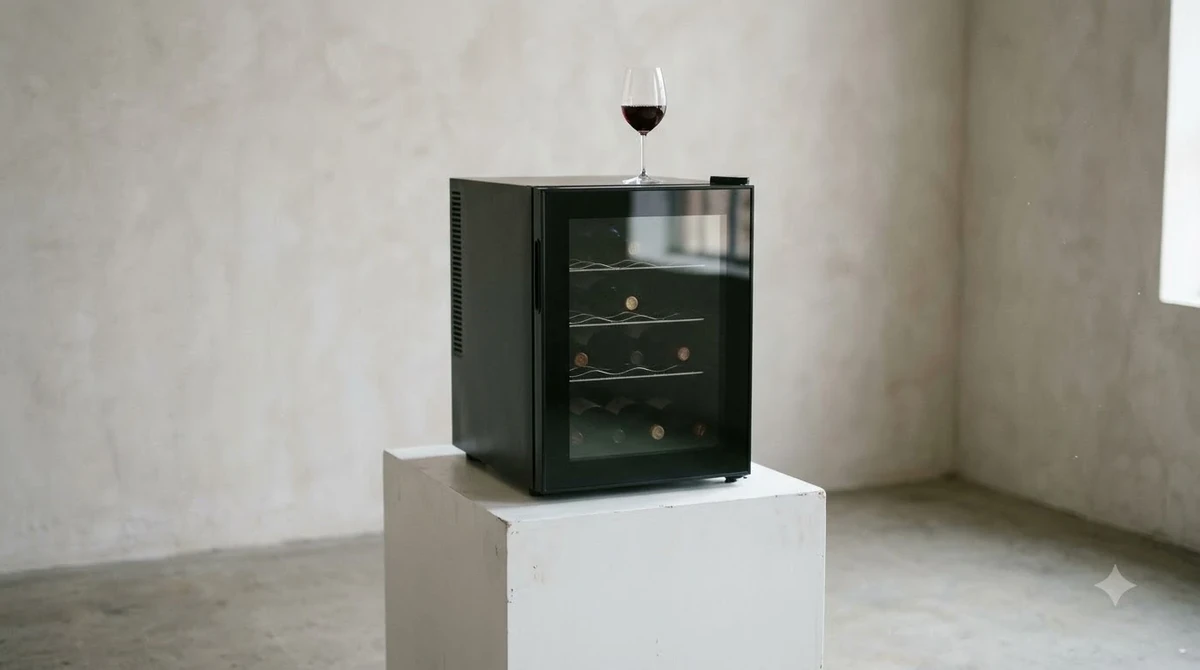
The most important specifications are the physical dimensions and storage capacity. The cabinet measures approximately 23 7/16 inches wide and 34 5/16 inches high, with a depth of 25 5/16 inches according to the manufacturer’s user guide. Its listed weight is 100.3 pounds, so installation requires a stable supporting surface and some planning before delivery.
| Specification | Insignia NS-BC1ZSS9 |
|---|---|
| Advertised capacity | 165 standard 12-ounce cans |
| Interior capacity | 5.3 cubic feet |
| Temperature range | 34–50°F |
| Adjustable shelves | 3 chrome wire shelves |
| Height | 34 5/16 inches |
| Width | 23 7/16 inches |
| Depth | 25 5/16 inches |
| Weight | 100.3 pounds |
| Electrical requirement | 115V, 60Hz |
| Current | 0.86A |
| Power cord | 5.4 feet |
| Defrost system | Automatic |
| Lighting | Interior LED |
| Door | Reversible glass door |
The advertised 165-can capacity is useful for comparing this appliance with smaller countertop and undercounter beverage refrigerators. However, that number represents standard 12-ounce cans arranged efficiently. It should not be interpreted as a guarantee that 165 mixed-size containers, tall bottles, and cans will fit simultaneously. Packaging shapes and shelf spacing affect practical storage.
Temperature control is another important advantage. The available settings span 34°F to 50°F, giving owners room to accommodate different drinks. Soft drinks and many beers can be kept toward the colder end, while some craft beers and other beverages benefit from slightly warmer serving temperatures. The digital display makes adjustments more convenient than relying on a basic mechanical dial.
The three adjustable chrome wire shelves provide flexibility for changing the interior arrangement. Automatic defrosting reduces the need for manual frost removal, while the interior LED light makes it easier to identify drinks without switching on additional room lighting. Best Buy also lists a door-open alarm, which provides an additional reminder if the door is left ajar.
For the complete specifications and installation instructions, consult the official Insignia 165-can user guide. It is particularly useful for checking clearances and electrical requirements before committing to a cabinet opening.
What Owners Like About Everyday Performance
Owner feedback highlights the cooler’s capacity, appearance, temperature control, and relatively quiet operation. These qualities make the NS-BC1ZSS9 attractive for a home entertainment area where a conventional refrigerator may be inconvenient or visually distracting.
Storage is the most obvious advantage. A capacity of 165 standard cans provides considerably more room than many compact beverage refrigerators. Families can separate sparkling water, soda, beer, and other canned drinks instead of keeping everything in the main refrigerator. A dedicated beverage area also reduces the need to rearrange food whenever guests visit.
The glass door is another appealing feature. Rather than opening the cabinet to discover what is available, users can see the contents from outside. The stainless steel frame gives the appliance a more finished appearance than a basic solid-door mini refrigerator. Combined with interior lighting, it works well in a kitchen, entertainment room, or home bar where the refrigerator remains visible.
Best Buy’s customer feedback identifies cooling, size, capacity, and appearance as recurring positive themes. Some purchasers also describe the operating noise as acceptable. These comments are useful indicators of owner experience, although individual installations, room temperatures, loading patterns, and expectations can affect how a refrigerator performs.
Temperature flexibility is especially valuable for people who keep several beer styles. One Best Buy purchaser specifically mentioned using a setting around 40°F for craft beer. That example illustrates why a range of adjustable settings can be more useful than a beverage refrigerator with only one fixed cooling level.
The reversible door also deserves credit. Kitchen layouts and home bars do not always provide the same opening direction. Being able to change the hinge side gives owners more flexibility when positioning the appliance beside cabinetry, a countertop, or another refrigerator.
For people organizing a complete entertainment space, the cooler can complement a dedicated wine refrigerator rather than replacing one. A separate best rated wine cooler can provide more appropriate bottle storage, while the Insignia handles canned drinks and everyday refreshments. This division also keeps wine bottles from competing with cans for shelf space.
Common Complaints and Potential Drawbacks
The main concerns surrounding the NS-BC1ZSS9 involve shelf strength, door closure, and long-term durability. Its generous capacity is useful, but loading the shelves heavily and ignoring the door seal can create practical problems.
Shelf strength is one of the more specific concerns in owner feedback. A verified purchaser reported that the wire shelves could flex when completely loaded, allowing a can to fall against the door. Another owner described difficulties with double-stacking cans because the wire shelving did not provide an entirely flat surface.
This is worth considering because advertised capacity and convenient everyday organization are not necessarily the same thing. A refrigerator can accommodate a large number of standard cans under an ideal arrangement without making every possible arrangement equally stable. Heavy containers, oversized cans, and poorly balanced stacks can place additional pressure on the shelves.
A sensible approach is to distribute the weight evenly rather than concentrating the heaviest beverages on one section. Avoid forcing extra cans into narrow gaps, and leave enough space for the shelves to sit securely in their supports. For bottles that do not fit naturally, consider whether another storage arrangement would be more appropriate.
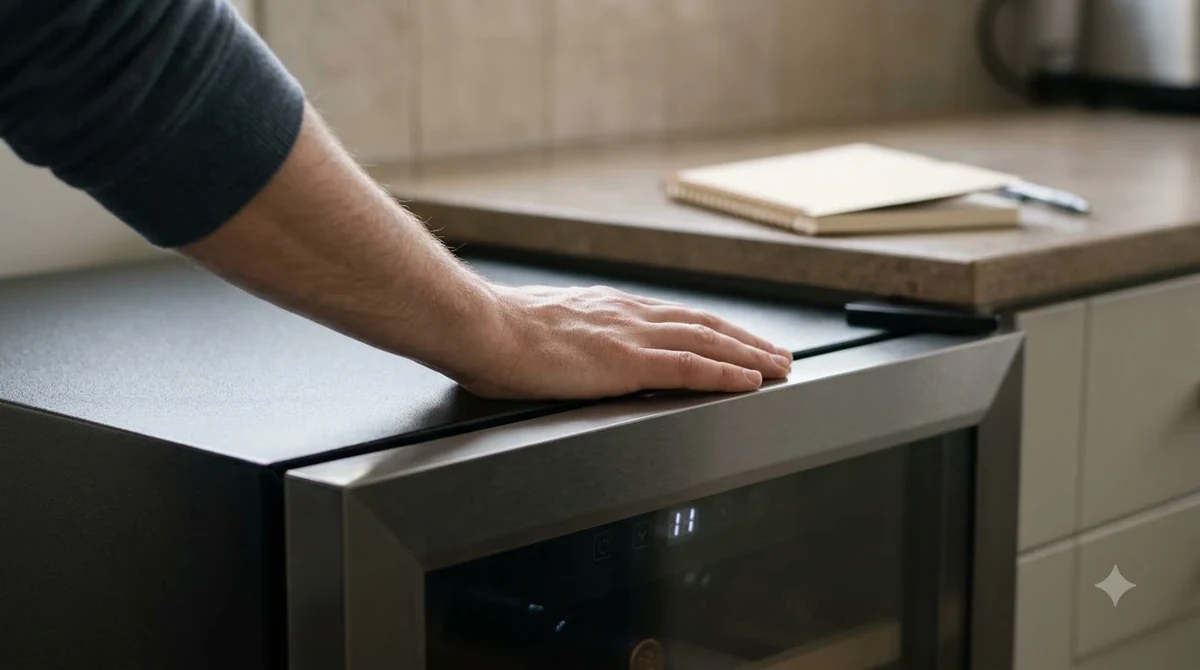
Door closure is another recurring issue. Best Buy customer feedback includes complaints about door seals and reports from owners who needed to pay attention to whether the door had closed properly. One purchaser specifically described the inconvenience of a door that could remain open after being slammed.
This issue deserves attention because even a good cooling system cannot maintain consistent temperatures if warm room air repeatedly enters the cabinet. A poorly positioned shelf, dirty gasket, or unlevel refrigerator can also interfere with proper closure. The manufacturer specifically identifies these possibilities in its troubleshooting instructions.
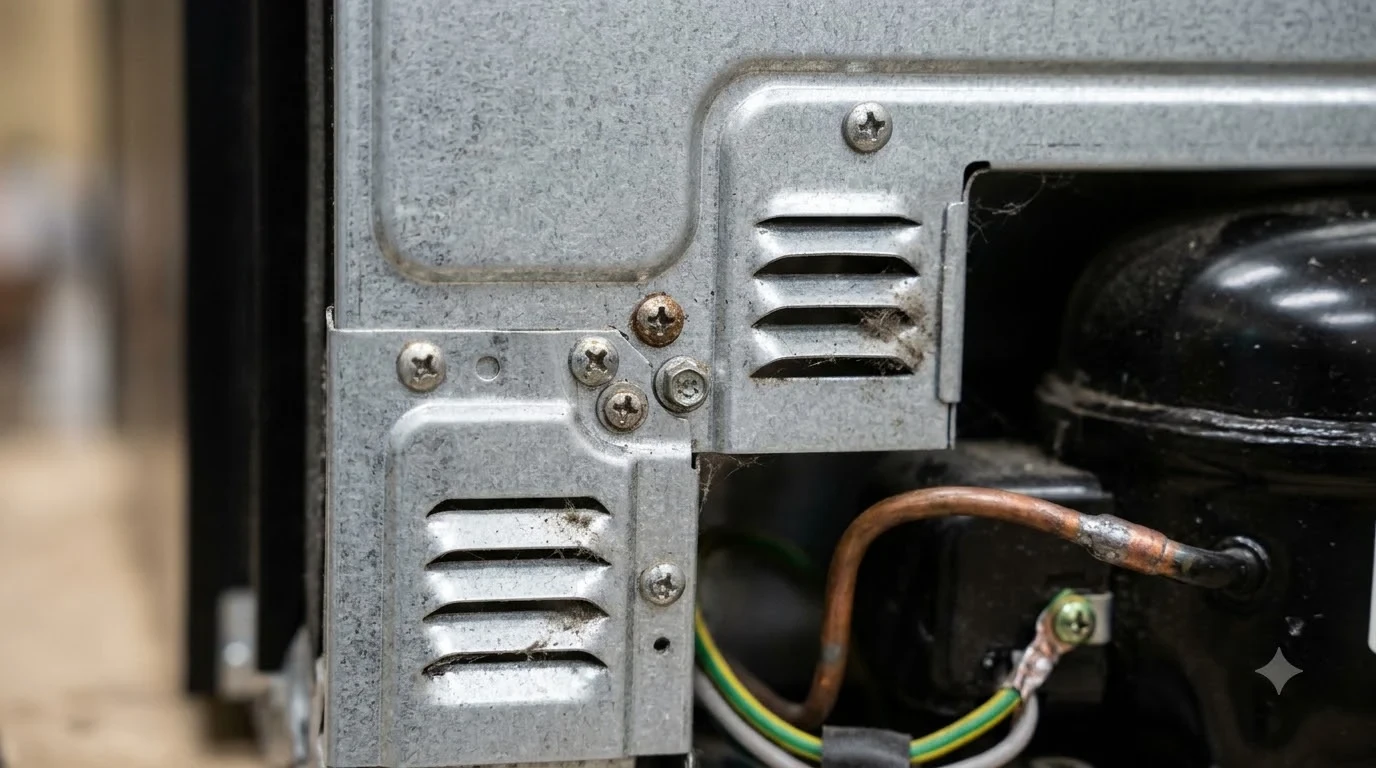
Durability is a further consideration. Some customers have raised concerns about long-term reliability and the condition of appliances received at delivery. These reports do not establish that every unit has a manufacturing defect, but they make an inspection immediately after delivery sensible. Check the glass, frame, corners, door alignment, shelves, and power cord before installation.
There are also practical limitations unrelated to defects. The cabinet weighs more than 100 pounds, so moving it into a tight kitchen opening is not a one-person convenience task. Its dimensions can also make it unsuitable for smaller rooms, narrow doorways, or cabinetry that was not measured for this particular appliance.
Finally, this is a beverage cooler rather than a specialist wine storage cabinet. Although its adjustable temperature settings can accommodate certain chilled wines, the internal layout is optimized around cans. Wine bottles may occupy more room, sit awkwardly on wire shelves, and reduce the total usable capacity.
Who Should Buy the Insignia and Who Should Skip It
The NS-BC1ZSS9 is best suited to households that regularly refrigerate large quantities of canned drinks and have enough room for an undercounter-style appliance. It is less appropriate for buyers who prioritize bottle storage, specialized wine preservation, or a particularly compact footprint.
Who should consider buying it
Home bar owners: The 165-can capacity provides room for multiple drink categories. Beer, soda, sparkling water, and canned cocktails can be organized separately, making it easier to serve guests without repeatedly opening the main refrigerator.
Families with frequent visitors: A dedicated beverage refrigerator can free up valuable kitchen refrigerator space. The glass door makes it easy to see which drinks need replenishing, while the interior light helps identify beverages during evening gatherings.
Kitchen renovation projects: Its built-in or freestanding design offers more installation flexibility than many ordinary compact refrigerators. The reversible door can also help accommodate different kitchen layouts, provided the required clearances are respected.
People who prefer adjustable temperatures: The 34–50°F range is useful for households that store different beverages. Owners can select settings based on the drinks being stored instead of accepting a single fixed temperature.
Who should look elsewhere
Wine collectors: A dedicated wine refrigerator generally offers a more suitable arrangement for bottles. Wine bottles are not interchangeable with standard cans in terms of shape, shelf support, or storage density. Someone maintaining a collection of Bordeaux, Burgundy, or sparkling wine should prioritize bottle-friendly shelving.
Small-apartment residents: The approximately 23-inch width and 34-inch height may be manageable, but the depth and 100.3-pound weight require careful planning. A smaller beverage refrigerator may make more sense where floor space and installation access are limited.
Buyers seeking maximum shelf flexibility: The three adjustable wire shelves provide basic organization, but they may not suit every container size. Anyone who regularly stores oversized bottles or unusually shaped containers should examine the shelf arrangement before purchasing.
People expecting a completely silent appliance: A compressor-based cooler produces operating sounds, including normal refrigerant movement and compressor noise. The manufacturer’s troubleshooting guide explains that buzzing and certain valve sounds can occur during normal operation.
For buyers who are still comparing appliance sizes and configurations, a broader beverage refrigerator model review can help establish whether a larger cabinet or smaller countertop design makes more sense.
How It Compares to Other Insignia Beverage Coolers
The 165-can model is not the only Insignia option, and the differences between models are significant. Capacity, overall dimensions, and installation style should guide the decision rather than the brand name alone.
One useful comparison is the NS-BC115SS9, which is rated for 115 standard 12-ounce cans and has a stated capacity of 3.2 cubic feet. It is a smaller alternative for people who need a dedicated drink refrigerator but do not regularly store enough beverages to justify a 5.3-cubic-foot cabinet.
The NS-BC115SS9 also has a different physical configuration. Its published dimensions are approximately 33.1 inches high, 18.9 inches wide, and 17.3 inches deep. That makes it a substantially more compact appliance than the NS-BC1ZSS9, although buyers should still confirm the exact installation requirements for their chosen model.
Another option is the NS-BC130GP1, a 130-can beverage cooler. It sits between the 115-can and 165-can models in advertised capacity. Best Buy identifies three adjustable wire shelves with wood trim, a reversible door, interior lighting, and temperature adjustment between 34°F and 50°F.
These distinctions matter because a larger advertised capacity does not automatically mean a better fit. The 165-can model is more attractive for households with extensive canned-drink storage needs, while the 115-can version can be more practical where cabinet space is limited. The 130-can model offers another capacity option for buyers who do not need the largest unit.
It is also important not to confuse a beverage cooler with a wine refrigerator. A wine-specific cabinet typically prioritizes bottle orientation, shelf spacing, and temperature requirements associated with wine storage. The Insignia NS-BC1ZSS9 is primarily intended for canned drinks, even though its temperature range overlaps with some wine-serving temperatures.
For example, sparkling wine is generally served around 40–50°F, while many light white wines and rosés are served around 45–50°F. The Insignia’s upper temperature settings overlap with those ranges, but temperature compatibility alone does not make it a purpose-built wine cellar. Bottle stability and storage configuration remain important considerations.
For a home that serves both wine and cocktails, separating the appliances can be a sensible arrangement. Use a dedicated wine refrigerator for bottles and the Insignia for canned drinks and mixers. That setup also makes it easier to prepare an Aperol Spritz recipe because sparkling water and other canned mixers can remain conveniently chilled.
Frequently Asked Questions
Can the Insignia 165-can beverage cooler be installed outdoors?
No. The manufacturer’s installation instructions state that this appliance is intended for indoor use and is not designed for garages or outdoor locations. Exposure to unsuitable ambient conditions can affect cooling performance, so a protected indoor location is the appropriate choice.
Does the Insignia beverage cooler remember its temperature setting after a power interruption?
The manufacturer’s user guide includes a memory-function section describing the controls. After a power interruption, allow the appliance to resume operation and verify the displayed setting before relying on it for beverage storage. The manual also recommends waiting at least five minutes before restarting the cooler after a power failure.
Can the Insignia beverage cooler be transported lying on its side?
The manufacturer instructs owners to keep the cooler upright during transportation. Remove the beverages, secure loose interior components, and tape the door shut before moving it. This is especially important for an appliance weighing approximately 100 pounds.
What do the E1 and E9 error codes mean?
E1 indicates a chamber temperature sensor fault, while E9 indicates a high-temperature alarm. The manual also identifies E4 as a defrost temperature sensor fault and E6 as a communication fault. It recommends contacting a dealer or service center rather than attempting internal repairs.
Can the Insignia beverage cooler be used in an RV with an inverter?
No. The manufacturer’s instructions specifically state that the NS-BC1ZSS9 is not designed for installation in an RV or operation through an inverter. It requires a properly grounded 115V, 60Hz electrical supply. A dedicated wall outlet is the specified connection method.
The Insignia NS-BC1ZSS9 makes the most sense for buyers who want a large-capacity beverage refrigerator with flexible installation, adjustable temperatures, and an attractive glass-front design. Its shelf-strength and door-closure concerns deserve consideration, but its combination of 165-can capacity and practical everyday features makes it a worthwhile option for a properly planned home bar or kitchen. Measure the installation space carefully and consider how many bottles versus cans will actually be stored before choosing this model.
More in Model Reviews
 Magic Chef 44 Bottle Wine Cooler Review for Flexible StorageUpdated Nov 21, 2026
 Whynter 164 Bottle Wine Cooler Review: Capacity, Features, and FitUpdated Nov 21, 2026
 Insignia NS WC16BK6 Review: Compact 16-Bottle Wine StorageUpdated Nov 21, 2026
 Wine Enthusiast Electric Blue Omega Review: Opening, Pouring, and Preserving Made EasierUpdated Nov 21, 2026
 Koolatron 20 Bottle Wine Cooler Review: Features, Fit, and PerformanceUpdated Nov 21, 2026
 NewAir AWC 330E Review for Home Wine StorageUpdated Nov 21, 2026