
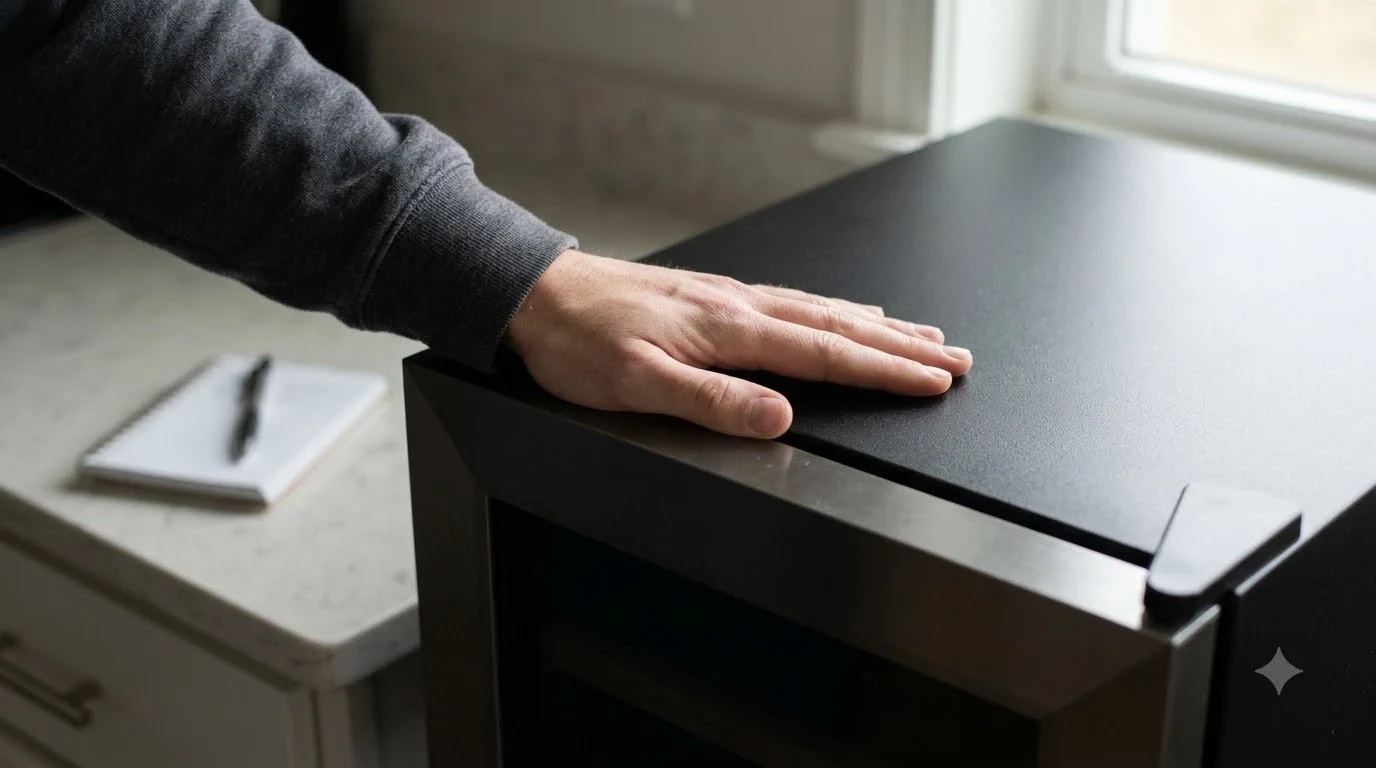

We may earn a commission when you buy through links on this page, at no extra cost to you. Learn more.
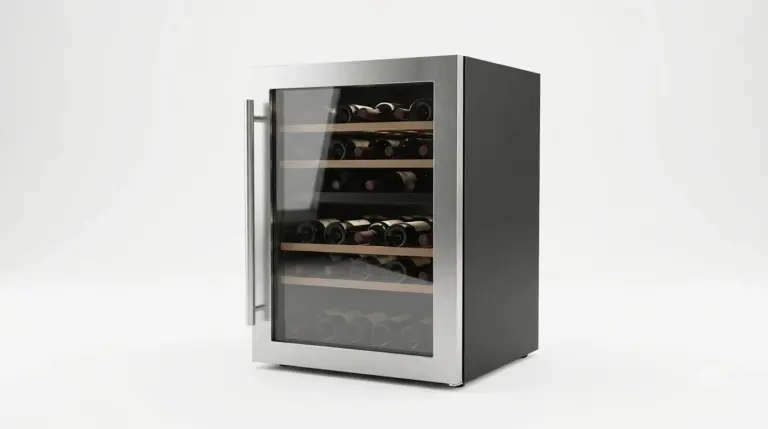
A lanbo wine cooler is a wine refrigerator designed for home collections, with options ranging from compact single-zone cabinets to larger dual-zone wine and beverage refrigerators. Lanbo offers useful features such as digital temperature controls, glass doors, adjustable shelving, and front-venting installation on selected models. However, customer feedback is mixed, particularly regarding long-term cooling reliability and customer support. The right purchase depends on the specific model, its installation requirements, and the warranty protection available.
Lanbo is a brand worth researching if you want a dedicated wine storage appliance without limiting your search to traditional premium wine-cellar manufacturers. Its catalog includes refrigerators for smaller collections, undercounter installations, and households that want wine and canned beverages in one cabinet. Understanding the product differences is particularly important because advertised capacities, temperature ranges, and installation requirements vary considerably across the lineup.
Brand Overview: What Lanbo Offers Wine Collectors
Lanbo specializes in home appliances, with a wine refrigeration range that includes single-zone, dual-zone, and triple-zone cabinets. Its product selection also includes wine-and-beverage combinations, giving buyers several ways to organize a home bar or kitchen without purchasing separate refrigerators.
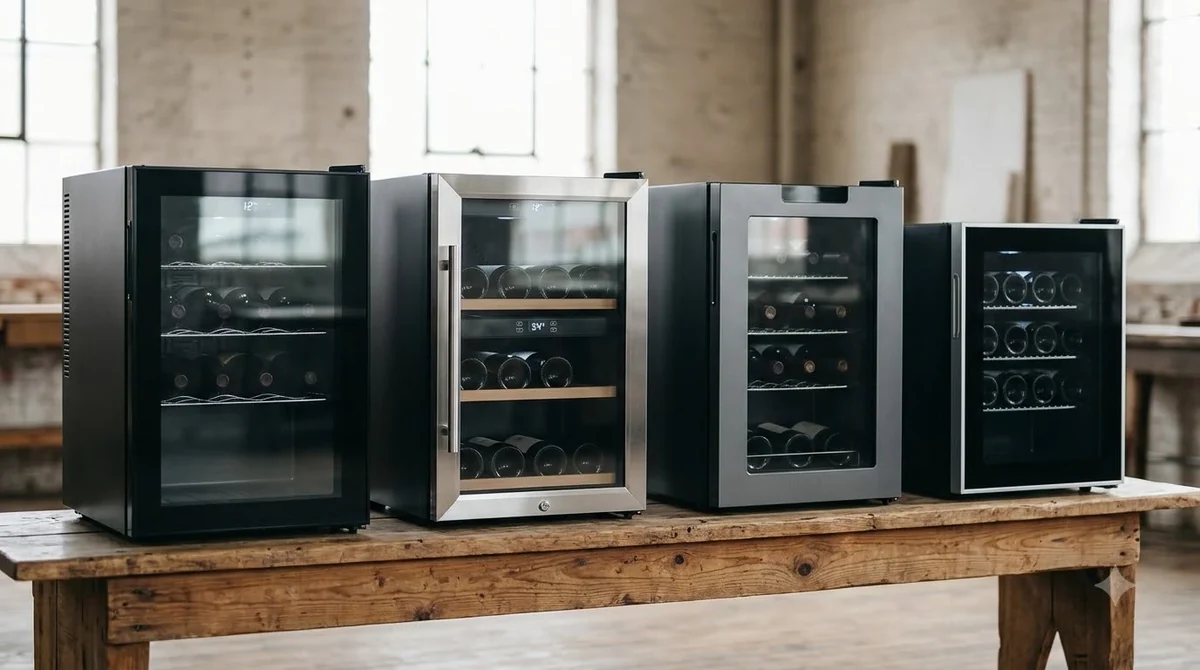
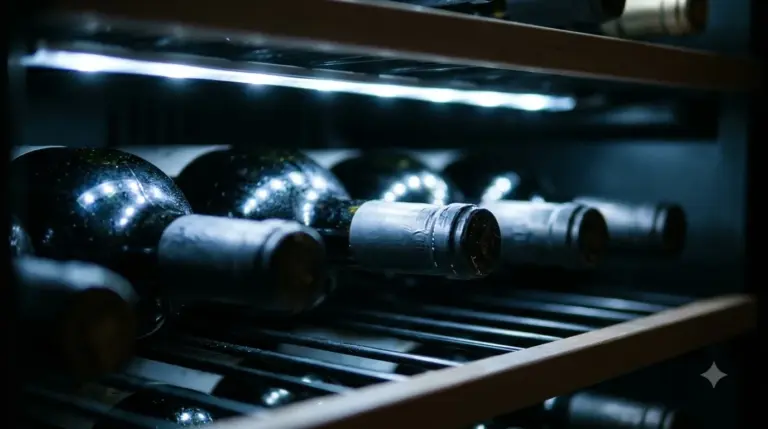
The brand’s wine refrigerators generally emphasize practical storage and contemporary appliance styling. Depending on the model, features can include glass doors, wooden-front bottle shelves, electronic temperature displays, interior LED lighting, compressor cooling, and ventilation designed for undercounter installation. These features make the range relevant to homeowners planning a built-in beverage area as well as people who simply want a freestanding cabinet.
One useful example is the LB36BAA, a dual-zone wine and beverage refrigerator. Lanbo specifies 18 standard Bordeaux bottles and 55 standard beverage cans, with separate temperature ranges for wine and beverages. The cabinet measures 23.4 inches wide, 33.9 inches high, and 25.3 inches deep, making it a substantial appliance that requires careful space planning rather than an ordinary countertop accessory.
That distinction matters when evaluating whether Lanbo is a good brand. A refrigerator can offer attractive styling and useful temperature controls while still presenting questions about long-term reliability, replacement parts, and service arrangements. A sensible assessment should consider both the manufacturer’s specifications and the experiences reported by actual owners.
Customer feedback is not uniformly positive. Lowe’s reviews of the LB36BD include praise for its dual-zone arrangement and appearance, alongside complaints about units that stopped cooling or developed noise problems. These reports do not establish that every Lanbo refrigerator will experience the same problems, but they are important considerations before committing to a model.
For readers comparing appliance manufacturers, our broader Brand hubs collection provides another starting point. You can also compare the purchasing considerations involved in is Black and Decker a good brand before deciding which appliance manufacturer deserves consideration.
Product Lines Explained: Single-Zone, Dual-Zone, and Beverage Models
Lanbo’s product range is best understood by looking at storage capacity and temperature-zone configuration first. Single-zone models prioritize straightforward wine storage, while dual-zone refrigerators accommodate different serving or storage temperatures and combination units add dedicated beverage space.
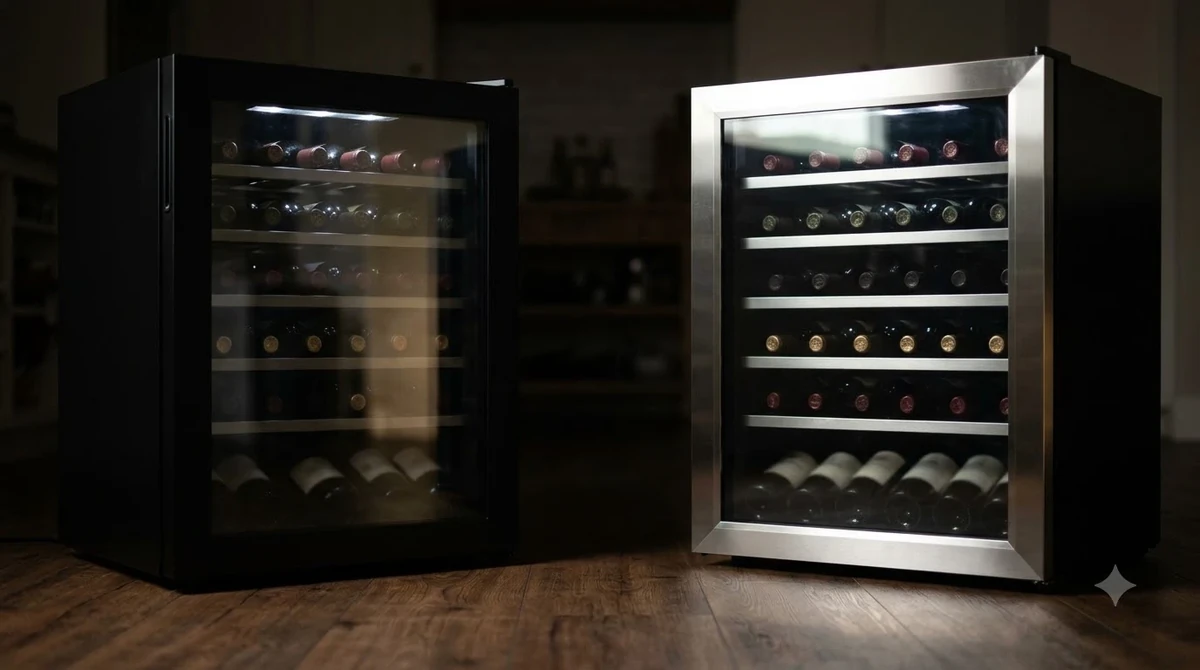
Single-zone wine refrigerators
A single-zone wine refrigerator maintains one primary temperature environment throughout its storage compartment. This arrangement is useful for collectors who mainly store one category of wine or prefer to maintain a consistent cellar-like temperature for their bottles.
Lanbo’s single-zone catalog includes several cabinet sizes, including compact and larger-capacity options. The practical advantage is simplicity: there is one principal temperature setting to manage, and the entire cabinet can be organized around the same storage objective.
However, a single-zone cabinet is not automatically the right choice for someone who serves red and white wine at different temperatures. Although a common storage temperature can preserve a mixed collection, bottles may need additional chilling or warming before serving.
Dual-zone wine refrigerators
A dual-zone wine refrigerator separates the interior into two independently controlled temperature compartments. This is particularly useful for households that regularly serve both red and white wines, or that want a wine section alongside a cooler beverage section.
The LB36BAA illustrates this approach. Its wine compartment is specified for 41 to 64 degrees Fahrenheit, while its beverage compartment operates between 39 and 50 degrees Fahrenheit. That configuration allows different products to occupy separate environments without requiring two standalone appliances.
Other Lanbo dual-zone models are designed specifically for wine rather than mixed beverage storage. When comparing these models, look beyond the dual-zone label. Confirm the temperature range of each compartment, the number of usable shelves, and whether the available capacity accommodates your preferred bottle shapes.
Wine and beverage refrigerators
Combination refrigerators are intended for households that want wine and other drinks stored in one cabinet. The LB36BAA is a representative example, with a dedicated wine compartment and a separate beverage compartment for standard cans.
The layout is particularly convenient for a home bar, entertainment room, or kitchen. However, the advertised capacity is based on standard bottle and can dimensions. Champagne bottles, Burgundy bottles, oversized wine bottles, and unusually shaped containers may reduce the actual storage capacity.
Large-capacity wine cabinets
Lanbo also offers larger wine refrigerators intended for more substantial collections. These models can provide considerably more bottle storage than a compact undercounter appliance, but their dimensions, weight, shelving arrangement, and ventilation requirements deserve particular attention.
A large advertised bottle count should not be the only purchasing criterion. Standard Bordeaux bottles are relatively uniform, while many premium wine bottles have wider shoulders, heavier glass, or unusual shapes. A cabinet that accommodates the advertised number of standard bottles may hold fewer mixed-format bottles in everyday use.
| Product category | Zone arrangement | Typical purpose | What to compare |
|---|---|---|---|
| Single-zone wine cooler | 1 temperature zone | Consistent wine storage | Capacity, temperature range, shelf spacing |
| Dual-zone wine cooler | 2 wine zones | Separate red and white wine storage | Independent controls and usable bottle capacity |
| Wine and beverage cooler | 2 separate compartments | Wine and canned drinks together | Bottle capacity, can capacity, temperature ranges |
| Large-capacity wine cabinet | 1 or more zones | Larger home collections | Footprint, shelving, bottle compatibility |
These categories describe the main purchasing distinctions rather than guaranteeing that every model has identical specifications. For example, the LB36BAA has a manufacturer-listed capacity of 18 wine bottles and 55 cans, but another Lanbo refrigerator may have an entirely different interior configuration.
Before choosing a category, consider how much wine you actually own, whether you need a separate beverage compartment, and whether the appliance will be installed beneath a counter. Those three decisions eliminate many unsuitable models before you start comparing individual features.
What Lanbo Does Well: Features and Everyday Convenience
Lanbo’s strongest selling points are its selection of storage configurations, contemporary cabinet designs, and practical features on selected models. Buyers looking for an appliance that combines wine storage with everyday beverage refrigeration may find the product range particularly appealing.
Independent temperature controls
Dual-zone operation is one of the most useful features in the range. Separate compartments allow wine and beverages to occupy different temperature environments, reducing the need to compromise between the preferences of different drinks.
For example, the LB36BAA provides a wine temperature range of 41 to 64 degrees Fahrenheit and a beverage range of 39 to 50 degrees Fahrenheit. The wine compartment can accommodate different serving preferences, while the beverage compartment offers colder settings for canned drinks.
These are operating ranges rather than guarantees of identical temperature conditions at every shelf position. Placement, room temperature, door openings, and how fully the cabinet is loaded can affect actual operation.
Useful interior organization
Selected Lanbo refrigerators use wooden-front wine shelves, wire shelving, baskets, and separate storage compartments. This arrangement can make it easier to organize wine bottles independently from cans and other beverages.
The LB36BAA has five full shelves and one half shelf in its wine compartment, along with three wire shelves and one wire basket in the beverage section. The manufacturer also describes removable shelving as a way to accommodate larger containers, although its manual advises owners to contact customer service before removing or reinstalling shelves.
Front ventilation on selected models
Front ventilation is an important feature for buyers considering an undercounter installation. A refrigerator designed to exhaust heat through the front can be more suitable for cabinetry than a freestanding appliance that requires unobstructed rear or side ventilation.
The LB36BAA is specifically listed as suitable for built-in or freestanding installation, with front ventilation. This is a useful distinction because an ordinary freestanding refrigerator should not automatically be enclosed inside kitchen cabinetry.
Additional convenience features
On the LB36BAA, Lanbo lists automatic defrost, anti-vibration technology, an activated-carbon filter, LED lighting, adjustable feet, and a digital touch control panel. These features address common practical concerns associated with wine storage and appliance maintenance.
The manufacturer also specifies a 42 dB operating-noise figure for this particular model. That specification provides a useful comparison point, but perceived noise depends on the room, floor surface, compressor cycles, and installation conditions.
For an additional perspective on smaller home appliances, the comparison with whether Galanz is a good brand can help readers think about appliance features, intended use, and ownership considerations rather than relying on appearance alone.
Common Complaints: What Lanbo Wine Cooler Reviews Reveal
Lanbo wine cooler reviews show a mixed ownership picture: some buyers appreciate the appearance, temperature controls, and storage flexibility, while others report cooling failures, unusual noises, and frustrating support experiences. Reliability and after-sales service deserve particular attention before purchasing.
Cooling problems and durability concerns
Some Lowe’s reviewers describe refrigerators that stopped cooling after relatively short ownership periods. One LB36BD owner reported a cooling failure after approximately 14 months, while other reviews describe satisfactory temperature performance and continued satisfaction with the appliance.
These experiences should be interpreted carefully. Individual customer reviews do not establish a failure rate for the entire Lanbo product range, and different models can use different components and refrigeration arrangements. Nevertheless, repeated complaints about cooling performance are relevant when comparing brands.
For a refrigerator that will hold valuable wine, reliability matters beyond ordinary beverage convenience. A malfunctioning appliance can disrupt temperature consistency and create additional expenses if replacement or professional repair becomes necessary.
Noise complaints
Noise is another recurring subject in owner feedback. Some customers describe their Lanbo refrigerator as quiet, while others report noticeable compressor sounds, clicking, or increased fan noise.
The difference may partly reflect the installation environment. A refrigerator placed inside kitchen cabinetry, against a hard wall, or on an uneven floor can transmit sound differently from an appliance operating in an open utility room.
Even so, buyers planning to put a wine cooler in a quiet dining area or living room should investigate noise-related feedback for the exact model rather than assuming every unit will operate silently.
Door and shelf construction
Wayfair feedback on the 18-bottle and 55-can Lanbo combination refrigerator includes positive comments about appearance and functionality, but some reviewers mention wobbly shelves and doors that do not close properly.
Door alignment and sealing deserve particular attention because a poorly closing door can allow unwanted warm air into the refrigerator. Shelf stability is also important when storing heavier bottles, especially if the cabinet is frequently opened and rearranged.
Customer support experiences
Support experiences reported by customers are mixed. Some reviews describe responses from the manufacturer, while others complain about lengthy email exchanges, repair difficulties, and problems obtaining a satisfactory resolution.
The manufacturer’s manual provides an email address and telephone number for customer service. However, the existence of a support contact does not guarantee a local technician, immediate replacement parts, or convenient in-home repairs.
Buyers should establish how warranty claims are handled before purchasing. Ask whether repairs are performed locally, whether replacement components can be shipped, and whether labor or transportation expenses could become the owner’s responsibility.
Tip: Before purchasing a Lanbo refrigerator, read recent owner reviews for the exact model number and confirm the warranty claim procedure in writing. Give particular attention to reports about cooling failures, compressor noise, replacement parts, and the availability of repair technicians in your area.
How to Choose a Lanbo Wine Cooler
Choosing the right Lanbo model starts with your collection, available installation space, and temperature requirements. A carefully selected smaller refrigerator can be more practical than a larger dual-zone cabinet if you mainly store one type of wine.
1. Determine your actual storage capacity
Start by counting your current bottles and estimating how many you expect to add. A household with 12 bottles has different requirements from a collector who regularly keeps 80 or more bottles available.
Leave room for future purchases rather than selecting a cabinet that is already close to full. A packed refrigerator can make bottles difficult to access and limit your ability to accommodate wider bottle formats.
Remember that advertised capacity generally refers to standard Bordeaux-style bottles. If you regularly purchase sparkling wine, Burgundy, or larger-format bottles, look for interior photographs and shelf measurements before making a decision.
2. Decide between single-zone and dual-zone cooling
Single-zone storage is appropriate for a collection that shares one main storage temperature. Dual-zone storage is more convenient if you regularly serve both red and white wine or want wine and canned drinks in separate compartments.
For serving, light white wines and rosé are generally best around 45 to 50 degrees Fahrenheit, while fuller-bodied whites are commonly served around 50 to 55 degrees. Light reds generally benefit from 55 to 60 degrees, and fuller reds from approximately 60 to 65 degrees.
These serving temperatures should not be confused with long-term storage temperatures. A dual-zone refrigerator can help organize different serving preferences, but a wine cabinet intended for aging should be evaluated for stable storage conditions rather than just the coldest available setting.
3. Measure the installation opening
Measure the width, height, and depth of the intended location, including door handles, cabinet trim, nearby walls, and the space required to open the refrigerator door.
For the LB36BAA, the manufacturer’s dimensions are 23.4 inches wide, 33.9 inches high, and 25.3 inches deep. The listed net weight is 97.7 pounds, so installation requires a suitable supporting surface and enough room to position the appliance safely.
Do not assume that a cabinet described as approximately 24 inches wide will automatically accommodate every 24-inch-class wine refrigerator. The actual opening, ventilation arrangement, and door clearance all matter.
4. Verify the ventilation arrangement
Check whether your chosen refrigerator is intended for built-in installation or freestanding use. Front-venting models can be suitable for cabinetry, while appliances that exhaust heat through other surfaces need sufficient surrounding clearance.
Lanbo’s manual provides general installation guidance for its covered models, including approximately 0.59 inches of side clearance and 0.39 inches at the rear and above, with exceptions for certain models. The manufacturer’s specifications and instructions for the exact refrigerator should take priority over generic installation assumptions.
5. Examine the temperature range
Check both the minimum and maximum settings for every compartment. A refrigerator with two zones is only useful if each zone can maintain the temperatures needed for its intended contents.
For instance, the LB36BAA’s wine section is specified for 41 to 64 degrees Fahrenheit. That makes its range different from a refrigerator with a dedicated long-term cellar setting near 55 degrees. Think about whether your priority is everyday serving convenience, short-term storage, or longer-term collection management.
6. Investigate warranty and repair arrangements
Read the written warranty before completing a purchase. Confirm the coverage period, which components are included, how a claim is initiated, and whether an authorized technician must perform the repair.
The LB36BAA manufacturer specification lists one year of parts coverage and one year of labor coverage. That is a relatively short stated coverage period for a major refrigeration appliance, so buyers may want to investigate additional protection and local service options.
7. Compare the complete ownership experience
Look beyond the initial appliance specifications. A refrigerator with attractive shelving and digital controls may not be the best choice if replacement parts are difficult to obtain or qualified repair services are unavailable locally.
Compare retailer return policies, delivery arrangements, installation requirements, and customer support options. Also investigate whether the seller offers an extended service plan and what exclusions apply.
The most suitable Lanbo wine cooler is the one that fits the available space, stores your preferred bottles, and comes with a realistic support arrangement. A lower-capacity refrigerator with a more suitable configuration can be a better ownership decision than a larger appliance with features you rarely use.
Warranty and Support: Manuals, Maintenance, and Troubleshooting
Lanbo provides a user manual covering multiple refrigerator families, along with manufacturer support contact information. Owners should use the documentation for their exact model because control-panel layouts, installation instructions, and operating procedures can differ between product families.
Finding the Lanbo wine cooler manual
The Lanbo user manual available through Best Buy’s document hosting covers several model groups, including LW28D, LW46D, LW142D, LW165D, LB36BD, LB36BAA, LW133DD, and LW328DD.
You can read the Lanbo wine cooler user manual for installation instructions, control-panel explanations, maintenance information, troubleshooting guidance, and product specifications.
Before following any instructions, identify the model number on the appliance. A manual that covers several families does not mean every button combination or technical instruction applies identically to every refrigerator.
Initial setup and installation
The manual recommends allowing a newly unpacked appliance to stand upright for approximately 24 hours before connecting it to power. This waiting period helps reduce the possibility of refrigeration-system problems associated with transportation and handling.
After unpacking, inspect the cabinet for visible damage and clean the interior using lukewarm water and a soft cloth. Position the refrigerator on a level, sufficiently strong floor, adjust the leveling feet, and keep the cabinet away from direct sunlight, stoves, heaters, and radiators.
For built-in installation, verify the clearance requirements for the exact model. Do not simply push the refrigerator into an opening because the outside dimensions appear to match.
Understanding the control panel
Lanbo uses different electronic control-panel arrangements across its product families. Some models have separate displays for temperature settings and chamber conditions, while others use touch controls designed for independent compartments.
When changing a temperature, identify which compartment is selected and confirm the displayed setting afterward. If a refrigerator appears to be operating at the wrong temperature, distinguish between the set temperature and the actual internal temperature before assuming that a component has failed.
Routine maintenance
Keep the door seals clean and inspect them periodically for visible damage. A door that does not close completely can interfere with temperature stability and increase the amount of work required from the refrigeration system.
Keep the surrounding ventilation openings unobstructed, clean accessible interior surfaces, and avoid unnecessary door openings. These basic habits help the refrigerator maintain a more consistent environment.
Also pay attention to unusual sounds, water accumulation, repeated temperature fluctuations, and excessive condensation. If the refrigerator stops cooling or develops an electrical or refrigeration-system fault, contact customer service or a qualified repair technician rather than attempting an improvised repair.
Warranty and customer service contacts
The manufacturer lists [email protected] and (833) 600-8766 as customer service contacts in its manual. Keep your purchase receipt, model number, serial number, and a description of the problem available when requesting assistance.
For the LB36BAA, the manufacturer’s product specifications state one year of parts coverage and one year of labor coverage. Do not automatically apply this warranty period to every Lanbo product. Coverage may vary by model, seller, purchase location, and applicable warranty documentation.
For additional appliance comparisons, readers can also explore whether ROVSUN is a good brand and compare how different manufacturers approach product features, service arrangements, and everyday ownership.
Frequently Asked Questions
Is Lanbo a good brand for wine refrigerators?
Lanbo offers a varied range of home wine refrigerators with useful storage configurations and features. However, its customer feedback includes reports of cooling failures and difficulties obtaining repairs. The brand is best evaluated model by model rather than assumed to have uniform reliability across its entire catalog.
Where can I download a Lanbo wine cooler manual?
The manufacturer’s website provides downloadable product documentation for selected refrigerators, and a multi-model user manual is also available through Best Buy’s document hosting. The manual identifies covered model families on its opening pages. Confirm that your refrigerator’s model number appears in the document before using its instructions.
Are Lanbo dual-zone wine coolers suitable for Champagne bottles?
They may accommodate some sparkling wine bottles, but the advertised bottle capacity is generally based on standard Bordeaux-sized bottles. Champagne bottles are often wider and can require more shelf space. Check the actual shelf dimensions and interior clearance before relying on the advertised capacity for a Champagne collection.
Does Lanbo sell replacement wine cooler parts?
Lanbo’s official website has a dedicated wine refrigerator components section that includes categories such as control panels, compressors, fans, door seals, sensors, and power boards. Availability for a particular part can vary. Contact the manufacturer with the exact model and component information before ordering anything.
Can a Lanbo wine refrigerator operate in a garage?
Suitability depends on the refrigerator’s specified ambient operating-temperature range and the conditions inside the garage. Extreme cold and excessive heat can affect refrigeration performance. Review the exact model’s technical documentation before installing it in an unconditioned garage or outdoor-adjacent space.
Lanbo offers several appealing wine storage configurations, particularly for buyers interested in dual-zone refrigerators and combined wine-and-beverage cabinets. Its specifications and customer feedback suggest that installation compatibility, cooling reliability, and after-sales support deserve as much attention as capacity and appearance. Compare individual models carefully, obtain the correct manual, and confirm warranty arrangements before choosing a refrigerator for your collection.
More in Brand Hubs
 Icyglee Wine Fridge: Compare Capacities, Features and ModelsUpdated Nov 20, 2026
 Fomup Wine Fridge: Explore Models, Features, and Buying TipsUpdated Nov 20, 2026
 Aaobosi Wine Fridge: Compare Models and Choose the Right CoolerUpdated Nov 20, 2026
 Orymuse Wine Fridge Reviews: Compare Capacities, Features and WarrantyUpdated Nov 20, 2026
 Tylza Wine Fridge: Find the Right Cooler for Your CollectionUpdated Nov 20, 2026
 Vintec Wine Fridge: Features, Warranty, and Buying AdviceUpdated Nov 20, 2026