

We may earn a commission when you buy through links on this page, at no extra cost to you. Learn more.
A Waterford decanter is a premium crystal serving piece for wine drinkers who value elegant presentation, substantial craftsmanship, and a distinctive centerpiece for entertaining. The collection includes traditional decorative crystal designs and more contemporary wine-serving shapes, with capacities that vary by model. Its strongest appeal is visual quality and gift presentation, while weight, careful maintenance, and the differences between wine and spirits decanters deserve consideration before buying.
Waterford has a recognizable place in fine crystal tableware, and its decanters extend that reputation into wine service and home entertaining. However, choosing one involves more than selecting an attractive silhouette. Capacity, opening width, stopper design, pouring comfort, and the intended type of wine all influence how useful a decanter will be once it leaves the display cabinet. This review examines the available product information, independent evaluation findings, practical advantages, and ownership considerations to help determine whether a Waterford piece is a worthwhile addition to a wine collection.
Specs and Key Features
Waterford decanters combine decorative crystal construction with designs intended for serving wine or spirits. The Elegance collection offers a more contemporary appearance, while other Waterford designs emphasize intricate cutting and traditional crystal styling. The specifications below illustrate the differences between several documented models rather than suggesting that every Waterford decanter shares identical dimensions or materials.
| Model | Material | Capacity | Height | Weight | Care |
|---|---|---|---|---|---|
| Elegance Optic Carafe | Crystal | 51 oz | 11 inches | 2.8 lb | Not dishwasher-safe |
| Elegance Short Decanter | Lead-free crystal | 1.1 liters | Not specified | Not specified | Hand wash |
| Opulence Lead Crystal Decanter | Leaded crystal | 31 oz | Not specified | Not specified | Hand wash |
| Opulence Crystal Spirits Decanter | Lead-free crystal | 31.4 oz | Not specified | 3.8 lb | Hand wash |
These specifications come from Good Housekeeping’s evaluation and retailer product descriptions from Harrods and Nordstrom. The Opulence listings also illustrate why checking the exact product description matters: similarly named products can have different material descriptions. A buyer should not assume that every piece carrying the Waterford name has the same crystal composition or intended use.
Crystal construction and visual design
Waterford’s appeal begins with the appearance of its crystal. Traditional decorative patterns use carefully arranged cuts to create reflections and visual depth. These details are especially noticeable under dining-room lighting, where the faceted surfaces catch light from different angles. The result is a serving piece that can function as both barware and decorative tableware.
The Elegance range takes a different approach. Its cleaner forms and more contemporary styling suit dining rooms where traditional cut crystal might feel too formal. The Elegance Optic Carafe, for example, uses a distinctive shape and substantial base rather than relying entirely on elaborate decorative cutting.
Material descriptions deserve attention because crystal terminology is not always consistent across retailers. Some Waterford listings identify lead-free crystal, while the Opulence product listed by Nordstrom is specifically described as leaded crystal. The corresponding Neiman Marcus listing describes a lead-free Opulence spirits decanter. These descriptions should be treated as model-specific information, not interchangeable claims about the entire collection.
Capacity and practical serving
Capacity determines whether a decanter can comfortably accommodate a standard bottle, a larger format, or several servings intended for a dinner party. The 51-ounce Elegance Optic Carafe is particularly substantial. Good Housekeeping identifies it as capable of holding a magnum bottle, making it a different proposition from a smaller decorative spirits decanter.
The 1.1-liter Elegance Short Decanter is another substantial option. It can accommodate a standard 750-milliliter wine bottle with additional room for air above the liquid. That extra space can be useful during decanting, although the shape and exposed wine surface matter as much as the nominal capacity.
By comparison, the 31-ounce Opulence decanter is listed as a spirits-serving piece. Although its capacity is close to that of a standard wine bottle, capacity alone does not establish that its neck, opening, or overall shape is optimized for red wine aeration. A wide-bottomed wine decanter generally offers more exposed surface area than a narrow spirits vessel.
For a broader understanding of how a decanter fits into a serving setup, it helps to compare it with suitable wine glasses. A carefully chosen decanter and appropriately shaped glasses make a more useful wine-serving combination than an impressive vessel alone.
What Owners Like
The strongest appeal of Waterford decanters is their combination of decorative presence and functional serving capacity. Their crystal appearance suits formal dining, celebrations, and gift occasions, while models such as the Elegance Optic Carafe provide enough room for substantial wine servings. Buyers looking for a recognizable crystal presentation piece will find several appealing design directions.
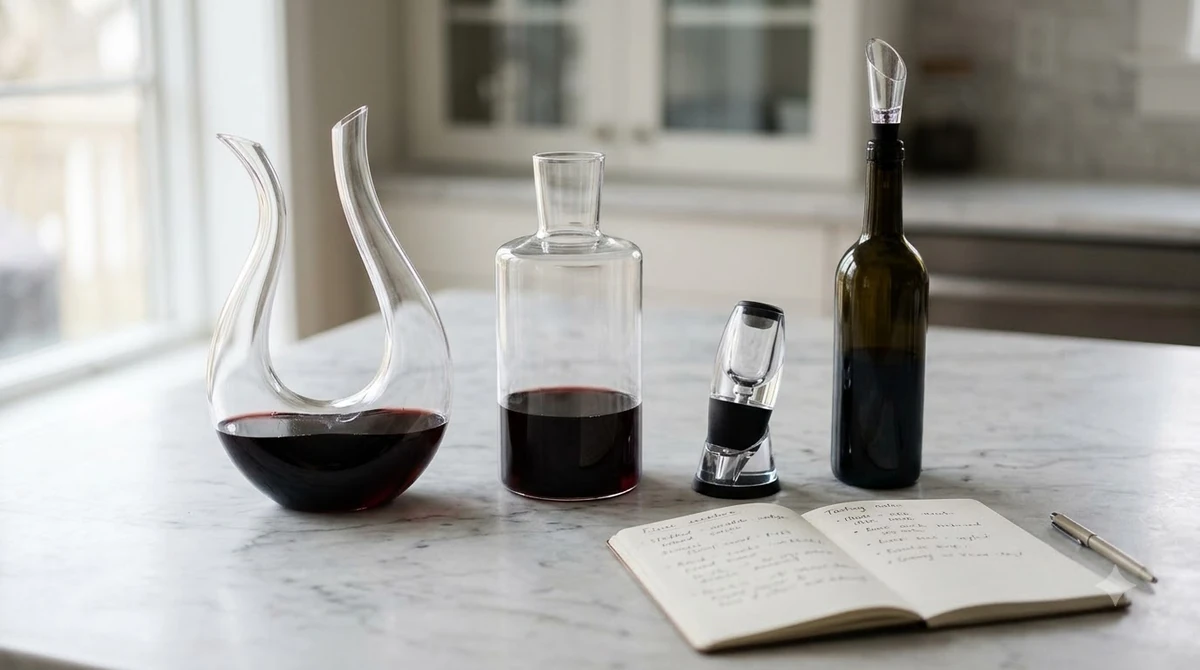
Distinctive appearance on the dining table
Traditional crystal patterns give Waterford pieces a recognizable appearance. Intricate cuts create highlights across the body, while a carefully proportioned stopper completes the overall design. This makes a decanter particularly attractive when it is displayed alongside matching tumblers or coordinated tableware.
The appeal is not limited to traditional dining rooms. Contemporary designs in the Elegance collection offer a cleaner alternative for households that prefer simpler table settings. Their more restrained appearance can work with modern glassware, neutral table linens, and minimalist dining furniture.
Retail customer feedback on Waterford’s Lismore barware collection at Bloomingdale’s frequently highlights the attractive appearance, classic styling, and substantial feel of the crystal. Some customers also describe the pieces as appropriate gifts. These comments concern the wider barware collection rather than one specific wine decanter, but they help explain the brand’s decorative appeal.
Substantial presentation and gift suitability
Weight can contribute to the impression of quality. A heavier crystal decanter often feels substantial when placed on a dining table, and its presence can make a gift feel more special. Good Housekeeping lists the Elegance Optic Carafe at 2.8 pounds, which is considerable for a vessel intended to be lifted and poured.
The same publication identifies premium packaging and engraving availability as advantages of the Elegance Optic Carafe. Personalization can make a decanter more appropriate for a wedding, anniversary, retirement, or milestone birthday. A personalized crystal piece also has the potential to remain part of a household’s entertaining collection for many years.
Presentation matters particularly for buyers who want a gift that does not require an extensive explanation. A Waterford decanter has an established identity as decorative crystal, so the recipient can appreciate its appearance even if they do not regularly decant wine.
Useful capacity for entertaining
The Elegance Optic Carafe’s 51-ounce capacity offers flexibility for gatherings. It can accommodate a magnum bottle according to Good Housekeeping, which is useful when serving several guests from one vessel. Rather than repeatedly opening and pouring individual bottles, a host can prepare a larger quantity before guests sit down.
The 1.1-liter Elegance Short Decanter also provides enough capacity for a standard 750-milliliter bottle. Its additional headspace can make pouring easier than using a vessel that barely accommodates the wine. This is especially helpful when transferring wine slowly to separate the liquid from sediment.
However, buyers should distinguish between volume and serving convenience. A vessel can hold plenty of wine but still be difficult to pour if its neck is narrow, its stopper is awkward, or its body is unusually heavy. Capacity should always be considered alongside handling.
Decorative value beyond wine service
A Waterford decanter does not need to be used every evening to justify its place in a home. It can be displayed in a glass cabinet, on a dining-room sideboard, or as part of a coordinated bar arrangement. Its decorative role is particularly relevant for owners who entertain occasionally rather than regularly.
That versatility also makes the product category attractive to collectors. A carefully selected decanter can complement existing crystal pieces, particularly if the design language matches the owner’s preferred glassware. Traditional cut patterns can sit comfortably alongside classic stemware, while cleaner Elegance shapes work with less ornate pieces.
Still, display should not become the only reason to buy a functional wine accessory. If the main objective is improving the practical experience of serving wine, a simpler vessel with a broad base and comfortable pouring neck may be more useful than an elaborate design with difficult handling characteristics.
Common Complaints
Waterford’s most important compromises involve handling, cleaning, and the difference between decorative crystal and purpose-designed wine equipment. The Elegance Optic Carafe is relatively heavy, and its independent evaluation indicated that wine needed more time to develop than in some faster-aerating alternatives. Buyers should also expect more careful maintenance than they would with ordinary everyday glassware.
Weight can make pouring difficult
The Elegance Optic Carafe weighs 2.8 pounds according to Good Housekeeping. That measurement makes it a substantial object even before wine is added. Filling it with a magnum bottle’s contents increases the total weight considerably, so pouring requires a firm grip and sufficient control.
This may not be a problem for someone who primarily uses a decanter as a centerpiece or serves wine in small quantities. It can become inconvenient for anyone who frequently pours for several guests or prefers to handle glassware with one hand.
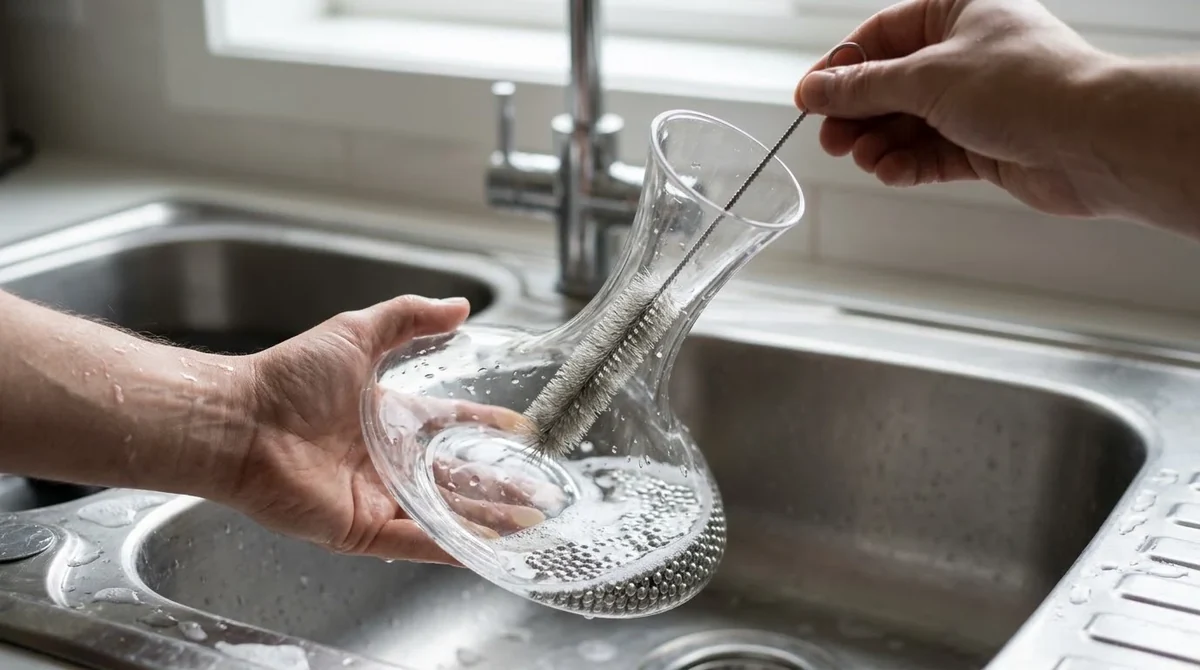
Weight is also important when cleaning. A large crystal vessel is more difficult to maneuver inside a sink, especially when it has a narrow neck and a broad body. A buyer with limited sink space should consider where the decanter will be washed and dried before purchasing.
Wine may require more time to open
Good Housekeeping reports that the Elegance Optic Carafe did not fully open the wine during its 15-minute or 30-minute evaluation points. The wine reached its stride after approximately 45 minutes. This finding suggests that the model may be more appropriate for planned meals than for situations where wine must be served immediately. The publication’s decanter comparison and evaluation provides additional context for its findings.
That result should not be interpreted as a universal aeration time for every wine. Different grape varieties, vintages, bottle ages, and wine styles respond differently to exposure to oxygen. A young Cabernet Sauvignon may benefit from more air than a delicate older Pinot Noir, while an older wine may need careful handling to preserve its remaining aromatic character.
For a young, full-bodied red, a starting decanting period of 30 to 60 minutes is often useful. A lighter red may need less time. The important consideration is to taste the wine periodically rather than assume that a particular vessel will produce the same result with every bottle.
Hand washing takes more effort
Crystal decanters are not ideal for people who expect every serving accessory to go into the dishwasher. Waterford’s care instructions recommend hand washing crystal and glass separately in warm, soapy water, followed by thorough rinsing and drying with a lint-free cloth. The manufacturer’s official crystal care guide explains its recommended cleaning and handling practices.
Waterford also warns that dishwasher heat, friction, and detergent can dull or scratch the surface. The company’s care guidance specifically recommends against sudden temperature changes, which can cause crystal to crack or break. This is an important ownership consideration for a product that may be handled infrequently but needs careful cleaning after every use.
Interior cleaning can also be inconvenient. A broad body does not necessarily mean that a hand or cleaning cloth can reach every surface. Residue left inside a decanter can become difficult to remove if the vessel is stored without proper rinsing and drying.
Product descriptions can create confusion
Another potential source of frustration is the difference between similarly named products. The Opulence listing at Nordstrom identifies leaded crystal, while the Neiman Marcus listing describes its Opulence spirits decanter as lead-free crystal. These listings demonstrate why buyers should examine the exact item rather than assume that the collection name guarantees identical construction.
Wine decanters and spirits decanters also serve different practical purposes. A spirits decanter may prioritize a secure stopper and attractive storage presentation. A wine decanter often prioritizes a broad base, sufficient capacity, and an opening that makes pouring and cleaning easier.
Buyers should also avoid assuming that a decorative stopper creates an airtight long-term storage solution. A decanter is primarily a serving vessel, not a substitute for a properly sealed wine bottle or a controlled wine-storage system.
Who Should Buy and Who Should Skip
A Waterford decanter makes the most sense for buyers who value crystal craftsmanship, presentation, and occasional entertaining. Its more substantial designs can serve as striking centerpieces, while the larger Elegance models offer useful capacity for sharing wine. However, practical wine drinkers who prioritize easy cleaning, lightweight construction, or everyday convenience may prefer a simpler decanter.
Who should buy a Waterford decanter?
Collectors of fine crystal: Waterford is an appealing option for anyone building a coordinated collection of decorative glassware. A cut-crystal decanter can complement existing serving pieces, especially when its design matches the visual style of the rest of the collection.
People shopping for milestone gifts: A Waterford decanter is particularly appropriate for weddings, anniversaries, retirements, and significant birthdays. The Elegance Optic Carafe’s engraving availability, noted by Good Housekeeping, provides an additional personalization option.
Hosts who entertain regularly: The 51-ounce Elegance Optic Carafe provides substantial serving capacity. It can be useful for gatherings where a magnum bottle is being shared or where several guests will be served from the same vessel.
Wine drinkers who enjoy formal presentation: Some people enjoy transferring wine from its original bottle into a carefully selected serving vessel. A decorative Waterford design makes that process part of the dining experience rather than simply a technical preparation step.
Owners who are comfortable with hand washing: The care requirements are manageable for someone who treats crystal as a special-use item. A dedicated soft cloth, mild detergent, and suitable drying space are usually sufficient for routine maintenance.
Who should skip it?
Everyday casual drinkers: Someone who opens a bottle of wine after work and wants a quick, uncomplicated serving routine may not need premium decorative crystal. A lightweight glass or straightforward carafe can perform the basic serving function with less maintenance.
People who rely on dishwashers: Waterford’s general care recommendations favor hand washing. Anyone unwilling to wash a large glass vessel manually should consider a product specifically identified as dishwasher-safe rather than assume that crystal can tolerate regular machine cleaning.
Buyers who prioritize lightweight handling: The 2.8-pound Elegance Optic Carafe is a substantial object, and filling it increases its weight. People who prefer lightweight serving equipment should compare the handling characteristics of other options.
Wine drinkers who need specialized sediment control: A decorative spirits decanter is not automatically the right tool for separating sediment from older red wine. A dedicated wine decanter with an appropriate neck and broad base may offer better practical control.
People seeking long-term wine storage: Decanting and storage are different tasks. A Waterford decanter is intended for serving and presentation, not for preserving an opened bottle over several days. Wine should be returned to an appropriate sealed storage arrangement after serving when necessary.
How It Compares to Alternatives
Waterford competes most directly with other decorative crystal and glass serving pieces, but the best alternative depends on whether appearance, aeration, capacity, or ease of care is the main priority. The distinction between a premium display-oriented decanter and a dedicated wine-aeration vessel is particularly important when comparing designs.
Waterford versus a simple glass wine decanter
A straightforward glass wine decanter is often the more practical option for regular use. Its main advantages are simplicity, easier handling, and fewer decorative surfaces that require attention during cleaning. A broad-bottomed design can also provide the surface area needed for young red wines to interact with oxygen.
Waterford offers a different proposition. Its crystal styling provides a more formal presentation, and certain models have the capacity to serve larger bottles. For someone who frequently hosts dinner parties, the visual contribution can justify choosing a more elaborate piece.
Neither type automatically aerates wine better. The opening, base width, amount of wine poured, and time spent in the vessel influence the result. A plain glass decanter with a wide base can be more useful for aeration than an ornate crystal vessel with a narrower body.
Waterford versus specialized wine decanters
Specialized wine decanters are generally selected around the requirements of particular wine styles. Some feature broad bowls to expose young red wines to more oxygen, while others have narrower necks that support controlled pouring when separating sediment from an older bottle.
The Waterford Elegance Optic Carafe offers a large 51-ounce capacity and a bulb-shaped base. Good Housekeeping reported that its base helped keep sediment away from the glass during its evaluation. However, the same evaluation found that the wine took approximately 45 minutes to reach its stride.
This makes the model a reasonable consideration for leisurely meals, where wine can be poured in advance. Buyers who regularly serve mature Bordeaux or Burgundy should still consider the neck design and pouring control rather than relying on appearance or capacity alone.
Waterford versus spirits decanters
A spirits decanter is designed primarily for presenting beverages such as whiskey, brandy, or other distilled drinks. Its stopper and decorative proportions often receive more attention than the broad exposed surface area that helps with wine aeration.
The Opulence listings illustrate this distinction. Nordstrom describes its 31-ounce lead-crystal version as a spirits decanter, while Neiman Marcus lists a 31.4-ounce Opulence spirits decanter made from lead-free crystal. Both have substantial decorative appeal, but their listed capacities and descriptions do not establish that they are dedicated wine-aeration vessels.
For wine service, a purpose-designed wine decanter is generally the safer choice. For a home bar or whiskey presentation, an Opulence-style vessel may be more appropriate. Buyers who want one vessel for both purposes should examine the opening, stopper fit, capacity, and cleaning access carefully.
Pairing the decanter with appropriate glassware
A decanter is only one part of a wine-serving setup. The shape of the glass influences how aromas collect and how wine reaches the palate. Red wines such as Cabernet Sauvignon often benefit from larger bowls, while sparkling wines are commonly served in narrower champagne glasses.
For a coordinated collection, compare the available red wine glasses and champagne flutes before choosing additional crystal pieces. This makes it easier to maintain a consistent appearance without buying accessories that perform the same job poorly.
Overall value and suitability
The value of a Waterford decanter depends heavily on the reason for purchasing it. Someone who wants a decorative centerpiece, an engraved gift, or a substantial crystal serving piece may appreciate the design for many years. Someone who only wants to aerate an inexpensive bottle of red wine may find that a simpler decanter delivers the same essential function.
It is also important to compare the actual model rather than the brand name alone. A lead-free Elegance decanter, a lead-crystal Opulence spirits decanter, and a large Optic Carafe have different specifications and intended uses. The best choice is the one whose dimensions, material, and care requirements suit the buyer’s routine.
Waterford’s broader glassware selection can be explored through Glassware Brands, which provides useful context when planning a coordinated table setting.
Frequently Asked Questions
These questions address additional ownership and serving considerations that are useful when selecting a Waterford decanter. They cover first-use preparation, wine handling, crystal identification, and practical details that are not limited to one model.
Should a Waterford decanter be rinsed before its first use?
Yes. Waterford recommends filling crystal decanters and carafes with an equal-parts vinegar-and-water solution and allowing it to stand overnight before the first use. Afterward, wash the interior with warm, soapy water, rinse thoroughly, and dry it carefully. This preparation is intended for the decanter’s interior rather than as a routine cleaning method after every serving.
Can a Waterford decanter be used for white wine?
Yes, a suitable wine-serving decanter can also be used for white wine. This is sometimes useful for mature white Burgundy or certain aromatic wines that benefit from a little air before serving. However, white wine should generally remain chilled, so avoid leaving it in a room-temperature vessel for an extended period.
Does Waterford offer replacement stoppers for decanters?
Replacement stopper availability depends on the specific collection and model. Crystal stoppers are not necessarily interchangeable because their shapes and fitting dimensions can differ. Contact Waterford customer support with the original product name and available identifying information before purchasing a replacement.
Can a Waterford decanter be used to serve nonalcoholic drinks?
A suitable crystal decanter can serve nonalcoholic beverages, including chilled grape juice or water. Avoid hot liquids and sudden temperature changes because crystal can crack under thermal stress. Waterford also recommends changing stored liquids frequently rather than leaving beverages inside the vessel for prolonged periods.
What should buyers look for when purchasing a vintage Waterford decanter?
Examine the stopper, rim, base, and body under good lighting for chips, cracks, repairs, and signs of cloudiness. Confirm the pattern and model identity before comparing a vintage piece with current collections. Original packaging and documented provenance can also help establish the history of an older collectible, although neither guarantees its physical condition.
A Waterford decanter is best viewed as a combination of serving equipment and decorative crystal rather than a purely functional wine accessory. The Elegance Optic Carafe stands out for its substantial 51-ounce capacity, while the Elegance Short Decanter offers a more contemporary 1.1-liter option. Choose according to the wine you serve, the weight you can comfortably handle, and the amount of care you are prepared to provide. For buyers who appreciate fine crystal and formal entertaining, Waterford offers an appealing addition to a well-considered glassware collection.
More in Wine Glasses
 Zwiesel Glas Champagne Flutes for Durable Everyday Sparkling WineUpdated Nov 20, 2026
 Vera Wang Crystal Wine Glasses: Design, Quality and Buying AdviceUpdated Nov 20, 2026
 West Elm White Wine Glasses: Compare Designs for Better Everyday Wine ServiceUpdated Nov 20, 2026
 Zalto Stemless Wine Glasses: Discover Their Distinctive DesignsUpdated Nov 20, 2026
 Viski Champagne Glasses That Match Your Style and Sparkling WineUpdated Nov 20, 2026
 Vista Alegre Decanter Review: Crystal Style and Wine ServiceUpdated Nov 20, 2026