

We may earn a commission when you buy through links on this page, at no extra cost to you. Learn more.
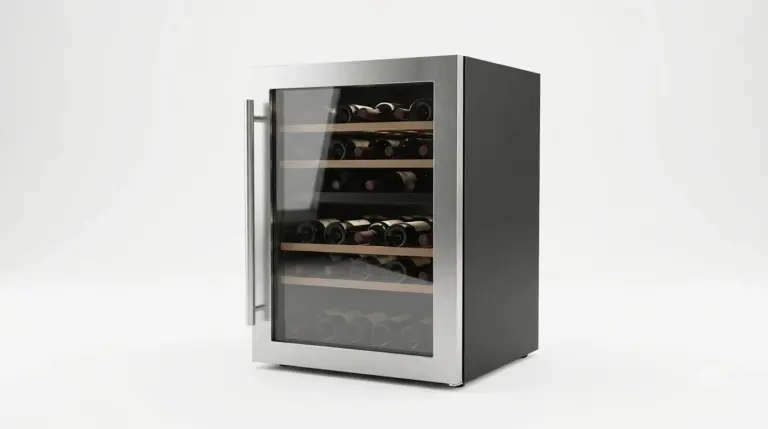
A Kalamera wine fridge is a practical option for wine collectors who want compressor cooling, glass-door storage, and a choice of single-zone or dual-zone configurations. The brand offers compact models for smaller collections and larger refrigerators designed for more extensive bottle storage. Its appeal includes straightforward temperature controls, attractive styling, and several installation formats, although owner feedback raises questions about long-term reliability, actual storage capacity, and customer support. Comparing individual models and understanding the warranty are important before choosing one.
Kalamera occupies an interesting position in the wine refrigerator market. Its lineup includes narrow cabinets, larger freestanding coolers, and dual-zone appliances intended to keep different wine styles at separate temperatures. However, choosing a wine refrigerator involves more than matching a stated bottle count to a collection. Cabinet dimensions, shelf spacing, ventilation, temperature ranges, and access to replacement parts all affect long-term satisfaction. This brand overview examines Kalamera’s product categories, common owner experiences, operating features, and support arrangements to help buyers make an informed decision.
Kalamera Brand Overview
Kalamera focuses on wine and beverage refrigeration, with products designed for home kitchens, dining areas, entertainment spaces, and dedicated wine storage. Its catalog includes built-in, freestanding, and dual-zone cooling categories, giving shoppers several configurations rather than one standard refrigerator design.
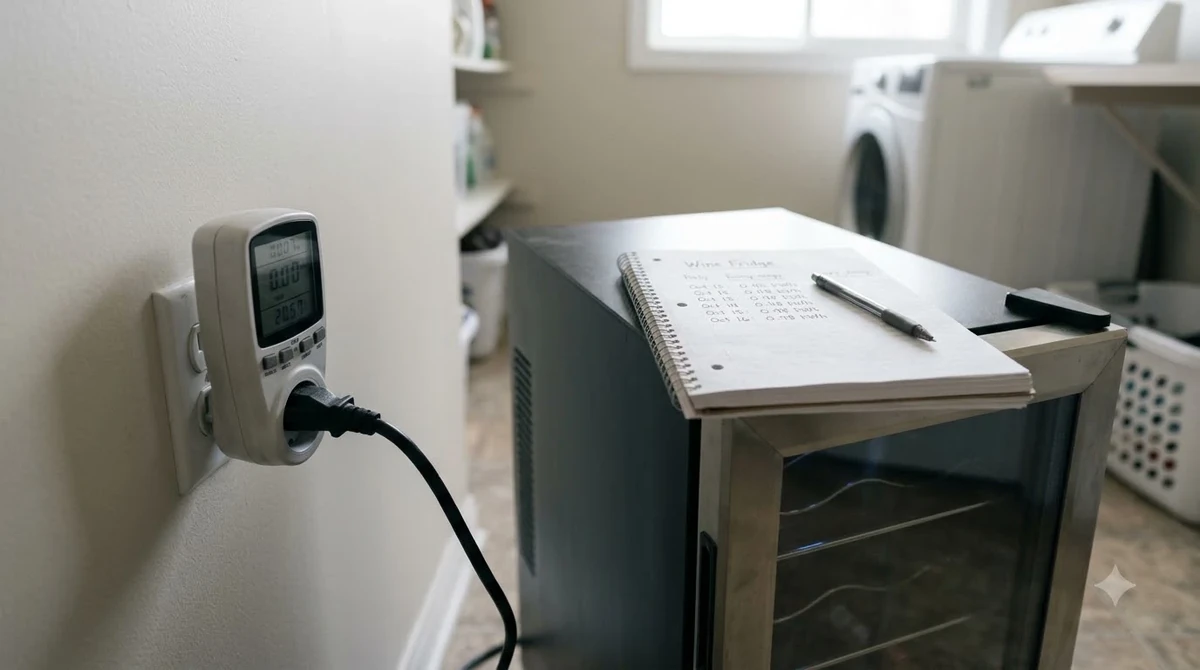
The brand’s published product documentation identifies compressor refrigeration as the cooling technology used in several of its wine refrigerators. Compressor systems are familiar in household refrigeration and can maintain temperatures suitable for storing different wine styles. Kalamera’s documented models include compact cabinets and larger appliances, with capacities ranging from 70 liters to 450 liters in the manual’s listed examples.
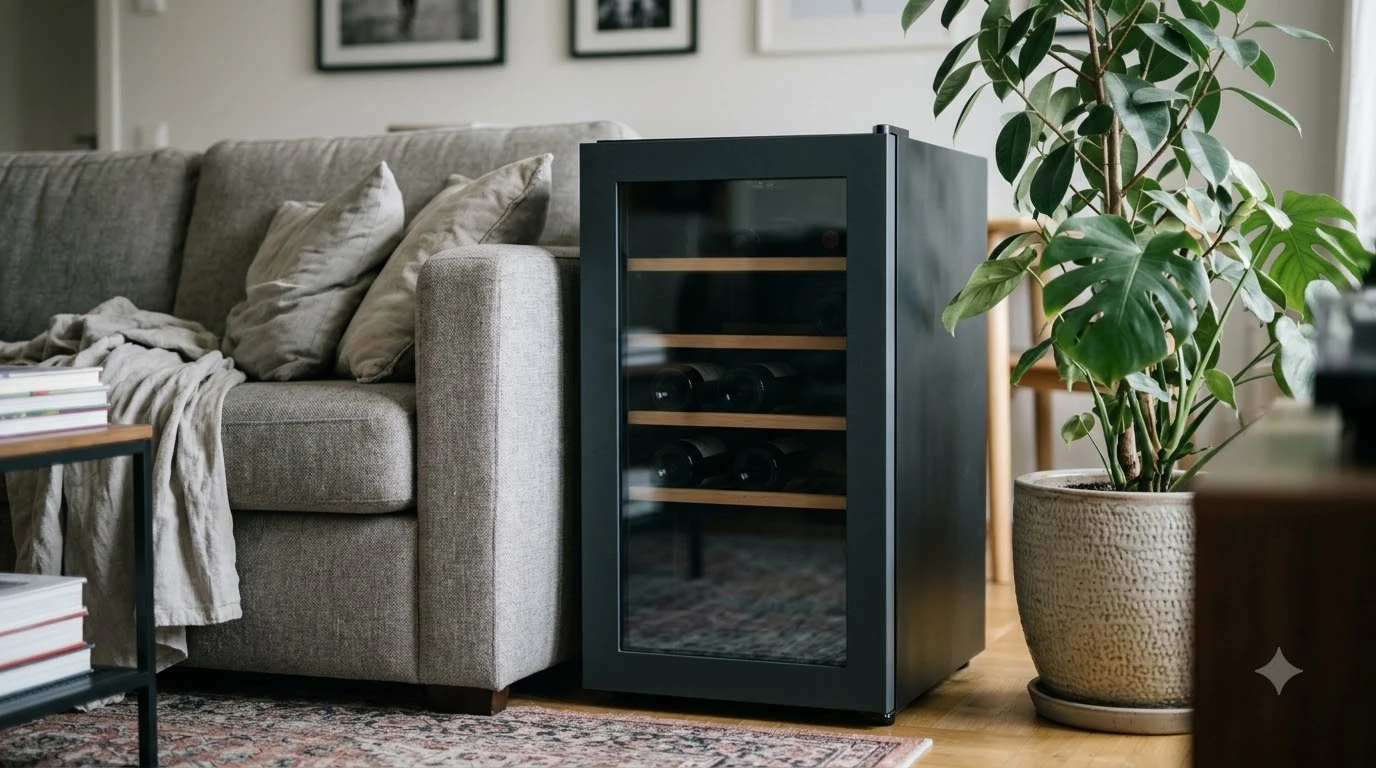
One reason the brand attracts attention is its combination of glass doors, adjustable storage arrangements, electronic temperature controls, and dark or stainless-steel finishes. These features make its appliances suitable for visible placement in kitchens and entertainment rooms. A glass-front cabinet also allows owners to see their collection without opening the door repeatedly.
However, a useful brand assessment needs to distinguish attractive product design from long-term appliance reliability. Kalamera’s published documentation explains installation, temperature adjustment, maintenance, and troubleshooting. Retailer reviews provide another perspective, including reports of satisfactory temperature performance alongside complaints involving control boards, cooling failures, and customer service.
So, is Kalamera a good brand? It can be a reasonable choice for buyers prioritizing design, storage options, and dual-zone flexibility. It is less straightforward for shoppers who place long-term repairability and extensive service coverage above initial features. Its one-year manufacturer warranty and model-specific replacement-parts availability deserve particular attention.
Shoppers comparing several appliance manufacturers can also explore whether Black and Decker is a good brand and compare other refrigerator categories before deciding which manufacturer best matches their expectations.
Kalamera Product Lines Explained
Kalamera’s range is best understood by separating single-zone refrigerators, dual-zone wine cabinets, and larger storage configurations. The right category depends on how many bottles need storage, whether different wine styles require separate settings, and where the appliance will be installed.
The manufacturer’s published manual provides useful examples of the differences between several models. The following table summarizes specifications stated in that document rather than treating every Kalamera refrigerator as having identical features.
| Model | Configuration | Capacity | Temperature range | Dimensions (W x H x D) |
|---|---|---|---|---|
| KRC-18SZB | Single zone | 70 liters | 40–66°F | 11.6 x 33.9 x 22.4 in |
| KRC-30SZB | Single zone | 90 liters | 40–66°F | 14.9 x 33.9 x 22.4 in |
| KRC-46DZB | Dual zone | 150 liters | Upper: 40–50°F; lower: 50–66°F | 23.4 x 33 x 22.4 in |
| KRC-54SZB | Single zone | 150 liters | 40–66°F | 23.4 x 33 x 22.4 in |
| KRC-157DZB | Dual zone | 450 liters | Upper: 40–50°F; lower: 50–66°F | 23.4 x 69.6 x 26.8 in |
These examples demonstrate why comparing model numbers and technical documentation matters. The KRC-46DZB and KRC-54SZB share a stated 150-liter capacity and similar exterior dimensions, but their temperature arrangements differ. The first offers two compartments, while the second uses one temperature range throughout the cabinet.
Single-zone wine refrigerators
Single-zone refrigerators are designed around one shared temperature setting. This arrangement is useful for collections that mainly contain one category of wine or for owners who prefer to store everything at a consistent cellar temperature.
The KRC-18SZB and KRC-30SZB illustrate the smaller end of Kalamera’s documented range. Their stated capacities are 70 liters and 90 liters, respectively. The KRC-18SZB measures 11.6 inches wide, making it particularly interesting for spaces where a standard 24-inch appliance would be too large.
The KRC-54SZB offers a larger 150-liter capacity while maintaining a single-zone design. It may suit buyers who want more storage without needing separate temperature controls for red and white wines.
Dual-zone wine refrigerators
A dual-zone refrigerator has two separately controlled storage compartments. Kalamera’s manual lists the KRC-46DZB and KRC-157DZB with an upper temperature range of 40°F to 50°F and a lower range of 50°F to 66°F.
This arrangement makes it possible to store whites and sparkling wines in the cooler section while keeping reds in the warmer compartment. For example, a buyer could set the upper section around 45°F for chilled white wine and the lower section around 60°F for lighter reds.
The 73-bottle dual-zone freestanding model listed by Wayfair provides another example of the brand’s larger configurations. Its product specifications identify 28 bottles in the first zone and 45 in the second, with 11 wooden shelves.
Kalamera also offers wine and beverage combinations in its broader catalog. These appliances are worth distinguishing from dedicated wine refrigerators because can storage and mixed beverage layouts can change the available space for traditional wine bottles.
Buyers exploring alternative manufacturers can also investigate whether ROVSUN is a good brand before narrowing their choices.
What the Kalamera Brand Does Well
Kalamera’s strongest selling points are its range of cabinet configurations, separate temperature options on selected models, and relatively straightforward electronic controls. These features address several common requirements for household wine storage.
One advantage is the availability of narrow refrigerators. A compact wine cabinet can fit into a kitchen or entertainment area where a wider refrigerator would be impractical. The KRC-18SZB’s published width of 11.6 inches provides a concrete example of this space-conscious approach.
The brand also offers larger cabinets for collections that have outgrown countertop wine racks. Its documented KRC-157DZB, for example, has a stated capacity of 450 liters and a height of 69.6 inches. Such dimensions make it more appropriate for a dedicated storage location than for a small kitchen counter.
Separate temperature settings
Dual-zone storage is another important advantage. Red and white wines are often served at different temperatures, so separate compartments offer more flexibility than one shared thermostat. The KRC-46DZB’s upper range of 40°F to 50°F and lower range of 50°F to 66°F provide a useful example.
Owners who regularly serve Sauvignon Blanc, Chardonnay, Riesling, Cabernet Sauvignon, and Pinot Noir may appreciate this arrangement. White wines can be stored in the cooler compartment, while reds can occupy the warmer section.
However, dual-zone cooling is most valuable when the owner regularly needs both temperature environments. A buyer with a collection consisting almost entirely of red wines may get more practical value from a simpler single-zone model.
Electronic controls and visibility
Kalamera’s manual describes UP and DOWN buttons for temperature adjustment. On applicable single-zone models, each press changes the setting by 1°F within a 40°F to 66°F range. The documented dual-zone controls use separate adjustment buttons for the upper and lower compartments.
The manual also describes an interior LIGHT button and a C/F control for switching between Fahrenheit and Celsius. These functions make everyday operation relatively simple for household users.
Glass doors provide a clear view of stored bottles, while interior lighting helps owners identify wines without searching through shelves. The visual design is particularly useful when the refrigerator occupies an exposed position in a kitchen, dining room, or home bar.
Wayfair’s review summary for its 73-bottle model also identifies appearance, temperature control, and quiet operation as positive customer themes. These observations are encouraging, although feedback for one model should not be assumed to represent every Kalamera refrigerator.
Common Complaints and Owner Experiences
Kalamera wine fridge reviews present a mixed picture. Some buyers appreciate the appearance, storage layout, and cooling performance, while others report concerns involving temperature consistency, noise, bottle capacity, control boards, and repair support.
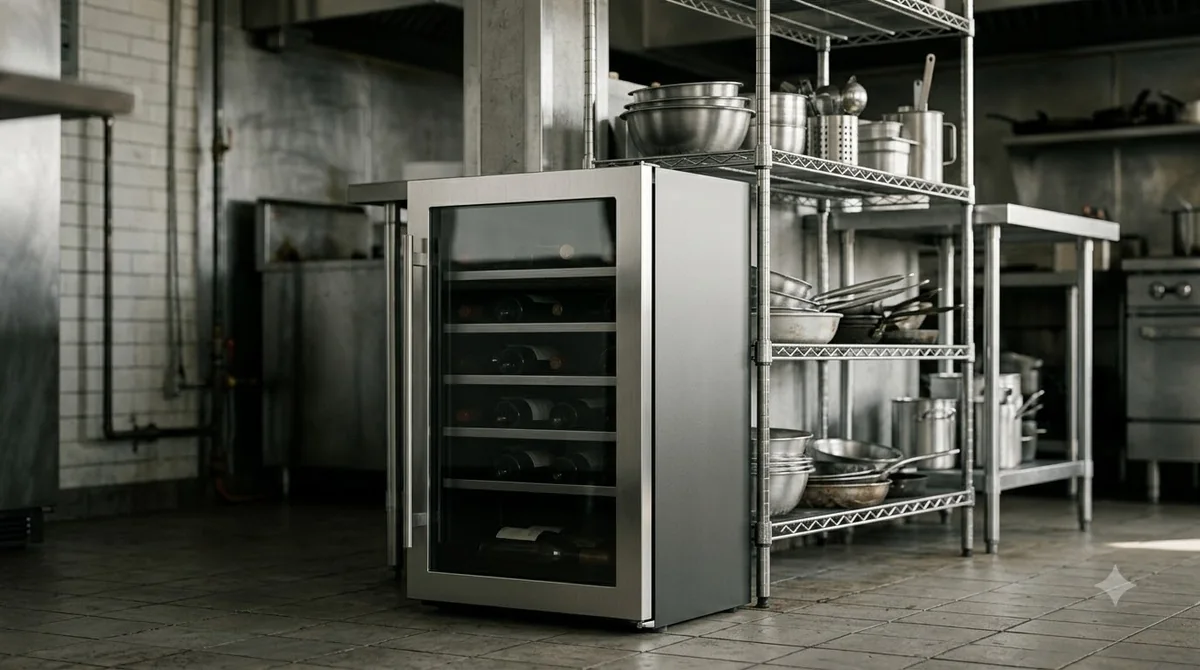
One recurring issue is the difference between advertised bottle capacity and practical storage capacity. Manufacturer bottle counts generally depend on standardized Bordeaux-style bottles arranged in a particular configuration. Burgundy bottles, Champagne bottles, and wider wine bottles can occupy more shelf space, reducing the number that fit comfortably.
Wayfair’s review summary for the 73-bottle refrigerator specifically identifies capacity as a mixed point. Some customers report that the actual number of bottles is lower than the advertised figure, particularly when their collections include larger bottle shapes.
Noise is another consideration. A compressor refrigerator produces normal operating sounds, including compressor activity and refrigerant movement. However, excessive vibration, rattling, or persistent noise may indicate that the appliance is not level, has insufficient ventilation, or is touching nearby cabinets or walls.
Cooling and electronic problems
Retailer feedback also includes reports of cooling failures and control-panel problems. Lowe’s reviews for the KRC-66DZB contain complaints about control-board faults, temperature controls that stop responding, and refrigerators that no longer cool correctly.
Some reviews describe problems after relatively short periods of use, while other customers report satisfactory operation. These individual accounts are not a controlled reliability study, but they identify issues buyers should consider before purchasing.
It is particularly important to investigate replacement-parts availability. A refrigerator can become difficult to maintain if a necessary control board or other component is discontinued. Kalamera’s own FAQ acknowledges that certain older KRC-150CB and KRC-180CB control boards are no longer available for models produced before 2022 once remaining stock is exhausted.
Customer support experiences
Support experiences are not uniform across retailers and product models. Some owners report receiving assistance with replacement parts, while other complaints describe slow communication or difficulty resolving problems after the warranty expires.
Kalamera’s official support information currently directs customers to email rather than telephone support. Buyers should therefore retain order confirmations, model numbers, serial numbers, and photographs of the appliance’s rating label.
Another consideration is the time required to receive replacement parts. The manufacturer’s FAQ estimates 15–25 business days for parts shipped from its overseas factory. That delay can be inconvenient if a refrigerator is needed for regular wine storage or entertaining.
The overall takeaway is that attractive styling and useful temperature features should be weighed against repairability and the relatively short standard warranty. For shoppers who prioritize long-term service access, comparing several brands is a sensible step.
How to Choose a Kalamera Wine Fridge
Choosing the right Kalamera refrigerator starts with the physical installation space and the collection’s storage requirements. A suitable model should accommodate the bottles you actually own, provide an appropriate temperature range, and leave enough ventilation space for reliable operation.
1. Calculate your realistic bottle capacity
Begin by counting the bottles you want to store now and allowing room for future purchases. If your collection contains 25 bottles, a cabinet advertised for 30 may seem adequate. However, wider bottles and irregular shelf arrangements can reduce practical capacity.
Pay particular attention to Champagne, Pinot Noir, Burgundy, and other bottles with wider bodies. These may not fit into shelf arrangements designed around standard Bordeaux bottles.
A useful approach is to choose a cabinet with more nominal capacity than your current collection requires. Extra space also makes it easier to retrieve individual bottles without moving several others.
2. Decide between single-zone and dual-zone cooling
Choose single-zone cooling if most of your wine can share one storage temperature. This is often a straightforward option for collectors who primarily store red wine or maintain a consistent collection.
Choose dual-zone cooling if you regularly keep different wine styles ready for serving. A 45°F upper compartment and a 60°F lower compartment, for example, can accommodate chilled whites and lighter reds simultaneously.
Remember that storage temperature and serving temperature are not always identical. A wine refrigerator should provide an appropriate storage environment, while individual bottles can be adjusted to their preferred serving temperatures before opening.
3. Measure the installation location
Measure the available width, height, and depth before selecting a model. Include the door swing, handle clearance, electrical outlet location, and any surrounding cabinet structure in your measurements.
Built-in installation deserves particular attention. Kalamera’s official FAQ specifies at least 1 inch of clearance above and on each side, plus at least 2 inches behind the appliance for its stated built-in ventilation requirements.
Do not assume that a freestanding wine refrigerator can be enclosed inside cabinetry simply because its exterior dimensions fit. Front ventilation and the manufacturer’s installation requirements determine whether a particular model is appropriate for an enclosed location.
4. Compare the technical specifications
Look beyond the model’s advertised bottle count. Temperature range, energy consumption, electrical requirements, dimensions, shelf arrangement, and weight are all relevant.
For example, Kalamera’s manual lists the KRC-18SZB at 0.55 kWh per day and the KRC-30SZB at 0.59 kWh per day. The KRC-157DZB is listed at 1.52 kWh per day, reflecting its much larger storage configuration.
These figures provide useful reference points, but actual electricity consumption can vary with room temperature, ventilation, door-opening frequency, and operating conditions.
5. Examine the warranty and replacement-parts situation
Read the warranty terms before completing a purchase. Kalamera’s current FAQ states that its products carry a one-year warranty covering manufacturing defects, with free replacement parts for qualifying problems during the coverage period.
Ask how labor, transportation, and service arrangements are handled. Also investigate whether important replacement parts are available for the exact model you are considering.
This is particularly important if you are purchasing an older model or a refrigerator that has been sitting in inventory. A model number alone does not establish that every replacement component will remain available indefinitely.
Tip: Photograph the refrigerator’s rating label and save your original purchase confirmation immediately after delivery. These records can make warranty verification and replacement-parts requests easier if a problem develops.
Finally, compare the retailer’s return period and delivery arrangements. Large glass-door refrigerators can be difficult to transport, so inspect the packaging and appliance for visible damage before discarding shipping materials.
For another perspective on compact appliance manufacturers, compare whether Galanz is a good brand and review the other brand hubs before making a final decision.
Kalamera Warranty, Manuals, and Support
Kalamera provides product manuals and online support information to help owners install, operate, clean, and troubleshoot their refrigerators. Its standard published warranty is one year from the original purchase date for manufacturing defects, making it important to understand the service arrangements before buying.
Finding the correct Kalamera wine cooler manual
The best starting point is the manufacturer’s official manual library. Kalamera publishes a compressor wine cooler manual covering several models, including the KRC-18SZB, KRC-30SZB, KRC-46DZB, KRC-54SZB, and KRC-157DZB.
The document includes technical specifications, safety instructions, installation information, control-panel explanations, cleaning procedures, troubleshooting guidance, and warranty terms.
Model identification matters because not every refrigerator uses the same control layout or temperature settings. The KRC-46DZB, for example, has separate controls for the upper and lower compartments, while the documented single-zone models use a shared temperature setting.
For the operating instructions, consult the official Kalamera compressor wine cooler manual. Use the section that corresponds to the exact model rather than assuming every instruction applies to every product.
Basic installation and operation
Kalamera’s manual provides several practical installation instructions. Before connecting a refrigerator after transportation, it recommends leaving the appliance upright for approximately two hours. This allows the cooling system to settle following handling.
The manual also recommends cleaning the interior with lukewarm water and a soft cloth before initial use. The appliance should be placed on a strong, level surface, with its front leveling legs adjusted as necessary.
After installation, the manufacturer recommends allowing the internal temperature to stabilize for 24 hours before normal use. This gives the refrigerator time to reach its operating conditions before the collection is loaded.
For dual-zone models, the upper compartment generally operates between 40°F and 50°F, while the lower compartment operates between 50°F and 66°F. The controls adjust each zone independently on the applicable models.
Cleaning and maintenance
The manual recommends unplugging the appliance and removing all bottles before cleaning. For the interior, it specifies warm water or a baking soda solution consisting of approximately two tablespoons of baking soda per quart of water.
The exterior can be cleaned using mild detergent or warm water. The manual also instructs owners to remove and wash the water collection box at the bottom of the refrigerator.
Keep the kick plate and internal fans unobstructed. Restricted airflow can interfere with operation, and inadequate ventilation is a potential contributor to cooling problems.
When moving the refrigerator, remove the bottles, secure loose internal components, raise the leveling legs, and tape the door closed. The manual advises keeping the appliance upright during transportation.
Troubleshooting common problems
If a Kalamera refrigerator is not cooling adequately, begin with basic checks. Confirm that the temperature setting is correct, the door closes completely, the gasket seals properly, and the appliance has sufficient ventilation space.
Excessive vibration or noise may be related to an uneven floor or improperly adjusted leveling legs. A fan obstruction or contact with a nearby cabinet can also create unusual sounds.
The manufacturer’s FAQ provides additional guidance for more complicated problems. It identifies a persistent 88 display code as a typical indication of a main control-board fault. A dual-zone refrigerator that stops cooling in only one compartment may have a temperature sensor, control-board, or refrigeration-system problem.
These symptoms do not establish a definitive diagnosis. Kalamera recommends professional refrigeration assistance for problems involving the sealed cooling system, including suspected refrigerant leaks and compressor failures.
Warranty and replacement-parts coverage
Kalamera’s official FAQ states that its standard product warranty lasts one year from the purchase date. The manufacturer says separate registration is not required and that order information can be used to verify purchase details.
For qualifying manufacturing defects within the warranty period, the FAQ describes free replacement parts. Owners should retain their purchase records and supply the requested model and serial information when seeking assistance.
Replacement-parts delivery is another consideration. Kalamera estimates 15–25 business days for parts shipped from its overseas factory. The manufacturer also notes that parts availability can vary by model and production period.
For older KRC-150CB and KRC-180CB models produced before 2022, certain control boards and temperature control boards have been discontinued. Buyers considering used or older inventory should investigate parts availability before committing.
Kalamera’s official support and documentation information is available through its wine cooler FAQ and support page. It is a useful resource for checking current warranty procedures, troubleshooting recommendations, and model-specific compatibility questions.
Frequently Asked Questions
Is Kalamera a good brand for a first wine refrigerator?
Kalamera can be a suitable starting point for someone moving from a countertop rack to refrigerated storage. Its smaller cabinets offer an alternative to purchasing a large wine refrigerator immediately. Buyers should still consider repair access and the one-year standard warranty before deciding.
Can a Kalamera wine cooler store Champagne bottles?
Many Champagne bottles have wider bodies than standard Bordeaux bottles. Their dimensions can reduce the usable capacity of a refrigerator designed around narrower bottles. Check the shelf spacing and interior measurements before purchasing if sparkling wine makes up a substantial part of your collection.
Does Kalamera sell replacement shelves separately?
Replacement-part availability depends on the exact model and component. Kalamera specifically states that wooden and wire mesh shelves use different mounting clips and cannot be interchanged. Provide the complete model number when asking about compatible replacement shelves.
Can a Kalamera wine fridge be used for long-term wine aging?
Wine aging benefits from stable storage conditions, minimal temperature fluctuations, and protection from excessive light and vibration. A wine refrigerator can provide controlled temperatures, but its suitability for a valuable long-term collection depends on the stability and consistency of the particular unit. Buyers should prioritize reliable temperature performance rather than appearance or bottle capacity alone.
Does Kalamera offer telephone customer service?
Kalamera’s published FAQ states that its after-sales support is provided through email and that telephone support is not offered. The company identifies [email protected] as its support contact. Include the order information and a photograph of the appliance’s rating label when submitting an initial request.
Kalamera offers a varied selection of wine refrigerators, from narrow single-zone cabinets to larger dual-zone storage appliances. Its combination of glass-door styling, electronic temperature controls, and flexible configurations makes the brand worth considering, but buyers should carefully evaluate actual bottle capacity, installation requirements, warranty coverage, and replacement-parts availability. The best choice is the model that suits the collection and installation space while providing a support arrangement you are comfortable with.
More in Brand Hubs
 Icyglee Wine Fridge: Compare Capacities, Features and ModelsUpdated Nov 20, 2026
 Fomup Wine Fridge: Explore Models, Features, and Buying TipsUpdated Nov 20, 2026
 Aaobosi Wine Fridge: Compare Models and Choose the Right CoolerUpdated Nov 20, 2026
 Orymuse Wine Fridge Reviews: Compare Capacities, Features and WarrantyUpdated Nov 20, 2026
 Tylza Wine Fridge: Find the Right Cooler for Your CollectionUpdated Nov 20, 2026
 Vintec Wine Fridge: Features, Warranty, and Buying AdviceUpdated Nov 20, 2026