

We may earn a commission when you buy through links on this page, at no extra cost to you. Learn more.
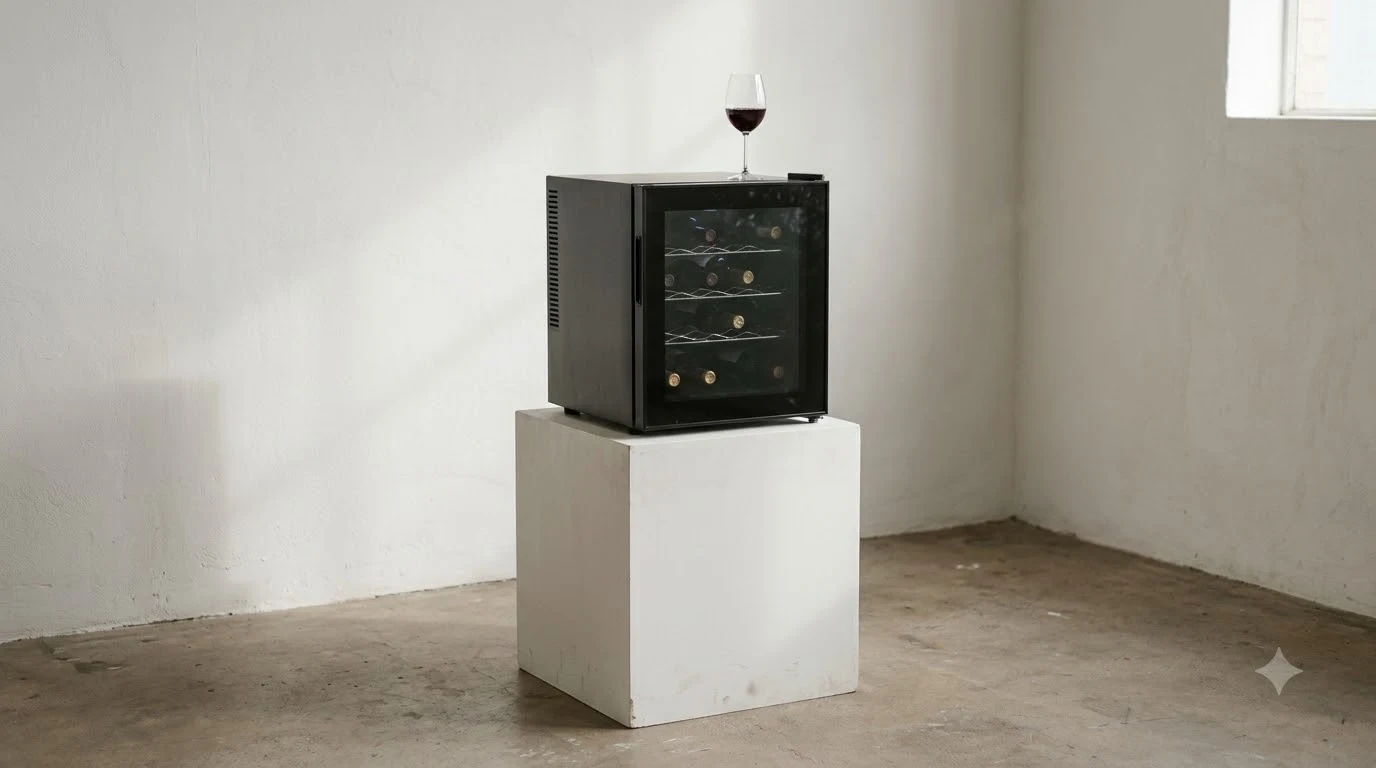
An EdgeStar wine cooler is a practical option for homeowners who want dedicated wine storage, with models offering single-zone and dual-zone temperature control, freestanding or built-in installation, and different storage capacities. The brand’s lineup includes compact cabinets and larger under-counter refrigerators, making it possible to match a cooler to a kitchen, dining room, or home bar. Its main strengths are flexible configurations and useful temperature controls, while potential buyers should pay close attention to bottle capacity, installation requirements, and long-term service considerations.
Choosing an EdgeStar wine refrigerator involves more than comparing the number of bottles printed on the product listing. Shelf dimensions, ventilation, temperature settings, cabinet measurements, and the availability of replacement parts can all affect the ownership experience. This brand overview examines the documented product range, common owner feedback, and practical considerations to help buyers decide whether EdgeStar belongs on their shortlist.
Brand Overview: EdgeStar Wine Refrigerators
EdgeStar is a name associated with specialty refrigeration and compact home appliances. Its wine cooler range focuses on storing bottles at controlled temperatures rather than providing the general-purpose food storage of a conventional kitchen refrigerator. The available configurations include single-zone and dual-zone designs, with different cabinet sizes and installation arrangements.
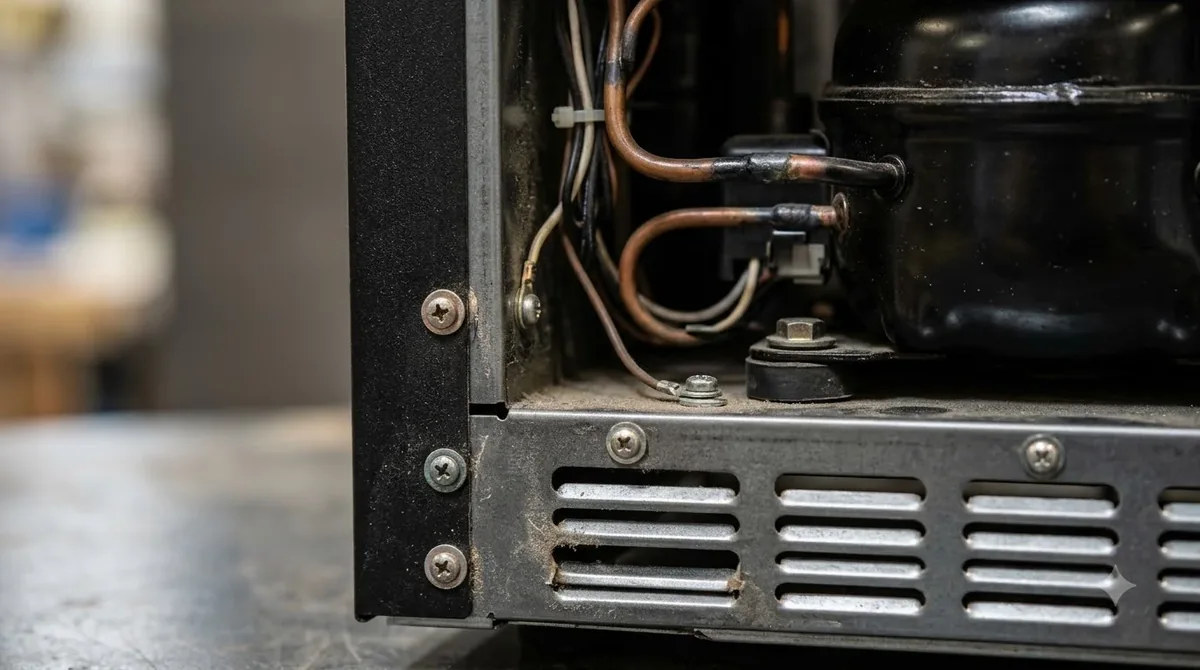
One reason shoppers consider an EdgeStar wine cooler is the variety of physical layouts. A freestanding cabinet can work in a dining room or entertainment area, while a suitable front-venting built-in design can fit beneath a kitchen counter. These are different installation requirements, however, and buyers should never assume that every freestanding model can safely operate inside cabinetry.
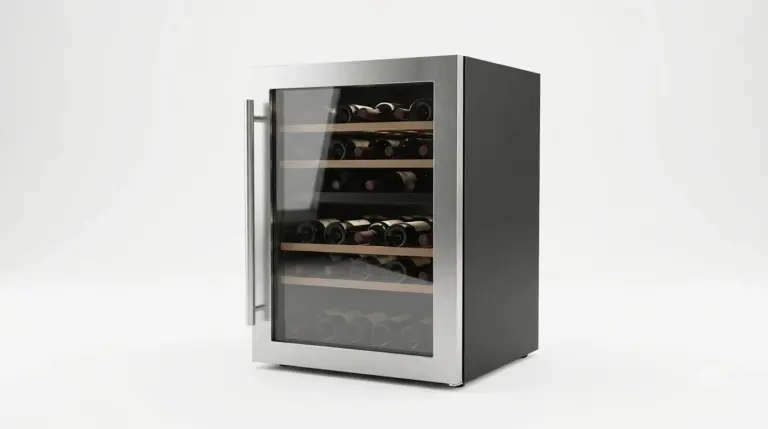
The CWF380DZ illustrates the brand’s approach to compact wine storage. This stainless steel model accommodates up to 38 standard wine bottles, offers two temperature zones, and has a reversible door. Lowe’s lists its dimensions as approximately 19.38 inches wide, 32.88 inches high, and 24.88 inches deep. That footprint makes it a potential option for households with limited floor space, provided the installation location meets the manufacturer’s requirements.
EdgeStar also has models with larger capacities and different cabinet arrangements. The CWR5631FD, for example, is covered by a dedicated dual-zone owner’s manual, while the CWR302SZ is documented as a built-in wine cooler. These model-specific documents are important because installation instructions, controls, and features should not be transferred from one appliance to another without confirmation.
For buyers researching whether EdgeStar is a good brand, the fairest assessment is that it offers useful wine-storage configurations, but the ownership experience depends heavily on the individual model. A well-designed cabinet can still be a disappointing purchase if its bottle capacity does not match the buyer’s collection or local repair support is limited.
Product Lines Explained
EdgeStar’s wine refrigerator range is best understood by configuration, installation style, and storage capacity rather than by assuming every model shares the same features. The following examples are documented models with identifiable product or manual information.
| Model | Configuration | Documented characteristics | Potential use |
|---|---|---|---|
| CWF380DZ | Dual zone | 38 bottles; reversible door | Compact home wine storage |
| CWR5631FD | Dual zone | Independent temperature controls; two zones | Separate red and white wine storage |
| CWR302SZ | Single zone | 40–65°F temperature range | Consistent storage temperature |
Compact dual-zone refrigerators
The CWF380DZ is a useful reference point for shoppers who want two storage environments without committing to a particularly wide cabinet. Its advertised 38-bottle capacity is based on standard wine bottles, which is an important qualification. Champagne, sparkling wine, Burgundy, and some wider-format bottles can occupy more shelf space than conventional Bordeaux-style bottles.
The reversible door is another practical consideration. Depending on the room layout, changing the opening direction can make access easier and reduce interference with nearby cabinetry or furniture. Buyers should confirm that the particular unit’s installation instructions support the intended door configuration before completing the setup.
Dual-zone cabinets with separate controls
The CWR5631FD demonstrates a more clearly divided approach to wine storage. Its owner’s manual describes two independently controlled cooling zones, each with its own temperature adjustment. Both zones have a documented adjustment range of 40°F to 65°F.
This arrangement is useful for people who regularly serve different wine styles. A household might keep Chardonnay and Riesling in one section while holding Cabernet Sauvignon and Merlot in the other. Separate controls allow the two environments to be adjusted independently rather than forcing every bottle into one compromise setting.
Single-zone wine refrigerators
A single-zone EdgeStar wine fridge is a simpler alternative for buyers who primarily collect one category of wine or want consistent storage conditions throughout the cabinet. The CWR302SZ manual documents a single-zone temperature range of 40°F to 65°F.
This configuration can make sense for a collection dominated by red wines, white wines, or bottles being held for longer-term storage. It also removes the need to decide how much cabinet space to allocate to each temperature zone. A single-zone design is not necessarily less useful than a dual-zone design; the better choice depends on the collection and serving habits.
What EdgeStar Does Well
EdgeStar’s strongest selling points are its range of installation formats, practical temperature controls, and the availability of models with separate cooling environments. These features address common household wine-storage needs without requiring a dedicated wine cellar.
Flexible installation arrangements
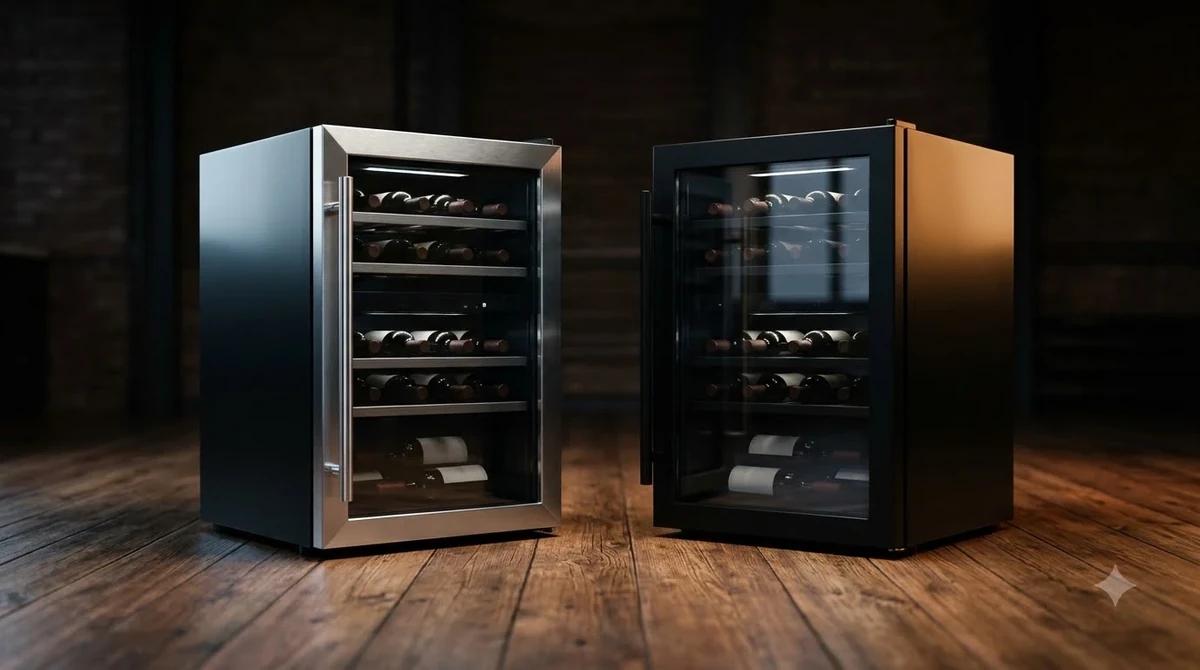
Some EdgeStar models are designed for freestanding placement, while others support built-in installation. The distinction matters because an under-counter wine refrigerator must release heat appropriately and have sufficient access to ventilation. A freestanding model may need substantially different clearance around its cabinet.
The CWR5631FD manual explains both freestanding and built-in installation considerations. For the documented installation, it specifies at least 2 inches of clearance behind the appliance and half an inch at the top and sides. Those measurements are model-specific, not universal requirements for every EdgeStar cooler.
Independent temperature management
Dual-zone models are particularly useful for households that regularly alternate between red and white wines. For example, a buyer can use one compartment for whites intended to be served around 45–50°F and another for light reds intended to be served around 55–60°F.
The CWR5631FD manual describes separate control panels for the two compartments, with adjustments in one-degree increments. This provides more flexibility than a single-temperature cabinet and allows users to make small adjustments as their storage preferences change.
Useful everyday controls
EdgeStar manuals describe controls for increasing and decreasing temperatures, switching the interior lighting, and changing the displayed temperature scale between Celsius and Fahrenheit. These basic functions make routine operation straightforward once the controls are understood.
The CWR302SZ documentation also describes a temperature-memory function. Following a power interruption, the unit is designed to return to its previously selected setting. That is a useful convenience, although owners should still check the cabinet temperature after an interruption rather than assume that every bottle remained at its intended temperature.
Positive owner feedback
Owner feedback on the CWF380DZ at Lowe’s frequently highlights its appearance, relatively quiet operation, and ability to maintain separate temperature settings. Some customers also appreciate its dimensions and suitability for under-counter placement.
These comments suggest that the everyday experience can be appealing when the refrigerator is correctly installed and the bottle arrangement matches the intended capacity. However, individual customer experiences should not be treated as proof of long-term durability across the entire brand range.
Shoppers comparing appliance brands may also want to examine whether Black and Decker is a good brand before deciding which manufacturer offers the best combination of features and practical ownership considerations.
Common Complaints and Ownership Concerns
EdgeStar wine cooler reviews present a mixed picture. Customers frequently appreciate the design and temperature-control features, but recurring concerns include reliability, shelf dimensions, door sealing, and the difficulty of arranging repairs.
Actual bottle capacity can be lower
The advertised bottle count is generally based on standard 750 ml wine bottles arranged in a particular pattern. That arrangement does not necessarily reflect the way every household stores wine. A collection containing wide Burgundy bottles, Champagne bottles, or larger sparkling-wine formats may not fit the advertised number.
This issue can be particularly noticeable when a cooler has closely spaced shelves. A bottle that fits comfortably in one row may prevent the shelf above it from sliding into place. Some owners of EdgeStar models have specifically mentioned limited clearance for larger bottles.
Cooling and compressor reliability
Some customer reports describe refrigerators that stopped cooling after a period of use. Other complaints mention compressor-related failures or appliances that became difficult to repair economically. These experiences are important considerations, especially for buyers planning to use a wine refrigerator for a valuable collection.
However, individual reports do not establish that every EdgeStar model has the same reliability problem. Product designs, usage conditions, installation quality, and the age of the appliance can all influence performance. A cabinet installed too close to a heat source or without adequate ventilation may struggle to maintain its intended temperature.
Door seals and temperature readings
Some CWF380DZ customer feedback mentions concerns about door sealing and cooling consistency. A door that does not close properly can allow warm air to enter the cabinet, increasing the workload on the cooling system.
There is also a distinction between a displayed setting and the actual temperature of the wine. A control panel showing 48°F does not necessarily mean that every bottle immediately reaches 48°F. Air temperature changes more quickly than the temperature inside a full bottle, and environmental conditions can affect how consistently a refrigerator reaches its target.
Repair accessibility
Repair access is another issue worth considering before buying. Some owners report that finding a qualified technician or obtaining the necessary replacement components can be difficult. A refrigerator that is relatively easy to operate may still become inconvenient if it develops a refrigeration-system problem.
Before purchasing, investigate local appliance-service options and ask whether technicians are willing to work on the exact model under consideration. This is particularly important for built-in units, where removal from cabinetry may add to the difficulty of servicing the appliance.
Tip: Before buying an EdgeStar wine cooler, measure your largest bottles and compare their dimensions with the shelf openings. Also confirm the model’s ventilation requirements, warranty terms, and availability of local repair service. These checks can prevent problems that a headline bottle-capacity figure will not reveal.
For another comparison point, see whether ROVSUN is a good brand. Comparing product documentation and owner experiences across manufacturers can help establish which features matter most in a particular installation.
How to Choose an EdgeStar Wine Cooler
The right EdgeStar model depends on the size of your wine collection, the available installation space, and whether you need one or two temperature environments. A careful comparison of these factors is more useful than choosing a refrigerator solely because it advertises a large bottle count.
1. Decide between single-zone and dual-zone storage
A single-zone wine refrigerator is suitable for a collection that needs one consistent storage environment. It is also a sensible choice for buyers who mostly purchase one style of wine and do not need separate serving temperatures.
A dual-zone wine cooler makes more sense if you regularly keep both reds and whites available. Sauvignon Blanc, Pinot Grigio, and Riesling generally benefit from cooler serving temperatures than full-bodied red wines such as Cabernet Sauvignon or Syrah. Separate compartments make it easier to keep both categories ready for different occasions.
2. Calculate realistic bottle capacity
Start by counting the bottles you currently own, then consider how much the collection is likely to grow. A cabinet that holds 38 standard bottles may be sufficient for an occasional wine drinker, but a collector with 50 or more bottles needs a different storage solution.
Also consider the proportions of different bottle shapes. Champagne and sparkling-wine bottles are often wider than standard Bordeaux bottles. If these make up a significant part of your collection, prioritize shelf clearance over the advertised capacity.
3. Measure the installation location
Measure the width, height, and depth of the available space, including the room needed to open the door. For the CWF380DZ, the listed dimensions are approximately 19.38 inches wide, 32.88 inches high, and 24.88 inches deep.
Do not forget the power outlet, ventilation, and access needed for maintenance. An appliance that fits tightly into an opening may still be unsuitable if the manufacturer’s installation requirements are not satisfied. Check whether the model is explicitly approved for built-in use before placing it beneath a counter.
4. Consider your collection’s temperature needs
For everyday serving, sparkling wines are generally best served around 40–50°F, light whites and rosé around 45–50°F, and fuller-bodied whites around 50–55°F. Light reds can be served around 55–60°F, while full-bodied reds generally suit 60–65°F.
These are serving guidelines rather than a requirement to maintain every bottle at its serving temperature permanently. A wine refrigerator is primarily a storage appliance, and a dual-zone model offers more flexibility when different wine styles are regularly available.
5. Compare documentation and support
Look for the exact model number before downloading a manual. EdgeStar has multiple wine refrigerator designs, and a manual for a single-zone appliance will not explain every feature of a dual-zone model.
Check the installation instructions, temperature-control information, troubleshooting section, and warranty provisions. It is also sensible to ask about replacement shelves, door gaskets, and service availability before committing to a particular cabinet.
Warranty, Manuals, and Customer Support
Documentation is particularly important with EdgeStar wine refrigerators because different models have different controls and installation requirements. The best starting point is the model and serial number on the appliance’s product label, followed by the matching owner’s manual and support information.
Finding the correct EdgeStar wine cooler manual
Search using the complete model number rather than a general phrase such as EdgeStar wine fridge manual. For example, the CWR5631FD manual explains the operation of its two independent temperature zones, while the CWR302SZ manual covers a single-zone configuration.
The CWR5631FD manual includes instructions for installation, electrical requirements, shelf removal, temperature adjustment, defrosting, cleaning, and troubleshooting. It also directs owners to EdgeStar’s support website for its self-diagnostic tool.
Owners can consult the EdgeStar CWR5631FD owner’s manual for model-specific instructions. The document explains that the appliance should stand upright for at least 24 hours before connection to the electrical supply, allowing compressor oil to settle after transportation.
Installation and initial operation
Installation deserves particular attention because poor positioning can contribute to cooling problems. The CWR5631FD manual recommends a grounded 115-volt, 60-Hz electrical supply and advises against using extension cords or power strips. It also recommends a dedicated electrical circuit.
The same manual specifies an ambient operating environment above 50°F and below 95°F. It advises keeping the refrigerator away from ovens, grills, direct heat, and locations exposed to moisture. The cabinet should sit on a firm, level surface that can support its weight when fully loaded.
After installation, allow at least 24 hours for the temperature to stabilize before loading the wine. The manual also advises waiting at least five minutes before switching the unit back on after it has been powered off. Following these instructions is a straightforward way to avoid unnecessary startup and installation problems.
Understanding warranty coverage
Warranty terms should be reviewed for the exact product rather than assumed to be identical across every EdgeStar wine refrigerator. The CWR5631FD documentation includes a limited one-year parts-and-labor warranty. That provision should not automatically be applied to a different model or a separately purchased appliance.
Buyers should establish what the warranty covers, how service is arranged, and whether transportation or labor outside the stated coverage period could become their responsibility. They should also retain the purchase receipt and record the appliance’s serial number.
For practical ownership planning, warranty length is only one consideration. The availability of qualified technicians, replacement components, and accessible service procedures can make a substantial difference if the refrigerator develops a fault.
Basic troubleshooting
Before contacting support about a cooling problem, review the model’s troubleshooting instructions. The CWR302SZ manual identifies several possible causes of poor cooling, including inadequate ventilation, a door that is not completely closed, excessive door opening, and placement near a heat source.
Unusual compressor and refrigerant sounds should also be considered in context. EdgeStar manuals describe certain humming, gurgling, rattling, and water-flow sounds as potentially normal during operation. However, smoke, burning odors, or genuinely abnormal sounds should not be ignored. The CWR5631FD instructions direct owners to unplug the appliance and contact customer service if these warning signs occur.
For additional brand comparisons, our Galanz brand overview provides another reference when evaluating compact refrigeration appliances. You can also browse the wider collection of brand hubs for further appliance research.
Frequently Asked Questions
Can an EdgeStar wine cooler be used for beer and other beverages?
Some wine refrigerators can physically accommodate cans and other packaged beverages, but their shelves are designed primarily for wine bottles. The available temperature range may also be unsuitable for certain beverages. Consult the specific appliance manual before using it for anything other than its intended storage purpose.
Does an EdgeStar wine refrigerator have a temperature alarm?
The CWR302SZ manual documents both a high- and low-temperature alarm. It describes an HI warning when the interior exceeds 73°F and an LO warning when the interior falls below 32°F, with the alarm sounding after one hour. These thresholds are specific to that documented model and should not be assumed to apply to every EdgeStar refrigerator.
Can an EdgeStar wine cooler operate in a garage?
Garage suitability depends on the ambient temperature and the specific model’s operating requirements. The CWR5631FD manual specifies an ambient range above 50°F and below 95°F. A garage that regularly falls outside that range may cause performance problems, even if the appliance is otherwise installed correctly.
Why does an EdgeStar wine cooler display HI or LO?
On the CWR302SZ, HI indicates an interior temperature above 73°F, while LO indicates a temperature below 32°F. The manual recommends consulting its troubleshooting instructions or contacting EdgeStar support if either condition occurs. These alerts indicate that the interior temperature is outside the documented operating thresholds.
Does an EdgeStar wine cooler remember its settings after a power outage?
The CWR302SZ manual specifically describes a temperature-memory function that restores the previously selected setting after power returns. This feature is useful following a temporary interruption. It does not guarantee that the wine remained at its intended temperature throughout the outage, so checking the cabinet after power is restored is sensible.
EdgeStar offers a range of wine-storage configurations that can suit different collections, room layouts, and temperature preferences. Its dual-zone options are particularly useful for households that keep both red and white wines, while single-zone models provide a simpler alternative. Before choosing, compare actual bottle dimensions, installation requirements, warranty coverage, and local repair options to find a refrigerator that will work well beyond the initial setup.
More in Brand Hubs
 Icyglee Wine Fridge: Compare Capacities, Features and ModelsUpdated Nov 20, 2026
 Fomup Wine Fridge: Explore Models, Features, and Buying TipsUpdated Nov 20, 2026
 Aaobosi Wine Fridge: Compare Models and Choose the Right CoolerUpdated Nov 20, 2026
 Orymuse Wine Fridge Reviews: Compare Capacities, Features and WarrantyUpdated Nov 20, 2026
 Tylza Wine Fridge: Find the Right Cooler for Your CollectionUpdated Nov 20, 2026
 Vintec Wine Fridge: Features, Warranty, and Buying AdviceUpdated Nov 20, 2026