
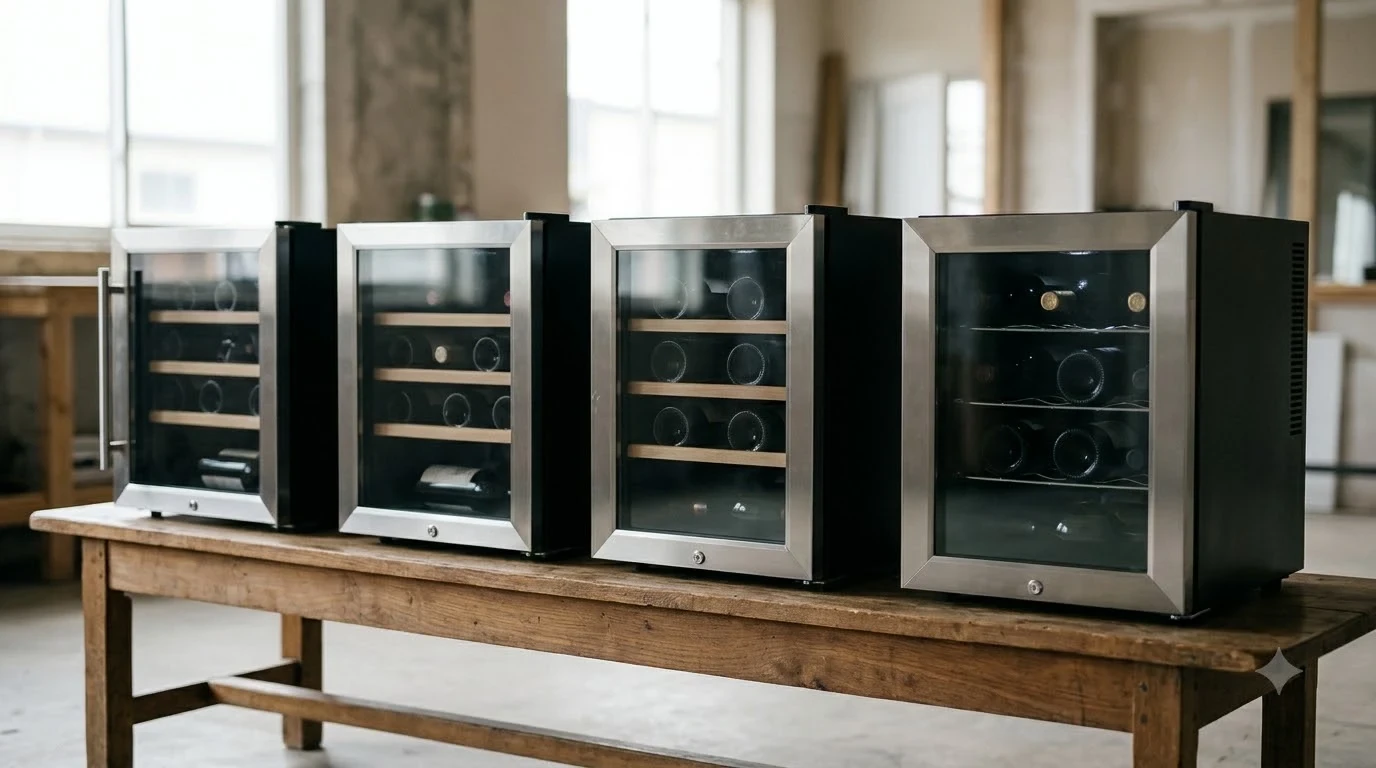

We may earn a commission when you buy through links on this page, at no extra cost to you. Learn more.
The newair beverage cooler ABR-1770 is a good option for homeowners who want a large-capacity, built-in or freestanding drink refrigerator with adjustable shelves and digital temperature controls. Its 177-can capacity, 37°F minimum setting, front-venting design, and triple-paned glass door make it particularly appealing for home bars and entertainment spaces. However, customer feedback raises concerns about operating noise, cooling consistency, and long-term reliability, so buyers should weigh its useful features against those potential drawbacks.
Newair offers several beverage refrigerator configurations, but the ABR-1770 is one of its larger indoor models. It combines a substantial storage compartment with a relatively standard under-counter width, making it an interesting choice for homeowners who want dedicated beverage storage without giving up an entire kitchen refrigerator. This review examines its specifications, everyday practicality, customer experiences, and the details worth checking before purchasing.
Specs and Key Features of the Newair ABR-1770
The Newair ABR-1770 is a single-zone compressor beverage refrigerator with room for 177 standard cans. Its combination of front ventilation, digital controls, adjustable shelves, and a locking glass door makes it suitable for a dedicated home bar or an entertainment area where drinks need to remain accessible.
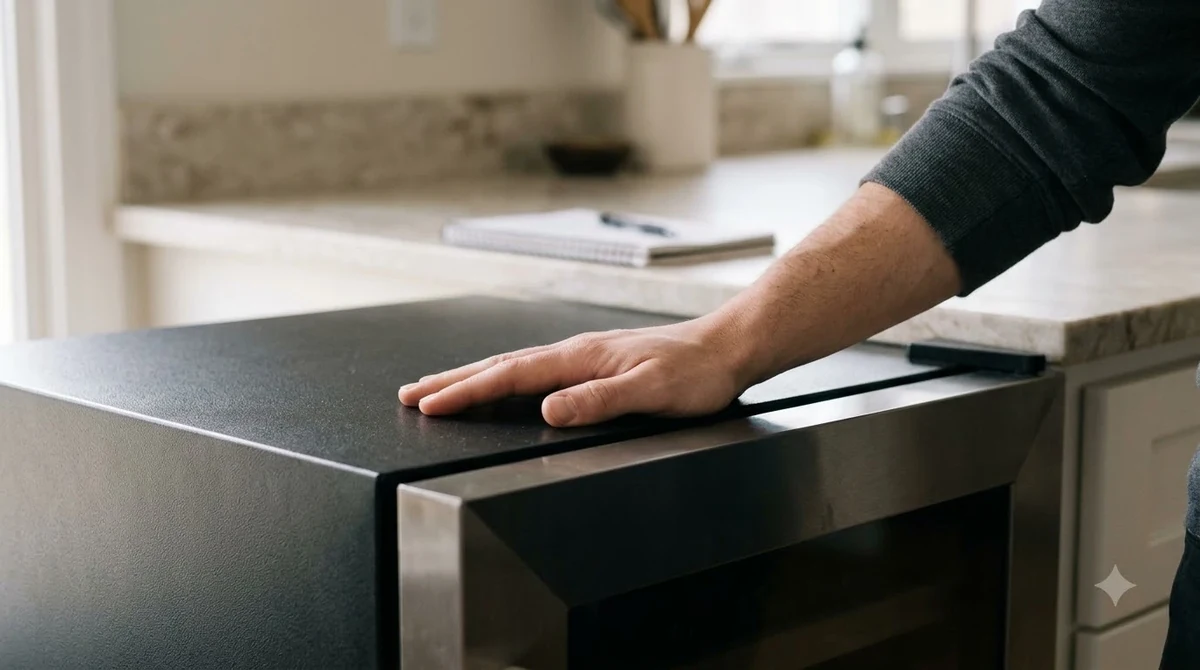
The most important distinction is that this is a beverage refrigerator rather than a dedicated wine preservation cabinet. Its temperature range accommodates chilled soft drinks, beer, sparkling water, and some short-term wine storage needs. The adjustable interior also gives owners more flexibility than a refrigerator designed around one fixed can arrangement.
Here are the principal specifications published by Newair for the ABR-1770:
| Specification | Newair ABR-1770 |
|---|---|
| Model | ABR-1770 |
| Maximum capacity | 177 standard cans |
| Internal volume | 5.3 cubic feet |
| Dimensions | 22.60″D x 23.50″W x 33″H |
| Depth with handle | 24.25 inches |
| Weight | 113 pounds (current listing) |
| Cooling system | Compressor |
| Temperature range | 37°F–66°F |
| Temperature zones | Single zone |
| Temperature controls | Digital push-button controls |
| Shelves | Six beverage racks |
| Door | Triple-paned glass with lock |
| Installation | Built-in or freestanding |
| Electrical requirements | 120 volts, 90 watts, 60 Hz |
Capacity is one of the strongest selling points. A refrigerator that holds 177 standard cans can accommodate a substantial selection of everyday refreshments, including cola, sparkling water, iced tea, beer, and canned cocktails. For a household that regularly entertains, having this much dedicated storage can reduce the need to rearrange the main refrigerator before guests arrive.
However, maximum can capacity is not the same as practical mixed-beverage capacity. A refrigerator filled entirely with standard cans can use its available space more efficiently than one containing tall bottles, oversized cans, and irregularly shaped containers. Buyers who plan to store a combination of beverages should expect the usable count to vary according to shelf arrangement.
The digital thermostat is another useful feature. Newair specifies a temperature range of 37°F to 66°F, with the controls allowing adjustments in one-degree increments. This gives owners more flexibility than a refrigerator with a few basic cooling settings.
The triple-paned glass door adds visual appeal while helping retain cold air. A locking mechanism is also useful in shared spaces, particularly when the refrigerator is installed in a family room, office, or entertainment area.
The stainless steel framing gives the refrigerator a contemporary appearance that works with many kitchen and bar finishes. Its glass door also makes it easy to see which beverages need restocking.
One specification deserves special attention: the manufacturer’s current listing gives a weight of 113 pounds, while the available owner’s manual lists a 104-pound product weight and 113-pound shipping weight. This discrepancy is worth clarifying with Newair when arranging delivery or installation.
For the complete manufacturer specification list, consult the Newair ABR-1770 product information.
What Owners Like About the Beverage Refrigerator
Customer feedback identifies storage capacity, adjustable shelving, and appearance as important advantages of the Newair ABR-1770. Owners who receive a properly functioning unit often appreciate having a dedicated place for drinks that does not compete with everyday food storage.
The 177-can capacity is particularly useful for households that buy beverages in bulk or entertain frequently. Instead of filling the main refrigerator with cans and bottles, owners can keep drinks organized in a separate appliance. This arrangement also makes it easier for guests to help themselves without repeatedly opening the kitchen refrigerator.
Adjustable shelves contribute to this flexibility. Standard cans can occupy several rows, while taller containers can be accommodated by changing the shelf arrangement. This is helpful for people who regularly alternate between soda cans, craft beer bottles, sparkling water, and specialty drinks.
The glass door is another frequently appreciated design feature. It provides a clear view of the contents, making it easier to identify what needs restocking. Combined with interior lighting, it gives the refrigerator the appearance of a dedicated beverage display rather than an ordinary utility appliance.
The stainless steel framing also works well with many contemporary kitchen and bar finishes. The refrigerator can complement stainless steel appliances, dark cabinetry, and dedicated entertainment furniture without looking out of place.
Customer feedback on Lowe’s provides some useful context. The retailer’s displayed ABR-1770 review page shows an average of 4.3 out of 5 from 455 reviews, with 90% of reviewers recommending the product. These figures provide a snapshot of customer sentiment rather than a guarantee of individual-unit performance.
Positive comments also mention customer support. One owner described receiving helpful assistance after the first unit developed an issue, while another reported several years of daily use before experiencing a power control board failure.
That distinction matters because appliance satisfaction involves more than the initial cooling performance. Access to replacement parts, troubleshooting assistance, and a clear warranty process can influence the overall ownership experience.
Another advantage is the ability to install the ABR-1770 as either a built-in or freestanding appliance. Owners who are remodeling a kitchen can consider integrating it into an appropriate under-counter space, while people who want a separate beverage station can position it in a suitable entertainment area.
Its front-venting arrangement is particularly useful for under-counter applications because ventilation is designed around the front of the unit. This is different from refrigerators that require substantial side or rear ventilation and therefore cannot be placed directly between cabinets.
Nevertheless, installation flexibility does not mean that every cabinet opening will accommodate the refrigerator. Actual opening dimensions, flooring height, door movement, and ventilation access still need to be considered.
Common Complaints and Potential Drawbacks
The biggest concerns in customer feedback involve noise, inconsistent cooling, frost buildup, and reliability. Although many owners report satisfactory use, the complaints are significant enough that buyers should consider their tolerance for appliance maintenance and possible service needs.
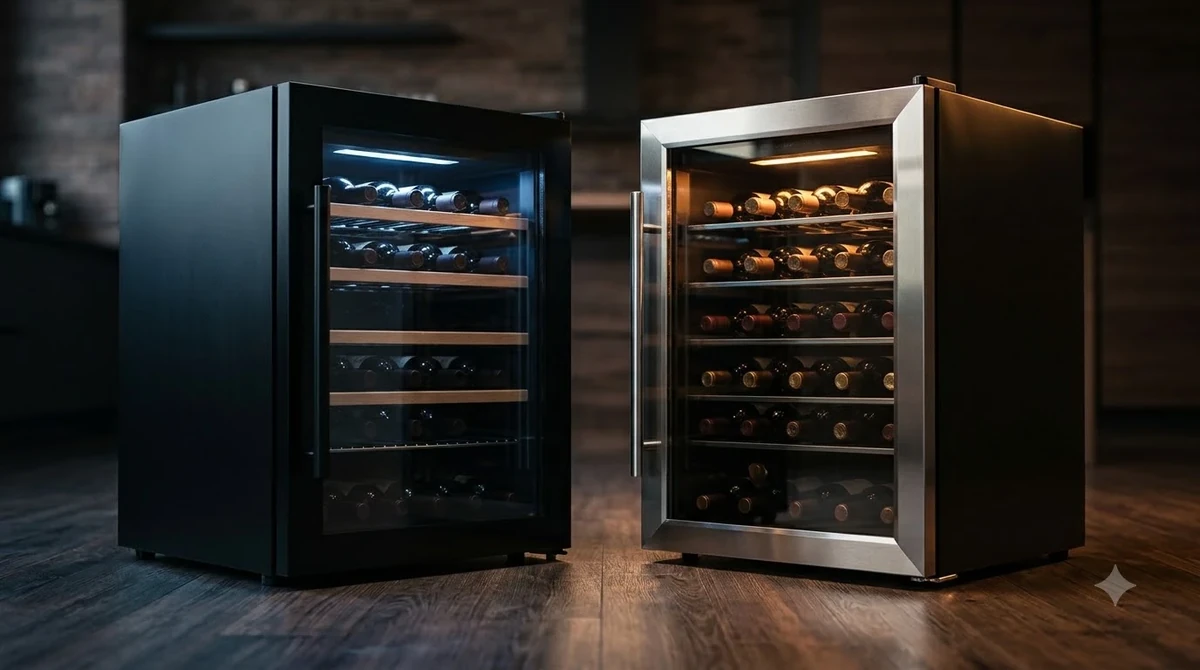
Noise is particularly important if the refrigerator will sit close to a living room, bedroom, or quiet home office. A compressor appliance produces operating sounds, and customer reports indicate that some ABR-1770 owners have found those sounds disruptive.
One Lowe’s reviewer reported that the refrigerator became noticeably loud after approximately five months. Other complaints describe buzzing during compressor operation. These experiences do not establish that every unit will be noisy, but they suggest that sound should be part of the purchasing decision rather than an afterthought.
The installation environment can also influence operating noise. Newair’s owner’s manual identifies an unlevel floor and an obstructed fan as possible reasons for excessive sound or vibration. Therefore, before concluding that a noise indicates a defective compressor, owners should check that the refrigerator sits level and that its ventilation openings are unobstructed.
Cooling performance is another area of mixed feedback. Some owners report satisfactory beverage cooling, while others describe difficulty maintaining their preferred temperature or units that stop cooling after a relatively short period.
The distinction between a displayed temperature and the temperature of every beverage is important. A digital control setting does not necessarily mean that every shelf maintains precisely the same temperature under all conditions. Frequent door openings, warm beverages, restricted airflow, and an overloaded interior can influence the cooling environment.
Newair’s manual specifically identifies frequent door opening, an improperly closed door, a weak door seal, and an obstructed front grille as possible reasons for inadequate cooling. These are useful troubleshooting starting points, although persistent cooling failures require professional assistance or manufacturer support.
Frost buildup is another reported issue. One Lowe’s reviewer described recurring frost at the back of the refrigerator even after defrosting. This is not evidence that frost will affect every ABR-1770, but it is a practical concern for anyone expecting maintenance-free operation.
Long-term reliability deserves particular attention. Some customer reports describe units that stopped cooling within months, while others describe component failures after longer periods of use. One reviewer reported a control-board problem after approximately four years of daily operation.
It is important not to treat individual complaints as a measured failure rate. Online reviews are self-selected, and people experiencing problems may be more motivated to post than owners whose refrigerators continue working normally. Nevertheless, repeated reports about similar issues are relevant when evaluating a major appliance.
Warranty information also requires careful attention. Newair’s current product page advertises a two-year warranty, but the available ABR-1770 owner’s manual describes a one-year limited warranty. These documents do not match, so buyers should obtain written confirmation of the warranty applying to their specific unit and purchase date.
For a refrigerator intended to operate every day, that clarification is particularly valuable. Confirm the coverage period, labor arrangements, replacement-part availability, and responsibility for transportation before completing a purchase.
Who Should Buy the Newair ABR-1770 and Who Should Skip It
The ABR-1770 is best suited to people who need substantial dedicated beverage storage and have a suitable under-counter or entertainment-space installation. It is less attractive for buyers who prioritize extremely quiet operation, specialized wine storage, or the smallest possible refrigerator footprint.
Who should consider buying it
Home bar owners: The 177-can capacity makes the ABR-1770 a practical choice for a home bar that regularly stocks beer, soda, sparkling water, and mixers. Its glass door and interior lighting also make it convenient to display beverages rather than hide them in a conventional refrigerator.
Frequent entertainers: People who host family gatherings, sporting events, and dinner parties may appreciate keeping refreshments separate from ingredients and prepared food. The additional storage can be particularly useful during occasions when several guests need access to drinks at the same time.
Homeowners planning an under-counter installation: The front-venting design makes the ABR-1770 worth considering for a properly measured kitchen or bar cabinet opening. Its 23.50-inch listed width and 33-inch height provide a useful starting point when evaluating available space.
People who prefer adjustable beverage storage: Owners who alternate between standard cans and taller bottles can benefit from adjustable shelving. The refrigerator is more versatile than a fixed-layout beverage cabinet when the contents change throughout the year.
Who should consider another refrigerator
Noise-sensitive households: If the appliance will be installed next to a television, bedroom, or quiet study, reported compressor noise may be a concern. A beverage refrigerator with verified low operating noise or a placement farther from living areas may be more appropriate.
Wine collectors: The ABR-1770 has a single temperature zone and a beverage-oriented shelf configuration. Serious wine collectors should look at dedicated wine refrigerators with bottle-supporting racks and, where appropriate, separate temperature zones.
For a broader selection of wine-specific storage options, the best rated wine cooler guide is a more suitable starting point. Wine refrigerators are designed around bottle dimensions and wine storage requirements rather than maximizing standard beverage-can capacity.
Small households with limited storage needs: A refrigerator holding 177 cans may be unnecessarily large for someone who only wants to keep a few bottles of water and several cans cold. A compact beverage refrigerator can occupy less space and be easier to position in a small apartment or office.
Buyers who want two separate temperature environments: Because the ABR-1770 uses one cooling zone, it cannot independently maintain two different temperatures for separate beverage categories. Anyone wanting one compartment for wine and another for colder soft drinks should consider a dual-zone appliance.
The right purchase therefore depends on the intended contents and installation space. A large beverage refrigerator can be a useful addition to a home, but capacity alone should not determine the decision.
How the Newair ABR-1770 Compares to Alternatives
The ABR-1770 occupies the large-capacity, under-counter beverage refrigerator category. Its main advantages are a 177-can capacity, adjustable shelving, a digital thermostat, and flexible installation, but other refrigerator configurations may suit different households better.
One important comparison is between a dedicated beverage cooler and a wine refrigerator. They may look similar, particularly when both have glass doors and stainless steel frames, but their interior arrangements serve different purposes.
A beverage refrigerator is generally designed to maximize the number of cans and bottles it can accommodate. Wine refrigerators, by comparison, usually use bottle-supporting racks that allow bottles to rest horizontally and make efficient use of the cabinet’s depth.
For example, a household that regularly serves Cabernet Sauvignon, Pinot Noir, Chardonnay, and sparkling wine may prefer a wine refrigerator with appropriate bottle storage. A beverage refrigerator can hold some wine bottles depending on their dimensions and shelf spacing, but that does not make it a dedicated wine-storage solution.
Temperature flexibility is another important consideration. The ABR-1770 offers a 37°F to 66°F range, which works well for a variety of chilled beverages. However, one zone means that everything inside shares the same general temperature setting.
A dual-zone refrigerator is a better match for people who want separate cooling environments. This arrangement can be helpful when storing beverages that are intended to be served at different temperatures.
Size also changes the comparison. Newair’s 96-can beverage refrigerator, for example, is a smaller-capacity alternative for buyers who want an under-counter beverage appliance without the same storage requirement. Its published specifications include a 3.2-cubic-foot interior and a 37°F to 66°F temperature range.
At the other end of the capacity range, Newair’s 224-can beverage refrigerator offers more storage than the ABR-1770. It is a larger-format alternative for households that regularly stock substantial quantities of drinks. Buyers should compare its cabinet dimensions, installation requirements, and electrical specifications rather than assuming that higher capacity automatically makes it a better purchase.
The following comparison summarizes the practical differences between the main categories:
| Refrigerator type | Typical capacity or configuration | Best application | Main consideration |
|---|---|---|---|
| Newair ABR-1770 | 177 cans, single zone | Large home bars and entertaining spaces | Requires suitable installation space |
| Compact beverage cooler | Smaller can capacity | Apartments, offices, and small bars | Less total storage |
| Dual-zone beverage refrigerator | Two separate cooling zones | Mixed beverage collections | More complex storage arrangement |
| Dedicated wine refrigerator | Bottle-oriented shelving | Wine collections | Not optimized for large can quantities |
| Large-capacity beverage refrigerator | 224 cans in Newair’s larger model | High-volume beverage storage | Requires more installation space |
For a household that mainly stores cans, the ABR-1770 offers a sensible balance between storage volume and an under-counter format. For a household that primarily stores wine, a wine refrigerator is generally the more appropriate investment.
There is also a difference between chilling beverages and preserving wine for extended periods. Wine storage involves considerations such as bottle positioning, temperature stability, and the intended aging period. A beverage cooler should not automatically be treated as a replacement for a dedicated wine cabinet.
Ultimately, the ABR-1770 is most competitive when its 177-can capacity and installation flexibility directly match the owner’s requirements. A smaller or specialized appliance may offer better practical value when those particular advantages are unnecessary.
For readers comparing different appliance categories and configurations, the brand and model reviews section offers another useful starting point for evaluating individual refrigerator designs and their intended uses.
Installation, Operation and Maintenance
Correct installation and regular maintenance are important for getting consistent performance from the Newair ABR-1770. The owner’s manual provides several specific instructions, including a two-hour upright settling period before plugging in the appliance and a six-month condenser-cleaning interval.
Prepare the installation location
Begin by measuring the intended opening. The manufacturer’s listed dimensions are 23.50 inches wide, 33 inches high, and 22.60 inches deep, with a total handle depth of 24.25 inches.
Measure the available space at several points rather than relying on one measurement. Cabinet openings can have small variations, and flooring, trim, and countertop overhangs may affect how easily an appliance fits.
Because the ABR-1770 uses front ventilation, its front kick plate and ventilation openings must remain clear. Do not install decorative panels, storage containers, or furniture that obstruct airflow through this area.
Also consider the door swing. The refrigerator needs enough space for the door to open comfortably and for shelves to slide out without hitting nearby cabinets or appliances.
Allow the refrigerator to settle
Newair’s manual recommends leaving the refrigerator upright for approximately two hours before connecting it to electrical power. This helps reduce the possibility of cooling-system problems associated with transportation and handling.
Once connected, allow the interior temperature to stabilize for 24 hours before treating the appliance as ready for regular use. This is particularly important when the refrigerator has been transported or installed in a new location.
Start with a suitable temperature setting for the beverages being stored. For standard soft drinks and beer, a cold setting is generally useful, while beverages intended for different serving temperatures may require a different arrangement.
A digital display is convenient, but owners should remember that a setting is not necessarily a direct measurement of the temperature of every beverage on every shelf. A separate refrigerator thermometer can help assess actual storage conditions.
Keep the interior organized
Use the adjustable shelves to create an arrangement that accommodates the containers stored most frequently. Standard cans can be grouped together, while taller bottles may need additional vertical clearance.
Avoid packing every available space tightly. Air circulation matters in a compressor refrigerator, and overcrowding can interfere with cooling performance. Leaving room around containers also makes it easier to remove individual drinks without disturbing the entire arrangement.
Try to group similar beverages together. For example, keeping sparkling water on one shelf and beer on another makes restocking easier and helps household members find what they want quickly.
Clean and maintain the appliance
The ABR-1770 manual recommends cleaning the condenser every six months. This is an important maintenance task because dust and debris can interfere with heat removal and contribute to inefficient operation.
For interior cleaning, Newair recommends unplugging the refrigerator, removing the contents, and using a warm-water solution containing two tablespoons of baking soda per quart of water. The manual also describes rinsing the bottom water reservoir.
Clean the exterior with mild detergent and warm water. Avoid abrasive cleaning products that could damage the finish or glass surfaces.
Check the door seal periodically to make sure it closes properly. A damaged or poorly seated seal can allow cold air to escape and make it harder for the refrigerator to maintain its temperature.
Persistent frost buildup, unusual vibration, or a refrigerator that cannot maintain its temperature should not be ignored. Consult the manufacturer’s troubleshooting instructions and contact qualified service support when necessary.
Tip: Keep the ABR-1770’s front ventilation area clear, clean the condenser every six months, and allow 24 hours for the interior temperature to stabilize after installation. These simple steps follow the manufacturer’s maintenance guidance and help avoid preventable operating problems.
For the most accurate operating instructions, owners should use the documentation supplied with their specific appliance. The Newair ABR-1770 owner’s manual includes installation, cleaning, troubleshooting, and warranty information.
Frequently Asked Questions
Does the Newair ABR-1770 have an automatic defrost system?
The available ABR-1770 owner’s manual includes cleaning and troubleshooting instructions but does not establish a specific automatic-defrost cycle. Owners should monitor frost accumulation and follow the manufacturer’s instructions if ice develops. Avoid using sharp objects or unauthorized heating methods to remove frost.
Can the Newair ABR-1770 operate in a garage?
The manual identifies a climate classification of T/ST/N/SN, which describes the appliance’s specified climate categories. However, that classification alone does not establish suitability for every unheated or extremely hot garage. Check the installation requirements and permitted ambient operating temperatures with Newair before placing the refrigerator in a garage.
Does the Newair ABR-1770 have a reversible door?
The available product specifications describe a locking glass door but do not establish that the door is reversible. Do not assume that its opening direction can be changed simply because another beverage refrigerator offers that feature. Confirm the hinge configuration with Newair before finalizing a cabinet layout.
Can the ABR-1770 be connected using an extension cord?
No. The owner’s manual specifically warns against using an extension cord to connect the refrigerator to power. It also requires a properly grounded electrical connection and warns against removing the grounding prong. Arrange an appropriate outlet near the intended installation location.
Can the Newair ABR-1770 be transported on its side?
Newair’s manual instructs owners to keep the appliance upright during transportation. It also recommends allowing the refrigerator to stand upright for approximately two hours before connecting it to power. Following these instructions helps reduce the possibility of problems associated with moving the cooling system.
The Newair ABR-1770 is a capable large-capacity beverage refrigerator with useful features for home bars, entertainment rooms, and under-counter installations. Its adjustable shelving, digital controls, and 177-can capacity are compelling, but reports of noise and reliability problems mean that warranty confirmation and careful installation should be part of the buying decision. If those considerations fit your expectations, it is a model worth considering; if quiet operation or dedicated wine storage is your priority, compare specialized alternatives before choosing.
More in Model Reviews
 Magic Chef 44 Bottle Wine Cooler Review for Flexible StorageUpdated Nov 21, 2026
 Whynter 164 Bottle Wine Cooler Review: Capacity, Features, and FitUpdated Nov 21, 2026
 Insignia NS WC16BK6 Review: Compact 16-Bottle Wine StorageUpdated Nov 21, 2026
 Wine Enthusiast Electric Blue Omega Review: Opening, Pouring, and Preserving Made EasierUpdated Nov 21, 2026
 Koolatron 20 Bottle Wine Cooler Review: Features, Fit, and PerformanceUpdated Nov 21, 2026
 NewAir AWC 330E Review for Home Wine StorageUpdated Nov 21, 2026