

We may earn a commission when you buy through links on this page, at no extra cost to you. Learn more.
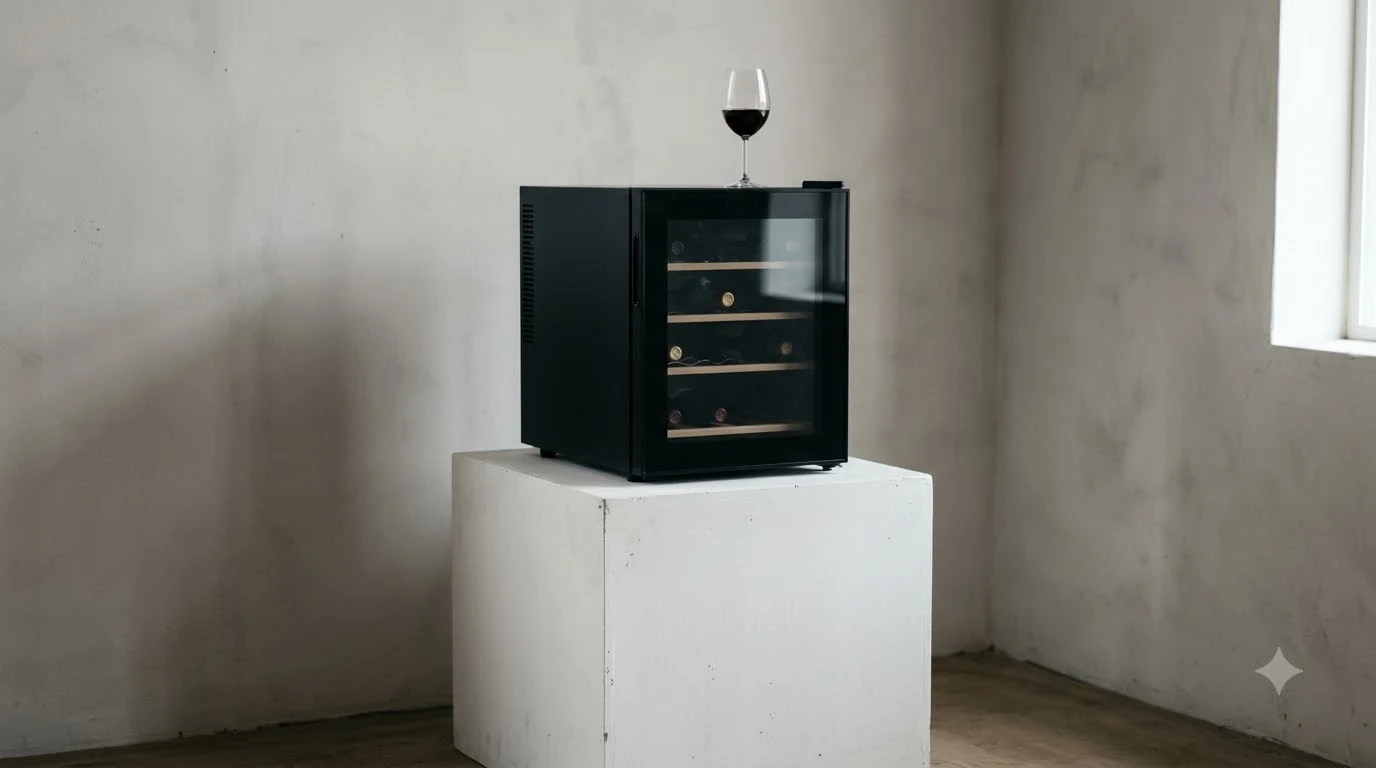
A Vinotemp wine cooler offers strong specification variety across freestanding countertop units, front-venting under-counter fridges, and tall dual-zone towers, though long-term reliability and post-warranty service draw mixed owner feedback. Founded in 1985, the company builds custom wood wine cabinets in California while importing metal compressor and thermoelectric coolers under lines such as Element, Private Reserve, Connoisseur, and Designer Series. Buyers get thoughtful wine-specific details like Low-E glass, front exhaust options, and wide temperature ranges, but should weigh short labor warranties and confirm retailer return policies before ordering.
Shoppers searching for a dependable wine fridge frequently encounter Vinotemp across specialty appliance dealers, warehouse clubs, and custom cellar projects. Evaluating the brand requires separating its California-built furniture cabinets from its imported stainless steel appliances, understanding how each product tier handles airflow and dual-zone cooling, and knowing what the owner’s manual requires from day one.
Brand Overview and Manufacturing Origins
Vinotemp began in Los Angeles, California in 1985 when winemaker and merchant Francis Ravel started building temperature-controlled wood wine cabinets, later handing leadership to his daughter, CEO India Hynes, and relocating corporate and warehouse operations to Henderson, Nevada. Over four decades, the company expanded into a multi-brand storage supplier encompassing Wine-Mate cooling units, Apex Wine Racks, Epicureanist wine accessories, and Brama kitchen appliances, as outlined on the Vinotemp company history page.
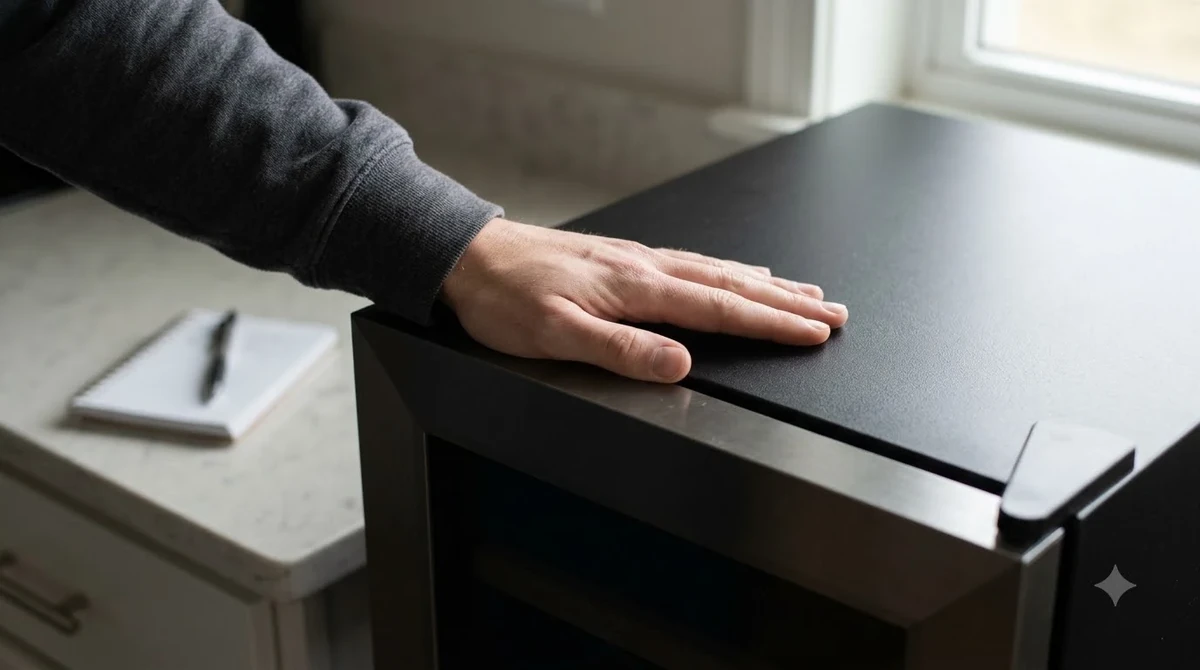
Understanding where a Vinotemp wine fridge is built helps clarify differences in construction and pricing across the catalog. According to the manufacturer, custom and semi-custom wood wine cabinets—including the Reserve, Sonoma, and Economy cabinet series—are still crafted in the Los Angeles area using 1.75-inch walls filled with rigid board insulation rated at an R-factor of approximately 11.6. By contrast, metal wine refrigerators and beverage centers are manufactured overseas to Vinotemp specifications, a distinction clarified following a Federal Trade Commission review of the company’s domestic assembly marketing.
Within the broader appliance landscape covered in WineShop on Main’s brand hubs, Vinotemp sits in the mid-range to upper-mid-range tier rather than the ultra-budget segment. While general appliance labels treat wine fridges as secondary catalog items, Vinotemp focuses primarily on cellar climate control, offering modular walk-in panels for up to 20,000 bottles alongside 6-bottle countertop chillers for apartments and home bars.
Vinotemp Product Lines Explained
Vinotemp divides its metal wine refrigerators into distinct sub-brands and series based on cooling hardware, venting direction, shelving materials, and cabinet integration. Matching the right series to the installation cutout prevents overheating and avoids paying for built-in engineering in a freestanding room.
| Product Line / Series | Typical Bottle Capacity | Cooling & Venting | Temperature Range | Key Features |
|---|---|---|---|---|
| Element & Il Romanzo | 6 to 48 bottles | Thermoelectric or compressor; mostly rear exhaust | 39°F – 65°F (thermoelectric cools ~20°F below ambient) | Compact footprints, mirrored or dual-pane glass doors, entry-level freestanding placement |
| Private Reserve Series | 16 to 188 bottles | Compressor; front exhaust for built-in or freestanding | 40°F – 65°F (single or dual zone) | Backlit interior panels on select towers, sliding metal or wood-trim racks, 24-inch cabinet widths |
| Connoisseur Series | 28 to 215 bottles | Compressor; front exhaust with fan-assisted circulation | 40°F – 56°F upper / 54°F – 65°F lower (dual zone) | 14.75-inch to 24-inch widths, gliding racks, digital touch controls, indoor or outdoor models |
| Designer Series | 24 to 300 bottles | Compressor; front exhaust with Silent/Dynamic modes | 40°F – 65°F (single or dual zone) | Low-E glass, Vinotemp Blu LED lighting, charcoal or cold catalyst air filters, French door locks |
| Wood Wine Cabinets | 80 to 440+ bottles | Wine-Mate 1500–8500 BTU top or rear cooling | 50°F – 58°F (cools up to 25°F below ambient) | California-built oak, cherry, or mahogany exteriors, 1.75-inch insulated walls, customizable racking |
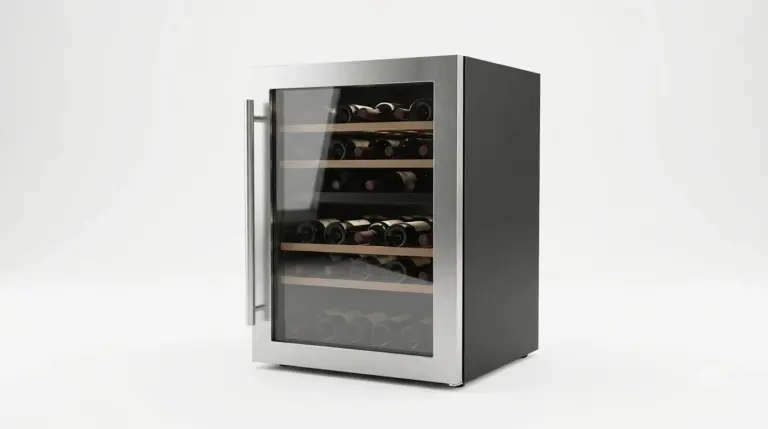
The Element line covers everyday residential wine coolers, including slim countertop thermoelectric chillers and freestanding compressor cabinets like the 48-bottle single-zone models. Step up to the Private Reserve and Connoisseur Series, and the engineering shifts toward kitchen cabinetry integration with front-facing exhaust grilles, heavier glide-out shelving, and tighter zone separation. For example, the Connoisseur Series 168 measures 24 inches wide by 73.6 inches tall and holds between 119 and 215 standard 750 ml bottles depending on whether bottles are single-layered on racks or double-stacked.
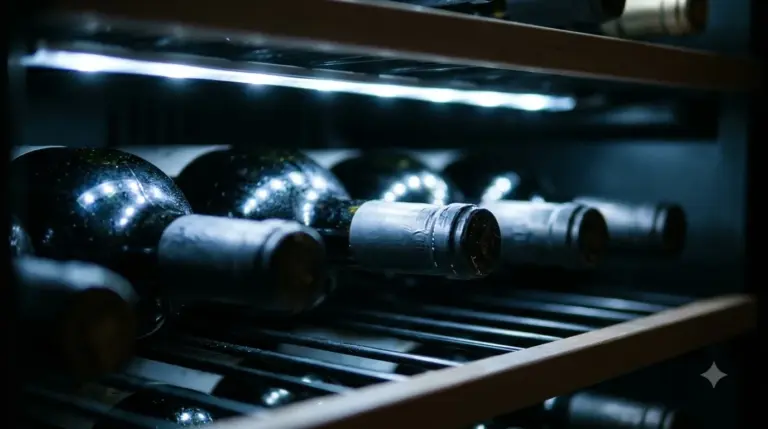
At the top of the metal appliance range, the Designer Series incorporates Low-E insulated glass to block ultraviolet light, selectable Silent or Dynamic fan modes, and internal carbon or cold-catalyst filtration to prevent cellar odors from penetrating natural corks. Buyers who need outdoor patio resilience can also select dedicated outdoor-rated stainless steel models such as the VT-OUTDR24GD-CLR, engineered to hold 30 wine bottles and 84 beverage cans in exposed weather environments.
What Vinotemp Does Well
Vinotemp stands out for offering genuine front-venting built-in flexibility across narrow 15-inch and standard 24-inch widths, paired with wine-specific temperature spans that cover both crisp sparkling service and long-term red cellaring. Few competitors match the sheer breadth of form factors under a single wine-focused roof.
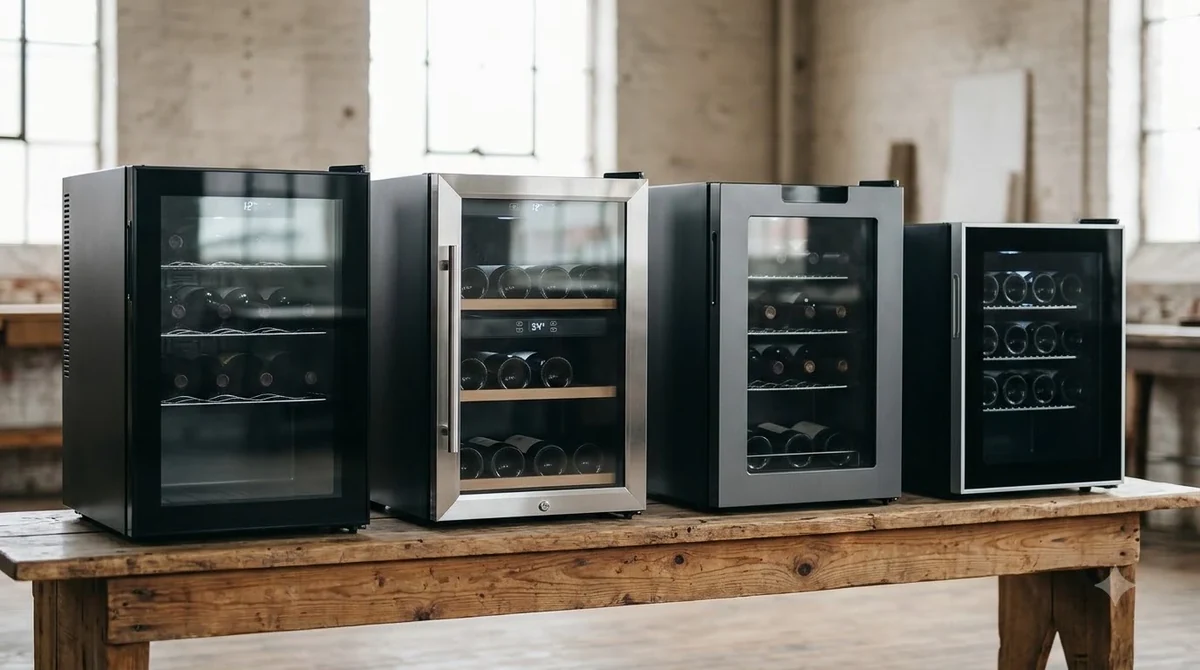
Temperature control on a Vinotemp dual zone wine cooler is structured around practical serving and storage habits rather than arbitrary digital readouts. On models such as the Connoisseur Series 168 and the 155-bottle EL-142SDST, the upper compartment operates between 40°F and 55°F or 56°F—ideal for keeping Champagne and Prosecco at 40°F to 50°F and crisp Sauvignon Blanc at 45°F to 50°F. Simultaneously, the lower zone maintains 54°F to 65°F, covering the 55°F long-term cellaring benchmark as well as the 60°F to 65°F serving window for full-bodied Cabernet Sauvignon and Syrah.
Airflow engineering is another area where Vinotemp documents clear distinctions for buyers comparing models. In built-in air-cooled units such as the VT-155SBB, an internal fan positioned ahead of the evaporator circulates chilled air evenly, keeping the temperature spread between upper and lower shelves within roughly 3°F. Larger Designer Series cabinets add selectable Dynamic Cooling mode to maintain steady humidity and even temperatures when cabinets are opened frequently during dinner parties.
Tip: When storing mixed bottle shapes in a Vinotemp cooler, place wider Burgundy, Pinot Noir, and Champagne bottles on the bottom bulk shelf or remove one adjustable rack; standard shelf spacing is calculated around slim 750 ml Bordeaux bottles and drops by 15 to 25 percent with wider glass.
Common Complaints and Reliability Trade-Offs
Despite strong on-paper features, Vinotemp wine cooler reviews reveal recurring concerns around post-warranty compressor or control board failures, replacement part availability, and slow customer service response times. Weighing these patterns against the brand’s design strengths helps buyers set realistic expectations.
Independent appliance comparisons, including a detailed Allavino vs. Vinotemp brand analysis, point out that Vinotemp’s public Trustpilot profile carries a low overall score driven by reports of units losing cooling capacity after 12 to 24 months of ownership. On wine collector forums such as WineBerserkers, owners have shared frustration over large 300-bottle towers warming to room temperature shortly after the first year, noting that out-of-warranty diagnostic and repair bills can approach the cost of replacing mid-sized coolers.
Practical day-to-day quirks also appear in owner feedback and factory manuals. Direct-cooling freestanding models like the VT-28TS and VT-48TS omit an internal circulation fan and rely on natural convection, which creates an intentional 8°F temperature gradient from top to bottom that surprises buyers expecting uniform cooling. Additionally, owners occasionally mistake the automatic 2-minute control panel lock for a broken keypad, or report rattling noises when compressor units sit directly on uncarpeted tile or hardwood floors without leveling adjustments.
How to Choose the Right Vinotemp Model
Selecting the right Vinotemp cooler comes down to four measurable constraints: room temperature, installation ventilation, bottle collection size, and single- versus dual-zone flexibility. Checking these parameters before comparing door finishes prevents premature compressor strain and capacity shortages.
Match Cooling Technology to Room Temperature
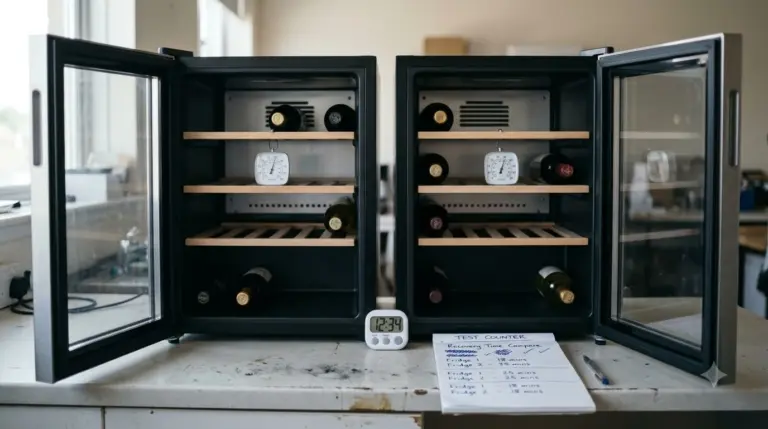
According to Vinotemp technical documentation, thermoelectric units lower interior temperatures by a maximum of roughly 20°F below the surrounding room air, which means a 78°F kitchen limits cooling to about 58°F. For rooms that regularly exceed 72°F or for collections larger than 18 bottles, a compressor-driven model provides far stronger thermal recovery. Even California-built Vinotemp wood cabinets cooled by Wine-Mate units are rated to drop temperatures up to 25°F below ambient conditions, so Vinotemp advises keeping ambient room temperatures at or below 78°F to hold a steady 55°F cellar setpoint.
Verify Front-Venting vs. Freestanding Clearances
Standard rear-exhaust Vinotemp refrigerators should not be slid flush into tight cabinetry because trapped heat forces the compressor to run continuously. Manufacturer setup guidelines specify leaving at least 6 inches of open breathing room behind freestanding models, whereas front-exhaust models in the Private Reserve, Connoisseur, and Designer lines pull and expel air through the bottom toe-kick grille. Shoppers cross-shopping compact freestanding chillers can also compare budget alternatives in is Black and Decker a good brand or evaluate mid-tier commercial-style cabinets in is Rovsun a good brand before committing to a built-in cutout.
Size Up for Real-World Bottle Geometry
Because Vinotemp calculates published capacities using narrow 750 ml Bordeaux bottles measuring roughly 3 inches in diameter, collectors who favor fuller-shoulder Burgundy, Pinot Noir, Syrah, or sparkling bottles routinely lose shelf rows. Buying a unit rated 20 to 30 percent above current bottle count—such as choosing a 48-bottle cabinet for a 35-bottle mixed rotation—keeps sliding wooden or wire racks gliding smoothly without scraping labels.
Vinotemp Manual Essentials, Setup, and Warranty Coverage
Following the setup steps in the Vinotemp wine cooler manual protects compressor lubrication on delivery day and preserves warranty eligibility if service is ever needed. Warranty lengths vary substantially by retail channel and product tier, so documenting the serial number immediately upon unboxing is essential.
Vinotemp installation instructions require standing every newly delivered compressor wine fridge upright and unplugged for a full 24 hours before connecting power so refrigerant oils settle back into the compressor sump. Once powered on, digital touch panels on models such as the Private Reserve and Connoisseur lines automatically engage a child-safety lock after 2 minutes of inactivity; holding the designated open button or key combination restores temperature and Vinotemp Blu light controls. For ongoing upkeep, Vinotemp recommends wiping door gaskets with mild soapy water and replacing activated charcoal or cold catalyst air filters every 3 to 6 months.
Warranty coverage across Vinotemp appliances depends on the exact series and retailer. While Designer Series and Connoisseur Series 168 units include 1 year of parts and labor coverage alongside a 5-year warranty on compressor parts only, select 28-bottle and 24-inch models sold through warehouse clubs carry a 2-year limited warranty, and compact Il Romanzo coolers carry 90 days on parts and labor. According to Vinotemp warranty terms, buyers must register their product within 10 days of delivery, retain original proof of purchase, and obtain written pre-approval from Vinotemp before hiring any third-party refrigeration technician.
Frequently Asked Questions
How do I reset or open a Vinotemp wine cooler control panel?
Per Vinotemp owner manuals, most digital touch panels lock automatically after 2 minutes without button presses to prevent accidental setpoint changes. Pressing and holding the lock icon—or simultaneously holding the up and down temperature arrows for 3 to 5 seconds depending on the model—opens the display so temperatures can be adjusted between 40°F and 65°F.
What should I do if my Vinotemp wine fridge is running but not cooling?
First verify that the door gasket seals tightly all the way around and that the front or rear condenser grille is free of dust buildup restricting airflow. If the unit was recently moved or tilted during delivery, unplugging it for 24 hours lets displaced compressor oil drain back before restarting; persistent warm temperatures after checking clearance usually indicate a faulty thermistor sensor, start relay, or refrigerant leak.
Can a Vinotemp wine cooler be installed in a garage or sunroom?
Standard indoor Vinotemp coolers are engineered for climate-controlled living spaces between roughly 60°F and 78°F and struggle in uninsulated garages where winter freezes or summer heat spikes exceed their ambient operating window. For covered patios or semi-exposed outdoor kitchens, Vinotemp builds dedicated outdoor-rated stainless steel models such as the VT-OUTDR24GD-CLR with weather-resistant housings and heavy-duty compressors.
How noisy are Vinotemp compressor wine coolers during normal operation?
Independent retailer specifications and customer testing generally place compressor-driven Vinotemp models in the low-to-mid 40-decibel range, producing a gentle hum comparable to a quiet household refrigerator when compressors cycle on. Models equipped with a Silent Mode in the Designer Series reduce fan speed once target temperatures stabilize, while leveling all four feet with a bubble level prevents cabinet vibration against hard flooring.
Does Vinotemp sell replacement shelves, locks, and door gaskets?
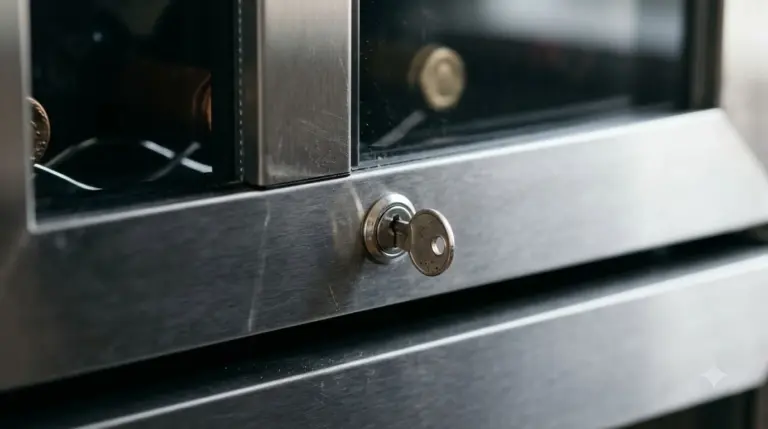
Vinotemp lists select replacement parts—including wooden rack inserts, wire shelves, door keys, and replacement gaskets—directly through its Nevada customer service and parts department when ordered with the exact model and serial number. Because older discontinued models occasionally face backorders on electronic control boards, checking part availability before scheduling out-of-warranty service saves diagnostic fees.
Vinotemp remains a compelling option for wine drinkers who want specialized front-venting dimensions, dual-zone serving flexibility, or California-built wood cabinetry under one roof. Confirming ventilation clearances, letting the compressor settle for 24 hours before plugging it in, and registering the warranty within 10 days gives buyers the smoothest ownership experience.
More in Brand Hubs
 Icyglee Wine Fridge: Compare Capacities, Features and ModelsUpdated Nov 20, 2026
 Fomup Wine Fridge: Explore Models, Features, and Buying TipsUpdated Nov 20, 2026
 Aaobosi Wine Fridge: Compare Models and Choose the Right CoolerUpdated Nov 20, 2026
 Orymuse Wine Fridge Reviews: Compare Capacities, Features and WarrantyUpdated Nov 20, 2026
 Tylza Wine Fridge: Find the Right Cooler for Your CollectionUpdated Nov 20, 2026
 Vintec Wine Fridge: Features, Warranty, and Buying AdviceUpdated Nov 20, 2026