

We may earn a commission when you buy through links on this page, at no extra cost to you. Learn more.
The main difference in gewurztraminer vs pinot grigio comes down to aromatic intensity, sweetness, and acidity: Gewürztraminer is a full-bodied, perfumed white wine with lychee and rose notes and low-to-moderate acidity, while Pinot Grigio is a light, dry, high-acid wine built around crisp citrus and green apple flavors. Both varieties grow with pinkish-gray skins, yet they deliver opposite experiences in the glass. Reach for Pinot Grigio when you want a refreshing, neutral sipper or an easy match for light seafood, and choose Gewürztraminer when you need rich texture or a touch of sweetness to balance bold spices.
Shoppers standing in the white wine aisle often confuse these two bottles because both come from cool European regions, wear slender flute-shaped bottles in Alsace or northern Italy, and share a rosy tint on the vine. Once pulled from the bottle, however, their personalities split immediately. Understanding how each grape behaves in terms of sugar, acid, alcohol, and food pairing turns a guessing game into a confident pick for dinner or casual entertaining.
Key Differences at a Glance
Gewürztraminer trades crispness for heady perfume and lush weight, whereas Pinot Grigio prioritizes zesty acidity and clean simplicity. Comparing their core structural traits side by side shows why one feels opulent and spicy while the other tastes brisk and thirst-quenching.
| Trait | Gewürztraminer | Pinot Grigio (Italian Style) |
|---|---|---|
| Primary Aromas | Lychee, rose petal, ginger, sweet baking spice, mango | Lemon zest, green apple, pear, white peach, crushed gravel |
| Typical Sweetness | Off-dry to semi-sweet (dry styles also exist) | Bone-dry to dry |
| Acidity Level | Low to moderate | Medium-high to high |
| Body and Texture | Medium-full to full, oily, viscous | Light to medium-light, crisp, lean |
| Typical ABV | 13% to 14.5% (lower in sweet late-harvest styles) | 11.5% to 13% |
| Color in Glass | Medium gold to deep golden-copper | Pale straw to silver-yellow |
| Key Regions | Alsace (France), Alto Adige (Italy), Germany, Washington | Veneto, Friuli-Venezia Giulia, Alto Adige (Italy) |
According to VinePair’s Gewürztraminer guide, roughly one-quarter of the world’s Gewürztraminer grows in France’s Alsace region, where warm autumn days push sugar ripeness high while natural acidity drops. That combination gives the wine a viscous mouthfeel and raised alcohol that often reaches 13.5% or 14% ABV in dry and off-dry bottlings. Even when winemakers ferment all the sugar out, the grape’s intense floral compounds trick the palate into sensing a hint of sweetness.
Pinot Grigio takes the opposite path in northeastern Italy. Growers in Veneto, Friuli-Venezia Giulia, and Alto Adige harvest the fruit earlier to preserve sharp malic acidity and keep alcohol moderate at around 12% ABV. Most commercial bottles ferment in temperature-controlled stainless-steel tanks without oak, resulting in a transparent, unadorned white wine that refreshes the palate between bites rather than dominating the table. Readers curious about how other crisp whites compare against Italian benchmarks can also explore albarino vs pinot grigio for another high-acid pairing option.
Aroma and Flavor Profile: Perfume vs. Crisp Citrus
Gewürztraminer announces itself from across the table with unmistakable aromas of lychee, rosewater, and crystallized ginger, while Pinot Grigio stays subtle with quiet orchard fruit and wet stone. Their flavor gap comes from the aromatic compounds locked inside their thick, pigmented skins.
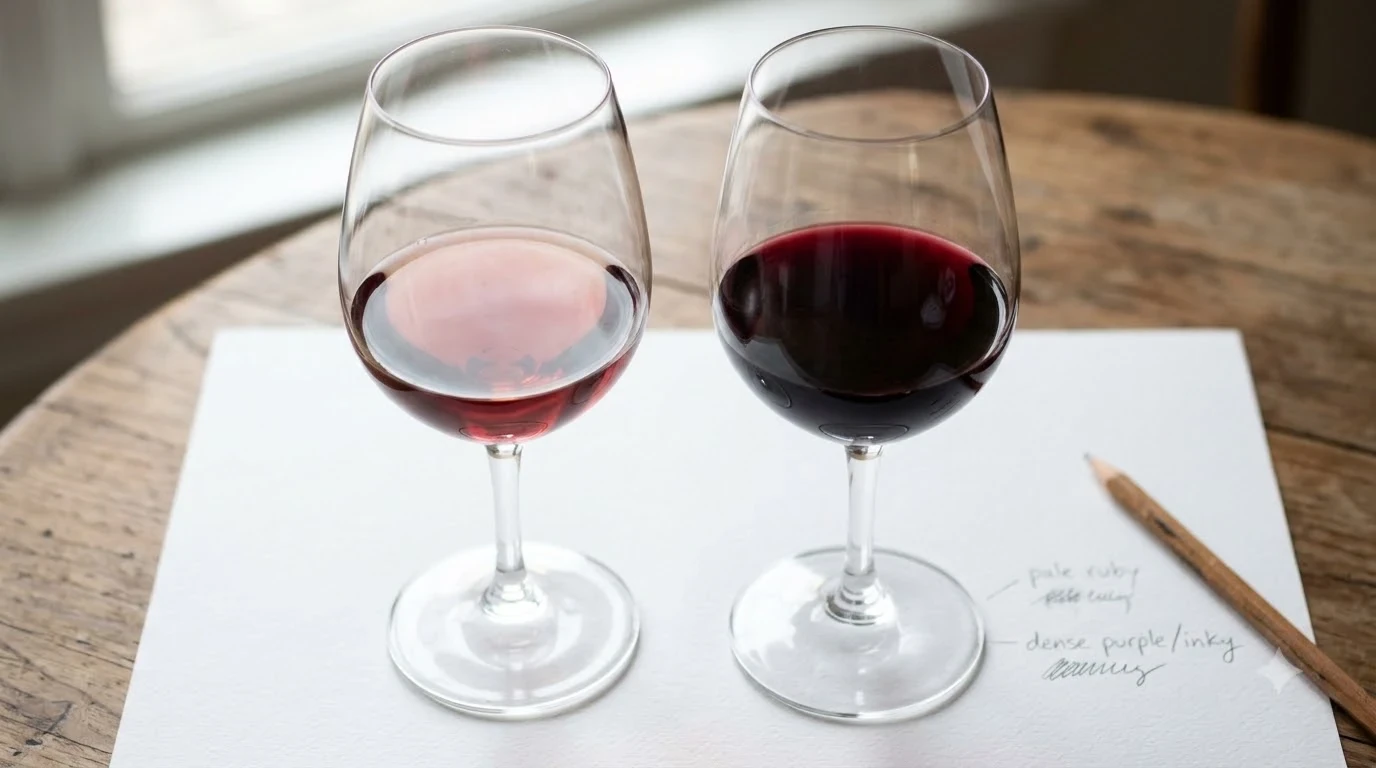
Gewürztraminer: Lychee, Rose, and Baking Spice
The name Gewürztraminer literally translates from German as “spice traminer,” a nod to the grape’s genetic link to Savagnin and its naturally high concentration of terpene compounds. Pouring a glass releases waves of tropical fruit—especially canned or fresh lychee, passion fruit, and ripe mango—layered over fresh rose petals, cinnamon, and clove. On the palate, the wine coats the tongue with an oily, rounded texture and often finishes with a gentle, pleasant bitterness reminiscent of grapefruit pith or almond skin.
Pinot Grigio: Green Apple, Lemon, and Mineral
Pinot Grigio sits on the neutral end of the aromatic spectrum. A classic bottle from northern Italy opens with clean scents of Meyer lemon, unripe pear, Granny Smith apple, and freshly cut grass. In higher-elevation vineyards such as Alto Adige or hillside Collio in Friuli, the wine adds a distinct stony salinity and a faint green almond note on the finish. Because it lacks heavy floral esters or oak spice, Pinot Grigio feels linear, brisk, and easy to drink chilled.
Sweetness, Acidity, and Body Compared
Pinot Grigio is almost always dry and sharp with acid, whereas Gewürztraminer feels soft, weighty, and frequently carries noticeable residual sugar. Understanding how sugar and acidity interact explains why two wines with similar alcohol numbers feel completely different in your mouth.
In standard Italian Pinot Grigio, residual sugar typically sits well below 4 grams per liter, placing it squarely in the bone-dry category. Combined with brisk acidity that makes the sides of your tongue water, that dryness creates a snappy, palate-cleansing sensation. Body stays light to medium-light because winemakers avoid heavy lees stirring or new oak barrels, preserving pure fruit and snappy tension.
Gewürztraminer flips that structure upside down. Because the grape naturally loses acidity quickly as it ripens on the vine, finished wines display low-to-moderate acid alongside a full, glycerine-rich body. Winemakers in Alsace frequently leave anywhere from 8 to 30 grams per liter of residual sugar in standard bottlings to balance the grape’s natural phenolic bitterness, resulting in an off-dry or semi-dry style. Late-harvest Alsace bottles go much further: Vendanges Tardives requires at least 257 grams per liter of sugar in the grapes at harvest, while botrytis-affected Sélection de Grains Nobles requires 306 grams per liter.
Tip: Do not assume every Gewürztraminer is sweet. Look at the alcohol percentage on the front or back label: bottles sitting at 13.5% to 14.5% ABV have usually fermented nearly dry, whereas bottles between 9% and 12% ABV generally retain noticeable sweetness.
Grape Origins and Key Wine Regions
Both grapes are pink-skinned color mutations grown across Europe’s Alpine foothills, yet Italy dominates global Pinot Grigio production while France’s Alsace region sets the benchmark for Gewürztraminer. Regional climate and local winemaking traditions shape what ends up inside each bottle.
According to Wine Folly’s Pinot Gris guide, global plantings of Pinot Gris and Pinot Grigio cover 120,020 acres, with Italy leading the world at 46,508 acres, followed by the United States at 18,439 acres and Germany at 12,076 acres. Genetically, the vine is a pinkish-gray mutation of red Pinot Noir that originated in Burgundy before spreading across northern Italy. Broad appellations like Delle Venezie DOC produce huge volumes of crisp, affordable, lemon-driven Pinot Grigio, while cooler Alpine pockets in Alto Adige and Friuli yield more textured, mineral-laced bottles. Across the border in Alsace—where the exact same grape is labeled Pinot Gris—winemakers harvest riper fruit for a richer, smokier style that sits much closer to Gewürztraminer in weight.
Gewürztraminer traces its roots to the village of Tramin in northern Italy’s Alto Adige before finding its spiritual home in Alsace, France, where it ranks among the region’s four noble white varieties alongside Riesling, Pinot Gris, and Muscat. Limestone and marl slopes in Alsace Grand Cru sites such as Hengst and Mambourg yield deeply spiced, age-worthy whites, while granite soils like Brand produce more floral, lifted versions. Outside France, standout dry examples thrive in Alto Adige, Germany’s Pfalz and Baden regions, and cool pockets of Washington’s Columbia Valley and California’s Anderson Valley. Shoppers comparing other regional white wine identities can also read chablis vs pinot grigio to see how French Chardonnay stacks up against Italian whites.
Food Pairing: Spicy Cuisine vs. Light Seafood and Salads
Gewürztraminer excels alongside spicy, aromatic dishes and pungent cheeses that overwhelm dry whites, while Pinot Grigio shines with delicate seafood, fresh salads, and lemon-dressed plates. Matching the wine’s sugar and acidity to the intensity of your meal prevents clashing flavors on the palate.
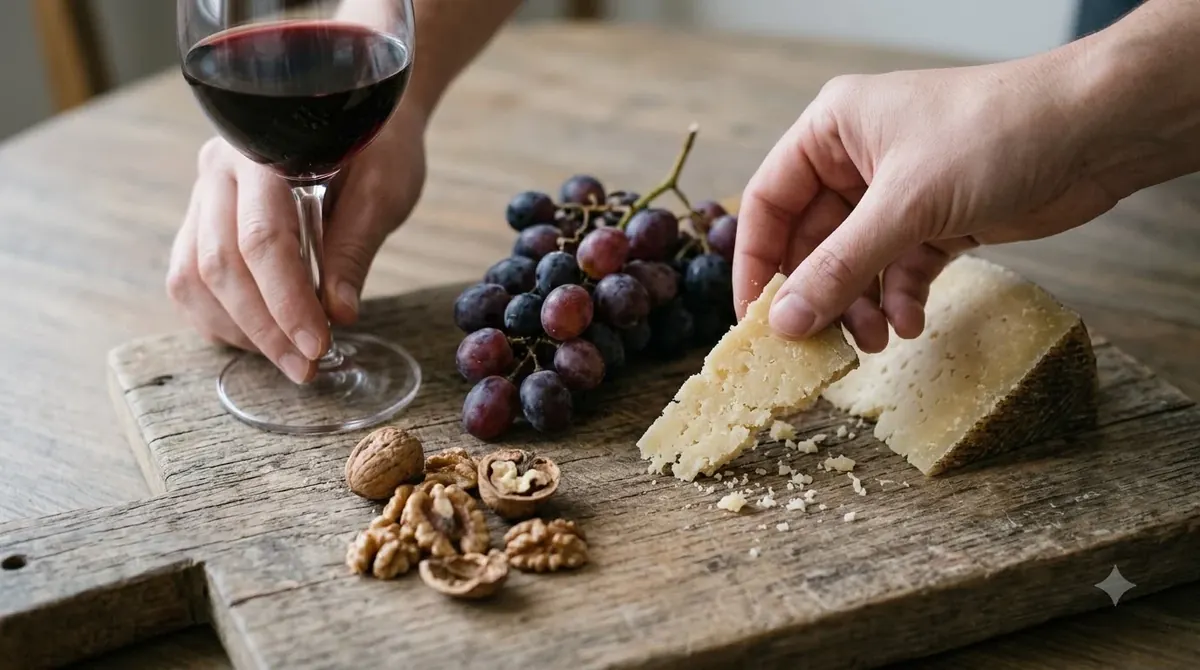
Chili heat is amplified by high alcohol and tannin, making dry, high-ABV whites feel fiery next to spicy food. Off-dry Gewürztraminer solves that problem by pairing gentle residual sugar with lush fruit to cool capsaicin burn, while its ginger and clove aromatics echo complex spice blends. According to Decanter’s guide to Gewürztraminer, the grape is a classic companion for spicy Thai curries, Indian tandoori dishes, Moroccan tagines, and Mexican mole, as well as pungent washed-rind Munster cheese and salty blue cheeses like Roquefort or Stilton.
Pinot Grigio thrives where Gewürztraminer would feel heavy or overly perfumed. Because acidic food needs equal or higher acidity in the glass, Pinot Grigio’s brisk citrus backbone pairs cleanly with raw oysters, grilled shrimp, ceviche, caprese salad, and goat cheese tartlets. Lightly herbed chicken breast, zucchini pasta with olive oil and lemon, and flaky white fish such as cod or sole also let Pinot Grigio’s subtle pear and mineral notes come through without overpowering delicate ingredients.
Serving Temperature, Glassware, and Storage
Serve Pinot Grigio colder at 45 to 50 degrees Fahrenheit to highlight its crisp acidity, and pour Gewürztraminer slightly warmer at 48 to 55 degrees Fahrenheit so its floral and spice aromas open up. Proper chilling and storage keep both whites fresh from the first pour to the last glass.
According to Wine Folly’s serving recommendations, light, zesty Pinot Grigio tastes sharpest straight from a standard refrigerator around 45 degrees Fahrenheit, while fuller-bodied Pinot Gris or off-dry Gewürztraminer shows better aromatics closer to 50 or 55 degrees Fahrenheit. Pour both into a standard medium-bowled white wine glass using a 5-ounce pour, which yields roughly five glasses from a standard 750-milliliter bottle. According to Wine Folly’s storage guidelines, still bottles of either variety stay fresh for 3 to 5 days once opened and recorked in the refrigerator.
Cellar aging separates everyday bottles from top-tier examples. According to Wine Folly, most commercial Italian Pinot Grigio is built for immediate freshness and tastes best within 1 to 2 years of the vintage date. By contrast, Decanter notes that top Alsace Grand Cru Gewürztraminer can age gracefully on its side near 55 degrees Fahrenheit for 15 to 20 years, gradually trading bright lychee fruit for honeyed marmalade, toasted nuts, and dried ginger.
How to Choose Between Gewürztraminer and Pinot Grigio
Pick Pinot Grigio for crisp, dry refreshment and easy crowd-pleasing versatility, and choose Gewürztraminer when you want bold aromatics, fuller texture, or a pairing for spicy food. Looking at the meal, guest preferences, and bottle origin makes the decision straightforward.
- Choose Pinot Grigio if you prefer bone-dry white wine, love zesty lemon and green apple flavors, are serving light seafood or salads, or want an approachable chilled aperitif for a large group.
- Choose Gewürztraminer if you enjoy fragrant floral and tropical notes, want a richer mouthfeel with lower acidity, are serving spicy Asian or Indian takeout, or are building a cheese board with washed-rind or blue cheeses.
- Look at regional cues: Choose bottles from Alto Adige or Friuli for crisp, mineral-driven Pinot Grigio, or reach for Alsace bottles when you want benchmark aromatic Gewürztraminer—and explore chenin blanc vs pinot grigio if you want a middle-ground white that bridges crisp acidity and off-dry fruit.
Frequently Asked Questions
Is Pinot Gris the exact same grape as Pinot Grigio?
Yes, Pinot Gris and Pinot Grigio are identical genetically, representing a pinkish-gray color mutation of Pinot Noir that originated in Burgundy, France. The different names simply reflect regional winemaking traditions: Italian producers label the grape Pinot Grigio for a light, crisp style, while French producers in Alsace label it Pinot Gris for a riper, fuller-bodied wine.
Why does Pinot Grigio sometimes look copper or pale pink in the glass?
According to Decanter, some winemakers in northeastern Italy’s Friuli region ferment Pinot Grigio with 24 to 36 hours of skin contact to extract natural pigments from the grape’s pinkish-gray skins. This traditional style is called ramato, meaning “auburn” or “copper” in Italian, and adds subtle berry notes and extra texture compared to standard pale-straw bottlings.
Which wine has more calories and higher alcohol on average?
Dry and off-dry Gewürztraminer typically carries slightly more calories per 5-ounce glass because riper harvest sugars convert into higher alcohol levels—reported by Wine Folly at 13% to 14.5% ABV—often alongside remaining residual sugar. Standard Italian Pinot Grigio usually sits between 11.5% and 13% ABV according to Wine Folly, with virtually no residual sugar, making it lighter in both alcohol and body.
Can you find dry Gewürztraminer outside of France?
Yes, northern Italy’s Alto Adige region—home to the village of Tramin from which the grape takes its name—specializes in crisp, dry Gewürztraminer grown on high-altitude Alpine slopes. Cooler mountain nights help preserve brisker natural acidity in Alto Adige bottles than in many warmer lowland vineyards.
Should you decant Gewürztraminer or Pinot Grigio before serving?
Standard young Pinot Grigio does not need decanting and should be poured straight from the chilled bottle to preserve its lively citrus aromatics. However, rich Alsace Grand Cru Gewürztraminer or aged bottles benefit from brief aeration in a decanter or wide glass to let complex spice, rosewater, and mineral layers open up.
Comparing gewurztraminer vs pinot grigio highlights how two pink-skinned European grapes can occupy opposite ends of the white wine spectrum. Keep Pinot Grigio on hand for crisp, dry simplicity with light dishes, and reach for Gewürztraminer whenever a meal calls for lush texture, exotic perfume, or a touch of sweetness to tame bold spices. For more head-to-head bottle breakdowns, browse the full Wine vs Wine comparison hub.
More in Wine vs Wine
 Chenin Blanc vs Pinot Gris: Acidity, Body, and Pairing DifferencesUpdated Nov 20, 2026
 Chianti vs Lambrusco: How Tuscany and Emilia-Romagna Reds CompareUpdated Nov 20, 2026
 Chianti vs Primitivo: Key Differences in Taste, Body, and PairingUpdated Nov 20, 2026
 Chianti vs Rioja: Key Differences in Taste, Aging, and PairingUpdated Nov 20, 2026
 Chianti vs Shiraz: How Acidity, Body, and Food Pairings CompareUpdated Nov 20, 2026
 Chianti vs Syrah: Key Differences in Taste, Body, and Food PairingUpdated Nov 20, 2026