

We may earn a commission when you buy through links on this page, at no extra cost to you. Learn more.
When comparing mourvedre vs syrah, both grapes produce dark, full-bodied, dry red wines, but Mourvèdre leans earthy, meaty, and rustic with firmer mid-palate tannins, while Syrah delivers brighter dark berry fruit, floral violet notes, and signature black pepper spice. Mourvèdre thrives in hot, sun-drenched coastal and plateau climates like Spain’s Jumilla and France’s Bandol, whereas Syrah adapts across both cool Northern Rhône slopes and warm Australian valleys. Choosing between them comes down to whether a meal calls for savory, gamey depth or peppery, fruit-forward lift.
Although these two varieties share centuries of history in southern France and frequently end up in the exact same bottle, they behave very differently in the vineyard, cellar, and glass. Understanding how their origins, tannins, acidity, and regional styles diverge makes it much easier to pick the right bottle off a wine shop shelf or restaurant list.
Mourvedre vs Syrah: Core Differences at a Glance
Mourvèdre and Syrah are separate black-skinned grape varieties with distinct genetic origins, though both yield deeply colored, age-worthy reds with medium-plus to high tannins. Mourvèdre builds its profile around savory earth, leather, and muscular structure, whereas Syrah balances plush dark fruit with cracked black pepper and medium acidity.
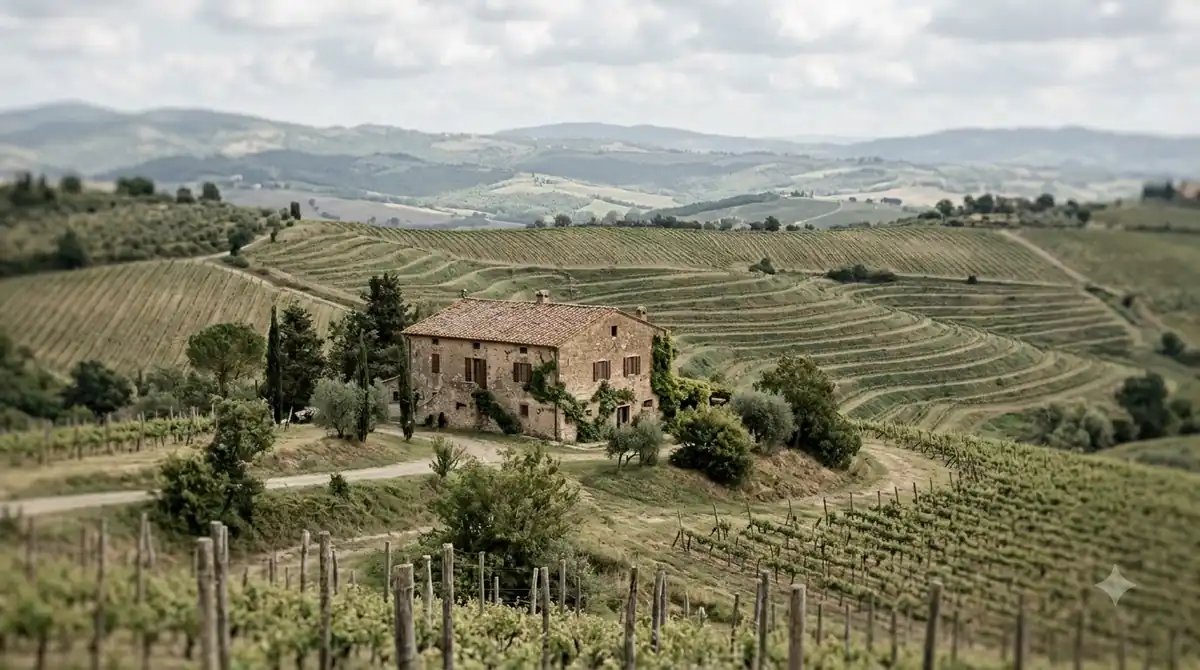
Because both grapes have thick skins packed with pigment and phenolic compounds, pouring a glass of either variety reveals an opaque purple-ruby core that stains the side of the glass. Beyond color, however, their structural balance feels noticeably different on the palate. Mourvèdre carries dense, chewy tannins that coat the middle of the mouth, paired with an alcohol level that often reaches 14% to 15% ABV because the grape requires intense heat to ripen fully. According to Wine Enthusiast, Mourvèdre’s acidity drops rapidly once the berries pass peak ripeness, giving mature bottlings a broad, velvety weight rather than a sharp, tart snap.
Syrah, known as Shiraz across Australia, brings a slightly livelier structural edge. While it also delivers medium-plus to high tannins and alcohol levels typically ranging from 13.5% to 15% ABV, Syrah retains steadier medium acidity that keeps its dark blackberry and blueberry flavors feeling energetic. Cooler-climate expressions from southeastern France taste decidedly savory, smoky, and peppery, while warmer New World versions lean lush and chocolatey. For drinkers exploring how Syrah compares to other bold reds, examining syrah vs zinfandel highlights how Syrah’s peppery spine differs from Zinfandel’s jammy sweetness.
| Attribute | Mourvèdre (Monastrell / Mataro) | Syrah (Shiraz) |
|---|---|---|
| Primary Origin | Eastern Spain (Valencia / Murcia) | Southeastern France (Rhône Valley) |
| Core Fruit Flavors | Blackberry, black cherry, stewed plum, prune | Blackberry, blueberry, black plum, raspberry |
| Savory & Spice Notes | Game, leather, wild herbs, earth, dark cocoa | Cracked black pepper, violet, smoke, bacon fat |
| Tannin Level | High, firm, and chewy mid-palate grip | Medium-plus to high, fine-grained to plush |
| Acidity Level | Medium-low to medium (drops fast if overripe) | Medium (higher in cool climates) |
| Typical Alcohol (ABV) | 14% to 15.5% | 13.5% to 15% |
| Ideal Serving Temp | 60–65°F | 60–65°F |
| Decanting Time | 45–90 minutes when young | 30–60 minutes when young |
Origins, Synonyms, and Vineyard Behavior
Mourvèdre is a late-ripening native of eastern Spain known domestically as Monastrell, while Syrah originated in France’s Rhône Valley and travels globally under the Australian alias Shiraz. Their contrasting growing cycles explain why Mourvèdre demands blistering Mediterranean heat and Syrah succeeds in cooler hillside vineyards.
Mourvèdre takes its French name from the ancient Spanish town of Morvedre, now called Sagunto, located near Valencia on Spain’s Mediterranean coast. When Catalan settlers carried the vine north into Roussillon and east into Provence during the late Middle Ages, it acquired regional aliases including Mataro—named after a coastal town north of Barcelona—which later traveled to California and Australia in the nineteenth century. In the late 1800s, the phylloxera root louse devastated European vineyards, and Mourvèdre suffered disproportionately because its wood resisted grafting onto early American rootstocks. Plantings in southern France plummeted to roughly 1,200 acres by 1960 before specialized rootstocks enabled a steady recovery.
Syrah’s family tree stays firmly rooted in southeastern France, where DNA profiling confirmed it as a natural cross between two obscure local grapes, Dureza and Mondeuse Blanche. Scottish viticulturist James Busby carried cuttings to Australia in the 1830s, launching the Shiraz tradition that now anchors South Australian winemaking. According to Wine Folly, global Syrah plantings surged from roughly 10,000 hectares in the 1980s to more than 180,000 hectares by the mid-2000s, dwarfing Mourvèdre’s global footprint of around 70,000 hectares.
How Climate Shapes Ripening
In the vineyard, Mourvèdre is stubbornly late to bud in spring, late to flower, and among the very last black grapes harvested in autumn. Its upright bush-vine habit with a short, sturdy trunk allows growers to use head-training without trellises, which shields the small, tight clusters from sunburn while exposed to sea breezes. Syrah buds and ripens earlier, allowing it to reach full phenolic maturity on steep, cool granite slopes along the Northern Rhône River where Mourvèdre would remain green and astringent.
Flavor Profile and Aromas: Earthy Game vs. Peppery Dark Fruit
Mourvèdre is driven by earthy, meaty, and herbal aromas that often overshadow its dark red and black fruit, whereas Syrah leads with vibrant blackberry, blueberry, and floral aromatics accented by black pepper. Both grapes develop complex leather and savory notes with bottle age, yet their youth tastes markedly distinct.
Pouring a young glass of Mourvèdre introduces an unmistakable savory edge right away. Alongside crushed blackberry, black cherry, and dried plum, the nose typically reveals roasted meat, wild Mediterranean scrub, dried thyme, leather, and cocoa powder. Decanter notes that Mourvèdre frequently exhibits funky, animal-like, and gamey characteristics that become even more pronounced as the wine matures into notes of forest floor and truffle. Because winemakers avoid masking these earthy nuances with heavy vanilla or toast, Mourvèdre usually ages in large, neutral oak casks called foudres rather than new barriques.
Syrah offers a much more aromatic, fruit-forward, and peppery introduction. Cool-climate Syrah from regions like Côte-Rôtie or the Sonoma Coast gets its signature cracked black pepper scent from rotundone, a natural aromatic compound concentrated in the grape skins. Alongside black pepper, cool-climate bottles display violet petals, black olive tapenade, smoke, and cured bacon. When grown in warmer regions like Barossa Valley or Paso Robles, Syrah’s fruit profile shifts from tart raspberry and blackberry toward lush blueberry compote, milk chocolate, licorice, and sweet baking spices from French or American oak barrels.
Tip: If a young bottle of Mourvèdre or Syrah smells faintly like struck matches, rubber, or boiled cabbage upon opening, it is experiencing harmless cellar reduction—pour it into a wide decanter for 45 minutes to let oxygen blow off the sulfur compounds and reveal the dark fruit underneath.
Tannins, Acidity, Body, and Aging Potential
Both grapes produce full-bodied red wines built for the cellar, but Mourvèdre delivers denser, firmer mid-palate tannins with lower acidity, while Syrah combines sleeker tannins with higher natural freshness. Each grape follows a predictable aging curve that determines when a bottle drinks best.
On the palate, Mourvèdre feels architectural and broad. Its thick skins contribute abundant tannins that grip the gums and center of the tongue, balanced by a plush, glyceric mid-palate weight rather than brisk tartness. According to California Rhône pioneer Tablas Creek Vineyard, Mourvèdre-dominant wines often enter a tight, unyielding “closed” phase roughly four to eight years after bottling, during which fruit flavors recede behind austere structure for one to five years before reopening with complex leather and truffle nuances. Top red Bandol bottlings regularly age easily for 15 to 25 years.
Classic Wine Regions for Mourvedre and Syrah
Mourvèdre reaches its benchmark expressions in hot Mediterranean coastal enclaves and high Spanish plateaus, while Syrah achieves iconic status along the steep granite slopes of France’s Northern Rhône and the sun-drenched valleys of South Australia. Knowing these flagship appellations helps predict whether a bottle will taste wild and savory or lush and spiced.
Spain remains the undisputed heartland of Mourvèdre, with more than 102,000 acres planted under the name Monastrell, according to Tablas Creek Vineyard. Spanish wine law designates Monastrell as a primary grape across southeastern Denominaciones de Origen including Jumilla, Yecla, Alicante, Almansa, and Valencia. Grown on dry-farmed limestone and sandy soils at elevations reaching 1,300 to 2,600 feet, old-vine Jumilla and Yecla Monastrell deliver concentrated blackberry fruit, dark cocoa, and muscular tannins at approachable everyday quality. Across the border on Provence’s Mediterranean coast, Bandol represents Mourvèdre’s qualitative pinnacle; appellation rules require 50% to 95% Mourvèdre in red Bandol wines and at least 20% in Bandol rosé, yielding structured, savory reds built for decades in the cellar. In California, roughly 994 acres of Mourvèdre were reported in state crush and acreage tallies, anchored by century-old bush vines in Contra Costa County and modern Rhône-style vineyards in Paso Robles.
Syrah’s stylistic benchmark sits in France’s Northern Rhône Valley, where steep, terraced granite hillsides above the Rhône River produce pure, 100% Syrah wines in Hermitage, Côte-Rôtie, Cornas, Saint-Joseph, and Crozes-Hermitage. In Côte-Rôtie, French appellation rules allow producers to co-ferment up to 20% white Viognier grapes with Syrah to stabilize color and amplify apricot and violet aromatics. Across the globe, Australia has made Shiraz its flagship red grape, with South Australia’s Barossa Valley and McLaren Vale producing velvety, full-bodied wines bursting with blackberry jam, dark chocolate, and sweet spice. Cooler Australian regions like Victoria’s Heathcote and Western Australia’s Great Southern offer a bridge between Old and New World styles, combining ripe dark fruit with cracked black pepper and eucalyptus.
The GSM Blend: Why Mourvedre and Syrah Need Each Other
In Southern Rhône appellations like Châteauneuf-du-Pape and Gigondas, winemakers rarely bottle Mourvèdre or Syrah alone, instead blending them with Grenache into the classic GSM trio. Each grape fills a structural and aromatic gap left by the others, producing a wine more balanced than any single component.
Grenache typically forms the generous foundation of a GSM blend, contributing high alcohol, bright red raspberry and strawberry fruit, and warm spice, though it lacks deep color and mid-palate grip. Syrah steps in to darken the hue, tighten the outer structural frame with acidity and fine tannins, and layer in blackberry and black pepper aromatics. Mourvèdre completes the triangle by anchoring the center of the palate with dense tannins, savory meat and leather complexity, and long-term aging stability. Winemakers adjust the percentages based on climate and house style: a Grenache-heavy blend tastes juicy and immediate, whereas a Mourvèdre-driven cuvée feels brooding, earthy, and built for food. Drinkers curious about how the foundational red grape compares directly against its darker partner can examine grenache vs syrah for a closer look at their individual traits.
Food Pairing and Serving Guide: Mourvedre vs Syrah
Both Mourvèdre and Syrah thrive alongside rich, savory meats and slow-cooked dishes, though Mourvèdre prefers earthy, gamey, and herb-crusted preparations while Syrah shines with smoked, pepper-rubbed, and grilled fare. Serving both wines at proper cellar temperature and giving young bottles air opens their best texture.
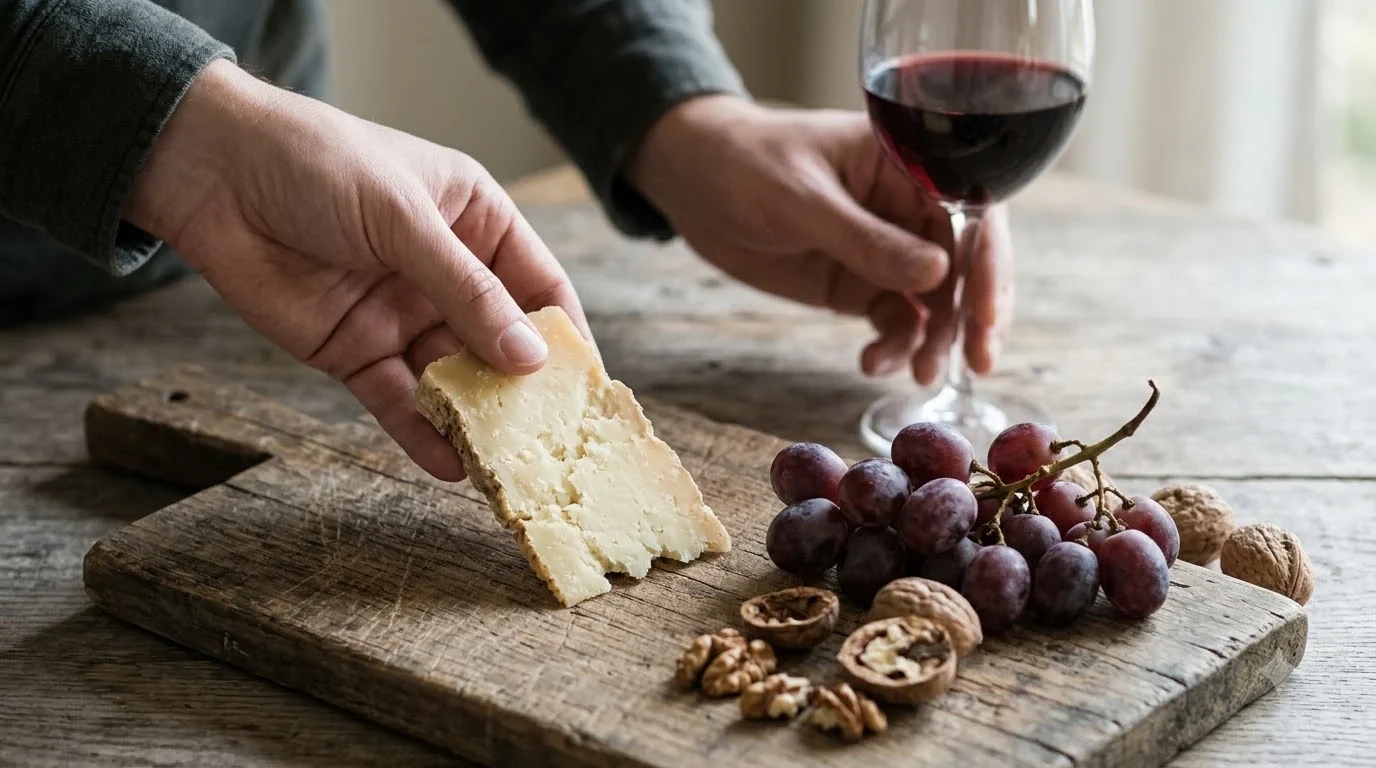
Because Mourvèdre carries firm mid-palate tannins and pronounced savory, herbal, and leather notes, it pairs naturally with braised meats and rustic Mediterranean dishes. Salt and fat soften Mourvèdre’s chewy tannic grip, making lamb shanks braised with rosemary and garlic, wild boar ragù, cassoulet, duck confit, and aged Manchego or Comté cheese ideal matches. Avoid pairing Mourvèdre with delicate white fish or fiery chili dishes, as its high alcohol and dense tannins amplify capsaicin heat and overwhelm light proteins.
Syrah’s brighter medium acidity and signature black pepper spice make it extraordinarily versatile at the grill and barbecue pit. Pepper-crusted ribeye steak, smoked pork ribs, grilled lamb chops, venison burgers, and roasted portobello mushrooms with thyme all echo Syrah’s smoky, savory aromatics while fat tames its tannins. Plush, fruit-driven Australian Shiraz also handles sweet-savory glazes like Korean bulgogi or barbecue brisket better than austere, earthy Mourvèdre. For further side-by-side grape comparisons across major wine regions, browse the broader Wine vs Wine guides.
Serving Temperature and Decanting Tips
Serve both Mourvèdre and Syrah at 60–65°F—slightly cooler than a warm living room—to keep their 13.5% to 15.5% alcohol levels balanced and fresh. Young bottles under five years old benefit from decanting: pour young Syrah into a decanter for 30 to 60 minutes, and give tight, structured young Mourvèdre 45 to 90 minutes of air before pouring standard 5-ounce servings. Once opened, recork unfinished bottles and store them in the refrigerator, where both wines will stay vibrant for three to five days.
Frequently Asked Questions
Are Mourvedre and Shiraz the exact same grape?
No, Mourvèdre and Shiraz are completely separate grape varieties with different genetic origins. Shiraz is simply the Australian and South African name for Syrah, whereas Mourvèdre is a Spanish native known as Monastrell in Spain and Mataro in parts of California and Australia.
Which wine is sweeter, Mourvedre or Syrah?
Both Mourvèdre and Syrah are vinified almost exclusively as dry red wines, meeting European Union dry wine standards of under 4 grams per liter of residual sugar. Warm-climate Australian Shiraz and Paso Robles Syrah can taste sweeter on the palate because ripe blueberry fruit, higher alcohol, and vanilla oak create a perception of sweetness even when the wine is technically dry.
Why is Mourvedre used in Bandol rose?
In Provence’s Bandol appellation, French appellation regulations require rosé wines to contain at least 20% Mourvèdre, with many producers using 50% or more. Mourvèdre gives Bandol rosé a deeper salmon-copper hue, firmer phenolic texture, and savory blood orange and herbal complexity that allow the wine to age gracefully for five to ten years.
Does Syrah ever get blended with white grapes?
Yes, winemakers in France’s Côte-Rôtie appellation are permitted under French appellation rules to co-ferment up to 20% white Viognier grapes alongside red Syrah. During fermentation, compounds in Viognier skins bind with Syrah pigments to deepen the wine’s purple color while adding lifted apricot, peach, and floral aromatics.
How should bottles of Mourvedre and Syrah be stored long term?
Store unopened bottles of Mourvèdre and Syrah on their sides in a cool, dark place with steady humidity and minimal vibration. Keeping the bottle horizontal keeps the natural cork moist and expanded against the glass neck, helping prevent premature oxidation during long-term cellar aging.
Choosing between Mourvèdre and Syrah depends on whether dinner calls for earthy, herbal depth or peppery dark fruit energy. Reach for a bottle of Bandol or Jumilla Monastrell when braising rich meats with Mediterranean herbs, and open a Northern Rhône Syrah or warm-climate Shiraz whenever grilled steaks, smoked barbecue, or bold spices hit the table.
More in Wine vs Wine
 Chenin Blanc vs Pinot Gris: Acidity, Body, and Pairing DifferencesUpdated Nov 20, 2026
 Chianti vs Lambrusco: How Tuscany and Emilia-Romagna Reds CompareUpdated Nov 20, 2026
 Chianti vs Primitivo: Key Differences in Taste, Body, and PairingUpdated Nov 20, 2026
 Chianti vs Rioja: Key Differences in Taste, Aging, and PairingUpdated Nov 20, 2026
 Chianti vs Shiraz: How Acidity, Body, and Food Pairings CompareUpdated Nov 20, 2026
 Chianti vs Syrah: Key Differences in Taste, Body, and Food PairingUpdated Nov 20, 2026