

We may earn a commission when you buy through links on this page, at no extra cost to you. Learn more.
Most orange wine sugar content falls below 4 grams per liter (g/L) of residual sugar, which classifies the vast majority of bottles as dry to bone-dry. Because winemakers ferment white grapes on their skins until native or cultured yeasts consume nearly all natural grape sugars, a standard 5-ounce (150 mL) pour typically contains less than 0.6 grams of sugar. While rare off-dry or medium-dry expressions exist, orange wine is not made from citrus fruit and is rarely sweet.
Shoppers often mistake the deep amber, copper, or tangerine hue of skin-contact white wine for a sign of syrupy sweetness or citrus flavoring. In reality, that color comes entirely from extended contact with white grape skins and seeds during fermentation—a technique borrowed from red winemaking that produces savory, tannic, and thoroughly dry wines.
What It Is and Why Orange Wine Is Dry
Orange wine is white wine made using red winemaking methods, where crushed white grapes ferment alongside their skins and seeds for days, weeks, or even months instead of being pressed immediately. According to Wine Folly’s orange wine guide, this extended skin contact extracts color, phenolic compounds, and firm tannins while yeasts convert grape fructose and glucose into alcohol.
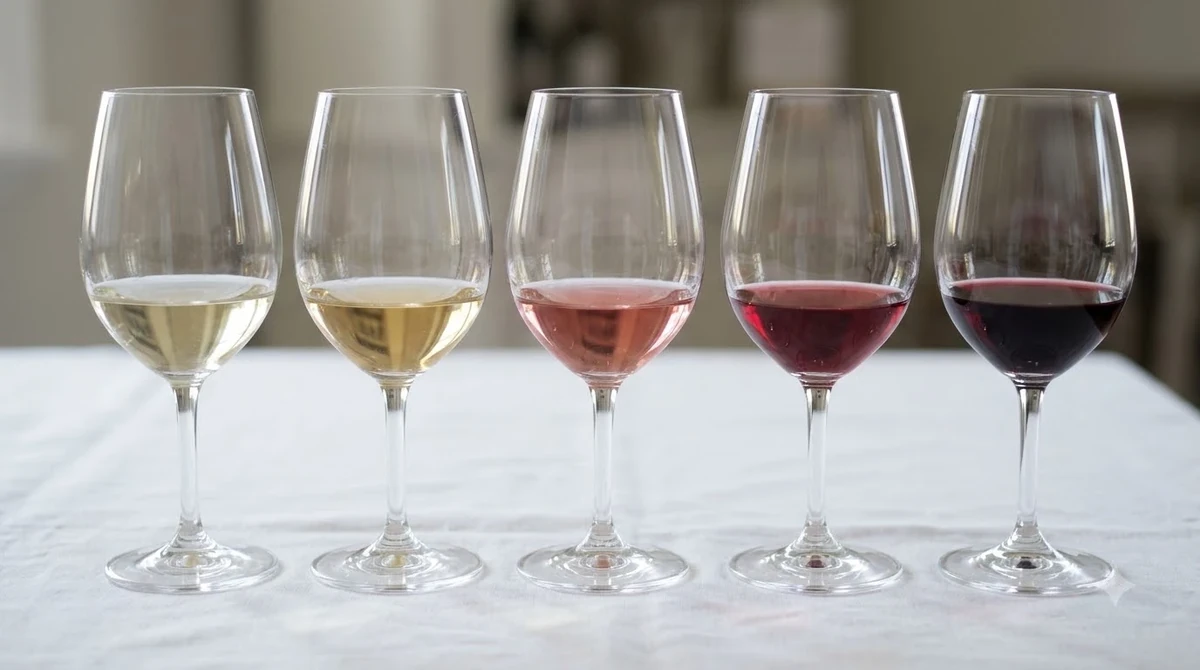
Understanding Wine Folly’s breakdown of residual sugar clarifies why skin-contact wines finish with so little sugar. Residual sugar (RS) is simply the natural grape sugar left behind once alcoholic fermentation ends, measured in grams per liter. Because most orange wine producers favor minimal-intervention cellaring and let indigenous yeasts ferment all the way to dryness, finished bottles routinely measure between 0 and 4 g/L of residual sugar—putting them in the exact same dry bracket as crisp Sauvignon Blanc or dry red table wines.
That dryness feels even more pronounced on the palate than the lab numbers suggest. Unlike standard white wines, which rely solely on acidity for structure, orange wines carry tactile astringency from grape-skin tannins. When dry chemistry meets noticeable tannin and bright natural acidity, any trace of leftover fruit sugar disappears behind flavors of dried apricot, bruised apple, black tea, and toasted nuts.
Tip: Do not confuse skin-contact orange wine with Spanish Vino Naranja, a fortified, sweet aromatized wine macerated with bitter orange peels that carries high residual sugar.
Sugar Content Comparison Across Wine Styles
Compared with standard white, red, and fortified styles, orange wine sits firmly at the low-sugar end of the spectrum alongside classic dry table wines. Checking residual sugar per liter alongside a standard 5-ounce (150 mL) serving makes it easy to see how skin-contact whites compare to other bottles on the shelf.
| Wine Style | Typical Sweetness Category | Residual Sugar (g/L) | Sugar per 5 oz (150 mL) Glass |
|---|---|---|---|
| Dry Orange Wine (Skin-Contact) | Bone-Dry to Dry | 0 to 4 g/L | 0 to 0.6 g |
| Off-Dry Orange Wine (Aromatic Grapes) | Off-Dry | 4 to 12 g/L | 0.6 to 1.8 g |
| Dry Red Wine (e.g., Merlot) | Dry | 1 to 4 g/L | 0.15 to 0.6 g |
| Dry to Off-Dry Riesling | Dry to Off-Dry | 1 to 35 g/L | 0.15 to 5.25 g |
| Sweet Fortified Wine (e.g., Tawny Port) | Very Sweet | 90 to 140+ g/L | 13.5 to 21+ g |
Looking at the numbers side by side highlights how consistent dry skin-contact bottlings are. When you explore different Wine by Type, dry orange wines track closely with traditional dry reds in merlot sugar content, whereas aromatic white varieties fermented without skin contact show much wider swings in riesling sugar content depending on where and how they were made.
Fortified dessert wines sit at the opposite pole entirely. Winemakers stop fermentation early with neutral grape spirit to preserve natural grape sweetness, resulting in vastly higher figures for port sugar content than any standard dry or off-dry skin-contact table wine will ever reach.
Flavor Profiles and Styles of Skin-Contact Wine
The length of maceration—how long juice stays on the skins—and the chosen aging vessel divide orange wine into two main styles: light, aromatic bottlings and deeply structured, oxidative wines. Regardless of how long the skins soak, both styles almost always ferment completely dry.
Short-maceration orange wines spend roughly four to ten days on the skins before pressing and often age in neutral stainless steel tanks. Reviewers note that these lighter expressions hold onto fresh orchard fruit, mandarin peel, and floral aromatics while keeping tannins gentle and approachable. Because fermentation runs cleanly in temperature-controlled vessels, residual sugar stays negligible while bright acidity keeps the finish snappy.
Extended-maceration orange wines remain on their skins and seeds for several weeks to seven months or longer, frequently inside buried clay amphorae (known as qvevri in Georgia) or seasoned wooden casks. Extended contact extracts deeper amber and burnt-copper pigments alongside firm, tea-like tannins and savory notes of hazelnut, beeswax, dried persimmon, and sourdough. Even when honeyed aromas appear on the nose, those scents come from phenolic ripeness and gentle micro-oxygenation through clay or wood rather than unfermented sugar.
Key Regions and Grape Varieties
While skin-contact winemaking originated thousands of years ago in the Caucasus, modern orange wines now come from both historic European appellations and experimental New World regions. The grape variety and local tradition influence whether a bottle finishes bone-dry or retains a hint of residual sugar.
Georgia remains the spiritual home of amber wine, where producers bury beeswax-lined clay qvevri underground to ferment native white varieties like Rkatsiteli, Mtsvane, and Kisi on their skins and stems. Across the border in northeastern Italy’s Friuli-Venezia Giulia and Slovenia’s Goriška Brda, pioneers such as Joško Gravner and Stanko Radikon sparked the modern revival using local Ribolla Gialla, Friulano, and copper-hued Pinot Grigio (locally called ramato). In both regions, traditional bottlings are fermented to strict dryness.
Aromatic grapes grown in cooler climates occasionally yield the rare off-dry orange wine. Winemakers in Alsace, Austria, and Germany working with Gewürztraminer, Muscat, Pinot Gris, or fungus-resistant PIWI varieties sometimes halt fermentation slightly early—leaving around 8 to 12 g/L of residual sugar—to cushion intense spice and phenolic grip. Meanwhile, producers in Spain, Australia’s Adelaide Hills, and California increasingly craft dry skin-contact wines from Sauvignon Blanc, Verdejo, Chardonnay, and Grenache Blanc.
How to Serve and Pair Orange Wine
Serving temperature and glassware play a major role in balancing the dry tannins and complex aromatics of orange wine. Pouring a skin-contact bottle straight from a cold kitchen refrigerator exaggerates bitterness and clamps down on its nuanced fruit and nut aromas.
Aim for cellar temperature—between 50 and 57 degrees Fahrenheit (10 to 14 degrees Celsius)—which sits right between crisp white wine and light red wine service. Lighter, short-maceration bottles shine closer to 50 to 54 degrees Fahrenheit in a standard white wine glass, while deeply macerated, full-bodied amber wines open up best around 55 to 57 degrees Fahrenheit in a wider Burgundy or universal bowl. Giving a young, grippy bottle 15 to 30 minutes in a decanter also softens firm tannins without needing any residual sugar to smooth the palate.
At the dinner table, orange wine excels with bold, savory, and richly spiced dishes that overwhelm conventional white wines. Its dry, tannic backbone cuts cleanly through roasted pork, duck, aged hard cheeses, and tahini-rich mezze, while its dried-fruit and citrus-peel notes harmonize with turmeric, cumin, saffron, Korean gochujang, and North African tagines.
How to Choose a Low-Sugar Bottle
Because wine labels in the United States rarely list nutrition panels or exact residual sugar figures, reading stylistic clues on the front and back labels helps confirm a bottle is completely dry. A quick check of grape variety, maceration notes, and producer details usually tells you everything you need to know.
Start by looking for terms like “skin-contact,” “macerated,” “amber,” or “ramato” paired with naturally dry-fermenting grapes such as Ribolla Gialla, Rkatsiteli, Sauvignon Blanc, Chardonnay, or Pinot Grigio. Back-label descriptions mentioning unfined, unfiltered, or native-yeast fermentation also point toward dry cellaring, as wild fermentations typically run until yeasts exhaust available grape sugars. If you want an exact figure, search the winery’s online technical sheet for the vintage, where residual sugar is listed in grams per liter.
Approach bottles made from late-harvest aromatic grapes—such as Muscat, Gewürztraminer, or Riesling—with a closer look if you want strictly zero noticeable sweetness. Even when these aromatic styles carry a few extra grams per liter of residual sugar to balance skin bitterness, they remain far drier than standard dessert wines.
Frequently Asked Questions
Is orange wine sweet or dry?
Almost all orange wine is dry to bone-dry, containing between 0 and 4 grams of residual sugar per liter. Although its deep amber color and notes of dried apricot or honey can trick the eye and nose, the palate is brisk, savory, and tannic rather than sweet.
How many grams of sugar are in a glass of orange wine?
A standard 5-ounce (150 mL) pour of dry orange wine contains between 0 and 0.6 grams of sugar. Even a rare off-dry skin-contact bottling at 10 g/L residual sugar delivers only about 1.5 grams of sugar per 5-ounce glass.
Does orange wine contain oranges or added sugar?
Traditional orange wine contains no oranges, citrus juice, or added sweeteners. It is made 100 percent from white wine grapes whose juice ferments in contact with the grape skins and seeds, creating its amber-orange color naturally.
Why does orange wine taste drier than regular white wine?
Extended skin contact extracts tannins—the same mouth-drying phenolic compounds found in red wine and black tea. Combined with bright natural acidity and minimal residual sugar, those tannins create a grippy, savory finish that feels even drier than a standard crisp white wine.
For anyone watching sugar intake without giving up complex flavor, skin-contact wine offers one of the driest profiles in the wine shop. Checking the grape variety, maceration style, and producer tech sheet ensures you land on a crisp, savory bottle tailored to your palate.
More in Wine Types & Grapes
 What Does Mourvèdre Taste Like? Flavor Profile, Regions, and PairingsUpdated Nov 20, 2026
 What Does Marsanne Taste Like? Flavors, Styles, and Food PairingsUpdated Nov 20, 2026
 What Does Malvasia Taste Like? Styles, Flavors, and Food PairingsUpdated Nov 20, 2026
 What Does Grenache Blanc Taste Like? Flavor Profile, Styles, and PairingsUpdated Nov 20, 2026
 What Does Garnacha Taste Like? Key Flavors, Styles, and Pairing TipsUpdated Nov 20, 2026
 What Does Fruit Wine Taste Like? A Complete Flavor and Style BreakdownUpdated Nov 20, 2026