

We may earn a commission when you buy through links on this page, at no extra cost to you. Learn more.
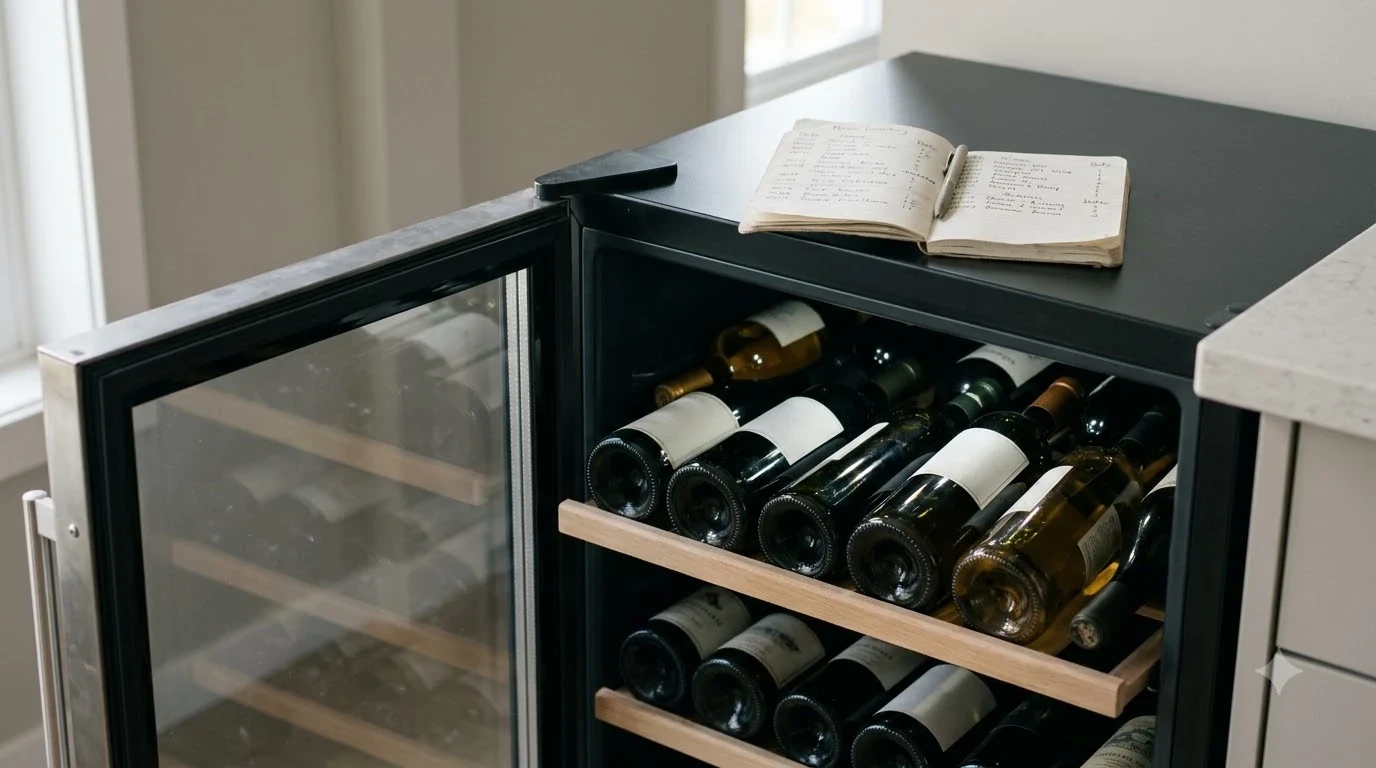
You can store wine in a wine fridge for several months to years, but how long can you store wine in a wine fridge depends on the wine’s aging potential and how steadily the cabinet holds its temperature. A stable setting near 55°F is a practical target for most bottles, while direct light, heat swings, and dry conditions can shorten a bottle’s useful life. The fridge protects wine; it does not make every wine suitable for long-term aging.
A wine fridge gives bottles a more controlled home than a sunny kitchen counter or a refrigerator set for groceries. The useful question is not simply how many months a cabinet can hold a bottle, but whether the wine was made to age and whether the appliance can keep the conditions consistent. The guidance below separates short-term storage from bottle aging and explains how to get the most from a home wine fridge.
How long can you store wine in a wine fridge?
The practical answer ranges from a few months for everyday wines to several years for age-worthy bottles kept under stable conditions. Purdue Extension gives a broad benchmark of about three years after bottling for typical white table wines and three to 10 years for red table wines, but those figures are general guidelines rather than a promise for every bottle.
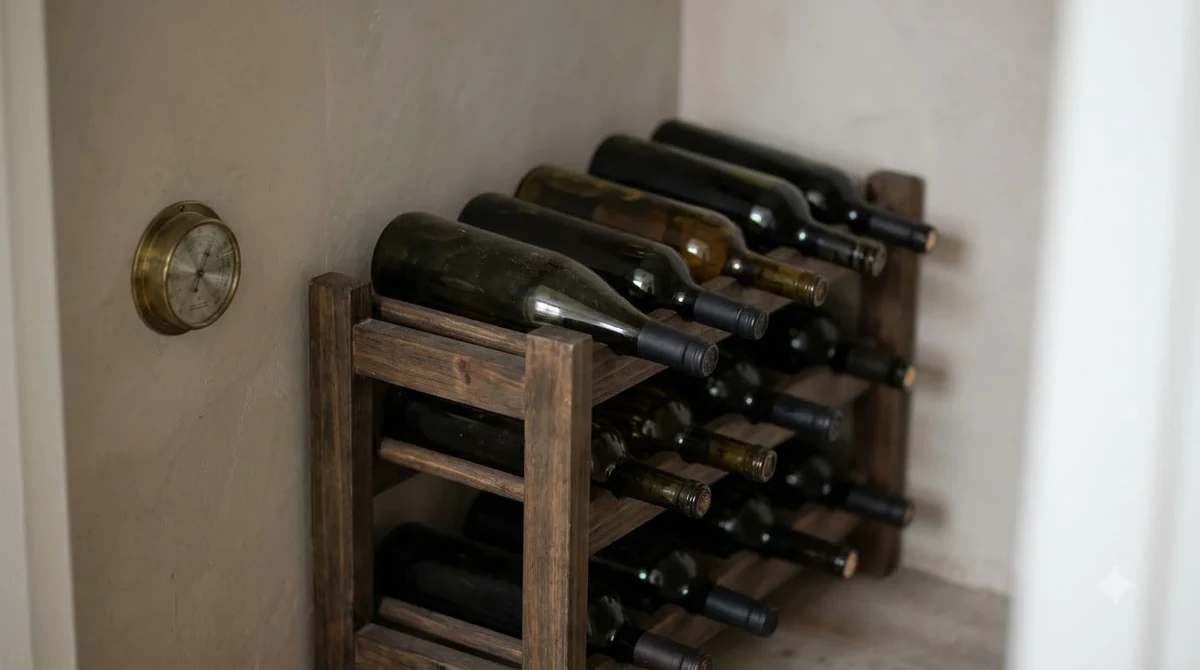
Those timelines describe how long wine may retain or improve its quality under good storage, not a countdown that begins when you place it in the cabinet. A wine that has already spent two years in a warm shop or warehouse does not become newly bottled when it reaches your home. Its past exposure, vintage, grape variety, winemaking choices, closure, and condition all affect how much useful life remains. A carefully stored bottle also may be ready to drink now; keeping it longer does not guarantee a better result.
For most people, a sensible plan is to use the wine fridge to protect bottles you expect to drink over the next several months and to reserve multi-year storage for wines with a known aging window. The Wine Society notes that most bottles are intended for relatively early drinking, while a smaller group of well-made wines can develop over years or even decades. That distinction matters more than the size or brand of the refrigerator. If a producer gives a recommended drinking window, use it as the starting point rather than assuming that every Cabernet, Chardonnay, or sparkling wine can age for the same length of time.
A wine fridge also cannot reverse damage that happened before purchase. Heat exposure may leave a wine flat, cooked, or prematurely mature, and oxidation from a compromised closure cannot be repaired by cooling the bottle. If a cork is pushed up, wine has seeped around the closure, or the fill level is unusually low for a relatively young bottle, treat those as warning signs rather than expecting the cabinet to restore it.
Set a steady cellar temperature near 55°F
A steady temperature near 55°F is the most useful all-purpose setting for long-term storage, with roughly 50°F to 60°F providing a practical cellar range. The goal is consistency: a cabinet that stays close to 55°F is preferable to one that repeatedly swings between warm and cold settings.
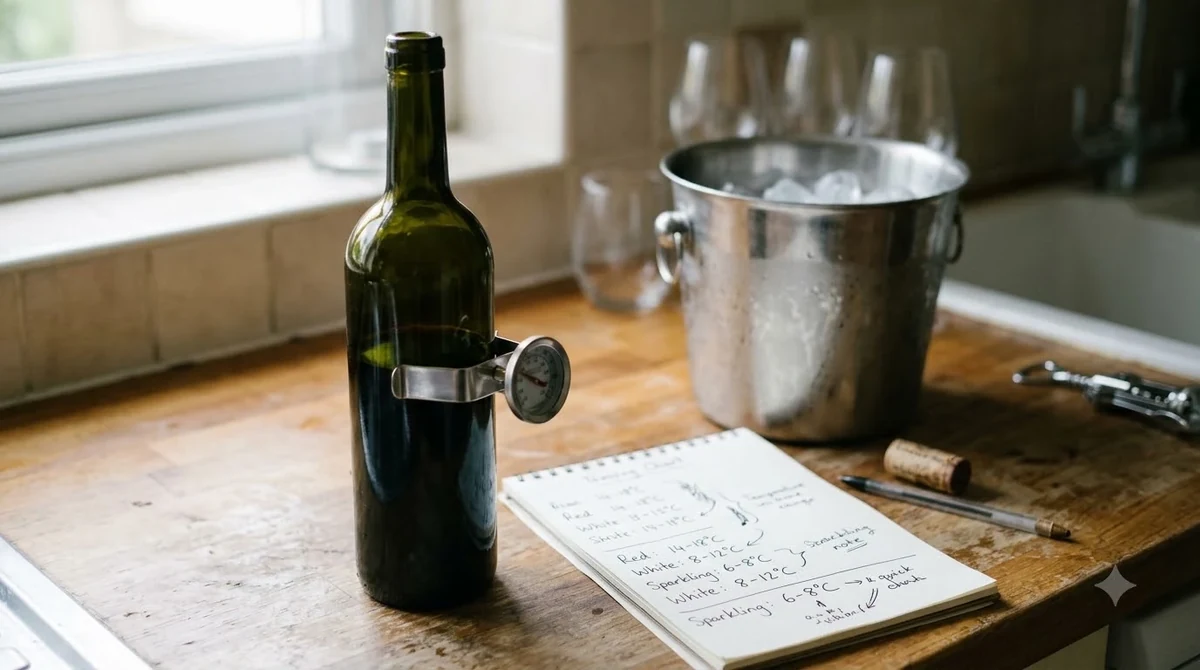
Wine Enthusiast’s storage overview identifies temperature as the most important environmental factor and describes about 55°F as a suitable target for reds, whites, sparkling wines, and fortified styles. Purdue Extension likewise describes 50°F to 60°F as the traditional long-term storage range. The Wine Enthusiast guide to storing wine explains why both excessive heat and excessive cold can affect quality.
Do not confuse storage temperature with serving temperature. A bottle kept at 55°F can be brought cooler or warmer shortly before pouring, depending on its style. For long storage, resist setting separate zones to ideal drinking temperatures for every type of wine if those settings create large temperature changes or leave some bottles much colder than necessary. A single steady zone is often easier to manage when the main purpose is aging rather than immediate service.
Heat is the more damaging mistake. Purdue reports that storage above 60°F accelerates maturation and can shorten a wine’s life, particularly for whites; exposure above 75°F can lead to undesirable aroma, flavor, and color changes. The same guidance warns against short-term exposure at 86°F or higher. This does not mean one warm afternoon automatically ruins a bottle, but it does mean a fridge placed beside an oven, sunny window, or hot garage wall is working against its purpose.
Humidity, light, vibration, and odors set the limits
Temperature is essential, but it is not the only condition that affects a bottle over months or years. For cork-finished wine, aim for moderate humidity, keep bottles away from strong light and persistent odors, and avoid unnecessary movement.
Wine Enthusiast recommends a humidity range around 50% to 80%, which helps prevent natural corks from drying and shrinking. Very dry air can weaken the seal and allow premature oxidation, while persistently damp conditions can damage labels and encourage mold on packaging or cabinet surfaces. Many compact wine fridges control temperature more reliably than humidity, so do not assume every model maintains cellar-like moisture. If your unit has a humidity readout, use it as a guide and follow the manufacturer’s instructions for maintaining the cabinet.
Light is another long-term concern. Sunlight and some strong artificial light can cause light-struck aromas and unwanted changes in a wine’s structure. A solid door or UV-resistant glass, dim interior lighting, and a location away from direct sun are useful protections. Keep the fridge away from strong household smells such as paint, solvents, smoke, and heavily scented cleaning products; a natural cork can allow outside aromas to affect the wine over time.
Vibration deserves a practical rather than fearful approach. A compressor creates some movement, but the larger everyday risk is repeatedly shifting bottles, stacking them where they knock together, or placing the cabinet on an unstable surface. Choose a level, stable location and arrange bottles so you can remove one without moving an entire row. The combination of steady temperature, darkness, a suitable closure, and minimal handling is more valuable than chasing a perfect number on every display.
Wine type and structure determine its aging window
Not every bottle benefits from years in a wine fridge. The broadest aging potential tends to belong to wines with a suitable balance of acidity, tannin, concentration, and structure, while many fresh, fruit-forward wines are made to be enjoyed young. The following estimates are broad reference points from Purdue Extension for wine kept without excessive ultraviolet exposure and at a steady temperature, within about 2°F to 3°F of the target. They are not guarantees for every grape, producer, vintage, or bottle, and the clock is counted from bottling rather than from the day you buy the wine.
| Wine category | General quality-retention guideline | How to use the guideline |
|---|---|---|
| Typical white table wine | About 3 years after bottling | Most are best enjoyed while fresh; only hold longer when the producer indicates aging potential. |
| Red table wine | About 3 to 10 years | Style and winemaking matter; structured reds are more likely to benefit from bottle age. |
| Age-worthy white or red wine | Several years to decades in selected cases | Use the producer’s drinking window and the wine’s vintage, acidity, tannin, and track record. |
These benchmarks are taken from Purdue Extension’s wine storage guidelines, which describe the figures as general guidance; some wines are intended for their first year, while others may age gracefully for decades. For red wine, Cabernet Sauvignon and Syrah often have more tannin and structure than light, early-drinking reds, while Merlot is generally softer. Pinot Noir can age in some examples despite its lower tannin, particularly when it has good acidity and concentration. The grape name alone is not enough: an uncomplicated, inexpensive bottling may be designed for near-term drinking, while a more structured example from the same variety may develop with time.
For whites, natural acidity is an important part of ageability. Riesling, Chenin Blanc, and selected Chardonnays can develop complexity when the fruit, acidity, and winemaking are suited to aging. Many light, aromatic whites and rosés are intended to preserve fresh fruit character, so months in the wine fridge are useful protection but years of storage may not improve them. Sweet wines with balanced acidity can also age well, but sweetness by itself does not create an aging guarantee.
The important distinction is between preserving quality and improving quality. A wine fridge can slow unwanted change and protect a bottle until its intended drinking window. It cannot add the acidity, tannin, concentration, or balance that the wine did not have at bottling. For practical advice on managing bottles outside a dedicated cabinet, see how to store wine at home.
Arrange bottles for stable, low-disturbance storage
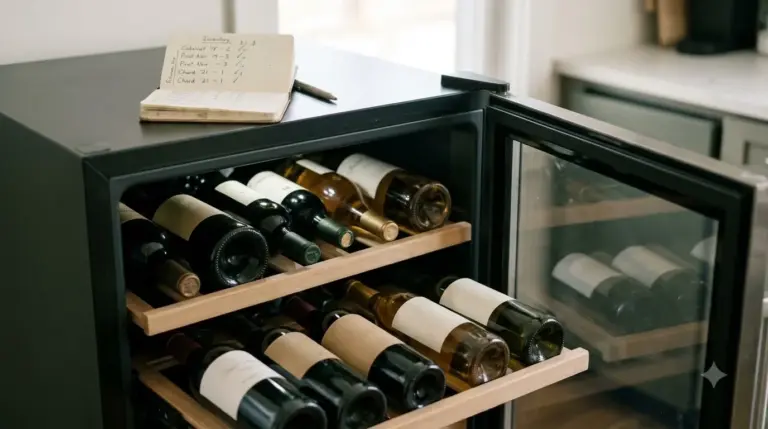
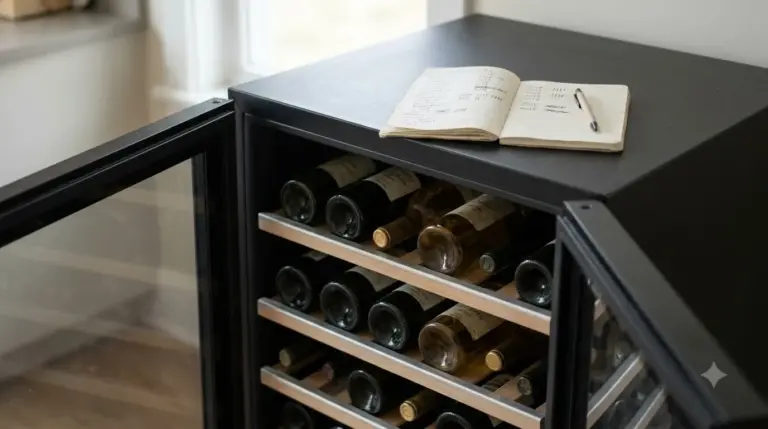
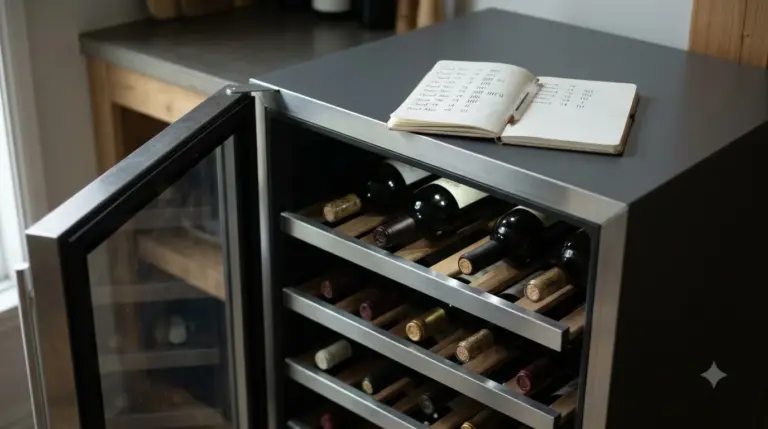
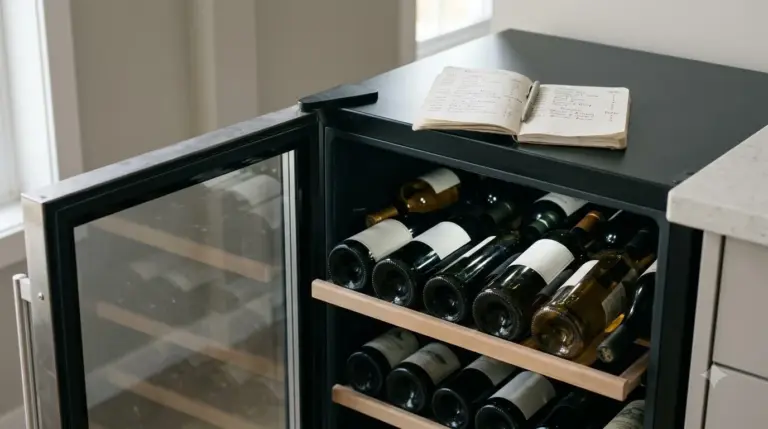
Good organization makes the wine fridge easier to use and reduces avoidable handling. Store cork-finished bottles on their sides, group bottles by expected drinking date, and leave enough room to reach the wine you plan to open without disturbing the rest of the collection.
Horizontal storage keeps the wine in contact with a natural cork, helping the cork remain moist and reducing the risk of a poor seal. The Wine Society recommends keeping bottles horizontal for this reason. Screw-cap bottles do not rely on a cork being kept moist, but storing them horizontally can still make efficient use of shelf space. Avoid placing bottles where they press against the cooling panel or block airflow if the manufacturer specifies clearance around shelves or vents.
Set a basic inventory for any bottle you intend to keep beyond the next few weeks. Record the producer, wine name, vintage, purchase date, and a target drinking window. Put bottles you plan to open soon near the front and longer-term bottles toward the back, but make sure the arrangement does not require lifting or rolling several bottles every time you reach one. Use a small label or digital note rather than repeatedly handling a bottle to read its vintage.
Cabinet placement also affects performance. Follow the installation instructions for ventilation and clearance, especially for compressor models, and keep the unit away from direct sunlight and major heat sources. A freestanding unit is not automatically suitable for an enclosed cabinet; before fitting it into cabinetry, confirm that the model is rated for that installation and that its heat can escape. Our explanation of whether a freestanding wine fridge can be built in covers the distinction. Also keep wine and beer storage needs separate when planning shelves and temperature zones; this guide explains whether you can store beer in a wine fridge.
Maintain the cabinet and monitor the bottles
A wine fridge needs occasional checks because the displayed setting is not the same as proof that every shelf remains at the target temperature. Use a reliable thermometer to confirm the actual cabinet temperature, watch for changes after power interruptions, and inspect bottles periodically for leakage or damaged closures.
Start by setting the cabinet close to 55°F, then allow it to stabilize before loading a large collection. Avoid repeatedly changing the temperature to chill one bottle quickly; use a short-term chilling method for that bottle instead of altering the storage environment for everything else. If your unit has separate zones, keep the long-term collection in the zone that holds the steadiest temperature and reserve the other zone for bottles intended for near-term service.
Check that the door seals close firmly and that the cabinet is not overcrowded. A blocked vent, failing seal, or faulty sensor can make the temperature uneven even when the control panel appears normal. Clean the interior according to the manufacturer’s directions, and do not use strongly scented cleaners that leave persistent odors. When a cabinet makes an unusual noise, cycles constantly, or cannot hold its setting, investigate the cause instead of assuming the wine is protected.
Review the collection a few times each year. Move bottles approaching their drinking window to the front, remove bottles that are not intended for further aging, and look for damp labels, seepage, or corks that have shifted. If a bottle has experienced a significant heat event or a long period without cooling, prioritize it for opening rather than returning it to the back and forgetting it. The storage and serving information in Wine Storage & Serving Temps can help you distinguish a cellar setting from the temperature you want in the glass.
Tip: Write the purchase date and intended drinking window on a simple inventory as soon as a bottle goes into long-term storage. It is easier to rotate bottles by date than to guess later how long each one has been in the cabinet.
Frequently Asked Questions
These answers cover opened bottles, serving temperatures, and cold-related changes that are different from the long-term aging guidance above. A 55°F storage setting is not a universal drinking temperature, and an opened bottle has a much shorter useful window than an unopened one.
How long can an opened bottle stay in a wine fridge?
Once resealed and refrigerated, most opened still wines are best used within about three to five days. Sparkling wine usually loses its freshness sooner, often within one to three days, while fortified wines can remain enjoyable for several weeks. Minimize the time the bottle spends open and use a closure that fits securely.
Should I serve wine at 55°F?
Not necessarily: 55°F is a useful storage target, not a universal serving temperature. Sparkling wines are generally served around 40°F to 50°F, light whites and rosés around 45°F to 50°F, and full-bodied reds around 60°F to 65°F. Bring the bottle to its serving range shortly before pouring rather than storing every style at its drinking temperature.
Can a wine fridge get cold enough to damage wine?
Yes. Purdue Extension notes that storage below 50°F can limit a wine’s development of aroma and flavor, while temperatures at or below 32°F can cause tartrate crystals to form in as little as an hour. Wine with 14% alcohol by volume or less can begin to freeze below 23°F, potentially pushing out the cork or breaking the bottle.
Are crystals in a bottle a sign that the wine has spoiled?
Not necessarily. Potassium bitartrate can naturally form visible crystals in white wine or colored crystals and sediment-like material in red wine after exposure to very cold temperatures. Purdue describes these deposits as a visual defect rather than proof that the wine has spoiled, although they can be mistaken for glass fragments.
Can sparkling wine be damaged by heat inside a wine fridge?
A properly functioning wine fridge should prevent the heat exposure that creates this concern, but a malfunctioning or poorly ventilated cabinet can become too warm. Purdue notes that sparkling wine bottles already hold pressure of about six atmospheres, or 90 psi, and that high temperatures can raise the pressure further; bottle breakage has been reported after severe heat exposure.
A wine fridge can protect a bottle for months or years when its temperature stays steady and the wine is suited to aging. Set the cabinet near 55°F, keep cork-finished bottles horizontal, and rotate everyday wines before their freshness fades. The best storage plan is the one that matches each bottle’s drinking window rather than leaving every wine to age for as long as the refrigerator can hold it.
More in Storage & Fridge Care
 Can You Store Beer in a Wine Fridge? Keep Both Drinks FreshUpdated Nov 20, 2026
 Is It Worth Repairing a Wine Fridge? Spot the Cheap Fixes Before You ReplaceUpdated Nov 20, 2026
 Wine Fridge Condensation: Identify Causes and Fix Moisture ProblemsUpdated Nov 20, 2026
 Wine Fridge Too Cold: Protect Your Wine and Fix the TemperatureUpdated Nov 20, 2026
 How to Reset Wine Fridge: Restore Cooling and SettingsUpdated Nov 20, 2026
 Wine Fridge Fan Not Working: Diagnose Problems and Restore CoolingUpdated Nov 20, 2026