

We may earn a commission when you buy through links on this page, at no extra cost to you. Learn more.
A focused vosne romanee wine tasting reveals the depth and refinement of Burgundy Pinot Noir, with ripe red and dark berries, rose and spice, velvety tannins, and a long, savory finish. The village appellation is red only and draws its character from limestone and clay-rich marl on the Côte de Nuits. The best way to understand it is to taste the fruit, texture, site, and age together rather than treating every bottle as the same style.
Vosne-Romanée is one of Burgundy’s best-known village names, but its wines are not defined by prestige alone. A careful tasting can explain why a village-level bottle, a Premier Cru, and a wine from one of the neighboring Grand Cru sites may feel related while showing different levels of concentration, structure, and detail. Taste with a clear sequence: identify the fruit, assess the tannin and acidity, and then connect those impressions to the label. This approach makes the region easier to understand whether the glass is a village bottling or a wine from a named climat.
What Vosne-Romanée Tastes Like
Vosne-Romanée is typically fragrant, layered Pinot Noir, combining ripe fruit with floral, spice, and earthy notes. Its texture can feel supple and velvety, while fine tannin and fresh fruit keep the wine from seeming heavy.
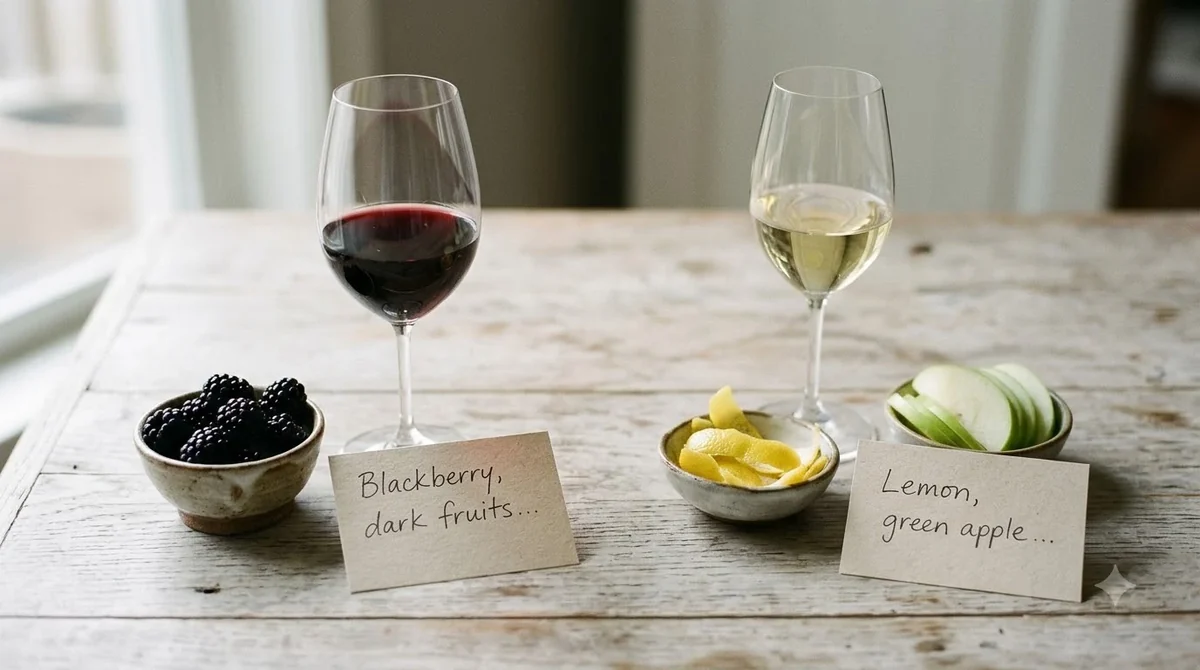
In a young glass, look first for cherry, raspberry, strawberry, and blackcurrant. The Bourgogne winegrowers’ association also identifies bilberry and ripe fruit layered with spice as common aromas. Red shades can range from clear ruby to deeper garnet, and the nose may include rose, violet, cinnamon, clove, or a faint forest-like character. Individual wines vary with the site, vintage, producer, and choices in the cellar, so do not expect every bottle to show the entire list.
On the palate, the first impression is often a combination of fruit intensity and smooth texture. Pinot Noir generally has low-to-medium tannin and high acidity, but Vosne-Romanée can still feel substantial: the official regional description notes that some wines seem austere when young and need time for their structure and flesh to come together. The finish may carry cherry skin, spice, savory earth, or a mineral impression. These are tasting descriptions, not separate ingredients added to the wine.
Age changes the aromatic picture. Fresh berries and flowers can give way to dried cherry, preserved fruit, leather, mushroom, and woodland notes. The wine may become more savory and complex without losing its identity as Pinot Noir. A mature bottle is not simply a young bottle with less fruit; its aromas and texture become more integrated, which is why serving a mature example gently matters as much as choosing the right glass.
How the Côte de Nuits Terroir Shapes the Wine
Vosne-Romanée sits in Burgundy’s Côte de Nuits, between Dijon and Nuits-Saint-Georges, and its village appellation covers vineyards in Vosne-Romanée and Flagey-Échezeaux. Limestone mixed with clayey marl, varying soil depth, and generally east-facing exposures help explain the combination of perfume, ripeness, and structure.
The official Bourgogne description places village-appellation parcels both high on the slope and near its foot, on either side of the Grand Cru climats; some plots reach a similar altitude to those famous sites. Soil depth ranges from a few tens of centimeters to about one meter, so a shallow stony parcel and a deeper clay-influenced parcel do not offer identical growing conditions.
Wine Enthusiast’s Vosne-Romanée coverage describes the area’s brown limestone and clay as a blend that retains heat while draining well. East-facing slopes receive morning light, and changing soil depth affects local warmth and water availability. These factors help explain the combination of ripe fruit, freshness, and detail, but they do not dictate a single flavor: the grower, season, picking decisions, extraction, whole-cluster use, and oak treatment also influence the finished wine.
Use site details as clues rather than tasting guarantees. Two nearby plots may share the village’s perfume yet differ in body, tannin, or floral character, which is why side-by-side tastings are useful. For context on French appellation terms, see the site’s Wine Regions overview; for a contrast in grapes and style, compare Vosne’s Pinot Noir focus with Alsace wine tasting.
Reading Village, Premier Cru, and Grand Cru Labels
The words on the label tell you more than the village name: they identify the appellation level and, in many cases, a named vineyard site. Vosne-Romanée is a Village appellation with 14 Premier Cru climats, while the wider two-commune area is associated with eight Grand Cru appellations.
| Measure | Figure | Context |
|---|---|---|
| Total area under production | 149.47 ha | Entire appellation |
| Premier Cru area | 56.01 ha | Included in total area |
| Average annual volume | 5,584 hl | All Vosne-Romanée |
| Premier Cru volume | 1,962 hl | Included in total volume |
A bottle labeled simply Vosne-Romanée is village-level wine. The Bourgogne winegrowers’ association records 149.47 hectares under the appellation, including 56.01 hectares classified as Premier Cru. The name may appear alone or be followed by a climat name; examples of Premier Cru sites include Les Suchots, Les Beaux Monts, Aux Brûlées, Les Chaumes, Aux Malconsorts, and Cros Parantoux.
Vosne-Romanée Premier Cru adds a more specific site classification, but it does not mean every Premier Cru tastes alike or guarantee a particular flavor. Les Suchots and Les Beaux Monts are distinct named climats; producer decisions and vintage conditions also shape their expression. Separate Village and Premier Cru first, then compare one climat at a time. A tasting notebook organized by producer, vintage, and site can reveal patterns across several bottles.
The regional body’s official Vosne-Romanée appellation profile is a useful reference for formal distinctions and named sites. The Grand Crus are distinct appellations, not an extra tier printed after the Village name: across Vosne-Romanée and neighboring Flagey-Échezeaux are eight Grand Cru names, including Romanée-Conti, La Tâche, Richebourg, Romanée-Saint-Vivant, Échezeaux, and Grands-Échezeaux. The Village appellation, its 14 Premier Cru climats, and the Grand Cru appellations are connected by geography but are not interchangeable classifications.
How to Taste Vosne-Romanée Step by Step
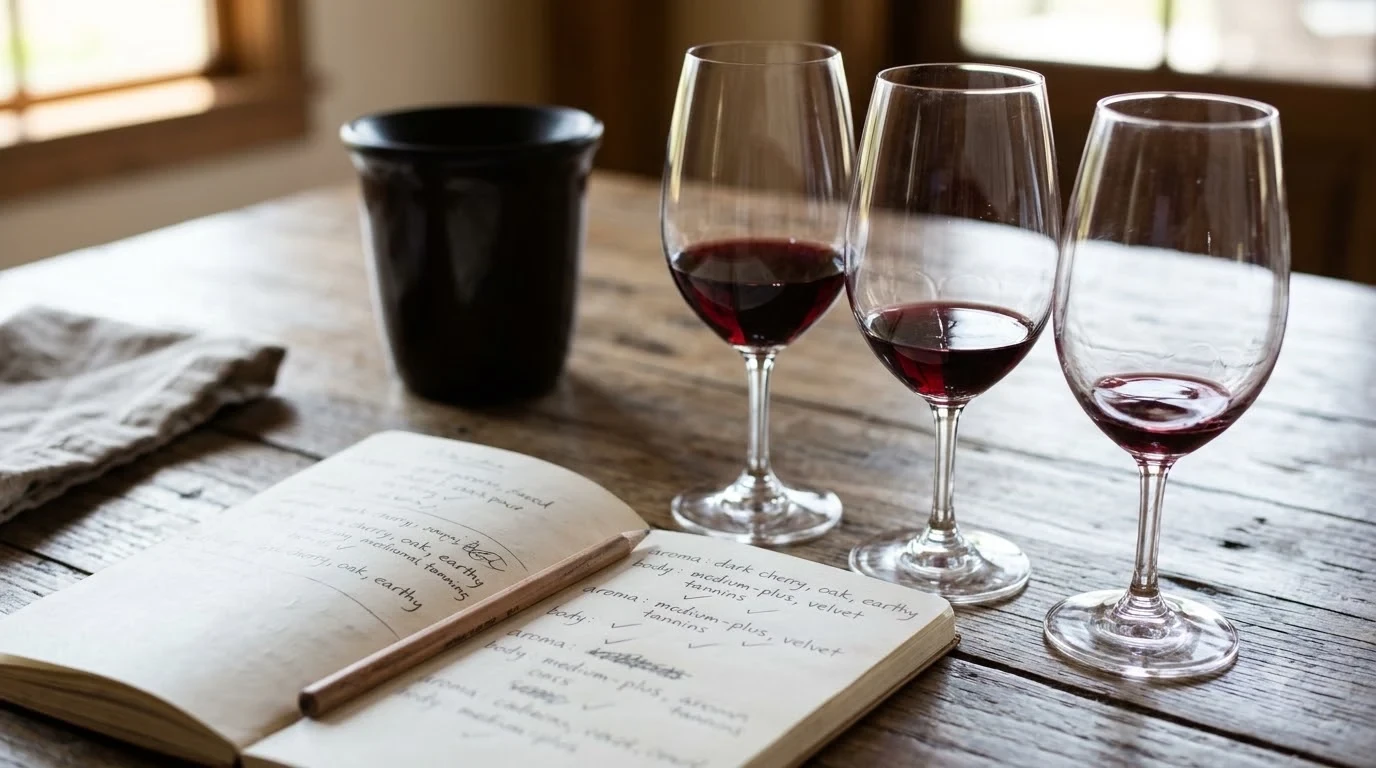
A focused tasting works best when you assess appearance, aroma, palate, and finish in the same order for every glass. Use a clear glass, pour a modest 5-ounce serving, and allow the wine a few minutes to open before deciding whether it is closed or fully expressive.
Begin with the color at the center and rim of the glass. Ruby and garnet are common reference points, but color alone cannot tell you quality or age with certainty. Swirl gently and smell before tasting: note whether red cherry and raspberry lead, or whether darker fruit, rose, spice, earth, or oak-derived vanilla is more prominent. Smell again after several minutes; changes in the glass can reveal aromas that were initially less obvious.
Take a small sip and move the wine across the palate. Consider how bright the fruit feels, how acidity refreshes the mouth, and whether the tannins seem fine, firm, or drying. Notice whether the middle palate is light and precise or broad and concentrated. After swallowing, pay attention to the finish: does cherry remain, does spice become clearer, or do earthy notes appear? A long finish is one feature to record, but balance and clarity matter more than duration alone.
Tip: Taste a village wine first, then compare one Premier Cru climat at a time to isolate site differences.
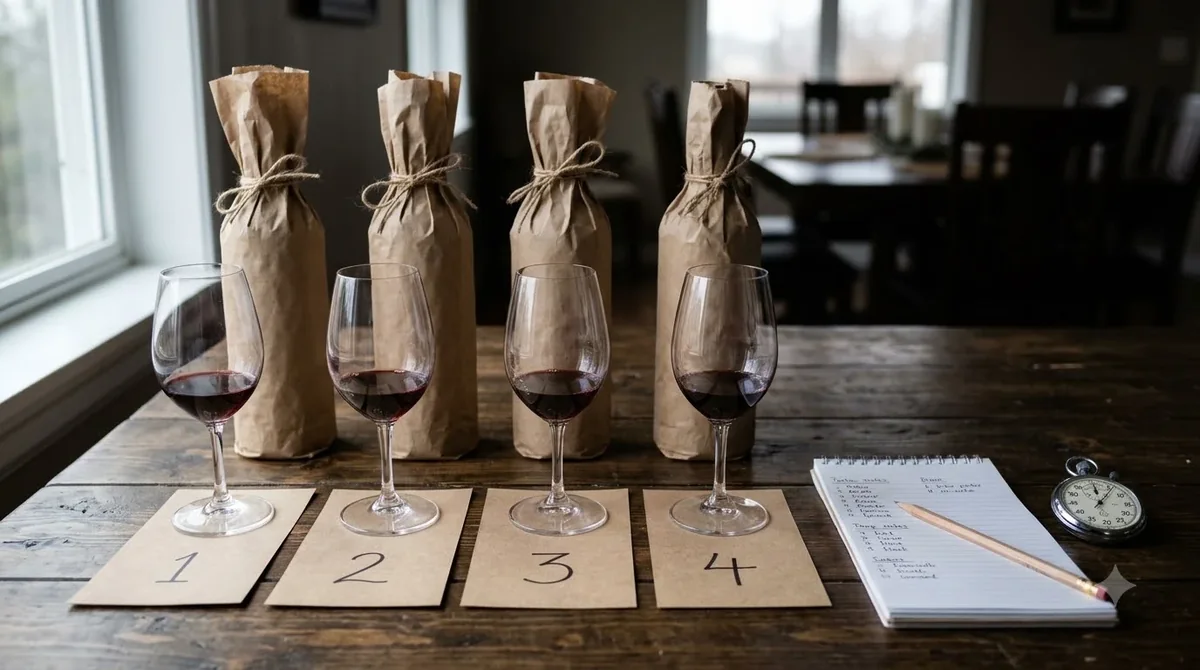
For a useful comparison, taste a village wine before a Premier Cru from Les Suchots or Aux Brûlées, ideally with similar serving conditions. Write down just three observations for each: the dominant fruit, the texture of the tannin, and the character of the finish. If you are comparing different regions as well, a Bolgheri wine tasting can show how Tuscan blends built around Bordeaux varieties differ from Burgundy Pinot Noir in grape composition and structure.
Serving Temperature, Decanting, and Storage
Serve Vosne-Romanée cool enough to preserve its aromas but not so cold that the fruit and texture are muted. A practical target is about 60–63°F for a structured red, with a little flexibility for the wine’s age and weight.
Temperature changes what you perceive. Too warm, and alcohol may stand out while the wine feels broader and less precise; too cold, and the aromas become difficult to read while tannin can seem more obvious. Aegerter’s producer guidance for its Vosne-Romanée cuvée is 14–16°C, roughly 57–61°F, which gives a useful lower-temperature reference. For a fuller or more structured bottle, letting it rise gradually in the glass toward 60–63°F can reveal more detail.
Decanting depends on the wine’s age and condition. A young, full-bodied red can benefit from 30–60 minutes of air, especially if its first aromas seem restrained or its tannins feel tightly wound. Older Burgundy is more fragile: open it carefully, taste a small amount, and avoid assuming that a long decant will improve it. Sediment may need to be separated from an older bottle, but the goal is clarity, not prolonged aeration.
For storage, keep bottles on their side in a cool, dark place near 55°F, with stable conditions and minimal vibration. Once opened, refrigerate the bottle and recork it; most still wines are best within 3–5 days, although delicate older Pinot Noir may lose its detail sooner. Bring a remaining portion back toward serving temperature before pouring. A consistent cellar environment is more useful than repeatedly moving bottles between warm rooms and cold storage.
Food Pairings That Suit Vosne-Romanée
Vosne-Romanée’s ripe fruit, savory complexity, and polished tannin work especially well with flavorful meats, roast poultry, and dishes with earthy elements. Aim for food with enough flavor to meet the wine’s intensity but avoid excessive chili heat or strongly acidic sauces that can make the wine seem less balanced.
Roast duck, guinea fowl, chicken with mushrooms, and oven-roasted lamb are reliable choices. The regional association specifically points to good-quality poultry, patiently roasted lamb, and feathered game; it also suggests firm-textured beef. A roast with browned skin, a mushroom pan sauce, or a gentle herb seasoning can echo the wine’s savory and woodland notes without covering its fruit.
Fat and salt can soften the perception of tannin, so dishes with duck fat, a buttery reduction, or a lightly salted crust often make the wine feel more supple. Firm beef, veal, pork chops, and game birds provide enough texture for a structured Pinot Noir. Mushroom risotto and lentils with herbs are useful meat-free partners, particularly with a village bottling whose body is not overly concentrated.
Choose cheese with care. Époisses and other flavorful washed-rind or aged cheeses can stand up to the wine, while mild fresh cheeses may seem too delicate. Avoid pairing a tannic red with oily fish, and be cautious with hot peppers: alcohol and tannin can make chili heat feel more intense. If the dish is sharply acidic, such as a vinegar-heavy dressing, the wine may taste flatter; a gentler sauce usually gives the Pinot Noir more room.
Frequently Asked Questions
These answers clarify the name, vineyard ownership, classification, and producer details that often come up when comparing bottles from the village and its neighboring sites.
Why was “Romanée” added to the village name?
The original village name was Vosne. According to France’s INAO, the prestigious Romanée name was added in 1866, reflecting the standing of the celebrated vineyard area. The Aegerter producer history also connects the added name with the Grand Cru climats.
What does monopole mean on a Burgundy vineyard label?
A monopole is a vineyard site held entirely by one owner rather than divided among multiple producers. Wine Enthusiast identifies Romanée-Conti and La Tâche as monopoles of Domaine de la Romanée-Conti, an unusual ownership arrangement in Burgundy’s often fragmented vineyard landscape.
Is La Romanée the same vineyard as Romanée-Conti?
No. La Romanée and Romanée-Conti are two separate Grand Cru appellations with distinct vineyard identities. INAO notes that La Romanée is the smallest of the Grand Cru appellations and the smallest appellation in France by area.
How long can a Vosne-Romanée wine age?
There is no single aging schedule for every producer, site, and vintage. As one producer-specific example, Aegerter lists an aging potential of 5–10 years and beyond for its Vosne-Romanée cuvée; a mature Premier Cru or Grand Cru may follow a different timetable, so use the wine’s origin and condition as guides.
How does one producer make its Vosne-Romanée cuvée?
Aegerter describes hand harvesting and sorting, followed by 2–4 days of pre-fermentation maceration in stainless steel vats. Its wine is then aged in oak barrels for 8–12 months; this is that producer’s stated method, not a rule that every Vosne-Romanée must follow.
Vosne-Romanée rewards attention to detail: the fruit and texture in the glass, the climat on the label, and the wine’s stage of development all add to the experience. Taste village and Premier Cru examples at a measured temperature, pair them with roast meats or mushrooms, and let the differences between sites speak for themselves.
More in Wine Regions
 Willcox Wine Trail: Discover Arizona’s High-Elevation Wine CountryUpdated Nov 20, 2026
 Yakima Valley Wine Region: Find the Best Styles to TryUpdated Nov 20, 2026
 Yakima Valley Wine Festival: Find the Best Seasonal Wine EventsUpdated Nov 20, 2026
 Wales Vineyards: Discover Cool-Climate Wines and Where to VisitUpdated Nov 20, 2026
 Yountville Wine Festival: Discover Napa Wines and Local FoodUpdated Nov 20, 2026
 Wales Wine: Discover the Grapes, Styles, and VineyardsUpdated Nov 20, 2026